Veeva Summit -2023

Supplier technology conferences are a different beast from more professionally orientated events. You approach them very differently in that at a single vendor conference in that you are very focused on two things:

  1. Getting your views heard to influence design
  2. Learning new uses of the tech and the upcoming roadmap

Even the hallway track is different. While you still have fascinating chats with colleagues of yore and are meeting new individuals to learn and share with; the overall tenor is very different. How are you using the tech, how are you overcoming issues, what are you doing differently.

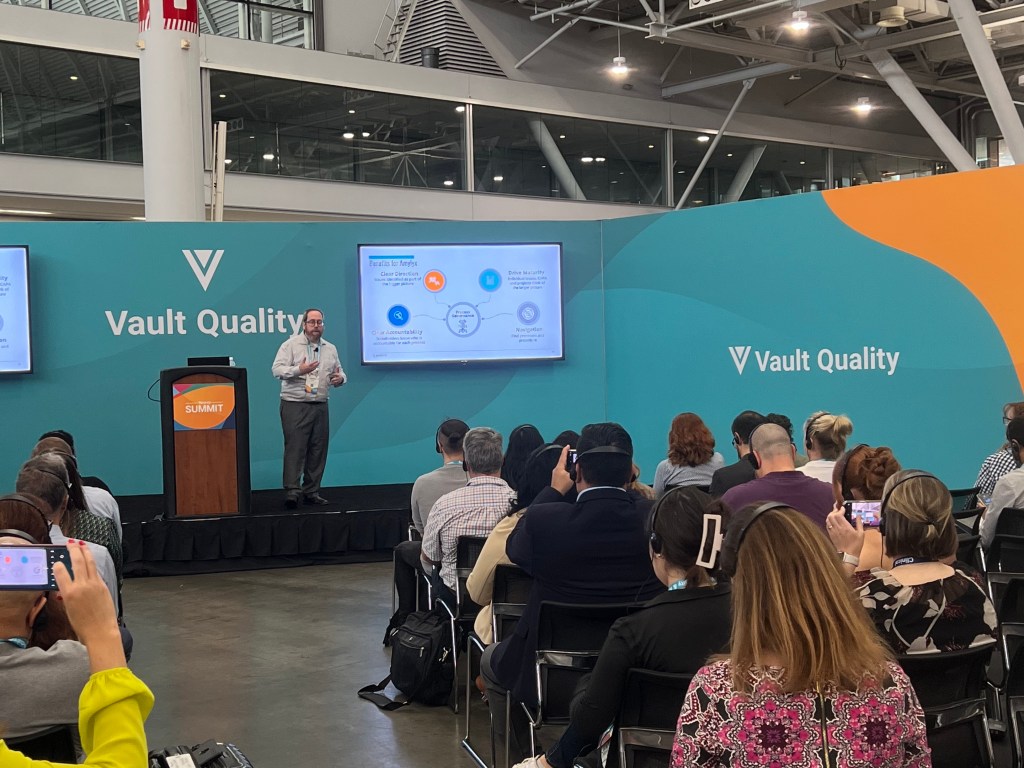
This week was the Veeva Summit, so it is no surprise that I feel slightly tired from the whirlwind. I presented on Process Management within Quality Vault utilizing Process Navigator, a fascination of mine and something I think organizations need to be way more deliberate about in their quality systems.

Structured unstructured time

First, what impacts knowledge workers’ energy is not the sheer amount of time they spend in meetings, but the relative proportion of meeting time compared to what they spend on individual tasks. We found that, on a given day, the more time knowledge workers dedicate to meetings relative to their own individual tasks, the less they engage in small break activities (e.g., a short walk, casual conversations, brief fun reading) to restore their energy during that day. The absence of such break activities, which are crucial for periodic replenishment, harms their workday energy. The impaired energy in turn has a negative impact on the knowledge workers’ task performance, creativity, and job satisfaction at work.

Arrange Your Meeting Schedule to Boost Your Energy” by Chen Zhang,  Gretchen M. Spreitzer,  and Zhaodong (Alan) Qiu (Harvard Business Review)

Solid research here that really resonates. Go and read it.

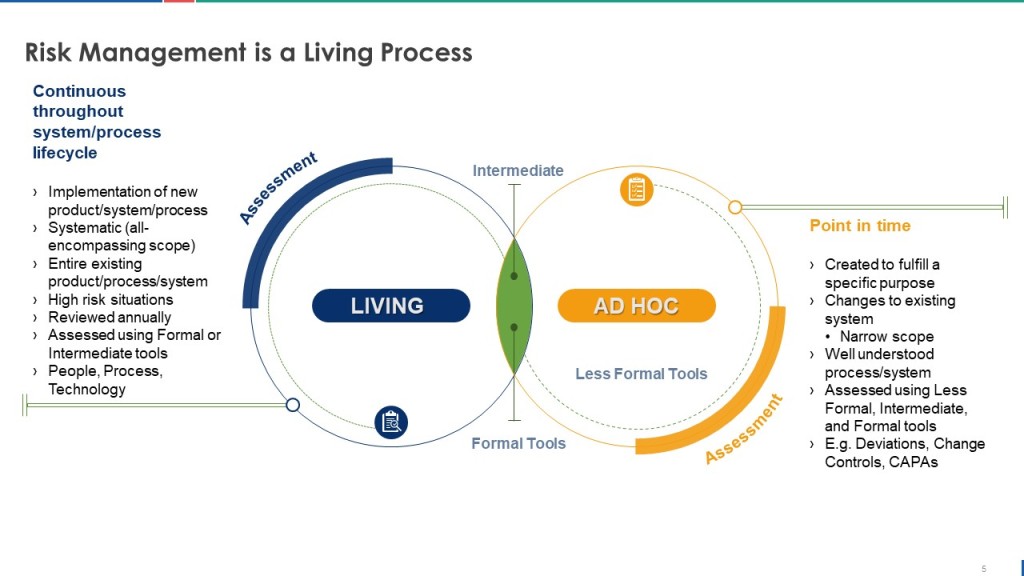
Risk Management is a Living Process

Living and adhoc risk assessments

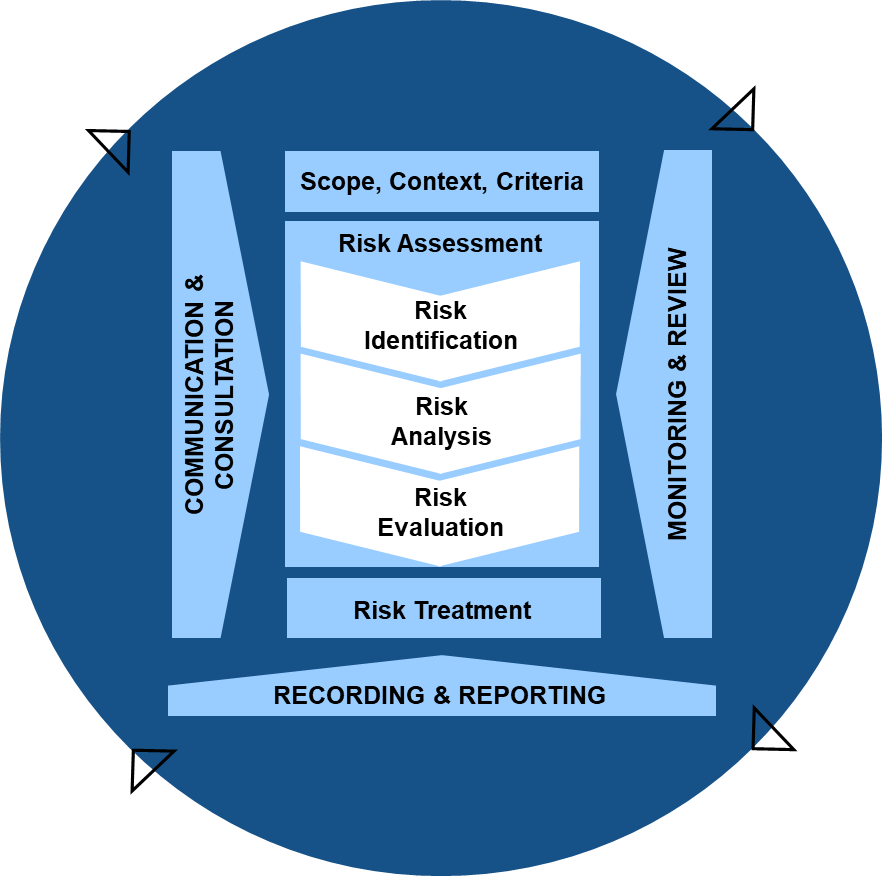
ISO 31000-2018 “Risk Management Guidelines” discusses on-going monitoring and review of risk management activities. We see a similar requirement in ICH Q9(r1) for the pharmaceutical industry. In many organizations we can take a lot of time on the performance of risk assessments (hopefully effectively) and a lot of time mitigating risks (again, hopefully effectively) but many organizations struggle in maintaining a lifecycle approach.

To do appropriate lifecycle management we should ensure three things:

  1. Planned review
  2. Continuous Monitoring
  3. Incorporate through governance, improvement and knowledge management activities.

Reviews are a critical part of our risk management process framework.

This living risk management approach effectively drives work in Control Environment, Response and Stress Testing.

At heart lies the ongoing connection between risk management and knowledge management.

Train-the-Trainer

A firm requirement throughout the GxP regulations and the various ISO standards is that individuals are appropriately trained and qualified to do their work.

Inevitably, that appropriately trained and qualified comes down to the trainer who is conducting the training. How do we train our trainers to ensure that individuals are learning and acquiring all of the skills, knowledge, and insight they need to perform their roles well.

Inadequate training is a consistent finding across the GxPs, so you have to ask are we training our trainers to an appropriate level to make the training effective? Equally important you are spending a lot of time and money training people so you want it to be effective and worth the resources spent.

There are really two options for trainers: 1. Trainers who become qualified to teach a course and 2. SMEs who are qualified to be trainers. In either case, you need that qualification mechanism to ensure your trainers can train. I’ll be honest for technical material I prefer SMEs being trained to be trainers as the experience is usually a whole lot better for the trainee.

This training focuses on being able to deliver informal and formal learning solutions in a manner that is both engaging and effective. Be able to:

  • Manage the learning environment.
  • Prepare for training delivery.
  • Convey objectives.
  • Align learning solutions with course objectives and learner needs.
  • Establish credibility as an instructor.
  • Create a positive learning climate.
  • Deliver various learning methodologies.
  • Facilitate learning.
  • Encourage participation and build learner motivation.
  • Deliver constructive feedback.
  • Ensure learning outcomes.
  • Evaluate solutions.

This qualification path will prove itself valuable.Through this we can ensure that our trainings meet their four objectives and that participants can demonstrate:

  1. Awareness: Participant says, “I’ve heard that!”
  2. Understanding: Participant recognizes the subject matter and then explains it.
  3. Practice: Participant actually uses the learning on the job.
  4. Mastery: Participant can use the acquired knowledge to teach others.

Being a trainer is critical for true subject matter expertise and process ownership.

And as an aside, notice I didn’t include instructional design, this is where your training team can really add value!