Structured unstructured time

First, what impacts knowledge workers’ energy is not the sheer amount of time they spend in meetings, but the relative proportion of meeting time compared to what they spend on individual tasks. We found that, on a given day, the more time knowledge workers dedicate to meetings relative to their own individual tasks, the less they engage in small break activities (e.g., a short walk, casual conversations, brief fun reading) to restore their energy during that day. The absence of such break activities, which are crucial for periodic replenishment, harms their workday energy. The impaired energy in turn has a negative impact on the knowledge workers’ task performance, creativity, and job satisfaction at work.

Arrange Your Meeting Schedule to Boost Your Energy” by Chen Zhang,  Gretchen M. Spreitzer,  and Zhaodong (Alan) Qiu (Harvard Business Review)

Solid research here that really resonates. Go and read it.

You, Yes You! Speak at a Conference

The process of writing and speaking is a core part of the Quality profession. Only through these activities can we truly contemplate and learn from our accomplishments to propel us forward to new heights.

There are some great speaking opportunities for folks around the Boston area coming up:

BOSCON is November 6 and 7th and is looking for speakers. I’m a huge fan of this regional convention and strongly recommend it. Submissions are due August 15th, 2023.

The ASQ’s Quality Innovations Summit (formerly the Quality 4.0 Summit) is September 19–21 in Boston, MA with a theme of “Innovations and Future Trends for Excellence.” Submission deadline is June 9th, 2023, with more information here.

I’m quite happy to help coach potential new speakers, both in the development of your proposal and in your presentation.

Quality Control as a Top 10 Skill

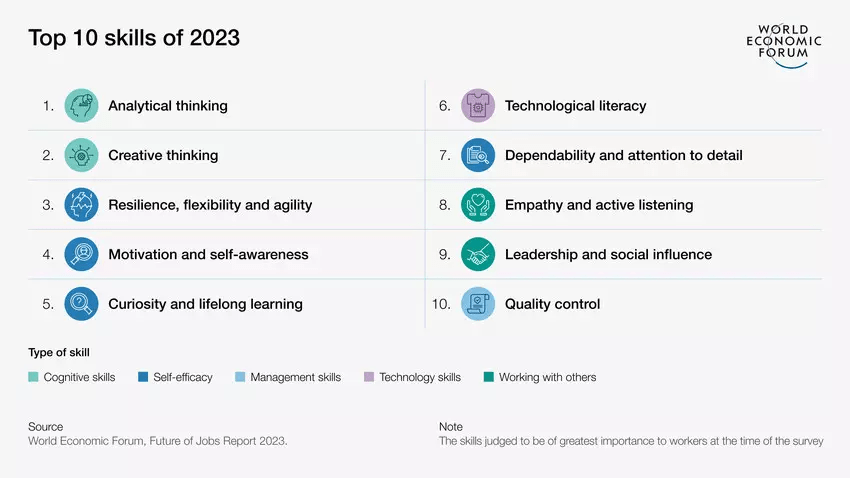
The World Economic Forum (WEF) has developed a Global Skills Taxonomy that provides a framework for aligning around a universal language for skills. It synthesizes and builds on existing taxonomies by integrating definitions and categorizations of skills that are of growing relevance in a fast-changing labor market 1

According to the World Economic Forum’s Future of Jobs Report 2023quality control is one of the top 10 core skills listed in the Global Skills Taxonomy. In the WEF taxonomy, Quality control refers to the process of verifying that a product or service meets specified standards or requirements. It appears to bundle both quality control and quality assurance into this definition.

Quality Control was not listed in the top 10 in the 2020 report. Throughout you find reference to a skill set called “Quality control and safety awareness”, so we can assume this is a refinement in the reporting. In any case, this is an interesting development that I wish the WEF’s material provided more detail on, especially as the 2021 Skills Taxonomy doesn’t include an entry for Quality Control.

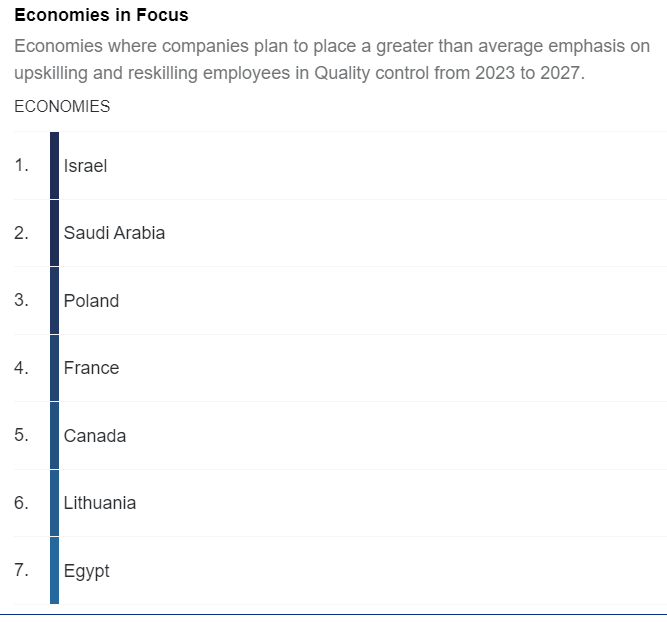
You need to go to the Data Explorer for Quality Control to see valuable information. Including this nice chart on the 7 top countries emphasizing quality control.

What facinates me most here is how it is not developing countries, there are some economic power houses here.

The industry categories of importance are interesting. Some industries I consider strong on quality rank below the mean and ohers above the mean. Others, Information and technology services I am looking at you, rate well below the mean on importance and it explains a lot of what is wrong with the world.

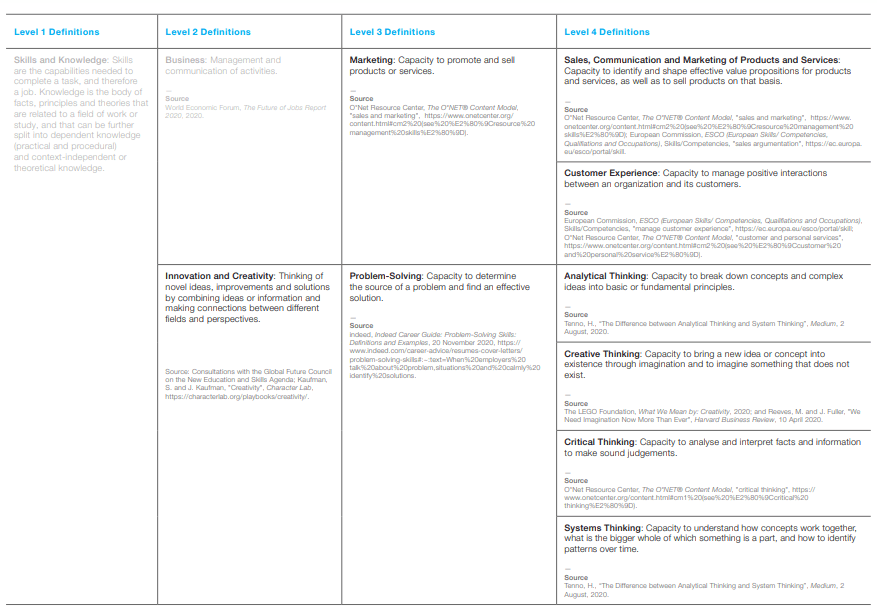
It would be nice to see the taxonomic entry. I’m fascinated by this one on Problem-Solving, which contains the first 2 in the top 10.

Interesting read that creates a lot of questions for me. But France and Canada, feel free to hit me up since it seems you are skill building.

And to help the WEF out, here is a nice way to break down what Quality is all about.

Making Presentations Accessible

Presentations are critical part of sharing and growing as a professional. I’ve gone on the record more than once stating that to truly grow you have to get as comfortable as possible presenting. But it is not merely enough to present, we need to strive for great presentations.

So coming out of WCQI a fw thoughts.

Our Slides are Mostly Awful

Powerpoint is your co-facilitator. Use it well. Do not use powerpoint as a wall of text. I actually hear a speaker this week say he put lots of text in a slide so folks can use them without hearing him speak. Oh no. Stop that.

Make the Presentations Accessible

Great advice here

Great advice in this post about acessibility, something we should always be standardizing.

I love the index card idea. I will be using it my next presentation.

Every Presentation is a Training

While we may not do level 3 or 4 assessments (or even formal level 2), take the attitude that each and every presentation is a training and strive for effectiveness in design.

Presentations are a Continuous Cycle of Improvement

No one was born as a good trainer. Get a coach. Ask for help. Realize that your first presentation will not be as good as your second and etc. Put the time in.

Look for Opportunities

You have done something that others are interested in. Take pride in it and share. There are always great opportunities, like BOSCON, so find them and put in a proposal. You may not get accepted, but as I said above, it is a cycle of improvement.

If you are reading this, I am willing to help you on your presentation journey.

Audience Applauding Speaker After Conference Presentation

Day 1 Afternoon- New Rules for Work Symposium

A Door Opens – Making Space for Innovation facilitated by Keith McCandless and Nancy White

“Notice and stop counterproductive behaviors that stifle creativity and innovation”

I felt they struggled to explain the concept of a TRIZ and the breakouts struggled to have an impact as a result. In hindsight, it was definitely a bit of my coming at the methodology a little too vigorously from my quality background. So a bit of an learning moment for me.

I’ll be contemplating this picture for weeks. There was a lot to absorb.

The NeuroScience of Teaming by Dr Michael Platt and Elizabeth Johnson

Start with the need to make time to socialize with coworkers at work. Back to the idea of fun.

Good relationships are critical in business. Finding ways to connect is critical for well-being. We are wired to connect.

The need to practice our social networking and skills. I feel that these days, so often I feel out of shape here after the last few weeks.

Our attention is one of the aspects of our neurobiology we have control over and through attention we can prioritize what our brain processes.

All about meeting structure comes back to managing attention. Discusses how eye contact causes processes in brain that link to team work and trust, and how this is an engineering challenge.

Importance of breaks.

All comes back to building relationships. I was interested in there is causal evidence here around synchronizing as a biomarker.

Perspective taking – shifting frame of reference to someone else’s.

Impact of the hierarchy on perspective taking. It’s not good.

Importance of empathy.

Facilitated Mixer: An Abundant Exchange

Fun experiment with 3 assumptions

  1. Visuals make everything easier to remember
  2. Small groups make valuable conversations easier
  3. We can create benefits that live beyond this workshop

Love the concept that the act of receiving help and knowledge is part of our being generous towards our peers. Thinking of abundance and applying it in professional development is a favorite topic of mine.

Deliberately thinking of what abundance I have that may help others fill their needs, and sharing what challenges I need help on was a powerful way to end my day.