Key Metrics for GMP Training in Pharmaceutical Systems: Leading & Lagging Indicators

When thinking about the training program you can add the Kilpatrick model to the mix and build from there. This allows a view across the training system to drive for an effective training program.
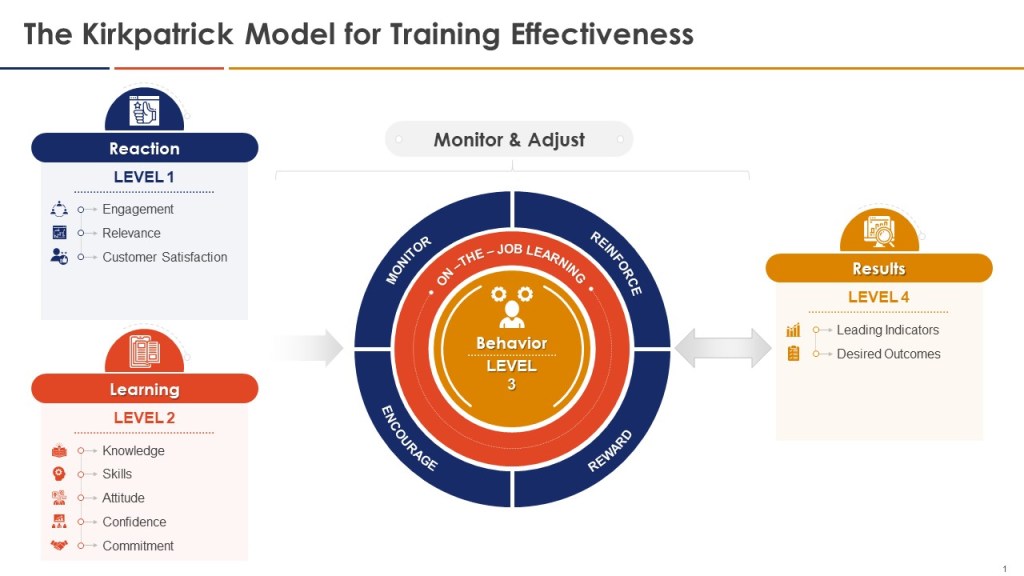
GMP Training Metrics Framework Aligned with Kirkpatrick’s Model

Kirkpatrick LevelCategoryMetric TypeExamplePurposeData SourceRegulatory Alignment
Level 1: ReactionKPILeading% Training Satisfaction Surveys CompletedMeasures engagement and perceived relevance of GMP trainingLMS (Learning Management System)ICH Q10 Section 2.7 (Training Effectiveness)
KRILeading% Surveys with Negative Feedback (<70%)Identifies risk of disengagement or poor training designSurvey ToolsFDA Quality Metrics Reporting (2025 Draft)
KBILeadingParticipation in Post-Training FeedbackEncourages proactive communication about training gapsAttendance LogsEU GMP Chapter 2 (Personnel Training)
Level 2: LearningKPILeadingPre/Post-Training Quiz Pass Rate (≥90%)Validates knowledge retention of GMP principlesAssessment Software21 CFR 211.25 (Training Requirements)
KRILeading% Trainees Requiring Remediation (>15%)Predicts future compliance risks due to knowledge gapsLMS Remediation ReportsFDA Warning Letters (Training Deficiencies)
KBILaggingReduction in Knowledge Assessment RetakesValidates long-term retention of GMP conceptsTraining RecordsICH Q7 Section 2.12 (Training Documentation)
Level 3: BehaviorKPILeadingObserved GMP Compliance Rate During AuditsMeasures real-time application of training in daily workflowsAudit ChecklistsFDA 21 CFR 211 (cGMP Compliance)
KRILeadingNear-Miss Reports Linked to Training GapsIdentifies emerging behavioral risks before incidents occurQMS (Quality Management System)ISO 9001:2015 Clause 10.2 (Nonconformity)
KBILeadingFrequency of Peer-to-Peer Knowledge SharingEncourages a culture of continuous learning and collaborationMeeting LogsICH Q10 Section 3.2.3 (Knowledge Management)
Level 4: ResultsKPILagging% Reduction in Repeat Deviations Post-TrainingQuantifies training’s impact on operational qualityDeviation Management SystemsFDA Quality Metrics (Batch Rejection Rate)
KRILaggingAudit Findings Related to Training EffectivenessReflects systemic training failures impacting complianceRegulatory Audit ReportsEU GMP Annex 15 (Qualification & Validation)
KBILaggingEmployee TurnoverAssesses cultural impact of training on staff retentionHR RecordsICH Q10 Section 1.5 (Management Responsibility)

Kirkpatrick Model Integration

  1. Level 1 (Reaction):
  • Leading KPI: Track survey completion to ensure trainees perceive value in GMP content.
  • Leading KRI: Flag facilities with >30% negative feedback for immediate remediation .
  1. Level 2 (Learning):
  • Leading KPI: Require ≥90% quiz pass rates for high-risk roles (e.g., aseptic operators) .
  • Lagging KBI: Retake rates >20% trigger refresher courses under EU GMP Chapter 3 .
  1. Level 3 (Behavior):
  • Leading KPI: <95% compliance during audits mandates retraining per 21 CFR 211.25 .
  • Leading KRI: >5 near-misses/month linked to training gaps violates FDA’s “state of control” .
  1. Level 4 (Results):
  • Lagging KPI: <10% reduction in deviations triggers CAPA under ICH Q10 Section 4.3 .
  • Lagging KRI: Audit findings >3/year require FDA-mandated QMS reviews .

Regulatory & Strategic Alignment

  • FDA Quality Metrics: Level 4 KPIs (e.g., deviation reduction) align with FDA’s 2025 focus on “sustainable compliance” .
  • ICH Q10: Level 3 KBIs (peer knowledge sharing) support “continual improvement of process performance” .
  • EU GMP: Level 2 KRIs (remediation rates) enforce Annex 11’s electronic training documentation requirements .

By integrating Kirkpatrick’s levels with GMP training metrics, organizations bridge knowledge acquisition to measurable quality outcomes while meeting global regulatory expectations.
Key Metrics for Pharmaceutical Change Control: Leading & Lagging Indicators

CategoryMetric TypeExamplePurposeRegulatory Alignment
KPILeading% Change Requests with Completed Risk AssessmentsPredicts compliance with FDA 21 CFR 211.100 (process control)FDA 21 CFR 211, ICH Q10, ICH Q9
LaggingAverage Time to Close Change RequestsValidates efficiency of change implementation (EudraLex Annex 15)EU GMP Annex 15
KRILeadingUnresolved CAPAs Linked to Change RequestsIdentifies systemic risks before deviations occur (FDA Warning Letters)21 CFR 211.22, ICH Q7
LaggingRepeat Deviations Post-ChangeReflects failure to address root causes (FDA 483 Observations)21 CFR 211.192
KBILeadingCross-Functional Review Participation RateEncourages proactive collaboration in change evaluationICH Q10 Section 3.2.3
LaggingReduction in Documentation Errors Post-TrainingValidates effectiveness of staff competency programsEU 1252/2014 Article 14

Key Performance Indicators (KPIs)

  • Leading KPI:
  • Change Requests with Completed Risk Assessments: Measures proactive compliance with FDA requirements for risk-based change evaluation. A rate <90% triggers quality reviews.
  • Lagging KPI:
  • Time to Close Changes: Benchmarks against EMA’s 30-day resolution expectation for critical changes. Prolonged closure (>45 days) indicates process bottlenecks.

Key Risk Indicators (KRIs)

  • Leading KRI:
  • Unresolved CAPAs: Predicts validation gaps; >5 open CAPAs per change violates FDA’s “state of control” mandate.
  • Lagging KRI:
  • Repeat Deviations: >3 repeat deviations quarterly triggers mandatory revalidation per FDA 21 CFR 211.180.

Key Behavioral Indicators (KBIs)

  • Leading KBI:
  • Review Participation: <80% cross-functional attendance violates ICH Q10’s “integrated team” expectation.
  • Lagging KBI:
  • Documentation Errors: Post-training error reduction <30% prompts requalification under EU GMP Chapter 4.

Implementation Guidance

Align with Regulatory Thresholds: Set leading KPI targets using FDA’s 2025 draft guidance: ≥95% risk assessment completion for high-impact changes.

Automate Tracking: Integrate metrics with eQMS software to monitor CAPA aging (leading KRI) and deviation trends (lagging KRI) in real time.

Link to Training: Tie lagging KBIs to annual GMP refresher courses, as required by EU 1252/2014 Article 14.


    Why It Matters:
    Leading metrics enable proactive mitigation of change-related risks (e.g., unresolved CAPAs predicting audit failures), while lagging metrics validate adherence to FDA’s lifecycle approach for process validation. Balancing both ensures compliance with 21 CFR 211’s “state of control” mandate while fostering continuous improvement.

    Timely Equipment/Facility Upgrades

    One of the many fascinating items in the recent Warning Letter to Sanofi is the FDA’s direction to provide a plan to perform “timely technological upgrades to the equipment/facility infrastructure.” This point drives home the point that staying current with technological advancements is crucial for maintaining compliance, improving efficiency, and ensuring product quality. Yet, I think it is fair to say we rarely see it this bluntly put as a requirement.

    One of the many reasons this Warning Letter stands out is that this is (as far as I can tell) the same facility that won the ISPE’s Facility of the Year award in 2020. This means it is still a pretty new facility, and since it is one of the templates that many single-use biotech manufacturing facilities are based on, we had best pay attention. If a failure to maintain a state-of-the-art facility can contribute to this sort of Warning Letter, then many companies had best be paying close attention. There is a lot to unpack and learn here.

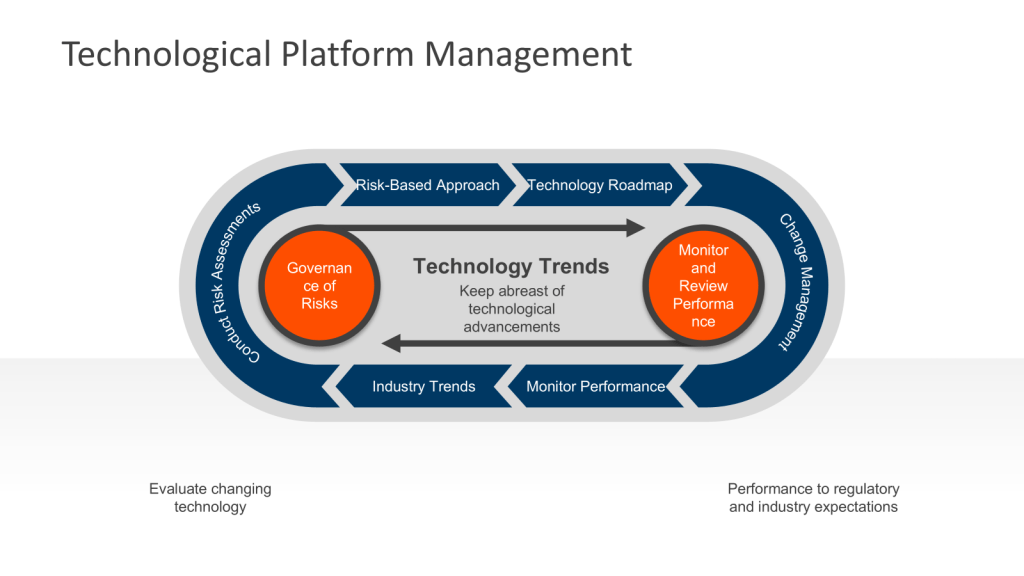
    Establishing an Ongoing Technology Platform Process

    To meet regulatory requirements and industry standards, facilities should implement a systematic approach to technological upgrades.

    1. Conduct Regular Assessments

    At least annually, perform comprehensive evaluations of your facility’s equipment, systems, and processes. This assessment should include:

    • Review of equipment performance and maintenance, including equipment effectiveness
    • Analysis of deviation reports and quality issues
    • Evaluation of current technologies against emerging industry standards
    • Assessment of facility design and layout for potential improvements

    This should be captured as part of the FUSE metrics plan and appropriately evaluated as part of quality governance.

    2. Stay Informed on Industry Trends

    Keep abreast of technological advancements in biotech manufacturing at minimum by:

    • Attending industry conferences and workshops
    • Participating in working groups for key consensus standard writers, such as ISPE and ASTM
    • Subscribing to relevant publications and regulatory updates
    • Engaging with equipment vendors and technology providers

    3. Develop a Risk-Based Approach

    Prioritize upgrades based on their potential impact on product quality, patient safety, and regulatory compliance. Utilize living risk assessments to get a sense of where issues are developing. These should be the evolution of the risk management that built the facility.

    4. Create a Technology Roadmap

    Develop a long-term plan for implementing upgrades, considering:

    • Budget constraints and return on investment
    • Regulatory timelines for submissions and approvals
    • Production schedules and potential downtime
    • Integration with existing systems and processes

    5. Implement Change Management Procedures

    Ensure there is a robust change management process in place to ensure that upgrades are implemented safely and effectively. This should include:

    6. Appropriate Verification – Commissioning, Qualification and Validation

    Conduct thorough verification activities to demonstrate that the upgraded equipment or systems meet predetermined specifications and regulatory requirements.

    7. Monitor and Review Performance

    Continuously monitor the performance of upgraded systems and equipment to ensure they meet expectations and comply with cGMP requirements. Conduct periodic reviews to identify any necessary adjustments or further improvements. This is all part of Stage 3 of the FDA’s process validation model focusing on ongoing assurance that the process remains in a state of control during routine commercial manufacture. This stage is designed to:

    • Anticipate and prevent issues before they occur
    • Detect unplanned deviations from the process
    • Identify and correct problems

    Leveraging Advanced Technologies

    To stay ahead of regulatory expectations and industry trends, consider incorporating advanced technologies into your upgrade plans:

    • Single-Use Systems (SUS): Implement disposable components to reduce cleaning and validation requirements while improving flexibility.
    • Modern Microbial Methods (MMM): Implement advanced techniques used in microbiology that offer significant advantages over traditional culture-based methods
    • Process Analytical Technology (PAT): Integrate real-time monitoring and control systems to enhance product quality and process understanding.
    • Data Analytics and Artificial Intelligence: Implement advanced data analysis tools to identify trends, predict maintenance needs, and optimize processes.

    Conclusion

    Maintaining a state-of-the-art biotech facility requires a proactive and systematic approach to technological upgrades. By establishing an ongoing process for identifying and implementing improvements, facilities can ensure compliance with FDA requirements, align with industry standards, and stay competitive in the rapidly evolving biotech landscape.

    Remember that the goal is not just to meet current regulatory expectations but to anticipate future requirements and position your facility at the forefront of biotech manufacturing excellence. By following this comprehensive approach and staying informed on industry developments, you can create a robust, flexible, and compliant manufacturing environment that supports the production of high-quality biopharmaceutical products.

    When to Widen the Investigation

    “there is no retrospective review of batch records for batches within expiry, to identify any other process deviations performed without the appropriate corresponding documentation including risk assessment(s).” – 2025 Warning Letter from the US FDA to Sanofi

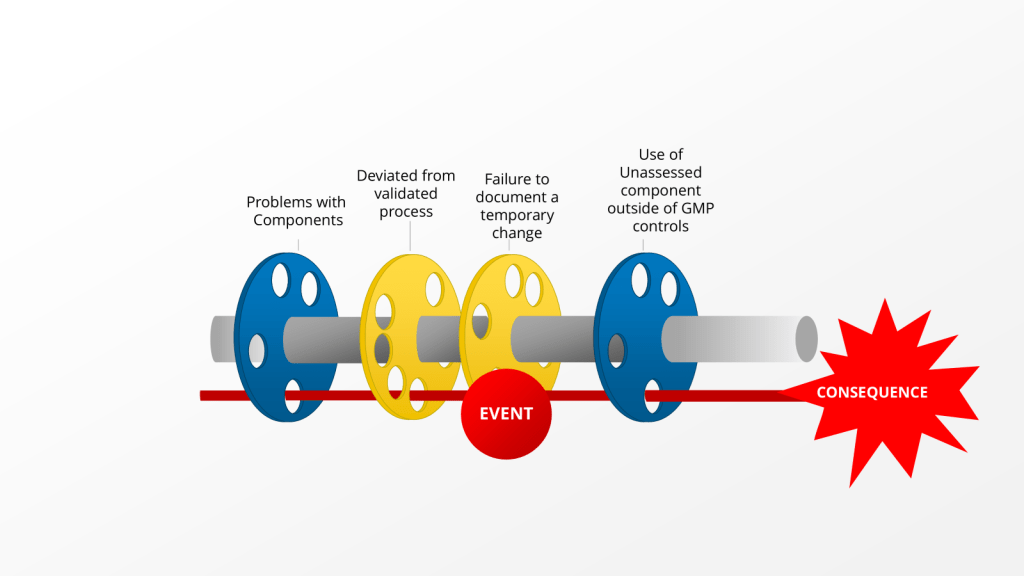
    This comment is about an instance where Sanofi deviated from the validated process by using an unvalidated single use component. Instead of self-identifying, creating a deviation and doing the right change control activities, the company just kept on deviating by using a non-controlled document.

    This is a big problem for lots of reasons, from uncontrolled documents, to not using the change control system, to breaking the validated state. What the language quoted above really brings to bear is the question, when should we evaluate our records for other similar instances of this happening, so we can address it.

    When a deviation investigation reveals recurring bad decision-making, it is crucial to expand the investigation and conduct a retrospective review of batch records. A good cutoff of this can be only for batches within expiry. This expanded investigation helps identify any other process deviations that may have occurred but were not discovered or documented at the time. Here’s when and how to approach this situation:

    Triggers for Expanding the Investigation

    1. Recurring Deviations: If the same or similar deviations are found to be recurring, it indicates a systemic issue that requires a broader investigation.
    2. Pattern of Human Errors: When a pattern of human errors or poor decision-making is identified, it suggests potential underlying issues in training, procedures, or processes.
    3. Critical Deviations: For deviations classified as critical, a more thorough investigation is typically warranted, including a retrospective review.
    4. Potential Impact on Product Quality: If there’s a strong possibility that undiscovered deviations could affect product quality or patient safety, an expanded investigation becomes necessary.

    Conducting the Retrospective Review

    1. Timeframe: Review batch records for all batches within expiry, typically covering at least two years of production. Similarily for issues in the FUSE program you might look since the last requalification, or from a decide to go backwards in concentric circles based on what you find.
    2. Scope: Examine not only the specific process where the deviation was found but also related processes or areas that could be affected. Reviewing related processes is critical.
    3. Data Analysis: Utilize statistical tools and trending analysis techniques to identify patterns or anomalies in the historical data.
    4. Cross-Functional Approach: Involve a team of subject matter experts from relevant departments to ensure a comprehensive review.
    5. Documentation Review: Examine batch production records, laboratory control records, equipment logs, and any other relevant documentation.
    6. Root Cause Analysis: Apply root cause analysis techniques to understand the underlying reasons for the recurring issues.

    Key Considerations

    • Risk Assessment: Prioritize the review based on the potential risk to product quality and patient safety.
    • Data Integrity: Ensure that any retrospective data used is reliable and has maintained its integrity.
    • Corrective Actions: Develop and implement corrective and preventive actions (CAPAs) based on the findings of the expanded investigation.
    • Regulatory Reporting: Assess the need for notifying regulatory authorities based on the severity and impact of the findings.

    By conducting a thorough retrospective review when recurring bad decision-making is identified, companies can uncover hidden issues, improve their quality systems, and prevent future deviations. This proactive approach not only enhances compliance but also contributes to continuous improvement in pharmaceutical manufacturing processes.

    In the case of an issue that rises to a regulatory observation this becomes a firm must. The agency has raised a significant concern and they will want proof that this is a limited issue or that you are holistically dealing with it across the organization.

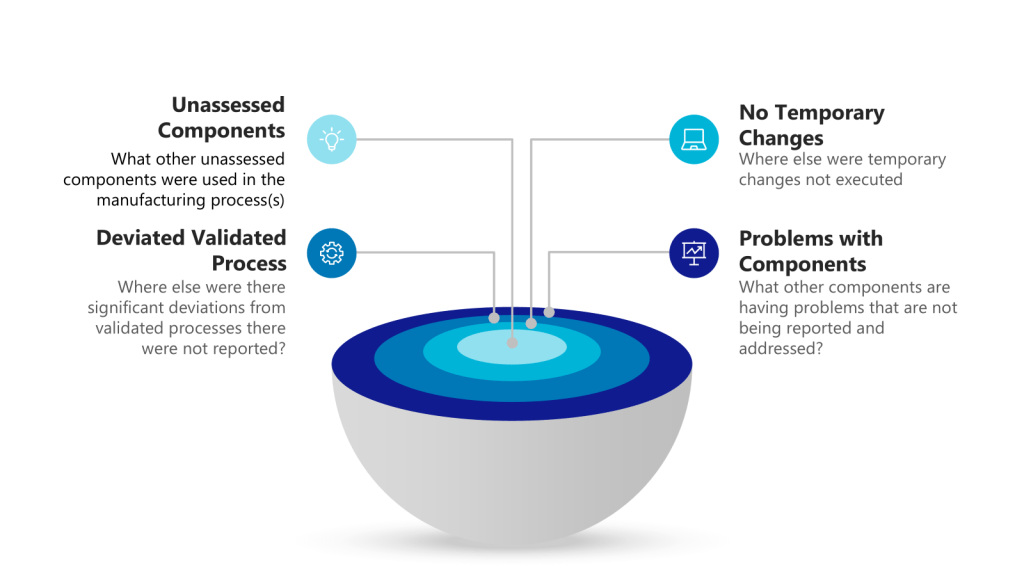
    Concentric Circles of Investigation

    Each layer of the investigation may require holistic looks. Utilizing the example above we have:

    Layer of ProblemFurther Investigation to Answer
    Use of unassessed component outside of GMP controlsWhat other unassessed components were used in the manufacturing process(s)
    Failure to document a temporary changeWhere else were temporary changes not executed
    Deviated from validated processWhere else were there significant deviations from validated processes there were not reported
    Problems with componentsWhat other components are having problems that are not being reported and addressed

    Take a risk-based approach here is critical.

    The Culture Wars Strike Clinical Trials

    In recent years, the importance of diversity in clinical trials has gained significant attention in the medical research community. This focus is not just a matter of inclusivity; it’s a crucial scientific and ethical imperative that directly impacts the quality and applicability of medical research.

    Why Diversity in Clinical Trials is Essential

    Scientific Validity and Generalizability

    Different populations may respond differently to the same treatment due to variations in genetics, lifestyle, and environmental factors. By including diverse participants, researchers can better understand how a treatment works across various groups, leading to more accurate and widely applicable results.

    Addressing Health Disparities

    Minority groups often experience poorer health outcomes in various diseases. Including these groups in clinical trials is a crucial step towards understanding and addressing these disparities, potentially leading to more targeted and effective treatments for underserved populations.

    Innovation and Discovery

    Diversity in clinical trials can lead to unexpected discoveries. For instance, the identification of PCSK9, which revolutionized our understanding of cholesterol homeostasis, was a result of studying variations in cardiovascular risk factors among different racial groups.

    Alignment with ICH Guidelines

    The International Council for Harmonisation (ICH) has recognized the importance of diversity in its updated guidelines, particularly in ICH E6(R3) and ICH E8(R1).

    ICH E6(R3)

    This guideline emphasizes the importance of including diverse patient populations in clinical trials. It encourages the use of innovative trial designs and technologies to enable wider participation and inclusion of diverse populations. The guideline also stresses the need for quality by design (QbD) and a focus on critical-to-quality factors, which inherently includes considerations of diversity to ensure the reliability of trial results.

    ICH E8(R1)

    ICH E8(R1) focuses on the general considerations for clinical studies and emphasizes the importance of engaging with a broader range of stakeholders, including patients and patient advocacy groups. This approach naturally leads to more diverse perspectives in trial design and conduct, potentially increasing participation from underrepresented groups.

    The Impact of Recent Policy Changes

    The recent purge of FDA pages on clinical trial diversity, as reported by STAT News, raises significant concerns about the future of inclusive clinical. This action, part of a wider executive order banning diversity, equity, and inclusion (DEI) initiatives, could have far-reaching consequences:

    1. Reduced Guidance: The removal of these resources may leave researchers and pharmaceutical companies with less clear direction on how to ensure diverse representation in their trials.
    2. Potential Setbacks: Years of progress in improving trial diversity could be undermined, potentially leading to less representative studies and, consequently, less generalizable results.
    3. Health Equity Concerns: This move could exacerbate existing health disparities by reducing the focus on including underrepresented groups in clinical research.
    4. Scientific Integrity: The quality and applicability of clinical trial data may be compromised if diversity is not actively pursued, potentially affecting the safety and efficacy of new treatments for certain populations.

    Moving Forward

    Despite this setback, the scientific and pharma community must continue to prioritize diversity in clinical trials. The principles outlined in ICH E6(R3) and E8(R1) provide a strong foundation for this effort. Researchers, pharmaceutical companies, and regulatory bodies should:

    1. Continue to develop innovative recruitment strategies to reach diverse populations.
    2. Engage with community leaders and organizations to build trust and awareness about clinical trials.
    3. Design trials with flexibility to improve access for all populations, including the use of decentralized trial elements.
    4. Maintain a focus on quality by design, ensuring that diversity considerations are built into trial planning from the outset.

    It is important to remember that E6(r3) is the regulation in Europe, while it is a guidance in the US. So companies need to follow it for their EMA approval possibilities.

    In conclusion, diversity in clinical trials is not just a matter of equity; it’s a scientific necessity that ensures the development of safe and effective treatments for all populations. While recent policy changes may present challenges, the medical research community must remain committed to this crucial aspect of clinical research, guided by international standards and ethical imperatives.