Conducting A Hazard and Operability Study (HAZOP)

A Hazard and Operability Study (HAZOP) is a structured and systematic examination of a complex planned or existing process or operation to identify and evaluate problems that may represent risks to product, personnel or equipment. The primary goal of a HAZOP is to ensure that risks are managed effectively by identifying potential hazards and operability problems and developing appropriate mitigation strategies.

Why Use HAZOP?

Biotech facilities involve intricate processes that can be prone to various risks, including contamination, equipment failure, and process deviations. Implementing a HAZOP can:

  • Risk Identification and Mitigation: HAZOPs help identify potential hazards associated with biotech processes, such as contamination risks, equipment malfunctions, and deviations from standard operating procedures. By identifying these risks, facilities can implement mitigation strategies to prevent accidents and ensure safety.
  • Process Optimization: Through the systematic analysis of processes, HAZOPs can identify inefficiencies and areas for improvement, leading to optimized operations and enhanced productivity.

Part of a Continuum of Risk Tools

A HAZOP (Hazard and Operability) study differs from other risk assessment methods in a few key ways:

  1. Systematic examination of process deviations: HAZOP uses a very structured approach of examining potential deviations from the intended design and operation of a process, using guidewords like “more”, “less”, “no”, “reverse”, etc. This systematic approach helps identify hazards that may be missed by other methods.
  2. Focus on operability issues: The HAZOP examines operability problems that could impact process efficiency or product quality.
  3. Node-by-node analysis: The process is broken down into nodes or sections that are analyzed individually, allowing for very thorough examination.
  4. Qualitative analysis: Unlike quantitative risk assessment methods, HAZOP is primarily qualitative, focusing on identifying potential hazards rather than quantifying risk levels. HAZOPs do not typically assign numerical scores or rankings to risks.
  5. Consideration of causes and consequences: For each deviation, the team examines possible causes, consequences, and existing safeguards before recommending additional actions.
  6. Applicable to complex processes: The structured approach makes HAZOP well-suited for analyzing complex processes with many variables and potential interactions.
MethodDescriptionStrengthsLimitations
HAZOP (Hazard and Operability Study)Systematic examination of process/operation to identify potential hazards and operability problems– Very thorough and structured approach
– Examines deviations from design intent
– Team-based
– Time consuming
– Primarily qualitative
FMEA (Failure Mode and Effects Analysis)Systematic method to identify potential failure modes and their effects– Quantitative risk prioritization
– Proactive approach
– Can be used on products and processes
– Does not consider combinations of failures
– Can be subjective
HACCP (Hazard Analysis and Critical Control Points)Systematic approach to food safety hazards– Focus on prevention
– Identifies critical control points
– Requires prerequisite programs in place
PHA (Preliminary Hazard Analysis)Early stage hazard identification technique– Can be used early in design process
– Relatively quick to perform
– Identifies major hazards
– Not very detailed
– Qualitative only
– May miss some hazards
Bow-Tie AnalysisCombines fault tree and event tree analysis– Visual representation of risk pathways
– Shows preventive and mitigative controls
– Good communication tool
– Does not show detailed failure logic
– Can oversimplify complex scenarios
– Time consuming for multiple hazards

Key differences:

  • HAZOP focuses on deviations from design intent, while FMEA looks at potential failure modes
  • HACCP is specific to identify hazards and is commonly used in food safety, while the others are more general risk assessment tools
  • PHA is used early in design, while the others are typically used on existing systems
  • Bow-Tie provides a visual risk pathway, while the others use more tabular formats
  • FMEA and HAZOP tend to be the most thorough and time-intensive methods

The choice of method depends on the specific application, stage of design, and level of detail required. Often a combination of methods may be used.

Instructions for Conducting a HAZOP

Preparation

    • Assemble a multidisciplinary team comprising appropriate experts
    • Define the scope of the HAZOP study, including the specific processes or operations to be analyzed.
    • Gather and review all relevant documentation, such as process flow diagrams, piping and instrumentation diagrams, and standard operating procedures.

    Execution

      • Divide the Process into Nodes: Break down the process into manageable sections or nodes. Each node typically represents a specific part of the process, such as a piece of equipment or a process step.
      • Identify Deviations: For each node, guidewords are applied to identify potential deviations from the intended design or operation. Common guidewords include:
        • No: Complete absence of a process parameter (e.g., no flow).
        • More: Quantitative increase (e.g., more pressure).
        • Less: Quantitative decrease (e.g., less temperature).
        • As well as: Presence of additional elements (e.g., contamination).
        • Part of: Partial completion of an action (e.g., partial mixing).
        • Reverse: Logical opposite of the intended action (e.g., reverse flow).
      • Analyze Causes and Consequences: Determine the possible causes of each deviation and analyze the potential consequences on safety, environment, and operations. This involves considering various factors such as equipment failure, human error, environmental conditions, or procedural issues that could lead to the deviation.
        • Use of Experience and Knowledge: The team relies on their collective experience and knowledge of the process, equipment, and industry standards to hypothesize potential causes. This may include reviewing historical data, previous incidents, and near misses.
      • Recommend Actions: Develop recommendations for mitigating identified risks, such as changes to the process, additional controls, or procedural modifications.

      Documentation and Follow-Up

        • Document all findings, including identified hazards, potential consequences, and recommended actions.
        • Assign responsibilities for implementing recommendations and establish timelines for completion.
        • Conduct follow-up reviews to ensure that recommended actions have been implemented effectively and that the process remains safe and operable.

        Review and Update

          • Regularly review and update the HAZOP study to account for changes in processes, equipment, or regulations.
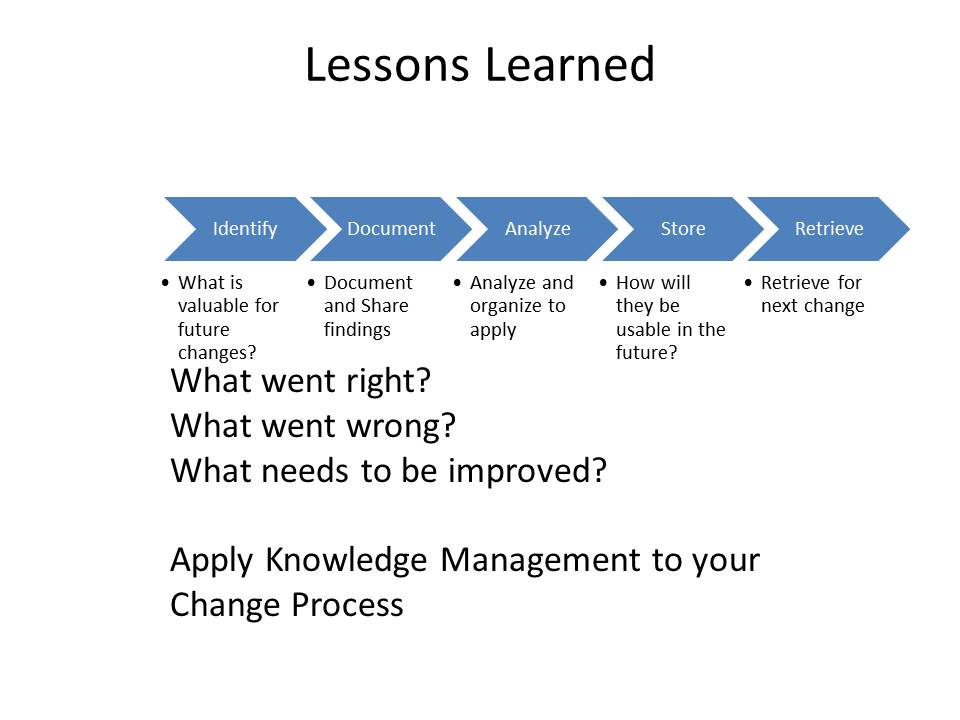
          • Ensure continuous improvement by incorporating lessons learned from past incidents or near misses.
          • Iterative Process: The process is iterative, with the team revisiting and refining their analysis as more information becomes available or as the understanding of the process deepens.
          NodeGuidewordParameterDeviationCauseConsequenceSafeguardsRecommendationsActions
          Specific section or equipment being analyzedGuideword applied (e.g. No, More, Less, Reverse, etc.)Process parameter being examined (e.g. Flow, Temperature, Pressure, etc.)How the parameter deviates from design intent when guideword is appliedPossible reasons for the deviationPotential results if deviation occursExisting measures to prevent or mitigate the deviationSuggested additional measures to control the riskSpecific tasks assigned to implement recommendations

          Inappropriate Uses of Quality Risk Management

          Quality Risk Management (QRM) is a vital aspect of pharmaceutical and biotechnology manufacturing, aimed at ensuring product quality and safety. I write a lot about risk management because risk management is so central to what I do. However, inappropriate uses of QRM can lead to significant negative consequences and I think it is a fairly common refrain in my day that an intended use is not an appropriate use of risk management. Let us explore these inappropriate uses, their potential consequences, and provide some examples so folks know what to avoid.

          1. Justifying Non-Compliance

          Inappropriate Use: Using QRM to justify deviations from Good Practices (GxP) or regulatory standards.

          Consequences: This can lead to regulatory non-compliance, resulting in action from regulatory bodies, such as warnings, fines, or even shutdowns. Everytime I read a Warning Letter I imagine that there was some poorly thought out risk assessment. Using risk management this way undermines the integrity of manufacturing processes and can compromise product safety and efficacy.

          Example: A company might use risk assessments to justify not adhering to environmental controls, claiming the risk is minimal. This can lead to contamination issues, as seen in cases where inadequate environmental monitoring led to microbial contamination of products.

          2. Substituting for Scientific Evidence

          Inappropriate Use: Relying on QRM as a substitute for robust scientific data and empirical evidence.

          Consequences: Decisions made without scientific backing can lead to ineffective risk mitigation strategies, resulting in product failures or recalls.

          Example: A manufacturer might use QRM to decide on process parameters without sufficient scientific validation, leading to inconsistent product quality. For example the inadequate scientific evaluation of raw materials led to variability in cell culture media performance.

          3. Supporting Predetermined Conclusions

          Inappropriate Use: Manipulating QRM to support conclusions that have already been decided.

          Consequences: This biases the risk management process, potentially overlooking significant risks and leading to inadequate risk controls.

          Example: In a biopharmaceutical facility, QRM might be used to support the continued use of outdated equipment, despite known risks of cross-contamination, leading to product recalls.

          4. Rationalizing Workarounds

          Inappropriate Use: Using QRM to justify workarounds that bypass standard procedures or controls.

          Consequences: This can introduce new risks into the manufacturing process, potentially leading to product contamination or failure.

          Example: A facility might use QRM to justify a temporary fix for a malfunctioning piece of equipment instead of addressing the root cause, leading to repeated equipment failures and production delays.

          5. Ignoring Obvious Issues

          Inappropriate Use: Conducting risk assessments instead of addressing clear and evident problems directly.

          Consequences: This can delay necessary corrective actions, exacerbating the problem and potentially leading to regulatory actions.

          Example: A company might conduct a lengthy risk assessment instead of immediately addressing a known contamination source, resulting in multiple batches being compromised.

          Inappropriate uses of Quality Risk Management can have severe implications for product quality, regulatory compliance, and patient safety. It is crucial for organizations to apply QRM objectively, supported by scientific evidence, and aligned with regulatory standards to ensure its effectiveness in maintaining high-quality manufacturing processes.

          Applying a Layers of Controls Analysis to Contamination Control

          Layers of Controls Analysis (LOCA)

          Layers of Controls Analysis (LOCA) provides a comprehensive framework for evaluating multiple layers of protection to reduce and manage operational risks. By examining both preventive and mitigative control measures simultaneously, LOCA allows organizations to gain a holistic view of their risk management strategy. This approach is particularly valuable in complex operational environments where multiple safeguards and protective systems are in place.

          One of the key strengths of LOCA is its ability to identify gaps in protection. By systematically analyzing each layer of control, from basic process design to emergency response procedures, LOCA can reveal areas where additional safeguards may be necessary. This insight is crucial for guiding decisions on implementing new risk reduction measures or enhancing existing ones. The analysis helps organizations prioritize their risk management efforts and allocate resources more effectively.

          Furthermore, LOCA provides a structured way to document and justify risk reduction measures. This documentation is invaluable for regulatory compliance, internal audits, and continuous improvement initiatives. By clearly outlining the rationale behind each protective layer and its contribution to overall risk reduction, organizations can demonstrate due diligence in their safety and risk management practices.

          Another significant advantage of LOCA is its promotion of a holistic view of risk control. Rather than evaluating individual safeguards in isolation, LOCA considers the cumulative effect of multiple protective layers. This approach recognizes that risk reduction is often achieved through the interaction of various control measures, ranging from engineered systems to administrative procedures and emergency response capabilities.

          By building on other risk assessment techniques, such as Hazard and Operability (HAZOP) studies and Fault Tree Analysis, LOCA provides a more complete picture of protection systems. It allows organizations to assess the effectiveness of their entire risk management strategy, from prevention to mitigation, and ensures that risks are reduced to an acceptable level. This comprehensive approach is particularly valuable in high-hazard industries where the consequences of failures can be severe.

          LOCA combines elements of two other methods – Layers of Protection Analysis (LOPA) and Layers of Mitigation Analysis (LOMA).

          Layers of Protection Analysis

          To execute a Layers of Protection Analysis (LOPA), follow these key steps:

          Define the hazardous scenario and consequences:

          • Clearly identify the hazardous event being analyzed
          • Determine the potential consequences if all protection layers fail

          Identify initiating events:

          • List events that could trigger the hazardous scenario
          • Estimate the frequency of each initiating event

          Identify Independent Protection Layers (IPLs):

          • Determine existing safeguards that can prevent the scenario
          • Evaluate if each safeguard qualifies as an IPL (independent, auditable, effective)
          • Estimate the Probability of Failure on Demand (PFD) for each IPL

          Identify Conditional Modifiers:

          • Determine factors that impact scenario probability (e.g. occupancy, ignition probability)
          • Estimate probability for each modifier

          Calculate scenario frequency:

          • Multiply initiating event frequency by PFDs of IPLs and conditional modifiers

          Compare to risk tolerance criteria:

          • Determine if calculated frequency meets acceptable risk level
          • If not, identify need for additional IPLs

          Document results:

          • Record all assumptions, data sources, and calculations
          • Summarize findings and recommendations

          Review and validate:

          • Have results reviewed by subject matter experts
          • Validate key assumptions and data inputs

          Key aspects for successful LOPA execution

          • Use a multidisciplinary team
          • Ensure independence between IPLs
          • Be conservative in estimates
          • Focus on prevention rather than mitigation
          • Consider human factors in IPL reliability
          • Use consistent data sources and methods

          Layers of Mitigation Analysis

          LOMA focuses on analyzing reactionary or mitigative measures, as opposed to preventive measures.

          A LOCA as part of Contamination Control

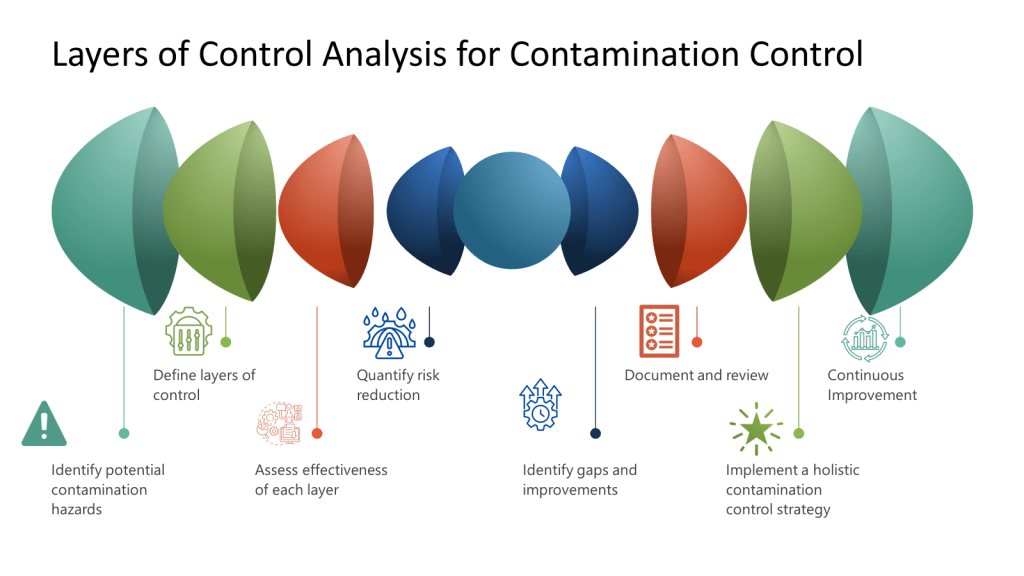
          A Layers of Controls Analysis (LOCA) can be effectively applied to contamination control in biotech manufacturing by systematically evaluating multiple layers of protection against contamination risks.

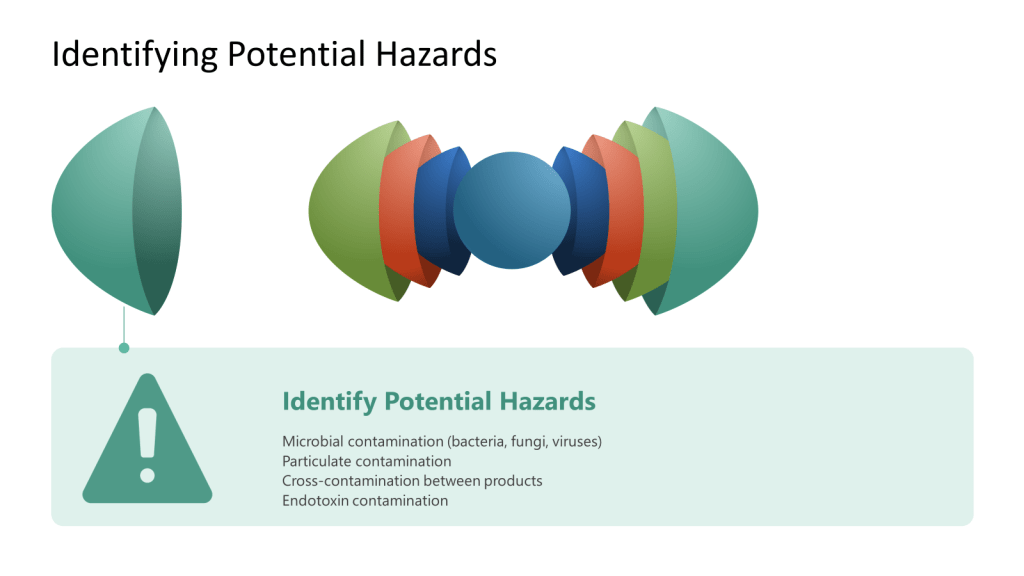
          To determine potential hazards when conducting a Layer of Controls Analysis (LOCA) for contamination control in biotech, follow these steps:

          1. Form a multidisciplinary team: Include members from manufacturing, quality control, microbiology, engineering, and environmental health & safety to gain diverse perspectives.
          2. Review existing processes and procedures: Examine standard operating procedures, experimental protocols, and equipment manuals to identify potential risks associated with each step.
          3. Consider different hazard types. Focus on categories like:
            • Biological hazards (e.g., microorganisms, cell lines)
            • Chemical hazards (e.g., toxic substances, flammable materials)
            • Physical hazards (e.g., equipment-related risks)
            • Radiological hazards (if applicable)
          4. Analyze specific contamination hazard types for biotech settings:
            • Mix-up: Materials used for the wrong product
            • Mechanical transfer: Cross-contamination via personnel, supplies, or equipment
            • Airborne transfer: Contaminant movement through air/HVAC systems
            • Retention: Inadequate removal of materials from surfaces
            • Proliferation: Potential growth of biological agents
          5. Conduct a process analysis: Break down each laboratory activity into steps and identify potential hazards at each stage.
          6. Consider human factors: Evaluate potential for human error, such as incorrect handling of materials or improper use of equipment.
          7. Assess facility and equipment: Examine the layout, containment measures, and equipment condition for potential hazards.
          8. Review past incidents and near-misses: Analyze previous safety incidents or close calls to identify recurring or potential hazards.
          9. Consult relevant guidelines and regulations: Reference industry standards, biosafety guidelines, and regulatory requirements to ensure comprehensive hazard identification.
          10. Use brainstorming techniques: Encourage team members to think creatively about potential hazards that may not be immediately obvious.
          11. Evaluate hazards at different scales: Consider how hazards might change as processes scale up from research to production levels.
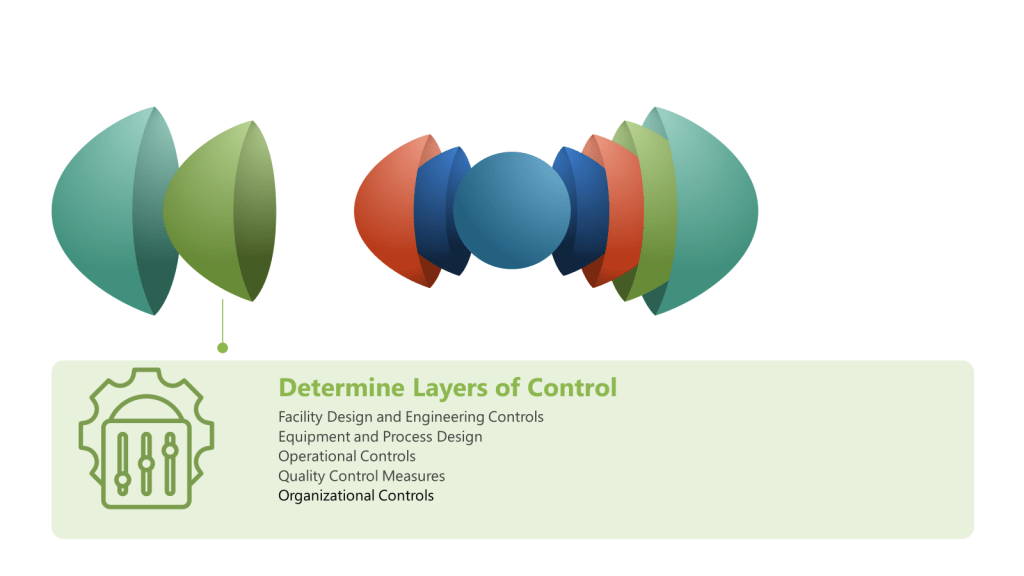
          • Facility Design and Engineering Controls
            • Cleanroom design and classification
            • HVAC systems with HEPA filtration
            • Airlocks and pressure cascades
            • Segregated manufacturing areas
          • Equipment and Process Design
            • Closed processing systems
            • Single-use technologies
            • Sterilization and sanitization systems
            • In-line filtration
          • Operational Controls
            • Aseptic techniques and procedures
            • Environmental monitoring programs
            • Cleaning and disinfection protocols
            • Personnel gowning and hygiene practices
          • Quality Control Measures
            • In-process testing (e.g., bioburden, endotoxin)
            • Final product sterility testing
            • Environmental monitoring data review
            • Batch record review
          • Organizational Controls
            • Training programs
            • Standard operating procedures (SOPs)
            • Quality management systems
            • Change control processes
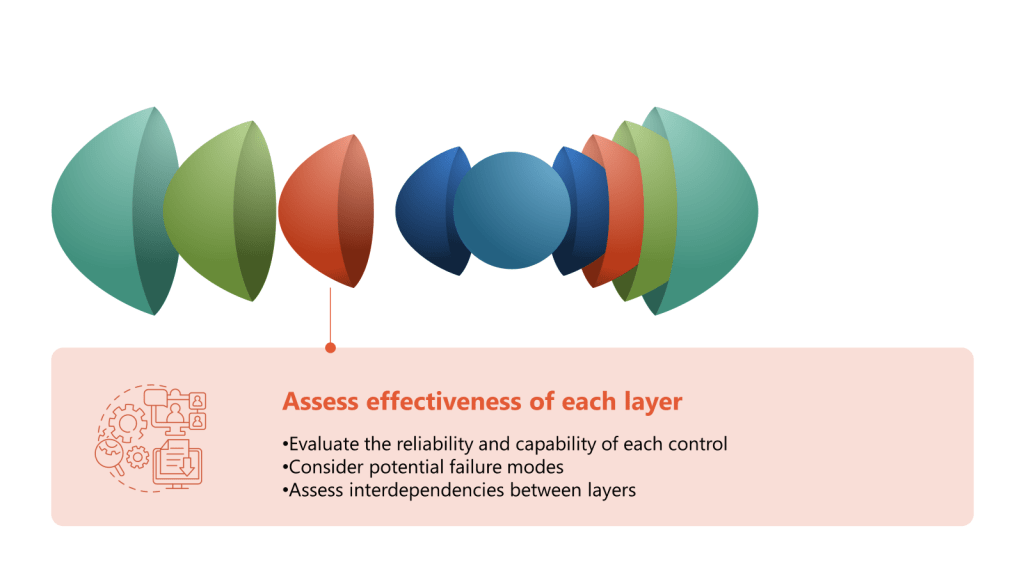
          1. Evaluate reliability and capability of each control:
            • Review historical performance data for each control measure
            • Assess the control’s ability to prevent or detect contamination
            • Consider the control’s consistency in different operating conditions
          2. Consider potential failure modes:
            • Conduct a Failure Mode and Effects Analysis (FMEA) for each control
            • Identify potential ways the control could fail or be compromised
            • Assess the likelihood and impact of each failure mode
          3. Evaluate human factors:
            • Assess the complexity and potential for human error in each control
            • Review training effectiveness and compliance with procedures
            • Consider ergonomics and usability of equipment and systems
          4. Analyze technology effectiveness:
            • Evaluate the performance of automated systems and equipment
            • Assess the reliability of monitoring and detection technologies
            • Consider the integration of different technological controls
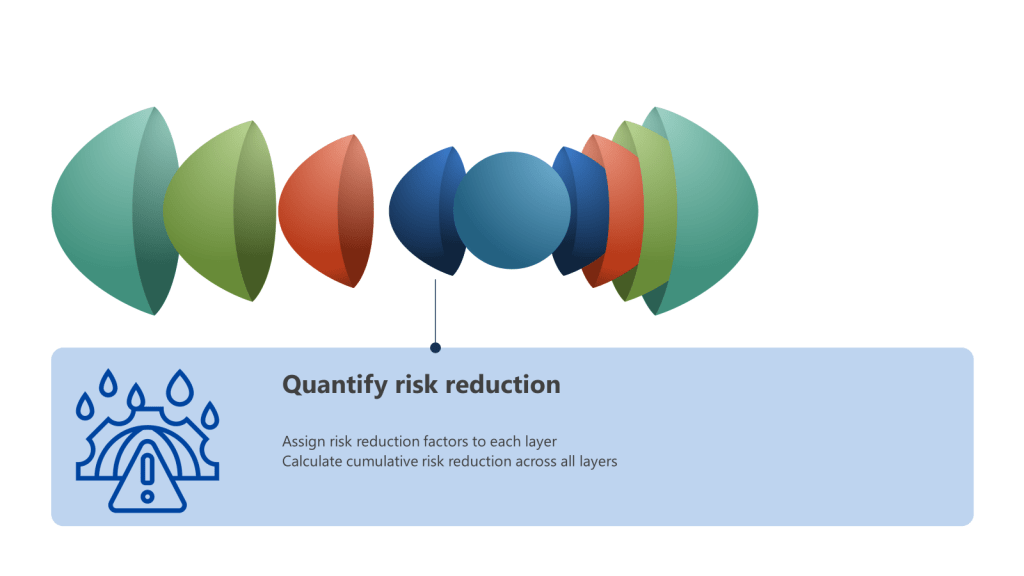
          1. Quantify risk reduction:
            • Assign risk reduction factors to each layer based on its effectiveness
            • Use a consistent scale (e.g., 1-10) to rate each control’s risk reduction capability
            • Calculate the cumulative risk reduction across all layers
          2. Assess interdependencies between layers:
            • Identify any controls that rely on or affect other controls
            • Evaluate how failures in one layer might impact the effectiveness of others
            • Consider potential common mode failures across multiple layers
          3. Review control performance metrics:
            • Analyze trends in environmental monitoring data
            • Examine out-of-specification results and their root causes
            • Assess the frequency and severity of contamination events
          1. Determine acceptable risk levels:
            • Define your organization’s risk tolerance for contamination events
            • Compare current risk levels against these thresholds
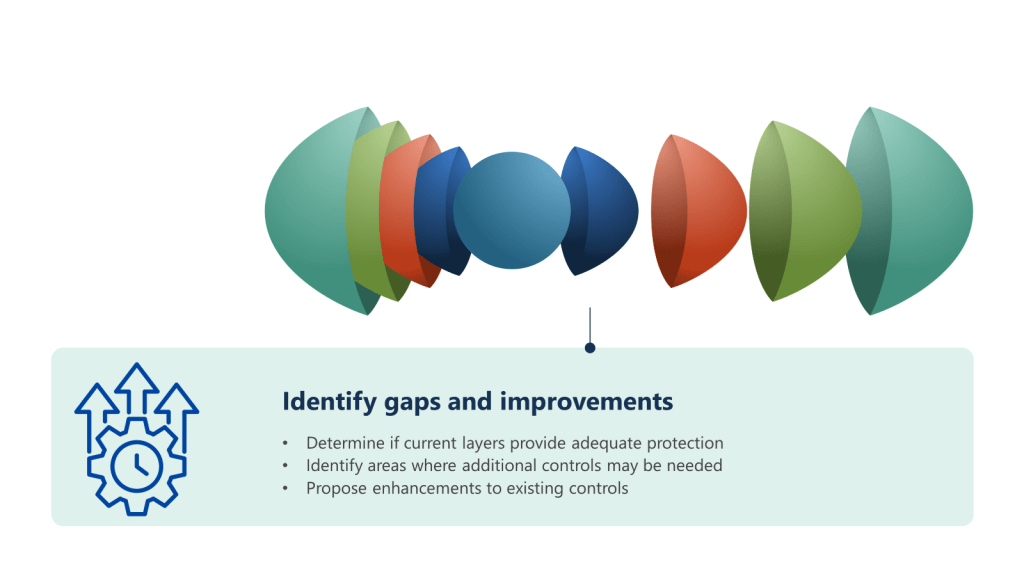
          2. Identify gaps:
            • Highlight areas where current controls fall short of required protection
            • Note processes or areas with insufficient redundancy
          3. Propose improvements:
            • Suggest enhancements to existing controls
            • Recommend new control measures to address identified gaps
          4. Prioritize actions:
            • Rank proposed improvements based on risk reduction potential and feasibility
            • Consider cost-benefit analysis for major changes
          5. Seek expert input:
            • Consult with subject matter experts on proposed improvements
            • Consider third-party assessments for critical areas
          6. Plan for implementation:
            • Develop action plans for addressing identified gaps
            • Assign responsibilities and timelines for improvements
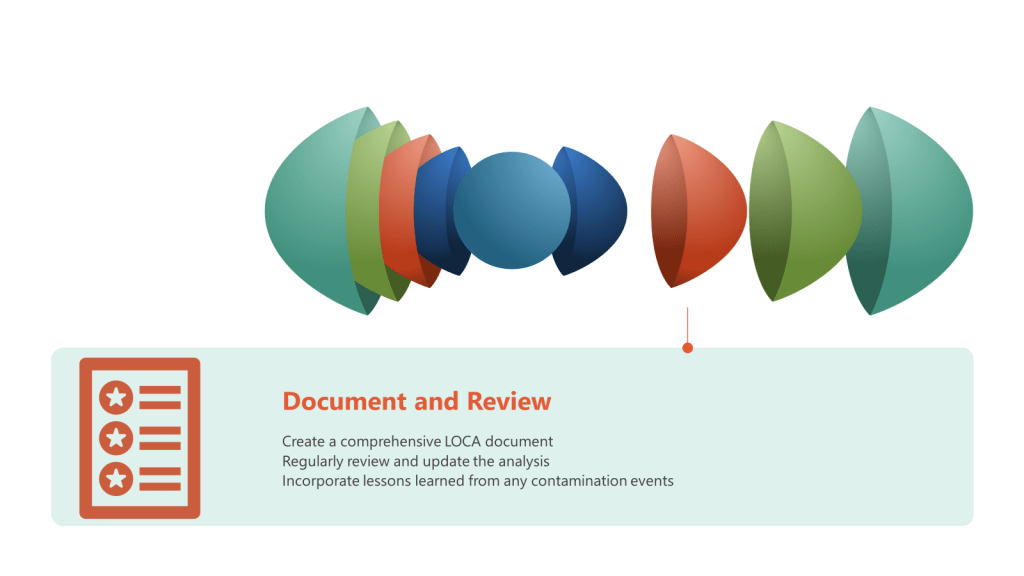
          1. Document and review:
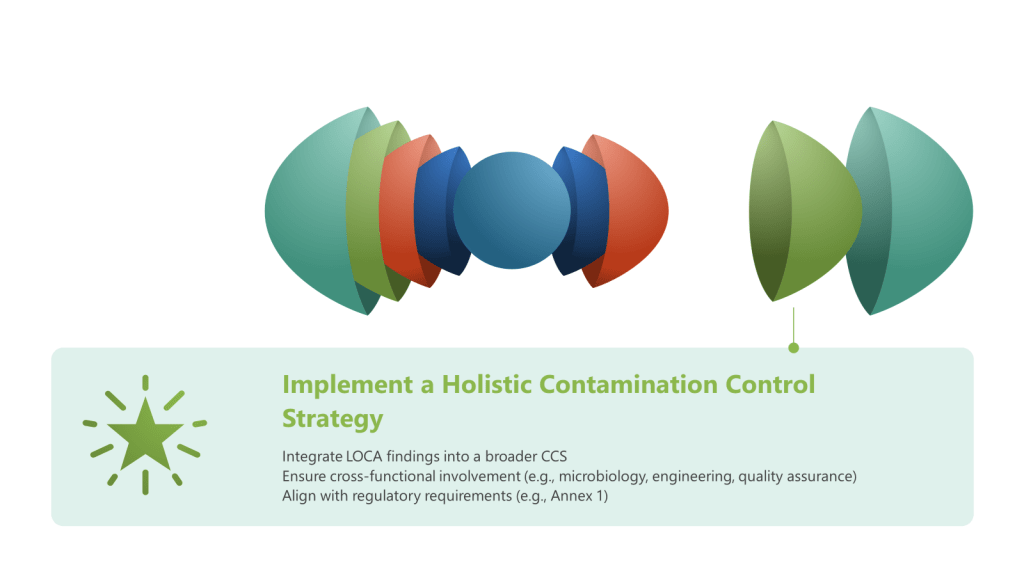
          1. Implement continuous monitoring and review:
          2. Develop a holistic CCS document:
            • Describe overall contamination control approach
            • Detail how different controls work together
            • Include risk assessments and rationales
          3. Establish governance and oversight:
            • Create a cross-functional CCS team
            • Define roles and responsibilities
            • Implement a regular review process
          4. Integrate with quality systems:
            • Align CCS with existing quality management processes
            • Ensure change control procedures consider CCS impact
          5. Provide comprehensive training:
            • Train all personnel on CCS principles and practices
            • Implement contamination control ambassador program
          1. Implement regular review cycles:
            • Schedule periodic reviews of the LOCA (e.g., annually or bi-annually)
            • Involve a cross-functional team including quality, manufacturing, and engineering
          2. Analyze trends and data:
            • Review environmental monitoring data
            • Examine out-of-specification results and their root causes
            • Assess the frequency and severity of contamination events
          3. Identify improvement opportunities:
            • Use gap analysis to compare current controls against industry best practices
            • Evaluate new technologies and methodologies for contamination control
            • Consider feedback from contamination control ambassadors and staff
          4. Prioritize improvements:
            • Rank proposed enhancements based on risk reduction potential and feasibility
            • Consider cost-benefit analysis for major changes
          5. Implement changes:
            • Update standard operating procedures (SOPs) as needed
            • Provide training on new or modified control measures
            • Validate changes to ensure effectiveness
          6. Monitor and measure impact:
            • Establish key performance indicators (KPIs) for each layer of control
            • Track improvements in contamination rates and overall control effectiveness
          7. Foster a culture of continuous improvement:
            • Encourage proactive reporting of potential issues
            • Recognize and reward staff contributions to contamination control
          8. Stay updated on regulatory requirements:
            • Regularly review and incorporate changes in regulations (e.g., EU GMP Annex 1)
            • Attend industry conferences and workshops on contamination control
          9. Integrate with overall quality systems:
            • Ensure LOCA improvements align with the site’s Quality Management System
            • Update the Contamination Control Strategy (CCS) document as needed
          10. Leverage technology:
            • Implement digital solutions for environmental monitoring and data analysis
            • Consider advanced technologies like rapid microbial detection methods
          11. Conduct periodic audits:
            • Perform surprise audits to ensure adherence to protocols
            • Use findings to further refine the LOCA and control measures

          Risk Management Addresses Uncertainty

          The ICH Q9 guideline on Quality Risk Management (QRM), including its revised version ICH Q9(R1), addresses the concept of uncertainty as a critical component in risk management within the pharmaceutical industry.

          Understanding Uncertainty in ICH Q9

          Uncertainty in the context of ICH Q9 refers to the lack of complete knowledge about a process and its expected or unexpected variability. This uncertainty can stem from various sources, including gaps in knowledge about pharmaceutical science, process understanding, and potential failure modes.

          Key Points on Uncertainty from ICH Q9(R1)

          Sources of Uncertainty:

            • Knowledge Gaps: Incomplete understanding of the scientific and technical aspects of processes.
            • Process Variability: Both expected and unexpected changes in process performance.
            • Failure Modes: Unidentified or poorly understood potential points of failure in processes or systems.

            Managing Uncertainty:

              • Risk-Based Decision Making: The guideline emphasizes that decisions should be made based on the level of uncertainty, importance, and complexity of the situation. This means that more formal and structured approaches should be used when uncertainty is high.
              • Formality in QRM: ICH Q9(R1) introduces the concept of formality as a spectrum, suggesting that the degree of formality in risk management activities should be commensurate with the level of uncertainty. Less formal methods may be appropriate for well-understood processes, while highly structured methods are necessary for areas with high uncertainty.

              Reducing Subjectivity:

                • The guideline acknowledges that subjectivity can impact the effectiveness of risk management. It recommends strategies to minimize subjectivity, such as using well-recognized risk assessment tools and involving cross-functional teams to provide diverse perspectives.

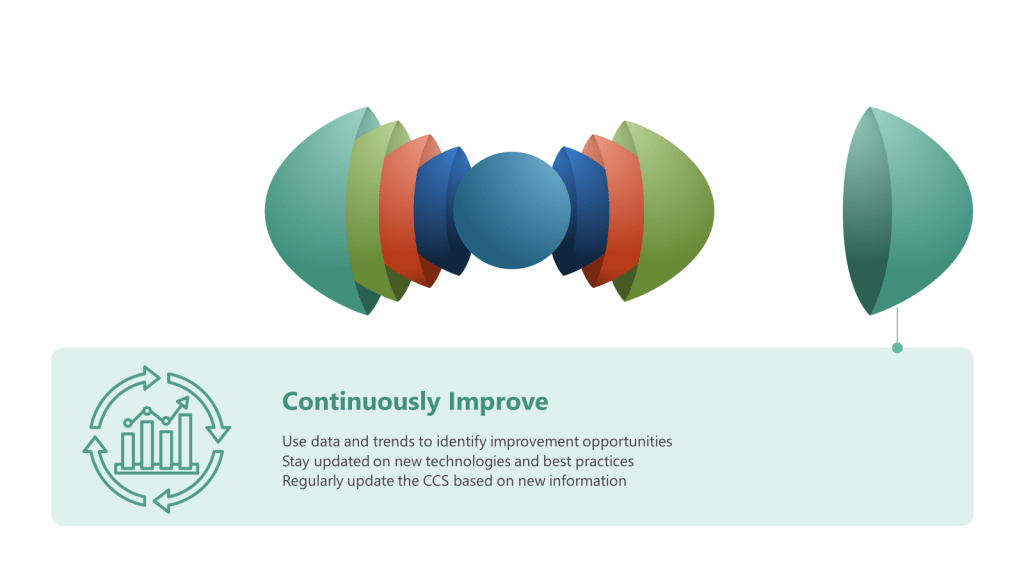
                Continuous Improvement:

                  • ICH Q9(R1) stresses the importance of continual improvement in risk management processes. This involves regularly updating risk assessments and control measures as new information becomes available, thereby reducing uncertainty over time.

                  Practical Implementation

                  In practice, managing uncertainty within the framework of ICH Q9 involves:

                  • Conducting thorough risk assessments to identify potential hazards and their associated risks.
                  • Applying appropriate risk control measures based on the level of uncertainty and the criticality of the process.
                  • Documenting and reviewing risk management activities to ensure they remain relevant and effective as new information is obtained.

                  Conclusion

                  The ICH Q9 approach to uncertainty underscores the importance of a structured, knowledge-based approach to risk management in the pharmaceutical industry. By addressing uncertainty through rigorous risk assessments and appropriate control measures, organizations can enhance the reliability and safety of their processes and products, ultimately safeguarding patient health and safety.

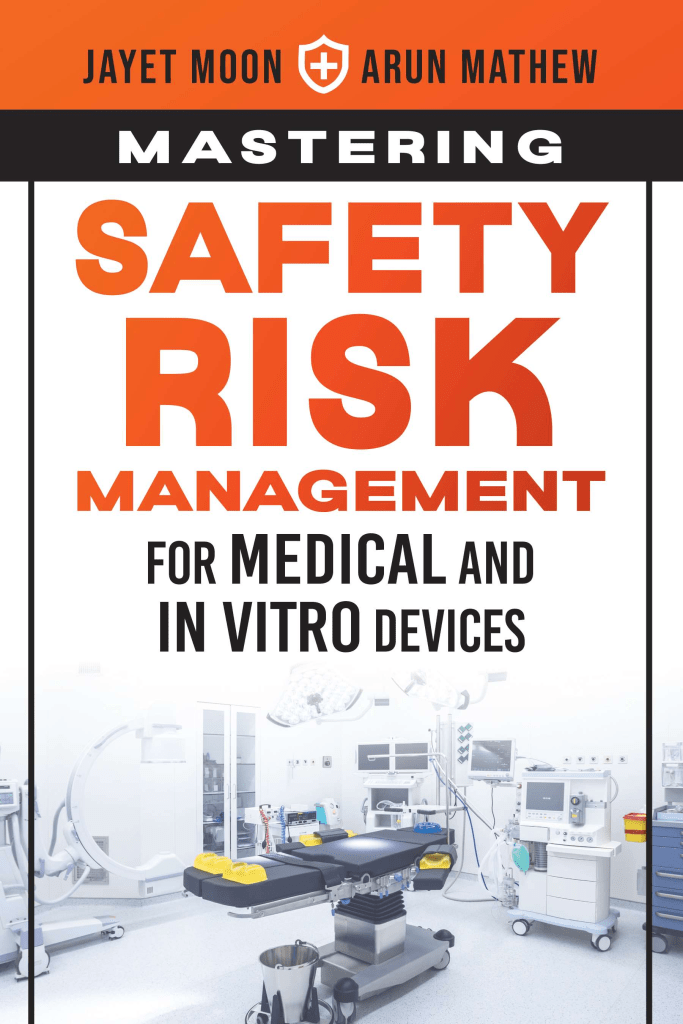
                  Quality Book Shelf: Mastering Safety Risk Management for Medical and In Vitro Devices

                  Disclaimer: I have had the privilege of being a former colleague of Jayet’s, and hold him in immense regard.

                  Mastering Safety Risk Management for Medical and In Vitro Devices by Jayet Moon and Arun Mathew is a comprehensive guide that addresses the critical aspects of risk management in medical and in vitro devices. This book is an essential resource for professionals involved in medical device design, production, and post-market phases, providing a structured approach to ensure product safety and regulatory compliance.

                  Starting with a solid overview of risk management principles that apply not only to medical devices under ISO13485 but will also teach pharmaceutical folks following ICH Q9 white a bit, this book delivers a heavy dose of knowledge and the benefit of wisdom in applying it.

                  The book then goes deep into the design assurance process, which is crucial for identifying, understanding, analyzing, and mitigating risks associated with healthcare product design. This foundational approach ensures that practitioners can perform a favorable benefit-risk assessment, which is vital for the safety and efficacy of medical devices.

                  Strengths

                  • Regulatory Compliance: The authors provide detailed guidance on conforming to major international standards such as ISO 13485:2016, ISO 14971:2019, the European Union Medical Device Regulation (MDR), In Vitro Diagnostic Regulation (IVDR), and the US FDA regulations, including the new FDA Quality Management System Regulation (QMSR).
                  • Risk Management Tools: The book offers a variety of tools and methodologies for effective risk management. These include risk analysis techniques, risk evaluation methods, and risk control measures, which are explained clearly and practically.
                  • Lifecycle Approach: One of the standout features of this book is its lifecycle approach to risk management. It emphasizes that risk management does not end with product design but continues through production and into the post-market phase, ensuring ongoing safety and performance.

                  The authors, Jayet Moon and Arun Mathew, bring their extensive experience in the field to bear, providing real-world examples and case studies that illustrate the application of risk management principles in various scenarios. This practical approach helps readers to understand how to implement the theoretical concepts discussed in the book. This book is essential for anyone working in medical devices and a good read for other quality life sciences professionals as there is much to draw on here.