On my.ASQ.org the following question was asked “The Device History Record is a form in fillable PDF format. Worker opens the PDF from a secure source within the local network. The only thing they can change is checkmark Pass/Fail, Yes/No and enter serial numbers in the allowed fields. Then after the assembly process is done for each procedure, the worker prints the DHR, signs and dates it by hand, to verify the accuracy of data entered. No re-printing or saving PDF’s is allowed.”
This comes up a lot. This is really a simple version of a hybrid situation, where both electronic and paper versions of the record exists.
Turning to the PIC/S draft guidance we find on page 44 of 52 “Each element of the hybrid system should be qualified and controlled in accordance with the guidance relating to manual and computerised systems”
Here would be my recommendation (and its one tried and tested).
The pdf form needs to be under the same document management system and controls as any other form. Ideally the exact same system. This provides version control and change management to the form. It also allows users to know they have the current version at all times.
Once it is printed, the paper version is the record. It has a wet-signature and it under all the same predicate record requirements. This record gets archived appropriately.
Where I have seen companies get messed up here is when the pdf exists in a separate, usually poorly controlled system from the rest of your document management. Situations like this should really be evaluated from the document management perspective and not the computer systems life-cycle perspective. But its all data integrity.
Having recently said farewell to a leader in our quality organization, I have been reflecting on quality leaders and what makes one great. As I often do, I look to standards, in this case the American Society of Quality (ASQ).
The Certified Manager of Quality/Organizational Excellence (CMQ/OE)leads and champions process improvement initiatives—that can have regional or global focus—in various service and industrial settings. A CMQ/OE facilitates and leads team efforts to establish and monitor customer/supplier relations,supports strategic planning and deployment initiatives, and helps develop measurement systems to determine organizational improvement.
The ASQ’s Certified Manager of Quality/Operation Excellence (CMQ/OE) body of knowledge‘s first section is on leadership.
To be honest, the current body of knowledge (bok) is a hodge-podge collection of stuff that is sort of related but often misses a real thematic underpinning. The bok (and the exam) could use a healthy dose of structure when laying out the principles of roles and responsibilities, change management, leadership techniques and empowerment.
There are fundamental skills to being a leader:
Shape a vision that is exciting and challenging for your team (or division/unit/organization).
Translate that vision into a clear strategy about what actions to take, and what not to do.
Recruit, develop, and reward a team of great people to carry out the strategy.
Focus on measurable results.
Foster innovation and learning to sustain your team (or organization) and grow new leaders.
Lead yourself — know yourself, improve yourself, and manage the appropriate balance in your own life.
In order to do these things a leader needs to demonstrate skills in communication, critical thinking, problem solving, and skills motivating and leading teams (and self).
The best leaders know a lot about the domain in which they are leading, and part of what makes them successful in a management role is technical competence. A Quality leader needs to know quality as a domain AND the domain of the industry they are within.
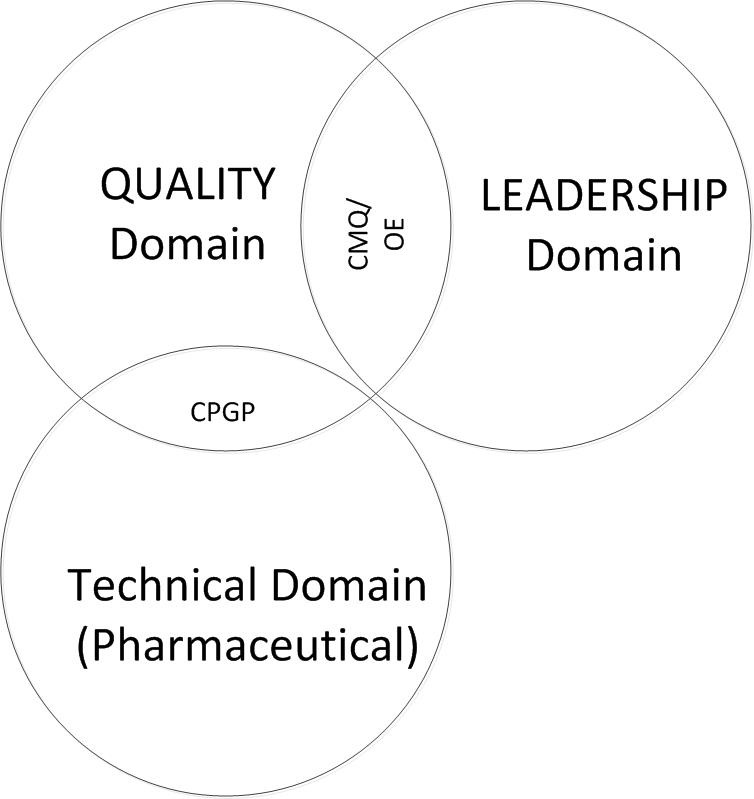
Three domains necessary for a quality leader
In my industry it is just not enough to know quality (for now we’ll define that as the ASQ BoK) nor is it enough to know pharmaceuticals (with regulatory being a subdomain). It is not enough just to have leadership skills. It is critical to be able to operate in all three areas.
To excel as a leader in practice, you also need a lot of expertise in a particular domain.
As an example, take the skill of thinking critically in order to find the essence of a situation. To do that well, you must have specific, technical expertise. The critical information an engineer needs to design a purification system is different from the knowledge used to understand drug safety, and both of those differ in important ways from what is needed to negotiate a good business deal.
When you begin to look at any of the core skills that leaders have, it quickly becomes clear that domain-specific expertise is bound up in all of them. And the domains of expertise required may also be fairly specific. Even business is not really a single domain. Leadership in pharmaceuticals, transportation, and internet (for example) all require a lot of specific knowledge.
Similarly, with only leadership and technical, you are going to fumble. Quality brings a set of practices necessary for success. A domain filled with analytical and decision making capabilities that cross-over with leadership (critical thinking and problem-solving) but are deepened with that perspective.
There are also other smaller domains, or flavors of domains. If I was building this model out more seriously I would have an interesting cluster of Health and Safety with Quality (the wider bucket of compliance even). I’m simplifying for this post.
Development of knowledge
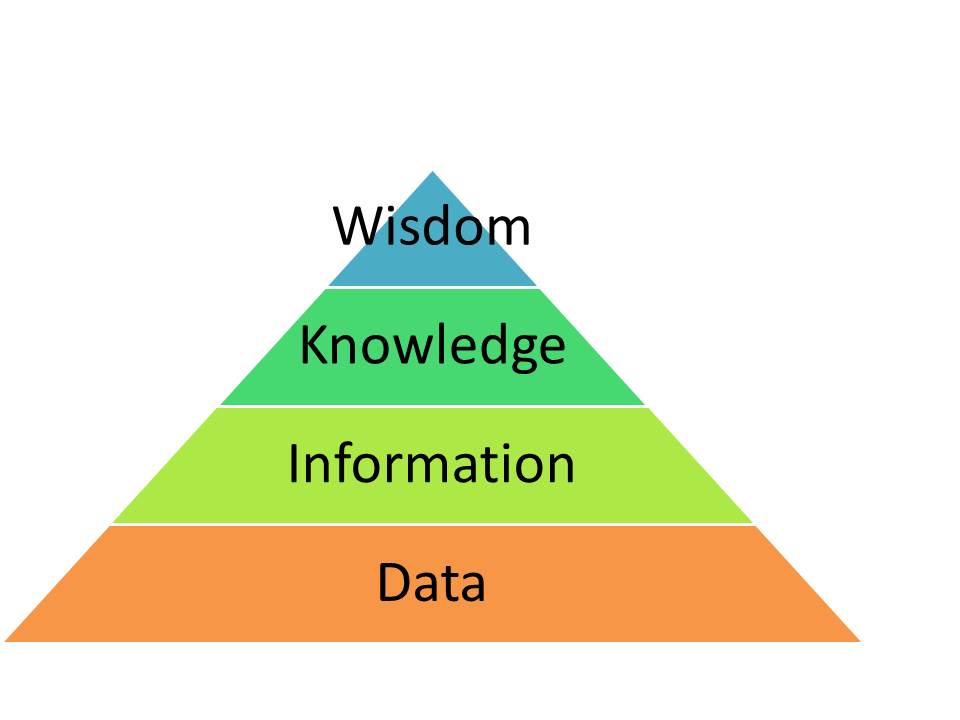
To go a step further. These three domains are critical for any quality professional. What changes is the development of wisdom and the widening of scope. This is why tenure is important. People need to be able to settle down and develop the skills they need to be successful in all three domains.
Good quality leaders recognize all this and look to build their organizations to reflect the growth of technical, quality and leadership domain.
I will be presenting at the ASQ Lean and Six Sigma Conference on March 5, 2019 on the topic “Training as Part of Lean Change Management.”
If you plan on being at the conference, let me know. I always enjoy sitting down with colleagues and chatting.
This topic unites three of my passions: change management, knowledge management and continuous improvements.
One of the key parts of any change stemming from a project is preparing people to actually do the work effectively. Every change needs to train and building valid and reliable training at the right level for the change is critical.
Training is valid when it is tied to the requirements of the job – the objectives; and when it includes evaluations that are linked to the skills and knowledge started in the objectives. Reliability means that the training clearly differentiates between those who can perform the task and those who cannot.
In this session we will take a risk based training approach to the best outcome for training. The following criteria will be examined and a tool provided for decision making:
Is a change in knowledge or skills needed to execute the changed process?
Is the process or change complex? Are there multiple changes?
Criticality of Process and risk of performance error? What is the difficulty in detecting errors?
What is the identified audience (e.g., location,size, department, single site vs. multiple sites)?
Is the goal to change workers conditioned behavior?
Armed with these criteria, participants will then be exposed to specific training tools to enable quick adoption of the training:reader-doer, pre-job briefings, and structured discussions. Advantages of each method, as well as common mistakes will be evaluated.
Knowledge management as a key enabler to lean improvements will be examined. Participants will gain an understanding of how to draw from their organizations formal and informal knowledge management systems, and gain an understanding a tool to ensure results of a lean project feedback into the knowledge management system.
Participants will leave this training with the ability to execute decision making around providing successful training for their lean projects and ensuring that this deepens their organization’s knowledge and the ability to apply that knowledge in the future.
The ASQ Voices of Quality roundup on change management was posted today. I wrote my thoughts last week. After reading all of the consolidated blog posts I have a few more thoughts:
Avoid being reductive on change management. Everyone focuses on people, and then mentions how hard it is. I think part of this is the lack of system thinking. People use processes in an organization enabled by technology.
If you only pull out change management for the transformational projects you aren’t exercising it enough. It needs to be built into all continuous improvement activities.
Change Management is enabled by knowledge management and risk management. Without these in place and well understood, change management will be much harder than it should be.
The ASQ has announced the theme for the 2019 World Conference On Quality And Improvement: “Leading Change”.
Change has always been constant, but in today’s digital landscape the pace of change is accelerating at a faster and faster rate. Within this dynamic is the opportunity for quality professionals to lead their organizations through the changes that each is destined to go through.
The 2018 theme, was the “Innovation of You,” with focus areas of “Building and Sustaining a Culture of Quality”, “Master’s Series”, “Quality 4.0: The Future of Quality Starts Here”, “Quality Fundamentals in the Digital Age” and “Risk and Change.”
The 2017 theme was “Grow Your Influence: In the Profession, Through the Organization and Around the World” with focus areas of “Focus on the Customer
Operational Excellence”, “Quality as a Competitive Advantage”, “Quality Fundamentals” and “Risk and Change.”
From this I draw the following opinion:
Change is perceived as hard
The future is murky
Culture of Quality is definitely something important (we might not be sure exactly what it is, but it is important!)
All of which are true. It also iterates what I fundamentally believe is a core function of quality. We drive change, we build a culture of excellence, we help navigate the future.
I enjoyed the 2018 ASQ WCQI in Seattle and will certainly plan on going whether as a speaker again or a participant. While I wish the ASQ would be the perfect organization of my dreams, I do deeply believe that an approach defined in the 2019 focus areas is one that brings a lot of value to any organization.
I have begun recommending co-workers submit this year, and I have a few ideas I am toying with myself. Proposals are due Aug. 17. I encourage you to be contemplating the best practices in your organization and be considering how you can share them with the wider quality world.



 Investigations of a Dog