One reason to invest in the CAPA program is that you will see fewer deviations over time as you fix issues. That is true, but it takes time. Yes, you’ve dealt with your backlog, improved your investigations, integrated risk management, built problem-solving into your processes, and are truly driving preventative actions. And yet your deviations remain high. What is going on?
It’s because you are getting good at things and working your way through the bolus of problems. Here’s what is going on:
Improved Detection and Reporting: As a CAPA program matures, it enhances an organization’s ability to detect and report deviations. Employees become more adept at identifying and documenting deviations due to better training and awareness, leading to a temporary increase in reported deviations.
Thorough Root Cause Analysis: A well-functioning CAPA program emphasizes thorough root cause analysis. This process often uncovers previously unnoticed issues and identifies additional deviations that need to be addressed.
Increased Scrutiny and Compliance: As the CAPA program gains momentum, management usually scrutinizes it more, which can lead to the discovery of more deviations. Organizations become more vigilant in maintaining compliance, resulting in more deviations being reported and documented.
Systematic Process Improvements: The CAPA process often leads to systemic improvements in processes and procedures. As these improvements are implemented, any deviations from the new standards are more likely to be identified and recorded, contributing to an initial rise in deviation reports.
Cultural Shift Towards Quality: A successful CAPA program fosters a culture of quality and continuous improvement. Employees may feel more empowered and responsible for reporting deviations, increasing the number of deviations captured.
Expect these changes and build your metric program around them. Avoid introducing a metric like a reduction in deviations in the first year, as such a metric will drive bad behavior. Instead, focus on metrics that demonstrate the success of the changes and, over time, introduce metrics to see the overall benefits.
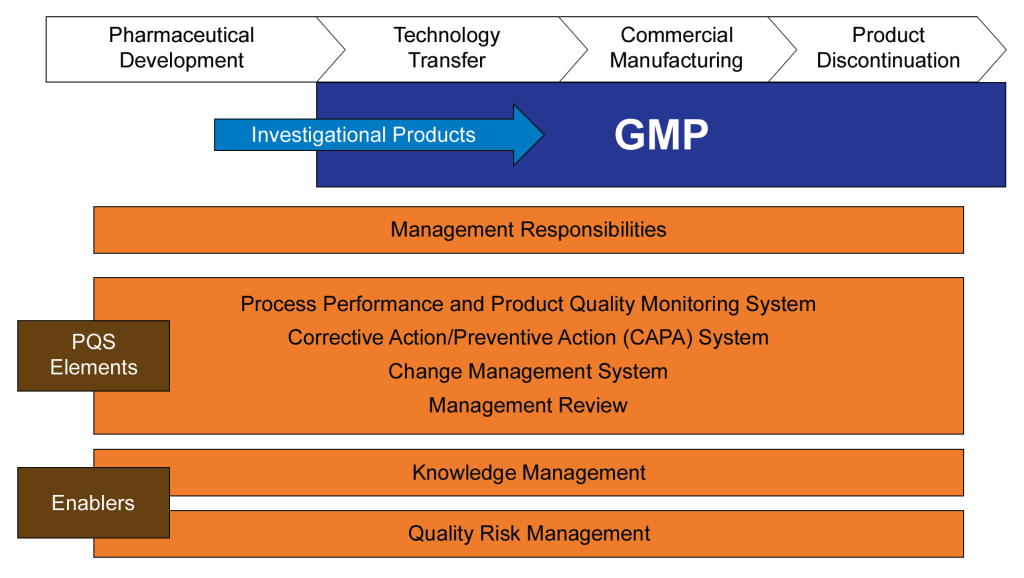
The International Conference on Harmonization (ICH) was established to harmonize the technical requirements for pharmaceutical product registration across Europe, Japan, and the United States. ICH Q10, finalized in June 2008, emerged from this initiative as a guideline for a comprehensive Pharmaceutical Quality System (PQS) applicable throughout the product lifecycle. It was adopted by the FDA in April 2009, following its implementation by the European Commission in July 2008.
ICH Q10 aims to provide a model for pharmaceutical manufacturers to develop and maintain effective quality management systems. The guideline emphasizes a lifecycle approach, integrating quality management principles from ISO standards and regional GMP requirements. The primary objectives of ICH Q10 include:
Ensuring consistent product quality that meets customer and regulatory requirements.
Establishing effective monitoring and control systems for process performance and product quality.
Promoting continual improvement and innovation throughout the product lifecycle.
The guideline outlines the key elements of management responsibilities, Corrective and Preventive Action (CAPA) , process performance and product quality monitoring, change management, and management review. ICH Q10 is usually considered part of the “Quality Trio” with ICH Q8 and Q9. Quality by design is only possible through proper risk management and a robust quality system.
FDA Guidance for Industry on Quality Systems Approach to Pharmaceutical CGMP Regulation
The FDA developed guidance on implementing modern quality systems and risk management practices to align with the CGMP (Current Good Manufacturing Practice) requirements outlined in parts 210 and 211 of the FDA regulations. These regulations govern the manufacturing of human and veterinary drugs, including biological products. Published in 2006, this guidance should be viewed as part of a continuum of thought with ICH Q10 and not as an earlier draft.
This guidance aims to assist manufacturers in meeting cGMP requirements by adopting a comprehensive quality systems model. It emphasizes the integration of quality systems with regulatory requirements to ensure full compliance without imposing new expectations on manufacturers. Key aspects of the guidance include:
Highlighting the consistency of the quality systems model with cGMP regulations.
Encouraging the use of risk management and quality systems to enhance compliance and product quality.
Providing a framework for manufacturers to gain control over their manufacturing processes.
Six-System Inspection Model
The FDA’s Six-System Inspection Model is a framework introduced in this guidance to ensure compliance with current Good Manufacturing Practice (CGMP) regulations in the pharmaceutical industry. This model helps FDA inspectors evaluate the robustness of a company’s quality management system by focusing on six key subsystems.
I am a huge fan of the six subsystem approach. Basically we have here the organization of the quality manual, a guide to what standards you need to write in a bigger company, and a franework for understanding the cGMPs as a whole (great for education purposes).
Here’s a detailed explanation of each subsystem:
1. Quality System
Role: Acts as the central hub for all other systems, ensuring overall quality management.
Focus: Management responsibilities, internal audits, CAPA (Corrective and Preventive Actions), and continuous improvement.
Importance: Ensures that all other systems are effectively integrated and managed to maintain product quality and regulatory compliance.
2. Facilities and Equipment System
Role: Ensures that facilities and equipment are suitable for their intended use and maintained properly.
Focus: Design, maintenance, cleaning, and calibration of facilities and equipment.
Importance: Prevents contamination and ensures consistent manufacturing conditions.
3. Materials System
Role: Manages the control of raw materials, components, and packaging materials.
Focus: Supplier qualification, receipt, storage, inventory control, and testing of materials.
Importance: Ensures that only high-quality materials are used in the manufacturing process, reducing the risk of product defects.
4. Production System
Role: Oversees the actual manufacturing processes.
Focus: Process controls, batch records, in-process controls, and validation.
Importance: Ensures that products are manufactured consistently and meet predefined quality criteria.
5. Packaging and Labeling System
Role: Manages the packaging and labeling processes to ensure correct and compliant product presentation.
Focus: Label control, packaging operations, and labeling verification.
Importance: Prevents mix-ups and ensures that products are correctly identified and used.
6. Laboratory Controls System
Role: Ensures the reliability of laboratory testing and data integrity.
Focus: Sampling, testing, analytical method validation, and laboratory records.
Importance: Verifies that products meet quality specifications before release.
Integration and Interdependence
Quality System as the Fulcrum: The quality system is the central element that integrates all other subsystems. It ensures that each subsystem functions correctly and is aligned with overall quality objectives.
State of Control: The primary goal of the six-system inspection model is to ensure that each subsystem is in a state of control, meaning it operates within predefined limits and consistently produces the desired outcomes.
The Six-System Inspection Model provides a structured approach for FDA inspectors to assess the compliance and effectiveness of a pharmaceutical company’s quality management system. By focusing on these six subsystems, the FDA ensures that all aspects of manufacturing, from raw materials to final product testing, are adequately controlled and managed to maintain high standards of product quality and safety.
A Complementary and Holistic Approach
Both ICH Q10 and the FDA’s guidance on quality systems approach aim to enhance the quality and safety of pharmaceutical products through robust quality management systems. ICH Q10 provides a harmonized model applicable across the product lifecycle, while the FDA guidance focuses on integrating quality systems with existing CGMP regulations. Together, they support the pharmaceutical industry in achieving consistent product quality and regulatory compliance.
Aspect
ICH Q10
FDA Guidance on CGMP
ISO 13485 and 21 CFR 820
ISO 9000
Purpose and Scope
Comprehensive model for pharmaceutical quality systems across the product lifecycle.
Quality systems approach to ensure CGMP compliance in pharmaceuticals.
Quality management system for medical devices, incorporating ISO 13485 and regulatory requirements of 21 CFR 820.
Fundamentals and vocabulary for quality management systems applicable to any industry.
Industry Focus
Specifically for the pharmaceutical industry.
Specifically for the pharmaceutical industry.
Specifically for the medical device industry.
Applicable to any industry.
Key Elements
Management responsibilities, CAPA, process performance, change management, management review.
Management responsibilities, quality systems, process validation, continuous improvement.
Quality management principles, terms, and definitions.
Regulatory Focus
Strong emphasis on regulatory compliance and lifecycle management.
Strong emphasis on regulatory compliance with CGMP.
Incorporates regulatory requirements specific to medical devices (21 CFR 820).
Does not directly address regulatory compliance.
Flexibility
Flexible, adaptable to specific product and process needs.
More prescriptive with specific compliance requirements.
Harmonized with international standards but includes specific regulatory requirements.
Provides a broad framework for customization.
Management Involvement
Emphasizes management’s role in quality and regulatory compliance.
Emphasizes management’s role in quality and CGMP integration.
Emphasizes management’s role in quality and risk-based decision making.
Emphasizes management’s role in quality and customer satisfaction.
Implementation
Tailored to pharmaceutical manufacturing, integrating quality management principles.
Mandates oversight and controls over drug manufacturing processes.
Requires a quality manual and specific documentation practices; aligned with international standards.
Requires customization to specific industry needs.
These two documents were developed at the same time and represents the thinking twenty years ago in laying down an approach that still matters today. I usually regard the six system approach as a deepening and defining of what Q10 means by process performance and product quality monitoring.
What is the current agency thinking?
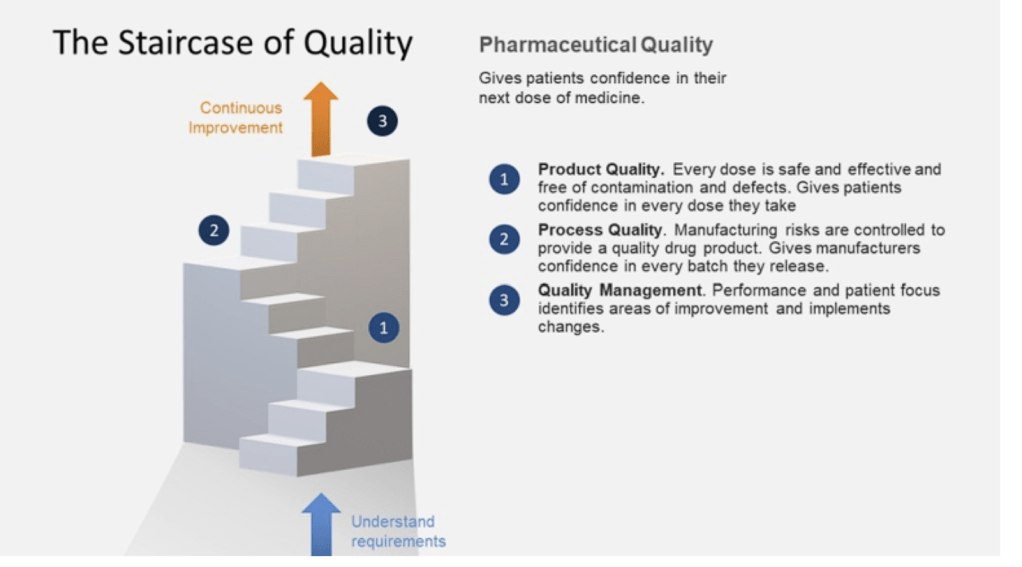
The FDA and other revulatory agencies haven’t stopped their thinking in 2008. Sixteen years later we see the continued push for quality culture and quality maturity. The FDA continues to make this a top priority, as we’ve been seeing in their annual drug shortage reports to Congress. There are a few themes we continue to see driven home.
The Patient is the Customer
Quality management must be customer-focused, ensuring that all processes and materials meet their intended use. Senior management’s commitment is crucial for a strong QMS, which emphasizes proactive quality assurance over reactive quality control. Robust supplier relationships and oversight programs are essential to manage variability in materials and processes.
This application of a core priciple in ISO 9000 may seem to basic to some, but I think it is central to a lot of messaging and should never be taken for granted.
Benefits of Better Quality Performance
A continued focus that a quality-focused culture leads to:
Early problem detection
Enhanced process stability and productivity
Fewer major deviations and failures
Efficient QA release of batches
Reduced customer complaints and returns
Protection of brand and competitiveness
Management Oversight of Drug Quality
Management must address sources of variability, including people, materials, methods, measurements, machines, and environment. Risk management should be dynamic and ongoing, facilitating continual learning and improvement.
Corrective Action and Preventive Action (CAPA)
A structured approach to investigating complaints, product rejections, nonconformances, recalls, deviations, audits, regulatory inspections, and trends is essential. CAPA should determine root causes and implement corrective actions.
Change Management
Timely and effective change management ensures corrections and improvements are undertaken efficiently. This includes implementing product quality improvements, process improvements, variability reduction, innovations, and pharmaceutical quality system enhancements.
Management Review
Management is responsible for quality policy, QMS effectiveness, internal communications, resource management, and supply chain oversight. This includes ensuring the quality of incoming materials and outsourced activities.
Quality Culture Driven by Top Management
A strong corporate quality culture is driven by daily decisions and executive oversight. Sustainable compliance requires aiming for high standards rather than just meeting minimum requirements. Quality management maturity involves proactive and preventive actions, iterative learning, and leveraging modern technologies.
Facility Lifecycle
Senior management must ensure the suitability of operational design, control, and maintenance. This includes addressing infrastructure reliability, appropriateness for new product demands, and mitigating equipment/facility degradation.
Risk Management in Manufacturing
Human factors and manual interventions pose significant risks in pharmaceutical manufacturing. Automation and separation technologies can mitigate these risks, but many facilities still rely on manually intensive processes. Leveraging new technologies and practices is a huge opportunity.
This approach is reflected in the FDA’s Quality Management Maturity (QMM), which promotes advanced quality management practices within drug manufacturing establishments.
Goals of the QMM Program
Foster a Strong Quality Culture Mindset: Encourage establishments to integrate quality deeply into their organizational culture.
Recognize Advanced Quality Management Practices: Acknowledge and reward establishments that go beyond basic CGMP (Current Good Manufacturing Practices) requirements.
Identify Growth Opportunities: Provide suggestions for enhancing quality management practices.
Minimize Risks to Product Availability: Ensure a reliable market supply by reducing quality-related failures and maintaining performance during supply chain disruptions.
Key Components of the QMM Program
Management Commitment to Quality: Leadership must prioritize quality, set clear objectives, and integrate these with business goals. Effective management review processes are crucial.
Business Continuity: Establishments should develop robust plans to handle disruptions, ensuring consistent operations and supply chain reliability.
Advanced Pharmaceutical Quality System (PQS): Implementing quality principles like Quality by Design (QbD) and risk management approaches to maintain system reliability and minimize production disruptions.
Technical Excellence: Emphasizing data management, innovative manufacturing processes, and advanced technologies to enhance quality and operational efficiency.
Employee Engagement and Empowerment: Encouraging employees to take ownership of quality, make suggestions, and understand their impact on product quality and patient safety.
Implementation and Assessment
The FDA has developed a prototype assessment protocol to evaluate QMM. This includes a standardized approach to minimize bias and ensure objectivity. Someday, eventually, it will move away from constant prototyping.
Assessments will focus on qualitative aspects, such as the establishment’s quality culture and how it uses data to drive improvements.
Benefits of QMM
Enhanced Supply Chain Reliability: By adopting mature quality management practices, establishments can reduce the occurrence of quality-related failures. The fact shortages continue to be so damning to our industry is a huge wake-up call.
Proactive Continual Improvement: Encourages a proactive approach to quality management, leveraging technological advancements and integrated business operations.
Long-term Cost Savings: Investing in a mature quality culture can lead to fewer compliance issues, reduced inspection needs, and overall cost reductions.
Conclusion
The FDA’s QMM program aims to transform how pharmaceutical quality is perceived, measured, and rewarded. The program seeks to ensure a more reliable drug supply and better patient outcomes by fostering a strong quality culture and recognizing advanced practices. It should be seen as part of a 20-year commitment from the agency in alignment with its international partners.
A deviation backlog in a regulated industry, such as pharmaceuticals, can pose significant risks to compliance, product quality, and overall operational efficiency. Addressing this backlog effectively requires a structured approach that prioritizes risk management, resource allocation, and continuous improvement.
You need to do two things first:
Prioritize Urgent Requests
Identify Critical Issues: Focus on resolving high-priority and time-sensitive deviations first to drive compliance.
Isolate and Organize
Separate Backlog from Ongoing Deviations: Create distinct queues for backlog deviations and new deviations to streamline management.
Create a Backlog Team: Assign a dedicated team to tackle the backlog, ensuring that regular support operations continue smoothly.
From there, you can then proceed into the next steps to tackle a deviation backlog:
1. Prioritize Based on Risk
Not all deviations have the same impact. Prioritizing the backlog based on the severity and risk part of each deviation is crucial. This involves:
Assessing Severity: Evaluate the potential impact of each deviation on product quality, patient safety, and regulatory compliance. Ideally you already classify deviations into categories such as minor, moderate, and major. based on those you will need to additional work to prioritize the backlog.
Risk-Based Approach: Focus on resolving high-risk deviations first to mitigate the most critical issues promptly.
2. Allocate Adequate Resources
Addressing a backlog efficiently often requires additional resources. Consider the following actions:
Increase Staffing: Temporarily augment your team with additional personnel or external consultants to handle the increased workload.
Specialized Teams: Form dedicated teams to focus solely on backlog reduction, ensuring that regular operations are not disrupted.
3. Improve and Make Robust Deviation Management Processes
A systematic approach to deviation management helps prevent backlogs from recurring. Key steps include:
Root Cause Analysis (RCA): Conduct thorough investigations to identify the underlying causes of deviations.
Corrective and Preventive Actions (CAPA): Develop and implement CAPA plans to address root causes and prevent future deviations. Ensure these plans are reviewed and approved by relevant stakeholders.
4. Regular Monitoring and Review
Continuous monitoring and regular reviews are essential to keep the backlog under control:
Track Progress: Use metrics and key performance indicators (KPIs) to monitor the progress of backlog reduction efforts. Tools like burndown charts can be helpful.
Periodic Reviews: Conduct regular review meetings to assess the status of the backlog and make necessary adjustments to the plan.
5. Enhance Deviation Management Systems
Improving your deviation management system can prevent future backlogs and streamline the resolution process:
Automation and Software Tools: Implement a eQMS or evaluate and improve the current one.
Training and Education: Ensure that all employees are well-trained in deviation management processes and understand the importance of timely reporting and resolution.
Promote a culture that values continuous improvement and proactive problem-solving:
Encourage Reporting: Create an environment where employees feel comfortable reporting deviations without fear of retribution.
Learn from Deviations: Analyze deviation trends to identify areas for process improvement and implement changes to prevent recurrence.
7. Set Clear Goals and Deadlines
Establish clear goals and deadlines for backlog reduction:
Set Due Dates: Assign due dates for resolving backlog items to ensure timely action. Items that exceed their due dates should be reviewed and either expedited or reassessed for relevance.
Regular Updates: Keep all stakeholders informed about the progress and any changes to the plan through regular updates and communication.
Conclusion
Addressing a deviation backlog effectively requires a combination of prioritization, resource allocation, robust processes, continuous monitoring, and a culture of improvement. By implementing these strategies, organizations can reduce their backlog, improve compliance, and enhance overall product quality and safety.
Occasionally the FDA writes a Warning Letter that is a succinct lesson in what is important about a quality system. In this Warning Letter they masterfully describe what a CAPA Program is. As this one further describes how to deal with an inadequate cleaning program it is near and dear to my heart.
Being good at problem-solving is critical to success in an organization. I’ve written quite a bit on problem-solving, but here I want to tackle the amount of effort we should apply.
It helps to look at problems systematically across our organization. The iceberg analogy is a pretty popular way to break this done focusing on Events, Patterns, Underlying Structure, and Mental Model.
Iceberg analogy
Events
Events start with the observation or discovery of a situation that is different in some way. What is being observed is a symptom and we want to quickly identify the problem and then determine the effort needed to address it.
This is where Art Smalley’s Four Types of Problems comes in handy to help us take a risk-based approach to determining our level of effort.
Type 1 problems, Troubleshooting, allows us to set problems with a clear understanding of the issue and a clear pathway. Have a flat tire? Fix it. Have a document error, fix it using good documentation practices.
It is valuable to work the way through common troubleshooting and ensure the appropriate linkages between the different processes, to ensure a system-wide approach to problem solving.
Corrective maintenance is a great example of troubleshooting as it involved restoring the original state of an asset. It includes documentation, a return to service and analysis of data. From that analysis of data problems are identified which require going deeper into problem-solving. It should have appropriate tie-ins to evaluate when the impact of an asset breaking leads to other problems (for example, impact to product) which can also require additional problem-solving.
It can be helpful for the organization to build decision trees that can help folks decide if a given problem stays as troubleshooting or if it it also requires going to type 2, “gap from standard.”
Type 2 problems, gap from standard, means that the actual result does not meet the expected and there is a potential of not meeting the core requirements (objectives) of the process, product, or service. This is the place we start deeper problem-solving, including root cause analysis.
Please note that often troubleshooting is done in a type 2 problem. We often call that a correction. If the bioreactor cannot maintain temperature during a run, that is a type 2 problem but I am certainly going to immediately apply troubleshooting as well. This is called a correction.
Take documentation errors. There is a practice in place, part of good documentation practices, for addressing troubleshooting around documents (how to correct, how to record a comment, etc). By working through the various ways documentation can go wrong, applying which ones are solved through troubleshooting and don’t involve type 2 problems, we can create a lot of noise in our system.
Trends/Patterns
Core to the quality system is trending, looking for possible signals that require additional effort. Trending can help determine where problems lay and can also drive up the level of effort necessary.
Underlying Structure
Root Cause Analysis is about finding the underlying structure of the problem that defines the work applied to a type 2 problem.
Not all problems require the same amount of effort, and type 2 problems really have a scale based on consequences, that can help drive the level of effort. This should be based on the impact to the organization’s ability to meet the quality objectives, the requirements behind the product or service.
For example, in the pharma world there are three major criteria:
safety, rights, or well-being of patients (including subjects and participants human and non-human)
data integrity (includes confidence in the results, outcome, or decision dependent on the data)
ability to meet regulatory requirements (which stem from but can be a lot broader than the first two)
These three criteria can be sliced and diced a lot of ways, but serve our example well.
To these three criteria we add a scale of possible harm to derive our criticality, an example can look like this:
The event has resulted in, or is clearly likely to result in, any one of the following outcomes: significant harm to the safety, rights, or well-being of subjects or participants (human or non-human), or patients; compromised data integrity to the extent that confidence in the results, outcome, or decision dependent on the data is significantly impacted; or regulatory action against the company.
Major
The event(s), were they to persist over time or become more serious, could potentially, though not imminently, result in any one of the following outcomes: harm to the safety, rights, or well-being of subjects or participants (human or non-human), or patients; compromised data integrity to the extent that confidence in the results, outcome, or decision dependent on the data is significantly impacted.
Minor
An isolated or recurring triggering event that does not otherwise meet the definitions of Critical or Major quality impacts.
Example of Classification of Events in a Pharmaceutical Quality System
This level of classification will drive the level of effort on the investigation, as well as drive if the CAPA addresses underlying structures alone or drives to addressing the mental models and thus driving culture change.
Mental Model
Here is where we address building a quality culture. In CAPA lingo this is usually more a preventive action than a corrective action. In the simplest of terms, corrective actions is address the underlying structures of the problem in the process/asset where the event happened. Preventive actions deal with underlying structures in other (usually related) process/assets or get to the Mindsets that allowed the underlying structures to exist in the first place.
Solving Problems Systematically
By applying this system perspective to our problem solving, by realizing that not everything needs a complete rebuild of the foundation, by looking holistically across our systems, we can ensure that we are driving a level of effort to truly build the house of quality.



 Investigations of a Dog