
Two Paths in Our Regulatory World: Leading Through Strategic Engagement

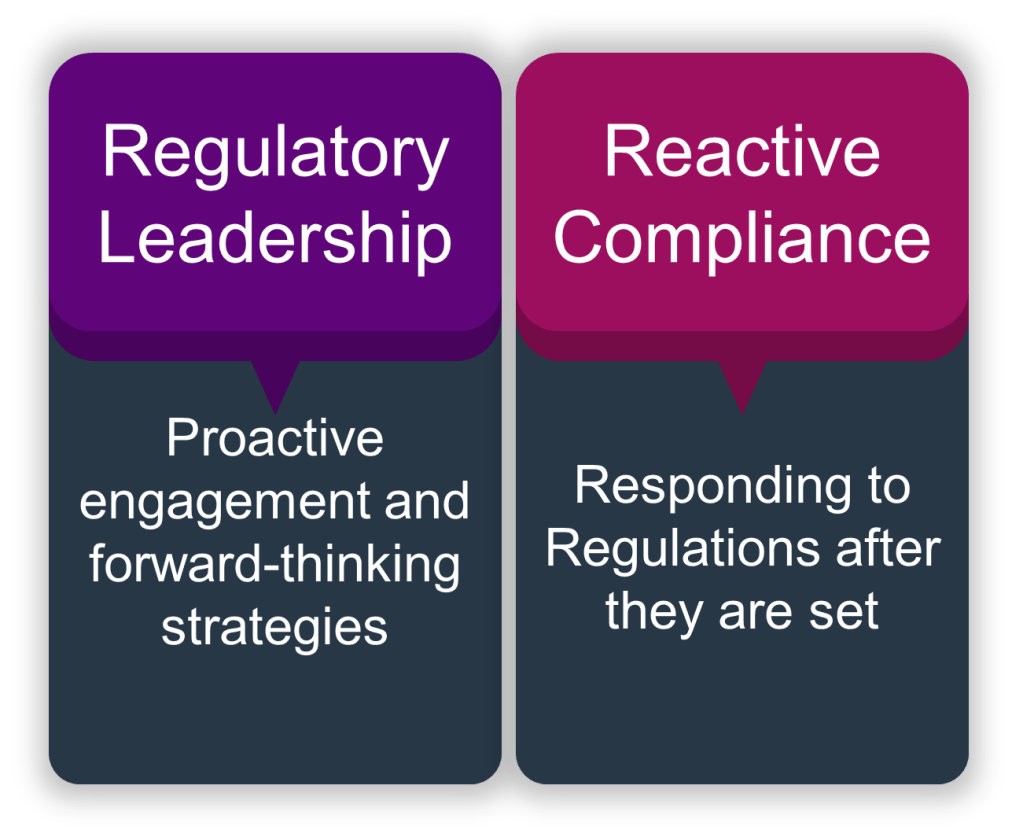
In pharmaceutical quality, we face a fundamental choice that defines our trajectory: we can either help set the direction of our regulatory landscape, or we can struggle to keep up with changes imposed upon us. As quality leaders, this choice isn’t just about compliance—it’s about positioning our organizations to drive meaningful change while delivering better patient outcomes.

The reactive compliance mindset has dominated our industry for too long, where companies view regulators as adversaries and quality as a cost center. This approach treats regulatory guidance as something that happens to us rather than something we actively shape. Companies operating in this mode find themselves perpetually behind the curve, scrambling to interpret new requirements, implement last-minute changes, and justify their approaches to skeptical regulators.

But there’s another way—one where quality professionals actively engage with the regulatory ecosystem to influence the development of standards before they become mandates.
The Strategic Value of Industry Group Engagement

Organizations like BioPhorum, NIIMBL, ISPE, and PDA represent far more than networking opportunities—they are the laboratories where tomorrow’s regulatory expectations are forged today. These groups don’t just discuss new regulations; they actively participate in defining what excellence looks like through standard-setting initiatives, white papers, and direct dialogue with regulatory authorities.

BioPhorum, with its collaborative network of 160+ manufacturers and suppliers deploying over 7,500 subject matter experts, demonstrates the power of collective engagement. Their success stories speak to tangible outcomes: harmonized approaches to routine environmental monitoring that save weeks on setup time, product yield improvements of up to 44%, and flexible manufacturing lines that reduce costs while maintaining regulatory compliance. Most significantly, their quality phorum launched in 2024 provides a dedicated space for quality professionals to collaborate on shared industry challenges.

NIIMBL exemplifies the strategic integration of industry voices with federal priorities, bringing together pharmaceutical manufacturers with academic institutions and government agencies to advance biopharmaceutical manufacturing standards. Their public-private partnership model demonstrates how industry engagement can shape policy while advancing technical capabilities that benefit all stakeholders.

ISPE and PDA provide complementary platforms where technical expertise translates into regulatory influence. Through their guidance documents, technical reports, and direct responses to regulatory initiatives, these organizations ensure that industry perspectives inform regulatory development. Their members don’t just consume regulatory intelligence—they help create it.

The Big Company Advantage—And Why Smaller Companies Must Close This Gap

Large pharmaceutical companies understand this dynamic intuitively. They maintain dedicated teams whose sole purpose is to engage with these industry groups, contribute to standard-setting activities, and maintain ongoing relationships with regulatory authorities. They recognize that regulatory intelligence isn’t just about monitoring changes—it’s about influencing the trajectory of those changes before they become requirements.

The asymmetry is stark: while multinational corporations deploy key leaders to these forums, smaller innovative companies often view such engagement as a luxury they cannot afford. This creates a dangerous gap where the voices shaping regulatory policy come predominantly from established players, potentially disadvantaging the very companies driving the most innovative therapeutic approaches.

But here’s the critical insight from my experience working with quality systems: smaller companies cannot afford NOT to be at these tables. When you’re operating with limited resources, you need every advantage in predicting regulatory direction, understanding emerging expectations, and building the credibility that comes from being recognized as a thoughtful contributor to industry discourse.

Consider the TESTED framework I’ve previously discussed—structured hypothesis formation requires deep understanding of regulatory thinking that only comes from being embedded in these conversations. When BioPhorum members collaborate on cleaning validation approaches or manufacturing flexibility standards, they’re not just sharing best practices—they’re establishing the scientific foundation for future regulatory expectations. When the ISPE comes out with a new good practice guide they are doing the same. The list goes on.

Making the Business Case: Job Descriptions and Performance Evaluation

Good regulatory intelligence practices requires systematically building this engagement into our organizational DNA. This means making industry participation an explicit component of senior quality roles and measuring our leaders’ contributions to the broader regulatory dialogue.

For quality directors and above, job descriptions should explicitly include:

  • Active participation in relevant industry working groups and technical committees
  • Contribution to industry white papers, guidance documents, and technical reports
  • Maintenance of productive relationships with regulatory authorities through formal and informal channels
  • Intelligence gathering and strategic assessment of emerging regulatory trends
  • Internal education and capability building based on industry insights

Performance evaluations must reflect these priorities:

  • Measure contributions to industry publications and standard-setting activities
  • Assess the quality and strategic value of regulatory intelligence gathered through industry networks
  • Evaluate success in anticipating and preparing for regulatory changes before they become requirements
  • Track the organization’s reputation within industry forums as a thoughtful contributor

This isn’t about checking boxes or accumulating conference attendance credits. It’s about recognizing that in our interconnected regulatory environment, isolation equals irrelevance. The companies that will thrive in tomorrow’s regulatory landscape are those whose leaders are actively shaping that landscape today.

Development plans for individuals should have clear milestones based on these requirements, so as individuals work their way up in an organization they are building good behaviors.

The Competitive Advantage of Regulatory Leadership

When we engage strategically with industry groups, we gain access to three critical advantages that reactive companies lack. First, predictive intelligence—understanding not just what regulations say today, but where regulatory thinking is headed. Second, credibility capital—the trust that comes from being recognized as a thoughtful contributor rather than a passive recipient of regulatory requirements. Third, collaborative problem-solving—access to the collective expertise needed to address complex quality challenges that no single organization can solve alone.

The pharmaceutical industry is moving toward more sophisticated quality metrics, risk-based approaches, and integrated lifecycle management. Companies that help develop these approaches will implement them more effectively than those who wait for guidance to arrive as mandates.c

As I’ve explored in previous discussions of hypothesis-driven quality systems, the future belongs to organizations that can move beyond compliance toward genuine quality leadership. This requires not just technical excellence, but strategic engagement with the regulatory ecosystem that shapes our industry’s direction.

The choice is ours: we can continue struggling to keep up with changes imposed upon us, or we can help set the direction through strategic engagement with the organizations and forums that define excellence in our field. For senior quality leaders, this isn’t just a career opportunity—it’s a strategic imperative that directly impacts our organizations’ ability to deliver innovative therapies to patients who need them.

The bandwidth required for this engagement isn’t overhead—it’s investment in the intelligence and relationships that make everything else we do more effective. In a world where regulatory agility determines competitive advantage, being at the table where standards are set isn’t optional—it’s essential.

Worker’s Rights: The Bedrock of True Quality Management – A May Day Reflection

As we celebrate International Workers’ Day this May 1st, it is an opportune moment to reflect on the profound connection between workers’ rights and effective quality management. The pursuit of quality cannot be separated from how we treat, empower, and respect the rights of those who create that quality daily. Today’s post examines this critical relationship, drawing from the principles I’ve advocated throughout my blog, and challenges us to reimagine quality management as fundamentally worker-centered.

The Historical Connection Between Workers’ Rights and Quality

International Workers’ Day commemorates the historic struggles and gains made by workers and the labor movement. This celebration reminds us that the evolution of quality management has paralleled the fight for workers’ rights. Quality is inherently a progressive endeavor, fundamentally anti-Taylorist in nature. Frederick Taylor’s scientific management approach reduced workers to interchangeable parts in a machine, stripping them of autonomy and creativity – precisely the opposite of what modern quality management demands.

The quality movement, from Deming onwards, has recognized that treating workers as mere cogs undermines the very foundations of quality. When we champion human rights and center those whose rights are challenged, we’re not engaging in politics separate from quality – we’re acknowledging the fundamental truth that quality cannot exist without empowered, respected workers.

Driving Out Fear: The Essential Quality Right

“No one can put in his best performance unless he feels secure,” wrote Deming thirty-five years ago. Yet today, fear remains ubiquitous in corporate culture, undermining the very quality we seek to create. As quality professionals, we must confront this reality at every opportunity.

Fear in the workplace manifests in multiple ways, each destructive to quality:

Source of FearDescriptionImpact on Quality
CompetitionManagers often view anxiety generated by competition between co-workers as positive, encouraging competition for scarce resources, power, and statusUndermines collaboration necessary for system-wide quality improvements
“Us and Them” CultureSilos proliferate, creating barriers between staff and supervisorsPrevents holistic quality approaches that span departmental boundaries
Blame CultureFocus on finding fault rather than improving systems, often centered around the concept of “human error”Discourages reporting of issues, driving quality problems underground

When workers operate in fear, quality inevitably suffers. They hide mistakes rather than report them, avoid innovation for fear of failure, and focus on protecting themselves rather than improving systems. Driving out fear isn’t just humane – it’s essential for quality.

Key Worker Rights in Quality Management

Quality management systems that respect workers’ rights create environments where quality can flourish. Based on workplace investigation principles, these rights extend naturally to all quality processes.

The Right to Information

In any quality system, clarity is essential. Workers have the right to understand quality requirements, the rationale behind procedures, and how their work contributes to the overall quality system. Transparency sets the stage for collaboration, where everyone works toward a common quality goal with full understanding.

The Right to Confidentiality and Non-Retaliation

Workers must feel safe reporting quality issues without fear of punishment. This means protecting their confidentiality when appropriate and establishing clear non-retaliation policies. One of the pillars of workplace equity is ensuring that employees are shielded from retaliation when they raise concerns, reinforcing a commitment to a culture where individuals can voice quality issues without fear.

The Right to Participation and Representation

The Who-What Matrix is a powerful tool to ensure the right people are involved in quality processes. By including a wider set of people, this approach creates trust, commitment, and a sense of procedural justice-all essential for quality success. Workers deserve representation in decisions that affect their ability to produce quality work.

Worker Empowerment: The Foundation of Quality Culture

Empowerment is not just a nice-to-have; it’s a foundational element of any true quality culture. When workers are entrusted with authority to make decisions, initiate actions, and take responsibility for outcomes, both job satisfaction and quality improve. Unfortunately, empowerment rhetoric is sometimes misused within quality frameworks like TQM, Lean, and Six Sigma to justify increased work demands rather than genuinely empowering workers.

The concept of empowerment has its roots in social movements, including civil rights and women’s rights, where it described the process of gaining autonomy and self-determination for marginalized groups. In quality management, this translates to giving workers real authority to improve processes and address quality issues.

Mary Parker Follett’s Approach to Quality Through Autonomy

Follett emphasized giving workers autonomy to complete their jobs effectively, believing that when workers have freedom, they become happier, more productive, and more engaged. Her “power with” principle suggests that power should be shared broadly rather than concentrated, fostering a collaborative environment where quality can thrive.

Rejecting the Great Man Fallacy

Quality regulations often fall into the trap of the “Great Man Fallacy” – the misguided notion that one person through education, experience, and authority can ensure product safety, efficacy, and quality. This approach is fundamentally flawed.

People only perform successfully when they operate within well-built systems. Process drives success by leveraging the right people at the right time making the right decisions with the right information. No single person can ensure quality, and thinking otherwise sets up both individuals and systems for failure.

Instead, we need to build processes that leverage teams, democratize decisions, and drive reliable results. This approach aligns perfectly with respecting workers’ rights and empowering them as quality partners rather than subjects of quality control.

Quality Management as a Program: Centering Workers’ Rights

Quality needs to be managed as a program, walking a delicate line between long-term goals, short-term objectives, and day-to-day operations. As quality professionals, we must integrate workers’ rights into this program approach.

The challenges facing quality today-from hyperautomation to shifting customer expectations-can only be addressed through worker empowerment. Consider how these challenges demand a worker-centered approach:

ChallengeImpact on Quality ManagementWorker-Centered Approach
Advanced AnalyticsRequires holistic data analysis and applicationDevelop talent strategies that upskill workers rather than replacing them
Hyper-AutomationTasks previously done by humans being automatedInvolve workers in automation decisions; focus on how automation can enhance rather than replace human work
Virtualization of WorkRethinking how quality is executed in digital environmentsEnsure workers have input on how virtual quality processes are designed
Shift to Resilient OperationsNeed to adapt to changing risk levels in real-timeEnable employees to make faster decisions by building quality-informed judgment
Digitally Native WorkforceChanged expectations for how work is managedConnect quality to values employees care about: autonomy, innovation, social issues

To meet these challenges, we must shift from viewing quality as a function to quality as an interdisciplinary, participatory process. We need to break down silos and build autonomy, encouraging personal buy-in through participatory quality management.

May Day as a Reminder of Our Quality Mission

As International Workers’ Day approaches, I’m reminded that our quality mission is inseparable from our commitment to workers’ rights. This May Day, I encourage all quality professionals to:

  1. Evaluate how your quality systems either support or undermine workers’ rights
  2. Identify and eliminate sources of fear in your quality processes
  3. Create mechanisms for meaningful worker participation in quality decisions
  4. Reject hierarchical quality models in favor of democratic, empowering approaches
  5. Recognize that centering workers’ rights isn’t just ethical-it’s essential for quality

Quality management without respect for workers’ rights is not just morally questionable-it’s ineffective. The future of quality lies in approaches that are predictive, connected, flexible, and embedded. These can only be achieved when workers are treated as valued partners with protected rights and real authority.

This May Day, let’s renew our commitment to driving out fear, empowering workers, and building quality systems that respect the dignity and rights of every person who contributes to them. In doing so, we honor not just the historical struggles of workers, but also the true spirit of quality that puts people at its center.

What steps will you take this International Workers’ Day to strengthen the connection between workers’ rights and quality in your organization?

Remote Informal Communication

Additionally, organizations should promote informal communication as a vital aspect of team functioning, which could help reduce the pressure to constantly appear busy

Vanessa Begemann, Lisa Handke, Nale Lehmann-Willenbrock, Enabling and constraining factors of remote informal communication: a socio-technical systems perspective, Journal of Computer-Mediated Communication, Volume 29, Issue 5, September 2024, zmae008, https://doi.org/10.1093/jcmc/zmae008

Great little paper on informal communications in the remote workplace. The focus on the technology needing to be focused on (1) accessibility, (2) usability, (3) visibility, (4) selectivity, and (5) synchronicity is something that cannot be iterated enough.

I think one solution to a lot of what this article covers is a good, well defined, team charter.

Idea Vaults

It is common for numerous meetings to go unrecorded, leading to the risk of losing valuable ideas that are dismissed. This can hinder the group’s ability to achieve its full potential, as revisiting past ideas has the potential to enhance overall performance. Forgetting is a significant barrier to generating innovative ideas; however, engaging in discussions about previous ideas can result in fresh insights. Fortunately, with the aid of chat windows, electronic whiteboards, and other virtual collaboration tools, it is possible to preserve past discussions effectively. This allows for easy access to previously overlooked ideas and facilitates thorough reviews, ultimately contributing to improved collaboration and innovation.

An idea vault is a tool or system that stores, organizes, and manages ideas for future use. This concept can be applied in various contexts, such as personal creativity, business innovation, and project management. Here’s a comprehensive guide on how to use an idea vault effectively:

Organizing Your Ideas

Ideas need to be curated to be of value:

  1. Categorization: Group similar ideas together. Categories can be based on themes, projects, or types of ideas (e.g., story ideas, business concepts, marketing strategies).
  2. Tagging: Use tags to make searching for specific ideas easier. Tags can include keywords, project names, or stages of development.
  3. Prioritization: Rank your ideas based on their potential impact or urgency. This helps in focusing on the most promising ideas first.
  4. Documentation: Provide enough detail for each idea so that you can understand and develop it later. This may include notes, sketches, diagrams, or links to related resources.

Using Your Idea Vault

With your ideas organized, you can now use your vault to enhance your creative and productive processes:

  • Idea Generation: Review your vault regularly to spark new ideas or find inspiration for current projects. Combining or modifying existing ideas can lead to innovative solutions.
  • Project Planning: Pull relevant ideas from your vault to create a solid foundation when starting a new project. This ensures that no good idea goes to waste.
  • Problem Solving: If you encounter a roadblock, your idea vault can provide alternative approaches or solutions you might not have considered initially.
  • Collaboration: Share your idea vault with team members or collaborators to gather feedback and build on each other’s ideas.

Maintenance and Updates

An idea vault is best used as a living document, which requires regular maintenance:

  • Regular Updates: Add new ideas as they come to you and update existing ones with new insights or developments.
  • Review and Cull: Periodically review your vault to remove outdated or irrelevant ideas. This keeps your vault focused and manageable.
  • Track Usage: Mark ideas that have been used or developed to avoid duplication and to keep track of your creative journey.

Blending Ideas

To make your ideas more interesting or unique, consider blending two or more concepts together. This can lead to unexpected and innovative outcomes. For example, combining elements from different genres or industries can result in novel solutions or creative projects.

By following these steps, you can effectively use an idea vault to capture, organize, and utilize your ideas, ensuring you and your team’s creative potential is fully realized.

Working on Silence

I’m working with my therapist to become more comfortable with silence, which has never been one of my strengths. I’m researching and writing to figure out how to address this. Here are some thoughts on how I plan to incorporate this at work.

Why Silence?

  1. Enhanced focus and reflection: Silence allows team members valuable time to process information, reflect on ideas, and formulate thoughtful responses, leading to deeper understanding and more insightful contributions.
  2. Improved inclusivity: Silent periods level the playing field for all participants, giving everyone an equal opportunity to contribute regardless of personality type or language proficiency. This can help draw out insights from quieter team members who might otherwise struggle to be heard.
  3. Increased efficiency: Silent meetings or periods of silence within discussions can be more time-efficient by eliminating unnecessary chatter and keeping the focus on the agenda.
  4. Higher quality discussions: When participants have time to reflect silently, they often formulate more articulate and considered responses, leading to higher-quality discussions when verbal communication resumes.
  5. Better idea generation: Silence can be particularly effective for brainstorming and ideation. Research suggests that silent brainstorming can yield more and better ideas compared to traditional verbal methods.
  6. Improved listening: Periods of silence encourage active listening, allowing team members to fully absorb what others are saying without immediately formulating a response.
  7. Reduced dominance by vocal members: Incorporating periods of silence into discussions can prevent a few voices from dominating the conversation. This can lead to more balanced and diverse input from the entire team.
  8. Enhanced creativity: Silence allows for diverse perspectives and unexpected ideas, fostering innovative solutions.
  9. Better decision-making: By allowing time for reflection and careful consideration, silence can contribute to more informed and thoughtful decision-making processes.
  10. Improved emotional intelligence: Strategic use of silence can help team members become more aware of nonverbal cues and develop a better understanding of group dynamics.

Okay, so based on this, here’s my plan to effectively incorporate silence into team discussions. I chose team discussions as it seems like a good place to start.

  • Explain the purpose and benefits of silent periods to the team
  • Use collaborative tools for quiet idea sharing and note-taking. This will require some alignment and effort to implement as I think my team needs work here to be truly comfortable. Been meaning to do this more.
  • Plan to take some time to reflect after important points or before making major decisions.
  • Encourage a culture that values thoughtful pauses and reflection.