Leading Teams: Conflict for Innovation and Change” by Carolann Wolfgang, Marilyn Monda and Lukas Cap.
The Human Development and Leadership Division is one of those divisions that I don’t get. Not because I disagree with the content, it’s just I don’t get what makes it different from the Quality Management or Team Excellence Divisions. This presentation by three of the member leaders didn’t make that any easier.
This workshop was an attempt to blend a few concepts, such as powerful questions, human explorers and curiosity types together and build a tool kit for team excellence. As such it wore its source material on it’s sleeves and skipped a few spots. A few specific observations:
The powerful questions are good
Why does this [point] matter to you?
What outcome would make it a success for you?
Is the way you think about the conflict useful, realistic or accurate?
What events or choices led to this conflict?
What other courses of action can you think of?
What if this obstacle was removed?
What is behind that thought, resistance or idea?
What are the priorities right now, in this conflict?
Using the Five Dimensions of Curiosity is very interesting. I think it can benefit from more thought on problems and how different curiosities lend themselves to different types of problems.
“System Transformation – Your role as a Lean Leader” by Erin Christiaens and Jaret Moch.
Super high level review of lean transformations and lean leadership. I find these workshops valuable to check-in against and hear what people are saying. Plus the rest of the 3 pm workshops didn’t engage me.
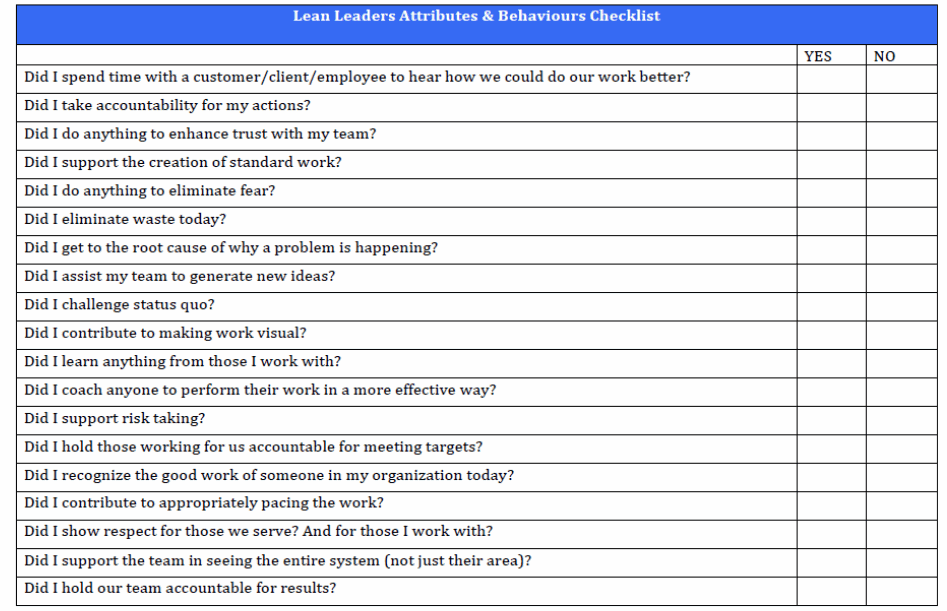
Focused almost exclusively on lean leadership standard work. Gave a few nice templates, and I do like workshops that give templates.
It is fascinating to hear people on different levels of the lean journey, or frankly any quality culture transformation. It is one of my favorite parts of attending conferences.
Provided by Lead2Lean Solutions
Afternoon Keynote – Tricia Wang
Praising statistical analysis at a quality conference is a good crowd pleaser. Way to bond with the audience.
Many of us have had, or given, a talk about how we can learn from children in how to communicate, whether it is being thoughtful in our relationships or learning to adapt and be resilient, or some other point.
What we are really talking about how communicating empathetically is essential, including to building a quality culture and it is a key part of change management. People need to feel respected and have a sense of self-worth in order to be motivated, confident, innovative, and committed to their work and to appropriately engage in quality culture.
I am not going to pretend to be an expert on empathy. I think it is fair to say that is still (always) one of my key development areas. That said, I think a core skill of any quality leader is that of giving feedback.
People
need to feel respected and have a sense of self-worth in order to be motivated,
confident, innovative, and committed to their work.
To
provide good feedback focus on doing the following:
Focus on facts.
Respect and support others. Even when people aren’t performing their best, they need to feel your support and to know that they’re valued.
Clarify motives. Don’t jump to conclusions. Keep others’ self-esteem in mind, and you’ll be more likely to ask, “What can you tell me about this error?” instead of, “Don’t you care about quality?”
When
someone has done a good job, succeeded at a task, or made a contribution, you
want to enhance that person’s self-esteem. Some ways to do that are to:
Acknowledge good thinking and ideas. Demonstrations of appreciation encourage people to think and contribute, and they support innovation and intellectual risk taking.
Recognize accomplishments. People need to hear specifically what they’ve done to contribute to the team’s or organization’s success. This encourages them to sustain or exceed expectations.
Express and show confidence. Voicing your trust and then calling on people to show what they can do boosts their confidence and their feelings of self-worth.
Be specific and sincere. When you describe in detail what people do well and why it’s effective, they know exactly what you’re recognizing.
Nothing
can deflate people’s confidence faster than telling them they’re responsible
for something, and then doing it yourself. Conversely, when you provide support
without removing responsibility, you build people’s sense of ownership of the
task or assignment as well as the confidence that they can accomplish it. When
you use this Key Principle, remember to:
Help others think and do. Provide your support in two ways: Help others think of ideas, alternatives, and solutions, then support them so that they can execute the plan.
Be realistic about what you can do and keep your commitments. Remember that you don’t have to do it all, but be sure to do whatever you agree to.
Resist the temptation to take over—keep responsibility where it belongs.
Many
quality individuals tend to be action oriented and task driven, so keeping
responsibility where it belongs can take resolve, even courage. You might have
to overcome the protests of a team member who is reluctant to stretch into new
areas or even brave objections from a key manager about your decision to
support others rather than take over.
Feedback Conversation Structure
Open
In the OPEN
step you ensure that the discussion has a clear purpose and that everyone understands
the importance of accomplishing it.
Always state purpose and importance clearly in the discussion opening.
If you initiate the discussion, explain what you would like to accomplish and why.
If someone else is leading the discussion, ask questions if necessary to pinpoint the purpose and importance.
Cite how accomplishing the purpose would benefit others in the discussion.
Ask if there are any related topics to discuss.
Clarify
There are two
types of information to seek and share in this step: facts and figures and
issues and concerns. Both are essential to building a complete picture of the
situation.
Facts and figures are the basic data and background information that people need to understand the situation and make informed decisions.
Exploring issues and concerns provides insight into potential barriers to achieving your purpose. It also helps reveal people’s feelings about the situation, which is valid, important information to gather.
Develop
When
developing ideas, it’s important to ask questions and include others in the
process. Most likely, you’ll have ideas about what to do, and you should share
them. However, you should put equal emphasis on seeking others’ ideas.
Involving people in thinking about alternative approaches can:
Spark their creative energy.
Result in more and better ideas than you alone could generate.
Build commitment to turning ideas into action.
Agree
It’s important that you and the people involved agree on a plan for
following through on the ideas that were developed and for supporting those who
will take action. During this step:
Specify
what will be done, who will do it, and by when.
Agree
on any follow-up actions needed to track progress in carrying out the plan.
Be
sure to agree on needed resources or support.
Close
This is the final chance to make sure that everyone is clear on
agreements and next steps and committed to following through. Closing
discussions involves a summary of actions and agreements as well as a check on
the person’s or team’s commitment to carrying them out.
There is a strong correlation between quality and ethics. Leadership’s demonstration of their philosophy and practice of ethical behavior impacts the whole organization in education, government or commercial enterprises
Quality is a management methodology, a set of ethics and a grab-bag of technical skills and tools (many of which are not unique to quality). Dennis Sergent does a good job riffing off of Deming’s Code of Professional Conduct, and in light of my recent post “Being a Quality Leader” I wanted to briefly talk about how leadership is perhaps the most effective lever in producing an ethical organization.
Cognitive moral development, meaning how sophisticated one’s thinking is about ethical issues
Ethics and Quality are hand-in-hand. You cannot create a quality product if you do not have an ethical framework. I often think this is a part of Deming’s message that has been lost.
Having recently said farewell to a leader in our quality organization, I have been reflecting on quality leaders and what makes one great. As I often do, I look to standards, in this case the American Society of Quality (ASQ).
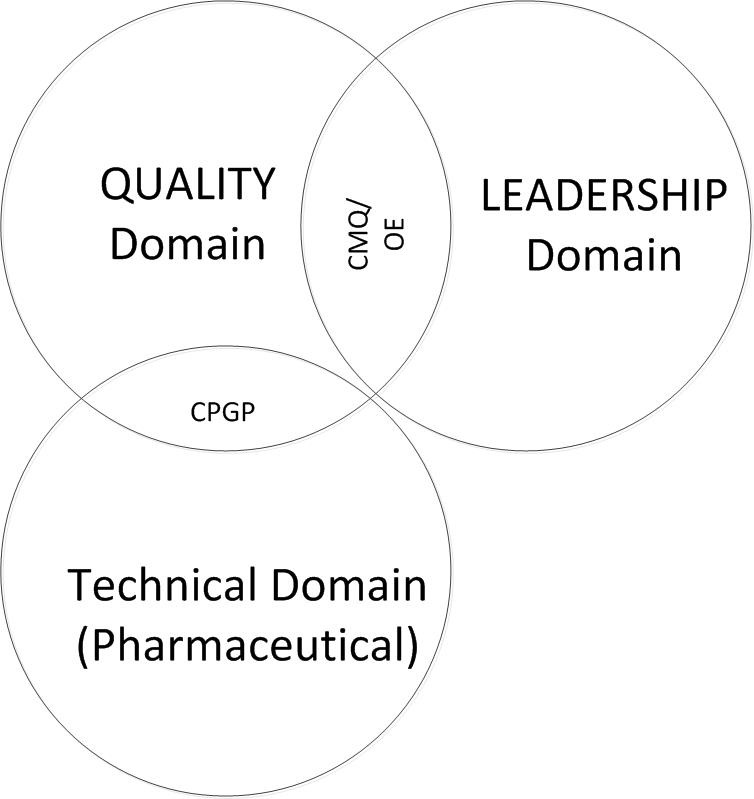
The Certified Manager of Quality/Organizational Excellence (CMQ/OE)leads and champions process improvement initiatives—that can have regional or global focus—in various service and industrial settings. A CMQ/OE facilitates and leads team efforts to establish and monitor customer/supplier relations,supports strategic planning and deployment initiatives, and helps develop measurement systems to determine organizational improvement.
The ASQ’s Certified Manager of Quality/Operation Excellence (CMQ/OE) body of knowledge‘s first section is on leadership.
To be honest, the current body of knowledge (bok) is a hodge-podge collection of stuff that is sort of related but often misses a real thematic underpinning. The bok (and the exam) could use a healthy dose of structure when laying out the principles of roles and responsibilities, change management, leadership techniques and empowerment.
There are fundamental skills to being a leader:
Shape a vision that is exciting and challenging for your team (or division/unit/organization).
Translate that vision into a clear strategy about what actions to take, and what not to do.
Recruit, develop, and reward a team of great people to carry out the strategy.
Focus on measurable results.
Foster innovation and learning to sustain your team (or organization) and grow new leaders.
Lead yourself — know yourself, improve yourself, and manage the appropriate balance in your own life.
In order to do these things a leader needs to demonstrate skills in communication, critical thinking, problem solving, and skills motivating and leading teams (and self).
The best leaders know a lot about the domain in which they are leading, and part of what makes them successful in a management role is technical competence. A Quality leader needs to know quality as a domain AND the domain of the industry they are within.
Three domains necessary for a quality leader
In my industry it is just not enough to know quality (for now we’ll define that as the ASQ BoK) nor is it enough to know pharmaceuticals (with regulatory being a subdomain). It is not enough just to have leadership skills. It is critical to be able to operate in all three areas.
To excel as a leader in practice, you also need a lot of expertise in a particular domain.
As an example, take the skill of thinking critically in order to find the essence of a situation. To do that well, you must have specific, technical expertise. The critical information an engineer needs to design a purification system is different from the knowledge used to understand drug safety, and both of those differ in important ways from what is needed to negotiate a good business deal.
When you begin to look at any of the core skills that leaders have, it quickly becomes clear that domain-specific expertise is bound up in all of them. And the domains of expertise required may also be fairly specific. Even business is not really a single domain. Leadership in pharmaceuticals, transportation, and internet (for example) all require a lot of specific knowledge.
Similarly, with only leadership and technical, you are going to fumble. Quality brings a set of practices necessary for success. A domain filled with analytical and decision making capabilities that cross-over with leadership (critical thinking and problem-solving) but are deepened with that perspective.
There are also other smaller domains, or flavors of domains. If I was building this model out more seriously I would have an interesting cluster of Health and Safety with Quality (the wider bucket of compliance even). I’m simplifying for this post.
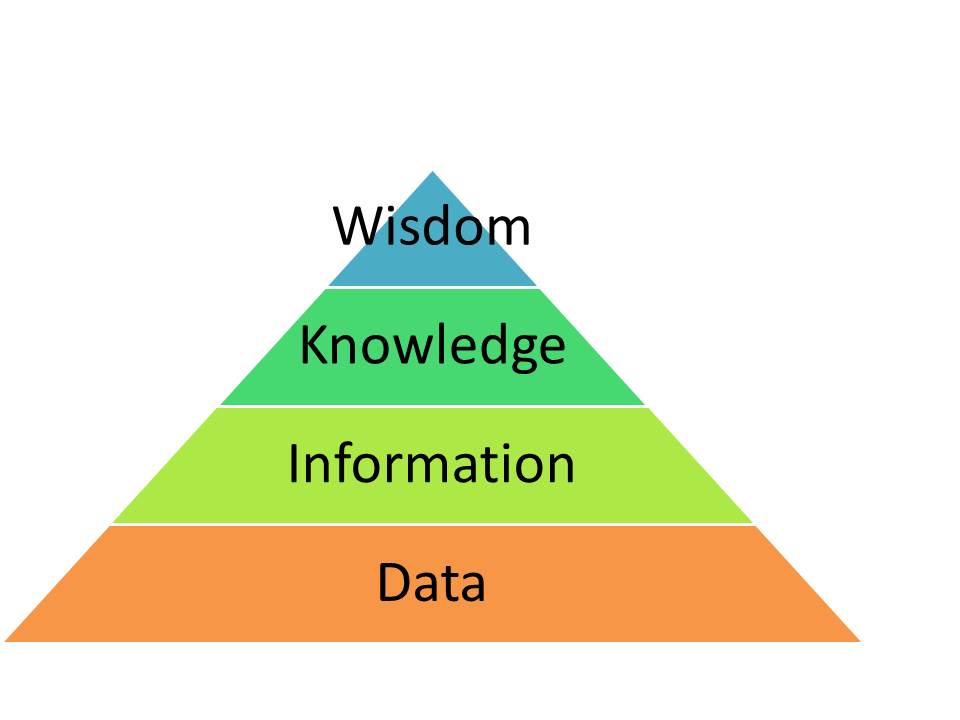
Development of knowledge
To go a step further. These three domains are critical for any quality professional. What changes is the development of wisdom and the widening of scope. This is why tenure is important. People need to be able to settle down and develop the skills they need to be successful in all three domains.
Good quality leaders recognize all this and look to build their organizations to reflect the growth of technical, quality and leadership domain.

.png)

 Investigations of a Dog