
Building a learning culture

Our organizations are either growing or they’re dying. The key thing that drives growth in organizations is when their employees are learning. To strengthen our organizations, our teams, ourselves we need to ensure our culture allows people to be exposed to new and challenging opportunities to learn.

We learn constantly. Most of that learning, however, is incremental, improvements that build on what we already know and do. We expand our knowledge and refine our skills in ways that strengthen our identities and commitments. This process sharpens competence and broadens expertise, and is key in building subject matter experts.

Incremental learning can allow people to grow in a workplace until they reach the limit on their resources for new learning – think of it as an S-curve. Eventually, there isn’t enough opportunities to learn. Furthermore, learning that broadens our expertise is valuable, but it is not enough. Incremental learning does not alter the way we see others, the world, and ourselves.

The second type of learning is called transformative, it changes our perspectives laying the foundations for growth and innovative leaps.

Both kinds of learning are necessary. Incremental learning helps us deliver, while transformative learning helps us develop. Both are necessary, but too often we allow incremental learning to be haphazard and make no space for transformative learning.

In both cases we need to build spaces to drive learning.

We often see incremental in our training programs, while transformative is critical for culture building.

Incremental LearningTransformative Learning
Good forKnowledge and SkillsPurpose and Presence
Source of LearningExperts (models)Experience (moments)
Work requiredDeliberate PracticeReflective engagement
Aim of processNew action (a better way)New meaning (a better why)
Role of othersFocusing practiceInviting Interpretation
Key aspects of the two styles

Bibliography

References

  • Bersin. (2018, July 08). A new paradigm for corporate training: Learning in the flow of work. Retrieved December 31, 2019, from https://joshbersin.com/2018/06/a-new-paradigm-for-corporate-training-learning-in-the-flow-of-work/
  • Boyatzis E., & Akrivou, K. (2006). The ideal self as the driver of intentional change. Journal of Management Development, 25(7), 624-642. doi:10.1108/02621710610678454
  • Brown D., & Starkey, K. (2000). Organizational identity and learning: A psychodynamic perspective. The Academy of Management Review, 25(1), 102. doi:10.2307/259265
  • Hoffman, R., Yeh, C., & Casnocha, B. (2019). Learn from people, not classes. Harvard Business Review, 97(3). Retrieved December 31, 2019, from https://hbr.org/2019/03/educating-the-next-generation-of-leaders
  • Mezirow, J. (1991). Transformative dimensions of adult learning. San Francisco, CA: Jossey-Bass.
  • Petriglieri, G., Petriglieri, J. L., & Wood, J. D. (2017). Fast tracks and Inner Journeys: Crafting Portable selves for contemporary careers. Administrative Science Quarterly, 63(3), 479-525. doi:10.1177/0001839217720930
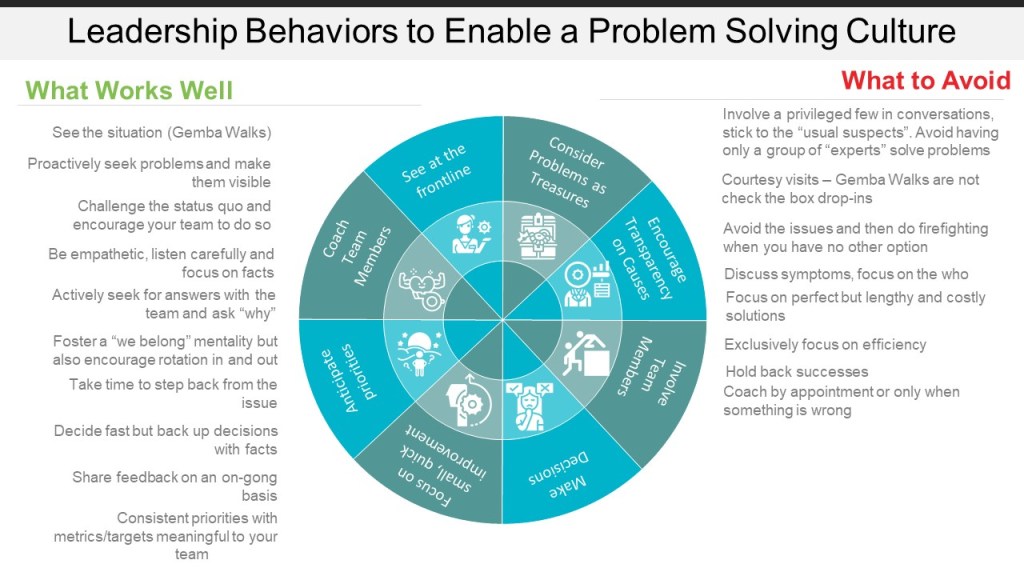
Be the Leader Needed for a Problem Solving Culture

Leadership is a critical element of a problem solving culture and rightly is emphasized in frameworks like the Baldridge or standards like ISO 9001:2015. Leadership is best looked at as the process for determining a possible future state that does not yet exist. As we strive to build excellence we need a passion for this work and to believe it to be truly important. Sharing that enthusiasm is motivating for all people involved and is a way to leverage greater success.

Good leaders encourage behaviors to maintain and improve quality by means of sound decision-making and risk-based thinking.

All of these leadership behaviors stem from four building blocks:

Anger and the job in difficult times

On Wednesday the United States set a devastating new record in the coronavirus pandemic: 3,124 people dead in one day. This was the first time the daily number of deaths has exceeded 3,000 but I fear it will not be the last. There are over 260k deaths in the US so far, over 1.5 million deaths worldwide. This is crippling, and it is difficult to go day-by-day with the pain of this suffering.

And yet, we need to work, support our families and communities. Get the job done. Amidst all that it is important to remember that is important to grieve and it is okay to be angry.

People grieve in diverse ways with different emotions, from anger, to depression to hopelessness, to resentment over what has been taken from them. Combined with the isolation of the pandemic, this is a recipe for poor mental health and poor coping mechanisms. And then there is a question of just how much and what sort of coping is good. Two-hundred-and-sixty thousand people are dead and there is a lot of evidence this is an underreport and a lot more people are going to die.

I hope you understand that I am angry. All day long. And it is a struggle not to bring that anger to work, not to let it twist my relationships. Yet that anger always exists.

I linked earlier this week to an article on mental health. It is particularly important to make this part of our organizations. Burnout must have a systematic fix.

What we need to give permission to, give space to, is a recognition that we are not in an okay state. And it may not be okay for a very long while, long after vaccines are widely available, and we return to the office.

It is okay to have taken a step back from obligations. I have not, for example, been writing much on this blog. It just did not work for me. Be kind to yourself and be okay with the things you must do less of. And when you are ready, go back to it.

Anger and Culture

Our organizational cultures are full of anger. What we must do is work to establish mechanisms to assure that anger is directed at issues or situations, not people. This will build psychological safety, enable good decisions and enhance our problem solving culture.

Some things we should do:

  • Acknowledge what is happening: Senior leadership needs to be working from compassion and generosity and taking real steps to address.
  • Treat toxic positivity as a bias: Toxic positivity is the assumption, either by one’s self or others, that despite a person’s emotional pain or difficult situation, they should only have a positive mindset. This is especially important as we have talent discussions, evaluate performance, and perform other managerial tasks.
  • Have systems around burnout
  • Focus on decision making quality
  • Build employee judgement feedback loops

We are not done. This winter will be very hard for many. As leaders we need to be ensuring our organizations can get through this and then leverage what we’ve learned to build a better culture.

The Value of Vulnerability

I’ve been thinking of the role vulnerability a lot in light of the current pandemic situation, and so I went back and re-read Professor Brené Brown’s Dare To Lead. In this book she lays out a framework for vulnerability, as a resource in leadership and within the workplace, which can impact the entire culture and creativity of a team.

Professor Brown defines vulnerability as uncertainty, risk and emotional exposure and lays out how vulnerability is essential to enabling collaboration. Leaders need to be transparent about their own challenges and encourage others to share their challenges with the group. Sharing vulnerability creates group cohesion.

At the same time I’m reading this book, I also started a new job and I’ve been in a lot of conversations about how we get folks comfortable with sharing their difficulties in their implementation around quality 4.0 initiatives.

Here’s the thing I want to stress, we can make vulnerability an organizational habit by instituting standard processes like after-action reviews and lessons learned. Building these processes into project lifecycle and our very culture provides a clear, designated space for sharing and vulnerability. By ensuring consistent application of lessons earned we can build this habit honesty, vulnerability, openness, and sharing of information. And through that we can help drive a culture of excellence.

Vulnerability can create space for “productive failure”, as Professor Brown terms it. A tricky thing for people to buy into but a way of thinking and working that turns failure into an opportunity to learn. When you know productive failure is a possibility you may be more inclined to be courageous and try and create something bigger and better despite the risks. When a workforce sees vulnerability named and shared by their leaders, and where they also acknowledge risks of failure but see it as an opportunity for learning they are likely to believe they can mirror some of that themselves.

There are a lot of reasons why organizations are bad at doing lessons learned, but I think at the core there is this unmovable idea that vulnerability is a weakness. It is probably for this reason that we see folks very willing to share their successes in case studies and at conferences, but not so willing to shares misses and failures. Even though we have a lot to learn from that vulnerability.

I’m curious. How is vulnerability expressed in your organization?

Burnout Needs a Systematic fix

It is more like being involved in a complicated love affair. One minute it’s thrilling, passionate, engaging. The next, it’s exhausting and overwhelming, and I feel like I need a break.
— Read on hbr.org/2019/07/when-passion-leads-to-burnout

Jennifer Moss, When Passion Leads to Burnout. HBR

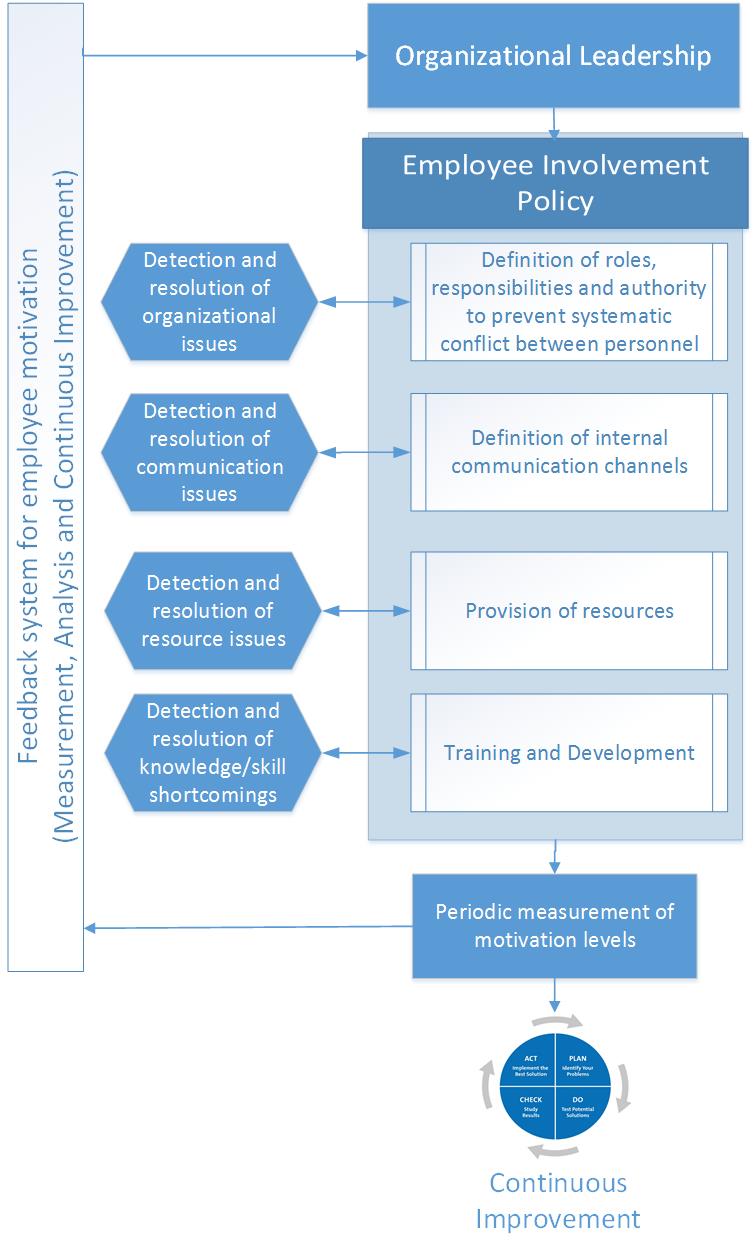
It is the responsibility of leaders “to keep an eye on the well-being of their staff.”  Organizations whose staff feel unmotivated due to stress and burnout cannot aspire to achieve a culture of excellence. Our systems need to be designed to eliminate the root cause for stress and burnout.

Five mechanisms can be leveraged to improve organizational system design: 1) Eliminate organizational issues related to roles, responsibilities and authorities of employees, 2) establish a policy of transparency and effective “bottom-up” internal communication channel to permit employee contribution and recognition, 3) establish criteria for resource distribution, 4) establish a commitment to identify needed training and provide resources for the purpose and 5) establish a systemic feedback loop for analysis and improvement of employee motivation based on periodic measurement of employee motivational levels.

If employees know exactly what their tasks are, without sustained overload, with necessary resources and competence, and recognition for the task well performed, there will be no major system-induced reason for demotivation.

This gets to the heart of Deming’s use of psychology in his System of Profound Knowledge. Lean calls it Respect-for-People. This is all about ensuring our organizations are healthy places to work and thrive.