Bias

There are many forms of bias that we must be cognizant during problem solving and decision making.

That chart can be a little daunting. I’m just going to mention three of the more common biases.

  • Attribution bias: When we do something well, we tend to think it’s because of our own merit. When we do something poorly, we tend to believe it was due to external factors (e.g. other people’s actions). When it comes to other people, we tend to think the opposite – if they did something well, we consider them lucky, and if they did something poorly, we tend to think it’s due to their personality or lack of skills.
  • Confirmation bias: The tendency to seek out evidence that supports decisions and positions we’ve already embraced – regardless of whether the information is true – and putting less weight on facts that contradict them.
  • Hindsight bias: The tendency to believe an event was predictable or preventable when looking at the sequence of events in hindsight. This can result in oversimplification of cause and effect and an exaggerated view that a person involved with an event could’ve prevented it. They didn’t know the outcome like you do now and likely couldn’t have predicted it with the information available at the time.

A few ways to address our biases include:

  • Bouncing ideas off of others, especially those not involved in the discussion or decision.
  • Surround yourself with a diverse group of people and do not be afraid to consider dissenting views. Actively listen.
  • Imagine yourself in other’s shoes.
  • Be mindful of your internal environment. If you’re struggling with a decision, take a moment to breathe. Don’t make decisions tired, hungry or stressed.
  • Consider who is impacted by your decision (or lack of decision). Sometimes, looking at how others will be impacted by a given decision will help to clarify the decision for you.

The advantage of focusing on decision quality is that we have a process that allows us to ensure we are doing the right things consistently. By building mindfulness we can strive for good decisions, reducing subjectivity and effective problem-solving.
Burnout Needs a Systematic fix

It is more like being involved in a complicated love affair. One minute it’s thrilling, passionate, engaging. The next, it’s exhausting and overwhelming, and I feel like I need a break.
— Read on hbr.org/2019/07/when-passion-leads-to-burnout

Jennifer Moss, When Passion Leads to Burnout. HBR

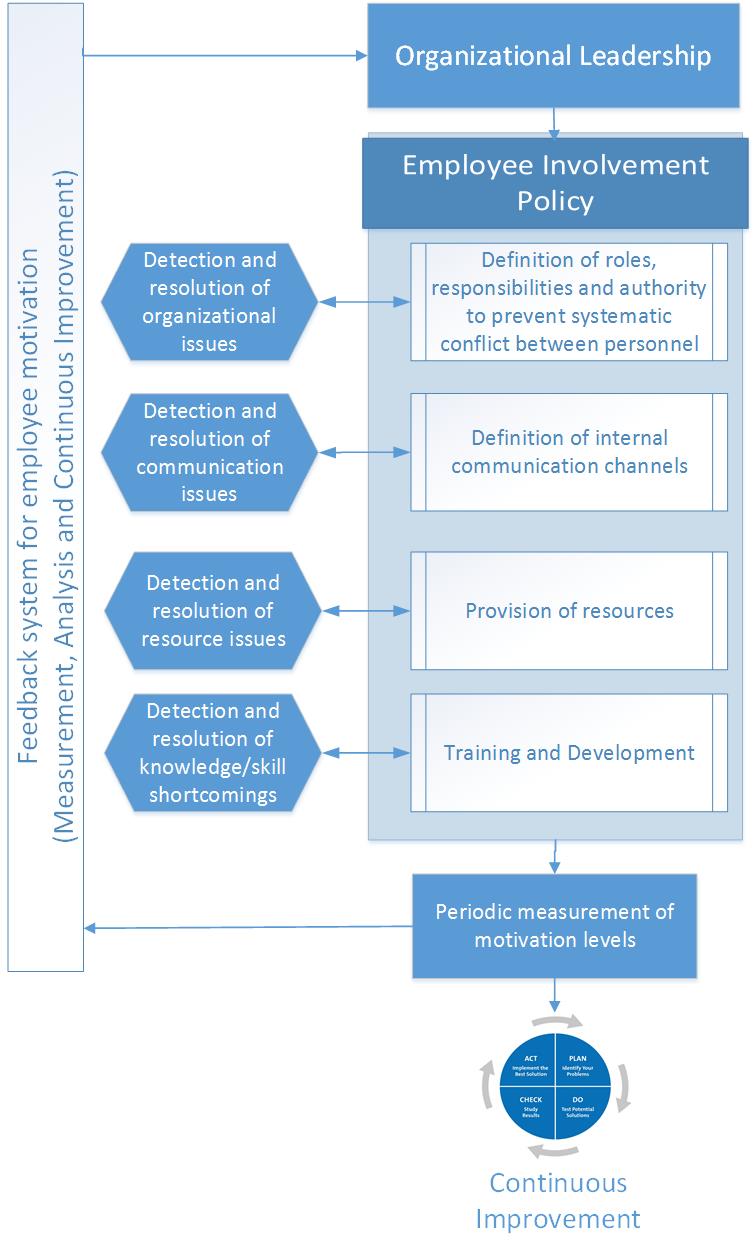
It is the responsibility of leaders “to keep an eye on the well-being of their staff.”  Organizations whose staff feel unmotivated due to stress and burnout cannot aspire to achieve a culture of excellence. Our systems need to be designed to eliminate the root cause for stress and burnout.

Five mechanisms can be leveraged to improve organizational system design: 1) Eliminate organizational issues related to roles, responsibilities and authorities of employees, 2) establish a policy of transparency and effective “bottom-up” internal communication channel to permit employee contribution and recognition, 3) establish criteria for resource distribution, 4) establish a commitment to identify needed training and provide resources for the purpose and 5) establish a systemic feedback loop for analysis and improvement of employee motivation based on periodic measurement of employee motivational levels.

If employees know exactly what their tasks are, without sustained overload, with necessary resources and competence, and recognition for the task well performed, there will be no major system-induced reason for demotivation.

This gets to the heart of Deming’s use of psychology in his System of Profound Knowledge. Lean calls it Respect-for-People. This is all about ensuring our organizations are healthy places to work and thrive.

Self Awareness and Problem Solving

We often try to solve problems as if we are outside them. When people describe a problem you will see them pointing away from themselves – you hear the word “them” a lot. “They” are seen as the problem. However, truly hard problems are system problems, and if you are part of the system (hint – you are) then you are part of the problem.

Being inside the problem means we have to understand bias and our blind spots – both as individuals, as teams and as organizations.

Understanding our blind spots

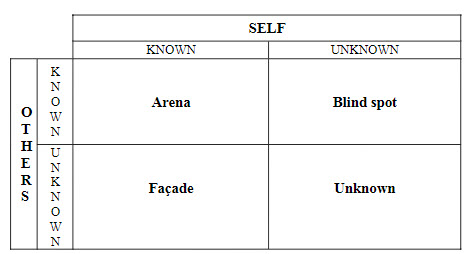
An easy tool to start thinking about this is the Johari window, a technique that helps people better understand their relationship with themselves and others. There are two axis, others and self. This forms four quadrants:

  • Arena – What is known by both self and others. It is also often referred to as the Public Area.
  • Blind spot – This region deals with knowledge unknown to self but visible to others, such as shortcomings or annoying habits.
  • Façade – This includes the features and knowledge of the individual which are not known to others. I prefer when this is called the Hidden. It was originally called facade because it can include stuff that is untrue but for the individual’s claim.
  • Unknown – The characteristics of the person that are unknown to both self and others.
The original Johari Window (based on Luft, 1969)

An example of a basic Johari Window (my own) can be found here.

Users are advised to reduce the area of ‘blind spot’ and ‘unknown’, while expand the ‘arena’. The premise is that the lesser the hidden personality, the better the person becomes in relating with other people.

The use of Johari Window is popular among business coaches as a cognitive tool to understand intrapersonal and interpersonal relationships. There isn’t much value of this tool as an empirical framework and it hasn’t held up to academic rigor. Still, like many such things it can bring to light the central point that we need to understand our hidden biases.

Another good tool to start understanding biases is a personal audit.

Using the Johari Window for Teams

Teams and organizations have blind spots, think of them as negative input factors or as procedural negatives.

The Johari Window can also be applied to knowledge transparency, and it fits nicely to the concepts of tacit and explicit knowledge bringing to light knowledge-seeking and knowledge-sharing behavior. For example, the ‘arena’ can simply become the ‘unknown’ if there is no demand or offer pertaining to the knowledge to be occupied by the recipient or to be shared by the owner, respectively.

The Johari Window transforms with the the four quadrants changing to:

  • Arena What the organization knows it knows. Contains knowledge available to the team as well as related organizations. Realizing such improvements is usually demanded by network partners and should be priority for implementation.
  • Façade What the organization does know it knows. Knowledge that is only available to parts of the focal organization. Derived improvements are unexpected, but beneficial for the organization and its collaborations.
  • Blind SpotWhat the organization knows it does not know. Knowledge only available to other organizations – internal and external. This area should be investigated with highest priority, to benefit from insights and to maintain effectiveness.
  • Unknown What the organization does not know it does not know, and what the organization believes it knows but does not actually know. Knowledge about opportunities for improvement that is not available to anyone. Its identification leads to the Façade sector.

We are firmly in the land of uncertainty, ignorance and surprise, and we are starting to perform a risk based approach to our organization blind spots. At the heart, knowledge management, problem solving and risk management are all very closely intertwined.

Situational Awareness and Expertise

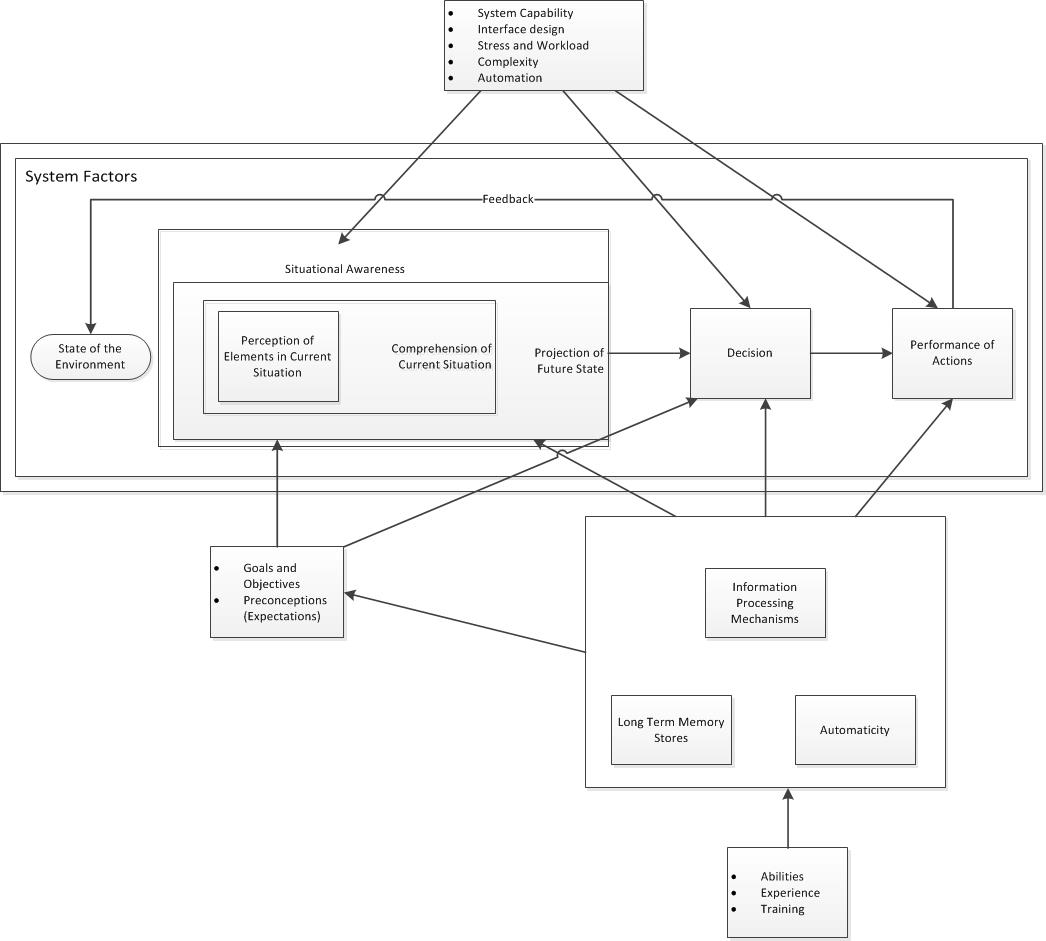
One of the key aspects of being an expert is the capacity to apply situational awareness: the perception of relevant information, comprehension of their meaning and the projection to future events.

Developing this situational awareness is a critical part of problem-solving and we can map the 4Cs of trouble-shooting onto these three elements.

Perception

The ability to perceive important information is a critical first step to being able to problem-solve, and one that takes time to develop especially in the highly complex and demanding environments most of us operate in. Knowing which information is important and have an understanding of the many subtle cues to evaluate is one of the hallmarks of an expert. But even for experts it can be difficult, which is why building perceptual cues in our checklists, procedures and such is important.

Comprehension

From perception we can draw meaning and significance, allowing the expert to combine, interpret, store and retain information. Integrating multiple pieces of information to arrive at a determination of relevance.

Projection

Experts are able to project from current events to anticipate future events and their implications.

Model of situation awareness in dynamic decision making (Endsley, 1995)

Further Reading

Practice Paying Attention for Good Problem Solving

Situational awareness is built on perception. Problem-solving requires it. Perception is a building block of agile-thinking and pretty much everything else we need to do to succeed in today’s idea-based businesses.

As individuals we should be striving to develop perception, and as organizations we need to be developing training and practices to reinforce. There are few aspects we need to build.

Look inward to analyze previous mistakes

How often have you or some expert said “No one could have predicted that” or “It wasn’t my job to see the warning signs.” Rarely do you hear them acknowledge their own responsibility with comments such as “I didn’t think about how that change could affect our organization” or “I didn’t ask for more information.”

When a problem arises consider the decisions we’ve made and the role you and your team played. Did you miss warning signs? Is there an incentive to overlook what was going on? What are your weak spots and how can you fix them to prevent future problems?

Take an outsider’s view:

If you’ have ever encountered the “things aren’t done that way” response to new solutions, push harder. There is usually no logical reason why a change can’t be made, and there is a bad habit that needs to be broken.

Look for signs, symptoms and syndromes

  1. Signs – something is not right or expected
  2. Symptoms – some signs are symptoms, but usually signs point to symptoms, an underlying problem or set of problems
  3. Syndrome – false beliefs that can generate symptoms, usually part of a wider set of causes

Avoid Willful Blindness