Knowledge Work is the product

Johanna Rothman recently provided some insightful thoughts about Project Work vs Product Work. While focused on software, Johanna has some points that are valuable outside of software as she focuses on the importance of long-lived teams, applying a product work mindset to team functions.

The more we create long-lived teams who have already learned how to work together, the easier it is to work together. Even if that work is project-based work.

I think the critical thing for me is how much we have to view each team, each project as having as one of it’s key deliverables knowledge management.

However, we also need to recognize that in this day-and-age the modern corporation is  a transient collective. Companies do not do a great job of showing loyalty, there are a lot of options for the modern knowledge worker, and people regularly move on.

For me, this is why it is so important for not just projects, but day-to-day work to have as part of the inherent ways of working, processes to bring the tacit to explicit. The lessons-learned is a great place to start but we should be constantly be striving to identify “what have we learned”, “what do we need to make explicit” and “how do we make it explicit” as part of our work.

Knowledge management Circular_Process_6_Stages (for expansion)

Returning to the 6 stages of knowledge management:

    1. Have a way to capture what knowledge bits. For example, if you have a visual board, make sure this is explicitly part of the board. Make it part of your day-to-day.
    2. As a team assess the collected captured (and generated) knowledge and determine what is suitable for retaining.
    3. Share it – pass it up, pass it down. Make it available by tying it into your companies knowledge management system.
    4. Turn it into artifacts that are reusable. Pre-job briefings, procedures, work instructions, whatever is relevant.
    5. Live it. Confirm you are using it.
    6. Remember knowledge management artifacts are living. Things change and need to be updated. We can always refine. Continuous improvement is key.


Effective Change Management

Both Curious Cat and A Lean Journey tell me that the ASQ Influential Voices blogs are covering change management. I do love a good blog carnival, and change management is sort of my thing, so I am going to jump in.

It’s often said that people don’t resist “change” so much as they resist “being changed.” So, the job of change management is clear: In a nutshell, you must explain why the affected people should want to change, and thereby cultivate readiness instead of resistance.

 What are some recommended strategies or tactics to help achieve successful change management?

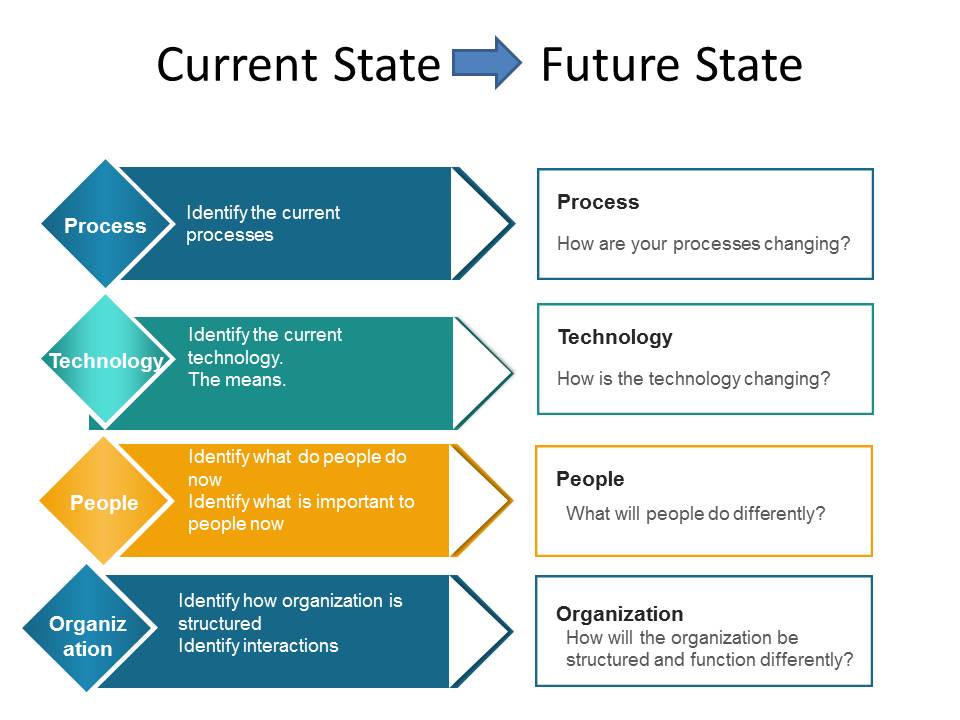
My first piece, of advice, abandon the idea that change management only involves people. Just as all systems are made of people, organization, process and technology; all changes impact all four and need to be viewed holistically.

Second, get rid of the artificial barriers between change management and change control. Change management is the how of change – assess, handle and release. Change control is the what, the execution steps. Remember that all changes are really just projects, and vice versa. The level of change determines the level of activity.

Level of Change Change Management Change Control
Transactional Minor Few

Closely clustered

Operational Major Several

Across several areas

Transformational Fundamental Many

Iterative

Often in waves

Simplify your variety of change controls and strive for scalability within one change management (and control) system. Utilize the levers, which include: regulatory (compliance), product release and risk.

Knowledge Management

Change Management and Knowledge Management are closely entwined. An effective change management system includes active knowledge management, in which information from multiple sources is integrated to identify stimuli for changes needed to improve product and/or process robustness.

There are key interactions with document management and training.

Risk Management

Risk management enables changes and helps assess:

  • The proposed change
  • The effectiveness of the change once implemented

Change Is

Propose the Change

curent and future

Make it SMART:

  • Specific – The proposal needs to be accurate and leave no doubt as to what the change will achieve.
  • Measurable – How will the system owner (sponsor) know when the project is complete.
  • Achievable – Make the change as small as possible after all it is easier to eat an elephant one bite at a time. It is far easier to manage a few smaller change than one big one. This is why operational and transformational changes are many changes and often iterative.
  • Realistic – Make the change easy to deliver, if it is over complicated then it is likely to hit problems and run over budget, be delivered late or of poor quality.
  • Timely – Does the change have to be complete by a certain date? If so put it in the scope that the project has to be complete by that date. Are there dependencies and independencies?

Evaluate

The change Project team leverages SMEs to harness the collective intelligence (synergy) for the benefit of the site.

  • Relevancy – The information gathered is of value
  • Reliability – The process by which the information is collected should be consistent
  • Accuracy – The data should be expressed in a manner that most accurately reflects its information content
  • Efficiency – The design and implementation of the tasks should minimize the burden

Evaluates all four areas (process, technology, people and organization). Includes communication of the change and training.

Vision Importance
What is the vision for this change Why is this change important to our organization
Success Measurements Process Measurements
How will we measure success How will we show progress towards our vision?
Who and what is affected?
What people, departments and processes need to change in order to realize our vision?
How will we support people?
What actions will we do to support people through the change?
What is our plan?
Detailed action plan

Build in effectiveness reviews to your plan.

Implement

Execute the change plan, provide evidence of completion. Escalate significant risks or delays.

Close

Ensure change plan was executed and benefits realized.

Hold a lessons learned.
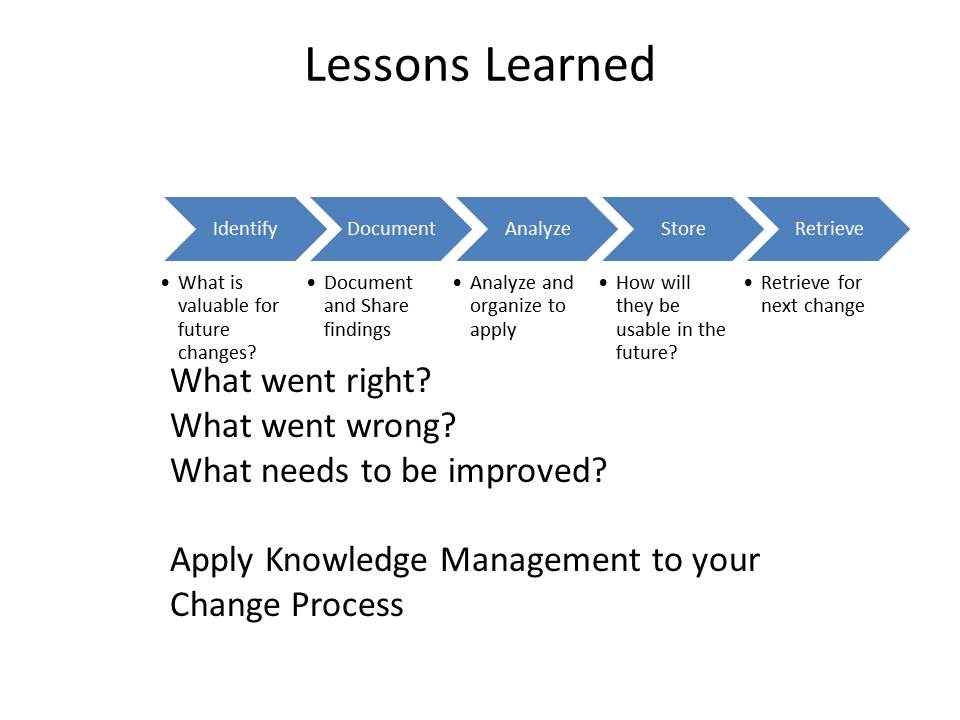
lessons learned

Conclusion

Change management is a system. It should have its own cycles of improvement and grow as you execute changes. Change is a fundamental pillar of a quality system and spending the time to build a robust system will reap dividends and prove itself a good idea again and again.



Gamestorming

Gamestorming: A Playbook for Innovators, Rulebreakers, and Changemakers by Dave Gray, Sunni Brown, and James Macanufo

Like The Quality Toolbox, this is a book chock-full of usefulness. This book provides a fun approach that makes it possible for collaborative activities to get everyone participating in creative and design-oriented activities. From planning meeting, generating ideas, understanding customers, creating prototypes, or making better decisions, Gamestorming is a way for groups to “work better together.”

Divided into Opening, Exploring and Closing sections, the structure of the book will be familiar to anyone with a facilitation background. I am constantly dipping into this book for activities for team meetings, project kickoffs, development meetings, lessons learned and a whole lot of other meetings.

This book delves into the usage of visual thinking to increase effectiveness and I find dramatically shorten the length of time needed for a group to solve a problem. This book proposes that visual thinking can:

  • Using a simple, shared visual language to increase understanding and information retention;
  • Applying improvisational discovery to keep participants engaged;
  • Mapping the big picture, solving problems and innovating as a team;
  • Creating visual meeting artifacts to drive decisions forward.

What is especially cool is that there is a great webpage dedicated to these games that I hope you will find as useful as I do. It is full of exercises, activities and advice.


Every change is a project, every project is a change

Project Management, the structured approach for managing tasks, resources, and budget to achieve a defined deliverable, is an important part of the quality management toolbox, and an important aspect to build into your change management program.

There are a lot of project management methodologies, but they all boil down to having an understanding of the tradeoffs between time, cost, and scope of a change; and then motivating a team towards delivering the change.

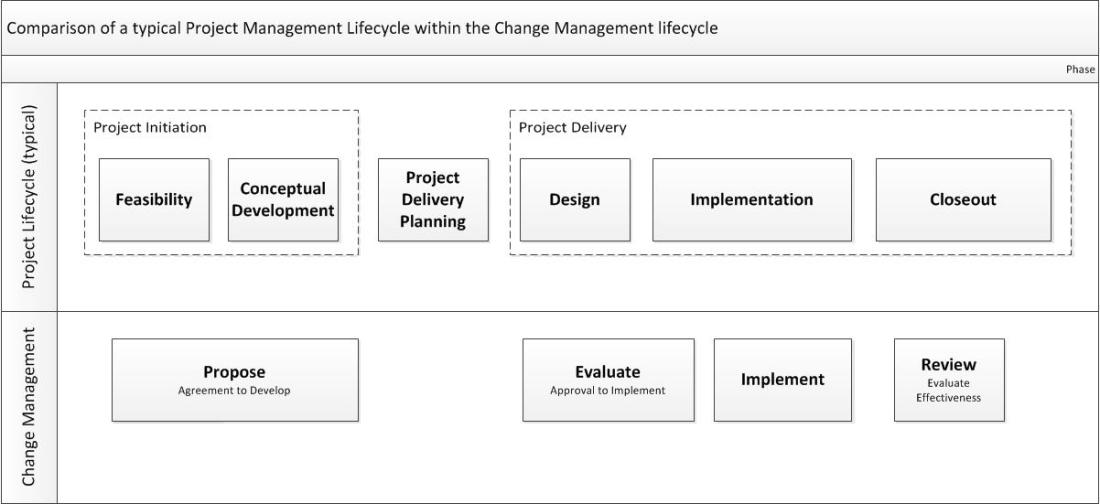
project and change comparison

Evaluate is best seen as a gate at the end of the project’s design (or a phase of design). A well-designed project, with appropriate stakeholders and team members ideally, will flow nicely into an evaluate change control (or set of change controls). Having this as part of your gate to develop will ensure that the right subject-matter-experts have been involved, that all potential risks and impacts are understood, and will ensure the site is ready to implement.

Small projects and the change management lifecycle are usually one and the same.

For projects with a large impact, it is often important to create more than one change control, to ensure appropriate implementations. In these cases it is often useful to create a change strategy (or incorporate in a project deliverable, such as a gate document) which can include:

Scope Describe the project, indicating the current and future state.
Roles/ Responsibilities Indicate what functions/departments will serve what role in the change controls

Indicate the role and responsibilities of project management.

Methodology/ Strategy What activities are included and how they will be organized.

How many change controls will be created as part of this strategy.

How change controls will be organized and linked together (e.g. dependencies).

Provide a methodology for managing changes and ensuring all change control activities happen according to the provided timetable.

Things to Consider:

Are there other changes that affect the same room/area or equipment?

How are affected rooms/areas/equipment being taken out of and placed back into service as to not to interfere with the provided timetable?

Will these change controls affect daily operations/sampling?

How will changes be organized? For example, will changes be organized along install, validate and implement?

If multiple areas are to be affected, will there be changes in Material and Personnel Flow that will need to be modified to execute the multiple changes?

Effectiveness Review If the project will have one effectiveness review (e.g. a process validation, comparability protocol, stability study) indicate, provide the effectiveness review criteria and justify. Provide a timeline for completion of the effectiveness review.
Regulatory Strategy Regulatory strategy for filing the project (e.g. will the changes be filed independently or together, at what point, which changes will require regulatory assessment)
Planned Timetable Timelines for writing, approving, implementing and closing change controls.

Take the dependencies written in the Methodology/Strategy into consideration when developing the timetable

Closure Plan How will the strategy be closed? What are the criteria for a successful project closure?

For larger projects, the change evaluation will start in the project design phase but can continue through implementation as individual changes are put in place.

The advantage of writing this strategy allows the project to consolidate deliverables and ensure the right level of effort is put into the changes across the project.