The Practice Paradox: Why Technical Knowledge Isn’t Enough for True Expertise

When someone asks about your skills they are often fishing for the wrong information. They want to know about your certifications, your knowledge of regulations, your understanding of methodologies, or your familiarity with industry frameworks. These questions barely scratch the surface of actual competence.

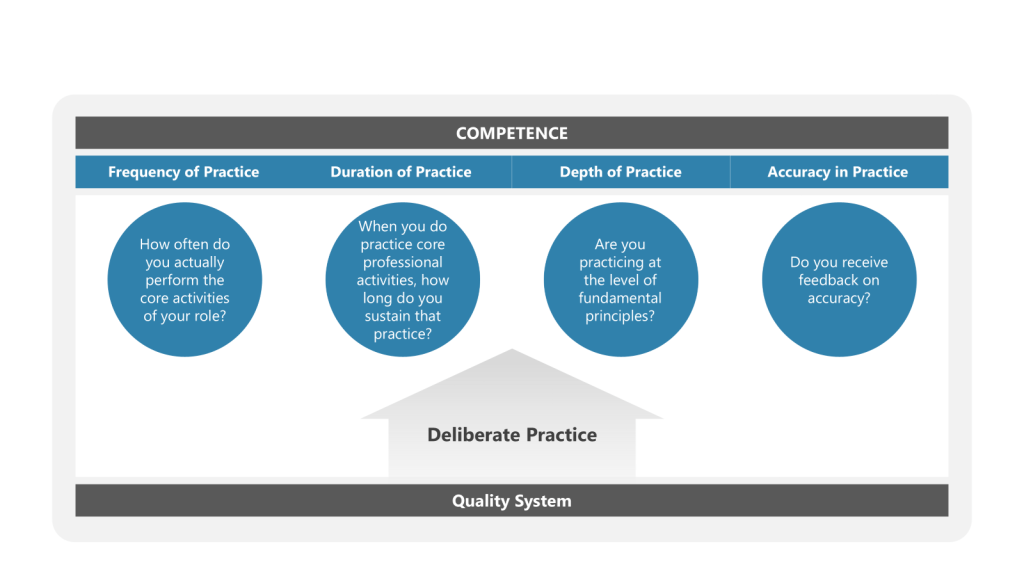
The real questions that matter are deceptively simple: What is your frequency of practice? What is your duration of practice? What is your depth of practice? What is your accuracy in practice?

Because here’s the uncomfortable truth that most professionals refuse to acknowledge: if you don’t practice a skill, competence doesn’t just stagnate—it actively degrades.

The Illusion of Permanent Competency

We persist in treating professional expertise like riding a bicycle, “once learned, never forgotten”. This fundamental misunderstanding pervades every industry and undermines the very foundation of what it means to be competent.

Research consistently demonstrates that technical skills begin degrading within weeks of initial training. In medical education, procedural skills show statistically significant decline between six and twelve weeks without practice. For complex cognitive skills like risk assessment, data analysis, and strategic thinking, the degradation curve is even steeper.

A meta-analysis examining skill retention found that half of initial skill acquisition performance gains were lost after approximately 6.5 months for accuracy-based tasks, 13 months for speed-based tasks, and 11 months for mixed performance measures. Yet most professionals encounter meaningful opportunities to practice their core competencies quarterly at best, often less frequently.

Consider the data analyst who completed advanced statistical modeling training eighteen months ago but hasn’t built a meaningful predictive model since. How confident should we be in their ability to identify data quality issues or select appropriate analytical techniques? How sharp are their skills in interpreting complex statistical outputs?

The answer should make us profoundly uncomfortable.

The Four Dimensions of Competence

True competence in any professional domain operates across four critical dimensions that most skill assessments completely ignore:

Frequency of Practice

How often do you actually perform the core activities of your role, not just review them or discuss them, but genuinely work through the systematic processes that define expertise?

This infrequency creates competence gaps that compound over time. Skills that aren’t regularly exercised atrophy, leading to oversimplified problem-solving, missed critical considerations, and inadequate solution strategies. The cognitive demands of sophisticated professional work—considering multiple variables simultaneously, recognizing complex patterns, making nuanced judgments—require regular engagement to maintain proficiency.

Deliberate practice research shows that experts practice longer sessions (87.90 minutes) compared to amateurs (46.00 minutes). But more importantly, they practice regularly. The frequency component isn’t just about total hours—it’s about consistent, repeated exposure to challenging scenarios that push the boundaries of current capability.

Duration of Practice

When you do practice core professional activities, how long do you sustain that practice? Minutes? Hours? Days?

Brief, superficial engagement with complex professional activities doesn’t build or maintain competence. Most work activities in professional environments are fragmented, interrupted by meetings, emails, and urgent issues. This fragmentation prevents the deep, sustained practice necessary to maintain sophisticated capabilities.

Research on deliberate practice emphasizes that meaningful skill development requires focused attention on activities designed to improve performance, typically lasting 1-3 practice sessions to master specific sub-skills. But maintaining existing expertise requires different duration patterns—sustained engagement with increasingly complex scenarios over extended periods.

Depth of Practice

Are you practicing at the surface level—checking boxes and following templates—or engaging with the fundamental principles that drive effective professional performance?

Shallow practice reinforces mediocrity. Deep practice—working through novel scenarios, challenging existing methodologies, grappling with uncertain outcomes—builds robust competence that can adapt to evolving challenges.

The distinction between deliberate practice and generic practice is crucial. Deliberate practice involves:

  • Working on skills that require 1-3 practice sessions to master specific components
  • Receiving expert feedback on performance
  • Pushing beyond current comfort zones
  • Focusing on areas of weakness rather than strengths

Most professionals default to practicing what they already do well, avoiding the cognitive discomfort of working at the edge of their capabilities.

Accuracy in Practice

When you practice professional skills, do you receive feedback on accuracy? Do you know when your analyses are incomplete, your strategies inadequate, or your evaluation criteria insufficient?

Without accurate feedback mechanisms, practice can actually reinforce poor techniques and flawed reasoning. Many professionals practice in isolation, never receiving objective assessment of their work quality or decision-making effectiveness.

Research on medical expertise reveals that self-assessment accuracy has two critical components: calibration (overall performance prediction) and resolution (relative strengths and weaknesses identification). Most professionals are poor at both, leading to persistent blind spots and competence decay that remains hidden until critical failures expose it.

The Knowledge-Practice Disconnect

Professional training programs focus almost exclusively on knowledge transfer—explaining concepts, demonstrating tools, providing frameworks. They ignore the practice component entirely, creating professionals who can discuss methodologies eloquently but struggle to execute them competently when complexity increases.

Knowledge is static. Practice is dynamic.

Professional competence requires pattern recognition developed through repeated exposure to diverse scenarios, decision-making capabilities honed through continuous application, and judgment refined through ongoing experience with outcomes. These capabilities can only be developed and maintained through deliberate, sustained practice.

A study of competency assessment found that deliberate practice hours predicted only 26% of skill variation in games like chess, 21% for music, and 18% for sports. The remaining variance comes from factors like age of initial exposure, genetics, and quality of feedback—but practice remains the single most controllable factor in competence development.

The Competence Decay Crisis

Industries across the board face a hidden crisis: widespread competence decay among professionals who maintain the appearance of expertise while losing the practiced capabilities necessary for effective performance.

This crisis manifests in several ways:

  • Templated Problem-Solving: Professionals rely increasingly on standardized approaches and previous solutions, avoiding the cognitive challenge of systematic evaluation. This approach may satisfy requirements superficially while missing critical issues that don’t fit established patterns.
  • Delayed Problem Recognition: Degraded assessment skills lead to longer detection times for complex issues and emerging problems. Issues that experienced, practiced professionals would identify quickly remain hidden until they escalate to significant failures.
  • Inadequate Solution Strategies: Without regular practice in developing and evaluating approaches, professionals default to generic solutions that may not address specific problem characteristics effectively. The result is increased residual risk and reduced system effectiveness.
  • Reduced Innovation: Competence decay stifles innovation in professional approaches. Professionals with degraded skills retreat to familiar, comfortable methodologies rather than exploring more effective techniques or adapting to emerging challenges.

The Skill Decay Research

The phenomenon of skill decay is well-documented across domains. Research shows that skills requiring complex mental requirements, difficult time limits, or significant motor control have an overwhelming likelihood of being completely lost after six months without practice.

Key findings from skill decay research include:

  • Retention interval: The longer the period of non-use, the greater the probability of decay
  • Overlearning: Extra training beyond basic competency significantly improves retention
  • Task complexity: More complex skills decay faster than simple ones
  • Feedback quality: Skills practiced with high-quality feedback show better retention

A practical framework divides skills into three circles based on practice frequency:

  • Circle 1: Daily-use skills (slowest decay)
  • Circle 2: Weekly/monthly-use skills (moderate decay)
  • Circle 3: Rare-use skills (rapid decay)

Most professionals’ core competencies fall into Circle 2 or 3, making them highly vulnerable to decay without systematic practice programs.

Building Practice-Based Competence

Addressing the competence decay crisis requires fundamental changes in how individuals and organizations approach professional skill development and maintenance:

Implement Regular Practice Requirements

Professionals must establish mandatory practice requirements for themselves—not training sessions or knowledge refreshers, but actual practice with real or realistic professional challenges. This practice should occur monthly, not annually.

Consider implementing practice scenarios that mirror the complexity of actual professional challenges: multi-variable analyses, novel technology evaluations, integrated problem-solving exercises. These scenarios should require sustained engagement over days or weeks, not hours.

Create Feedback-Rich Practice Environments

Effective practice requires accurate, timely feedback. Professionals need mechanisms for evaluating work quality and receiving specific, actionable guidance for improvement. This might involve peer review processes, expert consultation programs, or structured self-assessment tools.

The goal isn’t criticism but calibration—helping professionals understand the difference between adequate and excellent performance and providing pathways for continuous improvement.

Measure Practice Dimensions

Track the four dimensions of practice systematically: frequency, duration, depth, and accuracy. Develop personal metrics that capture practice engagement quality, not just training completion or knowledge retention.

These metrics should inform professional development planning, resource allocation decisions, and competence assessment processes. They provide objective data for identifying practice gaps before they become performance problems.

Integrate Practice with Career Development

Make practice depth and consistency key factors in advancement decisions and professional reputation building. Professionals who maintain high-quality, regular practice should advance faster than those who rely solely on accumulated experience or theoretical knowledge.

This integration creates incentives for sustained practice engagement while signaling commitment to practice-based competence development.

The Assessment Revolution

The next time someone asks about your professional skills, here’s what you should tell them:

“I practice systematic problem-solving every month, working through complex scenarios for two to four hours at a stretch. I engage deeply with the fundamental principles, not just procedural compliance. I receive regular feedback on my work quality and continuously refine my approach based on outcomes and expert guidance.”

If you can’t make that statement honestly, you don’t have professional skills—you have professional knowledge. And in the unforgiving environment of modern business, that knowledge won’t be enough.

Better Assessment Questions

Instead of asking “What do you know about X?” or “What’s your experience with Y?”, we should ask:

  • Frequency: “When did you last perform this type of analysis/assessment/evaluation? How often do you do this work?”
  • Duration: “How long did your most recent project of this type take? How much sustained focus time was required?”
  • Depth: “What was the most challenging aspect you encountered? How did you handle uncertainty?”
  • Accuracy: “What feedback did you receive? How did you verify the quality of your work?”

These questions reveal the difference between knowledge and competence, between experience and expertise.
The Practice Imperative

Professional competence cannot be achieved or maintained without deliberate, sustained practice. The stakes are too high and the environments too complex to rely on knowledge alone.

The industry’s future depends on professionals who understand the difference between knowing and practicing, and organizations willing to invest in practice-based competence development.

Because without practice, even the most sophisticated frameworks become elaborate exercises in compliance theater—impressive in appearance, inadequate in substance, and ultimately ineffective at achieving the outcomes that stakeholders depend on our competence to deliver.

The choice is clear: embrace the discipline of deliberate practice or accept the inevitable decay of the competence that defines professional value. In a world where complexity is increasing and stakes are rising, there’s really no choice at all.

Building Deliberate Practice into the Quality System

Embedding genuine practice into a quality system demands more than mandating periodic training sessions or distributing updated SOPs. The reality is that competence in GxP environments is not achieved by passive absorption of information or box-checking through e-learning modules. Instead, you must create a framework where deliberate, structured practice is interwoven with day-to-day operations, ongoing oversight, and organizational development.

Start by reimagining training not as a singular event but as a continuous cycle that mirrors the rhythms of actual work. New skills—whether in deviation investigation, GMP auditing, or sterile manufacturing technique—should be introduced through hands-on scenarios that reflect the ambiguity and complexity found on the shop floor or in the laboratory. Rather than simply reading procedures or listening to lectures, trainees should regularly take part in simulation exercises that challenge them to make decisions, justify their logic, and recognize pitfalls. These activities should involve increasingly nuanced scenarios, moving beyond basic compliance errors to the challenging grey areas that usually trip up experienced staff.

To cement these experiences as genuine practice, integrate assessment and reflection into the learning loop. Every critical quality skill—from risk assessment to change control—should be regularly practiced, not just reviewed. Root cause investigation, for instance, should be a recurring workshop, where both new hires and seasoned professionals work through recent, anonymized cases as a team. After each practice session, feedback should be systematic, specific, and forward-looking, highlighting not just mistakes but patterns and habits that can be addressed in the next cycle. The aim is to turn every training into a diagnostic tool for both the individual and the organization: What is being retained? Where does accuracy falter? Which aspects of practice are deep, and which are still superficial?

Crucially, these opportunities for practice must be protected from routine disruptions. If practice sessions are routinely canceled for “higher priority” work, or if their content is superficial, their effectiveness collapses. Commit to building practice into annual training matrices alongside regulatory requirements, linking participation and demonstrated competence with career progression criteria, bonus structures, or other forms of meaningful recognition.

Finally, link practice-based training with your quality metrics and management review. Use not just completion data, but outcome measures—such as reduction in repeat deviations, improved audit readiness, or enhanced error detection rates—to validate the impact of the practice model. This closes the loop, driving both ongoing improvement and organizational buy-in.

A quality system rooted in practice demands investment and discipline, but the result is transformative: professionals who can act, not just recite; an organization that innovates and adapts under pressure; and a compliance posture that is both robust and sustainable, because it’s grounded in real, repeatable competence.
Building a Competency Framework for Quality Professionals as System Gardeners

Quality management requires a sophisticated blend of skills that transcend traditional audit and compliance approaches. As organizations increasingly recognize quality systems as living entities rather than static frameworks, quality professionals must evolve from mere enforcers to nurturers—from auditors to gardeners. This paradigm shift demands a new approach to competency development that embraces both technical expertise and adaptive capabilities.

Building Competencies: The Integration of Skills, Knowledge, and Behavior

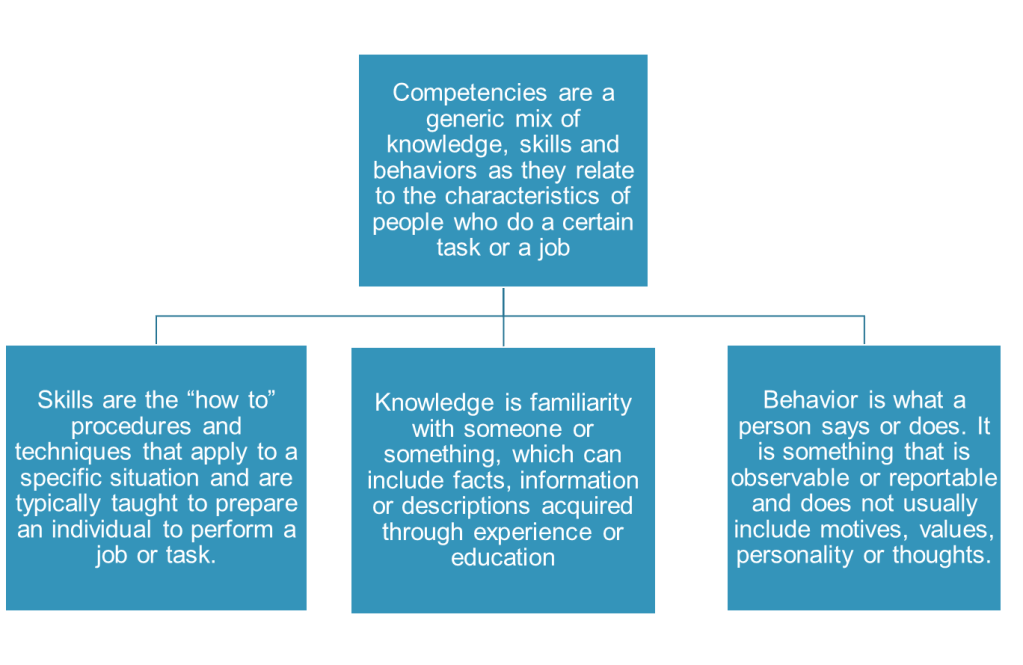
A comprehensive competency framework for quality professionals must recognize that true competency is more than a simple checklist of abilities. Rather, it represents the harmonious integration of three critical elements: skills, knowledge, and behaviors. Understanding how these elements interact and complement each other is essential for developing quality professionals who can thrive as “system gardeners” in today’s complex organizational ecosystems.

The Competency Triad

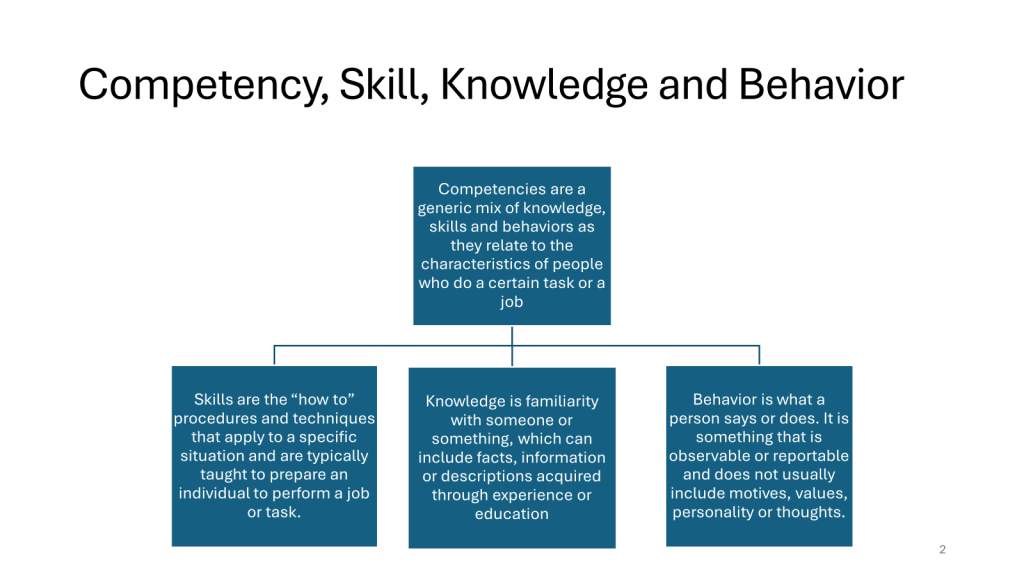
Competencies can be defined as the measurable or observable knowledge, skills, abilities, and behaviors critical to successful job performance. They represent a holistic approach that goes beyond what employees can do to include how they apply their capabilities in real-world contexts.

Knowledge: The Foundation of Understanding

Knowledge forms the theoretical foundation upon which all other aspects of competency are built. For quality professionals, this includes:

  • Comprehension of regulatory frameworks and compliance requirements
  • Understanding of statistical principles and data analysis methodologies
  • Familiarity with industry-specific processes and technical standards
  • Awareness of organizational systems and their interconnections

Knowledge is demonstrated through consistent application to real-world scenarios, where quality professionals translate theoretical understanding into practical solutions. For example, a quality professional might demonstrate knowledge by correctly interpreting a regulatory requirement and identifying its implications for a manufacturing process.

Skills: The Tools for Implementation

Skills represent the practical “how-to” abilities that quality professionals use to implement their knowledge effectively. These include:

  • Technical skills like statistical process control and data visualization
  • Methodological skills such as root cause analysis and risk assessment
  • Social skills including facilitation and stakeholder management
  • Self-management skills like prioritization and adaptability

Skills are best measured through observable performance in relevant contexts. A quality professional might demonstrate skill proficiency by effectively facilitating a cross-functional investigation meeting that leads to meaningful corrective actions.

Behaviors: The Expression of Competency

Behaviors are the observable actions and reactions that reflect how quality professionals apply their knowledge and skills in practice. These include:

  • Demonstrating curiosity when investigating deviations
  • Showing persistence when facing resistance to quality initiatives
  • Exhibiting patience when coaching others on quality principles
  • Displaying integrity when reporting quality issues

Behaviors often distinguish exceptional performers from average ones. While two quality professionals might possess similar knowledge and skills, the one who consistently demonstrates behaviors aligned with organizational values and quality principles will typically achieve superior results.

Building an Integrated Competency Development Approach

To develop well-rounded quality professionals who embody all three elements of competency, organizations should:

  1. Map the Competency Landscape: Create a comprehensive inventory of the knowledge, skills, and behaviors required for each quality role, categorized by proficiency level.
  2. Implement Multi-Modal Development: Recognize that different competency elements require different development approaches:
    • Knowledge is often best developed through structured learning, reading, and formal education
    • Skills typically require practice, coaching, and experiential learning
    • Behaviors are shaped through modeling, feedback, and reflective practice
  3. Assess Holistically: Develop assessment methods that evaluate all three elements:
    • Knowledge assessments through tests, case studies, and discussions
    • Skill assessments through demonstrations, simulations, and work products
    • Behavioral assessments through observation, peer feedback, and self-reflection
  4. Create Developmental Pathways: Design career progression frameworks that clearly articulate how knowledge, skills, and behaviors should evolve as quality professionals advance from foundational to leadership roles.

By embracing this integrated approach to competency development, organizations can nurture quality professionals who not only know what to do and how to do it, but who also consistently demonstrate the behaviors that make quality initiatives successful. These professionals will be equipped to serve as true “system gardeners,” cultivating environments where quality naturally flourishes rather than merely enforcing compliance with standards.

Understanding the Four Dimensions of Professional Skills

A comprehensive competency framework for quality professionals should address four fundamental skill dimensions that work in harmony to create holistic expertise:

Technical Skills: The Roots of Quality Expertise

Technical skills form the foundation upon which all quality work is built. For quality professionals, these specialized knowledge areas provide the essential tools needed to assess, measure, and improve systems.

Examples for Quality Gardeners:

  • Mastery of statistical process control and data analysis methodologies
  • Deep understanding of regulatory requirements and compliance frameworks
  • Proficiency in quality management software and digital tools
  • Knowledge of industry-specific technical processes (e.g., aseptic processing, sterilization validation, downstream chromatography)

Technical skills enable quality professionals to diagnose system health with precision—similar to how a gardener understands soil chemistry and plant physiology.

Methodological Skills: The Framework for System Cultivation

Methodological skills represent the structured approaches and techniques that quality professionals use to organize their work. These skills provide the scaffolding that supports continuous improvement and systematic problem-solving.

Examples for Quality Gardeners:

  • Application of problem solving methodologies
  • Risk management framework, methodology and and tools
  • Design and execution of effective audit programs
  • Knowledge management to capture insights and lessons learned

As gardeners apply techniques like pruning, feeding, and crop rotation, quality professionals use methodological skills to cultivate environments where quality naturally thrives.

Social Skills: Nurturing Collaborative Ecosystems

Social skills facilitate the human interactions necessary for quality to flourish across organizational boundaries. In living quality systems, these skills help create an environment where collaboration and improvement become cultural norms.

Examples for Quality Gardeners:

  • Coaching stakeholders rather than policing them
  • Facilitating cross-functional improvement initiatives
  • Mediating conflicts around quality priorities
  • Building trust through transparent communication
  • Inspiring leadership that emphasizes quality as shared responsibility

Just as gardeners create environments where diverse species thrive together, quality professionals with strong social skills foster ecosystems where teams naturally collaborate toward excellence.

Self-Skills: Personal Adaptability and Growth

Self-skills represent the quality professional’s ability to manage themselves effectively in dynamic environments. These skills are especially crucial in today’s volatile and complex business landscape.

Examples for Quality Gardeners:

  • Adaptability to changing regulatory landscapes and business priorities
  • Resilience when facing resistance to quality initiatives
  • Independent decision-making based on principles rather than rules
  • Continuous personal development and knowledge acquisition
  • Working productively under pressure

Like gardeners who must adapt to changing seasons and unexpected weather patterns, quality professionals need strong self-management skills to thrive in unpredictable environments.

DimensionDefinitionExamplesImportance
Technical SkillReferring to the specialized knowledge and practical skills– Mastering data analysis
– Understanding aseptic processing or freeze drying
Fundamental for any professional role; influences the ability to effectively perform specialized tasks
Methodological SkillAbility to apply appropriate techniques and methods– Applying Scrum or Lean Six Sigma
– Documenting and transferring insights into knowledge
Essential to promote innovation, strategic thinking, and investigation of deviations
Social SkillSkills for effective interpersonal interactions– Promoting collaboration
– Mediating team conflicts
– Inspiring leadership
Important in environments that rely on teamwork, dynamics, and culture
Self-SkillAbility to manage oneself in various professional contexts– Adapting to a fast-paced work environment
– Working productively under pressure
– Independent decision-making
Crucial in roles requiring a high degree of autonomy, such as leadership positions or independent work environments

Developing a Competency Model for Quality Gardeners

Building an effective competency model for quality professionals requires a systematic approach that aligns individual capabilities with organizational needs.

Step 1: Define Strategic Goals and Identify Key Roles

Begin by clearly articulating how quality contributes to organizational success. For a “living systems” approach to quality, goals might include:

  • Cultivating adaptive quality systems that evolve with the organization
  • Building resilience to regulatory changes and market disruptions
  • Fostering a culture where quality is everyone’s responsibility

From these goals, identify the critical roles needed to achieve them, such as:

  • Quality System Architects who design the overall framework
  • Process Gardeners who nurture specific quality processes
  • Cross-Pollination Specialists who transfer best practices across departments
  • System Immunologists who identify and respond to potential threats

Given your organization, you probably will have more boring titles than these. I certainly do, but it is still helpful to use the names when planning and imagining.

Step 2: Identify and Categorize Competencies

For each role, define the specific competencies needed across the four skill dimensions. For example:

Quality System Architect

  • Technical: Understanding of regulatory frameworks and system design principles
  • Methodological: Expertise in process mapping and system integration
  • Social: Ability to influence across the organization and align diverse stakeholders
  • Self: Strategic thinking and long-term vision implementation

Process Gardener

  • Technical: Deep knowledge of specific processes and measurement systems
  • Methodological: Proficiency in continuous improvement and problem-solving techniques
  • Social: Coaching skills and ability to build process ownership
  • Self: Patience and persistence in nurturing gradual improvements

Step 3: Create Behavioral Definitions

Develop clear behavioral indicators that demonstrate proficiency at different levels. For example, for the competency “Cultivating Quality Ecosystems”:

Foundational level: Understands basic principles of quality culture and can implement prescribed improvement tools

Intermediate level: Adapts quality approaches to fit specific team environments and facilitates process ownership among team members

Advanced level: Creates innovative approaches to quality improvement that harness the natural dynamics of the organization

Leadership level: Transforms organizational culture by embedding quality thinking into all business processes and decision-making structures

Step 4: Map Competencies to Roles and Development Paths

Create a comprehensive matrix that aligns competencies with roles and shows progression paths. This allows individuals to visualize their development journey and organizations to identify capability gaps.

For example:

CompetencyQuality SpecialistProcess GardenerQuality System Architect
Statistical AnalysisIntermediateAdvancedIntermediate
Process ImprovementFoundationalAdvancedIntermediate
Stakeholder EngagementFoundationalIntermediateAdvanced
Systems ThinkingFoundationalIntermediateAdvanced

Building a Training Plan for Quality Gardeners

A well-designed training plan translates the competency model into actionable development activities for each individual.

Step 1: Job Description Analysis

Begin by analyzing job descriptions to identify the specific processes and roles each quality professional interacts with. For example, a Quality Control Manager might have responsibilities for:

  • Leading inspection readiness activities
  • Supporting regulatory site inspections
  • Participating in vendor management processes
  • Creating and reviewing quality agreements
  • Managing deviations, change controls, and CAPAs

Step 2: Role Identification

For each job responsibility, identify the specific roles within relevant processes:

ProcessRole
Inspection ReadinessLead
Regulatory Site InspectionsSupport
Vendor ManagementParticipant
Quality AgreementsAuthor/Reviewer
Deviation/CAPAAuthor/Reviewer/Approver
Change ControlAuthor/Reviewer/Approver

Step 3: Training Requirements Mapping

Working with process owners, determine the training requirements for each role. Consider creating modular curricula that build upon foundational skills:

Foundational Quality Curriculum: Regulatory basics, quality system overview, documentation standards

Technical Writing Curriculum: Document creation, effective review techniques, technical communication

Process-Specific Curricula: Tailored training for each process (e.g., change control, deviation management)

Step 4: Implementation and Evolution

Recognize that like the quality systems they support, training plans should evolve over time:

  • Update as job responsibilities change
  • Adapt as processes evolve
  • Incorporate feedback from practical application
  • Balance formal training with experiential learning opportunities

Cultivating Excellence Through Competency Development

Building a competency framework aligned with the “living systems” view of quality management transforms how organizations approach quality professional development. By nurturing technical, methodological, social, and self-skills in balance, organizations create quality professionals who act as true gardeners—professionals who cultivate environments where quality naturally flourishes rather than imposing it through rigid controls.

As quality systems continue to evolve, the most successful organizations will be those that invest in developing professionals who can adapt and thrive amid complexity. These “quality gardeners” will lead the way in creating systems that, like healthy ecosystems, become more resilient and vibrant over time.

Applying the Competency Model

For organizational leadership in quality functions, adopting a competency model is a transformative step toward building a resilient, adaptive, and high-performing team—one that nurtures quality systems as living, evolving ecosystems rather than static structures. The competency model provides a unified language and framework to define, develop, and measure the capabilities needed for success in this gardener paradigm.

The Four Dimensions of the Competency Model

Competency Model DimensionDefinitionExamplesStrategic Importance
Technical CompetencySpecialized knowledge and practical abilities required for quality roles– Understanding aseptic processing
– Mastering root cause analysis
– Operating quality management software
Fundamental for effective execution of specialized quality tasks and ensuring compliance
Methodological CompetencyAbility to apply structured techniques, frameworks, and continuous improvement methods– Applying Lean Six Sigma
– Documenting and transferring process knowledge
– Designing audit frameworks
Drives innovation, strategic problem-solving, and systematic improvement of quality processes
Social CompetencySkills for effective interpersonal interactions and collaboration– Facilitating cross-functional teams
– Mediating conflicts
– Coaching and inspiring others
Essential for cultivating a culture of shared ownership and teamwork in quality initiatives
Self-CompetencyCapacity to manage oneself, adapt, and demonstrate resilience in dynamic environments– Adapting to change
– Working under pressure
– Exercising independent judgment
Crucial for autonomy, leadership, and thriving in evolving, complex quality environments

Leveraging the Competency Model Across Organizational Practices

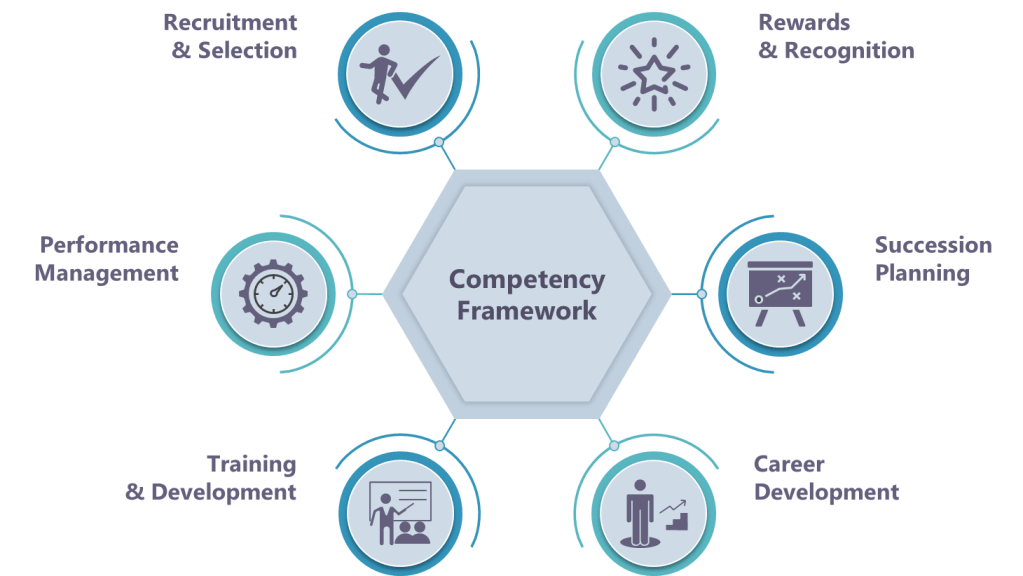
To fully realize the gardener approach, integrate the competency model into every stage of the talent lifecycle:

Recruitment and Selection

  • Role Alignment: Use the competency model to define clear, role-specific requirements—ensuring candidates are evaluated for technical, methodological, social, and self-competencies, not just past experience.
  • Behavioral Interviewing: Structure interviews around observable behaviors and scenarios that reflect the gardener mindset (e.g., “Describe a time you nurtured a process improvement across teams”).

Rewards and Recognition

  • Competency-Based Rewards: Recognize and reward not only outcomes, but also the demonstration of key competencies—such as collaboration, adaptability, and continuous improvement behaviors.
  • Transparency: Use the competency model to provide clarity on what is valued and how employees can be recognized for growing as “quality gardeners.”

Performance Management

  • Objective Assessment: Anchor performance reviews in the competency model, focusing on both results and the behaviors/skills that produced them.
  • Feedback and Growth: Provide structured, actionable feedback linked to specific competencies, supporting a culture of continuous development and accountability.

Training and Development

  • Targeted Learning: Identify gaps at the individual and team level using the competency model, and develop training programs that address all four competency dimensions.
  • Behavioral Focus: Ensure training goes beyond knowledge transfer, emphasizing the practical application and demonstration of new competencies in real-world settings.

Career Development

  • Progression Pathways: Map career paths using the competency model, showing how employees can grow from foundational to advanced levels in each competency dimension.
  • Self-Assessment: Empower employees to self-assess against the model, identify growth areas, and set targeted development goals.

Succession Planning

  • Future-Ready Talent: Use the competency model to identify and develop high-potential employees who exhibit the gardener mindset and can step into critical roles.
  • Capability Mapping: Regularly assess organizational competency strengths and gaps to ensure a robust pipeline of future leaders aligned with the gardener philosophy.

Leadership Call to Action

For quality organizations moving to the gardener approach, the competency model is a strategic lever. By consistently applying the model across recruitment, recognition, performance, development, career progression, and succession, leadership ensures the entire organization is equipped to nurture adaptive, resilient, and high-performing quality systems.

This integrated approach creates clarity, alignment, and a shared vision for what excellence looks like in the gardener era. It enables quality professionals to thrive as cultivators of improvement, collaboration, and innovation—ensuring your quality function remains vital and future-ready.

Reflective Learning to Build Competent Teams

Organizational Competencies

Organizational competencies are the skills, abilities, and knowledge that allow an organization to be successful in achieving its goals. They form the foundation of an organization’s culture, values, and strategy.

Organizational competencies can be broadly divided into two main categories:

  1. Technical Competencies
  2. Non-Technical Competencies (also called General Competencies)

Technical Competencies

Technical competencies are specific skills and knowledge required to perform particular jobs or functions within an organization. They are directly related to the core business activities and technical aspects of the work. For technical competencies:

  • They cover various fields of expertise relevant to the specific work carried out in the organization
  • They are at the heart of what the organizational employees do
  • They allow an organization to produce products or services efficiently and effectively
  • They often require ongoing training and reinforcement to stay current

Non-Technical Competencies

Non-technical competencies, also known as general competencies or soft skills, are broader skills and attributes that are important across various roles and functions. They include:

These competencies are crucial for effective interaction, collaboration, and overall organizational success.

Organizational Competencies for Validation (an example)

For an organization focusing on validation the following competencies would be particularly relevant:

Technical Competencies

    Skill Area

    Key Aspects

    Proficiency Levels

    Beginner

    Intermediate

    Advanced

    Expert

    General CQV Principles

           Modern process validation and guidance 

           Validation design and how to reduce variability

    Able to review a basic protocol

    Able to review/approve Validation document deliverables.

    Understands the importance of a well-defined URS.

           Able to be QEV lead in a small project

           Able to answer questions and guide others in QEV

           Participates in process improvement

           Able to review and approve RTM/SRs

    Able to be QEV lead in a large project project

    Trains and mentors others in QEV

    Leads process improvement initiatives

    Able to provide Quality oversight on the creation of Validation Plans for complex systems and/or projects

    Sets overall CQV strategy

    Recognized as an expert outside of JEB

    Facilities and Utilities

           Oversee Facilities, HVAC and Controlled Environments

           Pharma Water and WFI

           Pure Steam, Compressed Air, Medical Gases

    Understands the principles and GMP requirements

           Applies the principles, activities, and deliverables that constitute an efficient and acceptable approach to demonstrating facility fitness-for-use/qualification

    Guide the Design to Qualification Process for new facilities/utilities or the expansion of existing facilities/utilities

    Able to establish best practices

    Systems and Equipment

           Equipment, including Lab equipment

    Understands the principles and GMP requirements

           Principles, activities, and deliverables that constitute an efficient and acceptable approach to demonstrating equipment fitness-for-use/qualification

    Able to provide overall strategy for large projects

    Able to be QEV lead on complex systems and equipment.

    Able to establish best practices

    Computer Systems and Data Integrity

           Computer lifecycle, including validation

    Understands the principles and GMP requirements

           Able to review CSV documents

           Apply GAMP5 risk based approach

           Day-to-day quality oversight

    Able to provide overall strategy for a risk based GAMP5 approach to computer system quality

    Able to establish best practices

    Asset Lifecycle

           Quality oversight and decision making in the lifecycle asset lifecycle: Plan, acquire, use, maintain, and dispose of assets 

           Can use CMMS to look up Calibrations, Cal schedules and PM schedules

           Quality oversight of asset lifecycle decisions

           Able to provide oversight on Cal/PM frequency

           Able to assess impact to validated state for corrective WO’s.

           Able to establish asset lifecycle for new equipment classes

           Establish risk-based PM for new asset classes

           verification

           Establish asset lifecycle approach

           Serves as the organization’s authority on GMP requirements related to asset management in biotech facilities

           Implements sophisticated risk assessment methodologies tailored to biotech asset management challenges

    Quality Systems

           SOP/WI and other GxP Documents

           Deviation

           Change Control

           Able to use the eQMS

           Deviation reviewer (minor/major)

           Change Control approver

           Document author/approver

           Deviation reviewer (critical)

           Manage umbrella/Parent changes

           Able to set strategic direction

    Cleaning, Sanitization and Sterilization Validation

           Evaluate and execute cleaning practices, limit calculations, scientific rationales, and validation documents 

           Manage the challenges of multi-product facilities in the establishment of limits, determination of validation strategies, and maintaining the validated state

           Differentiate the requirements for cleaning and sterilization validation when using manual, semi-automatic, and automatic cleaning technologies

           Review protocols

           Identify and characterize potential residues including product, processing aids, cleaning agents, and adventitious agents

           Understand Sterilization principles and requirements 

           Create, review and approve scientifically sound rationales, validation protocols, and reports

           Manage and remediate the pitfalls inherent in cleaning after the production of biopharmaceutical and pharmaceutical products

           Define cleaning/sterilization validation strategy

           Implements a lifecycle approach to validation, ensuring continued process verification

           Implements a lifecycle approach to validation, ensuring continued process verification

    Quality Risk Management

           Apply QRM principles according to Q9

           Understands basic risk assessment principles

           Can identify potential hazards and risks

           Familiar with risk matrices and scoring methods

           Participate in a risk assessment

           Conducts thorough risk assessments using established methodologies

           Analyzes risks quantitatively and qualitatively

           Prioritizes risks based on likelihood and impact

           Determine appropriate tools

           Establish risk-based decision-making tools

           Leads complex risk assessments across multiple areas

           Develops new risk assessment methodologies

           Provides expert guidance on risk analysis techniques

           Serves as the organization’s authority on regulatory requirements and expectations related to quality risk management

           Builds a proactive risk culture across the organization, fostering risk awareness at all levels

    Process Validation

           Demonstrating that the manufacturing process can consistently produce a product that meets predetermined specifications and quality attributes.

           Understanding of GMP principles and regulatory requirements

           Basic understanding of GMP principles and regulatory requirements


           Can independently write, approve and execute validation protocols for routine processes

           Ability to develop validation master plans and protocols

           Understanding of critical process parameters (CPPs) and critical quality attributes (CQAs)

           Expertise in designing and implementing complex validation strategies

           Ability to troubleshoot and resolve validation issues

           Deep understanding of regulatory expectations and industry best practices

           Leads cross-functional validation teams for high-impact projects

           Develops innovative validation approaches for novel bioprocesses

           Serves as an organizational authority on validation matters and regulatory interactions


    Non-Technical Competencies:

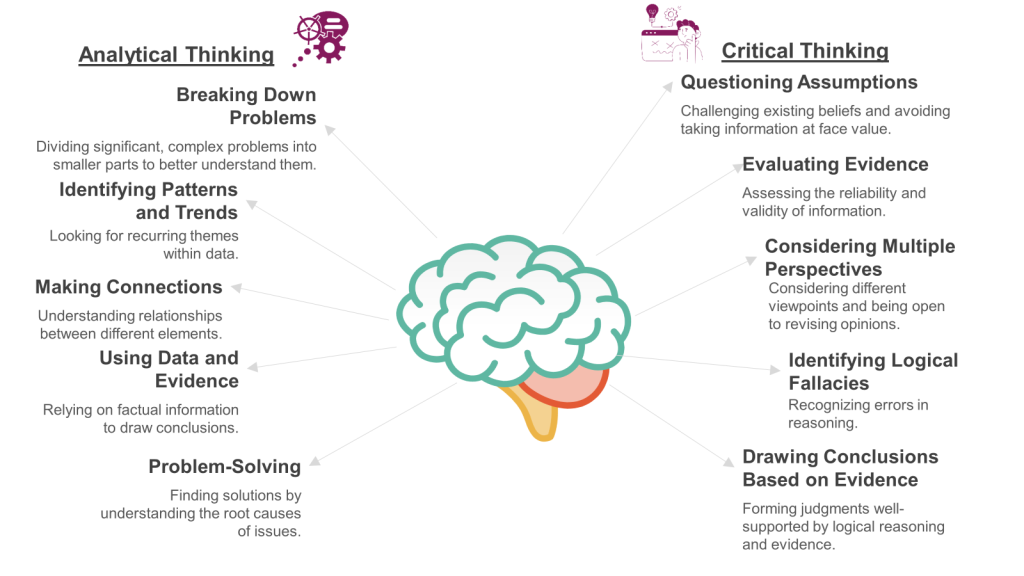
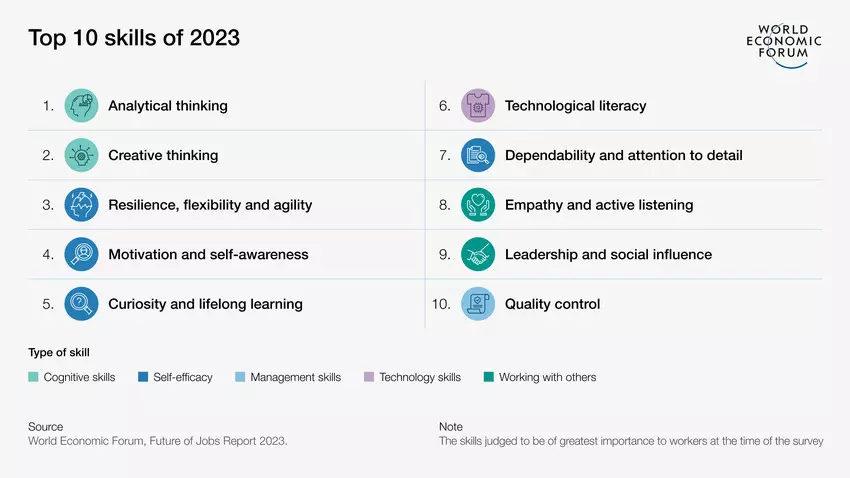
    1. Critical thinking and problem-solving skills
    2. Attention to detail
    3. Project management abilities
    4. Effective communication (both written and verbal)
    5. Teamwork and collaboration skills
    6. Adaptability to changing regulatory environments
    7. Ethical decision-making
    8. Continuous learning and improvement mindset
    9. Leadership and mentoring capabilities
    10. Time management and organizational skills

    Apply Reflective Learning for Continuous Learning

    Reflective learning is a powerful tool that organizations can leverage to build competency and drive continuous improvement. At its core, this approach involves actively analyzing and evaluating experiences and learning processes to enhance understanding and performance across all levels of the organization.

    The process of reflective learning begins with individuals and teams taking the time to step back and critically examine their actions, decisions, and outcomes. This introspection allows them to identify what worked well, what didn’t, and why. By doing so, they can uncover valuable insights that might otherwise go unnoticed in the day-to-day rush of business activities.

    One of the key benefits of reflective learning is its ability to transform tacit knowledge into explicit knowledge. Tacit knowledge is the unspoken, intuitive understanding that individuals develop through experience. By reflecting on and articulating these insights, organizations can capture and share this valuable wisdom, making it accessible to others and fostering a culture of collective learning.

    To implement reflective learning effectively, organizations should create structured opportunities for reflection. This might include regular debriefing sessions after projects, dedicated time for personal reflection, or the use of learning journals. Additionally, leaders should model reflective practices and encourage open and honest discussions about both successes and failures.

    It’s important to note that reflective learning is not just about looking back; it’s also about looking forward. The insights gained through reflection should be used to inform future actions and strategies. This forward-thinking approach helps organizations to be more adaptable and responsive to changing circumstances, ultimately leading to improved performance and innovation.

    By embracing reflective learning as a core organizational practice, companies can create a dynamic environment where continuous learning and improvement become ingrained in the culture. This not only enhances individual and team performance but also contributes to the overall resilience and competitiveness of the organization in an ever-changing business landscape.

    Implement Regular After-Action Reviews

    After-action reviews (AARs) or Lessons Learned are critical to provide a structured way for teams to reflect on projects, initiatives, or events. To implement effective AARs:

    • Schedule them immediately after key milestones or project completions
    • Focus on what was planned, what actually happened, why there were differences, and what can be learned
    • Encourage open and honest discussion without blame
    • Document key insights and action items

    Create a Supportive Environment for Reflection

    Foster a culture that values and encourages reflection:

    • Provide dedicated time and space for individual and group reflection
    • Model reflective practices at the leadership level
    • Recognize and reward insights gained through reflection

    By systematically implementing these practices, organizations can build a strong competency in reflective learning, leading to improved decision-making, innovation, and overall performance. Utilizing a model always helps.

    Kolb’s Reflective Model

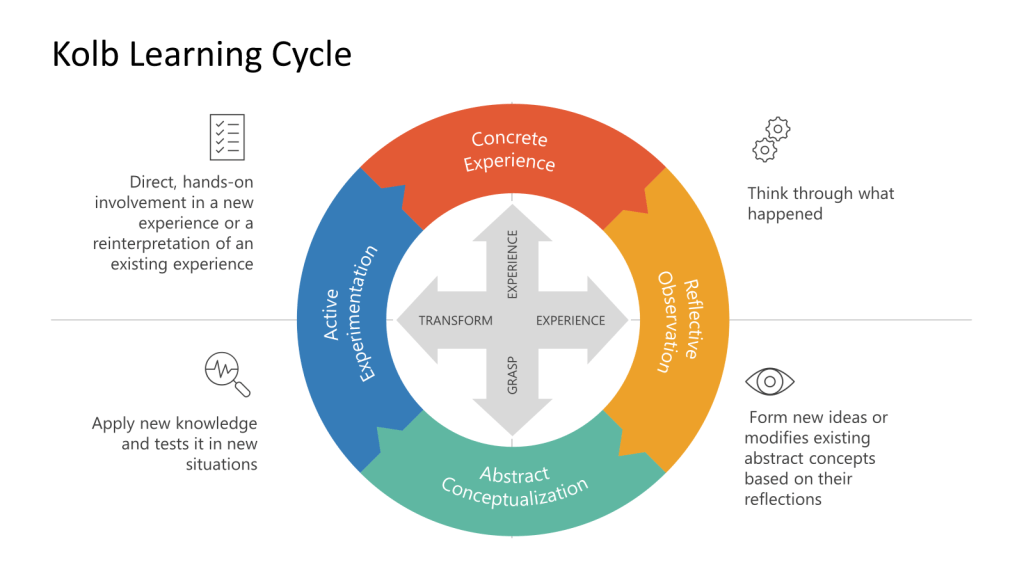
    Kolb’s reflective model, also known as Kolb’s experiential learning cycle, is a widely used framework for understanding how people learn from experience. The model consists of four stages that form a continuous cycle of learning:

    The Four Stages of Kolb’s Reflective Model

    1. Concrete Experience: This is the stage where the learner actively experiences an activity or situation. It involves direct, hands-on involvement in a new experience or a reinterpretation of an existing experience.
    2. Reflective Observation: In this stage, the learner reflects on and reviews the experience. They think about what happened, considering their feelings and the links to their existing knowledge and skills.
    3. Abstract Conceptualization: Here, the learner forms new ideas or modifies existing abstract concepts based on their reflections. This stage involves analyzing the experience and drawing conclusions about what was learned.
    4. Active Experimentation: In the final stage, the learner applies their new knowledge and tests it in new situations. This involves planning how to put the new learning into practice and experimenting with new approaches.

    Applying Kolb’s Model

    Kolb’s reflective model should be utilized as part of knowledge management:

    1. Create Opportunities for Concrete Experiences: Provide employees with hands-on learning experiences, such as job rotations, simulations, or real-world projects.
    2. Encourage Reflection: Set up regular reflection sessions or debriefings after significant experiences. Encourage employees to keep learning journals or participate in group discussions to share their observations.
    3. Facilitate Conceptualization: Provide resources and support for employees to analyze their experiences and form new concepts. This could involve training sessions, mentoring programs, or access to relevant literature and research.
    4. Support Active Experimentation: Create a safe environment for employees to apply their new knowledge and skills. Encourage innovation and provide opportunities for employees to test new ideas in their work.
    5. Integrate the Model into Learning Programs: Design training and development programs that incorporate all four stages of Kolb’s cycle, ensuring a comprehensive learning experience.
    6. Personalize Learning: Recognize that individuals may have preferences for different stages of the cycle. Offer diverse learning opportunities to cater to various learning styles.
    7. Measure and Iterate: Regularly assess the effectiveness of knowledge management initiatives based on Kolb’s model. Use feedback and results to continuously improve the learning process.

    By incorporating Kolb’s reflective model into knowledge management practices, we can create a more holistic and effective approach to learning and development. This can lead to improved knowledge retention, better application of learning to real-world situations, and a more adaptable and skilled workforce.

    Other Experiential Learning Models

    ModelKey ProponentsMain ComponentsUnique Features
    Experiential Learning Theory (ELT)David Kolb1. Concrete Experience
    2. Reflective Observation
    3. Abstract Conceptualization
    4. Active Experimentation
    – Cyclical process
    – Incorporates learning styles (Accommodator, Diverger, Assimilator, Converger)
    Reflective CycleGraham Gibbs1. Description
    2. Feelings
    3. Evaluation
    4. Analysis
    5. Conclusion
    6. Action Plan
    – Structured approach to reflection
    – Emphasizes emotional aspects
    Reflection-in-Action and Reflection-on-ActionDonald Schön1. Reflection-in-action
    2. Reflection-on-action
    – Focuses on professional practice
    – Emphasizes real-time reflection
    Single and Double Loop LearningChris Argyris, Donald Schön1. Single-loop learning
    2. Double-loop learning
    – Distinguishes between adjusting actions and questioning assumptions
    – Applicable to organizational learning
    Jarvis’s ModelPeter JarvisMultiple pathways including:
    1. Non-learning
    2. Non-reflective learning
    3. Reflective learning
    – Expands on Kolb’s work
    – Recognizes various responses to potential learning situations
    Backward DesignGrant Wiggins, Jay McTighe1. Identify desired results
    2. Determine acceptable evidence
    3. Plan learning experiences and instruction
    – Starts with learning outcomes
    – Focuses on designing effective learning experiences

    Applying the Experiential Learning Model to Validation Competencies

    To apply Kolb’s experiential learning model to building an organization’s competency for validation, we can structure the process as follows:

    Concrete Experience

      • Have employees participate in actual validation activities or simulations
      • Provide hands-on training sessions on validation techniques and tools
      • Assign validation tasks to teams in real projects

      Reflective Observation

        • Conduct debriefing sessions after validation activities
        • Encourage employees to keep validation journals or logs
        • Facilitate group discussions to share experiences and observations
        • Review validation results and outcomes as a team

        Abstract Conceptualization

          • Offer formal training on validation principles, methodologies, and best practices
          • Encourage employees to develop validation frameworks or models based on their experiences
          • Analyze validation case studies from other organizations or industries
          • Create validation guidelines and standard operating procedures

          Active Experimentation

            • Implement new validation approaches in upcoming projects
            • Encourage employees to propose and test innovative validation methods
            • Set up pilot programs to trial new validation tools or techniques
            • Assign employees to different types of validation projects to broaden their skills

            To make this process continuous and effective:

            1. Create a validation competency framework with clear learning objectives and skill levels
            2. Develop a mentoring program where experienced team members guide less experienced colleagues
            3. Establish regular knowledge-sharing sessions focused on validation topics
            4. Implement a system for capturing and disseminating lessons learned from validation activities
            5. Use technology platforms to support collaborative learning and information sharing about validation
            6. Regularly assess and update the organization’s validation processes based on learning outcomes
            7. Encourage cross-functional teams to work on validation projects to broaden perspectives
            8. Partner with external experts or organizations to bring in fresh insights and best practices
            9. Recognize and reward employees who demonstrate growth in validation competencies
            10. Integrate validation competency development into performance reviews and career progression paths

            By systematically applying Kolb’s model, we can create a robust learning environment that continuously improves our validation capabilities. This approach ensures that employees not only gain theoretical knowledge but also practical experience, leading to a more competent and adaptable workforce.