The Deep Ownership Paradox: Why It Takes Years to Master What You Think You Already Know

When I encounter professionals who believe they can master a process in six months, I think of something the great systems thinker W. Edwards Deming once observed: “It is not necessary to change. Survival is not mandatory.” The professionals who survive—and more importantly, who drive genuine improvement—understand something that transcends the checkbox mentality: true ownership takes time, patience, and what some might call “stick-to-itness.”

The uncomfortable truth is that most of us confuse familiarity with mastery. We mistake the ability to execute procedures with the deep understanding required to improve them. This confusion has created a generation of professionals who move from role to role, collecting titles and experiences but never developing the profound process knowledge that enables breakthrough improvement. This is equally true on the consultant side.

The cost of this superficial approach extends far beyond individual career trajectories. When organizations lack deep process owners—people who have lived with systems long enough to understand their subtle rhythms and hidden failure modes—they create what I call “quality theater”: elaborate compliance structures that satisfy auditors but fail to serve patients, customers, or the fundamental purpose of pharmaceutical manufacturing.

The Science of Deep Ownership

Recent research in organizational psychology reveals the profound difference between surface-level knowledge and genuine psychological ownership. When employees develop true psychological ownership of their processes, something remarkable happens: they begin to exhibit behaviors that extend far beyond their job descriptions. They proactively identify risks, champion improvements, and develop the kind of intimate process knowledge that enables predictive rather than reactive management.

But here’s what the research also shows: this psychological ownership doesn’t emerge overnight. Studies examining the relationship between tenure and performance consistently demonstrate nonlinear effects. The correlation between tenure and performance actually decreases exponentially over time—but this isn’t because long-tenured employees become less effective. Instead, it reflects the reality that deep expertise follows a complex curve where initial competence gives way to periods of plateau, followed by breakthrough understanding that emerges only after years of sustained engagement.

Consider the findings from meta-analyses of over 3,600 employees across various industries. The relationship between organizational commitment and job performance shows a very strong nonlinear moderating effect based on tenure. The implications are profound: the value of process ownership isn’t linear, and the greatest insights often emerge after years of what might appear to be steady-state performance.

This aligns with what quality professionals intuitively know but rarely discuss: the most devastating process failures often emerge from interactions and edge cases that only become visible after sustained observation. The process owner who has lived through multiple product campaigns, seasonal variations, and equipment lifecycle transitions develops pattern recognition that cannot be captured in procedures or training materials.

The 10,000 Hour Reality in Quality Systems

Malcolm Gladwell’s popularization of the 10,000-hour rule has been both blessing and curse for understanding expertise development. While recent research has shown that deliberate practice accounts for only 18-26% of skill variation—meaning other factors like timing, genetics, and learning environment matter significantly—the core insight remains valid: mastery requires sustained, focused engagement over years, not months.

But the pharmaceutical quality context adds layers of complexity that make the expertise timeline even more demanding. Unlike chess players or musicians who can practice their craft continuously, quality professionals must develop expertise within regulatory frameworks that change, across technologies that evolve, and through organizational transitions that reset context. The “hours” of meaningful practice are often interrupted by compliance activities, reorganizations, and role changes that fragment the learning experience.

More importantly, quality expertise isn’t just about individual skill development—it’s about understanding systems. Deming’s System of Profound Knowledge emphasizes that effective quality management requires appreciation for a system, knowledge about variation, theory of knowledge, and psychology. This multidimensional expertise cannot be compressed into abbreviated timelines, regardless of individual capability or organizational urgency.

The research on mastery learning provides additional insight. True mastery-based approaches require that students achieve deep understanding at each level before progressing to the next. In quality systems, this means that process owners must genuinely understand the current state of their processes—including their failure modes, sources of variation, and improvement potential—before they can effectively drive transformation.

The Hidden Complexity of Process Ownership

Many of our organizations struggle with “iceberg phenomenon”: the visible aspects of process ownership—procedure compliance, metric reporting, incident response—represent only a small fraction of the role’s true complexity and value.

Effective process owners develop several types of knowledge that accumulate over time:

  • Tacit Process Knowledge: Understanding the subtle indicators that precede process upsets, the informal workarounds that maintain operations, and the human factors that influence process performance. This knowledge emerges through repeated exposure to process variations and cannot be documented or transferred through training.
  • Systemic Understanding: Comprehending how their process interacts with upstream and downstream activities, how changes in one area create ripple effects throughout the system, and how to navigate the political and technical constraints that shape improvement opportunities. This requires exposure to multiple improvement cycles and organizational changes.
  • Regulatory Intelligence: Developing nuanced understanding of how regulatory expectations apply to their specific context, how to interpret evolving guidance, and how to balance compliance requirements with operational realities. This expertise emerges through regulatory interactions, inspection experiences, and industry evolution.
  • Change Leadership Capability: Building the credibility, relationships, and communication skills necessary to drive improvement in complex organizational environments. This requires sustained engagement with stakeholders, demonstrated success in previous initiatives, and deep understanding of organizational dynamics.

Each of these knowledge domains requires years to develop, and they interact synergistically. The process owner who has lived through equipment upgrades, regulatory inspections, organizational changes, and improvement initiatives develops a form of professional judgment that cannot be replicated through rotation or abbreviated assignments.

The Deming Connection: Systems Thinking Requires Time

Deming’s philosophy of continuous improvement provides a crucial framework for understanding why process ownership requires sustained engagement. His approach to quality was holistic, emphasizing systems thinking and long-term perspective over quick fixes and individual blame.

Consider Deming’s first point: “Create constancy of purpose toward improvement of product and service.” This isn’t about maintaining consistency in procedures—it’s about developing the deep understanding necessary to identify genuine improvement opportunities rather than cosmetic changes that satisfy short-term pressures.

The PDCA cycle that underlies Deming’s approach explicitly requires iterative learning over multiple cycles. Each cycle builds on previous learning, and the most valuable insights often emerge after several iterations when patterns become visible and root causes become clear. Process owners who remain with their systems long enough to complete multiple cycles develop qualitatively different understanding than those who implement single improvements and move on.

Deming’s emphasis on driving out fear also connects to the tenure question. Organizations that constantly rotate process owners signal that deep expertise isn’t valued, creating environments where people focus on short-term achievements rather than long-term system health. The psychological safety necessary for honest problem-solving and innovative improvement requires stable relationships built over time.

The Current Context: Why Stick-to-itness is Endangered

The pharmaceutical industry’s current talent management practices work against the development of deep process ownership. Organizations prioritize broad exposure over deep expertise, encourage frequent role changes to accelerate career progression, and reward visible achievements over sustained system stewardship.

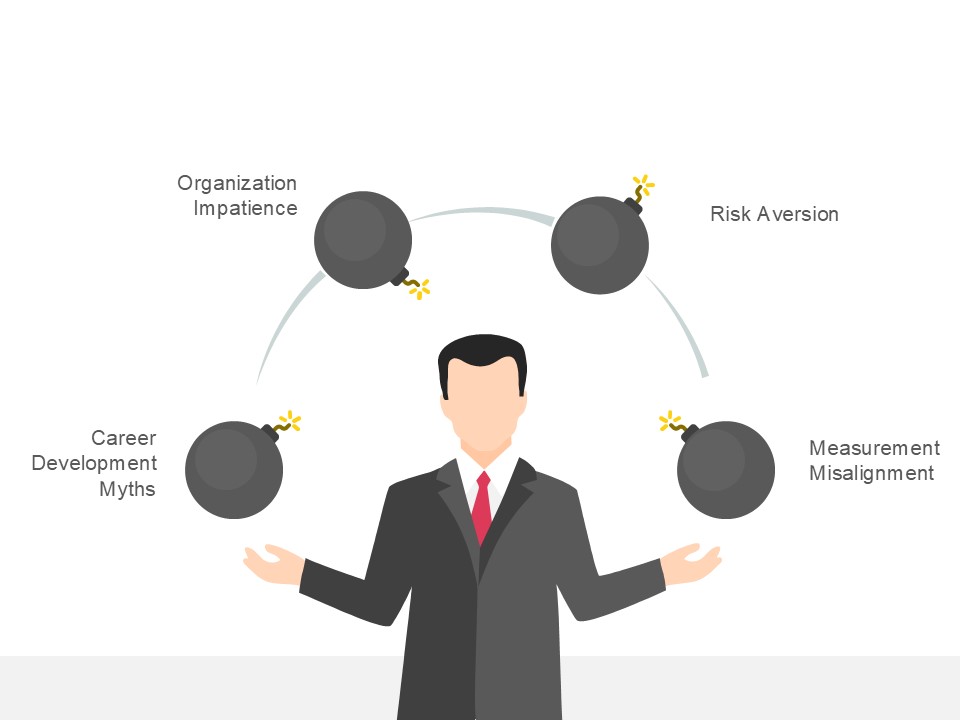
This approach has several drivers, most of them understandable but ultimately counterproductive:

  • Career Development Myths: The belief that career progression requires constant role changes, preventing the development of deep expertise in any single area. This creates professionals with broad but shallow knowledge who lack the depth necessary to drive breakthrough improvement.
  • Organizational Impatience: Pressure to demonstrate rapid improvement, leading to premature conclusions about process owner effectiveness and frequent role changes before mastery can develop. This prevents organizations from realizing the compound benefits of sustained process ownership.
  • Risk Aversion: Concern that deep specialization creates single points of failure, leading to policies that distribute knowledge across multiple people rather than developing true expertise. This approach reduces organizational vulnerability to individual departures but eliminates the possibility of breakthrough improvement that requires deep understanding.
  • Measurement Misalignment: Performance management systems that reward visible activity over sustained stewardship, creating incentives for process owners to focus on quick wins rather than long-term system development.

The result is what I observe throughout the industry: sophisticated quality systems managed by well-intentioned professionals who lack the deep process knowledge necessary to drive genuine improvement. We have created environments where people are rewarded for managing systems they don’t truly understand, leading to the elaborate compliance theater that satisfies auditors but fails to protect patients.

Building Genuine Process Ownership Capability

Creating conditions for deep process ownership requires intentional organizational design that supports sustained engagement rather than constant rotation. This isn’t about keeping people in the same roles indefinitely—it’s about creating career paths that value depth alongside breadth and recognize the compound benefits of sustained expertise development.

Redefining Career Success: Organizations must develop career models that reward deep expertise alongside traditional progression. This means creating senior individual contributor roles, recognizing process mastery in compensation and advancement decisions, and celebrating sustained system stewardship as a form of leadership.

Supporting Long-term Engagement: Process owners need organizational support to sustain motivation through the inevitable plateaus and frustrations of deep system work. This includes providing resources for continuous learning, connecting them with external expertise, and ensuring their contributions are visible to senior leadership.

Creating Learning Infrastructure: Deep process ownership requires systematic approaches to knowledge capture, reflection, and improvement. Organizations must provide time and tools for process owners to document insights, conduct retrospective analyses, and share learning across the organization.

Building Technical Career Paths: The industry needs career models that allow technical professionals to advance without moving into management roles that distance them from process ownership. This requires creating parallel advancement tracks, appropriate compensation structures, and recognition systems that value technical leadership.

Measuring Long-term Value: Performance management systems must evolve to recognize the compound benefits of sustained process ownership. This means developing metrics that capture system stability, improvement consistency, and knowledge development rather than focusing exclusively on short-term achievements.

The Connection to Jobs-to-Be-Done

The Jobs-to-Be-Done tool I explored iprovides valuable insight into why process ownership requires sustained engagement. Organizations don’t hire process owners to execute procedures—they hire them to accomplish several complex jobs that require deep system understanding:

Knowledge Development: Building comprehensive understanding of process behavior, failure modes, and improvement opportunities that enables predictive rather than reactive management.

System Stewardship: Maintaining process health through minor adjustments, preventive actions, and continuous optimization that prevents major failures and enables consistent performance.

Change Leadership: Driving improvements that require deep technical understanding, stakeholder engagement, and change management capabilities developed through sustained experience.

Organizational Memory: Serving as repositories of process history, lessons learned, and contextual knowledge that prevents the repetition of past mistakes and enables informed decision-making.

Each of these jobs requires sustained engagement to accomplish effectively. The process owner who moves to a new role after 18 months may have learned the procedures, but they haven’t developed the deep understanding necessary to excel at these higher-order responsibilities.

The Path Forward: Embracing the Long View

We need to fundamentally rethink how we develop and deploy process ownership capability in pharmaceutical quality systems. This means acknowledging that true expertise takes time, creating organizational conditions that support sustained engagement, and recognizing the compound benefits of deep process knowledge.

The choice is clear: continue cycling process owners through abbreviated assignments that prevent the development of genuine expertise, or build career models and organizational practices that enable deep process ownership to flourish. In an industry where process failures can result in patient harm, product recalls, and regulatory action, only the latter approach offers genuine protection.

True process ownership isn’t something we implement because best practices require it. It’s a capability we actively cultivate because it makes us demonstrably better at protecting patients and ensuring product quality. When we design organizational systems around the jobs that deep process ownership accomplishes—knowledge development, system stewardship, change leadership, and organizational memory—we create competitive advantages that extend far beyond compliance.

Organizations that recognize the value of sustained process ownership and create conditions for its development will build capabilities that enable breakthrough improvement and genuine competitive advantage. Those that continue to treat process ownership as a rotational assignment will remain trapped in the cycle of elaborate compliance theater that satisfies auditors but fails to serve the fundamental purpose of pharmaceutical manufacturing.

Process ownership should not be something we implement because organizational charts require it. It should be a capability we actively develop because it makes us demonstrably better at the work that matters: protecting patients, ensuring product quality, and advancing the science of pharmaceutical manufacturing. When we embrace the deep ownership paradox—that mastery requires time, patience, and sustained engagement—we create the conditions for the kind of breakthrough improvement that our industry desperately needs.

In quality systems, as in life, the most valuable capabilities cannot be rushed, shortcuts cannot be taken, and true expertise emerges only through sustained engagement with the work that matters. This isn’t just good advice for individual career development—it’s the foundation for building pharmaceutical quality systems that genuinely serve patients and advance human health.

Further Reading

Kausar, F., Ijaz, M. U., Rasheed, M., Suhail, A., & Islam, U. (2025). Empowered, accountable, and committed? Applying self-determination theory to examine work-place procrastination. BMC Psychology13, 620. https://doi.org/10.1186/s40359-025-02968-7

Available at: https://pmc.ncbi.nlm.nih.gov/articles/PMC12144702/

Kim, A. J., & Chung, M.-H. (2023). Psychological ownership and ambivalent employee behaviors: A moderated mediation model. SAGE Open13(1). https://doi.org/10.1177/21582440231162535

Available at: https://journals.sagepub.com/doi/full/10.1177/21582440231162535

Wright, T. A., & Bonett, D. G. (2002). The moderating effects of employee tenure on the relation between organizational commitment and job performance: A meta-analysis. Journal of Applied Psychology87(6), 1183-1190. https://doi.org/10.1037/0021-9010.87.6.1183

Available at: https://pubmed.ncbi.nlm.nih.gov/12558224/

Building a Competency Framework for Quality Professionals as System Gardeners

Quality management requires a sophisticated blend of skills that transcend traditional audit and compliance approaches. As organizations increasingly recognize quality systems as living entities rather than static frameworks, quality professionals must evolve from mere enforcers to nurturers—from auditors to gardeners. This paradigm shift demands a new approach to competency development that embraces both technical expertise and adaptive capabilities.

Building Competencies: The Integration of Skills, Knowledge, and Behavior

A comprehensive competency framework for quality professionals must recognize that true competency is more than a simple checklist of abilities. Rather, it represents the harmonious integration of three critical elements: skills, knowledge, and behaviors. Understanding how these elements interact and complement each other is essential for developing quality professionals who can thrive as “system gardeners” in today’s complex organizational ecosystems.

The Competency Triad

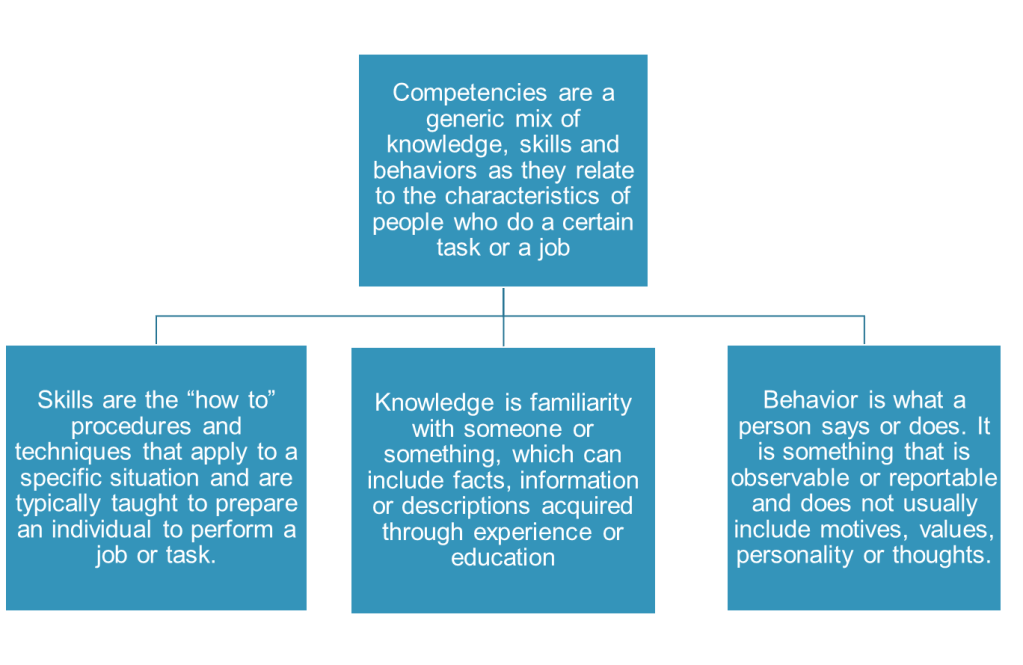
Competencies can be defined as the measurable or observable knowledge, skills, abilities, and behaviors critical to successful job performance. They represent a holistic approach that goes beyond what employees can do to include how they apply their capabilities in real-world contexts.

Knowledge: The Foundation of Understanding

Knowledge forms the theoretical foundation upon which all other aspects of competency are built. For quality professionals, this includes:

  • Comprehension of regulatory frameworks and compliance requirements
  • Understanding of statistical principles and data analysis methodologies
  • Familiarity with industry-specific processes and technical standards
  • Awareness of organizational systems and their interconnections

Knowledge is demonstrated through consistent application to real-world scenarios, where quality professionals translate theoretical understanding into practical solutions. For example, a quality professional might demonstrate knowledge by correctly interpreting a regulatory requirement and identifying its implications for a manufacturing process.

Skills: The Tools for Implementation

Skills represent the practical “how-to” abilities that quality professionals use to implement their knowledge effectively. These include:

  • Technical skills like statistical process control and data visualization
  • Methodological skills such as root cause analysis and risk assessment
  • Social skills including facilitation and stakeholder management
  • Self-management skills like prioritization and adaptability

Skills are best measured through observable performance in relevant contexts. A quality professional might demonstrate skill proficiency by effectively facilitating a cross-functional investigation meeting that leads to meaningful corrective actions.

Behaviors: The Expression of Competency

Behaviors are the observable actions and reactions that reflect how quality professionals apply their knowledge and skills in practice. These include:

  • Demonstrating curiosity when investigating deviations
  • Showing persistence when facing resistance to quality initiatives
  • Exhibiting patience when coaching others on quality principles
  • Displaying integrity when reporting quality issues

Behaviors often distinguish exceptional performers from average ones. While two quality professionals might possess similar knowledge and skills, the one who consistently demonstrates behaviors aligned with organizational values and quality principles will typically achieve superior results.

Building an Integrated Competency Development Approach

To develop well-rounded quality professionals who embody all three elements of competency, organizations should:

  1. Map the Competency Landscape: Create a comprehensive inventory of the knowledge, skills, and behaviors required for each quality role, categorized by proficiency level.
  2. Implement Multi-Modal Development: Recognize that different competency elements require different development approaches:
    • Knowledge is often best developed through structured learning, reading, and formal education
    • Skills typically require practice, coaching, and experiential learning
    • Behaviors are shaped through modeling, feedback, and reflective practice
  3. Assess Holistically: Develop assessment methods that evaluate all three elements:
    • Knowledge assessments through tests, case studies, and discussions
    • Skill assessments through demonstrations, simulations, and work products
    • Behavioral assessments through observation, peer feedback, and self-reflection
  4. Create Developmental Pathways: Design career progression frameworks that clearly articulate how knowledge, skills, and behaviors should evolve as quality professionals advance from foundational to leadership roles.

By embracing this integrated approach to competency development, organizations can nurture quality professionals who not only know what to do and how to do it, but who also consistently demonstrate the behaviors that make quality initiatives successful. These professionals will be equipped to serve as true “system gardeners,” cultivating environments where quality naturally flourishes rather than merely enforcing compliance with standards.

Understanding the Four Dimensions of Professional Skills

A comprehensive competency framework for quality professionals should address four fundamental skill dimensions that work in harmony to create holistic expertise:

Technical Skills: The Roots of Quality Expertise

Technical skills form the foundation upon which all quality work is built. For quality professionals, these specialized knowledge areas provide the essential tools needed to assess, measure, and improve systems.

Examples for Quality Gardeners:

  • Mastery of statistical process control and data analysis methodologies
  • Deep understanding of regulatory requirements and compliance frameworks
  • Proficiency in quality management software and digital tools
  • Knowledge of industry-specific technical processes (e.g., aseptic processing, sterilization validation, downstream chromatography)

Technical skills enable quality professionals to diagnose system health with precision—similar to how a gardener understands soil chemistry and plant physiology.

Methodological Skills: The Framework for System Cultivation

Methodological skills represent the structured approaches and techniques that quality professionals use to organize their work. These skills provide the scaffolding that supports continuous improvement and systematic problem-solving.

Examples for Quality Gardeners:

  • Application of problem solving methodologies
  • Risk management framework, methodology and and tools
  • Design and execution of effective audit programs
  • Knowledge management to capture insights and lessons learned

As gardeners apply techniques like pruning, feeding, and crop rotation, quality professionals use methodological skills to cultivate environments where quality naturally thrives.

Social Skills: Nurturing Collaborative Ecosystems

Social skills facilitate the human interactions necessary for quality to flourish across organizational boundaries. In living quality systems, these skills help create an environment where collaboration and improvement become cultural norms.

Examples for Quality Gardeners:

  • Coaching stakeholders rather than policing them
  • Facilitating cross-functional improvement initiatives
  • Mediating conflicts around quality priorities
  • Building trust through transparent communication
  • Inspiring leadership that emphasizes quality as shared responsibility

Just as gardeners create environments where diverse species thrive together, quality professionals with strong social skills foster ecosystems where teams naturally collaborate toward excellence.

Self-Skills: Personal Adaptability and Growth

Self-skills represent the quality professional’s ability to manage themselves effectively in dynamic environments. These skills are especially crucial in today’s volatile and complex business landscape.

Examples for Quality Gardeners:

  • Adaptability to changing regulatory landscapes and business priorities
  • Resilience when facing resistance to quality initiatives
  • Independent decision-making based on principles rather than rules
  • Continuous personal development and knowledge acquisition
  • Working productively under pressure

Like gardeners who must adapt to changing seasons and unexpected weather patterns, quality professionals need strong self-management skills to thrive in unpredictable environments.

DimensionDefinitionExamplesImportance
Technical SkillReferring to the specialized knowledge and practical skills– Mastering data analysis
– Understanding aseptic processing or freeze drying
Fundamental for any professional role; influences the ability to effectively perform specialized tasks
Methodological SkillAbility to apply appropriate techniques and methods– Applying Scrum or Lean Six Sigma
– Documenting and transferring insights into knowledge
Essential to promote innovation, strategic thinking, and investigation of deviations
Social SkillSkills for effective interpersonal interactions– Promoting collaboration
– Mediating team conflicts
– Inspiring leadership
Important in environments that rely on teamwork, dynamics, and culture
Self-SkillAbility to manage oneself in various professional contexts– Adapting to a fast-paced work environment
– Working productively under pressure
– Independent decision-making
Crucial in roles requiring a high degree of autonomy, such as leadership positions or independent work environments

Developing a Competency Model for Quality Gardeners

Building an effective competency model for quality professionals requires a systematic approach that aligns individual capabilities with organizational needs.

Step 1: Define Strategic Goals and Identify Key Roles

Begin by clearly articulating how quality contributes to organizational success. For a “living systems” approach to quality, goals might include:

  • Cultivating adaptive quality systems that evolve with the organization
  • Building resilience to regulatory changes and market disruptions
  • Fostering a culture where quality is everyone’s responsibility

From these goals, identify the critical roles needed to achieve them, such as:

  • Quality System Architects who design the overall framework
  • Process Gardeners who nurture specific quality processes
  • Cross-Pollination Specialists who transfer best practices across departments
  • System Immunologists who identify and respond to potential threats

Given your organization, you probably will have more boring titles than these. I certainly do, but it is still helpful to use the names when planning and imagining.

Step 2: Identify and Categorize Competencies

For each role, define the specific competencies needed across the four skill dimensions. For example:

Quality System Architect

  • Technical: Understanding of regulatory frameworks and system design principles
  • Methodological: Expertise in process mapping and system integration
  • Social: Ability to influence across the organization and align diverse stakeholders
  • Self: Strategic thinking and long-term vision implementation

Process Gardener

  • Technical: Deep knowledge of specific processes and measurement systems
  • Methodological: Proficiency in continuous improvement and problem-solving techniques
  • Social: Coaching skills and ability to build process ownership
  • Self: Patience and persistence in nurturing gradual improvements

Step 3: Create Behavioral Definitions

Develop clear behavioral indicators that demonstrate proficiency at different levels. For example, for the competency “Cultivating Quality Ecosystems”:

Foundational level: Understands basic principles of quality culture and can implement prescribed improvement tools

Intermediate level: Adapts quality approaches to fit specific team environments and facilitates process ownership among team members

Advanced level: Creates innovative approaches to quality improvement that harness the natural dynamics of the organization

Leadership level: Transforms organizational culture by embedding quality thinking into all business processes and decision-making structures

Step 4: Map Competencies to Roles and Development Paths

Create a comprehensive matrix that aligns competencies with roles and shows progression paths. This allows individuals to visualize their development journey and organizations to identify capability gaps.

For example:

CompetencyQuality SpecialistProcess GardenerQuality System Architect
Statistical AnalysisIntermediateAdvancedIntermediate
Process ImprovementFoundationalAdvancedIntermediate
Stakeholder EngagementFoundationalIntermediateAdvanced
Systems ThinkingFoundationalIntermediateAdvanced

Building a Training Plan for Quality Gardeners

A well-designed training plan translates the competency model into actionable development activities for each individual.

Step 1: Job Description Analysis

Begin by analyzing job descriptions to identify the specific processes and roles each quality professional interacts with. For example, a Quality Control Manager might have responsibilities for:

  • Leading inspection readiness activities
  • Supporting regulatory site inspections
  • Participating in vendor management processes
  • Creating and reviewing quality agreements
  • Managing deviations, change controls, and CAPAs

Step 2: Role Identification

For each job responsibility, identify the specific roles within relevant processes:

ProcessRole
Inspection ReadinessLead
Regulatory Site InspectionsSupport
Vendor ManagementParticipant
Quality AgreementsAuthor/Reviewer
Deviation/CAPAAuthor/Reviewer/Approver
Change ControlAuthor/Reviewer/Approver

Step 3: Training Requirements Mapping

Working with process owners, determine the training requirements for each role. Consider creating modular curricula that build upon foundational skills:

Foundational Quality Curriculum: Regulatory basics, quality system overview, documentation standards

Technical Writing Curriculum: Document creation, effective review techniques, technical communication

Process-Specific Curricula: Tailored training for each process (e.g., change control, deviation management)

Step 4: Implementation and Evolution

Recognize that like the quality systems they support, training plans should evolve over time:

  • Update as job responsibilities change
  • Adapt as processes evolve
  • Incorporate feedback from practical application
  • Balance formal training with experiential learning opportunities

Cultivating Excellence Through Competency Development

Building a competency framework aligned with the “living systems” view of quality management transforms how organizations approach quality professional development. By nurturing technical, methodological, social, and self-skills in balance, organizations create quality professionals who act as true gardeners—professionals who cultivate environments where quality naturally flourishes rather than imposing it through rigid controls.

As quality systems continue to evolve, the most successful organizations will be those that invest in developing professionals who can adapt and thrive amid complexity. These “quality gardeners” will lead the way in creating systems that, like healthy ecosystems, become more resilient and vibrant over time.

Applying the Competency Model

For organizational leadership in quality functions, adopting a competency model is a transformative step toward building a resilient, adaptive, and high-performing team—one that nurtures quality systems as living, evolving ecosystems rather than static structures. The competency model provides a unified language and framework to define, develop, and measure the capabilities needed for success in this gardener paradigm.

The Four Dimensions of the Competency Model

Competency Model DimensionDefinitionExamplesStrategic Importance
Technical CompetencySpecialized knowledge and practical abilities required for quality roles– Understanding aseptic processing
– Mastering root cause analysis
– Operating quality management software
Fundamental for effective execution of specialized quality tasks and ensuring compliance
Methodological CompetencyAbility to apply structured techniques, frameworks, and continuous improvement methods– Applying Lean Six Sigma
– Documenting and transferring process knowledge
– Designing audit frameworks
Drives innovation, strategic problem-solving, and systematic improvement of quality processes
Social CompetencySkills for effective interpersonal interactions and collaboration– Facilitating cross-functional teams
– Mediating conflicts
– Coaching and inspiring others
Essential for cultivating a culture of shared ownership and teamwork in quality initiatives
Self-CompetencyCapacity to manage oneself, adapt, and demonstrate resilience in dynamic environments– Adapting to change
– Working under pressure
– Exercising independent judgment
Crucial for autonomy, leadership, and thriving in evolving, complex quality environments

Leveraging the Competency Model Across Organizational Practices

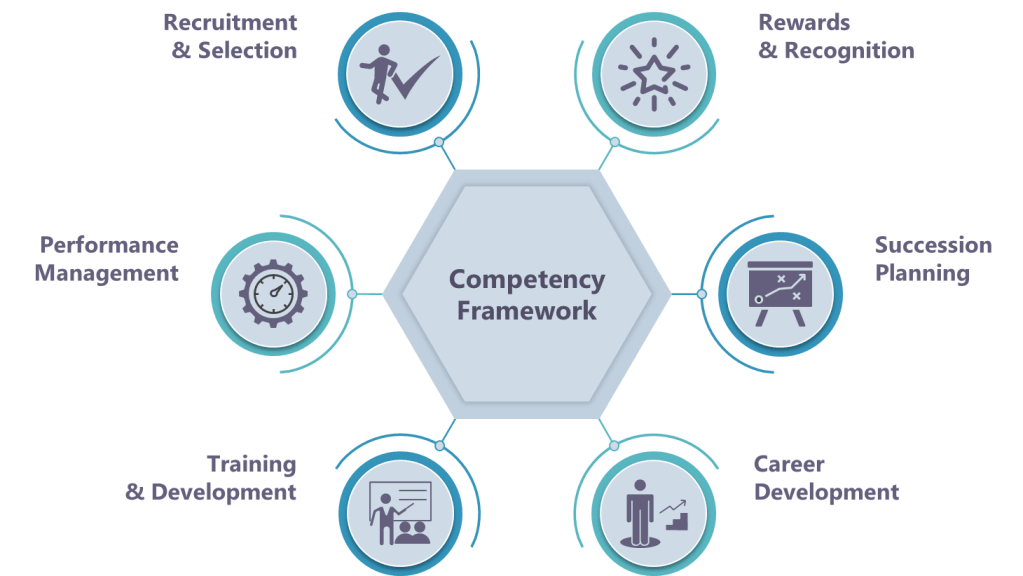
To fully realize the gardener approach, integrate the competency model into every stage of the talent lifecycle:

Recruitment and Selection

  • Role Alignment: Use the competency model to define clear, role-specific requirements—ensuring candidates are evaluated for technical, methodological, social, and self-competencies, not just past experience.
  • Behavioral Interviewing: Structure interviews around observable behaviors and scenarios that reflect the gardener mindset (e.g., “Describe a time you nurtured a process improvement across teams”).

Rewards and Recognition

  • Competency-Based Rewards: Recognize and reward not only outcomes, but also the demonstration of key competencies—such as collaboration, adaptability, and continuous improvement behaviors.
  • Transparency: Use the competency model to provide clarity on what is valued and how employees can be recognized for growing as “quality gardeners.”

Performance Management

  • Objective Assessment: Anchor performance reviews in the competency model, focusing on both results and the behaviors/skills that produced them.
  • Feedback and Growth: Provide structured, actionable feedback linked to specific competencies, supporting a culture of continuous development and accountability.

Training and Development

  • Targeted Learning: Identify gaps at the individual and team level using the competency model, and develop training programs that address all four competency dimensions.
  • Behavioral Focus: Ensure training goes beyond knowledge transfer, emphasizing the practical application and demonstration of new competencies in real-world settings.

Career Development

  • Progression Pathways: Map career paths using the competency model, showing how employees can grow from foundational to advanced levels in each competency dimension.
  • Self-Assessment: Empower employees to self-assess against the model, identify growth areas, and set targeted development goals.

Succession Planning

  • Future-Ready Talent: Use the competency model to identify and develop high-potential employees who exhibit the gardener mindset and can step into critical roles.
  • Capability Mapping: Regularly assess organizational competency strengths and gaps to ensure a robust pipeline of future leaders aligned with the gardener philosophy.

Leadership Call to Action

For quality organizations moving to the gardener approach, the competency model is a strategic lever. By consistently applying the model across recruitment, recognition, performance, development, career progression, and succession, leadership ensures the entire organization is equipped to nurture adaptive, resilient, and high-performing quality systems.

This integrated approach creates clarity, alignment, and a shared vision for what excellence looks like in the gardener era. It enables quality professionals to thrive as cultivators of improvement, collaboration, and innovation—ensuring your quality function remains vital and future-ready.

Emergence in the Quality System

The concept of emergence—where complex behaviors arise unpredictably from interactions among simpler components—has haunted and inspired quality professionals since Aristotle first observed that “the whole is something besides the parts.” In modern quality systems, this ancient paradox takes new form: our meticulously engineered controls often birth unintended consequences, from phantom batch failures to self-reinforcing compliance gaps. Understanding emergence isn’t just an academic exercise—it’s a survival skill in an era where hyperconnected processes and globalized supply chains amplify systemic unpredictability.

The Spectrum of Emergence: From Predictable to Baffling

Emergence manifests across a continuum of complexity, each type demanding distinct management approaches:

1. Simple Emergence
Predictable patterns emerge from component interactions, observable even in abstracted models. Consider document control workflows: while individual steps like review or approval seem straightforward, their sequencing creates emergent properties like approval cycle times. These can be precisely modeled using flowcharts or digital twins, allowing proactive optimization.

2. Weak Emergence
Behaviors become explainable only after they occur, requiring detailed post-hoc analysis. A pharmaceutical company’s CAPA system might show seasonal trends in effectiveness—a pattern invisible in individual case reviews but emerging from interactions between manufacturing schedules, audit cycles, and supplier quality fluctuations. Weak emergence often reveals itself through advanced analytics like machine learning clustering.

3. Multiple Emergence
Here, system behaviors directly contradict component properties. A validated sterile filling line passing all IQ/OQ/PQ protocols might still produce unpredictable media fill failures when integrated with warehouse scheduling software. This “emergent invalidation” stems from hidden interaction vectors that only manifest at full operational scale.

4. Strong Emergence
Consistent with components but unpredictably manifested, strong emergence plagues culture-driven quality systems. A manufacturer might implement identical training programs across global sites, yet some facilities develop proactive quality innovation while others foster blame-avoidance rituals. The difference emerges from subtle interactions between local leadership styles and corporate KPIs.

5. Spooky Emergence
The most perplexing category, where system behaviors defy both component properties and simulation. A medical device company once faced identical cleanrooms producing statistically divergent particulate counts—despite matching designs, procedures, and personnel. Root cause analysis eventually traced the emergence to nanometer-level differences in HVAC duct machining, interacting with shift-change lighting schedules to alter airflow dynamics.

TypeCharacteristicsQuality System Example
SimplePredictable through component analysisDocument control workflows
WeakExplainable post-occurrence through detailed modelingCAPA effectiveness trends
MultipleContradicts component properties, defies simulationValidated processes failing at scale
StrongConsistent with components but unpredictably manifestedCulture-driven quality behaviors
SpookyDefies component properties and simulation entirelyPhantom batch failures in identical systems

The Modern Catalysts of Emergence

Three forces amplify emergence in contemporary quality systems:

Hyperconnected Processes

IoT-enabled manufacturing equipment generates real-time data avalanches. A biologics plant’s environmental monitoring system might integrate 5,000 sensors updating every 15 seconds. The emergent property? A “data tide” that overwhelms traditional statistical process control, requiring AI-driven anomaly detection to discern meaningful signals.

Compressed Innovation Cycles

Compressed innovation cycles are transforming the landscape of product development and quality management. In this new paradigm, the pressure to deliver products faster—whether due to market demands, technological advances, or public health emergencies—means that the traditional, sequential approach to development is replaced by a model where multiple phases run in parallel. Design, manufacturing, and validation activities that once followed a linear path now overlap, requiring organizations to verify quality in real time rather than relying on staged reviews and lengthy data collection.

One of the most significant consequences of this acceleration is the telescoping of validation windows. Where stability studies and shelf-life determinations once spanned years, they are now compressed into a matter of months or even weeks. This forces quality teams to make critical decisions based on limited data, often relying on predictive modeling and statistical extrapolation to fill in the gaps. The result is what some call “validation debt”—a situation where the pace of development outstrips the accumulation of empirical evidence, leaving organizations to manage risks that may not be fully understood until after product launch.

Regulatory frameworks are also evolving in response to compressed innovation cycles. Instead of the traditional, comprehensive submission and review process, regulators are increasingly open to iterative, rolling reviews and provisional specifications that can be adjusted as more data becomes available post-launch. This shift places greater emphasis on computational evidence, such as in silico modeling and digital twins, rather than solely on physical testing and historical precedent.

The acceleration of development timelines amplifies the risk of emergent behaviors within quality systems. Temporal compression means that components and subsystems are often scaled up and integrated before they have been fully characterized or validated in isolation. This can lead to unforeseen interactions and incompatibilities that only become apparent at the system level, sometimes after the product has reached the market. The sheer volume and velocity of data generated in these environments can overwhelm traditional quality monitoring tools, making it difficult to identify and respond to critical quality attributes in a timely manner.

Another challenge arises from the collision of different quality management protocols. As organizations attempt to blend frameworks such as GMP, Agile, and Lean to keep pace with rapid development, inconsistencies and gaps can emerge. Cross-functional teams may interpret standards differently, leading to confusion or conflicting priorities that undermine the integrity of the quality system.

The systemic consequences of compressed innovation cycles are profound. Cryptic interaction pathways can develop, where components that performed flawlessly in isolation begin to interact in unexpected ways at scale. Validation artifacts—such as artificial stability observed in accelerated testing—may fail to predict real-world performance, especially when environmental variables or logistics introduce new stressors. Regulatory uncertainty increases as control strategies become obsolete before they are fully implemented, and critical process parameters may shift unpredictably during technology transfer or scale-up.

To navigate these challenges, organizations are adopting adaptive quality strategies. Predictive quality modeling, using digital twins and machine learning, allows teams to simulate thousands of potential interaction scenarios and forecast failure modes even with incomplete data. Living control systems, powered by AI and continuous process verification, enable dynamic adjustment of specifications and risk priorities as new information emerges. Regulatory agencies are also experimenting with co-evolutionary approaches, such as shared industry databases for risk intelligence and regulatory sandboxes for testing novel quality controls.

Ultimately, compressed innovation cycles demand a fundamental rethinking of quality management. The focus shifts from simply ensuring compliance to actively navigating complexity and anticipating emergent risks. Success in this environment depends on building quality systems that are not only robust and compliant, but also agile and responsive—capable of detecting, understanding, and adapting to surprises as they arise in real time.

Supply Chain Entanglement

Globalization has fundamentally transformed supply chains, creating vast networks that span continents and industries. While this interconnectedness has brought about unprecedented efficiencies and access to resources, it has also introduced a web of hidden interaction vectors—complex, often opaque relationships and dependencies that can amplify both risk and opportunity in ways that are difficult to predict or control.

At the heart of this complexity is the fragmentation of production across multiple jurisdictions. This spatial and organizational dispersion means that disruptions—whether from geopolitical tensions, natural disasters, regulatory changes, or even cyberattacks—can propagate through the network in unexpected ways, sometimes surfacing as quality issues, delays, or compliance failures far from the original source of the problem.

Moreover, the rise of powerful transnational suppliers, sometimes referred to as “Big Suppliers,” has shifted the balance of power within global value chains. These entities do not merely manufacture goods; they orchestrate entire ecosystems of production, labor, and logistics across borders. Their decisions about sourcing, labor practices, and compliance can have ripple effects throughout the supply chain, influencing not just operational outcomes but also the diffusion of norms and standards. This reconsolidation at the supplier level complicates the traditional view that multinational brands are the primary drivers of supply chain governance, revealing instead a more distributed and dynamic landscape of influence.

The hidden interaction vectors created by globalization are further obscured by limited supply chain visibility. Many organizations have a clear understanding of their direct, or Tier 1, suppliers but lack insight into the lower tiers where critical risks often reside. This opacity can mask vulnerabilities such as overreliance on a single region, exposure to forced labor, or susceptibility to regulatory changes in distant markets. As a result, companies may find themselves blindsided by disruptions that originate deep within their supply networks, only becoming apparent when they manifest as operational or reputational crises.

In this environment, traditional risk management approaches are often insufficient. The sheer scale and complexity of global supply chains demand new strategies for mapping connections, monitoring dependencies, and anticipating how shocks in one part of the world might cascade through the system. Advanced analytics, digital tools, and collaborative relationships with suppliers are increasingly essential for uncovering and managing these hidden vectors. Ultimately, globalization has made supply chains more efficient but also more fragile, with hidden interaction points that require constant vigilance and adaptive management to ensure resilience and sustained performance.

Emergence and the Success/Failure Space: Navigating Complexity in System Design

The interplay between emergence and success/failure space reveals a fundamental tension in managing complex systems: our ability to anticipate outcomes is constrained by both the unpredictability of component interactions and the inherent asymmetry between defining success and preventing failure. Emergence is not merely a technical challenge, but a manifestation of how systems oscillate between latent potential and realized risk.

The Duality of Success and Failure Spaces

Systems exist in a continuum where:

  • Success space encompasses infinite potential pathways to desired outcomes, characterized by continuous variables like efficiency and adaptability.
  • Failure space contains discrete, identifiable modes of dysfunction, often easier to consensus-build around than nebulous success metrics.

Emergence complicates this duality. While traditional risk management focuses on cataloging failure modes, emergent behaviors—particularly strong emergence—defy this reductionist approach. Failures can arise not from component breakdowns, but from unexpected couplings between validated subsystems operating within design parameters. This creates a paradox: systems optimized for success space metrics (e.g., throughput, cost efficiency) may inadvertently amplify failure space risks through emergent interactions.

Emergence as a Boundary Phenomenon

Emergent behaviors manifest at the interface of success and failure spaces:

  1. Weak Emergence
    Predictable through detailed modeling, these behaviors align with traditional failure space analysis. For example, a pharmaceutical plant might anticipate temperature excursion risks in cold chain logistics through FMEA, implementing redundant monitoring systems.
  2. Strong Emergence
    Unpredictable interactions that bypass conventional risk controls. Consider a validated ERP system that unexpectedly generates phantom batch records when integrated with new MES modules—a failure emerging from software handshake protocols never modeled during individual system validation.

To return to a previous analogy of house purchasing to illustrate this dichotomy: while we can easily identify foundation cracks (failure space), defining the “perfect home” (success space) remains subjective. Similarly, strong emergence represents foundation cracks in system architectures that only become visible after integration.

Reconciling Spaces Through Emergence-Aware Design

To manage this complexity, organizations must:

1. Map Emergence Hotspots
Emergence hotspots represent critical junctures where localized interactions generate disproportionate system-wide impacts—whether beneficial innovations or cascading failures. Effectively mapping these zones requires integrating spatial, temporal, and contextual analytics to navigate the interplay between component behaviors and collective outcomes..

2. Implement Ambidextrous Monitoring
Combine failure space triggers (e.g., sterility breaches) with success space indicators (e.g., adaptive process capability) – pairing traditional deviation tracking with positive anomaly detection systems that flag beneficial emergent patterns.

3. Cultivate Graceful Success

Graceful success represents a paradigm shift from failure prevention to intelligent adaptation—creating systems that maintain core functionality even when components falter. Rooted in resilience engineering principles, this approach recognizes that perfect system reliability is unattainable, and instead focuses on designing architectures that fail into high-probability success states while preserving safety and quality.

  1. Controlled State Transitions: Systems default to reduced-but-safe operational modes during disruptions.
  2. Decoupled Subsystem Design: Modular architectures prevent cascading failures. This implements the four layers of protection philosophy through physical and procedural isolation.
  3. Dynamic Risk Reconfiguration: Continuously reassess risk priorities using real-time data brings the concept of fail forward into structured learning modes.

This paradigm shift from failure prevention to failure navigation represents the next evolution of quality systems. By designing for graceful success, organizations transform disruptions into structured learning opportunities while maintaining continuous value delivery—a critical capability in an era of compressed innovation cycles and hyperconnected supply chains.

The Emergence Literacy Imperative

This evolution demands rethinking Deming’s “profound knowledge” for the complexity age. Just as failure space analysis provides clearer boundaries, understanding emergence gives us lenses to see how those boundaries shift through system interactions. The organizations thriving in this landscape aren’t those eliminating surprises, but those building architectures where emergence more often reveals novel solutions than catastrophic failures—transforming the success/failure continuum into a discovery engine rather than a risk minefield.

Strategies for Emergence-Aware Quality Leadership

1. Cultivate Systemic Literacy
Move beyond component-level competence. Trains quality employees in basic complexity science..

2. Design for Graceful Failure
When emergence inevitably occurs, systems should fail into predictable states. For example, you can redesign batch records with:

  • Modular sections that remain valid if adjacent components fail
  • Context-aware checklists that adapt requirements based on real-time bioreactor data
  • Decoupled approvals allowing partial releases while investigating emergent anomalies

3. Harness Beneficial Emergence
The most advanced quality systems intentionally foster positive emergence.

The Emergence Imperative

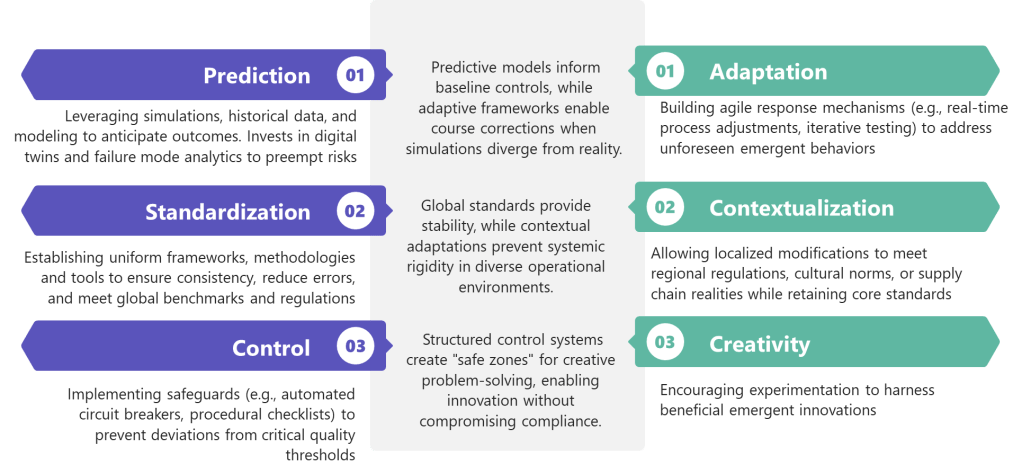
Future-ready quality professionals will balance three tensions:

  • Prediction AND Adaptation : Investing in simulation while building response agility
  • Standardization AND Contextualization : Maintaining global standards while allowing local adaptation
  • Control AND Creativity : Preventing harm while nurturing beneficial emergence

The organizations thriving in this new landscape aren’t those with perfect compliance records, but those that rapidly detect and adapt to emergent patterns. They understand that quality systems aren’t static fortresses, but living networks—constantly evolving, occasionally surprising, and always revealing new paths to excellence.

In this light, Aristotle’s ancient insight becomes a modern quality manifesto: Our systems will always be more than the sum of their parts. The challenge—and opportunity—lies in cultivating the wisdom to guide that “more” toward better outcomes.

Integrating Elegance into Quality Systems: The Third Dimension of Excellence

Quality systems often focus on efficiency—doing things right—and effectiveness—doing the right things. However, as industries evolve and systems grow more complex, a third dimension is essential to achieving true excellence: elegance. Elegance in quality systems is not merely about simplicity but about creating solutions that are intuitive, sustainable, and seamlessly integrated into organizational workflows.

Elegance elevates quality systems by addressing complexity in a way that reduces friction while maintaining sophistication. It involves designing processes that are not only functional but also intuitive and visually appealing, encouraging engagement rather than resistance. For example, an elegant deviation management system might replace cumbersome, multi-step forms with guided tools that simplify root cause analysis while improving accuracy. By integrating such elements, organizations can achieve compliance with less effort and greater satisfaction among users.

When viewed through the lens of the Excellence Triad, elegance acts as a multiplier for both efficiency and effectiveness. Efficiency focuses on streamlining processes to save time and resources, while effectiveness ensures those processes align with organizational goals and regulatory requirements. Elegance bridges these two dimensions by creating systems that are not only efficient and effective but also enjoyable to use. For instance, a visually intuitive risk assessment matrix can enhance both the speed of decision-making (efficiency) and the accuracy of risk evaluations (effectiveness), all while fostering user engagement through its elegant design.

To imagine how elegance can be embedded into a quality system, consider this high-level example of an elegance-infused quality plan aimed at increasing maturity within 18 months. At its core, this plan emphasizes simplicity and sustainability while aligning with organizational objectives. The plan begins with a clear purpose: to prioritize patient safety through elegant simplicity. This guiding principle is operationalized through metrics such as limiting redundant documents and minimizing the steps required to report quality events.

The implementation framework includes cross-functional quality circles tasked with redesigning one process each quarter using visual heuristics like symmetry and closure. These teams also conduct retrospectives to evaluate the cognitive load of procedures and the aesthetic clarity of dashboards, ensuring that elegance remains a central focus. Documentation is treated as a living system, with cognitive learning driven and video micro-procedures replacing lengthy procedures and tools scoring documents to ensure they remain user-friendly.

The roadmap for maturity integrates elegance at every stage. At the standardized level, efficiency targets include achieving 95% on-time CAPA closures, while elegance milestones focus on reducing document complexity scores across SOPs. As the organization progresses to predictive maturity, AI-driven risk forecasts enhance efficiency, while staff adoption rates reflect the intuitive nature of the systems in place. Finally, at the optimizing stage, zero repeat audits signify peak efficiency and effectiveness, while voluntary adoption of quality tools by R&D teams underscores the system’s elegance.

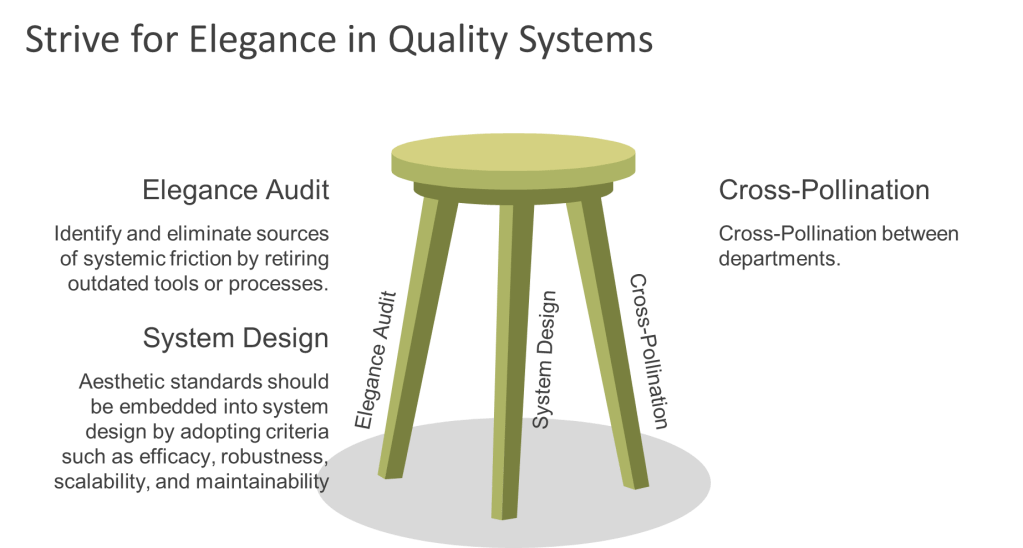
To cultivate elegance within quality systems, organizations can adopt three key strategies. First, they should identify and eliminate sources of systemic friction by retiring outdated tools or processes. For example, replacing blame-centric forms with learning logs can transform near-miss reporting into an opportunity for growth rather than criticism. Second, aesthetic standards should be embedded into system design by adopting criteria such as efficacy, robustness, scalability, and maintainability. Training QA teams as system gardeners who can further enhance this approach. Finally, cross-pollination between departments can foster innovation; for instance, involving designers in QA processes can lead to more visually engaging outcomes.

By embedding elegance into their quality systems alongside efficiency and effectiveness, organizations can move from mere survival to thriving excellence. Compliance becomes an intuitive outcome of well-designed processes rather than a burdensome obligation. Innovation flourishes in frictionless environments where tools invite improvement rather than resistance. Organizations ready to embrace this transformative approach should begin by conducting an “Elegance Audit” of their most cumbersome processes to identify opportunities for improvement. Through these efforts, excellence becomes not just a goal but a natural state of being for the entire system.