The Practice Paradox: Why Technical Knowledge Isn’t Enough for True Expertise

When someone asks about your skills they are often fishing for the wrong information. They want to know about your certifications, your knowledge of regulations, your understanding of methodologies, or your familiarity with industry frameworks. These questions barely scratch the surface of actual competence.

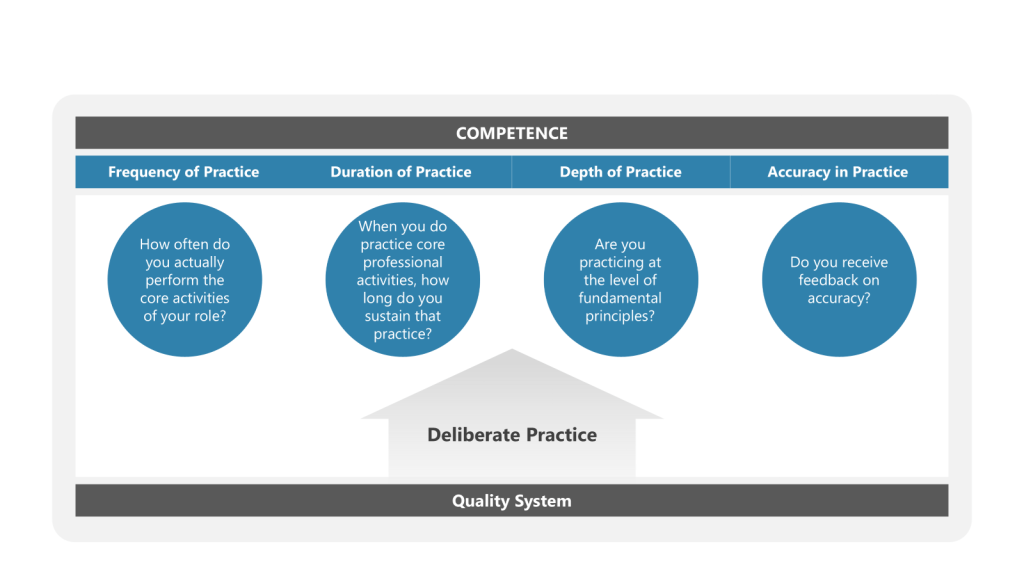
The real questions that matter are deceptively simple: What is your frequency of practice? What is your duration of practice? What is your depth of practice? What is your accuracy in practice?

Because here’s the uncomfortable truth that most professionals refuse to acknowledge: if you don’t practice a skill, competence doesn’t just stagnate—it actively degrades.

The Illusion of Permanent Competency

We persist in treating professional expertise like riding a bicycle, “once learned, never forgotten”. This fundamental misunderstanding pervades every industry and undermines the very foundation of what it means to be competent.

Research consistently demonstrates that technical skills begin degrading within weeks of initial training. In medical education, procedural skills show statistically significant decline between six and twelve weeks without practice. For complex cognitive skills like risk assessment, data analysis, and strategic thinking, the degradation curve is even steeper.

A meta-analysis examining skill retention found that half of initial skill acquisition performance gains were lost after approximately 6.5 months for accuracy-based tasks, 13 months for speed-based tasks, and 11 months for mixed performance measures. Yet most professionals encounter meaningful opportunities to practice their core competencies quarterly at best, often less frequently.

Consider the data analyst who completed advanced statistical modeling training eighteen months ago but hasn’t built a meaningful predictive model since. How confident should we be in their ability to identify data quality issues or select appropriate analytical techniques? How sharp are their skills in interpreting complex statistical outputs?

The answer should make us profoundly uncomfortable.

The Four Dimensions of Competence

True competence in any professional domain operates across four critical dimensions that most skill assessments completely ignore:

Frequency of Practice

How often do you actually perform the core activities of your role, not just review them or discuss them, but genuinely work through the systematic processes that define expertise?

This infrequency creates competence gaps that compound over time. Skills that aren’t regularly exercised atrophy, leading to oversimplified problem-solving, missed critical considerations, and inadequate solution strategies. The cognitive demands of sophisticated professional work—considering multiple variables simultaneously, recognizing complex patterns, making nuanced judgments—require regular engagement to maintain proficiency.

Deliberate practice research shows that experts practice longer sessions (87.90 minutes) compared to amateurs (46.00 minutes). But more importantly, they practice regularly. The frequency component isn’t just about total hours—it’s about consistent, repeated exposure to challenging scenarios that push the boundaries of current capability.

Duration of Practice

When you do practice core professional activities, how long do you sustain that practice? Minutes? Hours? Days?

Brief, superficial engagement with complex professional activities doesn’t build or maintain competence. Most work activities in professional environments are fragmented, interrupted by meetings, emails, and urgent issues. This fragmentation prevents the deep, sustained practice necessary to maintain sophisticated capabilities.

Research on deliberate practice emphasizes that meaningful skill development requires focused attention on activities designed to improve performance, typically lasting 1-3 practice sessions to master specific sub-skills. But maintaining existing expertise requires different duration patterns—sustained engagement with increasingly complex scenarios over extended periods.

Depth of Practice

Are you practicing at the surface level—checking boxes and following templates—or engaging with the fundamental principles that drive effective professional performance?

Shallow practice reinforces mediocrity. Deep practice—working through novel scenarios, challenging existing methodologies, grappling with uncertain outcomes—builds robust competence that can adapt to evolving challenges.

The distinction between deliberate practice and generic practice is crucial. Deliberate practice involves:

  • Working on skills that require 1-3 practice sessions to master specific components
  • Receiving expert feedback on performance
  • Pushing beyond current comfort zones
  • Focusing on areas of weakness rather than strengths

Most professionals default to practicing what they already do well, avoiding the cognitive discomfort of working at the edge of their capabilities.

Accuracy in Practice

When you practice professional skills, do you receive feedback on accuracy? Do you know when your analyses are incomplete, your strategies inadequate, or your evaluation criteria insufficient?

Without accurate feedback mechanisms, practice can actually reinforce poor techniques and flawed reasoning. Many professionals practice in isolation, never receiving objective assessment of their work quality or decision-making effectiveness.

Research on medical expertise reveals that self-assessment accuracy has two critical components: calibration (overall performance prediction) and resolution (relative strengths and weaknesses identification). Most professionals are poor at both, leading to persistent blind spots and competence decay that remains hidden until critical failures expose it.

The Knowledge-Practice Disconnect

Professional training programs focus almost exclusively on knowledge transfer—explaining concepts, demonstrating tools, providing frameworks. They ignore the practice component entirely, creating professionals who can discuss methodologies eloquently but struggle to execute them competently when complexity increases.

Knowledge is static. Practice is dynamic.

Professional competence requires pattern recognition developed through repeated exposure to diverse scenarios, decision-making capabilities honed through continuous application, and judgment refined through ongoing experience with outcomes. These capabilities can only be developed and maintained through deliberate, sustained practice.

A study of competency assessment found that deliberate practice hours predicted only 26% of skill variation in games like chess, 21% for music, and 18% for sports. The remaining variance comes from factors like age of initial exposure, genetics, and quality of feedback—but practice remains the single most controllable factor in competence development.

The Competence Decay Crisis

Industries across the board face a hidden crisis: widespread competence decay among professionals who maintain the appearance of expertise while losing the practiced capabilities necessary for effective performance.

This crisis manifests in several ways:

  • Templated Problem-Solving: Professionals rely increasingly on standardized approaches and previous solutions, avoiding the cognitive challenge of systematic evaluation. This approach may satisfy requirements superficially while missing critical issues that don’t fit established patterns.
  • Delayed Problem Recognition: Degraded assessment skills lead to longer detection times for complex issues and emerging problems. Issues that experienced, practiced professionals would identify quickly remain hidden until they escalate to significant failures.
  • Inadequate Solution Strategies: Without regular practice in developing and evaluating approaches, professionals default to generic solutions that may not address specific problem characteristics effectively. The result is increased residual risk and reduced system effectiveness.
  • Reduced Innovation: Competence decay stifles innovation in professional approaches. Professionals with degraded skills retreat to familiar, comfortable methodologies rather than exploring more effective techniques or adapting to emerging challenges.

The Skill Decay Research

The phenomenon of skill decay is well-documented across domains. Research shows that skills requiring complex mental requirements, difficult time limits, or significant motor control have an overwhelming likelihood of being completely lost after six months without practice.

Key findings from skill decay research include:

  • Retention interval: The longer the period of non-use, the greater the probability of decay
  • Overlearning: Extra training beyond basic competency significantly improves retention
  • Task complexity: More complex skills decay faster than simple ones
  • Feedback quality: Skills practiced with high-quality feedback show better retention

A practical framework divides skills into three circles based on practice frequency:

  • Circle 1: Daily-use skills (slowest decay)
  • Circle 2: Weekly/monthly-use skills (moderate decay)
  • Circle 3: Rare-use skills (rapid decay)

Most professionals’ core competencies fall into Circle 2 or 3, making them highly vulnerable to decay without systematic practice programs.

Building Practice-Based Competence

Addressing the competence decay crisis requires fundamental changes in how individuals and organizations approach professional skill development and maintenance:

Implement Regular Practice Requirements

Professionals must establish mandatory practice requirements for themselves—not training sessions or knowledge refreshers, but actual practice with real or realistic professional challenges. This practice should occur monthly, not annually.

Consider implementing practice scenarios that mirror the complexity of actual professional challenges: multi-variable analyses, novel technology evaluations, integrated problem-solving exercises. These scenarios should require sustained engagement over days or weeks, not hours.

Create Feedback-Rich Practice Environments

Effective practice requires accurate, timely feedback. Professionals need mechanisms for evaluating work quality and receiving specific, actionable guidance for improvement. This might involve peer review processes, expert consultation programs, or structured self-assessment tools.

The goal isn’t criticism but calibration—helping professionals understand the difference between adequate and excellent performance and providing pathways for continuous improvement.

Measure Practice Dimensions

Track the four dimensions of practice systematically: frequency, duration, depth, and accuracy. Develop personal metrics that capture practice engagement quality, not just training completion or knowledge retention.

These metrics should inform professional development planning, resource allocation decisions, and competence assessment processes. They provide objective data for identifying practice gaps before they become performance problems.

Integrate Practice with Career Development

Make practice depth and consistency key factors in advancement decisions and professional reputation building. Professionals who maintain high-quality, regular practice should advance faster than those who rely solely on accumulated experience or theoretical knowledge.

This integration creates incentives for sustained practice engagement while signaling commitment to practice-based competence development.

The Assessment Revolution

The next time someone asks about your professional skills, here’s what you should tell them:

“I practice systematic problem-solving every month, working through complex scenarios for two to four hours at a stretch. I engage deeply with the fundamental principles, not just procedural compliance. I receive regular feedback on my work quality and continuously refine my approach based on outcomes and expert guidance.”

If you can’t make that statement honestly, you don’t have professional skills—you have professional knowledge. And in the unforgiving environment of modern business, that knowledge won’t be enough.

Better Assessment Questions

Instead of asking “What do you know about X?” or “What’s your experience with Y?”, we should ask:

  • Frequency: “When did you last perform this type of analysis/assessment/evaluation? How often do you do this work?”
  • Duration: “How long did your most recent project of this type take? How much sustained focus time was required?”
  • Depth: “What was the most challenging aspect you encountered? How did you handle uncertainty?”
  • Accuracy: “What feedback did you receive? How did you verify the quality of your work?”

These questions reveal the difference between knowledge and competence, between experience and expertise.
The Practice Imperative

Professional competence cannot be achieved or maintained without deliberate, sustained practice. The stakes are too high and the environments too complex to rely on knowledge alone.

The industry’s future depends on professionals who understand the difference between knowing and practicing, and organizations willing to invest in practice-based competence development.

Because without practice, even the most sophisticated frameworks become elaborate exercises in compliance theater—impressive in appearance, inadequate in substance, and ultimately ineffective at achieving the outcomes that stakeholders depend on our competence to deliver.

The choice is clear: embrace the discipline of deliberate practice or accept the inevitable decay of the competence that defines professional value. In a world where complexity is increasing and stakes are rising, there’s really no choice at all.

Building Deliberate Practice into the Quality System

Embedding genuine practice into a quality system demands more than mandating periodic training sessions or distributing updated SOPs. The reality is that competence in GxP environments is not achieved by passive absorption of information or box-checking through e-learning modules. Instead, you must create a framework where deliberate, structured practice is interwoven with day-to-day operations, ongoing oversight, and organizational development.

Start by reimagining training not as a singular event but as a continuous cycle that mirrors the rhythms of actual work. New skills—whether in deviation investigation, GMP auditing, or sterile manufacturing technique—should be introduced through hands-on scenarios that reflect the ambiguity and complexity found on the shop floor or in the laboratory. Rather than simply reading procedures or listening to lectures, trainees should regularly take part in simulation exercises that challenge them to make decisions, justify their logic, and recognize pitfalls. These activities should involve increasingly nuanced scenarios, moving beyond basic compliance errors to the challenging grey areas that usually trip up experienced staff.

To cement these experiences as genuine practice, integrate assessment and reflection into the learning loop. Every critical quality skill—from risk assessment to change control—should be regularly practiced, not just reviewed. Root cause investigation, for instance, should be a recurring workshop, where both new hires and seasoned professionals work through recent, anonymized cases as a team. After each practice session, feedback should be systematic, specific, and forward-looking, highlighting not just mistakes but patterns and habits that can be addressed in the next cycle. The aim is to turn every training into a diagnostic tool for both the individual and the organization: What is being retained? Where does accuracy falter? Which aspects of practice are deep, and which are still superficial?

Crucially, these opportunities for practice must be protected from routine disruptions. If practice sessions are routinely canceled for “higher priority” work, or if their content is superficial, their effectiveness collapses. Commit to building practice into annual training matrices alongside regulatory requirements, linking participation and demonstrated competence with career progression criteria, bonus structures, or other forms of meaningful recognition.

Finally, link practice-based training with your quality metrics and management review. Use not just completion data, but outcome measures—such as reduction in repeat deviations, improved audit readiness, or enhanced error detection rates—to validate the impact of the practice model. This closes the loop, driving both ongoing improvement and organizational buy-in.

A quality system rooted in practice demands investment and discipline, but the result is transformative: professionals who can act, not just recite; an organization that innovates and adapts under pressure; and a compliance posture that is both robust and sustainable, because it’s grounded in real, repeatable competence.
Annex 11 Section 5.1 “Cooperation”—The Real Test of Governance and Project Team Maturity

The draft Annex 11 is a cultural shift, a new way of working that reaches beyond pure compliance to emphasize accountability, transparency, and full-system oversight. Section 5.1, simply titled: “Cooperation” is a small but might part of this transformation

On its face, Section 5.1 may sound like a pleasantry: the regulation states that “there should be close cooperation between all relevant personnel such as process owner, system owner, qualified persons and IT.” In reality, this is a direct call to action for the formation of empowered, cross-functional, and highly integrated governance structures. It’s a recognition that, in an era when computerized systems underpin everything from batch release to deviation investigation, a siloed or transactional approach to system ownership is organizational malpractice.

Governance: From Siloed Ownership to Shared Accountability

Let’s breakdown what “cooperation” truly means in the current pharmaceutical digital landscape. Governance in the Annex 11 context is no longer a paperwork obligation but the backbone for digital trust. The roles of Process Owner (who understands the GMP-critical process), System Owner (managing the integrity and availability of the system), Quality (bearing regulatory release or oversight risk), and the IT function (delivering the technical and cybersecurity expertise) all must be clearly defined, actively engaged, and jointly responsible for compliance outcomes.

This shared ownership translates directly into how organizations structure project teams. Legacy models—where IT “owns the system,” Quality “owns compliance,” and business users “just use the tool”—are explicitly outdated. Section 5.1 obligates that these domains work in seamless partnership, not simply at “handover” moments but throughout every lifecycle phase from selection and implementation to maintenance and retirement. Each group brings indispensable knowledge: the process owner knows process risks and requirements; the system owner manages configuration and operational sustainability; Quality interprets regulatory standards and ensure release integrity; IT enables security, continuity, and technical change.

Practical Project Realities: Embedding Cooperation in Every Phase

In my experience, the biggest compliance failures often do not hinge on technical platform choices, but on fractured or missing cross-functional cooperation. Robust governance, under Section 5.1, doesn’t just mean having an org chart—it means everyone understands and fulfills their operational and compliance obligations every day. In practice, this requires formal documents (RACI matrices, governance charters), clear escalation routes, and regular—preferably, structured—forums for project and system performance review.

During system implementation, deep cooperation means all stakeholders are involved in requirements gathering and risk assessment, not just as “signatories” but as active contributors. It is not enough for the business to hand off requirements to IT with minimal dialogue, nor for IT to configure a system and expect the Qulity sign-off at the end. Instead, expect joint workshops, shared risk assessments (tying from process hazard analysis to technical configuration), and iterative reviews where each stakeholder is empowered to raise objections or demand proof of controls.

At all times, communication must be systematic, not ad hoc: regular governance meetings, with pre-published minutes and action tracking; dashboards or portals where issues, risks, and enhancement requests can be logged, tracked, and addressed; and shared access to documentation, validation reports, CAPA records, and system audit trails. This is particularly crucial as digital systems (cloud-based, SaaS, hybrid) increasingly blur the lines between “IT” and “business” roles.

Training, Qualifications, and Role Clarity: Everyone Is Accountable

Section 5.1 further clarifies that relevant personnel—regardless of functional home—must possess the appropriate qualifications, documented access rights, and clearly defined responsibilities. This raises the bar on both onboarding and continuing education. “Cooperation” thus demands rotational training and knowledge-sharing among core team members. Process owners must understand enough of IT and validation to foresee configuration-related compliance risks. IT staff must be fluent in GMP requirements and data integrity. Quality must move beyond audit response and actively participate in system configuration choices, validation planning, and periodic review.

In my own project experience, the difference between a successful, inspection-ready implementation and a troubled, remediation-prone rollout is almost always the presence, or absence, of this cross-trained, truly cooperative project team.

Supplier and Service Provider Partnerships: Extending Governance Beyond the Walls

The rise of cloud, SaaS, and outsourced system management means that “cooperation” extends outside traditional organizational boundaries. Section 5.1 works in concert with supplier sections of Annex 11—everyone from IT support to critical SaaS vendors must be engaged as partners within the governance framework. This requires clear, enforceable contracts outlining roles and responsibilities for security, data integrity, backup, and business continuity. It also means periodic supplier reviews, joint planning sessions, and supplier participation in incidents and change management when systems span organizations.

Internal IT must also be treated with the same rigor—a department supporting a GMP system is, under regulation, no different than a third-party vendor; it must be a named party in the cooperation and governance ecosystem.

Oversight and Monitoring: Governance as a Living Process

Effective cooperation isn’t a “set and forget”—it requires active, joint oversight. That means frequent management reviews (not just at system launch but periodically throughout the lifecycle), candid CAPA root cause debriefs across teams, and ongoing risk and performance evaluations done collectively. Each member of the governance body—be they system owner, process owner, or Quality—should have the right to escalate issues and trigger review of system configuration, validation status, or supplier contracts.

Structured communication frameworks—regularly scheduled project or operations reviews, joint documentation updates, and cross-functional risk and performance dashboards—turn this principle into practice. This is how validation, data integrity, and operational performance are confidently sustained (not just checked once) in a rigorous, documented, and inspection-ready fashion.

The “Cooperation” Imperative and the Digital GMP Transformation

With the explosion of digital complexity—artificial intelligence, platform integrations, distributed teams—the management of computerized systems has evolved well beyond technical mastery or GMP box-ticking. True compliance, under the new Annex 11, hangs on the ability of organizations to operationalize interdisciplinary governance. Section 5.1 thus becomes a proxy for digital maturity: teams that still operate in silos or treat “cooperation” as a formality will be missed by the first regulatory deep dive or major incident.

Meanwhile, sites that embed clear role assignment, foster cross-disciplinary partnership, and create active, transparent governance processes (documented and tracked) will find not only that inspections run smoothly—they’ll spend less time in audit firefighting, make faster decisions during technology rollouts, and spot improvement opportunities early.

Teams that embrace the cooperation mandate see risk mitigation, continuous improvement, and regulatory trust as the natural byproducts of shared accountability. Those that don’t will find themselves either in chronic remediation or watching more agile, digitally mature competitors pull ahead.

Key Governance and Project Team Implications

To provide a summary for project, governance, and operational leaders, here is a table distilling the new paradigm:

Governance AspectImplications for Project & Governance Teams
Clear Role AssignmentDefine and document responsibilities for process owners, system owners, and IT.
Cross-Functional PartnershipEnsure collaboration among quality, IT, validation, and operational teams.
Training & QualificationClarify required qualifications, access levels, and competencies for personnel.
Supplier OversightEstablish contracts with roles, responsibilities, and audit access rights.
Proactive MonitoringMaintain joint oversight mechanisms to promptly address issues and changes.
Communication FrameworkSet up regular, documented interaction channels among involved stakeholders.

In this new landscape, “cooperation” is not a regulatory afterthought. It is the hinge on which the entire digital validation and integrity culture swings. How and how well your teams work together is now as much a matter of inspection and business success as any technical control, risk assessment, or test script.

Key Metrics for GMP Training in Pharmaceutical Systems: Leading & Lagging Indicators

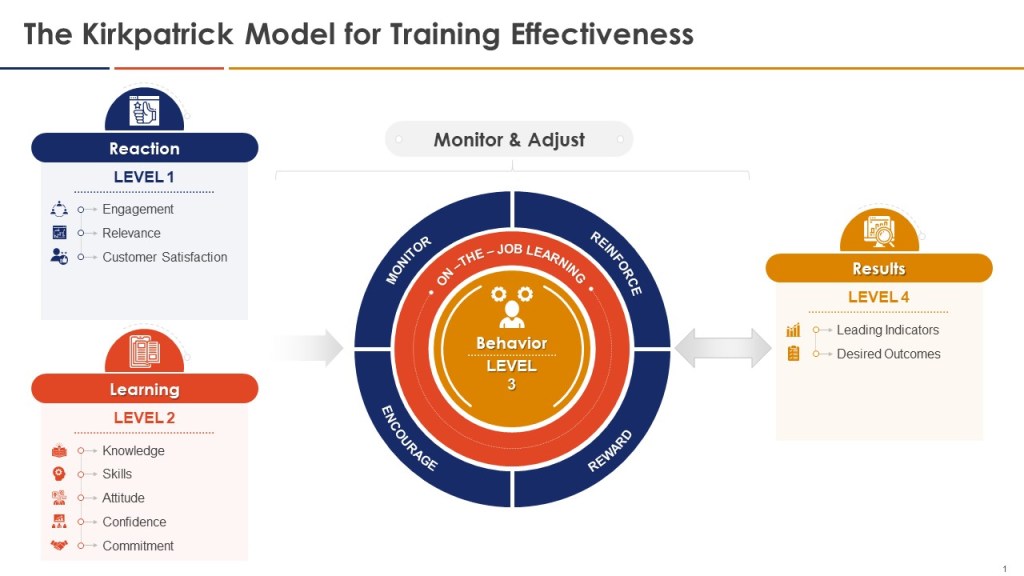
When thinking about the training program you can add the Kilpatrick model to the mix and build from there. This allows a view across the training system to drive for an effective training program.

GMP Training Metrics Framework Aligned with Kirkpatrick’s Model

Kirkpatrick LevelCategoryMetric TypeExamplePurposeData SourceRegulatory Alignment
Level 1: ReactionKPILeading% Training Satisfaction Surveys CompletedMeasures engagement and perceived relevance of GMP trainingLMS (Learning Management System)ICH Q10 Section 2.7 (Training Effectiveness)
KRILeading% Surveys with Negative Feedback (<70%)Identifies risk of disengagement or poor training designSurvey ToolsFDA Quality Metrics Reporting (2025 Draft)
KBILeadingParticipation in Post-Training FeedbackEncourages proactive communication about training gapsAttendance LogsEU GMP Chapter 2 (Personnel Training)
Level 2: LearningKPILeadingPre/Post-Training Quiz Pass Rate (≥90%)Validates knowledge retention of GMP principlesAssessment Software21 CFR 211.25 (Training Requirements)
KRILeading% Trainees Requiring Remediation (>15%)Predicts future compliance risks due to knowledge gapsLMS Remediation ReportsFDA Warning Letters (Training Deficiencies)
KBILaggingReduction in Knowledge Assessment RetakesValidates long-term retention of GMP conceptsTraining RecordsICH Q7 Section 2.12 (Training Documentation)
Level 3: BehaviorKPILeadingObserved GMP Compliance Rate During AuditsMeasures real-time application of training in daily workflowsAudit ChecklistsFDA 21 CFR 211 (cGMP Compliance)
KRILeadingNear-Miss Reports Linked to Training GapsIdentifies emerging behavioral risks before incidents occurQMS (Quality Management System)ISO 9001:2015 Clause 10.2 (Nonconformity)
KBILeadingFrequency of Peer-to-Peer Knowledge SharingEncourages a culture of continuous learning and collaborationMeeting LogsICH Q10 Section 3.2.3 (Knowledge Management)
Level 4: ResultsKPILagging% Reduction in Repeat Deviations Post-TrainingQuantifies training’s impact on operational qualityDeviation Management SystemsFDA Quality Metrics (Batch Rejection Rate)
KRILaggingAudit Findings Related to Training EffectivenessReflects systemic training failures impacting complianceRegulatory Audit ReportsEU GMP Annex 15 (Qualification & Validation)
KBILaggingEmployee TurnoverAssesses cultural impact of training on staff retentionHR RecordsICH Q10 Section 1.5 (Management Responsibility)

Kirkpatrick Model Integration

  1. Level 1 (Reaction):
  • Leading KPI: Track survey completion to ensure trainees perceive value in GMP content.
  • Leading KRI: Flag facilities with >30% negative feedback for immediate remediation .
  1. Level 2 (Learning):
  • Leading KPI: Require ≥90% quiz pass rates for high-risk roles (e.g., aseptic operators) .
  • Lagging KBI: Retake rates >20% trigger refresher courses under EU GMP Chapter 3 .
  1. Level 3 (Behavior):
  • Leading KPI: <95% compliance during audits mandates retraining per 21 CFR 211.25 .
  • Leading KRI: >5 near-misses/month linked to training gaps violates FDA’s “state of control” .
  1. Level 4 (Results):
  • Lagging KPI: <10% reduction in deviations triggers CAPA under ICH Q10 Section 4.3 .
  • Lagging KRI: Audit findings >3/year require FDA-mandated QMS reviews .

Regulatory & Strategic Alignment

  • FDA Quality Metrics: Level 4 KPIs (e.g., deviation reduction) align with FDA’s 2025 focus on “sustainable compliance” .
  • ICH Q10: Level 3 KBIs (peer knowledge sharing) support “continual improvement of process performance” .
  • EU GMP: Level 2 KRIs (remediation rates) enforce Annex 11’s electronic training documentation requirements .

By integrating Kirkpatrick’s levels with GMP training metrics, organizations bridge knowledge acquisition to measurable quality outcomes while meeting global regulatory expectations.

Understanding Policies

The article “Research: Do New Hires Really Understand Your Policies?” by Rachel Schlund and Vanessa Bohns in HBR does a great job discussing consent that I think have real ramifications on GMP training, especially of the read-and-understood variety. Really gets me thinking on GxP orientation and the building of informed consent.

Building Effective Consent

1. Transparent Communication

Provide clear, detailed information about the why’s.

2. Staged Introduction

Instead of overwhelming new hires with all that GxP training at once, introduce them gradually over time. This approach gives employees the opportunity to digest and comprehend each requirement individually.

3. Interactive Training Sessions

Conduct engaging training sessions that explain the rationale behind each major requirement set and allow employees to ask questions and voice concerns.

4. Regular Policy Reviews

Implement periodic reviews with employees to ensure ongoing understanding and address any evolving concerns or questions.

5. Clear Benefits Communication

Explain the benefits of each requirement to the employee and the organization, helping new hires understand the value and purpose behind the requirements.

Assessing the Impact of Changes to Your Validation Program

When undertaking a project to enhance your validation program, it’s crucial to have a robust method for measuring success. This is especially important as you aim to increase maturity and address organizational challenges, with a significant focus on training and personnel qualification. The Kirkpatrick model, originally designed for evaluating training programs, can be effectively adapted to assess the success of your validation program improvements.

Level 1: Reaction

This level measures how participants react to the validation program.

  • Survey validation team members on their satisfaction with the validation approach
  • Gather feedback on the clarity of risk-based validation concepts
  • Assess perceived relevance and applicability of the new validation methodology

Level 2: Learning

This level evaluates the knowledge and skills acquired.

  • Conduct assessments to measure understanding of key principles
  • Test ability to perform risk assessments and develop verification strategies
  • Evaluate comprehension of good engineering practices (GEP) and their integration into validation activities

Level 3: Behavior

This level examines how participants apply what they’ve learned on the job.

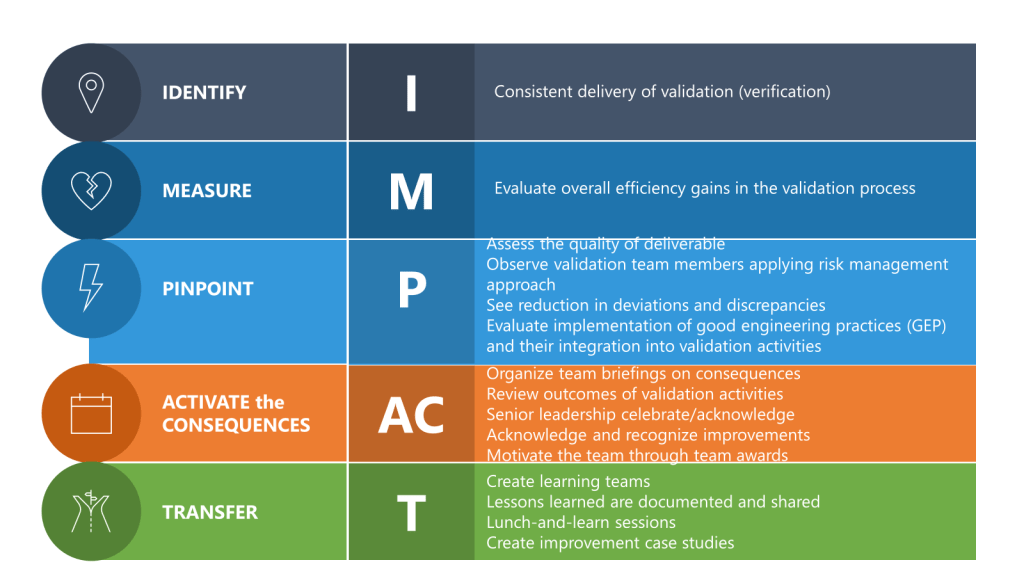
  • Observe validation team members implementing risk-based approaches in actual projects
  • Review documentation to ensure proper application of methodologies and assess the quality of user requirements, risk assessments, and verification plans. This is where I would use a rubric.
  • Create some key behavior indicators, such as right-the-first time.

I use IMPACT as a tool here.

And then come up with a set of leading and lagging quality and behavioral indicators.

Leading

  • Measure and report attendance at risk assessments and project team meetings
  • Number of employee/team improvement suggestions implemented
  • Number of good catches identified

Trended Lagging

  • % RFT validation deliverables
  • % RFT executions (looking at discrepancies)

Level 4: Results

This level measures the impact on the organization.

  • Track reduction in validation cycle times and associated costs
  • Monitor improvements in product quality and reduction in deviations
  • Assess regulatory inspection outcomes and feedback on validation approach
  • Evaluate overall efficiency gains in the validation process

By applying the Kirkpatrick Model to a validation program improvements we can systematically evaluate the effectiveness of their implementation and identify areas for continuous improvement.