Organizational competencies are the skills, abilities, and knowledge that allow an organization to be successful in achieving its goals. They form the foundation of an organization’s culture, values, and strategy.
Organizational competencies can be broadly divided into two main categories:
Technical Competencies
Non-Technical Competencies (also called General Competencies)
Technical Competencies
Technical competencies are specific skills and knowledge required to perform particular jobs or functions within an organization. They are directly related to the core business activities and technical aspects of the work. For technical competencies:
They cover various fields of expertise relevant to the specific work carried out in the organization
They are at the heart of what the organizational employees do
They allow an organization to produce products or services efficiently and effectively
They often require ongoing training and reinforcement to stay current
Non-Technical Competencies
Non-technical competencies, also known as general competencies or soft skills, are broader skills and attributes that are important across various roles and functions. They include:
These competencies are crucial for effective interaction, collaboration, and overall organizational success.
Organizational Competencies for Validation (an example)
For an organization focusing on validation the following competencies would be particularly relevant:
Technical Competencies
Skill Area
Key Aspects
Proficiency Levels
Beginner
Intermediate
Advanced
Expert
General CQV Principles
Modern process validation and
guidance
Validation design and how to
reduce variability
Able
to review a basic protocol
Able
to review/approve Validation document deliverables.
Understands
the importance of a well-defined URS.
Able to be QEV lead in a small
project
Able to answer questions and
guide others in QEV
Participates in process
improvement
Able to review and approve
RTM/SRs
Able
to be QEV lead in a large project project
Trains
and mentors others in QEV
Leads
process improvement initiatives
Able
to provide Quality oversight on the creation of Validation Plans for complex
systems and/or projects
Sets
overall CQV strategy
Recognized
as an expert outside of JEB
Facilities
and Utilities
Oversee Facilities, HVAC and
Controlled Environments
Pharma Water and WFI
Pure Steam, Compressed Air,
Medical Gases
Understands
the principles and GMP requirements
Applies the principles,
activities, and deliverables that constitute an efficient and acceptable
approach to demonstrating facility fitness-for-use/qualification
Guide
the Design to Qualification Process for new facilities/utilities or the
expansion of existing facilities/utilities
Able
to establish best practices
Systems
and Equipment
Equipment, including Lab
equipment
Understands
the principles and GMP requirements
Principles, activities, and
deliverables that constitute an efficient and acceptable approach to
demonstrating equipment fitness-for-use/qualification
Able
to provide overall strategy for large projects
Able
to be QEV lead on complex systems and equipment.
Able
to establish best practices
Computer
Systems and Data Integrity
Computer lifecycle, including
validation
Understands
the principles and GMP requirements
Able to review CSV documents
Apply GAMP5 risk
based approach
Day-to-day quality oversight
Able
to provide overall strategy for a risk based GAMP5 approach to computer
system quality
Able
to establish best practices
Asset Lifecycle
Quality
oversight and decision making in the lifecycle asset lifecycle: Plan,
acquire, use, maintain, and dispose of assets
Can
use CMMS to look up Calibrations, Cal schedules and PM schedules
Quality
oversight of asset lifecycle decisions
Able
to provide oversight on Cal/PM frequency
Able
to assess impact to validated state for corrective WO’s.
Able
to establish asset lifecycle for new equipment classes
Establish
risk-based PM for new asset classes
verification
Establish
asset lifecycle approach
Serves
as the organization’s authority on GMP requirements related to asset
management in biotech facilities
Cleaning, Sanitization and Sterilization Validation
Evaluate
and execute cleaning practices, limit calculations, scientific rationales,
and validation documents
Manage
the challenges of multi-product facilities in the establishment of limits,
determination of validation strategies, and maintaining the validated state
Differentiate
the requirements for cleaning and sterilization validation when using manual,
semi-automatic, and automatic cleaning technologies
Review
protocols
Identify
and characterize potential residues including product, processing aids,
cleaning agents, and adventitious agents
Understand
Sterilization principles and requirements
Create,
review and approve scientifically sound rationales, validation protocols, and
reports
Manage
and remediate the pitfalls inherent in cleaning after the production of
biopharmaceutical and pharmaceutical products
Define
cleaning/sterilization validation strategy
Implements
a lifecycle approach to validation, ensuring continued process verification
Implements
a lifecycle approach to validation, ensuring continued process verification
Quality Risk Management
Apply
QRM principles according to Q9
Understands
basic risk assessment principles
Can
identify potential hazards and risks
Familiar
with risk matrices and scoring methods
Participate
in a risk assessment
Conducts
thorough risk assessments using established methodologies
Analyzes
risks quantitatively and qualitatively
Prioritizes
risks based on likelihood and impact
Determine
appropriate tools
Establish
risk-based decision-making tools
Leads
complex risk assessments across multiple areas
Develops
new risk assessment methodologies
Provides
expert guidance on risk analysis techniques
Serves
as the organization’s authority on regulatory requirements and expectations
related to quality risk management
Builds
a proactive risk culture across the organization, fostering risk awareness at
all levels
Process Validation
Demonstrating
that the manufacturing process can consistently produce a product that meets
predetermined specifications and quality attributes.
Understanding
of GMP principles and regulatory requirements
Basic
understanding of GMP principles and regulatory requirements
Can
independently write, approve and execute validation protocols for routine
processes
Ability to develop validation master plans
and protocols
Understanding
of critical process parameters (CPPs) and critical quality attributes (CQAs)
Expertise
in designing and implementing complex validation strategies
Ability
to troubleshoot and resolve validation issues
Deep
understanding of regulatory expectations and industry best practices
Leads
cross-functional validation teams for high-impact projects
Develops
innovative validation approaches for novel bioprocesses
Serves
as an organizational authority on validation matters and regulatory
interactions
Reflective learning is a powerful tool that organizations can leverage to build competency and drive continuous improvement. At its core, this approach involves actively analyzing and evaluating experiences and learning processes to enhance understanding and performance across all levels of the organization.
The process of reflective learning begins with individuals and teams taking the time to step back and critically examine their actions, decisions, and outcomes. This introspection allows them to identify what worked well, what didn’t, and why. By doing so, they can uncover valuable insights that might otherwise go unnoticed in the day-to-day rush of business activities.
One of the key benefits of reflective learning is its ability to transform tacit knowledge into explicit knowledge. Tacit knowledge is the unspoken, intuitive understanding that individuals develop through experience. By reflecting on and articulating these insights, organizations can capture and share this valuable wisdom, making it accessible to others and fostering a culture of collective learning.
To implement reflective learning effectively, organizations should create structured opportunities for reflection. This might include regular debriefing sessions after projects, dedicated time for personal reflection, or the use of learning journals. Additionally, leaders should model reflective practices and encourage open and honest discussions about both successes and failures.
It’s important to note that reflective learning is not just about looking back; it’s also about looking forward. The insights gained through reflection should be used to inform future actions and strategies. This forward-thinking approach helps organizations to be more adaptable and responsive to changing circumstances, ultimately leading to improved performance and innovation.
By embracing reflective learning as a core organizational practice, companies can create a dynamic environment where continuous learning and improvement become ingrained in the culture. This not only enhances individual and team performance but also contributes to the overall resilience and competitiveness of the organization in an ever-changing business landscape.
Implement Regular After-Action Reviews
After-action reviews (AARs) or Lessons Learned are critical to provide a structured way for teams to reflect on projects, initiatives, or events. To implement effective AARs:
Schedule them immediately after key milestones or project completions
Focus on what was planned, what actually happened, why there were differences, and what can be learned
Encourage open and honest discussion without blame
Document key insights and action items
Create a Supportive Environment for Reflection
Foster a culture that values and encourages reflection:
Provide dedicated time and space for individual and group reflection
Model reflective practices at the leadership level
Recognize and reward insights gained through reflection
By systematically implementing these practices, organizations can build a strong competency in reflective learning, leading to improved decision-making, innovation, and overall performance. Utilizing a model always helps.
Kolb’s Reflective Model
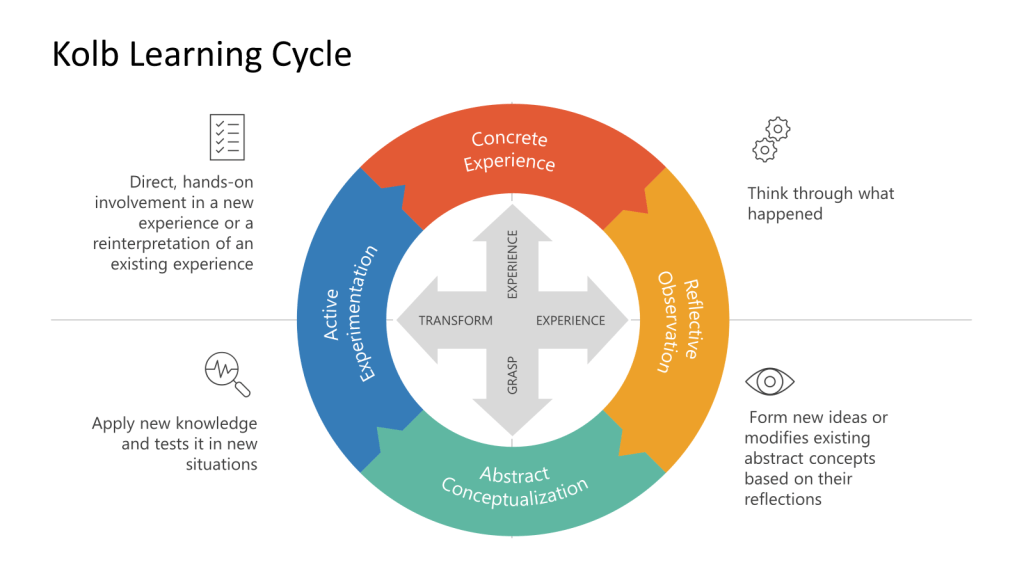
Kolb’s reflective model, also known as Kolb’s experiential learning cycle, is a widely used framework for understanding how people learn from experience. The model consists of four stages that form a continuous cycle of learning:
The Four Stages of Kolb’s Reflective Model
Concrete Experience: This is the stage where the learner actively experiences an activity or situation. It involves direct, hands-on involvement in a new experience or a reinterpretation of an existing experience.
Reflective Observation: In this stage, the learner reflects on and reviews the experience. They think about what happened, considering their feelings and the links to their existing knowledge and skills.
Abstract Conceptualization: Here, the learner forms new ideas or modifies existing abstract concepts based on their reflections. This stage involves analyzing the experience and drawing conclusions about what was learned.
Active Experimentation: In the final stage, the learner applies their new knowledge and tests it in new situations. This involves planning how to put the new learning into practice and experimenting with new approaches.
Create Opportunities for Concrete Experiences: Provide employees with hands-on learning experiences, such as job rotations, simulations, or real-world projects.
Encourage Reflection: Set up regular reflection sessions or debriefings after significant experiences. Encourage employees to keep learning journals or participate in group discussions to share their observations.
Facilitate Conceptualization: Provide resources and support for employees to analyze their experiences and form new concepts. This could involve training sessions, mentoring programs, or access to relevant literature and research.
Support Active Experimentation: Create a safe environment for employees to apply their new knowledge and skills. Encourage innovation and provide opportunities for employees to test new ideas in their work.
Integrate the Model into Learning Programs: Design training and development programs that incorporate all four stages of Kolb’s cycle, ensuring a comprehensive learning experience.
Personalize Learning: Recognize that individuals may have preferences for different stages of the cycle. Offer diverse learning opportunities to cater to various learning styles.
Measure and Iterate: Regularly assess the effectiveness of knowledge management initiatives based on Kolb’s model. Use feedback and results to continuously improve the learning process.
By incorporating Kolb’s reflective model into knowledge management practices, we can create a more holistic and effective approach to learning and development. This can lead to improved knowledge retention, better application of learning to real-world situations, and a more adaptable and skilled workforce.
– Expands on Kolb’s work – Recognizes various responses to potential learning situations
Backward Design
Grant Wiggins, Jay McTighe
1. Identify desired results 2. Determine acceptable evidence 3. Plan learning experiences and instruction
– Starts with learning outcomes – Focuses on designing effective learning experiences
Applying the Experiential Learning Model to Validation Competencies
To apply Kolb’s experiential learning model to building an organization’s competency for validation, we can structure the process as follows:
Concrete Experience
Have employees participate in actual validation activities or simulations
Provide hands-on training sessions on validation techniques and tools
Assign validation tasks to teams in real projects
Reflective Observation
Conduct debriefing sessions after validation activities
Encourage employees to keep validation journals or logs
Facilitate group discussions to share experiences and observations
Review validation results and outcomes as a team
Abstract Conceptualization
Offer formal training on validation principles, methodologies, and best practices
Encourage employees to develop validation frameworks or models based on their experiences
Analyze validation case studies from other organizations or industries
Create validation guidelines and standard operating procedures
Active Experimentation
Implement new validation approaches in upcoming projects
Encourage employees to propose and test innovative validation methods
Set up pilot programs to trial new validation tools or techniques
Assign employees to different types of validation projects to broaden their skills
To make this process continuous and effective:
Create a validation competency framework with clear learning objectives and skill levels
Develop a mentoring program where experienced team members guide less experienced colleagues
Establish regular knowledge-sharing sessions focused on validation topics
Implement a system for capturing and disseminating lessons learned from validation activities
Use technology platforms to support collaborative learning and information sharing about validation
Regularly assess and update the organization’s validation processes based on learning outcomes
Encourage cross-functional teams to work on validation projects to broaden perspectives
Partner with external experts or organizations to bring in fresh insights and best practices
Recognize and reward employees who demonstrate growth in validation competencies
Integrate validation competency development into performance reviews and career progression paths
By systematically applying Kolb’s model, we can create a robust learning environment that continuously improves our validation capabilities. This approach ensures that employees not only gain theoretical knowledge but also practical experience, leading to a more competent and adaptable workforce.
A psychological contract refers to the unwritten, intangible set of expectations, beliefs, and obligations that define the relationship between an employer and an employee. Unlike a formal employment contract, which is legally binding and outlines specific duties, responsibilities, and compensation, a psychological contract encompasses the informal and often unspoken aspects of the employment relationship.
Key Characteristics of a Psychological Contract
Unwritten and Intangible: Psychological contracts are not documented formally. They are based on mutual perceptions and understandings that develop through interactions and experiences over time.
Mutual Expectations: These contracts involve what each party expects from the other. For example, an employee might expect job security, opportunities for growth, and fair treatment, while an employer might expect loyalty, hard work, and a willingness to go above and beyond.
Dynamic and Evolving: The terms of a psychological contract can change over time as the needs and circumstances of both the employee and employer evolve. What is considered fair and balanced at one stage of an employee’s career might change as their personal and professional priorities shift.
Relational and Transactional Elements: Psychological contracts can be categorized into relational and transactional. Relational contracts are long-term and based on mutual trust and loyalty, while transactional contracts are short-term and focus on specific exchanges of labor for rewards.
Importance of Psychological Contracts
Employee Engagement and Motivation: A well-balanced psychological contract can increase employee engagement, motivation, and job satisfaction. Employees who feel their expectations are being met are more likely to be committed to their organization and perform better.
Organizational Performance: Organizations that manage psychological contracts effectively can benefit from improved performance and lower turnover rates. Employees who perceive their psychological contract as fair are likelier to stay with the company and contribute positively to its goals.
Trust and Fairness: The psychological contract is crucial for building trust between employees and employers. When employees feel that their employer is keeping its informal promises, it fosters a sense of fairness and mutual respect.
Breach of Psychological Contracts
A breach occurs when one party perceives that the other has failed to fulfill its obligations. This can lead to feelings of betrayal, decreased job satisfaction, and reduced organizational commitment. Common consequences of a breached psychological contract include increased turnover, lower productivity, and higher levels of employee disengagement.
Examples of Psychological Contracts
Promotion Expectations: An employee might be verbally promised a promotion after completing specific training. If this promotion does not materialize, the employee may feel that the psychological contract has been breached.
Work-Life Balance: An organization might have an unwritten rule that employees can leave early on Fridays. Employees might feel that their psychological contract has been violated if a new manager enforces strict hours.
Job Security: Employees might expect job security in exchange for their loyalty and hard work. If the company undergoes layoffs without clear communication, it can lead to a breach of the psychological contract.
Managing Psychological Contracts
Communicate Clearly: Regular and transparent communication helps align expectations and reduces misunderstandings.
Foster Trust: Building a culture of trust and fairness can help maintain a positive psychological contract.
Adapt to Changes: Recognize that employees’ needs and expectations change over time and be willing to adapt accordingly.
Yes, psychological contracts change over time, and there are several ways this can occur:
Organizational changes: Major organizational shifts, such as restructuring, mergers, or leadership changes, can alter the implicit expectations and obligations between employees and employers. For example, a company that previously emphasized job security may shift towards a more flexible workforce, changing the psychological contract around long-term employment.
Societal and economic changes: Broader societal trends and economic conditions can influence psychological contracts. The COVID-19 pandemic, for instance, dramatically shifted expectations around remote work and work-life balance for many employees and employers.
Career progression: As employees advance, their expectations and perceived obligations often evolve. An entry-level employee might prioritize learning opportunities, while a more experienced worker may expect greater autonomy and decision-making power.
Generational differences: Different generations often have varying expectations about work. Younger generations may emphasize work-life balance and purpose-driven work more than older generations.
Technological advancements: The rapid pace of technological change can alter how work is performed and what skills are valued, shifting the psychological contract.
Personal life changes: Major life events for employees (e.g., starting a family or approaching retirement) can change their priorities and expectations from work.
Ongoing experiences and interactions: Day-to-day experiences and interactions between employees and employers continuously shape and refine the psychological contract.
Explicit renegotiation: In some cases, employers and employees may openly discuss and revise their mutual expectations, especially during performance reviews or when job roles change significantly.
It’s important to note that these changes in psychological contracts can sometimes lead to perceived breaches if not properly managed or communicated. Organizations and employees need to be aware of these potential shifts and work to maintain alignment in their mutual expectations over time. Regular communication, transparency, and flexibility are crucial to adapting psychological contracts as circumstances change.
Psychological contracts are under constant assault in most workplaces. Just look at all the tension around returning to work, quitting quietly, and whatever the new term de-jour is. We have entered an era in which continuous reinvention is the only way to manage continuous turbulence. This means that, when it comes to the psychological contract, we are (inadvertently) lying to our employees everywhere. Gone are the days when “you support this one-time transformation, and things will return to normal for a few years.” Now is the time for honest dialogue and explicit re-negotiation. We must allocate some of our time and resources to perpetual reinvention to survive and thrive in the perpetually turbulent world. That is the new normal. And psychological contracts are under a lot of tension. Plan to deal with that.
A central premise of the Quality mindset is that the means justify the ends and that how we work produces a better result.
At its core, a Quality mindset values the journey as much as the destination. It’s an understanding that the path taken to achieve results is integral to the quality of those results. This mindset shifts the focus from merely meeting targets to how those targets are met, emphasizing continuous improvement, attention to detail, and a commitment to excellence at every step of the process.
The Means Define the Culture
One of the most profound impacts of adopting a Quality mindset is on organizational culture. When a company prioritizes the means as much as the ends, it fosters a culture of integrity, responsibility, and continuous learning. Employees are encouraged to take ownership of their work, innovate, and find better ways to achieve objectives. This enhances the quality of work and boosts morale and engagement among team members.
Process Improvement as a Habit
Incorporating a Quality mindset means viewing process improvement as not a one-time initiative but an ongoing habit. It’s about making small, continuous adjustments that cumulatively lead to significant improvements.
Building Resilience through Quality
Another critical aspect of the Quality mindset is its role in building organizational resilience. Companies can create flexible and robust processes that withstand external pressures and disruptions by concentrating on the means. This resilience is crucial in today’s fast-paced and ever-changing business environment, where adaptability and agility are key to survival and success.
The Role of Leadership
Leadership plays a pivotal role in cultivating a Quality mindset within an organization. Leaders must set the tone by demonstrating a commitment to quality in their actions and decisions. They should encourage open communication, foster a culture of feedback and learning, and recognize and reward quality improvements. By leading by example, leaders can inspire their teams to adopt a Quality mindset and contribute to a culture of excellence.
Conclusion
Adopting a Quality mindset is a strategic choice that can lead to superior outcomes for organizations. By focusing on the means—how work is done—companies can improve processes, foster a positive culture, build resilience, and ultimately achieve higher-quality results. Embedding this mindset into the fabric of the company’s operations requires a commitment from all levels of the organization, especially leadership. In the end, a Quality mindset is not just about achieving better results; it’s about building a better organization.
I recently joined Just Evotec Biologics as the Senior Director of Global Quality Engineering and Validation. For a variety of reasons (just look at my past company on my LinkedIn bio and search the news to find one) it was a good time to move. I had decided that I wanted a position that was tied to an innovative manufacturing company and was deep in domain expertise. The combination of Just Evotec Biologics innovative technology aims and the ability to deep dive into one of my favorite topics was just too much to resist. Add to it the opportunity to work with a leader I deeply respected again and well, here I am. And feeling very good about it.
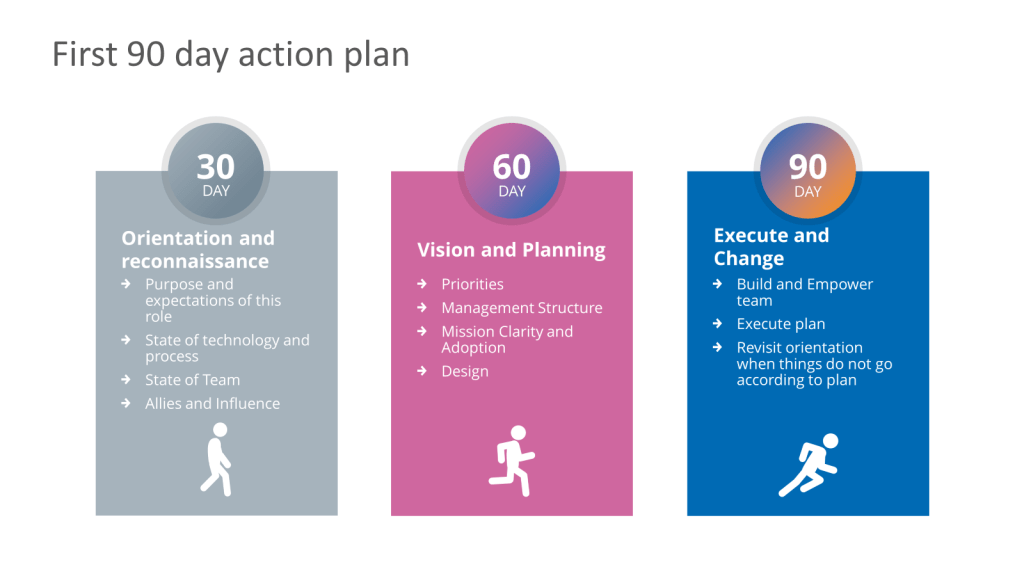
When I first started I met with the team and laid out my 30-60-90 day goals.
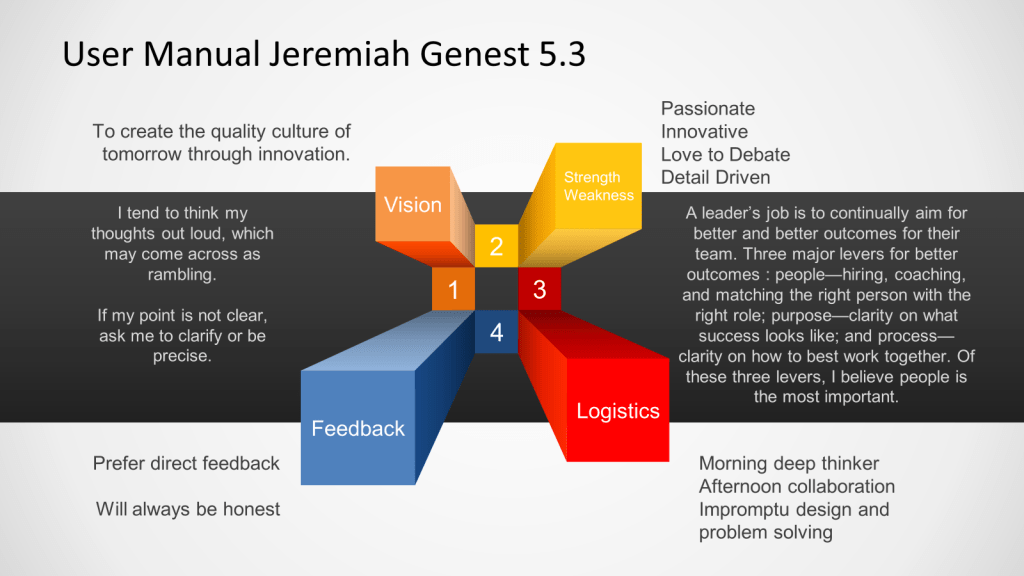
As well as talking a little about how I operate.
A big chunk of my time has been getting the lay-of-the-land institutionally. Setting some standards, doing gap assessments, figuring out what-is-what, and getting to know all my partners and stakeholders. For reasons of confidentiality, this post won’t be going deep on that.
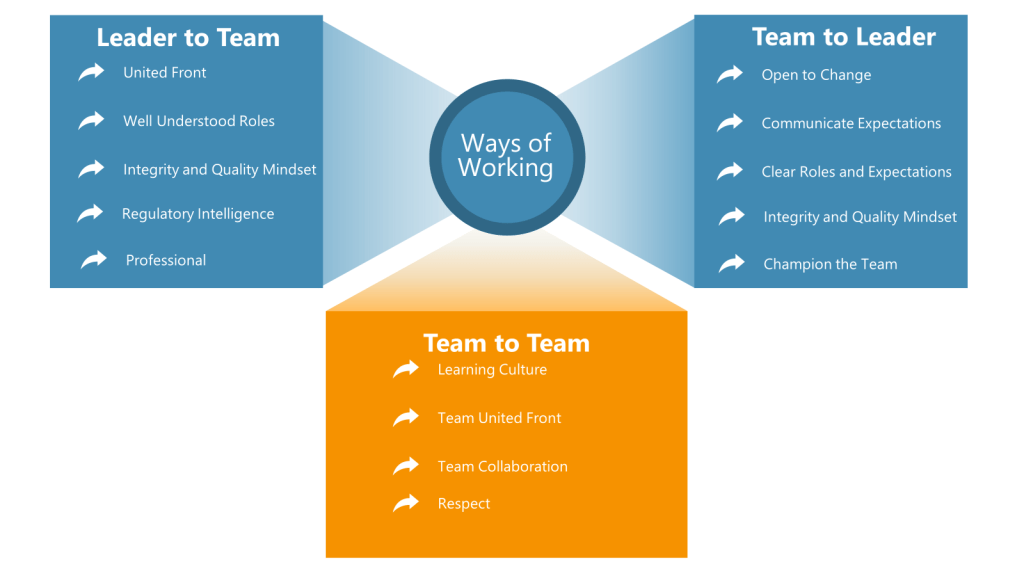
What I do want to talk about is our team values and ways of working. I’ve been focused heavily on three areas with the team:
Team Values
Team Decision Making
Team Competencies
Team Values
We did a few workshops where we identified a set of values:
Leader to Team: How I expect the team to perform
Team to Leader: How the Team expects me to perform
Team to Team: How we expect each other to perform
This exercise really helped me understand what was going on within the team and through it I really started to understand some priorities.
For each of these, we created a Value Statement. Here are some examples.
Value: United Front
Definition: Decisions are made and recorded honestly and transparently. Employees understand decisions and how to execute them. The entire team represents the decisions made, and the decision-making process with one voice.
Desired Behaviors:
I hold myself accountable for representing the decisions made by the team.
I work to anticipate and fend off the possibility of failures occurring.
I engage with decision making and respect the decisions that result.
Value: Open to Change
Definition: Willingness to listen to the team. Actively looking for feedback and input from the team before making decisions that impact the team. Open to changing established ways and revisiting previously made decisions.
I will create an environment where new ideas are welcome and challenging ideas are encouraged.
I will include the team in decision-making where applicable.
I will actively seek out individual and group feedback to enable continuous improvements.
Value: Learning Culture
Definition: Share lessons learned from projects so team can grow together and remain aligned. Engage in knowledge-sharing sessions.
Desired Behaviors:
I will share lessons learned from each project with the wider QEV team via teams channel &/or weekly team meetings.
I will encourage team members to openly share their experiences, successes, and challenges without fear of judgement.
I will update RAID log with decisions made by the team.
I will identify possible process improvements and update the process improvement tracker
Team Decision Making
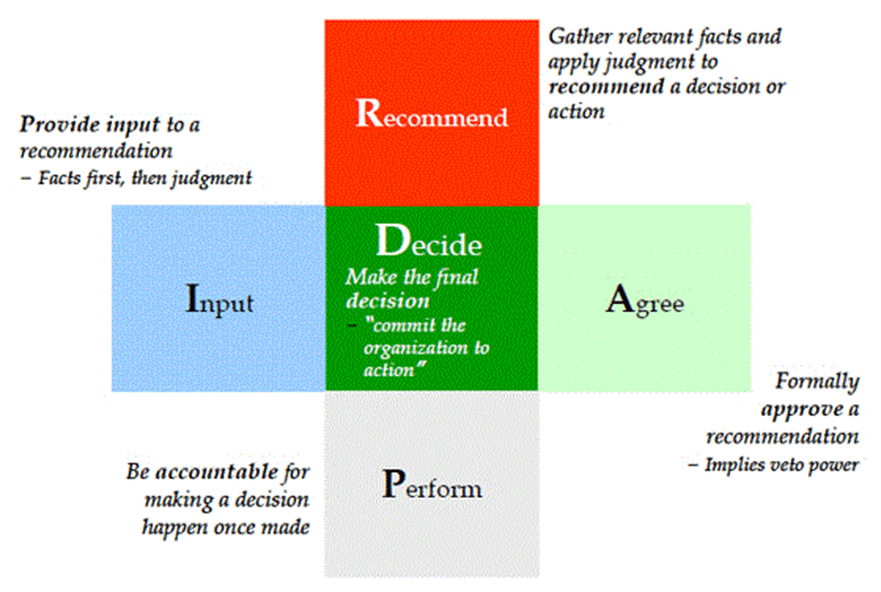
Currently working with the team to define decision-making, introducing the RAPID model and working on a matrix of decisions.
Team Competencies
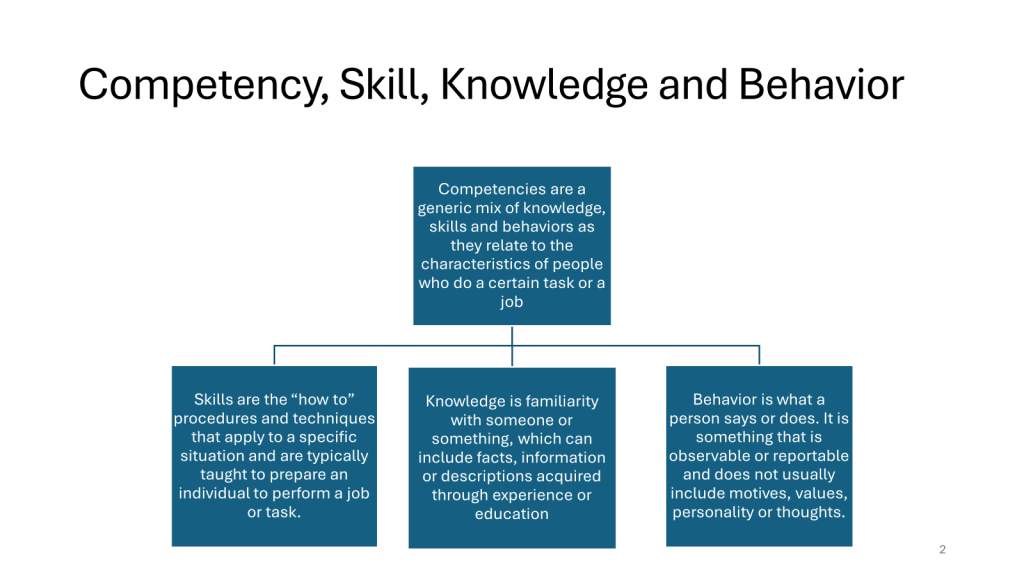
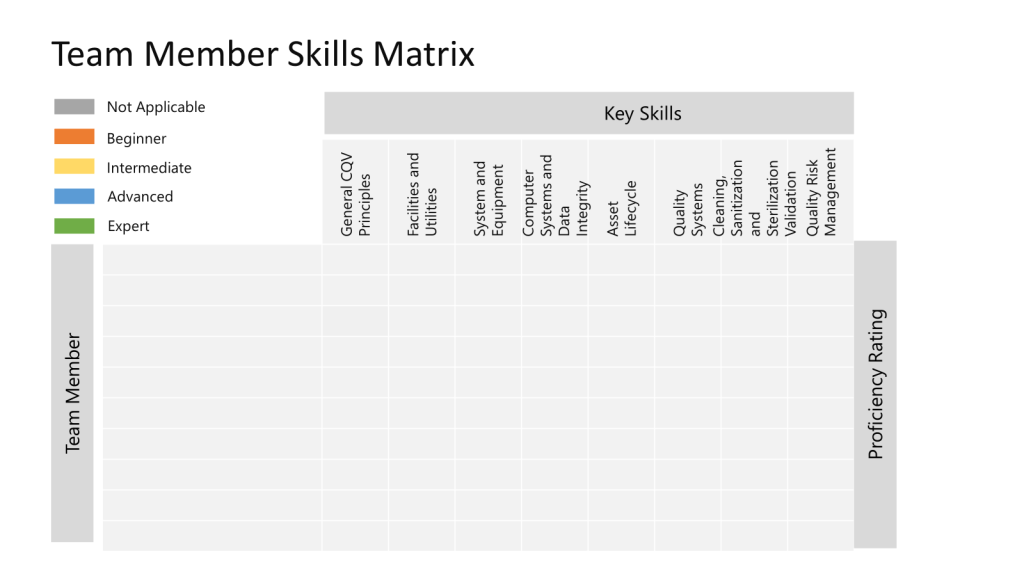
Starting with technical skills we are defining our core competencies. Next, we will tackle, with the larger quality organization, the soft skill side of the equation. This is definitely a work in progress.
Skill
Area
Key
Aspects
Proficiency
Levels
Beginner
Intermediate
Advanced
Expert
General
CQV Principles
�Modern
process validation and guidance
�Validation
design and how to reduce variability
�Able
to review a basic protocol
�Able
to review/approve Validation document deliverables.
�Understands
the importance of a well-defined URS.
�Able
to be QEV lead in a small project
�Able
to answer questions and guide others in QEV
�Participates
in process improvement
�Able
to review and approve RTM/SRs
�Able
to be QEV lead in a large project project
�Trains
and mentors others in QEV
�Leads
process improvement initiatives
�Able
to provide Quality oversight on the creation of Validation Plans for complex
systems and/or projects
�Sets
overall CQV strategy
�Recognized
as an expert outside of JEB
Facilities and Utilities
�Oversee
Facilities, HVAC and Controlled Environments
�Pharma
Water and WFI
�Pure
Steam, Compressed Air, Medical Gases
�Understands
the principles and GMP requirements
�Applies
the principles, activities, and deliverables that constitute an efficient and
acceptable approach to demonstrating facility fitness-for-use/qualification
�Guide
the Design to Qualification Process for new facilities/utilities or the
expansion of existing facilities/utilities
�Able
to establish best practices
Systems and Equipment
�Equipment,
including Lab equipment
�Understands
the principles and GMP requirements
�Principles,
activities, and deliverables that constitute an efficient and acceptable
approach to demonstrating equipment fitness-for-use/qualification
�Able
to provide overall strategy for large projects
�Able
to be QEV lead on complex systems and equipment.
�Able
to establish best practices
Computer Systems and Data Integrity
�Computer
lifecycle, including validation
�Understands
the principles and GMP requirements
�Able
to review CSV documents
�Apply
GAMP5 risk based approach
�Day-to-day
quality oversight
�Able
to provide overall strategy for a risk based GAMP5 approach to computer
system quality
�Able
to establish best practices
Asset Lifecycle
�Quality
oversight and decision making in the lifecycle asset lifecycle: Plan,
acquire, use, maintain, and dispose of assets
�Can
use CMMS to look up Calibrations, Cal schedules and PM schedules
�Quality
oversight of asset lifecycle decisions
�Able
to provide oversight on Cal/PM frequency
�Able
to assess impact to validated state for corrective WO’s.
�Able
to establish asset lifecycle for new equipment classes
�Establish
risk-based PM for new asset classes
�Establish
asset lifecycle approach
Quality Systems
�SOP/WI
and other GxP Documents
�Deviation
�Change
Control
�Able
to use the eQMS
�Deviation
reviewer (minor/major)
�Change
Control approver
�Document
author/approver
�Deviation
reviewer (critical)
�Manage
umbrella/Parent changes
�Able
to set strategic direction
Cleaning,
Sanitization and Sterilization Validation
�Evaluate
and execute cleaning practices, limit calculations, scientific rationales,
and validation documents
�Manage
the challenges of multi-product facilities in the establishment of limits,
determination of validation strategies, and maintaining the validated state
�Differentiate
the requirements for cleaning and sterilization validation when using manual,
semi-automatic, and automatic cleaning technologies
�Review
protocols
�Identify
and characterize potential residues including product, processing aids,
cleaning agents, and adventitious agents
�Understand
Sterilization principles and requirements
�Create,
review and approve scientifically sound rationales,
validation protocols, and reports
�Manage
and remediate the pitfalls inherent in cleaning after the production of
biopharmaceutical and pharmaceutical products
�Define
cleaning/sterilization validation strategy to meet GMP requirements
Quality Risk Management
�Apply
QRM principles according to Q9
�Participate
in a risk assessment
�Determine
appropriate tools
�Establish
risk-based decision-making tools
�Set
risk-based approaches
�Define
risk management program for CQV activities
I’d love feedback on this.
My Overall Philosophy
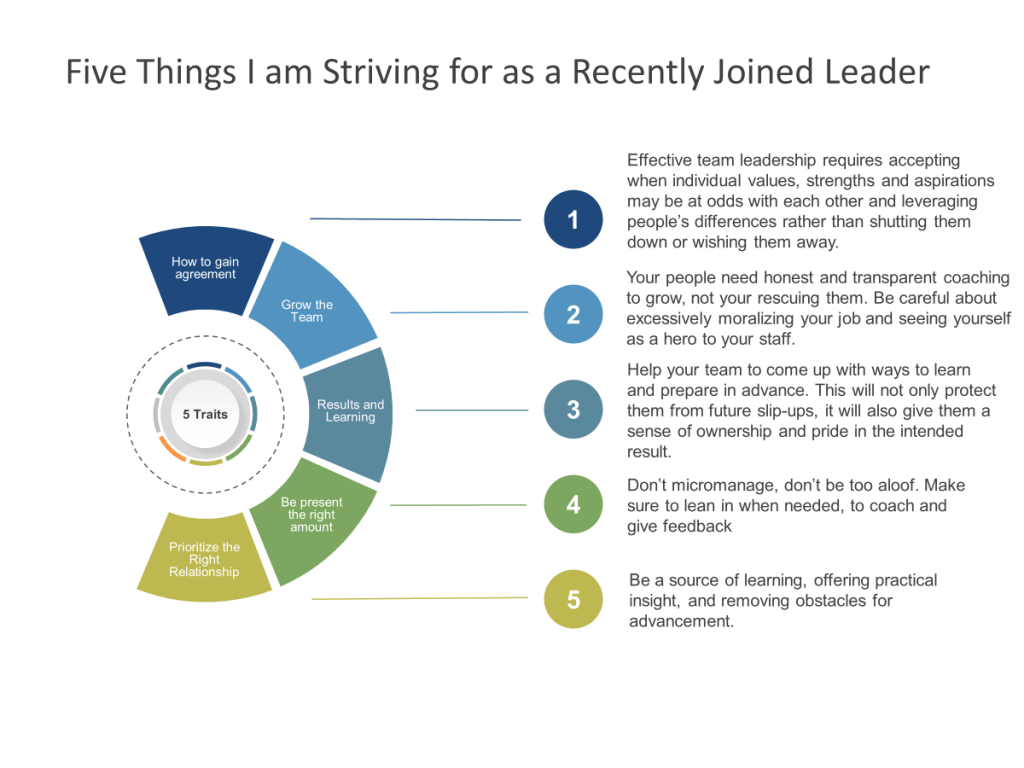
I’ve been focusing on five key tasks as a leader in this organization:
Decentralizing decision-making helps make better and faster decisions while inspiring people to feel needed by the organization and to be empowered. It is a central aspect of democratic leadership and a core way to build a quality culture.
Decentralized decision-making requires psychological safety and a recognition that it just doesn’t happen. Like any behavior, it needs time needs to be spent to develop and nurture.
As a value, decentralized decision-making might look like this:
Value: Decentralized Decision-Making
Definition: Decisions are made by the people who do the work. Everyone is trained to make data-driven decisions by paying attention to the problem, task or numbers, not the person.
I push decision-making to the right people as appropriate.
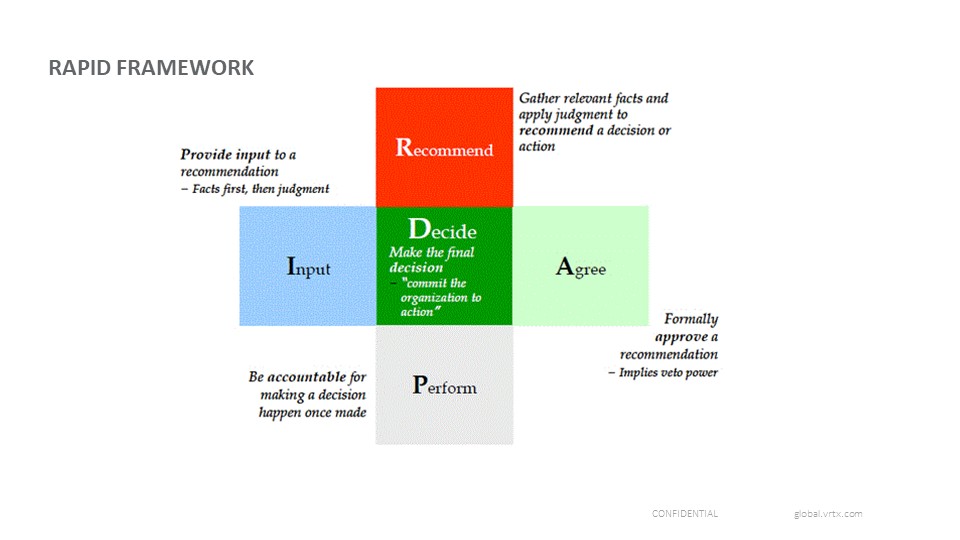
To make this work, it is critical to teach decision-making. A popular method is RAPID, an acronym of 5 words that refer to the group of people involved in the steps of decision-making -Recommend, Agree, Perform, Input, Decision. This was a framework developed by Bain & Company as a systemized framework to design an action plan regarding a problem.
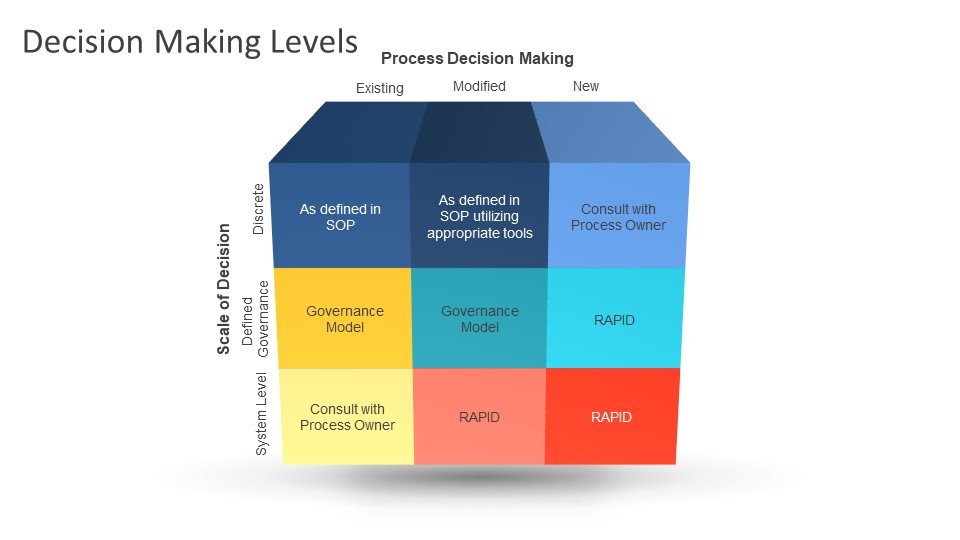
With the base of how a decision is made, the next step is to decide what sort of decisions exist in the organization, and how they get made. I recommend two axis:
The Scale of the Decision: What is the risk level of the decision
The Level of Process Controls: How well defined is the process around the area of the decision


 Investigations of a Dog