Navigating VUCA and BANI: Building Quality Systems for a Chaotic World

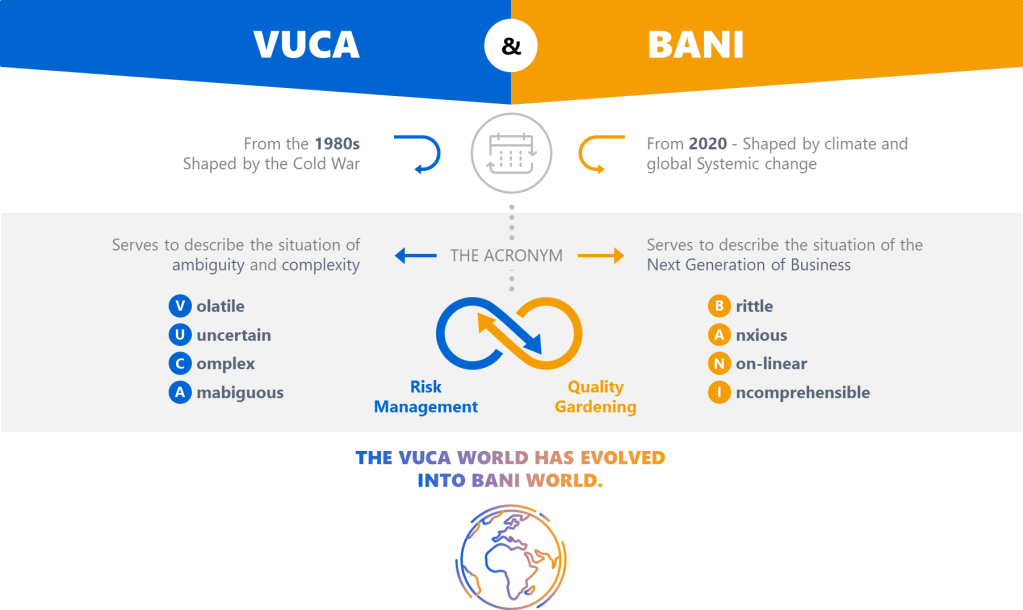
The quality management landscape has always been a battlefield of competing priorities, but today’s environment demands more than just compliance-it requires systems that thrive in chaos. For years, frameworks like VUCA (Volatility, Uncertainty, Complexity, Ambiguity) have dominated discussions about organizational resilience. But as the world fractures into what Jamais Cascio terms a BANI reality (Brittle, Anxious, Non-linear, Incomprehensible), our quality systems must evolve beyond 20th-century industrial thinking. Drawing from my decade of dissecting quality systems on Investigations of a Dog, let’s explore how these frameworks can inform modern quality management systems (QMS) and drive maturity.

VUCA: A Checklist, Not a Crutch

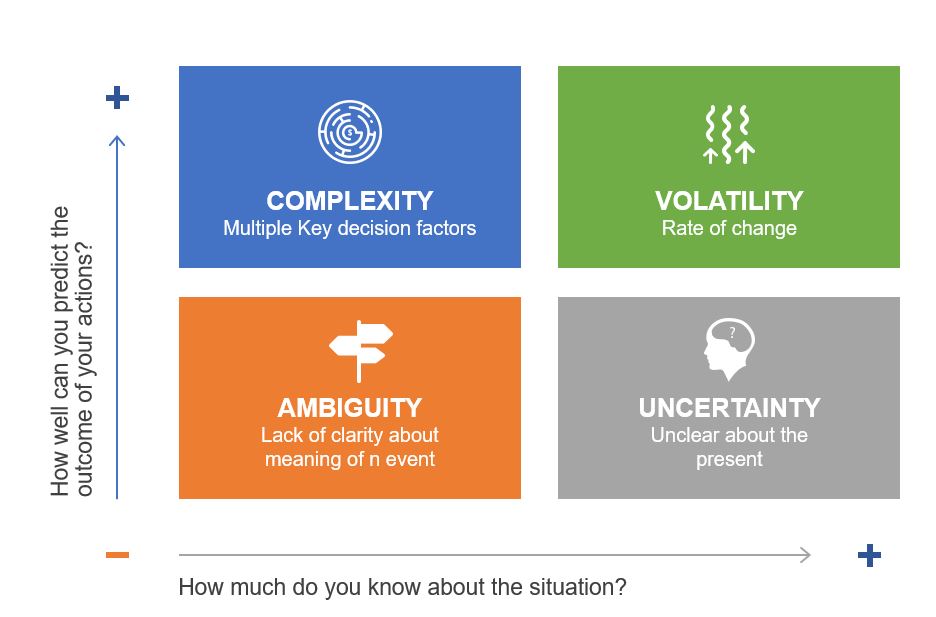
VUCA entered the lexicon as a military term, but its adoption by businesses has been fraught with misuse. As I’ve argued before, treating VUCA as a single concept is a recipe for poor decisions. Each component demands distinct strategies:

Volatility ≠ Complexity

Volatility-rapid, unpredictable shifts-calls for adaptive processes. Think of commodity markets where prices swing wildly. In pharma, this mirrors supply chain disruptions. The solution isn’t tighter controls but modular systems that allow quick pivots without compromising quality. My post on operational stability highlights how mature systems balance flexibility with consistency.

Ambiguity ≠ Uncertainty

Ambiguity-the “gray zones” where cause-effect relationships blur-is where traditional QMS often stumble. As I noted in Dealing with Emotional Ambivalence, ambiguity aversion leads to over-standardization. Instead, build experimentation loops into your QMS. For example, use small-scale trials to test contamination controls before full implementation.

BANI: The New Reality Check

Cascio’s BANI framework isn’t just an update to VUCA-it’s a wake-up call. Let’s break it down through a QMS lens:

Brittle Systems Break Without Warning

The FDA’s Quality Management Maturity (QMM) program emphasizes that mature systems withstand shocks. But brittleness lurks in overly optimized processes. Consider a validation program that relies on a single supplier: efficient, yes, but one disruption collapses the entire workflow. My maturity model analysis shows that redundancy and diversification are non-negotiable in brittle environments.

Anxiety Demands Psychological Safety

Anxiety isn’t just an individual burden, it’s systemic. In regulated industries, fear of audits often drives document hoarding rather than genuine improvement. The key lies in cultural excellence, where psychological safety allows teams to report near-misses without blame.

Non-Linear Cause-Effect Upends Root Cause Analysis

Traditional CAPA assumes linearity: find the root cause, apply a fix. But in a non-linear world, minor deviations cascade unpredictably. We need to think more holistically about problem solving.

Incomprehensibility Requires Humility

When even experts can’t grasp full system interactions, transparency becomes strategic. Adopt open-book quality metrics to share real-time data across departments. Cross-functional reviews expose blind spots.
Building a BANI-Ready QMS

From Documents to Living Systems

Traditional QMS drown in documents that “gather dust” (Documents and the Heart of the Quality System). Instead, model your QMS as a self-adapting organism:

  • Use digital twins to simulate disruptions
  • Embed risk-based decision trees in SOPs
  • Replace annual reviews with continuous maturity assessments

Maturity Models as Navigation Tools

A maturity model framework maps five stages from reactive to anticipatory. Utilizing a Maturity model for quality planning help prepare for what might happen.

Operational Stability as the Keystone

The House of Quality model positions operational stability as the bridge between culture and excellence. In BANI’s brittle world, stability isn’t rigidity-it’s dynamic equilibrium. For example, a plant might maintain ±1% humidity control not by tightening specs but by diversifying HVAC suppliers and using real-time IoT alerts.

The Path Forward

VUCA taught us to expect chaos; BANI forces us to surrender the illusion of control. For quality leaders, this means:

  • Resist checklist thinking: VUCA’s four elements aren’t boxes to tick but lenses to sharpen focus.
  • Embrace productive anxiety: As I wrote in Ambiguity, discomfort drives innovation when channeled into structured experimentation.
  • Invest in sensemaking: Tools like Quality Function Deployment help teams contextualize fragmented data.

The future belongs to quality systems that don’t just survive chaos but harness it. As Cascio reminds us, the goal isn’t to predict the storm but to learn to dance in the rain.


For deeper dives into these concepts, explore my series on VUCA and Quality Systems.
Navigating the New Era of Quality Management

One of the topics I’m passionate about is exploring the changing landscape of quality management and the challenges we face. The solutions that worked in the past decade won’t be as effective in our current era, marked by post-globalization, capital rationalization, spatial dispersion, shrinking workforces, and an increasing reliance on automation. This transformation calls for a new perspective on quality management, as traditional instincts and strategies may no longer be sufficient. The nature of opportunity and risk has fundamentally changed, and in order to thrive, we need to adapt our approach.

The New Rules of Engagement

In this era of volatility, several key trends are reshaping the business environment:

  • Post-Globalization: The shift towards localized operations and supply chains.
  • Capital Rationalization: More stringent allocation of financial resources. This is a huge trend in biotech.
  • Spatial Dispersion: Decentralized workforces and operations.
  • Shrinking Workforces: Reduced human resources due to demographic changes.
  • Dependence on Automation: Increased reliance on technologies like AI, ML, and RPA.

We need to reevaluate how we approach quality management in light of these trends.

Prediction: Anticipating the Future

In a volatile environment, it is crucial to predict and anticipate disruptions. Quality management must shift from being reactive to proactive. This involves:

  • Advanced Analytics: Utilizing data analytics to anticipate quality issues before they emerge. This necessitates a strong data foundation and the capability to analyze both structured and unstructured data.
  • Scenario Planning: Developing multiple scenarios to anticipate potential disruptions and their impacts on quality aids in making well-informed strategic decisions and preparing for various contingencies.

Adaptability: Embracing Change

Adaptability is crucial in a constantly changing world. Quality management systems need to be flexible and responsive to new challenges.

  • Agile Methodologies: Implementing agile practices to allow for quick adjustments to processes and workflows, fostering a culture of experimentation, and learning from failures.
  • Virtualization of Work: Adapting quality processes to support remote and hybrid work environments involves re-evaluating governance models and ensuring that quality standards are maintained regardless of the location of work.

Resilience: Building Robust Systems

Resilience ensures that organizations can withstand and recover from disruptions. This capability is built on strong foundations:

  • Robust Systems: Developing systems that can operate effectively under stress. This includes ensuring that automated processes are reliable and that there are contingencies for system failures.
  • Organizational Culture: Fostering a culture that values resilience and continuous improvement ensures that employees are prepared to handle disruptions and contribute to the organization’s long-term success.

Implementing the New Quality Paradigm

To effectively implement these principles, organizations should consider the following steps:

  1. Assess the Current State: Conduct a comprehensive assessment of existing quality processes, identifying areas for improvement and potential vulnerabilities.
  2. Set Clear Objectives: Establish clear, measurable objectives that align with the principles of prediction, adaptability, and resilience.
  3. Develop a Phased Approach: Implement changes gradually, with clear milestones and measurable outcomes to ensure smooth transitions.
  4. Engage Stakeholders: Involve all relevant stakeholders in the transformation process to ensure alignment and buy-in.
  5. Monitor Progress: Continuously monitor progress against predefined objectives and make adjustments as necessary to stay on track.
  6. Invest in Training: Provide employees with the necessary training and development opportunities to adapt to new technologies and processes.

Conclusion

It is important to change our mindset and strategy. Embracing the principles of prediction, adaptability, and resilience can help organizations navigate the complexities of a volatile environment and position themselves for long-term success. Going forward, it is essential to stay vigilant, flexible, and proactive in our approach to quality management. We must ensure that we not only meet but exceed stakeholder expectations in this rapidly changing world.

Dealing with Emotional Ambivalence

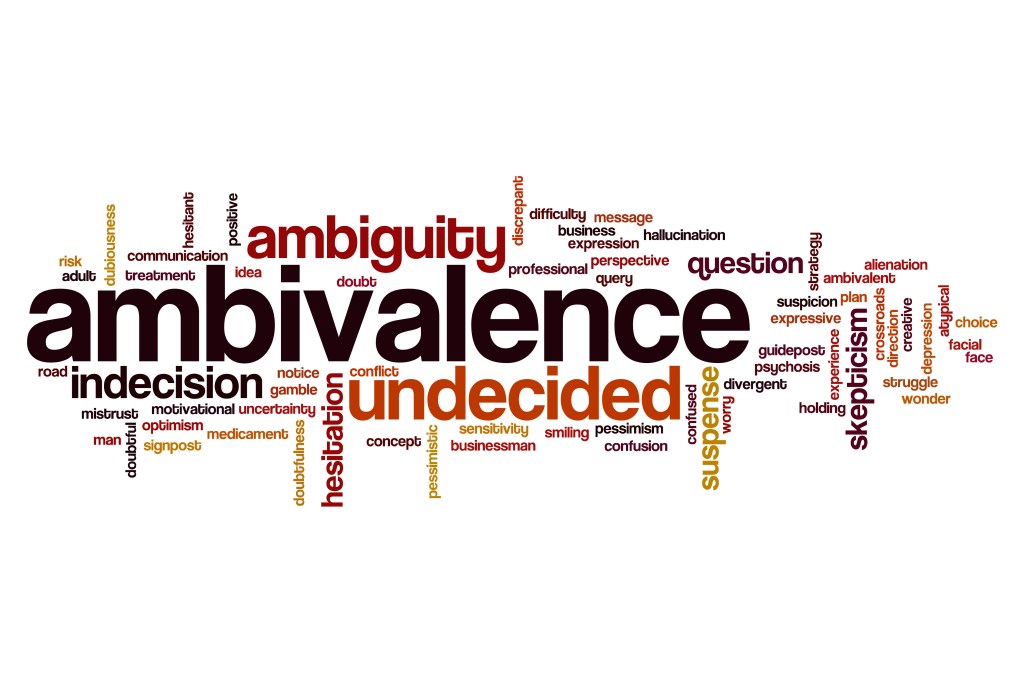
Wordcloud for Ambivalence

Ambivalence, the A in VUCA, is a concept that quality professionals struggle with. We often call it “navigating the gray” or something similar. It is a skill we need to grow into, and definitely an area that should be central to your development program.

There is a great article in Harvard Business Review on “Embracing the Power of Ambivalence” that I strongly recommend folks read. This article focuses on emotional ambivalence, the feeling of being “torn” and discusses the return to the office. I’m not focusing on that topic (though like everyone I have strong opinions), instead I think the practices described there are great to think about as we develop a culture of quality.

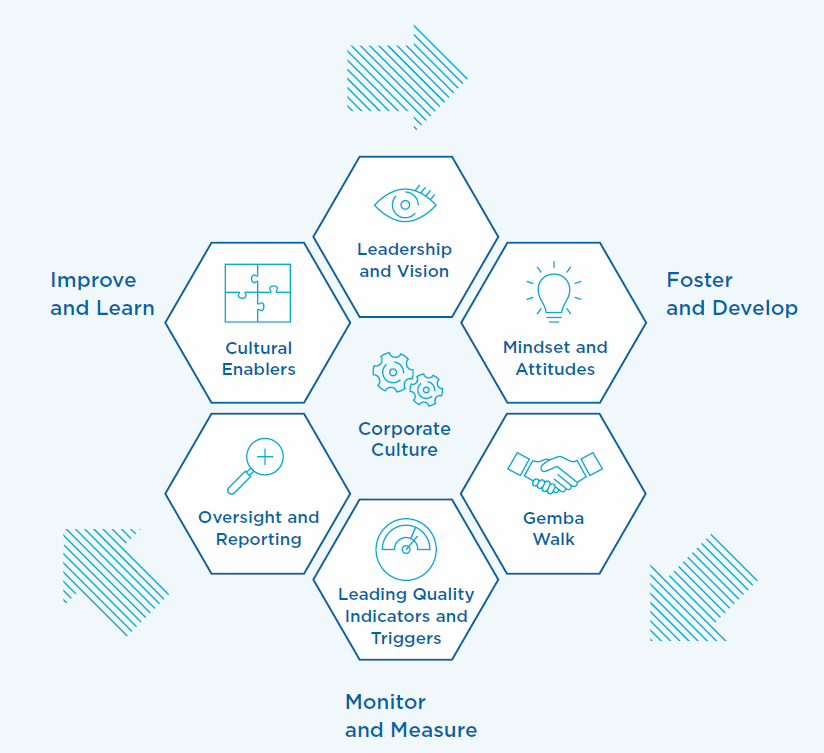
ISPE’s cultural excellence model

Ambiguity

Ambiguity is present in virtually all real-life situations and are those ‘situations in which we do not have sufficient information to quantify the stochastic nature of the problem. It is a lack of knowledge as
to the ‘basic rules of the game’ where cause-and-effect are not understood and there is no precedent for
making predictions as to what to expect

Ambiguity is often used, especially in the context of VUCA, to cover situations in situations that have:

  • Doubt about the nature of cause and effect
  • Little to no historical information to predict the outcome
  • Difficult to forecast or plan for

It is important to answer whether there are risks of lack of experience and predictability that might affect the situation, and interrogate our unknown unknowns.

People are ambiguity averse in that they prefer situations in which probabilities are perfectly known to situations in which they are unknown.

Ambiguity is best resolved by experimentation.

VUCA – Accented Just Right It is a Profanity

Talk about strategy, risk management, or change; it is inevitable that the acronym VUCA — short for volatility, uncertainty, complexity, and ambiguity — will come up. VUCA is a catchall for “Hey, it’s crazy out there!” And like many catch-all’s it is misleading, VUCA conflates four distinct types of challenges that demand four distinct types of responses. VUCA can quickly become a crutch, a way to throw off the hard work of strategy and planning—after all, you can’t prepare for a VUCA world, right?

The mistake folks often make here is treating these four traits as a single idea, which leads to poorer decision making.

VUCA really isn’t a tool. It’s a checklist of four things that hopefully your system is paying attention to. All four represent distinct elements that make our environment and organization harder to grasp and control.