Control Strategies

In a past post discussing the program level in the document hierarchy, I outlined how program documents serve as critical connective tissue between high-level policies and detailed procedures. Today, I’ll explore three distinct but related approaches to control strategies: the Annex 1 Contamination Control Strategy (CCS), the ICH Q8 Process Control Strategy, and a Technology Platform Control Strategy. Understanding their differences and relationships allows us to establish a comprehensive quality system in pharmaceutical manufacturing, especially as regulatory requirements continue to evolve and emphasize more scientific, risk-based approaches to quality management.

Control strategies have evolved significantly and are increasingly central to pharmaceutical quality management. As I noted in my previous article, program documents create an essential mapping between requirements and execution, demonstrating the design thinking that underpins our quality processes. Control strategies exemplify this concept, providing comprehensive frameworks that ensure consistent product quality through scientific understanding and risk management.

The pharmaceutical industry has gradually shifted from reactive quality testing to proactive quality design. This evolution mirrors the maturation of our document hierarchies, with control strategies occupying that critical program-level space between overarching quality policies and detailed operational procedures. They serve as the blueprint for how quality will be achieved, maintained, and improved throughout a product’s lifecycle.

This evolution has been accelerated by increasing regulatory scrutiny, particularly following numerous drug recalls and contamination events resulting in significant financial losses for pharmaceutical companies.

Annex 1 Contamination Control Strategy: A Facility-Focused Approach

The Annex 1 Contamination Control Strategy represents a comprehensive, facility-focused approach to preventing chemical, physical and microbial contamination in pharmaceutical manufacturing environments. The CCS takes a holistic view of the entire manufacturing facility rather than focusing on individual products or processes.

A properly implemented CCS requires a dedicated cross-functional team representing technical knowledge from production, engineering, maintenance, quality control, microbiology, and quality assurance. This team must systematically identify contamination risks throughout the facility, develop mitigating controls, and establish monitoring systems that provide early detection of potential issues. The CCS must be scientifically formulated and tailored specifically for each manufacturing facility’s unique characteristics and risks.

What distinguishes the Annex 1 CCS is its infrastructural approach to Quality Risk Management. Rather than focusing solely on product attributes or process parameters, it examines how facility design, environmental controls, personnel practices, material flow, and equipment operate collectively to prevent contamination. The CCS process involves continual identification, scientific evaluation, and effective control of potential contamination risks to product quality.

Critical Factors in Developing an Annex 1 CCS

The development of an effective CCS involves several critical considerations. According to industry experts, these include identifying the specific types of contaminants that pose a risk, implementing appropriate detection methods, and comprehensively understanding the potential sources of contamination. Additionally, evaluating the risk of contamination and developing effective strategies to control and minimize such risks are indispensable components of an efficient contamination control system.

When implementing a CCS, facilities should first determine their critical control points. Annex 1 highlights the importance of considering both plant design and processes when developing a CCS. The strategy should incorporate a monitoring and ongoing review system to identify potential lapses in the aseptic environment and contamination points in the facility. This continuous assessment approach ensures that contamination risks are promptly identified and addressed before they impact product quality.

ICH Q8 Process Control Strategy: The Quality by Design Paradigm

While the Annex 1 CCS focuses on facility-wide contamination prevention, the ICH Q8 Process Control Strategy takes a product-centric approach rooted in Quality by Design (QbD) principles. The ICH Q8(R2) guideline introduces control strategy as “a planned set of controls derived from current product and process understanding that ensures process performance and product quality”. This approach emphasizes designing quality into products rather than relying on final testing to detect issues.

The ICH Q8 guideline outlines a set of key principles that form the foundation of an effective process control strategy. At its core is pharmaceutical development, which involves a comprehensive understanding of the product and its manufacturing process, along with identifying critical quality attributes (CQAs) that impact product safety and efficacy. Risk assessment plays a crucial role in prioritizing efforts and resources to address potential issues that could affect product quality.

The development of an ICH Q8 control strategy follows a systematic sequence: defining the Quality Target Product Profile (QTPP), identifying Critical Quality Attributes (CQAs), determining Critical Process Parameters (CPPs) and Critical Material Attributes (CMAs), and establishing appropriate control methods. This scientific framework enables manufacturers to understand how material attributes and process parameters affect product quality, allowing for more informed decision-making and process optimization.

Design Space and Lifecycle Approach

A unique aspect of the ICH Q8 control strategy is the concept of “design space,” which represents a range of process parameters within which the product will consistently meet desired quality attributes. Developing and demonstrating a design space provides flexibility in manufacturing without compromising product quality. This approach allows manufacturers to make adjustments within the established parameters without triggering regulatory review, thus enabling continuous improvement while maintaining compliance.

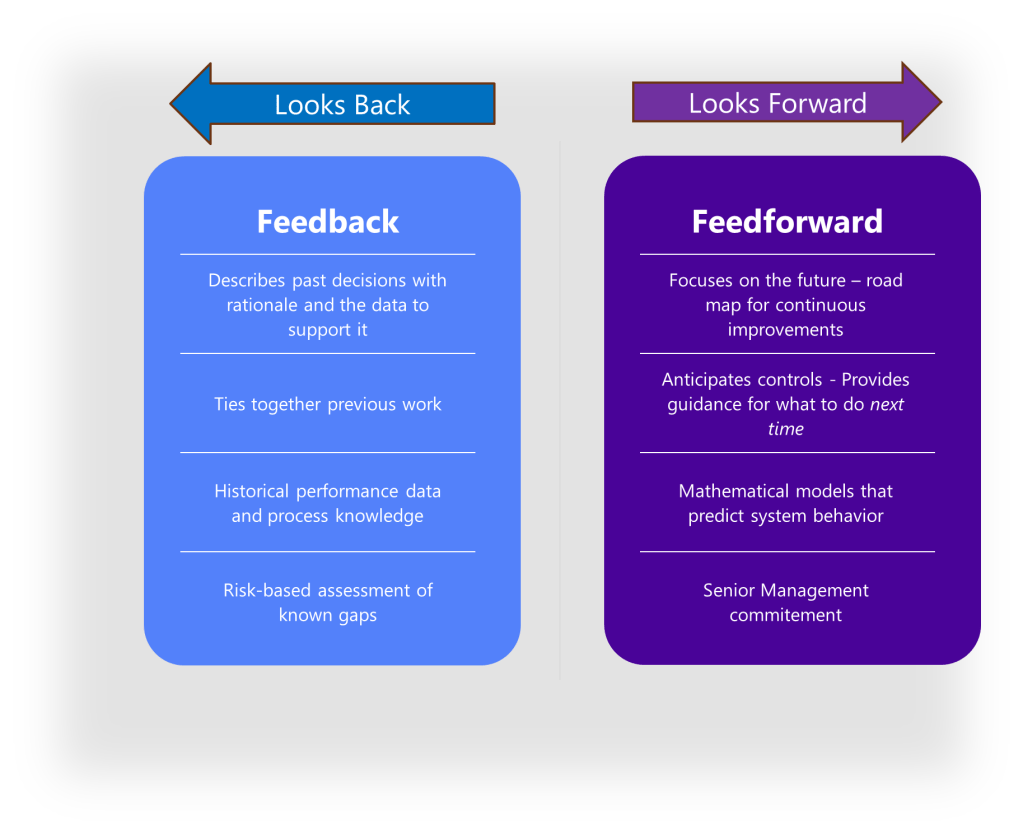
What makes the ICH Q8 control strategy distinct is its dynamic, lifecycle-oriented nature. The guideline encourages a lifecycle approach to product development and manufacturing, where continuous improvement and monitoring are carried out throughout the product’s lifecycle, from development to post-approval. This approach creates a feedback-feedforward “controls hub” that integrates risk management, knowledge management, and continuous improvement throughout the product lifecycle.

Technology Platform Control Strategies: Leveraging Prior Knowledge

As pharmaceutical development becomes increasingly complex, particularly in emerging fields like cell and gene therapies, technology platform control strategies offer an approach that leverages prior knowledge and standardized processes to accelerate development while maintaining quality standards. Unlike product-specific control strategies, platform strategies establish common processes, parameters, and controls that can be applied across multiple products sharing similar characteristics or manufacturing approaches.

The importance of maintaining state-of-the-art technology platforms has been highlighted in recent regulatory actions. A January 2025 FDA Warning Letter to Sanofi, concerning a facility that had previously won the ISPE’s Facility of the Year award in 2020, emphasized the requirement for “timely technological upgrades to equipment/facility infrastructure”. This regulatory focus underscores that even relatively new facilities must continually evolve their technological capabilities to maintain compliance and product quality.

Developing a Comprehensive Technology Platform Roadmap

A robust technology platform control strategy requires a well-structured technology roadmap that anticipates both regulatory expectations and technological advancements. According to recent industry guidance, this roadmap should include several key components:

At its foundation, regular assessment protocols are essential. Organizations should conduct comprehensive annual evaluations of platform technologies, examining equipment performance metrics, deviations associated with the platform, and emerging industry standards that might necessitate upgrades. These assessments should be integrated with Facility and Utility Systems Effectiveness (FUSE) metrics and evaluated through structured quality governance processes.

The technology roadmap must also incorporate systematic methods for monitoring industry trends. This external vigilance ensures platform technologies remain current with evolving expectations and capabilities.

Risk-based prioritization forms another critical element of the platform roadmap. By utilizing living risk assessments, organizations can identify emerging issues and prioritize platform upgrades based on their potential impact on product quality and patient safety. These assessments should represent the evolution of the original risk management that established the platform, creating a continuous thread of risk evaluation throughout the platform’s lifecycle.

Implementation and Verification of Platform Technologies

Successful implementation of platform technologies requires robust change management procedures. These should include detailed documentation of proposed platform modifications, impact assessments on product quality across the portfolio, appropriate verification activities, and comprehensive training programs. This structured approach ensures that platform changes are implemented systematically with full consideration of their potential implications.

Verification activities for platform technologies must be particularly thorough, given their application across multiple products. The commissioning, qualification, and validation activities should demonstrate not only that platform components meet predetermined specifications but also that they maintain their intended performance across the range of products they support. This verification must consider the variability in product-specific requirements while confirming the platform’s core capabilities.

Continuous monitoring represents the final essential element of platform control strategies. By implementing ongoing verification protocols aligned with Stage 3 of the FDA’s process validation model, organizations can ensure that platform technologies remain in a state of control during routine commercial manufacture. This monitoring should anticipate and prevent issues, detect unplanned deviations, and identify opportunities for platform optimization.

Leveraging Advanced Technologies in Platform Strategies

Modern technology platforms increasingly incorporate advanced capabilities that enhance their flexibility and performance. Single-Use Systems (SUS) reduce cleaning and validation requirements while improving platform adaptability across products. Modern Microbial Methods (MMM) offer advantages over traditional culture-based approaches in monitoring platform performance. Process Analytical Technology (PAT) enables real-time monitoring and control, enhancing product quality and process understanding across the platform. Data analytics and artificial intelligence tools identify trends, predict maintenance needs, and optimize processes across the product portfolio.

The implementation of these advanced technologies within platform strategies creates significant opportunities for standardization, knowledge transfer, and continuous improvement. By establishing common technological foundations that can be applied across multiple products, organizations can accelerate development timelines, reduce validation burdens, and focus resources on understanding the unique aspects of each product while maintaining a robust quality foundation.

How Control Strategies Tie Together Design, Qualification/Validation, and Risk Management

Control strategies serve as the central nexus connecting design, qualification/validation, and risk management in a comprehensive quality framework. This integration is not merely beneficial but essential for ensuring product quality while optimizing resources. A well-structured control strategy creates a coherent narrative from initial concept through on-going production, ensuring that design intentions are preserved through qualification activities and ongoing risk management.

During the design phase, scientific understanding of product and process informs the development of the control strategy. This strategy then guides what must be qualified and validated and to what extent. Rather than validating everything (which adds cost without necessarily improving quality), the control strategy directs validation resources toward aspects most critical to product quality.

The relationship works in both directions—design decisions influence what will require validation, while validation capabilities and constraints may inform design choices. For example, a process designed with robust, well-understood parameters may require less extensive validation than one operating at the edge of its performance envelope. The control strategy documents this relationship, providing scientific justification for validation decisions based on product and process understanding.

Risk management principles are foundational to modern control strategies, informing both design decisions and priorities. A systematic risk assessment approach helps identify which aspects of a process or facility pose the greatest potential impact on product quality and patient safety. The control strategy then incorporates appropriate controls and monitoring systems for these high-risk elements, ensuring that validation efforts are proportionate to risk levels.

The Feedback-Feedforward Mechanism

One of the most powerful aspects of an integrated control strategy is its ability to function as what experts call a feedback-feedforward controls hub. As a product moves through its lifecycle, from development to commercial manufacturing, the control strategy evolves based on accumulated knowledge and experience. Validation results, process monitoring data, and emerging risks all feed back into the control strategy, which in turn drives adjustments to design parameters and validation approaches.
Comparing Control Strategy Approaches: Similarities and Distinctions

While these three control strategy approaches have distinct focuses and applications, they share important commonalities. All three emphasize scientific understanding, risk management, and continuous improvement. They all serve as program-level documents that connect high-level requirements with operational execution. And all three have gained increasing regulatory recognition as pharmaceutical quality management has evolved toward more systematic, science-based approaches.

AspectAnnex 1 CCSICH Q8 Process Control StrategyTechnology Platform Control Strategy
Primary FocusFacility-wide contamination preventionProduct and process qualityStandardized approach across multiple products
ScopeMicrobial, pyrogen, and particulate contamination (a good one will focus on physical, chemical and biologic hazards)All aspects of product qualityCommon technology elements shared across products
Regulatory FoundationEU GMP Annex 1 (2022 revision)ICH Q8(R2)Emerging FDA guidance (Platform Technology Designation)
Implementation LevelManufacturing facilityIndividual productTechnology group or platform
Key ComponentsContamination risk identification, detection methods, understanding of contamination sourcesQTPP, CQAs, CPPs, CMAs, design spaceStandardized technologies, processes, and controls
Risk Management ApproachInfrastructural (facility design, processes, personnel) – great for a HACCPProduct-specific (process parameters, material attributes)Platform-specific (shared technological elements)
Team StructureCross-functional (production, engineering, QC, QA, microbiology)Product development, manufacturing and qualityTechnology development and product adaptation
Lifecycle ConsiderationsContinuous monitoring and improvement of facility controlsProduct lifecycle from development to post-approvalEvolution of platform technology across multiple products
DocumentationFacility-specific CCS with ongoing monitoring recordsProduct-specific control strategy with design space definitionPlatform master file with product-specific adaptations
FlexibilityLow (facility-specific controls)Medium (within established design space)High (adaptable across multiple products)
Primary BenefitContamination prevention and controlConsistent product quality through scientific understandingEfficiency and knowledge leverage across product portfolio
Digital IntegrationEnvironmental monitoring systems, facility controlsProcess analytical technology, real-time release testingPlatform data management and cross-product analytics

These approaches are not mutually exclusive; rather, they complement each other within a comprehensive quality management system. A manufacturing site producing sterile products needs both an Annex 1 CCS for facility-wide contamination control and ICH Q8 process control strategies for each product. If the site uses common technology platforms across multiple products, platform control strategies would provide additional efficiency and standardization.

Control Strategies Through the Lens of Knowledge Management: Enhancing Quality and Operational Excellence

The pharmaceutical industry’s approach to control strategies has evolved significantly in recent years, with systematic knowledge management emerging as a critical foundation for their effectiveness. Control strategies—whether focused on contamination prevention, process control, or platform technologies—fundamentally depend on how knowledge is created, captured, disseminated, and applied across an organization. Understanding the intersection between control strategies and knowledge management provides powerful insights into building more robust pharmaceutical quality systems and achieving higher levels of operational excellence.

The Knowledge Foundation of Modern Control Strategies

Control strategies represent systematic approaches to ensuring consistent pharmaceutical quality by managing various aspects of production. While these strategies differ in focus and application, they share a common foundation in knowledge—both explicit (documented) and tacit (experiential).

Knowledge Management as the Binding Element

The ICH Q10 Pharmaceutical Quality System model positions knowledge management alongside quality risk management as dual enablers of pharmaceutical quality. This pairing is particularly significant when considering control strategies, as it establishes what might be called a “Risk-Knowledge Infinity Cycle”—a continuous process where increased knowledge leads to decreased uncertainty and therefore decreased risk. Control strategies represent the formal mechanisms through which this cycle is operationalized in pharmaceutical manufacturing.

Effective control strategies require comprehensive knowledge visibility across functional areas and lifecycle phases. Organizations that fail to manage knowledge effectively often experience problems like knowledge silos, repeated issues due to lessons not learned, and difficulty accessing expertise or historical product knowledge—all of which directly impact the effectiveness of control strategies and ultimately product quality.

The Feedback-Feedforward Controls Hub: A Knowledge Integration Framework

As described above, the heart of effective control strategies lies is the “feedback-feedforward controls hub.” This concept represents the integration point where knowledge flows bidirectionally to continuously refine and improve control mechanisms. In this model, control strategies function not as static documents but as dynamic knowledge systems that evolve through continuous learning and application.

The feedback component captures real-time process data, deviations, and outcomes that generate new knowledge about product and process performance. The feedforward component takes this accumulated knowledge and applies it proactively to prevent issues before they occur. This integrated approach creates a self-reinforcing cycle where control strategies become increasingly sophisticated and effective over time.

For example, in an ICH Q8 process control strategy, process monitoring data feeds back into the system, generating new understanding about process variability and performance. This knowledge then feeds forward to inform adjustments to control parameters, risk assessments, and even design space modifications. The hub serves as the central coordination mechanism ensuring these knowledge flows are systematically captured and applied.

Knowledge Flow Within Control Strategy Implementation

Knowledge flows within control strategies typically follow the knowledge management process model described in the ISPE Guide, encompassing knowledge creation, curation, dissemination, and application. For control strategies to function effectively, this flow must be seamless and well-governed.

The systematic management of knowledge within control strategies requires:

  1. Methodical capture of knowledge through various means appropriate to the control strategy context
  2. Proper identification, review, and analysis of this knowledge to generate insights
  3. Effective storage and visibility to ensure accessibility across the organization
  4. Clear pathways for knowledge application, transfer, and growth

When these elements are properly integrated, control strategies benefit from continuous knowledge enrichment, resulting in more refined and effective controls. Conversely, barriers to knowledge flow—such as departmental silos, system incompatibilities, or cultural resistance to knowledge sharing—directly undermine the effectiveness of control strategies.

Annex 1 Contamination Control Strategy Through a Knowledge Management Lens

The Annex 1 Contamination Control Strategy represents a facility-focused approach to preventing microbial, pyrogen, and particulate contamination. When viewed through a knowledge management lens, the CCS becomes more than a compliance document—it emerges as a comprehensive knowledge system integrating multiple knowledge domains.

Effective implementation of an Annex 1 CCS requires managing diverse knowledge types across functional boundaries. This includes explicit knowledge documented in environmental monitoring data, facility design specifications, and cleaning validation reports. Equally important is tacit knowledge held by personnel about contamination risks, interventions, and facility-specific nuances that are rarely fully documented.

The knowledge management challenges specific to contamination control include ensuring comprehensive capture of contamination events, facilitating cross-functional knowledge sharing about contamination risks, and enabling access to historical contamination data and prior knowledge. Organizations that approach CCS development with strong knowledge management practices can create living documents that continuously evolve based on accumulated knowledge rather than static compliance tools.

Knowledge mapping is particularly valuable for CCS implementation, helping to identify critical contamination knowledge sources and potential knowledge gaps. Communities of practice spanning quality, manufacturing, and engineering functions can foster collaboration and tacit knowledge sharing about contamination control. Lessons learned processes ensure that insights from contamination events contribute to continuous improvement of the control strategy.

ICH Q8 Process Control Strategy: Quality by Design and Knowledge Management

The ICH Q8 Process Control Strategy embodies the Quality by Design paradigm, where product and process understanding drives the development of controls that ensure consistent quality. This approach is fundamentally knowledge-driven, making effective knowledge management essential to its success.

The QbD approach begins with applying prior knowledge to establish the Quality Target Product Profile (QTPP) and identify Critical Quality Attributes (CQAs). Experimental studies then generate new knowledge about how material attributes and process parameters affect these quality attributes, leading to the definition of a design space and control strategy. This sequence represents a classic knowledge creation and application cycle that must be systematically managed.

Knowledge management challenges specific to ICH Q8 process control strategies include capturing the scientific rationale behind design choices, maintaining the connectivity between risk assessments and control parameters, and ensuring knowledge flows across development and manufacturing boundaries. Organizations that excel at knowledge management can implement more robust process control strategies by ensuring comprehensive knowledge visibility and application.

Particularly important for process control strategies is the management of decision rationale—the often-tacit knowledge explaining why certain parameters were selected or why specific control approaches were chosen. Explicit documentation of this decision rationale ensures that future changes to the process can be evaluated with full understanding of the original design intent, avoiding unintended consequences.

Technology Platform Control Strategies: Leveraging Knowledge Across Products

Technology platform control strategies represent standardized approaches applied across multiple products sharing similar characteristics or manufacturing technologies. From a knowledge management perspective, these strategies exemplify the power of knowledge reuse and transfer across product boundaries.

The fundamental premise of platform approaches is that knowledge gained from one product can inform the development and control of similar products, creating efficiencies and reducing risks. This depends on robust knowledge management practices that make platform knowledge visible and available across product teams and lifecycle phases.

Knowledge management challenges specific to platform control strategies include ensuring consistent knowledge capture across products, facilitating cross-product learning, and balancing standardization with product-specific requirements. Organizations with mature knowledge management practices can implement more effective platform strategies by creating knowledge repositories, communities of practice, and lessons learned processes that span product boundaries.

Integrating Control Strategies with Design, Qualification/Validation, and Risk Management

Control strategies serve as the central nexus connecting design, qualification/validation, and risk management in a comprehensive quality framework. This integration is not merely beneficial but essential for ensuring product quality while optimizing resources. A well-structured control strategy creates a coherent narrative from initial concept through commercial production, ensuring that design intentions are preserved through qualification activities and ongoing risk management.

The Design-Validation Continuum

Control strategies form a critical bridge between product/process design and validation activities. During the design phase, scientific understanding of the product and process informs the development of the control strategy. This strategy then guides what must be validated and to what extent. Rather than validating everything (which adds cost without necessarily improving quality), the control strategy directs validation resources toward aspects most critical to product quality.

The relationship works in both directions—design decisions influence what will require validation, while validation capabilities and constraints may inform design choices. For example, a process designed with robust, well-understood parameters may require less extensive validation than one operating at the edge of its performance envelope. The control strategy documents this relationship, providing scientific justification for validation decisions based on product and process understanding.

Risk-Based Prioritization

Risk management principles are foundational to modern control strategies, informing both design decisions and validation priorities. A systematic risk assessment approach helps identify which aspects of a process or facility pose the greatest potential impact on product quality and patient safety. The control strategy then incorporates appropriate controls and monitoring systems for these high-risk elements, ensuring that validation efforts are proportionate to risk levels.

The Feedback-Feedforward Mechanism

The feedback-feedforward controls hub represents a sophisticated integration of two fundamental control approaches, creating a central mechanism that leverages both reactive and proactive control strategies to optimize process performance. This concept emerges as a crucial element in modern control systems, particularly in pharmaceutical manufacturing, chemical processing, and advanced mechanical systems.

To fully grasp the concept of a feedback-feedforward controls hub, we must first distinguish between its two primary components. Feedback control works on the principle of information from the outlet of a process being “fed back” to the input for corrective action. This creates a loop structure where the system reacts to deviations after they occur. Fundamentally reactive in nature, feedback control takes action only after detecting a deviation between the process variable and setpoint.

In contrast, feedforward control operates on the principle of preemptive action. It monitors load variables (disturbances) that affect a process and takes corrective action before these disturbances can impact the process variable. Rather than waiting for errors to manifest, feedforward control uses data from load sensors to predict when an upset is about to occur, then feeds that information forward to the final control element to counteract the load change proactively.

The feedback-feedforward controls hub serves as a central coordination point where these two control strategies converge and complement each other. As a product moves through its lifecycle, from development to commercial manufacturing, this control hub evolves based on accumulated knowledge and experience. Validation results, process monitoring data, and emerging risks all feed back into the control strategy, which in turn drives adjustments to design parameters and validation approaches.

Knowledge Management Maturity in Control Strategy Implementation

The effectiveness of control strategies is directly linked to an organization’s knowledge management maturity. Organizations with higher knowledge management maturity typically implement more robust, science-based control strategies that evolve effectively over time. Conversely, organizations with lower maturity often struggle with static control strategies that fail to incorporate learning and experience.

Common knowledge management gaps affecting control strategies include:

  1. Inadequate mechanisms for capturing tacit knowledge from subject matter experts
  2. Poor visibility of knowledge across organizational and lifecycle boundaries
  3. Ineffective lessons learned processes that fail to incorporate insights into control strategies
  4. Limited knowledge sharing between sites implementing similar control strategies
  5. Difficulty accessing historical knowledge that informed original control strategy design

Addressing these gaps through systematic knowledge management practices can significantly enhance control strategy effectiveness, leading to more robust processes, fewer deviations, and more efficient responses to change.

The examination of control strategies through a knowledge management lens reveals their fundamentally knowledge-dependent nature. Whether focused on contamination control, process parameters, or platform technologies, control strategies represent the formal mechanisms through which organizational knowledge is applied to ensure consistent pharmaceutical quality.

Organizations seeking to enhance their control strategy effectiveness should consider several key knowledge management principles:

  1. Recognize both explicit and tacit knowledge as essential components of effective control strategies
  2. Ensure knowledge flows seamlessly across functional boundaries and lifecycle phases
  3. Address all four pillars of knowledge management—people, process, technology, and governance
  4. Implement systematic methods for capturing lessons and insights that can enhance control strategies
  5. Foster a knowledge-sharing culture that supports continuous learning and improvement

By integrating these principles into control strategy development and implementation, organizations can create more robust, science-based approaches that continuously evolve based on accumulated knowledge and experience. This not only enhances regulatory compliance but also improves operational efficiency and product quality, ultimately benefiting patients through more consistent, high-quality pharmaceutical products.

The feedback-feedforward controls hub concept represents a particularly powerful framework for thinking about control strategies, emphasizing the dynamic, knowledge-driven nature of effective controls. By systematically capturing insights from process performance and proactively applying this knowledge to prevent issues, organizations can create truly learning control systems that become increasingly effective over time.

Conclusion: The Central Role of Control Strategies in Pharmaceutical Quality Management

Control strategies—whether focused on contamination prevention, process control, or technology platforms—serve as the intellectual foundation connecting high-level quality policies with detailed operational procedures. They embody scientific understanding, risk management decisions, and continuous improvement mechanisms in a coherent framework that ensures consistent product quality.

Regulatory Needs and Control Strategies

Regulatory guidelines like ICH Q8 and Annex 1 CCS underscore the importance of control strategies in ensuring product quality and compliance. ICH Q8 emphasizes a Quality by Design (QbD) approach, where product and process understanding drives the development of controls. Annex 1 CCS focuses on facility-wide contamination prevention, highlighting the need for comprehensive risk management and control systems. These regulatory expectations necessitate robust control strategies that integrate scientific knowledge with operational practices.

Knowledge Management: The Backbone of Effective Control Strategies

Knowledge management (KM) plays a pivotal role in the effectiveness of control strategies. By systematically acquiring, analyzing, storing, and disseminating information related to products and processes, organizations can ensure that the right knowledge is available at the right time. This enables informed decision-making, reduces uncertainty, and ultimately decreases risk.

Risk Management and Control Strategies

Risk management is inextricably linked with control strategies. By identifying and mitigating risks, organizations can maintain a state of control and facilitate continual improvement. Control strategies must be designed to incorporate risk assessments and management processes, ensuring that they are proactive and adaptive.

The Interconnectedness of Control Strategies

Control strategies are not isolated entities but are interconnected with design, qualification/validation, and risk management processes. They form a feedback-feedforward controls hub that evolves over a product’s lifecycle, incorporating new insights and adjustments based on accumulated knowledge and experience. This dynamic approach ensures that control strategies remain effective and relevant, supporting both regulatory compliance and operational excellence.

Why Control Strategies Are Key

Control strategies are essential for several reasons:

  1. Regulatory Compliance: They ensure adherence to regulatory guidelines and standards, such as ICH Q8 and Annex 1 CCS.
  2. Quality Assurance: By integrating scientific understanding and risk management, control strategies guarantee consistent product quality.
  3. Operational Efficiency: Effective control strategies streamline processes, reduce waste, and enhance productivity.
  4. Knowledge Management: They facilitate the systematic management of knowledge, ensuring that insights are captured and applied across the organization.
  5. Risk Mitigation: Control strategies proactively identify and mitigate risks, protecting both product quality and patient safety.

Control strategies represent the central mechanism through which pharmaceutical companies ensure quality, manage risk, and leverage knowledge. As the industry continues to evolve with new technologies and regulatory expectations, the importance of robust, science-based control strategies will only grow. By integrating knowledge management, risk management, and regulatory compliance, organizations can develop comprehensive quality systems that protect patients, satisfy regulators, and drive operational excellence.
Leveraging Supplier Documentation in Biotech Qualification

The strategic utilization of supplier documentation in qualification processes presents a significant opportunity to enhance efficiency while maintaining strict quality standards. Determining what supplier documentation can be accepted and what aspects require additional qualification is critical for streamlining validation activities without compromising product quality or patient safety.

Regulatory Framework Supporting Supplier Documentation Use

Regulatory bodies increasingly recognize the value of leveraging third-party documentation when properly evaluated and integrated into qualification programs. The FDA’s 2011 Process Validation Guidance embraces risk-based approaches that focus resources on critical aspects rather than duplicating standard testing. This guidance references the ASTM E2500 standard, which explicitly addresses the use of supplier documentation in qualification activities.

The EU GMP Annex 15 provides clear regulatory support, stating: “Data supporting qualification and/or validation studies which were obtained from sources outside of the manufacturers own programmes may be used provided that this approach has been justified and that there is adequate assurance that controls were in place throughout the acquisition of such data.” This statement offers a regulatory pathway for incorporating supplier documentation, provided proper controls and justification exist.

ICH Q9 further supports this approach by encouraging risk-based allocation of resources, allowing companies to focus qualification efforts on areas of highest risk while leveraging supplier documentation for well-controlled, lower-risk aspects. The integration of these regulatory perspectives creates a framework that enables efficient qualification strategies while maintaining regulatory compliance.

Benefits of Utilizing Supplier Documentation in Qualification

Biotech manufacturing systems present unique challenges due to their complexity, specialized nature, and biological processes. Leveraging supplier documentation offers multiple advantages in this context:

  • Supplier expertise in specialized biotech equipment often exceeds that available within pharmaceutical companies. This expertise encompasses deep understanding of complex technologies such as bioreactors, chromatography systems, and filtration platforms that represent years of development and refinement. Manufacturers of bioprocess equipment typically employ specialists who design and test equipment under controlled conditions unavailable to end users.
  • Integration of engineering documentation into qualification protocols can reduce project timelines, while significantly decreasing costs associated with redundant testing. This efficiency is particularly valuable in biotech, where manufacturing systems frequently incorporate numerous integrated components from different suppliers.
  • By focusing qualification resources on truly critical aspects rather than duplicating standard supplier testing, organizations can direct expertise toward product-specific challenges and integration issues unique to their manufacturing environment. This enables deeper verification of critical aspects that directly impact product quality rather than dispersing resources across standard equipment functionality tests.

Criteria for Acceptable Supplier Documentation

Audit of the Supplier

Supplier Quality System Assessment

Before accepting any supplier documentation, a thorough assessment of the supplier’s quality system must be conducted. This assessment should evaluate the following specific elements:

  • Quality management systems certification to relevant standards with verification of certification scope and validity. This should include review of recent certification audit reports and any major findings.
  • Document control systems that demonstrate proper version control, appropriate approvals, secure storage, and systematic review and update cycles. Specific attention should be paid to engineering document management systems and change control procedures for technical documentation.
  • Training programs with documented evidence of personnel qualification, including training matrices showing alignment between job functions and required training. Training records should demonstrate both initial training and periodic refresher training, particularly for personnel involved in critical testing activities.
  • Change control processes with formal impact assessments, appropriate review levels, and implementation verification. These processes should specifically address how changes to equipment design, software, or testing protocols are managed and documented.
  • Deviation management systems with documented root cause analysis, corrective and preventive actions, and effectiveness verification. The system should demonstrate formal investigation of testing anomalies and resolution of identified issues prior to completion of supplier testing.
  • Test equipment calibration and maintenance programs with NIST-traceable standards, appropriate calibration frequencies, and out-of-tolerance investigations. Records should demonstrate that all test equipment used in generating qualification data was properly calibrated at the time of testing.
  • Software validation practices aligned with GAMP5 principles, including risk-based validation approaches for any computer systems used in equipment testing or data management. This should include validation documentation for any automated test equipment or data acquisition systems.
  • Internal audit processes with independent auditors, documented findings, and demonstrable follow-up actions. Evidence should exist that the supplier conducts regular internal quality audits of departments involved in equipment design, manufacturing, and testing.

Technical Capability Verification

Supplier technical capability must be verified through:

  • Documentation of relevant experience with similar biotech systems, including a portfolio of comparable projects successfully completed. This should include reference installations at regulated pharmaceutical or biotech companies with complexity similar to the proposed equipment.
  • Technical expertise of key personnel demonstrated through formal qualifications, industry experience, and specific expertise in biotech applications. Review should include CVs of key personnel who will be involved in equipment design, testing, and documentation.
  • Testing methodologies that incorporate scientific principles, appropriate statistics, and risk-based approaches. Documentation should demonstrate test method development with sound scientific rationales and appropriate controls.
  • Calibrated and qualified test equipment with documented measurement uncertainties appropriate for the parameters being measured. This includes verification that measurement capabilities exceed the required precision for critical parameters by an appropriate margin.
  • GMP understanding demonstrated through documented training, experience in regulated environments, and alignment of test protocols with GMP principles. Personnel should demonstrate awareness of regulatory requirements specific to biotech applications.
  • Measurement traceability to national standards with documented calibration chains for all critical measurements. This should include identification of reference standards used and their calibration status.
  • Design control processes aligned with recognized standards including design input review, risk analysis, design verification, and design validation. Design history files should be available for review to verify systematic development approaches.

Documentation Quality Requirements

Acceptable supplier documentation must demonstrate:

  • Creation under GMP-compliant conditions with evidence of training for personnel generating the documentation. Records should demonstrate that personnel had appropriate training in documentation practices and understood the criticality of accurate data recording.
  • Compliance with GMP documentation practices including contemporaneous recording, no backdating, proper error correction, and use of permanent records. Documents should be reviewed for evidence of proper data recording practices such as signed and dated entries, proper correction of errors, and absence of unexplained gaps.
  • Completeness with clearly defined acceptance criteria established prior to testing. Pre-approved protocols should define all test parameters, conditions, and acceptance criteria without post-testing modifications.
  • Actual test results rather than summary statements, with raw data supporting reported values. Testing documentation should include actual measured values, not just pass/fail determinations, and should provide sufficient detail to allow independent evaluation.
  • Deviation records with thorough investigations and appropriate resolutions. Any testing anomalies should be documented with formal investigations, root cause analysis, and justification for any retesting or data exclusion.
  • Traceability to requirements through clear linkage between test procedures and equipment specifications. Each test should reference the specific requirement or specification it is designed to verify.
  • Authorization by responsible personnel with appropriate signatures and dates. Documents should demonstrate review and approval by qualified individuals with defined responsibilities in the testing process.
  • Data integrity controls including audit trails for electronic data, validated computer systems, and measures to prevent unauthorized modification. Evidence should exist that data security measures were in place during testing and documentation generation.
  • Statistical analysis and justification where appropriate, particularly for performance data involving multiple measurements or test runs. Where sampling is used, justification for sample size and statistical power should be provided.

Good Engineering Practice (GEP) Implementation

The supplier must demonstrate application of Good Engineering Practice through:

  • Adherence to established industry standards and design codes relevant to biotech equipment. This includes documentation citing specific standards applied during design and evidence of compliance verification.
  • Implementation of systematic design methodologies including requirements gathering, conceptual design, detailed design, and design review phases. Design documentation should demonstrate progression through formal design stages with appropriate approvals at each stage.
  • Application of appropriate testing protocols based on equipment type, criticality, and intended use. Testing strategies should be aligned with industry norms for similar equipment and demonstrate appropriate rigor.
  • Maintenance of equipment calibration throughout testing phases with records demonstrating calibration status. All test equipment should be documented as calibrated before and after critical testing activities.
  • Documentation accuracy and completeness demonstrated through systematic review processes and quality checks. Evidence should exist of multiple review levels for critical documentation and formal approval processes.
  • Implementation of appropriate commissioning procedures aligned with recognized industry practices. Commissioning plans should demonstrate systematic verification of all equipment functions and utilities.
  • Formal knowledge transfer processes ensuring proper communication between design, manufacturing, and qualification teams. Evidence should exist of structured handover meetings or documentation between project phases.

Types of Supplier Documentation That Can Be Leveraged

When the above criteria are met, the following specific types of supplier documentation can potentially be leveraged.

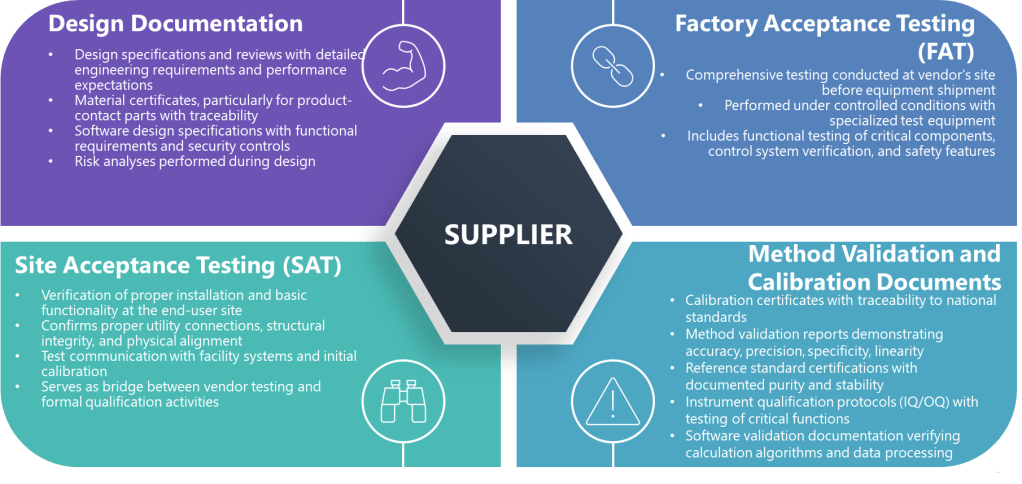
Factory Acceptance Testing (FAT)

FAT documentation represents comprehensive testing at the supplier’s site before equipment shipment. These documents are particularly valuable because they often represent testing under more controlled conditions than possible at the installation site. For biotech applications, FAT documentation may include:

  • Functional testing of critical components with detailed test procedures, actual measurements, and predetermined acceptance criteria. This should include verification of all critical operating parameters under various operating conditions.
  • Control system verification through systematic testing of all control loops, alarms, and safety interlocks. Testing should demonstrate proper response to normal operating conditions as well as fault scenarios.
  • Material compatibility confirmation with certificates of conformance for product-contact materials and testing to verify absence of leachables or extractables that could impact product quality.
  • Cleaning system performance verification through spray pattern testing, coverage verification, and drainage evaluation. For CIP (Clean-in-Place) systems, this should include documented evidence of cleaning effectiveness.
  • Performance verification under load conditions that simulate actual production requirements, with test loads approximating actual product characteristics where possible.
  • Alarm and safety feature testing with verification of proper operation of all safety interlocks, emergency stops, and containment features critical to product quality and operator safety.
  • Software functionality testing with documented verification of all user requirements related to automation, control systems, and data management capabilities.

Site Acceptance Testing (SAT)

SAT documentation verifies proper installation and basic functionality at the end-user site. For biotech equipment, this might include:

  • Installation verification confirming proper utilities connections, structural integrity, and physical alignment according to engineering specifications. This should include verification of spatial requirements and accessibility for operation and maintenance.
  • Basic functionality testing demonstrating that all primary equipment functions operate as designed after transportation and installation. Tests should verify that no damage occurred during shipping and installation.
  • Communication with facility systems verification, including integration with building management systems, data historians, and centralized control systems. Testing should confirm proper data transfer and command execution between systems.
  • Initial calibration verification for all critical instruments and control elements, with documented evidence of calibration accuracy and stability.
  • Software configuration verification showing proper installation of control software, correct parameter settings, and appropriate security configurations.
  • Environmental conditions verification confirming that the installed location meets requirements for temperature, humidity, vibration, and other environmental factors that could impact equipment performance.

Design Documentation

Design documents that can support qualification include:

  • Design specifications with detailed engineering requirements, operating parameters, and performance expectations. These should include rationales for critical design decisions and risk assessments supporting design choices.
  • Material certificates, particularly for product-contact parts, with full traceability to raw material sources and manufacturing processes. Documentation should include testing for biocompatibility where applicable.
  • Software design specifications with detailed functional requirements, system architecture, and security controls. These should demonstrate structured development approaches with appropriate verification activities.
  • Risk analyses performed during design, including FMEA (Failure Mode and Effects Analysis) or similar systematic evaluations of potential failure modes and their impacts on product quality and safety.
  • Design reviews and approvals with documented participation of subject matter experts across relevant disciplines including engineering, quality, manufacturing, and validation.
  • Finite element analysis reports or other engineering studies supporting critical design aspects such as pressure boundaries, mixing efficiency, or temperature distribution.

Method Validation and Calibration Documents

For analytical instruments and measurement systems, supplier documentation might include:

  • Calibration certificates with traceability to national standards, documented measurement uncertainties, and verification of calibration accuracy across the operating range.
  • Method validation reports demonstrating accuracy, precision, specificity, linearity, and robustness for analytical methods intended for use with the equipment.
  • Reference standard certifications with documented purity, stability, and traceability to compendial standards where applicable.
  • Instrument qualification protocols (IQ/OQ) with comprehensive testing of all critical functions and performance parameters against predetermined acceptance criteria.
  • Software validation documentation showing systematic verification of all calculation algorithms, data processing functions, and reporting capabilities.

What Must Still Be Qualified By The End User

Despite the value of supplier documentation, certain aspects always require direct qualification by the end user. These areas should be the focus of end-user qualification activities:

Site-Specific Integration

Site-specific integration aspects requiring end-user qualification include:

  • Facility utility connections and performance verification under actual operating conditions. This must include verification that utilities (water, steam, gases, electricity) meet the required specifications at the point of use, not just at the utility generation source.
  • Integration with other manufacturing systems, particularly verification of interfaces between equipment from different suppliers. Testing should verify proper data exchange, sequence control, and coordinated operation during normal production and exception scenarios.
  • Facility-specific environmental conditions including temperature mapping, particulate monitoring, and pressure differentials that could impact biotech processes. Testing should verify that environmental conditions remain within acceptable limits during worst-case operating scenarios.
  • Network connectivity and data transfer verification, including security controls, backup systems, and disaster recovery capabilities. Testing should demonstrate reliable performance under peak load conditions and proper handling of network interruptions.
  • Alarm systems integration with central monitoring and response protocols, including verification of proper notification pathways and escalation procedures. Testing should confirm appropriate alarm prioritization and notification of responsible personnel.
  • Building management system interfaces with verification of environmental monitoring and control capabilities critical to product quality. Testing should verify proper feedback control and response to excursions.

Process-Specific Requirements

Process-specific requirements requiring end-user qualification include:

  • Process-specific parameters beyond standard equipment functionality, with testing under actual operating conditions using representative materials. Testing should verify equipment performance with actual process materials, not just test substances.
  • Custom configurations for specific products, including verification of specialized equipment settings, program parameters, or mechanical adjustments unique to the user’s products.
  • Production-scale performance verification, with particular attention to scale-dependent parameters such as mixing efficiency, heat transfer, and mass transfer. Testing should verify that performance characteristics demonstrated at supplier facilities translate to full-scale production.
  • Process-specific cleaning verification, including worst-case residue removal studies and cleaning cycle development specific to the user’s products. Testing should demonstrate effective cleaning of all product-contact surfaces with actual product residues.
  • Specific operating ranges for the user’s process, with verification of performance at the extremes of normal operating parameters. Testing should verify capability to maintain critical parameters within required tolerances throughout production cycles.
  • Process-specific automation sequences and recipes with verification of all production scenarios, including exception handling and recovery procedures. Testing should verify all process recipes and automated sequences with actual production materials.
  • Hold time verification for intermediate process steps specific to the user’s manufacturing process. Testing should confirm product stability during maximum expected hold times between process steps.

Critical Quality Attributes

Testing related directly to product-specific critical quality attributes should generally not be delegated solely to supplier documentation, particularly for:

  • Bioburden and endotoxin control verification using the actual production process and materials. Testing should verify absence of microbial contamination and endotoxin introduction throughout the manufacturing process.
  • Product contact material compatibility studies with the specific products and materials used in production. Testing should verify absence of leachables, extractables, or product degradation due to contact with equipment surfaces.
  • Product-specific recovery rates and process yields based on actual production experience. Testing should verify consistency of product recovery across multiple batches and operating conditions.
  • Process-specific impurity profiles with verification that equipment design and operation do not introduce or magnify impurities. Testing should confirm that impurity clearance mechanisms function as expected with actual production materials.
  • Sterility assurance measures specific to the user’s aseptic processing approaches. Testing should verify the effectiveness of sterilization methods and aseptic techniques with the actual equipment configuration and operating procedures.
  • Product stability during processing with verification that equipment operation does not negatively impact critical quality attributes. Testing should confirm that product quality parameters remain within acceptable limits throughout the manufacturing process.
  • Process-specific viral clearance capacity for biological manufacturing processes. Testing should verify effective viral removal or inactivation capabilities with the specific operating parameters used in production.

Operational and Procedural Integration

A critical area often overlooked in qualification plans is operational and procedural integration, which requires end-user qualification for:

  • Operator interface verification with confirmation that user interactions with equipment controls are intuitive, error-resistant, and aligned with standard operating procedures. Testing should verify that operators can effectively control the equipment under normal and exception conditions.
  • Procedural workflow integration ensuring that equipment operation aligns with established manufacturing procedures and documentation systems. Testing should verify compatibility between equipment operation and procedural requirements.
  • Training effectiveness verification for operators, maintenance personnel, and quality oversight staff. Assessment should confirm that personnel can effectively operate, maintain, and monitor equipment in compliance with established procedures.
  • Maintenance accessibility and procedural verification to ensure that preventive maintenance can be performed effectively without compromising product quality. Testing should verify that maintenance activities can be performed as specified in supplier documentation.
  • Sampling accessibility and technique verification to ensure representative samples can be obtained safely without compromising product quality. Testing should confirm that sampling points are accessible and provide representative samples.
  • Change management procedures specific to the user’s quality system, with verification that equipment changes can be properly evaluated, implemented, and documented. Testing should confirm integration with the user’s change control system.

Implementing a Risk-Based Approach to Supplier Documentation

A systematic risk-based approach should be implemented to determine what supplier documentation can be leveraged and what requires additional verification:

  1. Perform impact assessment to categorize system components based on their potential impact on product quality:
    • Direct impact components with immediate influence on critical quality attributes
    • Indirect impact components that support direct impact systems
    • No impact components without reasonable influence on product quality
  2. Conduct risk analysis using formal tools such as FMEA to identify:
    • Critical components and functions requiring thorough qualification
    • Potential failure modes and their consequences
    • Existing controls that mitigate identified risks
    • Residual risks requiring additional qualification activities
  3. Develop a traceability matrix linking:
    • User requirements to functional specifications
    • Functional specifications to design elements
    • Design elements to testing activities
    • Testing activities to specific documentation
  4. Identify gaps between supplier documentation and qualification requirements by:
    • Mapping supplier testing to user requirements
    • Evaluating the quality and completeness of supplier testing
    • Identifying areas where supplier testing does not address user-specific requirements
    • Assessing the reliability and applicability of supplier data to the user’s specific application
  5. Create targeted verification plans to address:
    • High-risk areas not adequately covered by supplier documentation
    • User-specific requirements not addressed in supplier testing
    • Integration points between supplier equipment and user systems
    • Process-specific performance requirements

This risk-based methodology ensures that qualification resources are focused on areas of highest concern while leveraging reliable supplier documentation for well-controlled aspects.

Documentation and Justification Requirements

When using supplier documentation in qualification, proper documentation and justification are essential:

  1. Create a formal supplier assessment report documenting:
    • Evaluation methodology and criteria used to assess the supplier
    • Evidence of supplier quality system effectiveness
    • Verification of supplier technical capabilities
    • Assessment of documentation quality and completeness
    • Identification of any deficiencies and their resolution
  2. Develop a gap assessment identifying:
    • Areas where supplier documentation meets qualification requirements
    • Areas requiring additional end-user verification
    • Rationale for decisions on accepting or supplementing supplier documentation
    • Risk-based justification for the scope of end-user qualification activities
  3. Prepare a traceability matrix showing:
    • Mapping between user requirements and testing activities
    • Source of verification for each requirement (supplier or end-user testing)
    • Evidence of test completion and acceptance
    • Cross-references to specific documentation supporting requirement verification
  4. Maintain formal acceptance of supplier documentation with:
    • Quality unit review and approval of supplier documentation
    • Documentation of any additional verification activities performed
    • Records of any deficiencies identified and their resolution
    • Evidence of conformance to predetermined acceptance criteria
  5. Document rationale for accepting supplier documentation:
    • Risk-based justification for leveraging supplier testing
    • Assessment of supplier documentation reliability and completeness
    • Evaluation of supplier testing conditions and their applicability
    • Scientific rationale supporting acceptance decisions
  6. Ensure document control through:
    • Formal incorporation of supplier documentation into the quality system
    • Version control and change management for supplier documentation
    • Secure storage and retrieval systems for qualification records
    • Maintenance of complete documentation packages supporting qualification decisions

Biotech-Specific Considerations

For Cell Culture Systems:

While basic temperature, pressure, and mixing capabilities may be verified through supplier testing, product-specific parameters require end-user verification. These include:

  • Cell viability and growth characteristics with the specific cell lines used in production. End-user testing should verify consistent cell growth, viability, and productivity under normal operating conditions.
  • Metabolic profiles and nutrient consumption rates specific to the production process. Testing should confirm that equipment design supports appropriate nutrient delivery and waste removal for optimal cell performance.
  • Homogeneity studies for bioreactors under process-specific conditions including actual media formulations, cell densities, and production phase operating parameters. Testing should verify uniform conditions throughout the bioreactor volume during all production phases.
  • Cell culture monitoring systems calibration and performance with actual production cell lines and media. Testing should confirm reliable and accurate monitoring of critical culture parameters throughout the production cycle.
  • Scale-up effects specific to the user’s cell culture process, with verification that performance characteristics demonstrated at smaller scales translate to production scale. Testing should verify comparable cell growth kinetics and product quality across scales.

For Purification Systems

Chromatography system pressure capabilities and gradient formation may be accepted from supplier testing, but product-specific performance requires end-user verification:

  • Product-specific recovery, impurity clearance, and yield verification using actual production materials. Testing should confirm consistent product recovery and impurity removal across multiple cycles.
  • Resin lifetime and performance stability with the specific products and buffer systems used in production. Testing should verify consistent performance throughout the expected resin lifetime.
  • Cleaning and sanitization effectiveness specific to the user’s products and contaminants. Testing should confirm complete removal of product residues and effective sanitization between production cycles.
  • Column packing reproducibility and performance with production-scale columns and actual resins. Testing should verify consistent column performance across multiple packing cycles.
  • Buffer preparation and delivery system performance with actual buffer formulations. Testing should confirm accurate preparation and delivery of all process buffers under production conditions.

For Analytical Methods

Basic instrument functionality can be verified through supplier IQ/OQ documentation, but method-specific performance requires end-user verification:

  • Method-specific performance with actual product samples, including verification of specificity, accuracy, and precision with the user’s products. Testing should confirm reliable analytical performance with actual production materials.
  • Method robustness under the specific laboratory conditions where testing will be performed. Testing should verify consistent method performance across the range of expected operating conditions.
  • Method suitability for the intended use, including capability to detect relevant product variants and impurities. Testing should confirm that the method can reliably distinguish between acceptable and unacceptable product quality.
  • Operator technique verification to ensure consistent method execution by all analysts who will perform the testing. Assessment should confirm that all analysts can execute the method with acceptable precision and accuracy.
  • Data processing and reporting verification with the user’s specific laboratory information management systems. Testing should confirm accurate data transfer, calculations, and reporting.

Practical Examples

Example 1: Bioreactor Qualification

For a 2000L bioreactor system, supplier documentation might be leveraged for:

Acceptable with minimal verification: Pressure vessel certification, welding documentation, motor specification verification, basic control system functionality, standard safety features. These aspects are governed by well-established engineering standards and can be reliably verified by the supplier in a controlled environment.

Acceptable with targeted verification: Temperature control system performance, basic mixing capability, sensor calibration procedures. While these aspects can be largely verified by the supplier, targeted verification in the user’s facility ensures that performance meets process-specific requirements.

Requiring end-user qualification: Process-specific mixing studies with actual media, cell culture growth performance, specific gas transfer rates, cleaning validation with product residues. These aspects are highly dependent on the specific process and materials used and cannot be adequately verified by the supplier.

In all cases, the acceptance of supplier documentation must be documented well and performed according to GMPs and at appropriately described in the Validation Plan or other appropriate testing rationale document.

Example 2: Chromatography System Qualification

For a multi-column chromatography system, supplier documentation might be leveraged as follows:

Acceptable with minimal verification: Pressure testing of flow paths, pump performance specifications, UV detector linearity, conductivity sensor calibration, valve switching accuracy. These aspects involve standard equipment functionality that can be reliably verified by the supplier using standardized testing protocols.

Acceptable with targeted verification: Gradient formation accuracy, column switching precision, UV detection sensitivity with representative proteins, system cleaning procedures. These aspects require verification with materials similar to those used in production but can largely be addressed through supplier testing with appropriate controls.

Requiring end-user qualification: Product-specific binding capacity, elution conditions optimization, product recovery rates, impurity clearance, resin lifetime with actual process streams, cleaning validation with actual product residues. These aspects are highly process-specific and require testing with actual production materials under normal operating conditions.

The qualification approach must balance efficiency with appropriate rigor, focusing end-user testing on aspects that are process-specific or critical to product quality.

Example 3: Automated Analytical Testing System Qualification

For an automated high-throughput analytical testing platform used for product release testing, supplier documentation might be leveraged as follows:

Acceptable with minimal verification: Mechanical subsystem functionality, basic software functionality, standard instrument calibration, electrical safety features, standard data backup systems. These fundamental aspects of system performance can be reliably verified by the supplier using standardized testing protocols.

Acceptable with targeted verification: Sample throughput rates, basic method execution, standard curve generation, basic system suitability testing, data export functions. These aspects require verification with representative materials but can largely be addressed through supplier testing with appropriate controls.

Requiring end-user qualification: Method-specific performance with actual product samples, detection of product-specific impurities, method robustness under laboratory-specific conditions, integration with laboratory information management systems, data integrity controls specific to the user’s quality system, analyst training effectiveness. These aspects are highly dependent on the specific analytical methods, products, and laboratory environment.

For analytical systems involved in release testing, additional considerations include:

  • Verification of method transfer from development to quality control laboratories
  • Demonstration of consistent performance across multiple analysts
  • Confirmation of data integrity throughout the complete testing process
  • Integration with the laboratory’s sample management and result reporting systems
  • Alignment with regulatory filing commitments for analytical methods

This qualification strategy ensures that standard instrument functionality is efficiently verified through supplier documentation while focusing end-user resources on the product-specific aspects critical to reliable analytical results.

Conclusion: Best Practices for Supplier Documentation in Biotech Qualification

To maximize the benefits of supplier documentation while ensuring regulatory compliance in biotech qualification:

  1. Develop clear supplier requirements early in the procurement process, with specific documentation expectations communicated before equipment design and manufacturing. These requirements should specifically address documentation format, content, and quality standards.
  2. Establish formal supplier assessment processes with clear criteria aligned with regulatory expectations and internal quality standards. These assessments should be performed by multidisciplinary teams including quality, engineering, and manufacturing representatives.
  3. Implement quality agreements with key equipment suppliers, explicitly defining responsibilities for documentation, testing, and qualification activities. These agreements should include specifics on documentation standards, testing protocols, and data integrity requirements.
  4. Create standardized processes for reviewing and accepting supplier documentation based on criticality and risk assessment. These processes should include formal gap analysis and identification of supplemental testing requirements.
  5. Apply risk-based approaches consistently when determining what can be leveraged, focusing qualification resources on aspects with highest potential impact on product quality. Risk assessments should be documented with clear rationales for acceptance decisions.
  6. Document rationale thoroughly for acceptance decisions, including scientific justification and regulatory considerations. Documentation should demonstrate a systematic evaluation process with appropriate quality oversight.
  7. Maintain appropriate quality oversight throughout the process, with quality unit involvement in key decisions regarding supplier documentation acceptance. Quality representatives should review and approve supplier assessment reports and qualification plans.
  8. Implement verification activities targeting gaps and high-risk areas identified during document review, focusing on process-specific and integration aspects. Verification testing should be designed to complement, not duplicate, supplier testing.
  9. Integrate supplier documentation within your qualification lifecycle approach, establishing clear linkages between supplier testing and overall qualification requirements. Traceability matrices should demonstrate how supplier documentation contributes to meeting qualification requirements.

The key is finding the right balance between leveraging supplier expertise and maintaining appropriate end-user verification of critical aspects that impact product quality and patient safety. Proper evaluation and integration of supplier documentation represents a significant opportunity to enhance qualification efficiency while maintaining the rigorous standards essential for biotech products. With clear criteria for acceptance, systematic risk assessment, and thorough documentation, organizations can confidently leverage supplier documentation as part of a comprehensive qualification strategy aligned with current regulatory expectations and quality best practices.

Equanimity: The Overlooked Foundation of Quality Culture

I occasionally strive to be open about what I’m personally working on: situational humility, coping with uncertainty, silence, my mental health, and humbleness, among other things. I believe these are all ways to approach a continuous journey aimed at my growth as a leader. I like to think I am on a constant path of improvement, but as organizations evolve and our roles within them change, it’s crucial to reflect on our experiences and aim for betterment. Sometimes, this requires shifting the perspective I use to assess my development. Today, my focus is on the concept of equanimity.

In today’s fast-paced organizational landscape, where constant change and disruption are the norm, the ability to maintain inner balance while facing complex challenges is a vital yet often overlooked leadership skill. Equanimity—an even-tempered state of psychological stability and composure that remains undisturbed by emotions, pain, or external pressures—becomes a fundamental element in creating resilient, quality-driven cultures. Unlike complacency, which silently undermines innovation and organizational excellence, equanimity equips leaders and professionals with a mental framework to stay responsive without becoming reactive, engaged without becoming entangled.

This balanced mindset fosters clear decision-making and steady leadership, necessary for nurturing environments where quality is not merely a compliance requirement but a cultural imperative. As organizations navigate increasingly turbulent markets and regulatory challenges, understanding and cultivating equanimity serves as a powerful antidote to the cycles of complacency that threaten long-term viability and stakeholder trust.

The Anatomy of Equanimity in Professional Contexts

Equanimity, derived from the Latin “aequanimitas” meaning evenness of mind, represents more than mere calmness—it constitutes a sophisticated mental framework that allows individuals to process and respond to experiences without becoming overwhelmed by them. In professional contexts, equanimity manifests as the capacity to remain present and engaged with challenging situations while maintaining psychological balance. Buddhist scholar Peter Harvey aptly described this state as being “stirred but not shaken”—the opposite of James Bond’s martini—highlighting how equanimity allows us to fully experience workplace events while preventing emotional entanglement that clouds judgment.

This mental stance creates a critical space between stimulus and response, where professionals can observe both external circumstances and their own emotional reactions without immediate judgment. Consider a quality assurance specialist discovering a significant product defect just before shipment. Equanimity enables this professional to feel the appropriate concern without spiraling into panic, allowing them to assess the situation clearly, communicate effectively with stakeholders, and implement necessary corrective actions. The equanimous mind acknowledges reality as it is—not as we wish it to be—creating the foundational awareness needed for effective quality management.

A common misconception portrays equanimity as emotional detachment or apathy—a mischaracterization that fundamentally misunderstands its nature. True equanimity does not suppress passion or diminish concern for quality outcomes; rather, it channels these energies more effectively. Professionals operating with equanimity remain deeply invested in excellence while freeing themselves from counterproductive emotional reactivity that might otherwise cloud their judgment or diminish their effectiveness. This balanced approach proves especially valuable in high-stakes quality scenarios where both clear perception and appropriate concern must coexist.

Equanimity as the Antidote to Complacency Cycles

Where complacency operates as a silent organizational saboteur, equanimity functions as its natural counteragent. Complacency cycles—characterized by reduced vigilance, resistance to innovation, and workforce disengagement—systematically undermine quality culture through self-reinforcing patterns of mediocrity. Equanimity disrupts these cycles by maintaining alertness without anxiety, openness without impulsivity, and engagement without exhaustion.

The “stagnation phase” of complacency begins when initial success breeds overconfidence and teams prioritize efficiency over improvement. Equanimity counters this tendency by facilitating a balanced perspective that acknowledges achievements while maintaining awareness of potential improvements. Rather than becoming complacent with current performance levels, equanimous professionals maintain a curious stance toward emerging risks and opportunities.

Similarly, during the “normalization of risk” phase, where minor deviations from standards become habitual, equanimity provides the mental clarity to recognize incremental drift before it culminates in significant failures. The equanimous mind remains attuned to subtle changes in quality parameters without becoming desensitized to gradually evolving risks. This vigilance represents a crucial firewall against the erosion of quality standards that typically precedes major quality incidents.

Most critically, equanimity prevents the “crisis trigger” phase by maintaining consistent attention to potential quality issues rather than requiring catastrophic events to reinstate vigilance. Unlike the boom-bust pattern of attention often observed in complacent organizations, equanimity sustains a steady awareness that prevents the accumulation of quality deficits in the first place. This proactive stance transforms quality management from a reactive crisis response into a continuous practice of excellence maintenance.

How Equanimity Transforms Leadership

Leadership serves as the linchpin in establishing and sustaining quality culture, with a leader’s responses and behaviors creating ripple effects throughout the organization. Research reveals concerning patterns in leadership reactions under pressure, with many leaders becoming more close-minded and controlling while others become more emotionally reactive during challenging situations—precisely when clarity and openness are most needed. Equanimity directly addresses these tendencies by creating the psychological space necessary for more deliberate, effective responses.

When leaders demonstrate equanimity during quality challenges, they effectively model how the organization should process and respond to adversity. Consider a manufacturing executive facing a significant product recall. An equanimous response—acknowledging the severity while maintaining composed problem-solving—signals to the organization that challenges represent opportunities for systemic improvement rather than occasions for blame or panic. This leadership stance creates psychological safety, enabling more transparent reporting of potential quality issues before they escalate into crises.

Equanimity also enhances a leader’s ability to make balanced decisions when confronting quality dilemmas that involve competing priorities. The pharmaceutical industry regularly faces tensions between production timelines and quality verification procedures. Leaders practicing equanimity can more effectively navigate these tensions, maintaining unwavering commitment to quality standards while acknowledging business realities. This balanced approach prevents the “diminished problem-solving rigor” that characterizes complacent organizations, where teams favor quick fixes over root-cause analysis.

Beyond individual decisions, equanimity transforms a leader’s overall approach to quality governance. Rather than oscillating between hypervigilance during crises and inattention during stable periods, equanimous leaders maintain consistent quality focus through various organizational phases. This steady attention prevents the “ceremonial governance” pattern where quality oversight becomes a performance rather than a genuine inquiry into systemic risks. By modeling emotional stability while maintaining quality vigilance, leaders create environments where excellence becomes self-sustaining rather than crisis-dependent.

Developing Equanimity as a Professional

Cultivating equanimity requires intentional practice rather than mere philosophical appreciation. For professionals seeking to develop this capacity, several evidence-based approaches offer practical pathways toward greater psychological balance in workplace settings.

Mindfulness meditation stands as perhaps the most well-established method for developing equanimity. Regular practice—even in brief sessions of 5-10 minutes—enhances the ability to observe thoughts and emotions without becoming entangled in them. This mental training directly strengthens the neural pathways associated with emotional regulation and cognitive flexibility, enabling professionals to respond more skillfully to quality challenges. A quality engineer practicing mindfulness might notice anxiety arising when discovering a potential compliance issue but can observe this reaction without allowing it to dominate their problem-solving approach.

Emotional intelligence development complements mindfulness by enhancing awareness of emotional patterns that undermine equanimity. By understanding personal triggers and typical reaction patterns, professionals can identify situations where their equanimity might be tested before they become emotionally activated. This anticipatory awareness creates an opportunity to implement self-regulation strategies proactively rather than reactively. Quality professionals with high emotional intelligence recognize when perfectionism or defensiveness might cloud their judgment and can consciously adjust their approach accordingly.

Gratitude practices offer another avenue toward equanimity by broadening perspective beyond immediate challenges. Regular reflection on positive aspects of work—successful quality initiatives, collaborative team dynamics, or personal growth—creates psychological resources that buffer against stress during difficult periods. This expanded awareness prevents quality challenges from consuming a professional’s entire attention, maintaining the balanced perspective essential for effective problem-solving.

Pre-mortem analyses—mentally simulating potential quality failures before they occur—paradoxically strengthen equanimity by reducing uncertainty and surprise when challenges arise. By anticipating possible issues and preparing response strategies in advance, professionals reduce the cognitive and emotional load of real-time problem-solving. This preparation creates a sense of capability and readiness that supports composed responses during actual quality incidents.

Cultivating Organizational Equanimity Through Systems Approach

While individual practices build personal equanimity, organizational systems and structures must support these efforts for sustainable impact. Leaders can implement several systemic approaches to foster equanimity throughout their quality culture.

Transparent communication systems represent a foundational element in organizational equanimity. When information about quality metrics, emerging risks, and improvement initiatives flows freely throughout the organization, uncertainty decreases and collective sense-making improves. Digital dashboards tracking real-time quality indicators, regular cross-functional quality briefings, and systematic feedback loops all contribute to an information environment where sudden surprises—a primary threat to equanimity—become less frequent.

Leadership development programs should explicitly address equanimity as a core competency rather than treating it as an incidental personality trait. Training modules focusing on mindfulness, emotional intelligence, and stress resilience build the individual capacities necessary for equanimous leadership. When combined with peer coaching circles where leaders candidly discuss quality challenges and share regulation strategies, these formal development efforts create a leadership culture where balanced responses to pressure become the norm rather than the exception.

Recognition systems that reward equanimous handling of quality challenges—rather than just technical problem-solving—reinforce the importance of balanced responses. Acknowledging professionals who maintain composure while addressing complex quality issues sends a powerful message about organizational values. These recognition practices might highlight situations where teams maintained psychological safety during compliance audits or demonstrated composed problem-solving during manufacturing disruptions.

Resource optimization initiatives that address workload management directly support equanimity by preventing the overwhelm that undermines psychological balance. Realistic staffing models for quality functions, appropriate technological support for monitoring activities, and adequate time allocations for improvement projects all contribute to an environment where maintaining equanimity becomes feasible rather than heroic.

https://www.freepik.com/free-vector/organic-flat-business-people-meditating-illustration_13233903.htm

Leadership’s Role in Modeling and Sustaining Equanimity

Executive leadership bears particular responsibility for establishing equanimity as a cultural norm through consistent modeling and systemic reinforcement. Leaders demonstrate their commitment to equanimity not just through words but through visible behaviors during challenging quality scenarios.

Leaders practice vulnerability and transparency by openly discussing their own experiences with maintaining equanimity during difficult situations. When executives share stories about managing their reactions during regulatory inspections, customer complaints, or internal quality failures, they normalize the emotional challenges inherent in quality work while demonstrating the possibility of balanced responses. This transparent approach creates psychological safety for others to acknowledge their own struggles with maintaining equanimity.

Participation in frontline quality activities provides another powerful demonstration of leadership equanimity. Executives who join quality audits, improvement workshops, or failure investigations gain firsthand exposure to quality challenges while modeling composed engagement. An executive participating in monthly gemba walks not only identifies systemic risks but also demonstrates how to approach quality issues with balanced curiosity rather than blame or anxiety.

Restructuring performance metrics represents a systemic approach to supporting equanimity by emphasizing leading indicators over lagging ones. When leaders prioritize metrics like preventative corrective actions, near-miss reporting, or improvement suggestion implementation, they create an information environment that supports proactive quality management rather than crisis response. This shift reduces the emotional volatility associated with reactive approaches while maintaining appropriate quality vigilance.

Cross-functional collaboration initiatives further support equanimity by distributing quality responsibilities across the organization rather than isolating them within quality departments. When leaders establish quality SWAT teams with representation from various functions, they create shared ownership for quality outcomes while preventing the isolation that can lead to overwhelm within quality functions. This collaborative approach supports equanimity by ensuring that quality challenges receive diverse perspectives and adequate resources.

Equanimity as a Journey, Not a Destination

Equanimity in professional contexts represents an ongoing practice rather than a permanent achievement—a perspective that itself embodies equanimous thinking. Like quality culture more broadly, equanimity requires continual renewal through intentional individual practices and supportive organizational systems. The interplay between complacency cycles and quality culture creates a perpetual tension that demands vigilance without anxiety, commitment without rigidity, and excellence without perfectionism.

Organizations that recognize equanimity as a foundational element of quality culture gain a significant advantage in navigating the complexities of modern business environments. By cultivating this balanced mental state throughout their workforce—particularly within leadership ranks—they establish psychological conditions where quality thrives as a natural expression of organizational values rather than a compliance obligation. This cultural foundation supports the relentless leadership commitment, systems thinking, and psychological safety necessary for sustained excellence.

As professionals and leaders journey toward greater equanimity, they transform not only their individual effectiveness but also the cultural fabric of their organizations. Each composed response to a quality challenge, each balanced decision during a crisis, and each steady commitment during uncertainty contributes to an organizational environment resistant to complacency yet free from reactivity. In this way, equanimity operates not just as a personal virtue but as a collective capability—one that enables organizations to maintain quality focus through changing conditions while remaining adaptive to emerging requirements. The cultivation of equanimity thus represents not merely a philosophical aspiration but a practical necessity for organizations committed to enduring excellence in increasingly turbulent times.

Self-Reflection

In the quiet moments of self-reflection, I have discovered that equanimity—that elusive state of mental calmness and composure, especially under trying circumstances—represents not a destination but an ongoing practice. The journey toward equanimity has been important for me, particularly as I’ve incorporated journaling as a companion practice. This written exploration serves as both a retrospective lens through which to examine past conversations and a preparatory tool for navigating difficult moments with greater balance. Equanimity teaches us to be with whatever shows up, to notice what shuts us down, pushes us away, or tears us wide open. Through the disciplined practice of putting pen to paper, I have found a pathway toward standing equally in both clear and muddy waters, remaining present with each moment exactly as it is.

The act of putting feelings into words helps with cognitive reappraisal—reframing situations to reduce their emotional impact by engaging the prefrontal cortex, our brain’s control center for planning, decision-making, and emotional regulation.

When I first implemented a consistent journaling practice, I noticed immediate benefits in managing workplace stress. After particularly challenging meetings or interactions, taking time to write about these experiences created distance from immediate emotional reactions. Research supports this experience, suggesting that writing about emotional events can benefit both mental and physical health. Journaling has been linked to decreased mental distress, reduced anxiety, and help with breaking cycles of obsessive thinking. Studies even indicate potential physical benefits, with participants who wrote about upsetting events healing faster after medical procedures than those who wrote about neutral topics.

Beyond retrospective analysis, journaling serves as a powerful preparatory tool for approaching challenging situations with greater equanimity. Before difficult conversations or high-stakes presentations, I’ve found that writing helps clarify intentions, anticipate potential triggers, and develop strategies for maintaining balance. This practice creates a foundation for equanimity that proves invaluable when emotions run high.

Pre-mortem analyses—mentally simulating potential failures before they occur—paradoxically strengthen equanimity by reducing uncertainty and surprise when challenges arise. By writing through possible difficult scenarios, I develop response strategies in advance, creating a sense of capability and readiness that supports composed responses during actual difficulties. This preparation reduces the cognitive and emotional load of real-time problem-solving in stressful situations.

Critical Material Attributes

In the complex landscape of biologics drug substance (DS) manufacturing, the understanding and management of Critical Material Attributes (CMAs) has emerged as a cornerstone for achieving consistent product quality. As biological products represent increasingly sophisticated therapeutic modalities with intricate structural characteristics and manufacturing processes, the identification and control of CMAs become vital components of a robust Quality by Design (QbD) approach. It is important to have a strong process for the selection, risk management, and qualification/validation of CMAs, capturing their relationships with Critical Quality Attributes (CQAs) and Critical Process Parameters (CPPs).

Defining Critical Material Attributes

Critical Material Attributes (CMA) represent a fundamental concept within the pharmaceutical QbD paradigm. A CMA is a physical, chemical, biological, or microbiological property or characteristic of an input material controlled within an appropriate limit, range, or distribution to ensure the desired quality of output material. While not officially codified in guidance, this definition has become widely accepted throughout the industry as an essential concept for implementing QbD principles in biotech manufacturing.

In biologics drug substance manufacturing, CMAs may encompass attributes of raw materials used in cell culture media, chromatography resins employed in purification steps, and various other input materials that interact with the biological product during production. For example, variations in the composition of cell culture media components can significantly impact cell growth kinetics, post-translational modifications, and, ultimately, the critical quality attributes of the final biological product.

The biologics manufacturing process typically encompasses both upstream processing (USP) and downstream processing (DSP) operations. Within this continuum, product development aims to build robustness and demonstrate control of a manufacturing process to ensure consistency within the specifications of the manufacturing quality attributes. QbD principles reinforce the need for a systematic process development approach and risk assessment to be conducted early and throughout the biologics development process.

The Interdependent Relationship: CMAs, CQAs, and CPPs in Biologics Manufacturing

In biologics DS manufacturing, the relationship between CMAs, CPPs, and CQAs forms a complex network that underpins product development and manufacture. CQAs are physical, chemical, biological, or microbiological properties or characteristics of the output product that should remain within appropriate limits to ensure product quality. For biologics, these might include attributes like glycosylation patterns, charge variants, aggregation propensity, or potency—all of which directly impact patient safety and efficacy.

The intricate relationship between these elements in biologics production can or exabe expressed as: CQAs = f(CPP₁, CPP₂, CPP₃, …, CMA₁, CMA₂, CMA₃, …). This formulation crystallizes the understanding that CQAs in a biological product are a function of both process parameters and material attributes. For example, in monoclonal antibody production, glycosylation profiles (a CQA) might be influenced by bioreactor temperature and pH (CPPs) as well as the quality and composition of cell culture media components (CMAs).

Identifying CMAs in manufacturing must be aligned with biopharmaceutical development and manufacturing strategies guided by the product’s Target Product Profile (TPP). QbD principles are applied from the onset of product definition and development to ensure that the product meets patient needs and efficacy requirements. Critical sources of variability are identified and controlled through appropriate control strategies to consistently meet product CQAs, and the process is continually monitored, evaluated, and updated to maintain product quality throughout its life cycle.

The interdependence between unit operations adds another layer of complexity. The output from one unit operation becomes the input for the next, creating a chain of interdependent processes where material attributes at each stage can influence subsequent steps. For example, the transition from upstream cell culture to downstream purification operations where the characteristics of the harvested cell culture fluid significantly impact purification efficiency and product quality.

Systematic Approach to CMA Selection in Biologics Manufacturing

Identifying and selecting CMAs in biologics DS manufacturing represents a methodical process requiring scientific rigor and risk-based decision-making. This process typically begins with establishing a Quality Target Product Profile (QTPP), which outlines the desired quality characteristics of the final biological product, taking into account safety and efficacy considerations.

The first step in CMA selection involves comprehensive material characterization to identify all potentially relevant attributes of input materials used in production. This might include characteristics like purity, solubility, or bioactivity for cell culture media components. For chromatography resins in downstream processing, attributes such as binding capacity, selectivity, or stability might be considered. This extensive characterization creates a foundation of knowledge about the materials that will be used in the biological product’s manufacturing process.

Risk assessment tools play a crucial role in the initial screening of potential CMAs. These might include Failure Mode and Effects Analysis (FMEA), Preliminary Hazards Analysis (PHA), or cause-and-effect matrices that relate material attributes to CQAs.

Once potential high-risk material attributes are identified, experimental studies, often employing the Design of Experiments (DoE) methodology, are conducted to determine whether these attributes genuinely impact CQAs of the biological product and, therefore, should be classified as critical. This empirical verification is essential, as theoretical risk assessments must be confirmed through actual data before final classification as a CMA. The process characterization strategy typically aims to identify process parameters that impact product quality and yield by identifying interactions between process parameters and critical quality attributes, justifying and, if necessary, adjusting manufacturing operating ranges and acceptance criteria, ensuring that the process delivers a product with reproducible yields and purity, and enabling heads-up detection of manufacturing deviations using the established control strategy and knowledge about the impact of process inputs on product quality.

Risk Management Strategies for CMAs in Biologics DS Manufacturing

Risk management for Critical Material Attributes (CMAs) in biologics manufacturing extends far beyond mere identification to encompass a comprehensive strategy for controlling and mitigating risks throughout the product lifecycle. The risk management process typically follows a structured approach comprising risk identification, assessment, control, communication, and review—all essential elements for ensuring biologics quality and safety.

Structured Risk Assessment Methodologies

The first phase in effective CMA risk management involves establishing a cross-functional team to conduct systematic risk assessments. A comprehensive Raw Material Risk Assessment (RMRA) requires input from diverse experts including Manufacturing, Quality Assurance, Quality Control, Supply Chain, and Materials Science & Technology (MSAT) teams, with additional Subject Matter Experts (SMEs) added as necessary. This multidisciplinary approach ensures that diverse perspectives on material criticality are considered, particularly important for complex biologics manufacturing where materials may impact multiple aspects of the process.

Risk assessment methodologies for CMAs must be standardized yet adaptable to different material types. A weight-based scoring system can be implemented where risk criteria are assigned predetermined weights based on the severity that risk realization would pose on the product/process. This approach recognizes that not all material attributes carry equal importance in terms of their potential impact on product quality and patient safety.

Comprehensive Risk Evaluation Categories

When evaluating CMAs, three major categories of risk attributes should be systematically assessed:

  1. User Requirements: These evaluate how the material is used within the manufacturing process and include assessment of:
    • Patient exposure (direct vs. indirect material contact)
    • Impact to product quality (immediate vs. downstream effects)
    • Impact to process performance and consistency
    • Microbial restrictions for the material
    • Regulatory and compendial requirements
    • Material acceptance requirements
  2. Material Attributes: These assess the inherent properties of the material itself:
    • Microbial characteristics and bioburden risk
    • Origin, composition, and structural complexity
    • Material shelf-life and stability characteristics
    • Manufacturing complexity and potential impurities
    • Analytical complexity and compendial status
    • Material handling requirements
  3. Supplier Attributes: These evaluate the supply chain risks associated with the material:
    • Supplier quality system performance
    • Continuity of supply assurance
    • Supplier technical capabilities
    • Supplier relationship and communication
    • Material grade specificity (pharmaceutical vs. industrial)

In biologics manufacturing, these categories take on particular significance. For instance, materials derived from animal sources might carry higher risks related to adventitious agents, while complex cell culture media components might exhibit greater variability in composition between suppliers—both scenarios with potentially significant impacts on product quality.

Quantitative Risk Scoring and Prioritization

Risk assessment for CMAs should employ quantitative scoring methodologies that allow for consistency in evaluation and clear prioritization of risk mitigation activities. For example, risk attributes can be qualitatively scaled as High, Medium, and Low, but then converted to numerical values (High=9, Medium=3, Low=1) to create an adjusted score. These adjusted scores are then multiplied by predetermined weights for each risk criterion to calculate weighted scores.

The total risk score for each raw material is calculated by adding all the weighted scores across categories. This quantitative approach enables objective classification of materials into risk tiers: Low (≤289), Medium (290-600), or High (≥601). Such tiered classification drives appropriate resource allocation, focusing intensified control strategies on truly critical materials while avoiding unnecessary constraints on low-risk items.

This methodology aligns with the QbD principle that not all quality attributes result in the same level of harm to patients, and therefore not all require the same level of control. The EMA-FDA QbD Pilot program emphasized that “the fact that a risk of failure is mitigated by applying a robust proactive control strategy should not allow for the underestimation of assigning criticality.” This suggests that even when control strategies are in place, the fundamental criticality of material attributes should be acknowledged and appropriately managed.

Risk Mitigation Strategies and Control Implementation

For materials identified as having medium to high risk, formalizing mitigation strategies becomes crucial. The level of mitigation required should be proportionate to the risk score. Any material with a Total Risk Score of Medium (290-600) requires a documented mitigation strategy, while materials with High risk scores (≥601) should undergo further evaluation under formal Quality Risk Management procedures. For particularly high-risk materials, consideration should be given to including them on the organization’s risk register to ensure ongoing visibility and management attention.

Mitigation strategies for high-risk CMAs in biologics manufacturing might include:

  1. Enhanced supplier qualification and management programs: For biotech manufacturing, this might involve detailed audits of suppliers’ manufacturing facilities, particularly focusing on areas that could impact critical material attributes such as cell culture media components or chromatography resins.
  2. Tightened material specifications: Implementing more stringent specifications for critical attributes of high-risk materials. For example, for a critical growth factor in cell culture media, the purity, potency, and stability specifications might be tightened beyond the supplier’s standard specifications.
  3. Increased testing frequency: Implementing more frequent or extensive testing protocols for high-risk materials, potentially including lot-to-lot testing for biological activity or critical physical attributes.
  4. Secondary supplier qualification: Developing and qualifying alternative suppliers for high-risk materials to mitigate supply chain disruptions. This is particularly important for specialized biologics materials that may have limited supplier options.
  5. Process modifications to accommodate material variability: Developing processes that can accommodate expected variability in critical material attributes, such as adjustments to cell culture parameters based on growth factor potency measurements.

Continuous Monitoring and Periodic Reassessment

A crucial aspect of CMA risk management in biologics manufacturing is that the risk assessment is not a one-time activity but a continuous process. The RMRA should be treated as a “living document” that requires updating when conditions change or when mitigation efforts reduce the risk associated with a material. At minimum, periodical re-evaluation of the risk assessment should be conducted in accordance with the organization’s Quality Risk Management procedures.

Changes that might trigger reassessment include:

  • Supplier changes or manufacturing site transfers
  • Changes in material composition or manufacturing process
  • New information about material impact on product quality
  • Observed variability in process performance potentially linked to material attributes
  • Regulatory changes affecting material requirements

This continual reassessment approach is particularly important in biologics manufacturing, where understanding of process-product relationships evolves throughout the product lifecycle, and where subtle changes in materials can have magnified effects on biological systems.

The integration of material risk assessments with broader process risk assessments is also essential. The RMRA should be conducted prior to Process Characterization risk assessments to determine whether any raw materials will need to be included in robustness studies. This integration ensures that the impact of material variability on process performance and product quality is systematically evaluated and controlled.

Through this comprehensive approach to risk management for CMAs, biotech manufacturers can develop robust control strategies that ensure consistent product quality while effectively managing the inherent variability and complexity of production systems and their input materials.

Qualification and Validation of CMAs

The qualification and validation of CMAs represent critical steps in translating scientific understanding into practical control strategies for biotech manufacturing. Qualification involves establishing that the analytical methods used to measure CMAs are suitable for their intended purpose, providing accurate and reliable results. This is particularly important for biologics given their complexity and the sophisticated analytical methods required for their characterization.

For biologics DS manufacturing, a comprehensive analytical characterization package is critical for managing process or facility changes in the development cycle. As part of creating the manufacturing process, analytical tests capable of qualitatively and quantitatively characterizing the physicochemical, biophysical, and bioactive/functional potency attributes of the active biological DS are essential. These tests should provide information about the identity (primary and higher order structures), concentration, purity, and in-process impurities (residual host cell protein, mycoplasma, bacterial and adventitious agents, nucleic acids, and other pathogenic viruses).

Validation of CMAs encompasses demonstrating the relationship between these attributes and CQAs through well-designed experiments. This validation process often employs DoE approaches to establish the functional relationship between CMAs and CQAs, quantifying how variations in material attributes influence the final product quality. For example, in a biologics manufacturing context, a DoE study might investigate how variations in the quality of a chromatography resin affect the purity profile of the final drug substance.

Control strategies for validated CMAs might include a combination of raw material specifications, in-process controls, and process parameter adjustments to accommodate material variability. The implementation of control strategies for CMAs should follow a risk-based approach, focusing the most stringent controls on attributes with the highest potential impact on product quality. This prioritization ensures efficient resource allocation while maintaining robust protection against quality failures.

Integrated Control Strategy for CMAs

The culmination of CMA identification, risk assessment, and validation leads to developing an integrated control strategy within the QbD framework for biotech DS manufacturing. This control strategy encompasses the totality of controls implemented to ensure consistent product quality, including specifications for drug substances, raw materials, and controls for each manufacturing process step.

For biologics specifically, robust and optimized analytical assays and characterization methods with well-documented procedures facilitate smooth technology transfer for process development and cGMP manufacturing. A comprehensive analytical characterization package is also critical for managing process or facility changes in the biological development cycle. Such “comparability studies” are key to ensuring that a manufacturing process change will not adversely impact the quality, safety (e.g., immunogenicity), or efficacy of a biologic product.
Advanced monitoring techniques like Process Analytical Technology (PAT) can provide real-time information about material attributes throughout the biologics manufacturing process, enabling immediate corrective actions when variations are detected. This approach aligns with the QbD principle of continual monitoring, evaluation, and updating of the process to maintain product quality throughout its lifecycle.

The typical goal of a Process Characterization Strategy in biologics manufacturing is to identify process parameters that impact product quality and yield by identifying interactions between process parameters and critical quality attributes, justifying and, if necessary, adjusting manufacturing operating ranges and acceptance criteria, ensuring that the process delivers a product with reproducible yields and purity, and enabling early detection of manufacturing deviations using the established control strategy.

Biologics-Specific Considerations in CMA Management

Biologics manufacturing presents unique challenges for CMA management due to biological systems’ inherent complexity and variability. Unlike small molecules, biologics are produced by living cells and undergo complex post-translational modifications that can significantly impact their safety and efficacy. This biological variability necessitates specialized approaches to CMA identification and control.

In biologics DS manufacturing, yield optimization is a significant consideration. Yield refers to downstream efficiency and is the ratio of the mass (weight) of the final purified protein relative to its mass at the start of purification (output/content from upstream bioprocessing). To achieve a high-quality, safe biological product, it is important that the Downstream Processing (DSP) unit operations can efficiently remove all in-process impurities (Host Cell Proteins, nucleic acid, adventitious agents).

The analytical requirements for biologics add another layer of complexity to CMA management. For licensing biopharmaceuticals, development and validation of assays for lot release and stability testing must be included in the specifications for the DS. Most importantly, a potency assay is required that measures the product’s ability to elicit a specific response in a disease-relevant system. This analytical complexity underscores the importance of robust analytical method development for accurately measuring and controlling CMAs.

Conclusion

Critical Material Attributes represent a vital component in the modern pharmaceutical development paradigm. Their systematic identification, risk management, and qualification underpin successful QbD implementation and ensure consistent production of high-quality biological products. By understanding the intricate relationships between CMAs, CPPs, and CQAs, biologics developers can build robust control strategies that accommodate material variability while consistently delivering products that meet their quality targets.

As manufacturing continues to evolve toward more predictive and science-based approaches, the importance of understanding and controlling CMAs will only increase. Future advancements may include improved predictive models linking material attributes to biological product performance, enhanced analytical techniques for real-time monitoring of CMAs, and more sophisticated control strategies that adapt to material variability through automated process adjustments.

The journey from raw to finished products traverses a complex landscape where material attributes interact with process parameters to determine final product quality. By mastering the science of CMAs, developers, and manufacturers can confidently navigate this landscape, ensuring that patients receive safe, effective, and consistent biological medicines. Through continued refinement of these approaches and collaborative efforts between industry and regulatory agencies, biotech manufacturing can further enhance product quality while improving manufacturing efficiency and regulatory compliance.

Sources

APA Bibliography

World Health Organization. (n.d.). Quality risk management (WHO Technical Report Series, No. 981, Annex 2). https://www.who.int/docs/default-source/medicines/norms-and-standards/guidelines/production/trs981-annex2-who-quality-risk-management.pdf

Residence Time Distribution

Residence Time Distribution (RTD) is a critical concept in continuous manufacturing (CM) of biologics. It provides valuable insights into how material flows through a process, enabling manufacturers to predict and control product quality.

The Importance of RTD in Continuous Manufacturing

RTD characterizes how long materials spend in a process system and is influenced by factors such as equipment design, material properties, and operating conditions. Understanding RTD is vital for tracking material flow, ensuring consistent product quality, and mitigating the impact of transient events. For biologics, where process dynamics can significantly affect critical quality attributes (CQAs), RTD serves as a cornerstone for process control and optimization.

By analyzing RTD, manufacturers can develop robust sampling and diversion strategies to manage variability in input materials or unexpected process disturbances. For example, changes in process dynamics may influence conversion rates or yield. Thus, characterizing RTD across the planned operating range helps anticipate variability and maintain process performance.

Methodologies for RTD Characterization

Several methodologies are employed to study RTD, each tailored to the specific needs of the process:

  1. Tracer Studies: Tracers with properties similar to the material being processed are introduced into the system. These tracers should not interact with equipment surfaces or alter the process dynamics. For instance, a tracer could replace a constituent of the liquid or solid feed stream while maintaining similar flow properties.
  2. In Silico Modeling: Computational models simulate RTD based on equipment geometry and flow dynamics. These models are validated against experimental data to ensure accuracy.
  3. Step-Change Testing: Quantitative changes in feed composition (e.g., altering a constituent) are used to study how material flows through the system without introducing external tracers.

The chosen methodology must align with the commercial process and avoid interfering with its normal operation. Additionally, any approach taken should be scientifically justified and documented.

Applications of RTD in Biologics Manufacturing Process Control

RTD data enables real-time monitoring and control of continuous processes. By integrating RTD models with Process Analytical Technology (PAT), manufacturers can predict CQAs and adjust operating conditions proactively. This is particularly important for biologics, where minor deviations can have significant impacts on product quality.

Material Traceability

In continuous processes, material traceability is crucial for regulatory compliance and quality assurance. RTD models help track the movement of materials through the system, enabling precise identification of affected batches during deviations or equipment failures.

Process Validation

RTD studies are integral to process validation under ICH Q13 guidelines. They support lifecycle validation by demonstrating that the process operates within defined parameters across its entire range. This ensures consistent product quality during commercial manufacturing.

Real-Time Release Testing (RTRT)

While not mandatory, RTRT aligns well with continuous manufacturing principles. By combining RTD models with PAT tools, manufacturers can replace traditional end-product testing with real-time quality assessments.

Regulatory Considerations: Aligning with ICH Q13

ICH Q13 emphasizes a science- and risk-based approach to CM. RTD characterization supports several key aspects of this guideline:

  1. Control Strategy Development: RTD data informs strategies for monitoring input materials, controlling process parameters, and diverting non-conforming materials.
  2. Process Understanding: Comprehensive RTD studies enhance understanding of material flow and its impact on CQAs.
  3. Lifecycle Management: RTD models facilitate continuous process verification (CPV) by providing real-time insights into process performance.
  4. Regulatory Submissions: Detailed documentation of RTD studies is essential for regulatory approval, especially when proposing RTRT or other innovative approaches.

Challenges and Future Directions

Despite its benefits, implementing RTD in CM poses challenges:

  • Complexity of Biologics: Large molecules like mAbs require sophisticated modeling techniques to capture their unique flow characteristics.
  • Integration Across Unit Operations: Synchronizing RTD data across interconnected processes remains a technical hurdle.
  • Regulatory Acceptance: While ICH Q13 encourages innovation, gaining regulatory approval for novel applications like RTRT requires robust justification and data.

Future developments in computational modeling, advanced sensors, and machine learning are expected to enhance RTD applications further. These innovations will enable more precise control over continuous processes, paving the way for broader adoption of CM in biologics manufacturing.

Residence Time Distribution is a foundational tool for advancing continuous manufacturing of biologics. By aligning with ICH Q13 guidelines and leveraging cutting-edge technologies, manufacturers can achieve greater efficiency, consistency, and quality in producing life-saving therapies like monoclonal antibodies.