Pump up the Fun!

People learn and solve problems when they are having fun, stress is low, and the environment encourages discovery. A core part of psychological safety.

I’ve talked before about bringing playfulness to work, about exuberance and excitement. These personal approaches can be turned to the wider organization.

Quality as a profession – not so known for fun. So we need to look for opportunities for fun, whether in our training programs, through initiatives like Quality Days, or any other place we can find it.

Here are some ideas for organizing fun to drive a quality message.

Activity Name

Description

Cost required

Effort required

Impact/ Learning Opportunity

Learning Outcome

Video Competitions

Contest of team videos with stories about how they transfer quality or outline continuous improvement projects. Teams may also record a best practice to be shared with the organization.

Medium

High

High

-Video and poster viewership helps transfer quality behaviors and values to others.

-Employee-created messages are more credible, giving them a stronger impact on transferring the culture of quality throughout the organization.

Poster Signing

Teams can sign a poster to make a commitment to quality. They can hold a contest for designing the best Quality Day poster.

Low

Low

Medium

Employee Idea Demonstrations

Make peer idea generation (quality ideas) visible to all employees through the use of regularly refreshed public “progress boards” and idea showcases where projects are publicly evaluated.

Low

Medium

High

-Shows employees that quality focus is something that peers around them prioritize and benefit from.

-Provides employees a benchmark for what behaviors are expected from them and encourages the ones whose ideas are recognized.

Quality Awards and Recognition

Publicly recognize individuals and teams with a trophy/certificate for consistently embodying quality in their work. Awarding behaviors, not just outcomes, increases employee engagement.

High

Medium

High

-Helps engage employees in quality improvement efforts by demonstrating that despite other objectives and priorities, quality remains important to leaders.

Client/ Customer Visit

Invite your clients/customers to visit and talk about their experience with the product/service and the importance of quality.

High

High

High

-Helps employees understand how a high-quality mindset avoids customer-facing mistakes and leads to greater customer satisfaction.

Games

Word-Play Games: A group of employees can play games like Scrabble and Bingo with quality terminology.

Low

Low

Medium

-Quick games help employees become aware of quality terms, tests, standards in a fun way.

Trivia Games: Employees can play games such as “Jeopardy” and beer pong with quality standards, tests, tools to educate themselves.

Low

Low

Medium

Articles on Quality

Share blogs and articles on quality.

Low

Medium

Medium

-Increases quality’s visibility across the organization and promotes awareness.

Quality Quiz Competition

Employees can take quizzes on quality-related concepts.

Low

Medium

High

-Tests employees’ awareness and creates a healthy competition to know more.

Quality Merchandise (swag)

Distribute T-shirts, mugs, badges with quality quotes to employees. Reward contest winners with goodies such as chocolates with quality phrases written on them.

High

High

Medium

-Provides more visibility to quality and imparts a sense of pride in employees.


Leveraging fun is a good way to help build a culture of quality.
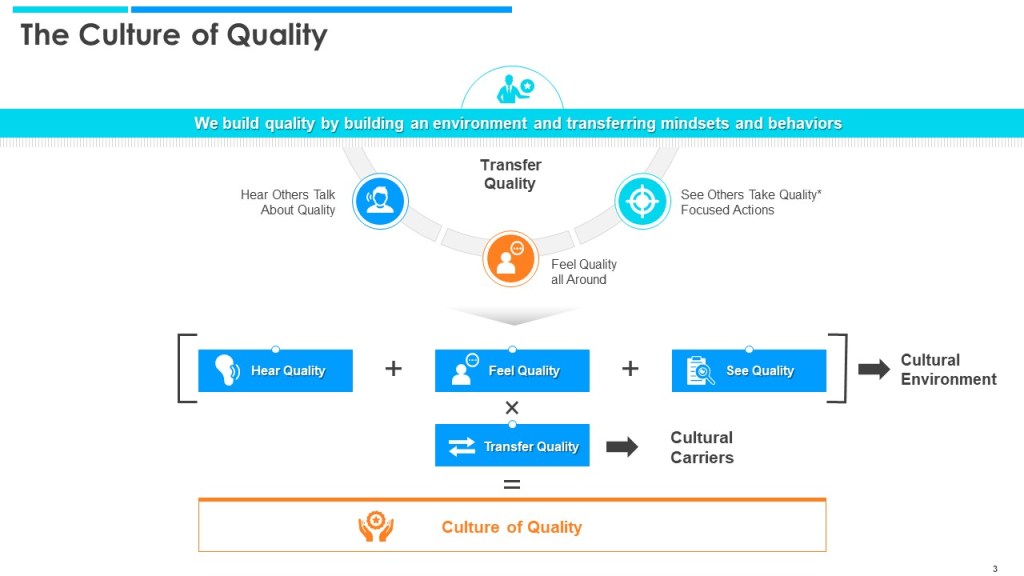
Building moments of planned fun is work, and should be part of the overall Quality Plan, with activities and milestones clearly marked and executed towards.


The Big Thinkers in Meetings I Rely On

Everyone struggles with meetings, and I am certainly not an exception. As a fan of finding and leveraging expertise, I’d like to share the big thinkers in this space that I rely on and three books that I recommend everyone read.

Elise Keith and Lucid Meetings

Elise, and her company Lucid Meetings, should be on everyone’s contact list. Elise’s book Where the Action Is: The Meetings That Make or Break Your Organization is one of those books I’ve bought at least five times because I keep giving my copy away!

Elise’s practice, and her book, are all about the best ways to make it easy for people to enjoy meetings that get work done. She emphasizes that the whole point of a meeting is to gather people for a purpose and shares different meeting types to help us get to the why.

The amazing thing is how her book and her company’s practice are all about clear, practical tools and methodologies. Her workshops are well-run and can be transformative.

Everyone should read the book. And when your organization says “Meetings are horrible” then do yourself a favor and leverage Lucid Meeting’s offerings. Trust me, you will be happy you gave Elise a call.

Gamestorming

The book Gamestorming: A Playbook for Innovators, Rulebreakers, and Changemakers literally changed my career trajectory when I read it back in 2010. This book by Dave Gray, Sunni Brown, and James Macanufo taught me methods of meeting facilitation and having fun in meetings, which have made me happier in my professional growth, and hopefully a better leader. I’ve written about this before, and I continue to believe that visual meetings lead to better results and we all need to do more.

GameStorming is a beautiful resource webpage. As a company, they lead some great workshops. The Expeditions I attended, run by Dave Mastronardi, was one of the two best virtual events of 2021 – and yes, the other one was run by Elise! I strongly recommend signing up for an Expedition, and look forward to new offerings from Dave and his team.

Strategyzer

I love this team’s books. Co-founders Alex Osterwalder and Alan Smith have built a set of tools and methodologies to drive innovation in an organization. The 2021 High-Impact Tools for Teams is one of the must-reads in this area, and presents a powerful, highly visual approach to building teams.

Dealing with Naysayers

Every process improvement, every experiment, requires us to persuade others. There is a diversity of ideas, of needs, of requirements from stakeholders. I’ve written before about practicing “Yes..But…And“. Sometimes you just find people who are in naysayer category and you should have strategies for dealing with them. Try these:

  • Have you acknowledged the individual and their concerns? Sometimes the person simply wants to acknowledged. Although the naysayer’s actions can be frustrating because they are delaying the process of implementing, it can be worth it – and save time in the long run – to meet with the individual and listen to their concerns and thoughts.
  • What is the person not saying? Do they feel threatened or excluded?
  • As the individual how they would handle the challenge your idea seeks to solve. When you listen to them, you may find you have a kernel of common agreement upon which to build. Listen to their arguments against your idea – that could help you as you sell your idea to stakehoders and build an army of volunteers.
  • Does your idea potentially affect the naysayer’s area? Could it be a matter of a turf war? Can you gain insights by seeing things from their perspective – for example how would you feel if someone offered a similar idea that affected your team?
  • Does the person have someone whom they respect and will listen to? Can you discuss your idea with that individual and ask them to speak with the naysayer?
  • Are there other allies whom you can persuade and whom you can gain as allies to counter the naysayer? You may have to accept that the naysayer won’t come around to your idea.
  • Reach out to the naysayer for casual conversation to try to establish a collegial bond and build a better relationship for the long term.
Photo by elifskies on Pexels.com

Practice Exuberance

Love what you do. Love the practice of quality. Your enthusiasm will take you a long way. If you don’t love the work you do, well…. maybe get a different job, or if you are like me, learn to exude exuberance.

Your enthusiasm is the secret sauce of quality success. It is the launching pad to get folks to listen, learn, participate and strive for changes. You should inspire hope, energy, and excitement about the future.

Please don’t confuse enthusiasm with entertainment. Enthusiasm is a passion for what you do, commitment to whom you do it form, and confidence in how you do it.

I am passionate about quality and building systems. And yes, some days I have more enthusiasm than others. We all have days like that. So have a few ways to help:

  • Look for ways to do something out of the ordinary
  • Examine the parts of my work I enjoy the least and then look for opportunities to fix them.
  • Keep a smile file.
  • Try something new regularly
Photo by Monstera on Pexels.com

Biotech Employees in Short Supply, a rant

The Boston Globe reported this past weekend “In the region’s booming biotech industry, workers are in short supply“, which is both good news and bad for me.

Good news is that my career prospects are always good.

Bad news is that I am hiring and building teams within quality.

“also affect the quality of work as key positions become harder to fill and lower-level workers jump from company to company in search of a better compensation package.“

For compensation package, read total cash. Sure there can be a difference on how good other benefits can be, but they all kind of get blurred together and I don’t think I noticed any difference between benefits packages until I went to a small startup, and I definitely knew what I was getting into there. The article later goes on to say some biotech is starting to offer some of the benefits seen in more computer-driven fields, but maybe folks should pay attention to how that is usually a trad to entice people into longer hours.

Notice the emphasis on lower level workers. Read that for “We don’t really offer good development programs and the only way to get promoted in this title-obsessed field is go to another company.”

According to the latest report from industry association MassBio, nearly 85,000 people work in the state’s life sciences sector, up 55 percent from 2008.

And sometimes you feel like you know all 85k, and have worked with most of them.

“You can’t walk two blocks around Kendall Square without receiving a job offer,” said Jeanne Gray, chief people officer at Relay Therapeutics in Cambridge, only half-kiddingly. “I get the sense that a lot of candidates know the market is hot.”

And she only made it 2 blocks because of the pandemic. Seriously, this joke has existed for over a decade.

About 16.5 percent of life sciences employees in Massachusetts voluntarily quit their jobs last year

Wouldn’t you if you keep getting better offers, often unsolicited from other companies and your current company gave you a measly 2-4% raise? Companies want folks to stay, start giving real raises commensurate with the market increase. As a manager, looking someone in the eyes (or vaguely at their eyes because we are both on camera) and telling the best the company can do is a 3% raise is pretty damn problematic. Especially if the employee knows how to read a SEC filing (if your company is public make sure you read these at every update).

There’s also a sense that employees are easily swayed by “title inflation,” a phenomenon that occurs when people climb the corporate ladder faster by bouncing around.

This is a problem in a field where title is everything. Where people where their MDs and PhDs as holy vestments. Where title is tied to autonomy and with ability to influence. This is a complex systematic problem, and few companies are even thinking of how to fix it, and probably can’t because the problem starts at the C-suite. No the problem starts with the regulators. See it’s complex, it starts in a lot of places.

I’m doing my little experiment here, I went to a company started by two incredibly earnest guys who had just graduated from Brown. Is everything perfect? Never is. But the experiment itself is fascinating to participate in.

“the talent pool has not matured enough to fill key areas from the C-suite and clinical development, all the way through to the commercial launch of products.“

Yes, expertise matters. However, we prize years-in-seat more than we should sometimes, and we do not spend enough time building talent. And let’s be honest, that leads to a lot of director levels who do not know how to actually do the thing they are supposed to do beyond the last time they did it.

This is definitely a ranty post.