It is more like being involved in a complicated love affair. One minute it’s thrilling, passionate, engaging. The next, it’s exhausting and overwhelming, and I feel like I need a break.
— Read on hbr.org/2019/07/when-passion-leads-to-burnout
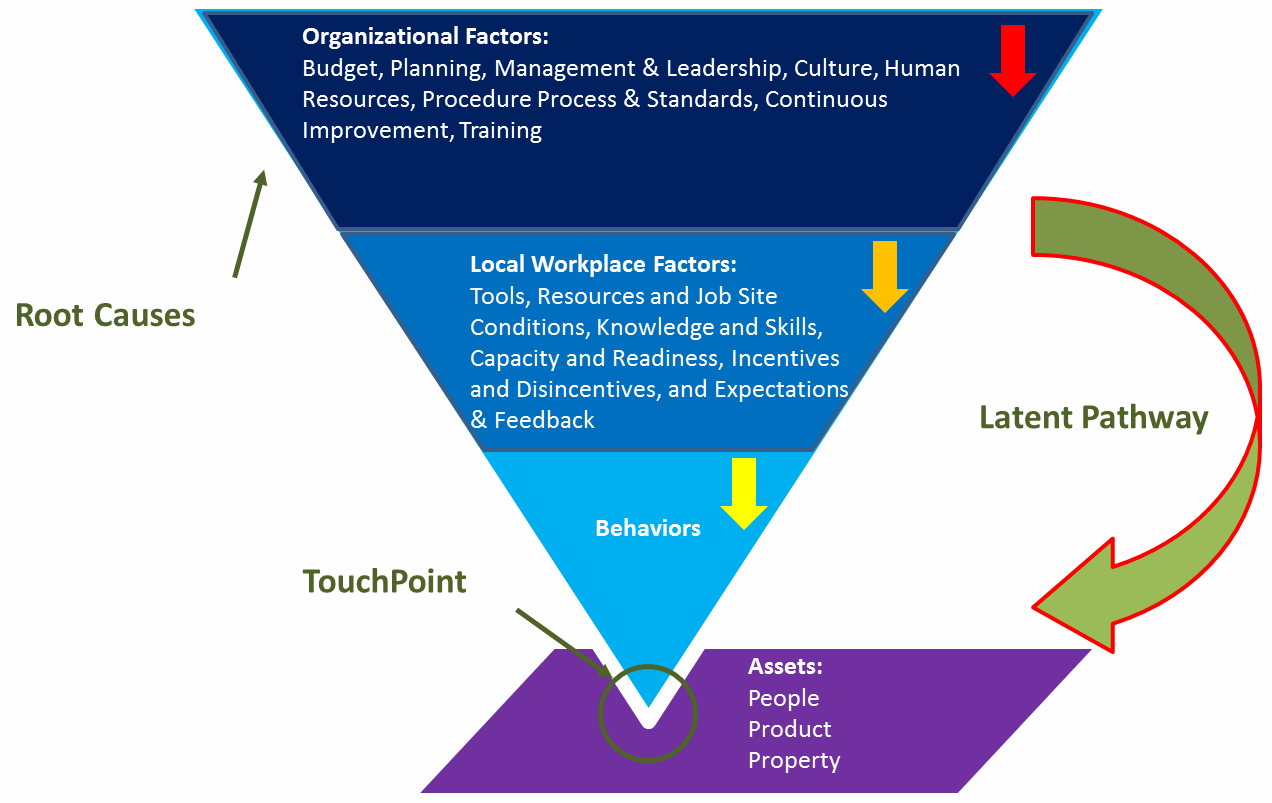
It is the responsibility of leaders “to keep an eye on the well-being of their staff.” Organizations whose staff feel unmotivated due to stress and burnout cannot aspire to achieve a culture of excellence. Our systems need to be designed to eliminate the root cause for stress and burnout.
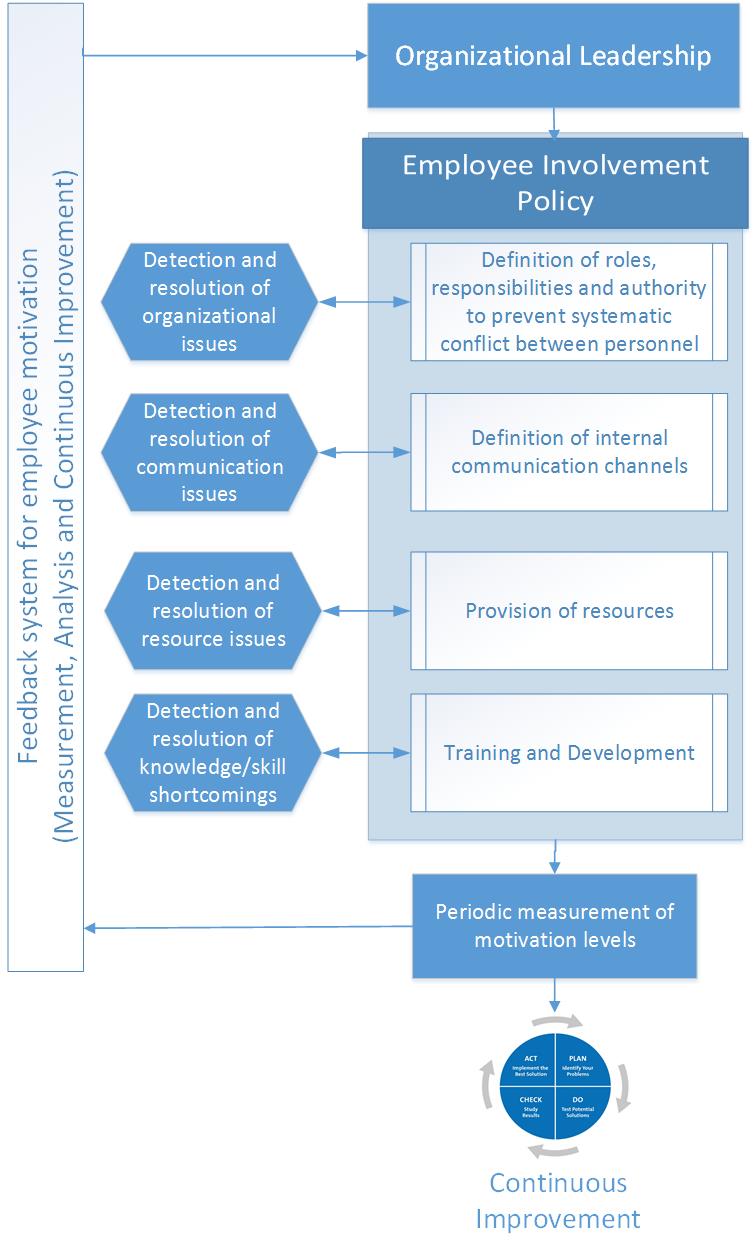
Five mechanisms can be leveraged to improve organizational system design: 1) Eliminate organizational issues related to roles, responsibilities and authorities of employees, 2) establish a policy of transparency and effective “bottom-up” internal communication channel to permit employee contribution and recognition, 3) establish criteria for resource distribution, 4) establish a commitment to identify needed training and provide resources for the purpose and 5) establish a systemic feedback loop for analysis and improvement of employee motivation based on periodic measurement of employee motivational levels.
If
employees know exactly what their tasks are, without sustained overload, with
necessary resources and competence, and recognition for the task well
performed, there will be no major system-induced reason for demotivation.
This gets to the heart of Deming’s use of psychology in his System of Profound Knowledge. Lean calls it Respect-for-People. This is all about ensuring our organizations are healthy places to work and thrive.
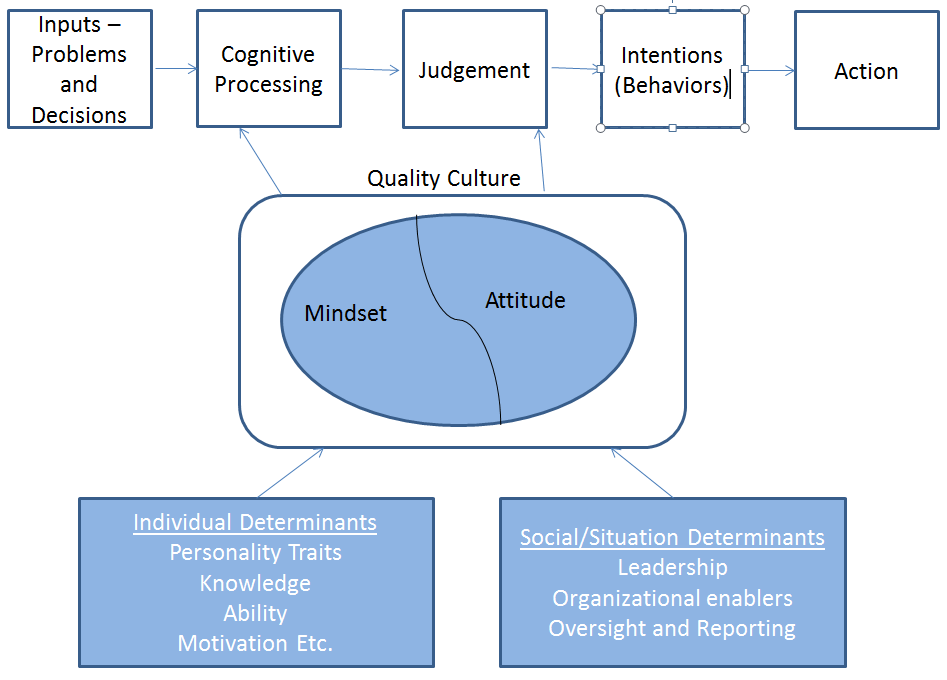
Mindsets are lenses or frames of mind that orient individuals to particular sets of associations and expectations. Mindsets help individuals make sense of complex information by offering them simple schematics about themselves and objects in their world. For employees, mindsets provide scaffolding for understanding the broad nature of their work. Mindsets can be intentionally and adaptively changed through targeted interventions, so the goal is to build the processes to assess, monitor and shape as part of our quality systems.
Attitudes are the beliefs and feelings that drive individuals’ intentions and actions. Attitudes are the lens through which individuals make sense of their surroundings and impart consistency to guide their behavior .
Mindset influences attitudes, which influence behaviors, which influence actions, which influence results, which influence performance. And performance leas to changes in mindsets, and is a continuous improvement loop.
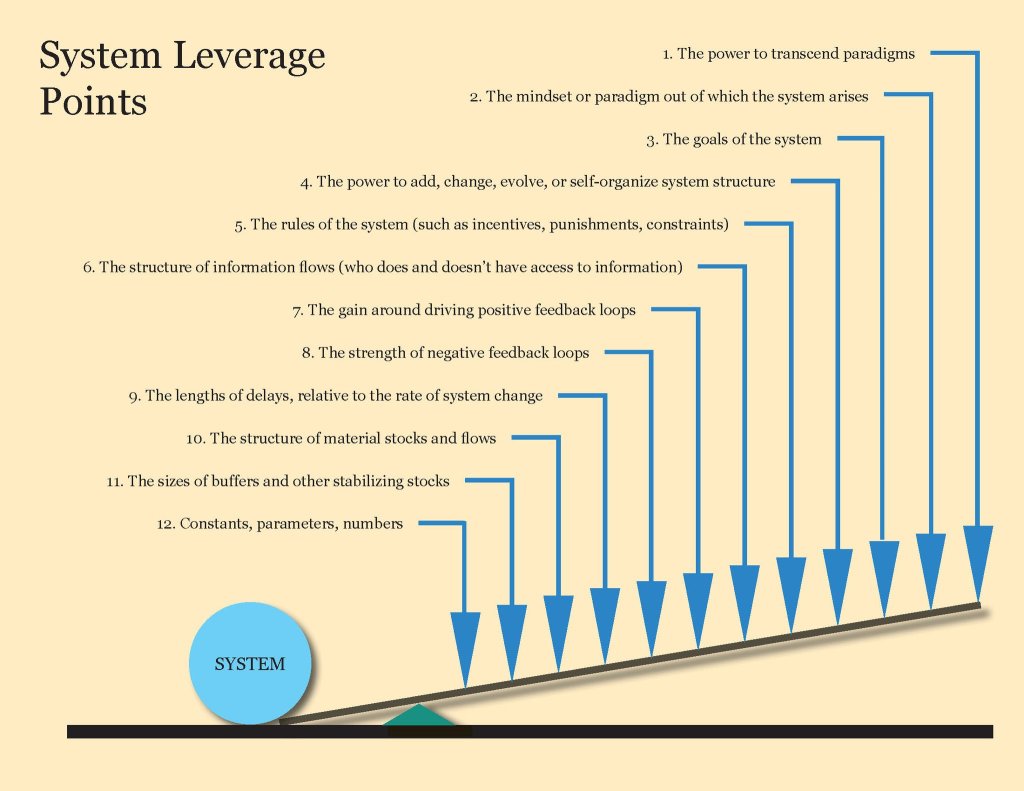
Since behaviors drive the actions we want to see, they are often a great pivot point. By thinking and working on mindsets and attitudes we are targeting the fourth and second leverage points.
Another way to think about this is we are developing habits. The same three factors apply:
Start small: If you have ever tried to tackle multiple resolutions all at once, you know it is next to impossible. Often, the habits will lack cohesion with one another, leading to more stress and less progress. The cognitive load increases, and the brain processes things in a more scattered, less congruent manner. It’s better to focus on one new habit at a time.
Enact the new habit daily: We can’t predict how long a specific habit will take to form, but all the research I’ve seen indicates that the more often people account on the new behavior, the more likely it is to become routine.
Weave into existing processes: When we blend the new behavior with current activities, it’s easier to latch on to, which make sit become an unconscious action more quickly.
Habits are contagious within social contexts, but scaling positive pressure on an organization level is a big challenge.
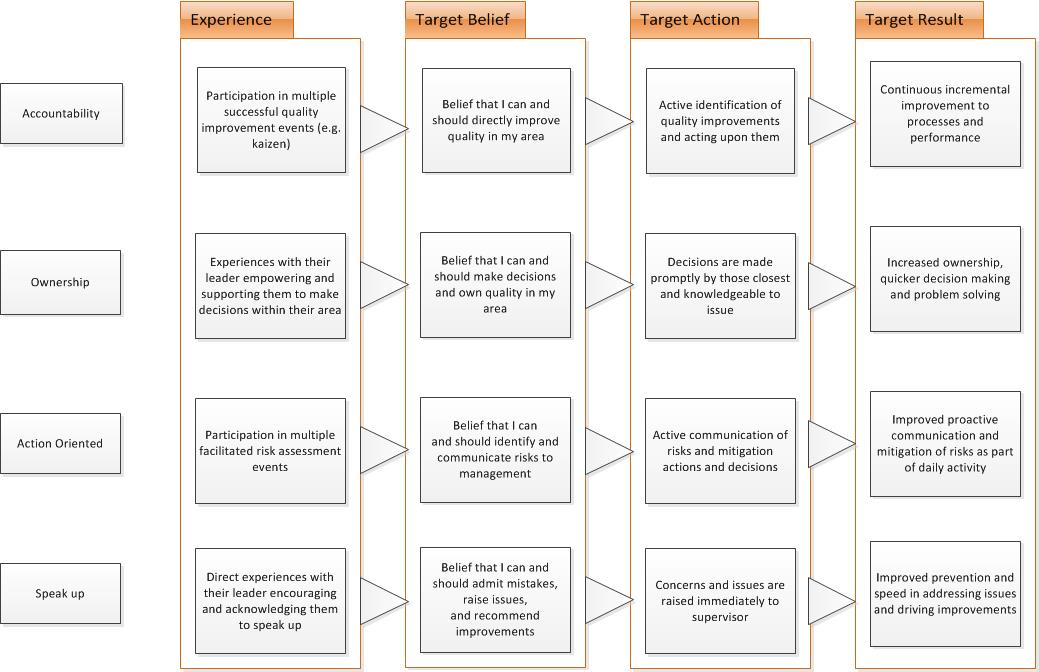
Another way to view this is in the framework of experiences, build beliefs, which lead to actions and give us results. By building this into our systems we can make sure the appropriate processes are in place to make sure these new habits stick. Building a quality culture is a multi-year journey requiring incremental, layered and additive formation.
This formation comes through building the mindsets that lead to the behaviors we want to see. Following the ISPE’s recommendations there are four good behaviors we can target (these are not the only ones nor are they exhaustive).
Accountability: Employees consistently see quality and compliance as their personal responsibilities. Establishing clear individual accountability for quality and compliance is a foundational step in helping shape quality mindset and cultural excellence. Accountability should be communicated consistently through job descriptions, onboarding, current good manufacturing practice (cGMP) training, and performance goals, and be supported by coaching, capability development programs, rewards, and recognition. Leaders should hold themselves and others accountable for performing to quality and compliance standards
Ownership: Employees have sufficient authority to make decisions and feel trusted to do their jobs well. Individual ownership of quality and compliance is a primary driver for shaping quality mindset. When individuals are fully engaged, empowered, and taking action to improve product quality, organizations typically benefit from continuous improvement and faster decision-making.
Action orientation: Employees regularly identify issues and intervene to minimize potential negative effects on quality and compliance. Establishing the expectation that individuals demonstrate action orientation helps shape quality mindset and foster cultural excellence. Leaders should promote and leverage proactive efforts (e.g., risk assessments, Gemba walks, employee suggestions) to reinforce support for the desired behavior. Additionally, it is important that rewards and recognition be aligned to support proactive efforts, rather than reactive fire-fighting efforts.
Speak up: Employees are not afraid to speak up, identify quality issues, or challenge the status quo for improved quality; they believe management will act on their suggestions. Empowering individuals to speak up and raise quality issues help foster quality mindset. Leaders should support this by modeling the desired behavior, building trust, and creating an environment in which individuals feel comfortable raising quality issues, engaging front-line personnel in problem solving, and involving employees in continuous-improvement activities.
Creating a high level action plan of experience -> Target Belief -> Target Action ->Target Result might look like this:
Ball, K., Jeffrey, R.W., Abbott, G., McNaughton, S.A. & Crawford, D (2010). Is Healthy behavior contagious: associations with social norms with physical activity and healthy eating. International Journal of Behavioural Nutrition and Physical Activity, 7 (86)
Gollwitzer, P. M. (1990). Action phases and mind-sets. In E. T. Higgins & R. M. Sorrentino (Eds.), Handbook of motivation and cognition: Foundations of social behavior, Vol. 2, pp. 53-92). New York, NY, US: The Guilford Press.
What do we mean when we discuss culture, which is sort of an all-encompassing word that seems difficult to pin down, or can be a rather nebulous way to refer to something bigger than any one individual or team.
Many definitions are available to describe culture. Formally, culture can be defined as “the [predominant] beliefs, values, attitudes, behaviors, and practices that are characteristic of a group of people” (Warrick, 2015). Culture can usually be described as the symbols, power structures, organisational structures, control systems, rituals & routines, and stories of a group.
Lack of commitment to excellence, questionable ethics, and a reputation for doing what is expedient rather than what is right
Clear roles, responsibilities, and success criteria, and strong commitment to engaging, empowering, and developing people
Unclear roles and responsibilities and little interest in fully utilizing and developing the capabilities and potential of people
Positive, can-do work environment
Negative, tense, stressful, and/or resistant work environment
Open, candid, straightforward, and transparent communication
Guarded communication, reluctance to be open and straightforward, and consequences for saying things leaders do not want to hear
Teamwork, collaboration, and involvement are the norm
Top-down decision making with minimal teamwork, collaboration, and involvement
Emphasis on constant improvement and state-of-the-art knowledge and practices
Slow to make needed improvements and behind times in knowledge and practices
Willingness to change, adapt, learn from successes and mistakes, take reasonable risk, and try new things
Poorly planned change, resistance to change, minimal learning from successes and mistakes, and either risk averse or risk foolish
Culture can either be built in a purposeful way or left to chance. As we strive for excellence we need to be methodical about building and sustaining cultures we want to drive excellence. A few guidelines then:
Make strategy and culture important leadership priorities
Develop a clear understanding of the present culture
Identify, communicate, educate, and engage employees in the cultural ideals
Role model desired behaviors
Recruit and develop for culture
Align for consistency between strategy and culture
Recognize and reward desired behaviors and practices
Use symbols, ceremonies, socialization, and stories to reinforce culture
Appoint a culture team
Monitor and manage the culture
What most of struggle with is how to actually do that. Of the many papers and articles I’ve read on the subject, my favorite might be from the International Society of Pharmaceutical engineers (ISPE).
The ISPE in 2015 introduced a cultural excellence framework which was expanded on in their 2017 Cultural Excellence Report. I’ve returned to this report again and again and continue to mine it for ideas for continual improvement and change in my organization.
ISPE’s Six dimensions of cultural excellence framework
The six dimensions to build and maintain cultural excellence are:
Leadership and vision: Leaders establish and engender the vision for the organization. Their thoughts, words, and actions about quality are critical in establishing and maintaining a culture of operational excellence. Leadership and vision, therefore, play a key role in establishing the culture, either within a local manufacturing site or across the company.
Mindset and attitudes: These play a key role in driving cultural performance, although they can be difficult to define, observe, and measure. Leaders can assess, monitor, and develop the desired cultural excellence mindset and attitudes within their organizations, using the practical and powerful approaches outlined in this report.
Gemba walks: Management engagement on the floor is a powerful way to demonstrate quality commitment to all members of the organization. Gemba walks allow site leaders to communicate clear messages using open and honest dialogue, and provide a real indication of progress toward desired behaviors at all levels. Gemba walks also empower front-line employees by recognizing their contributions to site results and involving them in problem-solving and continuous improvement.
Leading quality indicators and triggers: There are inherent links between culture, behavior, and leading quality indicators (LQIs) that drive desired patient-focused behaviors. Monitoring and surveillance of key triggers and the design of LQIs are highly recommended practices to help shape cultural excellence.
Oversight and review: Management oversight and review practices that engage both management and employees support a healthy quality culture because they demonstrate transparency, facilitate dialogue, bring attention to issues so they can be addressed, and highlight best practices so they can be replicated.
Structural enablers: These support the desired behaviors, help speed the pace of change, and improve performance over time. They include: –– Develop a learning organization –– Establish learning teams –– Influence and recognize organizational change –– Solve problems proactively –– Identify true root cause
Sources
R.D. Day. Leading and Managing People in the Dynamic Organization. Psychology Press, London, UK (2014)
ISPE. Cultural Excellence Report. ISPE, Bethesda (2017)
R.N. Lussier, C.F. Achua. Leadership: Theory, application, and skill development (6th ed.), Cengage Learning, Boston (2016)
D.D. Warrick, J. Mueller (Eds.), Lessons in changing cultures: Learning from real world cases, RossiSmith Academic Publishing, Oxford, UK (2015)
At the heart, data integrity is a lot about culture. There are technical requirements, but mostly we are returning to the same principles as quality culture and just keep coming back to Deming. A great example of this is the use of the fraud triangle and human error.
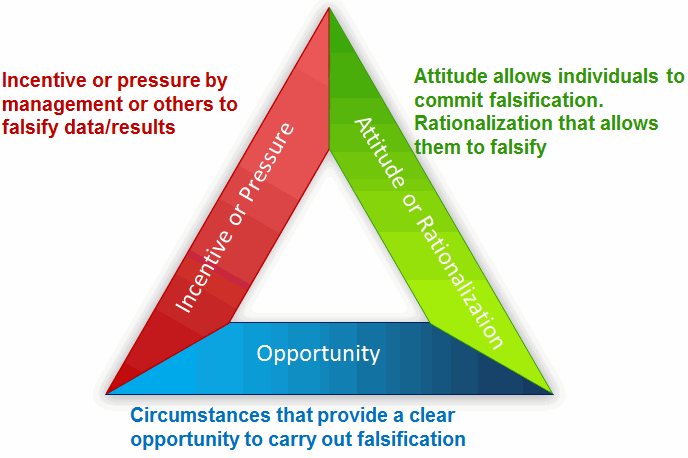
The fraud triangle was developed by Donald Cressey in the 1950s when investigating financial fraud and embezzlement. The principles Cressey identified are directly relevant to data integrity, and to quality culture as a whole.
Falsification Triangle
Element
Exists When
To Break
Incentive or Pressure
Why commit falsification of data? Managerial pressure or financial gains are the two main drivers here to push people to commit fraud. Setting unrealistic objectives such as stretch goals, turnaround time or key performance indicators that are totally divorced from reality especially when these are linked to pay or advancement will only encourage staff to falsify data to receive rewards. These goals coupled with poor analytical instruments and methods will only ensure that corners will be cut to meet deadlines or targets.
Management must lead by example – not through communication or establishing data governance structures but by ensuring the pressure to falsify data is removed. This means setting realistic expectations that are compatible with the organization’s capacity and process capability.
Rationalization or Incentive
To commit fraud people must either have an incentive or can rationalize that this is an acceptable practice within an organization or department.
Staff need to understand how their actions can impact the health of the patient. Ensure individuals know the importance of reliable and accurate data to the wellbeing of the patient as well as the business health of the company.
Opportunity
The opportunity to falsify data can be due to encouragement by management as a means of keeping cost down or a combination of lax controls or poor oversight of activities that contribute to staff being able to commit fraud.
Implement a process that is technically controlled so there is little, if any, opportunity to commit falsification of data.
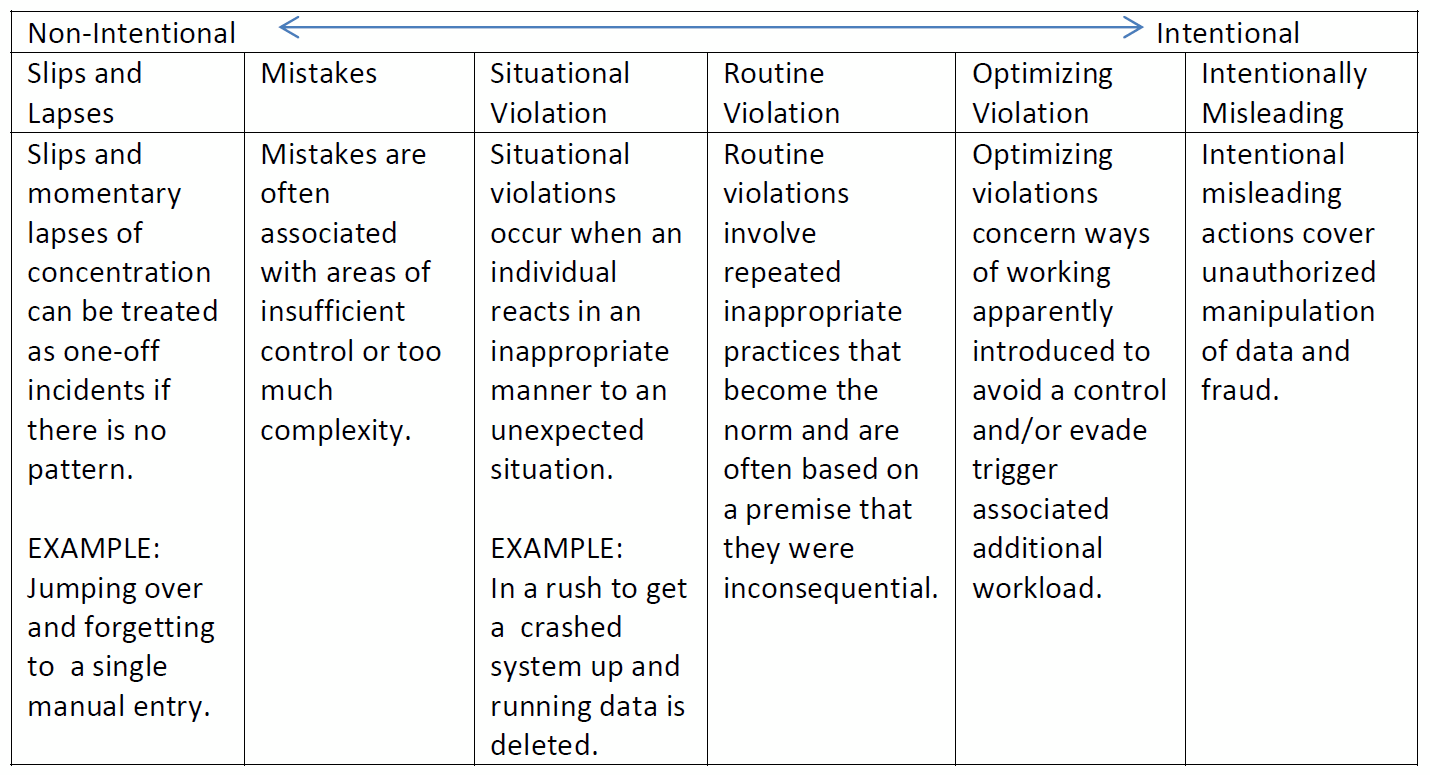
Mistakes are human nature – we all have fat finger moments.
This is why we build our processes and technologies to ensure we capture these
errors and self-correct them. These errors should be tracked and trended, but
only as a way to drive continuous improvement. It is important to have the
capability in your quality systems to be able to evaluate mistakes up-to-and
including fraud.
It helps to be able to classify issues and determine if there are changes to governance, management systems and behaviors necessary.
Events should be classified based on how intentional they are
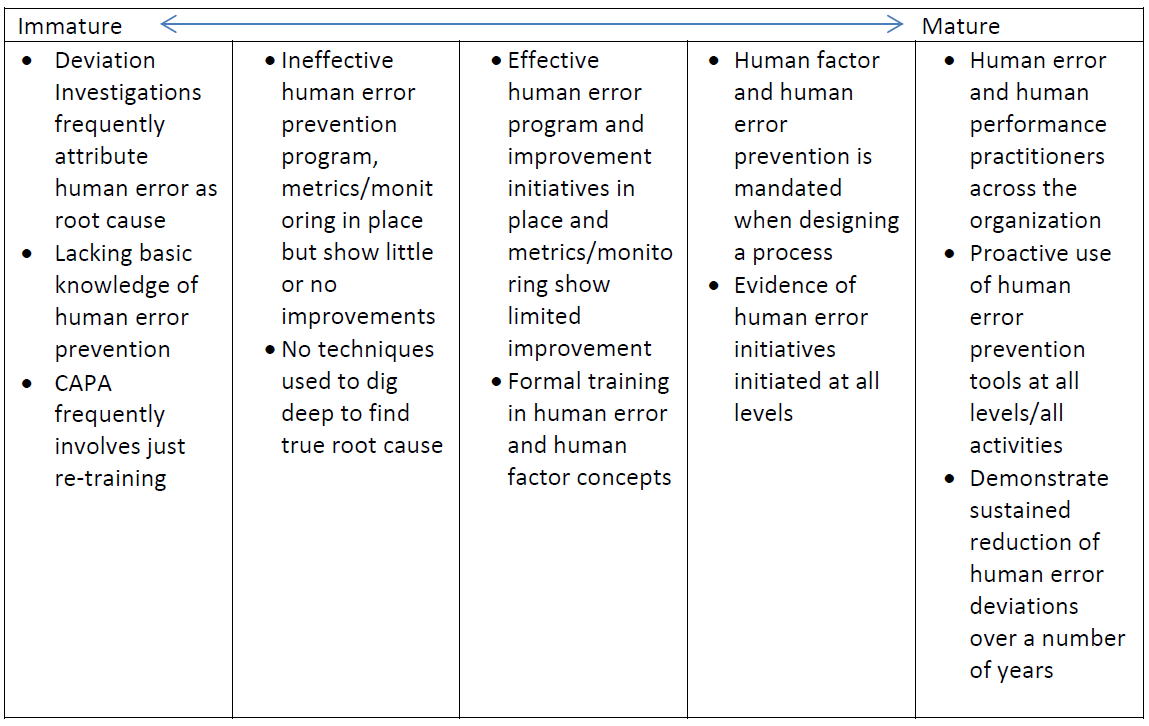
Human error should be built into investigative systems. Yes, whenever possible we are looking for technical controls, but the human exists and needs to be fully taken into consideration.
The best way to ensure data integrity is the best way to build a quality culture.
Quality System Management should be viewed and governed as a program
Program management is commonly defined as “a group of projects that contribute to a common, higher order objective.” The projects in a program are related, and the intent of achieving benefits would not be realized if the projects were managed independently.
Program management includes the practices and processes of strategic alignment, benefits management, stakeholder management, governance, and lifecycle management. Program governance creates the control framework for delivering the programs’ change objectives and making benefit delivery visible to the organization’s control.
There are different styles of program management and what I am focusing on here is what is sometimes called “heartbeat”, which aims to achieve evolutionary improvement of existing systems and processes or organizational change. This program type creates value by reconciling contradicting views and demands for change from various organization actors in order to enhance existing systems and practices while sustaining operations.
Heartbeat program management is all about awareness of the contexts of the program and requires knowledge of strategy, competition, trends in the industry, and differences in management practices between the business units of the company. A good heartbeat program manager is highly concerned about their program’s long-term effects and implications for the company’s business.
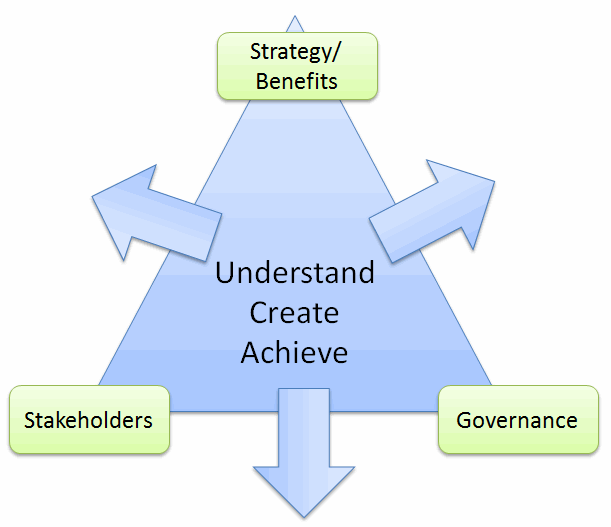
Magic triangle of a program manager
Programs exist to create value by improving the management
of projects and to create benefits through better organization of projects. The
fundamental goals of program management are:
Efficiency and effectiveness: Aspects of management that a proficient project manager should address and benefit from coordination.
Business focus goal: The external alignment of projects with the requirements, goals, drivers and culture of the wider organization. These goals are associated with defining an appropriate direction for the constituent projects within a program as well as for the program as a whole.
Goal
Description
Efficiency and effectiveness goals
Improved co-ordination
Assist in identification and definition of project inter-dependencies and thereby reduce the incidence of work backlogs, rework and delays
Improved dependency management
Reduce the amount of re-engineering required due to inadequate management of the interfaces between projects
More effective resource utilization
Improve the effectiveness and efficiency of the allocation of shared resources Assist in providing justification for specialist resources that deliver an overall improvement to program delivery and/or business operations
Provide a means to identify and improve upon transferable lessons. Facilitate organizational learning
Greater senior management ‘visibility’
Enable senior management to better monitor, direct and control the implementation process
Business focus goals
More coherent communication
Improve communication of overall goals and direction both internally and externally to the program Target management attention clearly on the realization of benefits that are defined and understood at the outset and achieved through the lifetime of the program and beyond Assist in keeping personal agendas in check
Improved project definition
Ensure that project definition is more systematic and objective, thereby reducing the prevalence of projects with a high risk of failure or obsolescence Enable the unbundling of activities in a strategic project-set into specific projects Enable the bundling of related projects together to create a greater leverage or achieve economies of scale
Better alignment with business drivers,
goals and strategy
Improves the linkage between the strategic direction of organizations and the management activities required to achieve these strategic objectives Provide an enabling framework for the realization of strategic change and the ongoing alignment of strategy and projects in response to a changing business environment (via project addition/culling, etc.)
The Attributes of a Good Heartbeat Program Manager are the
Attributes to a Good Quality Leader
As quality leaders we are often ambassadors to ensure that
the quality program is progressing despite the conflicting requirements of the
various stakeholders. We need to actively influence quality-related decisions
of all stakeholders, including people holding superior positions. Having a
well-developed personal network within the organization is particularly
helpful.
It is critical to always be communicating about the quality
program in a visionary way, to be seen as passionate ambassadors. Playing this
role requires constant attention to differing expectations of the stakeholders
and various ways to influence stakeholders for the benefit of the quality
system. To always be striving to build quality, to advance quality.
As advocates for Quality, it is a core competency to be able to stand up and defend, or argue for, the quality program and team members. This ability to challenge others, including their superiors, in a productive way is a critical ability.
A key focus of the quality program should be on engagement with a conscious and sustained drive to secure buy-in from key stakeholders (including senior management) and win over the hearts and minds of those responsible for execution to make changes feel less painful and inflicted. As quality leaders our aim should always be to engender a climate of comprehension, inclusion and trust, and to draw upon expertise globally to create fit for purpose processes and systems
Effective quality leaders need to be “heavyweight”
organizational players.
Core Competencies of the Heartbeat Manager
Contextual awareness
Scenario planning
Political skills
Courage
Networking
A note on program life
Many standard approaches perceive programs to have a finite life. This is constraining given that the strategies themselves, especially as applied to quality, have long lifetimes. I believe that program management has as much to learn from quality management, and there is a lot of value in seeing an indefinite time horizon as beneficial.
Quality management is an evolutionary approach, and utilizing program management methodologies within it should be taken in the same light.



 Investigations of a Dog