
That Vacation Helps Your Creativity, Schedule Now

It is almost summer in the northern hemisphere, and if you are like me, you are scratching your head, thinking, “I probably should have scheduled some vacation time by now.” So, if you haven’t done that yet, now is the time.

There are many reasons to take a vacation, but since I’ve been writing about critical thinking and creativity this week, here are a few specific reasons a vacation can help.

1. Mental Detachment and Relaxation

Vacations provide a break from the daily routine and work-related stress, allowing the mind to relax and recover. This mental detachment is crucial for creativity as it helps in reducing cognitive fatigue and stress, which can otherwise stifle creative thinking. Studies have shown that employees often perceive increased creativity about two weeks after returning from vacation, suggesting that the recovery period allows for restoring cognitive resources.

2. Exposure to Novel Experiences

Traveling introduces individuals to new environments, cultures, and experiences, which can stimulate the brain and foster creative thinking. The sensory overload from new sights, sounds, tastes, and textures can inspire new ideas and perspectives. Engaging with different cultures and stepping out of one’s comfort zone can challenge existing thought patterns and encourage innovative thinking.

3. Mastery Experiences

Vacations that include learning new skills or engaging in challenging activities can enhance creativity. Mastery experiences, such as learning a new language or trying a new sport, can boost self-efficacy and cognitive flexibility, which are important for creative problem-solving.

4. Reduction of Stress

Lower stress levels during vacations can lead to better mental health and cognitive functioning. Reduced stress allows for better focus and mental clarity, which is essential for creative thinking.

5. Increased Openness and Confidence

Traveling can increase openness to new experiences and boost confidence. This openness is linked to higher levels of creativity as it involves curiosity, imagination, and a willingness to explore new ideas. Confidence gained from overcoming travel-related challenges can also translate into a greater willingness to take creative risks in other areas of life.

6. Time for Reflection

Vacations often provide moments of solitude and reflection, which can lead to deeper insights and creative ideas. The downtime allows individuals to process their experiences and thoughts, often leading to new connections and innovative solutions.

Failing the Culture We Build is a Moral Injury

We as organization leaders are striving to build a high performing organization that might look like this:

High-Performance Cultures
Leaders are skilled, admired, and build organizations that excel at results and at taking excellent care of their people and their customers
Clear and compelling vision, mission, goals, and strategy
Core values drive the culture and are used in decision making
Committed to excellence, ethics, and doing things right
Clear roles, responsibilities, and success criteria, and strong commitment to engaging, empowering, and developing people
Positive, can-do work environment
Open, candid, straightforward, and transparent communication
Teamwork, collaboration, and involvement are the norm
Emphasis on constant improvement and state-of-the-art knowledge and practices
Willingness to change, adapt, learn from successes and mistakes, take reasonable risk, and try new things
Attributes of a High Performing Culture

There is a dark underbelly to aspiring to this, leaders who either fail to meet these standards or demonstrate hypocrisy and “do-as-I-say-not-as-I-do” attitudes. Organizations that aspire, can easily be hoisted by their own petard, and there is an excellent term for this “Moral Injury.”

Moral injury is understood to be the strong cognitive and emotional response that can occur following events that violate a person’s moral or ethical code. Potentially morally injurious events include a person’s own or other people’s acts of omission or commission, or betrayal by a trusted person in a high-stakes situation. For example, look at healthcare staff working during the COVID-19 pandemic who experienced a moral injury because they perceive that they received inadequate protective equipment, or when their workload is such that they deliver care of a standard that falls well below what they would usually consider to be good enough. This is causing a mass exodus of employees.

Give some thought to how to resolve moral injuries when they happen. Include them in your change plan and make them sustainable. They can happen, and when they do they will cripple your organization.

Mental Health and Culture

I’ve been thinking a lot today of this article by McKinsey by Jeffrey Pfeffer and Leanne Williams “Mental health in the workplace: The coming revolution.” It is a fascinating read, not just because we are in the midst of this pandemic which has certainly caused a lot of mental health issues, including depression, in many people. I know I’ve certainly been wrestling with it myself. I’m hopeful this issue remains on the agenda as I think it will provide long term benefits to culture.

I’ve written on how we need to build processes to support our employees in issues like burnout. Mental health is definitely a wicked problem, and will require systematic efforts to address. I am glad that the senior leaders I work with are thinking about this, and I look forward to deepening the conversation.

Burnout Needs a Systematic fix

It is more like being involved in a complicated love affair. One minute it’s thrilling, passionate, engaging. The next, it’s exhausting and overwhelming, and I feel like I need a break.
— Read on hbr.org/2019/07/when-passion-leads-to-burnout

Jennifer Moss, When Passion Leads to Burnout. HBR

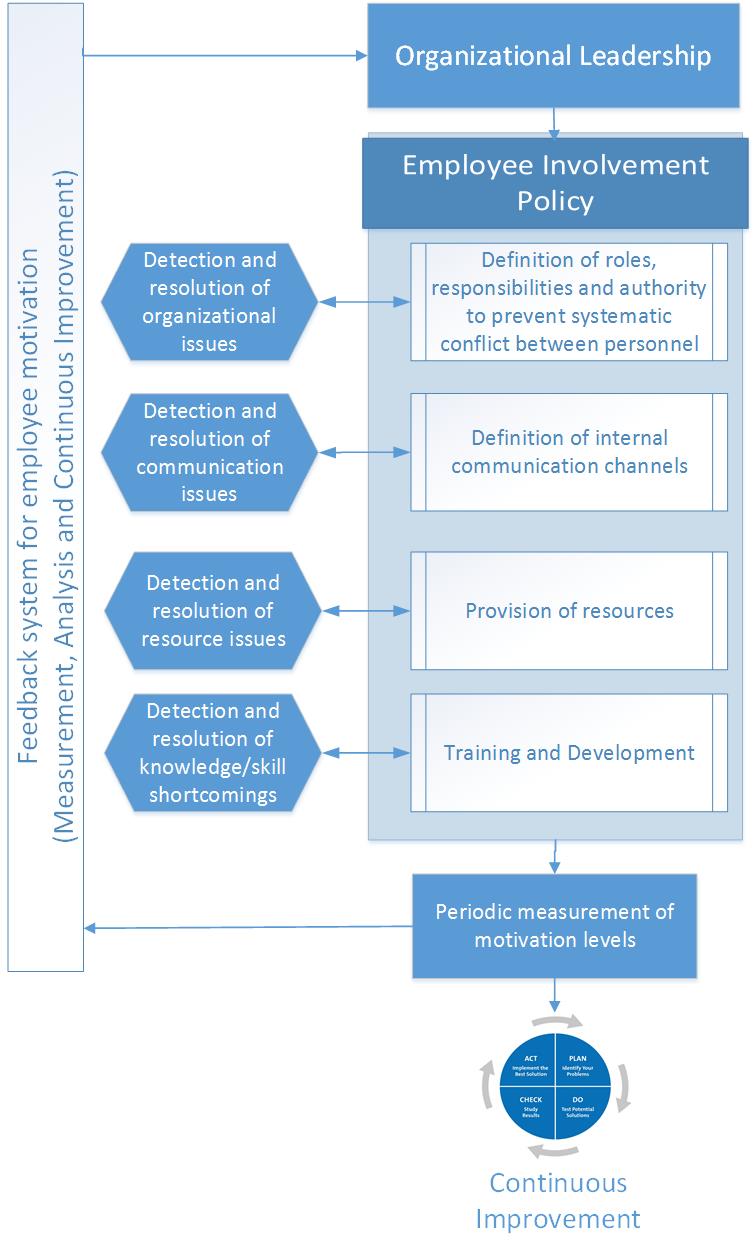
It is the responsibility of leaders “to keep an eye on the well-being of their staff.”  Organizations whose staff feel unmotivated due to stress and burnout cannot aspire to achieve a culture of excellence. Our systems need to be designed to eliminate the root cause for stress and burnout.

Five mechanisms can be leveraged to improve organizational system design: 1) Eliminate organizational issues related to roles, responsibilities and authorities of employees, 2) establish a policy of transparency and effective “bottom-up” internal communication channel to permit employee contribution and recognition, 3) establish criteria for resource distribution, 4) establish a commitment to identify needed training and provide resources for the purpose and 5) establish a systemic feedback loop for analysis and improvement of employee motivation based on periodic measurement of employee motivational levels.

If employees know exactly what their tasks are, without sustained overload, with necessary resources and competence, and recognition for the task well performed, there will be no major system-induced reason for demotivation.

This gets to the heart of Deming’s use of psychology in his System of Profound Knowledge. Lean calls it Respect-for-People. This is all about ensuring our organizations are healthy places to work and thrive.