A CoP is Collaborative Learning, not Lecture

I was recently at an event for GAMP5 that billed itself as a community of practice. Instead, it was a bunch of lectures, a lot of being talked at, and no collaborative learning.

Collaborative learning is an educational approach where two or more individuals work together to understand a concept, solve a problem, or create a product. This method leverages the group members’ collective resources, skills, and knowledge, fostering an environment where participants actively engage with each other to achieve shared learning goals. It is the heart of a flourishing community of practice and something we should do much more as industry professionals.

Key Characteristics of Collaborative Learning

  1. Group Dynamics: Collaborative learning involves small groups, typically ranging from pairs to groups of no more than six members, where each member contributes to the group’s success. The interaction among group members is crucial, as it involves sharing ideas, evaluating each other’s contributions, and collectively solving problems.
  2. Active Engagement: Unlike traditional individual learning, collaborative learning requires active participation from all members. This engagement can take various forms, including face-to-face discussions, online forums, group projects, and peer reviews.
  3. Shared Responsibility: In collaborative learning, responsibility and authority are distributed among group members. Each participant is accountable not only for their own learning but also for helping their peers understand and succeed.
  4. Diverse Perspectives: Collaborative learning often brings together individuals from different backgrounds, promoting diversity of thought and fostering open-mindedness and acceptance.

Benefits of Collaborative Learning

  1. Enhances Problem-Solving Skills: Working in groups exposes participants to various perspectives and approaches, which can lead to more effective problem-solving strategies.
  2. Improves Communication Skills: Collaborative learning requires clear and effective verbal and written communication, which helps participants develop strong communication skills.
  3. Fosters Social Interaction: By working together, participants practice and enhance social skills such as active listening, empathy, and respect, essential for building strong personal and professional relationships.
  4. Promotes Critical Thinking: The need to discuss, debate, and defend ideas in a group setting encourages participants to think critically and deeply about the subject matter.
  5. Encourages Creativity: Exchanging diverse ideas and perspectives can inspire creative solutions and innovative thinking.

Theoretical Background

Collaborative learning is rooted in Lev Vygotsky’s zone of proximal development concept, which emphasizes the importance of social interaction and communication in learning. According to Vygotsky, learners can achieve higher levels of understanding and retain more information when they work collaboratively, as they can learn from each other’s experiences and insights.

Examples of Collaborative Learning Activities

  1. Think-Pair-Share: Participants think about a question individually, discuss their thoughts with a partner, and then share their conclusions with the larger group.
  2. Jigsaw Method: Participants are divided into “home” groups, and each member becomes an expert on a subtopic. They then teach their subtopic to their group members, ensuring everyone understands the topic.
  3. Fishbowl Debate: Small groups of participants debate a topic, with some members observing and taking notes. This method encourages active participation and critical thinking.
  4. Case Studies: Groups analyze and discuss real-world scenarios, applying theoretical knowledge to practical situations.
  5. Online Forums: Participants collaborate through discussion boards or live collaboration software, sharing ideas and working together on projects.
Conducive Culture

Another building block to Quality Culture is conducive culture, which is an environment that promotes employee productivity, satisfaction, and well-being. There is a huge overlap between the concepts of a Just and Conducive Culture.

  1. Physical Comfort and Resources: Ensuring employees have a comfortable physical environment and the necessary resources to perform their tasks effectively.
  2. Open Communication: Encouraging transparent and open communication between employees and management helps build trust and fosters a sense of teamwork.
  3. Recognition and Reward: Regularly acknowledging and rewarding individual contributions can maintain high levels of employee motivation and engagement.
  4. Diversity, Equity, and Inclusion (DEI): Promoting a culture that values diversity, equity, and inclusion can lead to a more respectful and collaborative workplace, enhancing employee morale and productivity.
  5. Work-Life Balance: Supporting employees in achieving a healthy work-life balance through flexible working hours and telecommuting opportunities can increase their engagement and motivation.
  6. Positive Organizational Values: Establishing and operationalizing core values that align with collaboration, learning, and adapting (CLA) can create a supportive and innovative work environment.
  7. Feedback and Development: Regular, constructive feedback and opportunities for professional growth help employees feel valued and supported in their roles.
  8. Team Culture: Promoting teamwork and collective responsibility for outcomes can enhance the organization’s overall performance and success.

A conducive culture fosters innovation, collaboration, and inclusivity, all vital elements of a quality culture.

Fostering Critical Thinking

As a leader, fostering critical thinking in my team and beyond is a core part of my job. Fostering critical thinking means an approach that encourages open-mindedness, curiosity, and structured problem-solving.

Encourage Questioning and Healthy Debate

It is essential to create an environment where team members feel comfortable questioning assumptions and engaging in constructive debates. Encourage them to ask “why” and explore different perspectives. This open dialogue promotes deeper thinking and prevents groupthink.

Foster a Culture of Curiosity

Inspire your team to ask questions and seek deeper understanding. Role model this behavior by starting meetings with thought-provoking “what if” scenarios or sharing your own curiosities. Celebrate curiosity and reward those who think outside the box.

Assign Stretch Assignments

Provide your team with challenging tasks that push them beyond their comfort zones. These stretch assignments force them to think critically, analyze information from multiple angles, and develop innovative solutions.

Promote Diverse Perspectives

Encourage diversity of thought within your team. Diverse backgrounds, experiences, and viewpoints can challenge assumptions and biases, leading to a more comprehensive understanding and better decision-making.

Engage in Collaborative Problem-Solving

Involve your team in decision-making processes and problem-solving exercises. Techniques like role reversal debates, where team members argue a point they disagree with, can help them understand different perspectives and refine their argumentative skills.

Provide Training and Resources

Offer training sessions on critical thinking techniques, such as SWOT analysis, root cause analysis, and logical fallacies. Equip your team with the tools and frameworks they need to think critically.

Lead by Example

As a leader, model critical thinking behaviors. Discuss your thought processes openly, question your assumptions, and show the value of critical evaluation in real-time decision-making. Your team will be more likely to emulate these habits.

Encourage Continuous Learning

Recommend learning resources, such as courses, articles, and books from diverse fields. Continuous learning can broaden perspectives and foster multifaceted thinking.

Embrace Feedback and Mistakes

Establish feedback loops within the team and create a safe environment where mistakes are treated as learning opportunities. Receiving and giving feedback helps refine understanding and overcome biases.

Implement Role-Playing Scenarios

Use role-playing scenarios to simulate real-world challenges. This helps team members practice critical thinking in a controlled environment, enhancing their ability to apply these skills in actual situations.

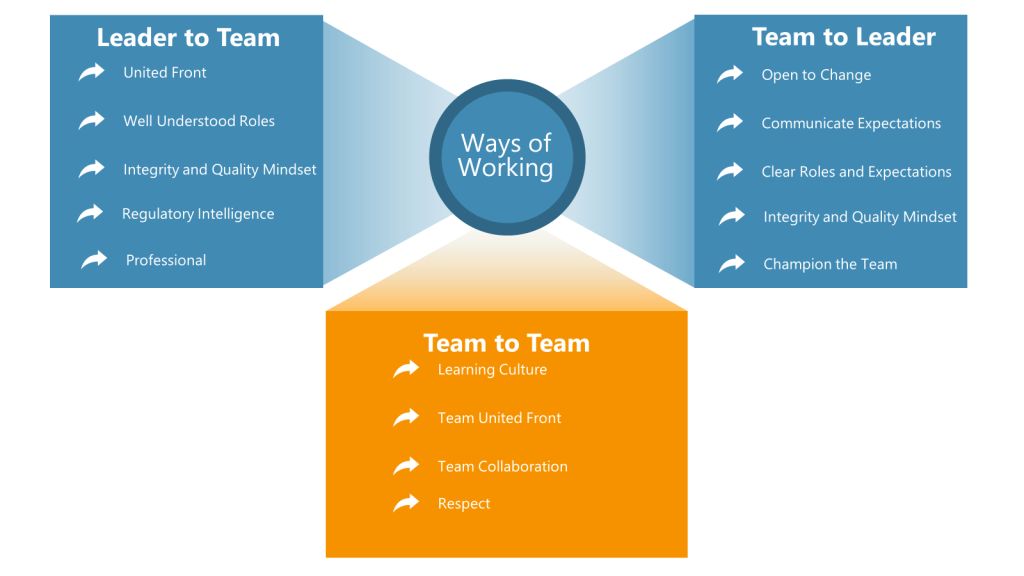
Build Into the Team Charter

Building these expectations into the team charter holds you and your team accountable.

Value: Regulatory Intelligence

Definition: Stay current on industry regulations and guidances. 

Desired Behaviors:

  1. I will dedicate time to reading industry-related guidance and regulation publications related to my job.
  2. I will share publications that I find interesting or applicable to my job with the team
  3. I will present to the team on at least one topic per year to share learnings with the team (or wider organization)

Value: Learning Culture

Definition: Share lessons learned from projects so the team can grow together and remain aligned.  Engage in knowledge-sharing sessions.

Desired Behaviors:

  1. I will share lessons learned from each project with the wider team via the team channel and/or weekly team meeting.
  2. I will encourage team members to openly share their experiences, successes, and challenges without fear of judgement.
  3. I will update RAID log with decisions made by the team.
  4. I will identify possible process improvements and update the process improvement tracker.

Value: Team Collaboration

Definition: Willingness to help teammates when they reach out for input/help

Desired Behaviors:

  1. I will be supportive of my teammate’s requests for assistance
  2. I will engage and offer my SME advice when asked or help identify another SME to assist 
  3. I will not ignore requests for input/help
  4. I will contribute to an environment where teammates can request help

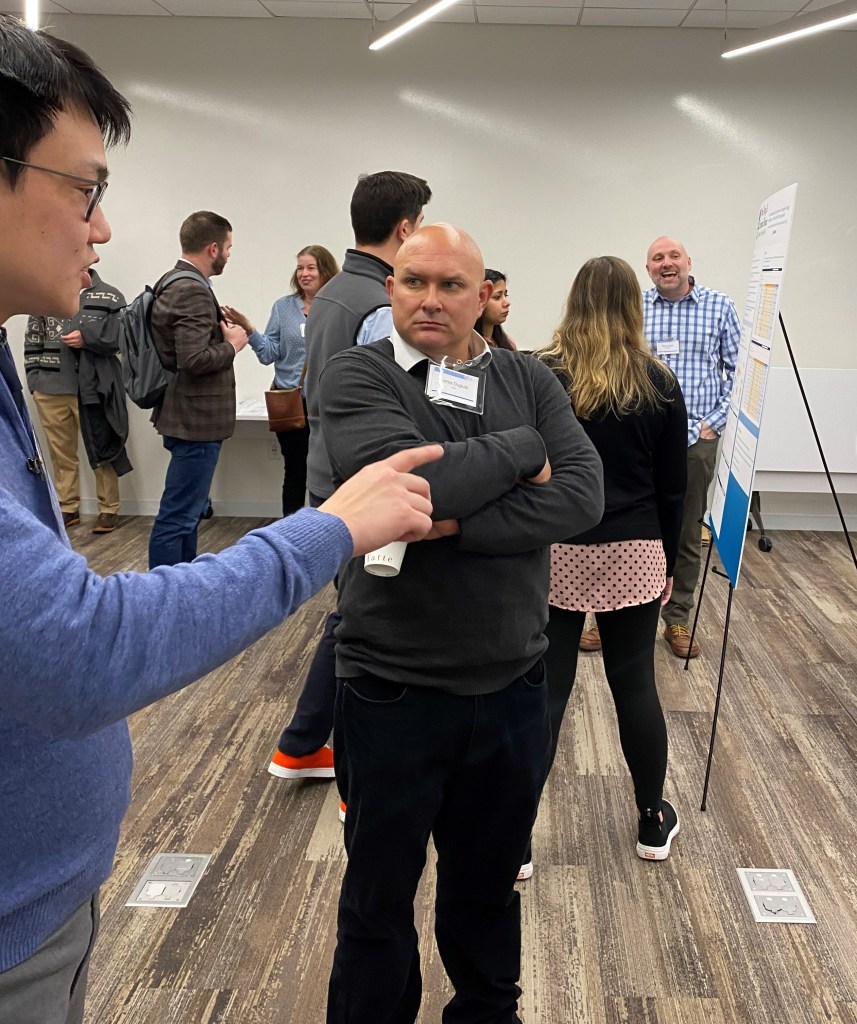
ASQ FD&C Boston Poster session – 28Feb2023

Yesterday the Food, Drug, and Cosmetic Division of the ASQ hosted a poster session on the question “What are you proud of in your eQMS? What about your implementation or continued use stands out and that you want to share?”

This was our first try and it also happened in one of the few winter weather events we’ve had this season in Boston, but I was incredibly pleased by the turnout and the five posters were all superlative.

I was actually so busy that the only photo I remembered to take was this one, which was actually 10 minutes before our official start time.

There were five posters:

  • Visual Hierarchy (Jeremiah Genest, Amylyx Pharmaceuticals)
  • Smart Numbering & Page Layouts (Kevin Kao, AVROBIO)
  • Minor Deviation Process (Jamie Dupuis, Agios)
  • Supplier Change Notifications – Requirements & Challenges (Russ Jacob, Resilience)
  • Electronic Forms – utilizing templates, tokens, and connectivity (Greg Greene, Amylyx Pharmaceuticals)

I thought each of the posters brought a different bit to the conversation, and wow were there a lot of conversations going on!

I definitely learned that next time I need to get recorded talks from folks. I had originally planned this, but it didn’t happen mostly because I was just too involved in talking about my poster.

I want to say an immense thank you to our very gracious hosts Veeva Systems, who provided a great spot and a whole lot of hospitality. Will Gould was great to work with and really went above-and-beyond as a host.

With the great attendance and the on-the-site feedback, definitely planning on doing this again. A quick survey to gauge interest and help select a topic is here: https://forms.office.com/r/rUf7VRE6Dy

Impact of Virtual Communication on Creativity

A very interesting study in Nature this week on “Virtual communication curbs creative idea generation.” And while I don’t think the results will surprise many, I do think we are not close to settling the question. This is a fairly good-sized study, with a good methodology, but I think more research is needed in the area. I’m thinking we will see a few more studies around the topic.

The results suggest that there is a unique cognitive advantage to in-person collaboration, but the authors do acknowledge there are a whole lot of other factors in play.

This is the big question for many. How do we get the benefits of in-person while maintaining the flexibility and benefits folks are used to. I think, for those work environments where virtual work is possible, the answer is going to be to structure times to maximize the tangible benefits of office-based work, including:

  • Serendipitous collaboration,” a term coined by Dana Sitar in Inc. to describe informal interactions that result in innovative ideas, problem-solving, and new approaches. For me this includes plopping in a coworker’s office for a quick problem-solving session (maybe with a little healthy venting on the side). Speedy, efficient interactions that simply don’t happen in a remote environment — and that build a sense of camaraderie and teamwork.
  • More productive meetings. Even though we’re becoming more skillful at remote meetings, there are just certain meetings that benefit from in-person..
  • Connection and loyalty are difficult to promote in employees working remotely. The sense of team is not the same when team members see each other online as opposed to seeing them and speaking with them multiple times a day.
  • High-functioning teams have outstanding communication and shared experiences — both of which are difficult to manufacture long distance. Creating a relaxed, and informal environment, diffusing tension, and engaging in an extensive discussion where every team member is heard are all much easier to do in person than virtually.

Businesses operate thanks to human ideas and energy. People are the power behind every business; successful businesses find that fulfilled, happy employees drive fresh ideas, work harder to accomplish goals, and remain loyal to their employers.

The human element (and the need for and value of human connection) can’t be overstated as an ingredient for success and growth. I think we’re entering a new phase, and there are a lot of questions to be answered. What I hope is that bad decisions won’t become enshrined because of cost-cutting or just organization laziness. That approach already gave us horrible open offices.