How I would Organize a Meeting of a CoP

As I discussed in “A CoP is Collaborative Learning, not Lecture,” it is past time to stop treating professionals as college kids (it is also past time to stop teaching college kids that way, but another subject). Lectures have their place. There is undoubtedly a high need for information transfer events (but even these can be better structured), and there will always be a need for GAMP5 workshops, training courses, and webinars on a specific topic.

But that is not the place of a community of practice.

I’ve written in the past some ways I prefer to structure professional engagements, such as poster sessions and an unconference. I have demonstrated some ways I think we can do this better. So, let’s turn our attention to what a better GAMP5 community of practice session could look like

We aim to connect, communicate, share, collaborate, and dialogue. So, what would a six-hour event look like?

Noon to 1:00—Networking and poster session. We have a lot of introverts in this industry, so help folks connect by doing it in a structured way. Posters are excellent as they can serve as a springboard for conversation. All the presentations that started about ISPE and GAMP5, what the GAMP5 plans are for the next two years, and current regulatory trends are posters.

1:00-2:00—Think-Pair-Share: There will be three rounds of 15 minutes each, each with a different topic. Each participant will have an 11×17 piece of paper to take notes of the other person’s thoughts. Post.

2:00 to 2:30: Review thoughts, brainstorm a theme, and propose.

2:30 to 2:45: N/5 voting for top themes

2:30 to 3:30 – Mock audit, fishbowl style. Deep dive on a particular issue, audit style.

3:30 to 4:30 -Unconference-style breakouts of the themes. Each working group comes out with a hand-drawn poster (or more based on how productive the group is)

4:30 to 5:00 – Present ideas

5:00 to 6:00 – Network, discuss ideas. Add to them.

Hit the bar/restaurant.

Publish the results, and continue to work on the online forum.
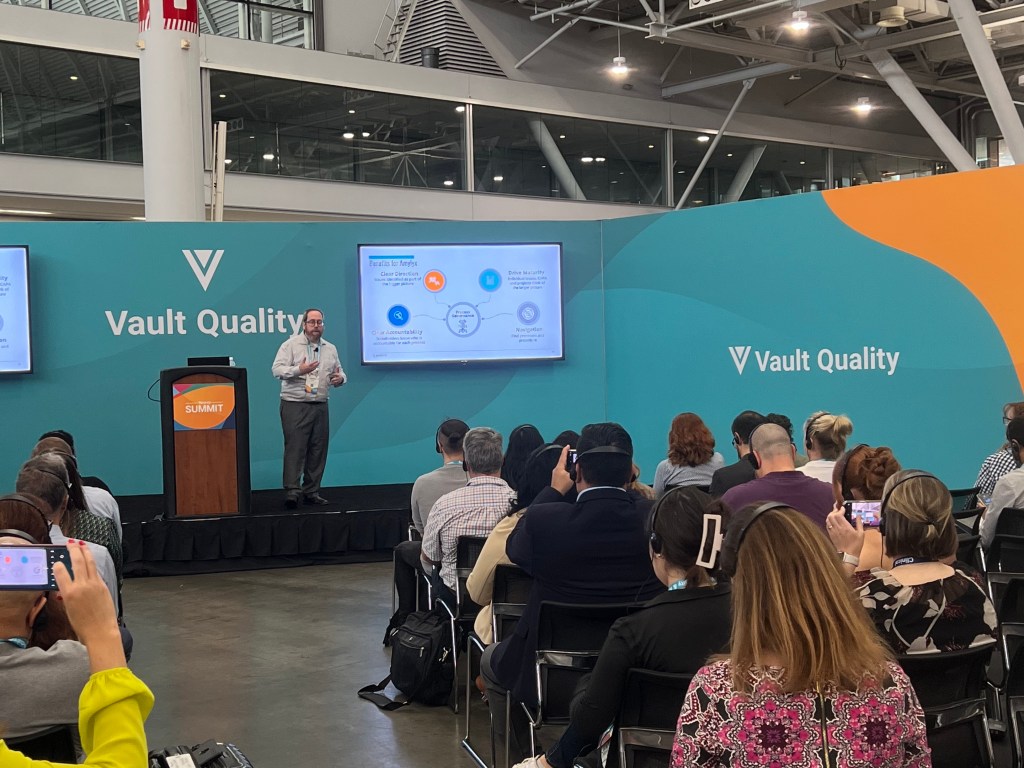
Veeva Summit -2023

Supplier technology conferences are a different beast from more professionally orientated events. You approach them very differently in that at a single vendor conference in that you are very focused on two things:

  1. Getting your views heard to influence design
  2. Learning new uses of the tech and the upcoming roadmap

Even the hallway track is different. While you still have fascinating chats with colleagues of yore and are meeting new individuals to learn and share with; the overall tenor is very different. How are you using the tech, how are you overcoming issues, what are you doing differently.

This week was the Veeva Summit, so it is no surprise that I feel slightly tired from the whirlwind. I presented on Process Management within Quality Vault utilizing Process Navigator, a fascination of mine and something I think organizations need to be way more deliberate about in their quality systems.

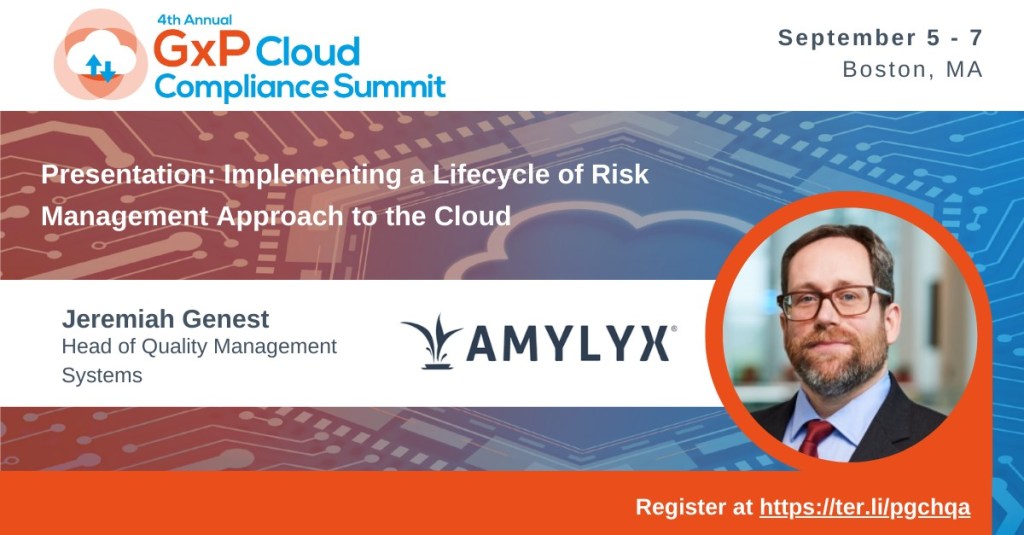
4th GxP Cloud Compliance Summit – September 5-7

I am looking forward to speaking at the GxP Cloud Compliance Summit in Boston in September on Implementing a Lifecycle Risk Management Approach to the Cloud. I’ll be discussing some of my favorite topics:

  • Best practices to harness a life cycle risk management approach to protect product quality and patient data
  • What does a living risk assessment look like when key parts of your IT infrastructure is maintained by cloud service providers
  • How does Q9 R1 impact functional and usage assessments around cloud applications

I am looking forward to meeting and discussing some of the critical questions in our heady embrace of the cloud.

Cloud based GxP systems have shifted in the last few years from “Something I guess we should figure out” to “Well guess we have it now” to “Well that is all I seem to have now.” And where 5 years ago it seemed we were obsessed about the fine details of Open vs Closed systems and what cloud-based applications are, we are now looking at much more mature questions around a risk based strategy that evaluates and ensures appropriate controls around Data Integrity, Privacy, and Security. Through a risk-based approach, we drive activities such as auditing, change control, qualification/validation, and oversight.

I am looking forward to having this discussion with my peers and sharing best practices and experiences. It is only though this type of event that we can grow as a professional.

I hope to see you there.

You, Yes You! Speak at a Conference

The process of writing and speaking is a core part of the Quality profession. Only through these activities can we truly contemplate and learn from our accomplishments to propel us forward to new heights.

There are some great speaking opportunities for folks around the Boston area coming up:

BOSCON is November 6 and 7th and is looking for speakers. I’m a huge fan of this regional convention and strongly recommend it. Submissions are due August 15th, 2023.

The ASQ’s Quality Innovations Summit (formerly the Quality 4.0 Summit) is September 19–21 in Boston, MA with a theme of “Innovations and Future Trends for Excellence.” Submission deadline is June 9th, 2023, with more information here.

I’m quite happy to help coach potential new speakers, both in the development of your proposal and in your presentation.

Making Presentations Accessible

Presentations are critical part of sharing and growing as a professional. I’ve gone on the record more than once stating that to truly grow you have to get as comfortable as possible presenting. But it is not merely enough to present, we need to strive for great presentations.

So coming out of WCQI a fw thoughts.

Our Slides are Mostly Awful

Powerpoint is your co-facilitator. Use it well. Do not use powerpoint as a wall of text. I actually hear a speaker this week say he put lots of text in a slide so folks can use them without hearing him speak. Oh no. Stop that.

Make the Presentations Accessible

Great advice here

Great advice in this post about acessibility, something we should always be standardizing.

I love the index card idea. I will be using it my next presentation.

Every Presentation is a Training

While we may not do level 3 or 4 assessments (or even formal level 2), take the attitude that each and every presentation is a training and strive for effectiveness in design.

Presentations are a Continuous Cycle of Improvement

No one was born as a good trainer. Get a coach. Ask for help. Realize that your first presentation will not be as good as your second and etc. Put the time in.

Look for Opportunities

You have done something that others are interested in. Take pride in it and share. There are always great opportunities, like BOSCON, so find them and put in a proposal. You may not get accepted, but as I said above, it is a cycle of improvement.

If you are reading this, I am willing to help you on your presentation journey.

Audience Applauding Speaker After Conference Presentation