Powerpoint Slides

With the current plan to start attending conferences again this spring, I’ve been working a lot on a few different presentations, which means spending a lot of time on PowerPoint presentations.

Microsoft debuted PowerPoint in 1987, and since then, it has been used to present content in meetings, conference rooms, and classrooms. There are a lot of jokes about how bad PowerPoint can be, but if you know a little about its features, PowerPoint can be so much more than mere presentation software. It can be the means for taking audiences on a truly engaging learning adventure as well as a powerful tool that supports presenters by serving as their digital co-facilitator. It just requires some work.

Making presentations for folks outside my organization always gets me thinking of best practices. It helps me concentrate on how the true value of PowerPoint isn’t to serve as an information provider—that’s the role of a presenter. The true value of PowerPoint
is to support you and your presentation.

A presentation is most effective when it is focused and has a coherent narrative. Achieving that starts with defining your objectives and then taking some time to figure out how you’ll meet those objectives. Be intentional in your use of PowerPoint.

Traditional PowerPoint ThinkingIntentional PowerPoint Design Thinking
Every presentation needs slides.My intended presentation outcomes should dictate
the types of visual aids I use (or don’t use).
Every point I make needs a slide.My slides should never compete with me for the audience’s attention; they should support my message.
PowerPoint is synonymous with your presentation.PowerPoint is my co-facilitator.
PowerPoint is linear, and slides appear sequentially.Using triggers and hyperlinks, it’s possible to reveal information dynamically.
Templates make a slide deck look professional.Effective use of slide real estate and visual representation of my message looks professional.
There is a maximum number of words and an ideal font size for most presentations.My audience should be able to read all the words that appear on a slide.
People need a lot of information on technical slides and data-driven presentations.Slides are a visual aid for a presentation; more
detailed information is better offered through
handouts.
There are lots of options for animations and transitions, so they should all be used at some point.Animations and transitions can help focus attention, but there is such a thing as too much.
I can send someone my PowerPoint deck and that should be the equivalent of attending my presentation.Most narratives can be placed in the Notes section and distributed, along with my slides, to paint a complete picture for those not in attendance.
What’s Possible with PowerPoint?

Give a lot of thought to who is your audience. It is always a good idea to understand your audience, but when speaking to folks outside of your What (if anything) does the potential audience already know about your topic? What should the audience be able to do new, different, or better because of the time spent with you?

For example, at the upcoming ISPE Asceptic Conference, my audience understands pharmaceutical quality systems so I can start with the understanding that they understand the basics of my topic. My presentation, as a result, can go to more advanced topics and not have to explain the basics.

A presentation is most effective when it is focused and has a coherent narrative. Achieving that starts with defining your objectives and then taking some time to figure out how you’ll meet those objectives. Taking an hour or two to map out your thoughts and truly think through how best to visually represent your key points can help ensure that your presentation will be tight and focused with a coherent flow.

For each slide:

  1. Slide Purpose/Objective
  2. Sketch/Imagery
  3. Key Points

Things Conferences Should Change

Working on presentations for conferences again really reminds me of all the bad practices conferences continue to use.

  1. Stop Using Templates: It is a common misconception is that using a template makes the slide deck look more professional. Slide templates do help with consistency, but they dramatically reduce the real estate you have to work with on your slide. By the very nature of their structure, these templates encourage a title and bulleted list format. Don’t just believe me, watch this fun video by Will Thalheimer. The more space on a slide that is occupied by professional-looking template designs and logos, the less space remains for inserting powerful imagery, text, facts, or figures.
  2. Leverage Technology to Break Linearity: Most people use PowerPoint in linerar ways, and conference technology builds pretty much make that an inevitability. The technology exists to allow the audience to have some sort of control over the content that’s on display in front of them, and would greatly enhance the conference experience.

Resources

  • Bozarth, J. 2013. Better Than Bullet Points: Creating Engaging e-Learning with PowerPoint. 2nd ed. San Francisco: John Wiley & Sons.
  • Duarte, N. 2010. Resonate: Present Visual Stories that Transform Audiences. Hoboken, NJ: John Wiley & Sons.
  • Duarte, N. 2008. slide:ology: The Art and Science of Creating Great Presentations. Sebastopol, CA: O’Reilly Media.
  • Medina, J. 2014. Brain Rules (2nd ed.). Seattle: Pear Press.
  • Schwertly, S. 2011. How to be a Presentation God: Build, Design and Deliver Presentations that Dominate. Hoboken, NJ: John Wiley & Sons.
  • Vella, J. 2002. Learning to Listen, Learning to Teach: The Power of Dialogue in Educating Adults. San Francisco: Jossey-Bass.
  • Williams, R. 2008. The Non-Designer’s Design Book. 3rd ed. Berkeley, CA: Peachpit Press.
Photo by Pixabay on Pexels.com

Virtual WCQI

The ASQ is hosting a virtual World Conference on Quality Improvement. Glad to see thisexperiment. While a lot of organizations have been holding virtual conferences, this use of technology is a stretch for a lot of ASQ Members.

James Clear – 1% Better Every Day

Clear’s 2019 book Atomic Habits was definitely one of the most talked about self-help books from last year.

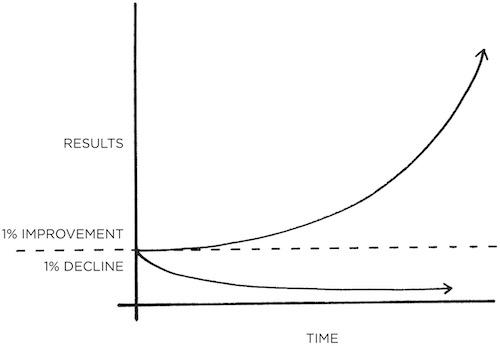
1% Better Every Day

The book has some concerns, for example do a little googling on the Marshmallow Test, and Clear still starts his talk referencing the British Cycling Team, probably not the most convincing given their doping scandals. Clear has actually written about the scandal, so I’m surprised he continues to use it in talks.

That said, I really like his use of a score card and his four rules. No argument from me on the importance of systems.

The four laws for building good habits according to Atomic Habits:

  1. Make the habit obvious.  
  2. Make it attractive
  3. Make it easy
  4. Make it satisfying  

To break bad habits the inverse applies:

  1. Make the habit invisible
  2. Make it unattractive
  3. Make it difficult
  4. Make it unsatisfying

Great discussion on how design and environment shapes our choices. Fits nicely into “nudges.” How we organize our work space and homes is a critical thing that we as quality professionals need to spend more time on. The structuring of an environment, including social, fits nicely into quality culture.

It may be pop psychology goes, but it is a very well written book. And James Clear is a great speaker, even from comfort of his living room or study.

ASQ Lean and Six Sigma Conference – Day 2

I ran into Stuart MacDonald, the magician from yesterday in several sessions today. I love when keynotes at a conference show their passion by learning from fellow practitioners. I bought his book, so it also worked on that level.

Morning Keynote of “Achieving Operational Excellence with Passion and Creativity” by Kaplan Mobray

As a facilitator I always approve of walking into a session with a name tag, file cards, paper, and crayons. It warms my heart.

Career coaches and motivational speakers are a tough one for me as I rarely connect with them as a conference speaker. Mr. Mobray had a high energy level, but what I really enjoyed was him using various facilitation techniques (graphic drawing) as a way to focus on his simple points, such as “pass it on” or “evolve” or “progress over persecution.”

“Steering Towards Zero Issues” by Franco Seravalli

Starts with the dilemma of poor quality and a high level overview of the case study at an automobile parts supplier in Costa Rica.

Though his case study covered their path root cause analysis and gap analysis and then went to improvement strategy.

  • People – Trust our people
  • Containment
  • Correction/Prevention

People was the most important.

Step by step process to create a quality culture and sell change.

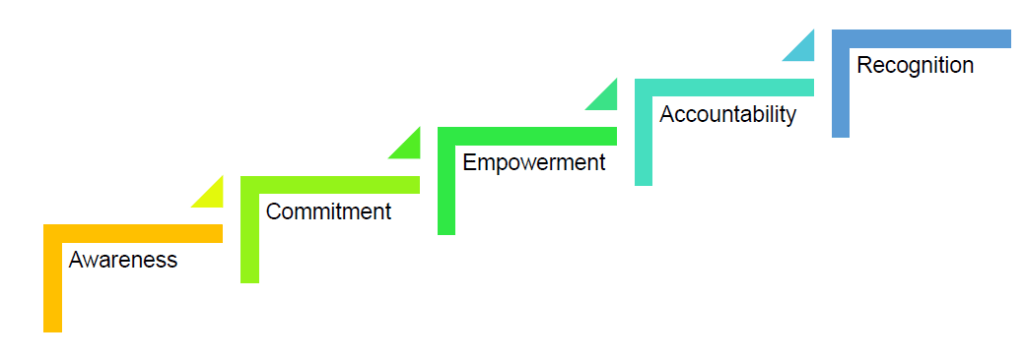
Steps for strengthening people

Focus on people and talked about human error and human performance.

  • Awareness – create a sense of pride and empathy with the customer. Transparency and candor and making the quality issues public
  • Commitment – Public displays of support. Talk and listen. Management walking-the-walk
  • Empowerment – Trust your people, decision-making authority
  • Accountability – interesting point about cultural differences (for example Spanish and Portuguese do not have this word)
  • Recognition
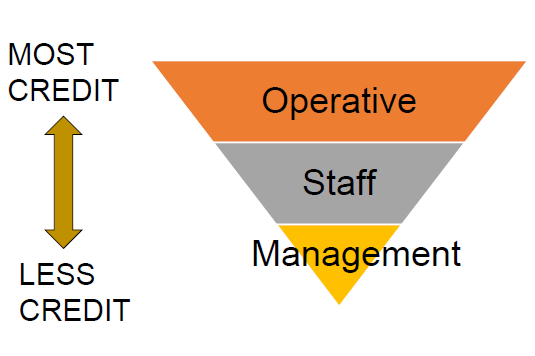
Credit where credit is due

Containment – focused on stop the bleeding and close the circle. Containment is fairly high level and felt very industry specific in his details.

Corrective Actions – laid out the typical deviation to CAPA to effectiveness review path. Covered 8D, talking about need to add risk analysis/management and the place of effectiveness reviews.

Covers risk and PFMEAs.

Again, not an intermediate discussion. We need better criteria for ranking a session. I would have gone to this even if it was marked basic as the speaker is a member of the Team and Workplace Excellence Forum, but I worry for other participants.

“See One, Do One, Go Do One” by Karissa Craig

Karissa laid out a journey to develop, trial, implement, evaluate, and refine their approach through a case study.

Brings a good qualification approach to Lean with “See One” and “Do One” are classroom learning and the “Go Do One” is application.

Talked about the resistance and the need for accountability for application. A “want to” and not a “have to”

Demonstrated the A3 as rubric for the “Go Do One”. Offered some good discussion of how firefighter cultures (which healthcare) and how you need to build the right culture to do problem and root cause and not jump to solutions.

Gave a nice 8-week (with added 1-week pre, 1-week post) schedule for training and doing.

For training focused on basic problem solving, talked about avoiding perfectionism and set reasonable expectations. Karissa described a great sounding training program. This three hour class seemed very well put together.

Had an interesting share on how training led people to realize that problem solving was harder than they used to think and impacted employee engagement. This led to a sponsor training so sponsors understood how to support teams.

“Run with scissors” about how transformation involves risk and the ways to deal with it.

Rest of the Day

I spent the afternoon networking and connecting and conducting some ASQ Team and Workplace Excellence Forum business and didn’t attend any of the afternoon sessions. I was ambivalent about the afternoon keynote speaker/piano player.

ASQ Lean and Six Sigma Conference – Day 1

Back again this year in sunny Phoenix for the ASQ Lean and Six Sigma Conference

These are all my rough, first draft impressions. So it will be mostly stream of conscience.

The Six Sigma Forum Award for the Advancement of Six Sigma is a mouth full. Dr Jamison Kovach. Awards are one part of the professional society experience that I do not really understand why we do them, but Dr Kovach has contributed to the field and is certainly deserving. I’m glad to see her get all the recognition that we can give her for her continued contributions.

Morning keynote is “The Art of Leading Change in the Age of Quality 4.0” by Greg Watson

Greg is a distant past president of the ASQ, and I think it is important to stress distant as that perspective informs much of his speaking. Whenever I hear Greg I always feel like I’m back in the late 1990s and then I have an urge to check on y2k projects.

But as a consultant, he had to get on board with the tsunami that is industrial transformation. And to be fair, I’m impressed by the approach he is taking.

He references an article from Richard Young from 2001 and then draws a path to “thinking systems.” He makes a good point that quality is never settled, and we need to use the past to set the future and asks the question of “can we simplify our way of pursuing quality in a digital world.”  Going back to profound knowledge he talks about organizational excellence and how we need architects that blend science, mathematics and engineering with artistic thinking to create a functional system that weathers its potential environment and is attractive to customers.

That is good. And then he went back to the 60s and I might have taken a nap. Don’t get me wrong, I love history and it’s important to understand it, but there might be a problem with understanding of quality 4.0 if we need to reference early days to make points.

Offers a definition of quality as “Quality is the relentless pursuit of goodness coupled tightly with the persistent avoidance of badness.” Break down to a product quality definition, service quality definition, process quality definition.

  • Product quality: Fit for use by the customer in the intended application and the actual environment.
  • Service quality: Consistent delivery of the desired service level over an extended period of time and across all locations.
  • Process quality: Maximizing the level of productivity relative to the customer demand with minimal waste, cost, inefficiency or loss

To get to quality 4.0 we must become trusted advisors and coaches to the executive team. Quality as lifeblood of the organization. Question we need to ask is how do I become that type of person

Organization Excellence three types of improvement:

  • Continual Improvement – Process focus, work changes
  • Breakthrough Projects – technology
  • Transformation projects – game changers in redirecting the purpose of organizational strategic intent

Hits on an issue I know many quality people grind their teeth on, especially in pharma

Managing organizational gemba the nature and structure of each Gemba changes in focus and content and must be improved in different ways

Quality characteristicGemba Gemba 2Gemba 3
Customer focusWorkersCustomersOwners
Work objectivesWork productivityWork priorityWork Profitability
Dominant functionPerform/operateSupervise/ManageCommand/Control
Performance focusFlow efficiencyProductivityResource efficiency
Performance approachQuality/efficiencyProductivity growthFinancial growth
Quality mindsetRight the first timeService the CustomerGet business results
Team approachWork group/circleProgram/ProjectCommittee/Council
  • Gemba 1 is continual improvement
  • Gemba 2 Breakthrough
  • Gemba 3 is transformation

Goes back to profound knowledge as delivering a systemic view of how work is carried out so that future performance may be predicted with a string degree of probability.

  • Systemic perspective
  • Managing the knowledge domain
  • Predictive analytics
  • Human understanding

System thinking and how hoshin kanri defines the strategic front-end that identifies, manages and enables critical change projects to achieve desired organization goals.

Knowledge of variation is a way that establishes change targets and sets priorities in a way that does not use unreasonable stretch targets the demotivate workers or spread fear.

Building worker competence and agility will enable people-intensive processes to run as an effective support system for the digital tools employed in deploying quality 4.0.

Profound knowledge enables insights necessary to design systems of fture and provide checks and balances to assure managerial oversight of

How to manage change

  • Operationalize profound knowledge across aly management system
  • Facilitate business improvement change
  • Balance resources

I’m really mixed by this presentation. There were some good points, but I really feel they get buried underneath the continued hearkening back to the 1980s and 1990s. Our history is important, but it shouldn’t bury us.

“Lean Transformation Lessons for Practitioners and Students” by Nicole Radziwill and Rebecca Simmons.

Rebecca is an assistant professor at James Madison University and a member of the Team and Workplace Excellence Forum and Nicole is one of the better thinkers on the impact of industrial transformation (IX) and Quality 4.0. Nicole wasn’t able to make the conference but is online. This means the presentation was a little different than expected but handled well.

Defined lean transformation as “installing the habits and practices that will enable yur organization to deliver a continuous flow of value to customers”

This cannot happen without cultural shift and stresses the importance of learning-by-doing. Old-habits to break, learning is easier than unlearning. Change requires cognitive energy and people are selective about where they spend that energy.

Click to access Markus1983_CACM266_PowerPoliticsMIS.pdf

Identify the Need

Is Lean the right approach? Some traditional questions but focused on very good question:

  • Employee turnover is high
  • Always short staffed
  • Cross functional conflict
  • Frequent pivoting

Power of observation, indicators of culture         

  • Are people first? – this is a good thing to develop a tool on what and how to observe interactions to see this?
  • Who has accountability & ownership?
  • How are mistakes handled?

Examine the system, follow the question

Assess Readiness

Once need and lean is right approach, is organization ready.

Can the organization absorb any additional change efforts? Capacity is finite and what else is going on? Is there a reasonable chance of success for this specific change? Time out – is no the right time?

Is there a reasonable chance of success for this specific effort?

Leadership engagement  – questions about time resources and actual commitement as self-discipline. Sustained hard work over time. Commitement is not enough

Process definition – enough to start but not enough that this is not value added. Who gets blamed when there is a problem?

Process stability – may need to triage first

Covered the visual triange. Information is power and sharing information with everyone in the facility means giving up control and power and this is very telling of true level of commitement.

Covers the sources of resistance and has a table based on 1993 study

Talks about importance of power balance and how shifts in power balance can create resistance.

Shared some good case studies. Love the fact they used the Baldridge as the rubric for the assessment.

Key Findings

  • Assess process maturity upfront
  • Build an organizational backbone – include standard work for leaders and “tech follows behavior” are good things emphasized here.
  • Create a sole source of truth which drives effective decision making
  • Design Strategic Quick Wins – the hardest project is not the first on to tackle. Leadership to recognize
  • Engage influencers and key executives

I then spoke.

“The Importance of PLAN in PDC/SA and DMAIC” by Grace Duffy

We need to make sure that our working level is comfortable with what they are doing. The above metric captures a balanced approach that Grace covered.

Ensured her audience was grounded on the idea of a perpetual system of improvement discussing how lean and six sigma fit together, with her concept of modular kaizen, linking back to benefits against an ideal cost of quality model. Coming back to a theory of constraints where resources and bottlenecks, finding the weak link in time.

Talks about the disruption loops as part of the PDCA loops of the modular kaizen approach. Discussed how we need to get people to think in terms of gap assessments. This is an interesting observation, and fits into a thread I’ve ben working on around situational awareness.

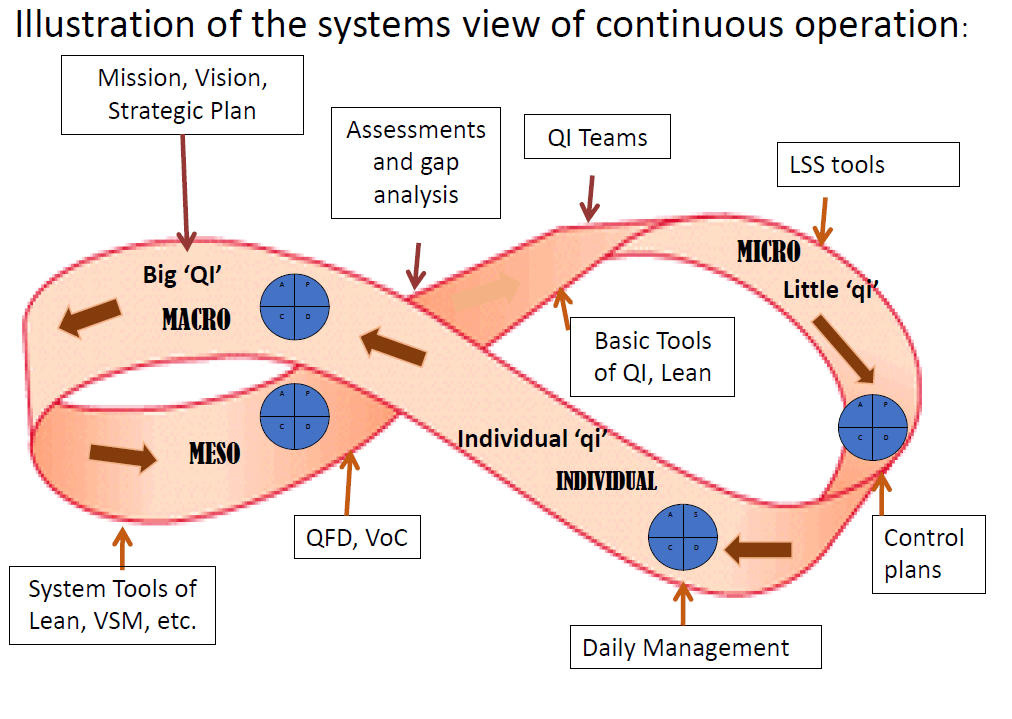
Building off on this Grace then covers a systems view of continuous operation.

Covering the seven step project sequence for modular kaizen improvement activities. I like her bringing QFD in here.

Overall assessment – I will go on the record again that I am a huge fan of Grace’s thoughts. She is an influential thinker in quality. I’ve also attended maybe 7 talks by Grace in the last two years and it has been interesting as she continues to refine and push ahead her system-based approach to continuous improvement.

“Practice Doesn’t Make Perfect, It Makes Habit” by Ryan Burge and Shrey Tarpara

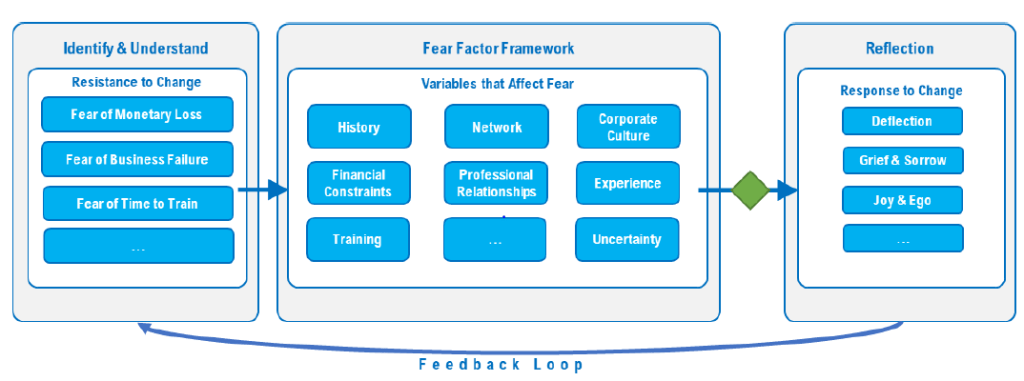
Starting with a resistance of change, covering it at an extremely high level, hitting a little on individuals fear of changes.

The habit discussed is to build a habit of consideration around change. Briefly touched on risk management as part of analysis of change need.

Laid out a framework for dealing with resistance and fears around change.

Stuart MacDonald Keynote

Entertaining. I was really happy with this. I’m linking to his TED talk, which is a super abbreviated version of his talk.

Throughout the day I had great conversations with awesome people. My favorite part of a conference.

Tomorrow is Day 2. Looking forward to it.