Critical and Analytical Thinking

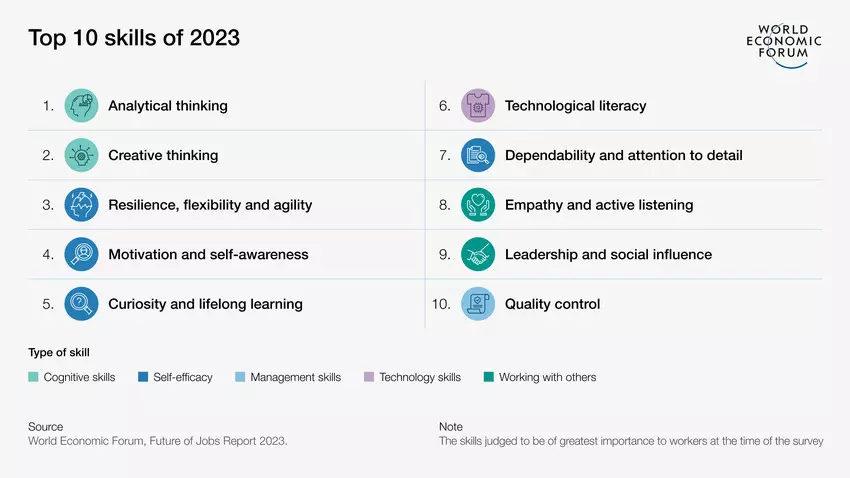
According to the World Economic Forum’s Future of Jobs Report 2023, analytical and critical thinking are the 1st and 2nd most needed job skills (Quality Control is ).

Analytical and critical thinking are two distinct cognitive processes often used interchangeably but have unique characteristics and purposes. Understanding the differences is essential as we hire and develop people.

Analytical Thinking

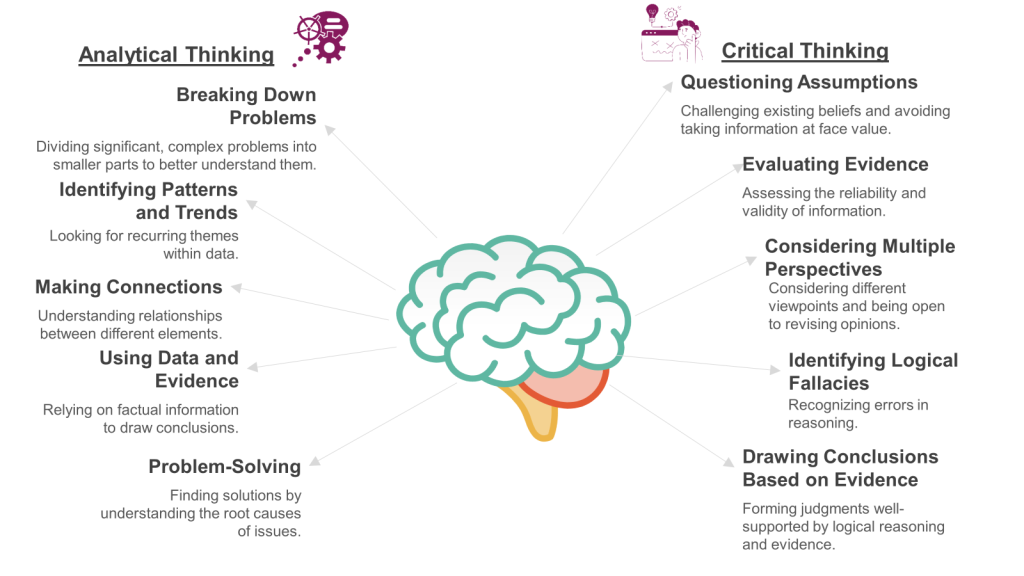
Analytical thinking involves separating complex information into smaller, more manageable parts to understand the underlying structure and relationships. It is a linear, step-by-step process that examines each component individually to identify patterns, trends, and cause-and-effect relationships. The goal is to draw logical conclusions based on the available data.

Key Aspects of Analytical Thinking:

  • Breaking Down Problems: Dividing significant, complex problems into smaller parts to better understand them.
  • Identifying Patterns and Trends: Looking for recurring themes within data.
  • Making Connections: Understanding relationships between different elements.
  • Using Data and Evidence: Relying on factual information to draw conclusions.
  • Problem-Solving: Finding solutions by understanding the root causes of issues.

Steps in Analytical Thinking:

  1. Gathering Relevant Information: Collecting all necessary data.
  2. Breaking Down Data: Dividing information into smaller, manageable parts.
  3. Examining Components: Analyzing each part to understand its role and relationship to the whole.
  4. Identifying Patterns: Looking for trends and cause-and-effect relationships.
  5. Drawing Conclusions: Making logical deductions based on the analysis.

Critical Thinking

On the other hand, critical thinking is a broader cognitive process that involves evaluating information and making judgments based on evidence. It is more holistic and reflective, considering the context, assumptions, and biases behind the information. Critical thinking aims to form well-reasoned judgments and decisions by synthesizing, evaluating, and reflecting on information from various sources.

Key Aspects of Critical Thinking:

  • Questioning Assumptions: Challenging existing beliefs and avoiding taking information at face value.
  • Evaluating Evidence: Assessing the reliability and validity of information.
  • Considering Multiple Perspectives: Considering different viewpoints and being open to revising opinions.
  • Identifying Logical Fallacies: Recognizing errors in reasoning.
  • Drawing Conclusions Based on Evidence: Forming judgments well-supported by logical reasoning and evidence.

Steps in Critical Thinking:

  1. Gathering Relevant Information: Collecting all necessary data.
  2. Evaluating Information: Assessing the credibility and relevance of the information.
  3. Asking Questions: Probing more profoundly into the information to uncover hidden biases or unsupported claims.
  4. Formulating Ideas: Developing theories and ideas based on the evaluation.
  5. Considering Alternatives: Exploring different possibilities before reaching a conclusion.
  6. Testing Conclusions: Verifying if the evidence supports the conclusions.

Differences Between Analytical and Critical Thinking

Approach:

  • Analytical Thinking: Linear and focused, breaking down problems into smaller components.
  • Critical Thinking: Holistic and reflective, evaluating the credibility and relevance of information.

Goal:

  • Analytical Thinking: Understand principles and identify patterns.
  • Critical Thinking: Evaluate credibility, question assumptions, and make informed decisions.

Outcome:

  • Analytical Thinking: Logical conclusions based on data.
  • Critical Thinking: Well-reasoned judgments and decisions based on a comprehensive evaluation of information.

While both analytical and critical thinking are essential for effective problem-solving and decision-making, they serve different purposes and involve distinct processes. Analytical thinking focuses on breaking down information to understand its components, whereas critical thinking involves evaluating and synthesizing information to form well-reasoned judgments. Integrating both types of thinking can lead to more robust and informed decision-making.

Here is a table comparing analytical thinking and critical thinking based on the provided information:

AspectAnalytical ThinkingCritical Thinking
DefinitionBreaking down complex information into smaller parts to understand its structure.Evaluating information and making judgments based on evidence and reasoning.
ApproachLinear, step-by-step process.Holistic, reflective, and considers multiple perspectives.
GoalUnderstand principles, identify patterns, and find connections.Form well-reasoned judgments and decisions.
Process– Gather relevant information
– Break down data
– Examine components
– Identify patterns
– Draw conclusions
– Gather relevant information
– Evaluate information
– Ask questions
– Formulate ideas
– Consider alternatives
– Test conclusions
FocusFacts and evidence within the information.Evaluating credibility, questioning assumptions, and considering outside knowledge.
OutcomeLogical conclusions based on data.Well-reasoned judgments and decisions.
Use in Problem-SolvingUsed to break down and understand complex problems.Used to evaluate and make informed decisions about problems.
Examples of UseAnalyzing reports and scientific data analysis.Evaluating arguments and making decisions.
Traits– Logical
– Detail-oriented
– Systematic
– Open-minded
– Skeptical
– Reflective
key differences and characteristics of analytical and critical thinking

That Vacation Helps Your Creativity, Schedule Now

It is almost summer in the northern hemisphere, and if you are like me, you are scratching your head, thinking, “I probably should have scheduled some vacation time by now.” So, if you haven’t done that yet, now is the time.

There are many reasons to take a vacation, but since I’ve been writing about critical thinking and creativity this week, here are a few specific reasons a vacation can help.

1. Mental Detachment and Relaxation

Vacations provide a break from the daily routine and work-related stress, allowing the mind to relax and recover. This mental detachment is crucial for creativity as it helps in reducing cognitive fatigue and stress, which can otherwise stifle creative thinking. Studies have shown that employees often perceive increased creativity about two weeks after returning from vacation, suggesting that the recovery period allows for restoring cognitive resources.

2. Exposure to Novel Experiences

Traveling introduces individuals to new environments, cultures, and experiences, which can stimulate the brain and foster creative thinking. The sensory overload from new sights, sounds, tastes, and textures can inspire new ideas and perspectives. Engaging with different cultures and stepping out of one’s comfort zone can challenge existing thought patterns and encourage innovative thinking.

3. Mastery Experiences

Vacations that include learning new skills or engaging in challenging activities can enhance creativity. Mastery experiences, such as learning a new language or trying a new sport, can boost self-efficacy and cognitive flexibility, which are important for creative problem-solving.

4. Reduction of Stress

Lower stress levels during vacations can lead to better mental health and cognitive functioning. Reduced stress allows for better focus and mental clarity, which is essential for creative thinking.

5. Increased Openness and Confidence

Traveling can increase openness to new experiences and boost confidence. This openness is linked to higher levels of creativity as it involves curiosity, imagination, and a willingness to explore new ideas. Confidence gained from overcoming travel-related challenges can also translate into a greater willingness to take creative risks in other areas of life.

6. Time for Reflection

Vacations often provide moments of solitude and reflection, which can lead to deeper insights and creative ideas. The downtime allows individuals to process their experiences and thoughts, often leading to new connections and innovative solutions.


Build Wonder in the Organization

A sense of wonder significantly enhances critical thinking by fostering curiosity, creativity, and deeper engagement with the subject matter.

  1. Curiosity and Inquiry: Wonder naturally leads to curiosity, prompting individuals to ask questions and seek answers. This inquisitive mindset is a cornerstone of critical thinking, as it drives the exploration of new ideas and the examination of existing knowledge.
  2. Engagement and Motivation: Experiencing awe and wonder can make learning more engaging and enjoyable. This emotional engagement motivates individuals to delve deeper into subjects, enhancing their understanding and retention of information.
  3. Creativity and Imagination: Wonder stimulates the imagination, allowing individuals to think beyond conventional boundaries and explore new possibilities. This creative thinking is essential for problem-solving and innovation. Critical thinking involves analyzing information and synthesizing new ideas, which is facilitated by a sense of wonder.
  4. Empathy and Perspective-Taking: Wonder can also foster empathy by encouraging individuals to see the world from different perspectives. This empathetic understanding is crucial for critical thinking, allowing for a more comprehensive and nuanced analysis of issues.
  5. Mindfulness and Reflection: Engaging with wonder often involves mindfulness and reflection, which are essential for critical thinking. Taking time to contemplate and reflect on experiences allows individuals to process information more thoroughly and develop well-reasoned conclusions. This reflective practice helps shift perspectives and integrate new knowledge.
Photo by Magda Ehlers: https://www.pexels.com/photo/brown-monkey-photo-767197/

Building a sense of wonder in the workplace involves creating an environment that encourages curiosity, creativity, and engagement.

1. Encourage Curiosity and Open-Mindedness

  • Ask Open-Ended Questions: Encourage open-ended questions that stimulate thinking and discussion to promote a culture where employees feel comfortable asking questions and exploring new ideas.
  • Vocalize Thoughts: Create an environment where employees are encouraged to share their thoughts and ideas openly, without fear of judgment. This helps in fostering a culture of curiosity and innovation.

2. Foster a Positive and Supportive Environment

  • Effective Communication: Ensure that communication within the organization is open and transparent. This builds trust and collaboration among team members, essential for a positive work environment.
  • Recognition and Rewards: Acknowledge and celebrate achievements. This boosts morale and encourages employees to continue exploring and innovating.

3. Create Opportunities for Exploration and Learning

  • Professional Development: Offer opportunities for continuous learning and professional growth. This can include training sessions, workshops, and access to educational resources.
  • Encourage Experimentation: Allow employees to experiment with new ideas and projects. The freedom to explore can lead to innovative solutions and a greater sense of wonder.

4. Incorporate Sensory Experiences

  • Engage the Senses: Create a work environment that stimulates the senses. This can include visual displays and frequent and deliberate time on the front line. Engaging the senses can enhance well-being and foster a sense of wonder.
  • Mindful Practices: Encourage mindfulness practices such as meditation or nature walks. These activities can help employees stay present and appreciate the beauty and complexity of their surroundings.

5. Promote a Culture of Reflection and Feedback

  • Reflective Space: Provide spaces where employees can reflect and think deeply about their work. This can be a quiet room or a designated area for contemplation.
  • Feedback Mechanisms: Implement regular feedback sessions where employees can discuss their experiences and insights. This helps continuous improvement and fosters a culture of learning and wonder.

6. Lead by Example

  • Leadership Engagement: Leaders should model a sense of wonder by being curious, open-minded, and engaged. When leaders demonstrate these qualities, it sets a tone for the entire organization.
  • Beginner’s Mindset: Encourage leaders and employees to adopt a beginner’s mindset, approach problems and opportunities with fresh eyes, and be open to new possibilities.

Critical Thinking

Critical thinking may be one of the most overused terms out there. It can mean just about anything anyone wants it to. We keep seeing it popping up in ICH Q9(r1), guidance on data integrity, and many other places. It has really become shorthand for “think better.” So, let us go to the basics and discuss what critical thinking is.

Critical thinking is a multifaceted cognitive process that involves the active and skillful conceptualization, application, analysis, synthesis, and evaluation of information gathered from observation, experience, reflection, reasoning, or communication. It aims to form a judgment or make a decision based on reliable information and rational analysis.

  1. Questioning and Clarifying: Critical thinking begins with questioning the information presented and clarifying the purpose and context of the thinking process. This involves identifying the problem or question and understanding the assumptions and concepts.
  2. Analyzing and Evaluating: This involves breaking down information into constituent parts to understand its structure and meaning. It also includes evaluating the credibility of sources, the validity of arguments, and the relevance and accuracy of the information.
  3. Synthesizing and Interpreting: Critical thinkers synthesize information from various sources to form a coherent understanding. They interpret data and evidence to draw conclusions and make informed judgments.
  4. Awareness of Biases: It is crucial to be aware of one’s own biases and assumptions. Critical thinkers strive to minimize personal biases’ influence and objectively consider alternative viewpoints.
  5. Intellectual Standards: Critical thinking is guided by intellectual standards such as clarity, accuracy, precision, consistency, relevance, sound evidence, good reasons, depth, breadth, and fairness.
  6. Application and Communication: It involves applying the insights gained through critical thinking to real-world problems and effectively communicating the reasoning behind decisions and judgments.

Critical thinking is a vital skill that involves a disciplined approach to analyzing and evaluating information. It is characterized by a commitment to intellectual rigor and a systematic method of questioning, analyzing, and synthesizing information to make well-informed decisions. Developing critical thinking skills is a lifelong endeavor that enhances one’s ability to reason and make judgments.

Critical thinking is something we educate on, not train. We cannot proceduralize critical thinking; we can only create tools to drive the behaviors.

Fostering Critical Thinking

As a leader, fostering critical thinking in my team and beyond is a core part of my job. Fostering critical thinking means an approach that encourages open-mindedness, curiosity, and structured problem-solving.

Encourage Questioning and Healthy Debate

It is essential to create an environment where team members feel comfortable questioning assumptions and engaging in constructive debates. Encourage them to ask “why” and explore different perspectives. This open dialogue promotes deeper thinking and prevents groupthink.

Foster a Culture of Curiosity

Inspire your team to ask questions and seek deeper understanding. Role model this behavior by starting meetings with thought-provoking “what if” scenarios or sharing your own curiosities. Celebrate curiosity and reward those who think outside the box.

Assign Stretch Assignments

Provide your team with challenging tasks that push them beyond their comfort zones. These stretch assignments force them to think critically, analyze information from multiple angles, and develop innovative solutions.

Promote Diverse Perspectives

Encourage diversity of thought within your team. Diverse backgrounds, experiences, and viewpoints can challenge assumptions and biases, leading to a more comprehensive understanding and better decision-making.

Engage in Collaborative Problem-Solving

Involve your team in decision-making processes and problem-solving exercises. Techniques like role reversal debates, where team members argue a point they disagree with, can help them understand different perspectives and refine their argumentative skills.

Provide Training and Resources

Offer training sessions on critical thinking techniques, such as SWOT analysis, root cause analysis, and logical fallacies. Equip your team with the tools and frameworks they need to think critically.

Lead by Example

As a leader, model critical thinking behaviors. Discuss your thought processes openly, question your assumptions, and show the value of critical evaluation in real-time decision-making. Your team will be more likely to emulate these habits.

Encourage Continuous Learning

Recommend learning resources, such as courses, articles, and books from diverse fields. Continuous learning can broaden perspectives and foster multifaceted thinking.

Embrace Feedback and Mistakes

Establish feedback loops within the team and create a safe environment where mistakes are treated as learning opportunities. Receiving and giving feedback helps refine understanding and overcome biases.

Implement Role-Playing Scenarios

Use role-playing scenarios to simulate real-world challenges. This helps team members practice critical thinking in a controlled environment, enhancing their ability to apply these skills in actual situations.

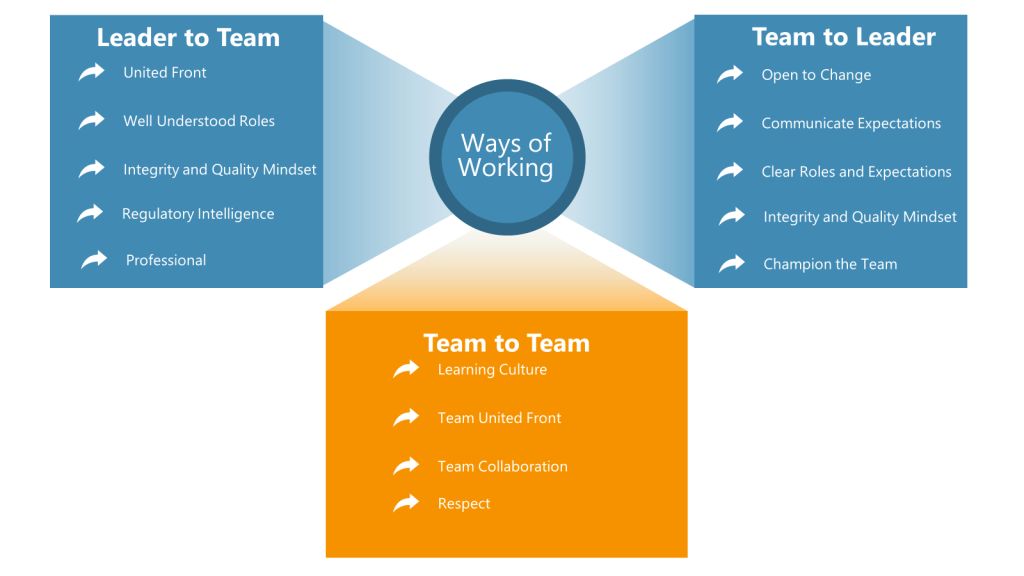
Build Into the Team Charter

Building these expectations into the team charter holds you and your team accountable.

Value: Regulatory Intelligence

Definition: Stay current on industry regulations and guidances. 

Desired Behaviors:

  1. I will dedicate time to reading industry-related guidance and regulation publications related to my job.
  2. I will share publications that I find interesting or applicable to my job with the team
  3. I will present to the team on at least one topic per year to share learnings with the team (or wider organization)

Value: Learning Culture

Definition: Share lessons learned from projects so the team can grow together and remain aligned.  Engage in knowledge-sharing sessions.

Desired Behaviors:

  1. I will share lessons learned from each project with the wider team via the team channel and/or weekly team meeting.
  2. I will encourage team members to openly share their experiences, successes, and challenges without fear of judgement.
  3. I will update RAID log with decisions made by the team.
  4. I will identify possible process improvements and update the process improvement tracker.

Value: Team Collaboration

Definition: Willingness to help teammates when they reach out for input/help

Desired Behaviors:

  1. I will be supportive of my teammate’s requests for assistance
  2. I will engage and offer my SME advice when asked or help identify another SME to assist 
  3. I will not ignore requests for input/help
  4. I will contribute to an environment where teammates can request help