Building a Safe Space for Reflection: Leveraging Psychological Safety Towards a Quality Culture

Creating a safe space for reflection is crucial for fostering innovation, problem-solving, and continuous improvement. This environment is deeply rooted in psychological safety and a quality culture, where employees feel empowered to express themselves freely, share ideas, and challenge existing norms without fear of judgment or reprisal.

Understanding Psychological Safety

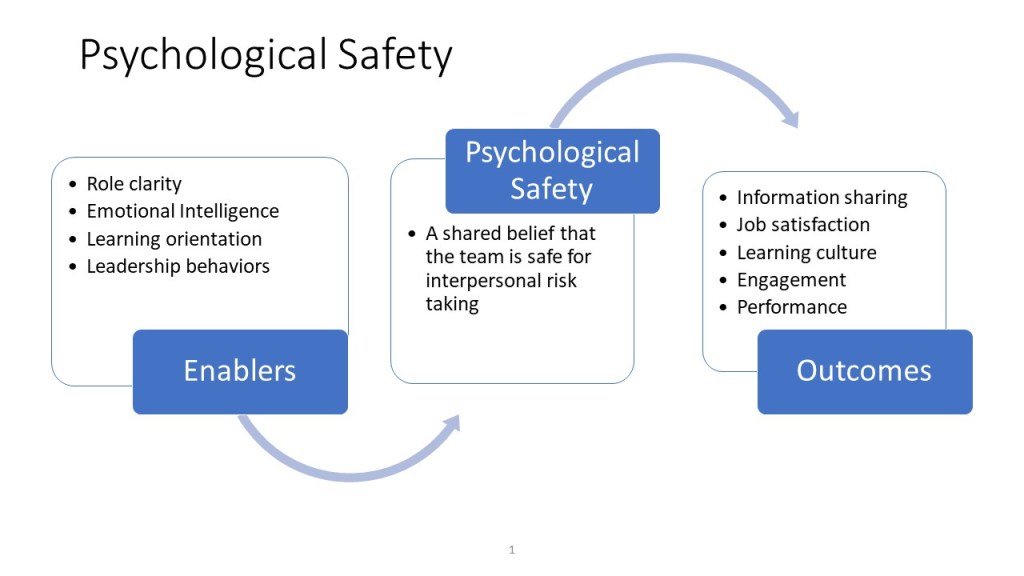
Psychological safety refers to a shared belief among team members that they are safe to take risks, share their thoughts, and learn from their mistakes without fear of negative consequences. This concept is foundational to building a culture where individuals feel valued, included, and motivated to contribute their unique perspectives. It is the bedrock upon which effective collaboration, creativity, and problem-solving are built. In environments where psychological safety is prioritized, employees are more likely to engage in open dialogue, admit mistakes, and explore new ideas, leading to enhanced innovation and productivity.
The Role of Leadership in Fostering Psychological Safety

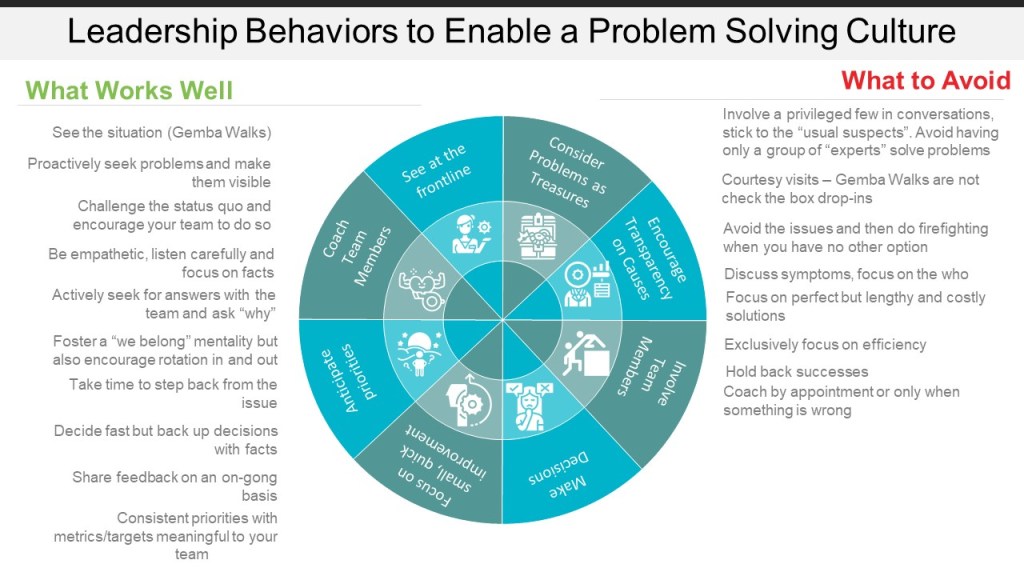
Effective leadership plays a pivotal role in establishing and maintaining a culture of psychological safety. Leaders must set the tone by modeling vulnerability, encouraging open communication, and demonstrating empathy towards their team members. They should establish clear expectations of respect and inclusivity, ensuring that diverse perspectives are welcomed and valued. By doing so, leaders create an environment where employees feel comfortable sharing their thoughts and ideas, which is essential for driving innovation and solving complex problems.

In the past post on Psychological Safety, Reflexivity, and Problem Solving, I explored how psychological safety enables individuals to behave authentically and express themselves candidly, which is crucial for effective problem-solving and reflexivity in organizations. This authenticity allows teams to tackle challenges more effectively by leveraging diverse viewpoints and experiences.
Building a Quality Culture

A quality culture is deeply intertwined with psychological safety. It emphasizes continuous improvement, learning from mistakes, and a commitment to excellence. In such a culture, employees are encouraged to reflect on their processes, identify areas for improvement, and implement changes that enhance overall performance. This reflective practice is facilitated by psychological safety, as it allows individuals to share insights and ideas without fear of criticism, thereby fostering a collaborative and adaptive environment.
Strategies for Creating a Safe Space for Reflection

Creating a safe space for reflection involves several strategic steps:

Establishing Open Communication Channels

Organizations should implement transparent and constructive communication channels that allow employees to express their thoughts, concerns, and ideas without fear of negative consequences. This can be achieved through regular team meetings, anonymous feedback systems, or open forums where employees feel comfortable sharing their perspectives. Active listening and empathy are crucial in these interactions, as they reinforce the sense of safety and encourage further participation.

Implementing Psychological Safety Training

Providing comprehensive training on psychological safety is essential for building awareness and equipping employees with the skills needed to navigate complex interactions and support their colleagues. These programs should emphasize the importance of trust, vulnerability, and inclusivity, and offer practical strategies for fostering a psychologically safe environment. By educating employees on these principles, organizations can ensure that psychological safety becomes an integral part of their culture.

Encouraging Active Participation and Feedback

Encouraging active participation involves creating opportunities for employees to engage in collaborative discussions and provide feedback. This can be facilitated through workshops, brainstorming sessions, or project meetings where diverse perspectives are sought and valued. Feedback loops should be open and constructive, allowing employees to learn from their experiences and grow professionally.

Measuring Psychological Safety

Measuring psychological safety is critical for understanding its impact on organizational culture and identifying areas for improvement. This can be achieved through surveys, behavioral indicators, and engagement scores. Surveys should include questions that assess employees’ perceptions of safety, trust, and openness within their teams. Behavioral indicators, such as the frequency of idea sharing and openness in feedback loops, can also provide valuable insights into the level of psychological safety within an organization.

In our previous discussions on on this blog, I have emphasized the importance of a culture that supports open dialogue and continuous improvement. A few examples include:

  1. Communication Loops and Silos: A Barrier to Effective Decision Making in Complex Industries: This post highlights the challenges of communication loops and silos in industries like aviation and biotechnology. It emphasizes the need for open dialogue to bridge these gaps and improve decision-making processes.
  2. Change Strategies for Accelerating Change: This post discusses strategies such as promoting cross-functional training, fostering informal interactions, and implementing feedback loops. These strategies are crucial for creating a culture that supports open dialogue and continuous improvement.
  3. Reducing Subjectivity in Quality Risk Management: Aligning with ICH Q9(R1): This post focuses on reducing subjectivity through structured approaches and data-driven decision-making. It underscores the importance of a culture that encourages open communication to ensure that decisions are based on comprehensive data rather than personal biases.

These examples illustrate the importance of fostering a culture that supports open dialogue and continuous improvement in complex industries.

Overcoming Challenges

Despite the benefits of psychological safety, several challenges may arise when attempting to implement it within an organization. Fear and resistance to change are common obstacles, particularly in hierarchical structures where speaking up can be perceived as risky. To overcome these challenges, organizations should identify influential champions who can model psychological safety behaviors and inspire others to do the same. Regular assessments and feedback sessions can also help identify areas where psychological safety is lacking, allowing for targeted interventions.

Sustaining Psychological Safety

Sustaining a culture of psychological safety requires ongoing effort and commitment. Organizations must regularly assess the effectiveness of their psychological safety initiatives and refine their strategies based on feedback and performance data. This involves ensuring that leadership behaviors consistently reinforce psychological safety principles and that training programs are scaled to reach all levels of the organization.

Conclusion

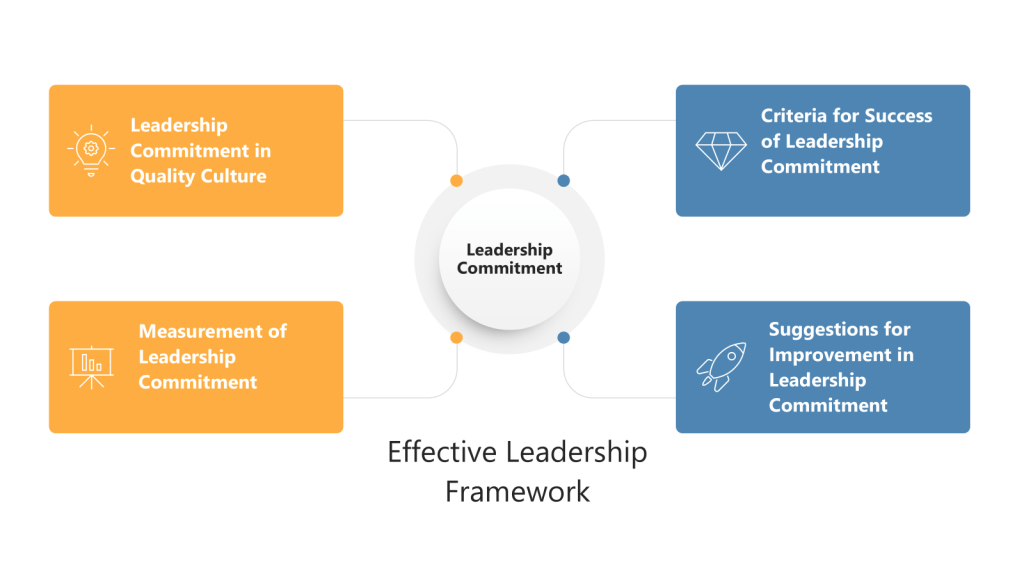
Building a safe space for reflection within an organization is a multifaceted process that relies heavily on psychological safety and a quality culture. By fostering an environment where employees feel valued, included, and empowered to share their ideas, organizations can unlock their full potential and drive innovation. Psychological safety is not a static state but a continuous journey that requires leadership commitment, effective communication, and ongoing evaluation. As we continue to navigate the complexities of modern organizational challenges, prioritizing psychological safety will remain essential for creating a workplace where employees thrive and contribute meaningfully.

By embracing psychological safety and fostering a quality culture, organizations can create a safe space for reflection that drives innovation, enhances collaboration, and promotes continuous improvement. This approach not only benefits the organization but also contributes to the well-being and growth of its employees, ultimately leading to a more resilient and adaptive workforce.
Harnessing the Power of “What, So What, Now What” in Data Storytelling

In today’s data-driven world, effectively communicating insights is crucial for driving informed decision-making. By combining the “What, So What, Now What” reflective model with data storytelling techniques, we can create compelling narratives that not only present findings but also inspire action. Let’s explore how to leverage this approach to organize recommendations from problem-solving or gap assessments.

The “What, So What, Now What” Framework

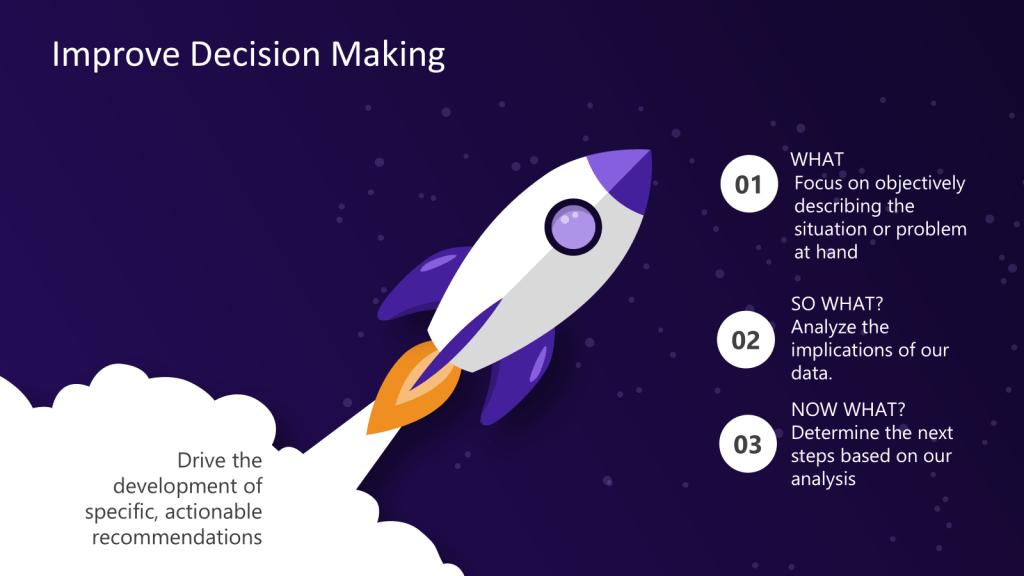
The “What, So What, Now What” model, originally developed by Terry Borton in the 1970s, provides a simple yet powerful structure for reflection and analysis.

What?

This stage focuses on objectively describing the situation or problem at hand. In data storytelling, this is where we present the raw facts and figures without interpretation. Frame the problem and provide the data.

So What?

Here, we analyze the implications of our data. This is the stage where we extract meaning from the numbers and identify patterns or trends. We provide the root cause analysis.

Now What?

Finally, we determine the next steps based on our analysis. This is where we formulate actionable recommendations and outline a path forward.

Integrating Data Storytelling

To effectively utilize this framework in data storytelling, we need to consider three key elements: data, visuals, and narrative. Let’s break down how to incorporate these elements into each stage of our “What, So What, Now What” approach.

What? – Setting the Scene

  1. Present the Data: Start by clearly presenting the relevant data points. Use simple, easy-to-understand visualizations to highlight key metrics.
  2. Provide Context: Explain the background of the situation or problem. What led to this analysis? What were the initial goals or expectations?
  3. Engage the Audience: Use narrative techniques to draw your audience in. For example, you might start with a provocative question or a surprising statistic to capture attention.

So What? – Analyzing the Implications

  1. Identify Patterns and Trends: Use more complex visualizations to illustrate relationships within the data. Consider using interactive elements to allow your audience to explore the data themselves.
  2. Compare to Benchmarks: Put your findings in context by comparing them to regulations, industry standards or historical performance.
  3. Highlight Key Insights: Use narrative techniques to guide your audience through your analysis. Emphasize the most important findings and explain their significance.

Now What? – Formulating Recommendations

  1. Present Clear Action Items: Based on your analysis, outline specific, actionable recommendations. Use visual aids like flowcharts or decision trees to illustrate proposed processes or strategies.
  2. Quantify Potential Impact: Where possible, use data to project the potential outcomes of your recommendations. This could include forecasts, scenario analyses, or cost-benefit calculations.
  3. Tell a Future Story: Use narrative techniques to paint a picture of what success could look like if your recommendations are implemented. This helps make your proposals more tangible and motivating.

Best Practices for Effective Data Storytelling

To maximize the impact of your “What, So What, Now What” data story, keep these best practices in mind:

  1. Know Your Audience: Tailor your language, level of technical detail, and choice of visualizations to your specific audience.
  2. Use a Clear Narrative Arc: Structure your story with a beginning, middle, and end. This helps maintain engagement and ensures your key messages are memorable.
  3. Choose Appropriate Visualizations: Select chart types that best represent your data and support your narrative. Avoid cluttered or overly complex visuals.
  4. Highlight the Human Element: Where possible, include anecdotes or case studies that illustrate the real-world impact of your data and recommendations.
  5. Practice Data Ethics: Be transparent about your data sources and methodologies. Address potential biases or limitations in your analysis.

By combining the structured reflection of the “What, So What, Now What” model with powerful data storytelling techniques, you can create compelling narratives that not only present your findings but also drive meaningful action. This approach helps bridge the gap between data analysis and decision-making, ensuring that your insights translate into real-world impact.

Remember, effective data storytelling is both an art and a science. It requires a deep understanding of your data, a clear grasp of your audience’s needs, and the ability to weave these elements into a coherent and engaging narrative. With practice and refinement, you can master this powerful tool for driving data-informed change in your organization.

Data and a Good Data Culture

I often joke that as a biotech company employee I am primarily responsible for the manufacture of data (and water) first and foremost, and as a result we get a byproduct of a pharmaceutical drugs.

Many of us face challenges within organizations when it comes to effectively managing data. There tends to be a prevailing mindset that views data handling as a distinct activity, often relegated to the responsibility of someone else, rather than recognizing it as an integral part of everyone’s role. This separation can lead to misunderstandings and missed opportunities for utilizing data to its fullest potential.

Many organizations suffer some multifaceted challenges around data management:

  1. Lack of ownership: When data is seen as “someone else’s job,” it often falls through the cracks.
  2. Inconsistent quality: Without a unified approach, data quality can vary widely across departments.
  3. Missed insights: Siloed data management can result in missed opportunities for valuable insights.
  4. Inefficient processes: Disconnected data handling often leads to duplicated efforts and wasted resources.

Integrate Data into Daily Work

  1. Make data part of job descriptions: Clearly define data-related responsibilities for each role, emphasizing how data contributes to overall job performance.
  2. Provide context: Help employees understand how their data-related tasks directly impact business outcomes and decision-making processes.
  3. Encourage data-driven decision making: Train employees to use data in their daily work, from small decisions to larger strategic choices.

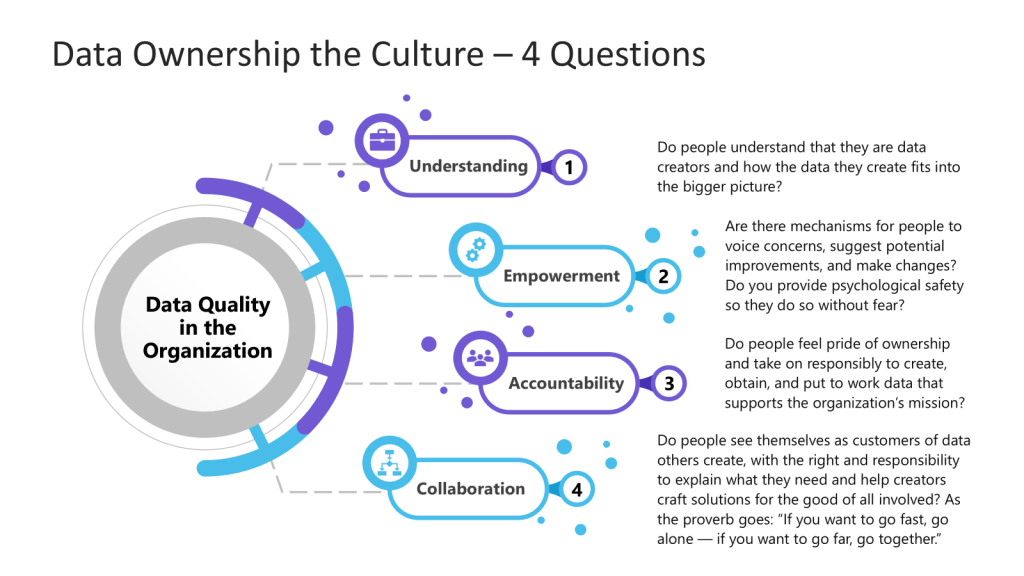
We want to strive to ask four questions.

  1. UnderstandingDo people understand that they are data creators and how the data they create fits into the bigger picture?
  2. Empowerment: Are there mechanisms for people to voice concerns, suggest potential improvements, and make changes? Do you provide psychological safety so they do so without fear?
  3. AccountabilityDo people feel pride of ownership and take on responsibly to create, obtain, and put to work data that supports the organization’s mission?
  4. CollaborationDo people see themselves as customers of data others create, with the right and responsibility to explain what they need and help creators craft solutions for the good of all involved?

Foster a Data-Driven Culture

Fostering a data-driven culture is essential for organizations seeking to leverage the full potential of their data assets. This cultural shift requires a multi-faceted approach that starts at the top and permeates throughout the entire organization.

Leadership by example is crucial in establishing a data-driven culture. Managers and executives must actively incorporate data into their decision-making processes and discussions. By consistently referencing data in meetings, presentations, and communications, leaders demonstrate the value they place on data-driven insights. This behavior sets the tone for the entire organization, encouraging employees at all levels to adopt a similar approach. When leaders ask data-informed questions and base their decisions on factual evidence, it reinforces the importance of data literacy and analytical thinking across the company.

Continuous learning is another vital component of a data-driven culture. Organizations should invest in regular training sessions that enhance data literacy and proficiency with relevant analysis tools. These educational programs should be tailored to each role within the company, ensuring that employees can apply data skills directly to their specific responsibilities. By providing ongoing learning opportunities, companies empower their workforce to make informed decisions and contribute meaningfully to data-driven initiatives. This investment in employee development not only improves individual performance but also strengthens the organization’s overall analytical capabilities.

Creating effective feedback loops is essential for refining and improving data processes over time. Organizations should establish systems that allow employees to provide input on data-related practices and suggest enhancements. This two-way communication fosters a sense of ownership and engagement among staff, encouraging them to actively participate in the data-driven culture. By valuing employee feedback, companies can identify bottlenecks, streamline processes, and uncover innovative ways to utilize data more effectively. These feedback mechanisms also help in closing the loop between data insights and actionable outcomes, ensuring that the organization continually evolves its data practices to meet changing needs and challenges.

Build Data as a Core Principle

  1. Focus on quality: Emphasize the importance of data quality to the mission of the organization
  2. Continuous improvement: Encourage ongoing refinement of data processes,.
  3. Pride in workmanship: Foster a sense of ownership and pride in data-related tasks, .
  4. Break down barriers: Promote cross-departmental collaboration on data initiatives and eliminate silos.
  5. Drive out fear: Create a safe environment for employees to report data issues or inconsistencies without fear of reprisal.

By implementing these strategies, organizations can effectively tie data to employees’ daily work and create a robust data culture that enhances overall performance and decision-making capabilities.

A Structured Approach to Strategic Decisions

Making sound strategic decisions is crucial for organizational success, however, human judgment can be unreliable, leading to errors that can significantly impact that success. To address this challenge, a structured approach to strategic decision-making is essential.

Organizations can be viewed as decision factories, where the primary output is not physical products, but rather judgments and choices that shape the company’s future. This perspective, popularized by thinkers like Daniel Kahneman, emphasizes the critical role of decision-making in organizational success.

In a decision factory, every employee is part of the production line, contributing to the quality and efficiency of decisions made. Just as a traditional factory focuses on optimizing its manufacturing processes, a decision factory must refine its decision-making processes to ensure high-quality outcomes. This involves carefully designing the organizational structure, clarifying decision rights, and establishing effective methodologies.

To improve the quality of decisions, organizations should focus on several key areas. First, they need to align their decision-making processes with their strategic direction, ensuring that decisions at all levels support the company’s overall goals. Second, they should implement robust methodologies and processes that facilitate evidence-based analysis. Finally, cultivating a culture that values data-driven insights, encourages diverse perspectives, and promotes accountability is crucial for maintaining a high-performing decision factory.

The Challenge of Evaluative Judgments

These quality decisions are fundamentally evaluative judgments. They require decision-makers to process large amounts of complex information and either:

  1. Assign numerical scores to competing options
  2. Make a yes-no decision on a specific course of action

These judgments are susceptible to errors stemming from cognitive biases and random variations, often referred to as “noise”. Recognizing this unreliability is the first step towards improving the decision-making process.

There are several really good tools, such as Multi-Criteria Decision-Making, to help drive to good decision making. The Mediating Assessments Protocol , a method from the book “Noise”, designed by Daniel Kahneman and Olivier Sibony, “with noise mitigation as a primary objective” is an excellent, if slightly simpler, tool that deserves to be in your toolbox.

The Mediating Assessments Protocol (MAP)

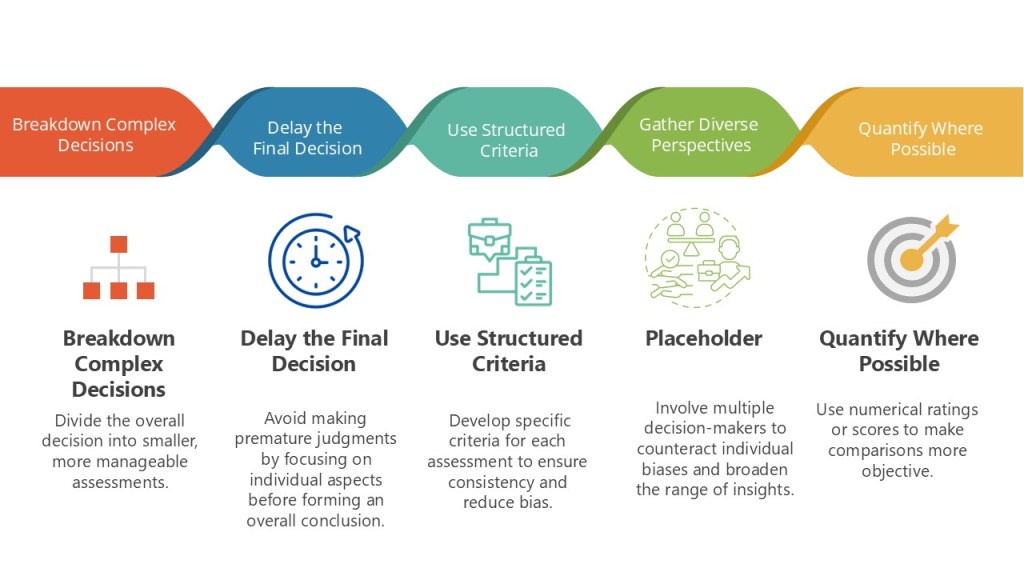
The Mediating Assessments Protocol (MAP) is a structured approach to strategic decision-making aims to reduce errors and improve the quality of judgments. I think this a good tool for the toolbox, as it:

  1. Break down complex decisions: Divide the overall decision into smaller, more manageable assessments.
  2. Delay the final decision: Avoid making premature judgments by focusing on individual aspects before forming an overall conclusion.
  3. Use structured criteria: Develop specific criteria for each assessment to ensure consistency and reduce bias.
  4. Gather diverse perspectives: Involve multiple decision-makers to counteract individual biases and broaden the range of insights.
  5. Quantify where possible: Use numerical ratings or scores to make comparisons more objective.

Implementing a structured approach like MAP can yield several benefits. First and foremost, it significantly reduces bias in the decision-making process. By breaking decisions into smaller components, the influence of initial impressions or irrelevant factors is minimized. This allows decision-makers to focus on each aspect individually, leading to more objective evaluations.

Another key advantage is improved consistency. Structured criteria ensure that all options are evaluated on the same basis, eliminating the variability that often occurs when different decision-makers use their own subjective standards. This consistency not only improves the quality of decisions but also makes it easier to compare and contrast different options.

Enhanced transparency is yet another benefit of a structured approach. The decision-making process becomes clearer and more defensible when each step is well-defined and documented. This transparency can be particularly valuable in organizations where decisions need to be justified to stakeholders or where there’s a need for accountability.

Lastly, a structured approach like MAP can lead to better group dynamics. By providing a framework for evaluation, it helps prevent groupthink and encourages diverse viewpoints. Team members are more likely to voice their opinions when there’s a clear process for considering different aspects of a decision, leading to more robust and well-rounded strategic choices.

To adopt a structured approach to strategic decision-making:

  1. Identify key decisions: Determine which strategic decisions would benefit most from a structured approach.
  2. Develop assessment criteria: Create specific, measurable criteria for each aspect of the decision.
  3. Train decision-makers: Ensure that all involved parties understand the MAP process and its benefits.
  4. Document the process: Keep records of assessments and final decisions for future reference and learning.
  5. Review and refine: Regularly evaluate the effectiveness of your structured approach and make improvements as needed.

By adopting a structured approach like MAP, organizations can significantly improve the quality of their strategic decisions. This method helps mitigate cognitive biases, reduces noise in the decision-making process, and ultimately leads to more reliable and successful outcomes. In an increasingly complex business landscape, such an approach can provide a crucial competitive advantage.


References

  • Kahneman, D., Lovallo, D., & Sibony, O. (2019). A structured approach to strategic decisions. MIT Sloan Management Review, 60(3), 67-73.
  • Sinnaiah, T., Adam, S., & Mahadi, B. (2023). A strategic management process: the role of decision-making style and organisational performance. Journal of Work-Applied Management, 15(1), 37-50.
  • Mintzberg, H., Ahlstrand, B., & Lampel, J. (2020). Strategy safari: A guided tour through the wilds of strategic management. Free Press.
  • Calabretta, G., Gemser, G., & Wijnberg, N. M. (2017). The interplay between intuition and rationality in strategic decision making: A paradox perspective. Organization Studies, 38(3-4), 365-401.
  • Hodgkinson, G. P., & Sadler-Smith, E. (2018). The dynamics of intuition and analysis in managerial and organizational decision making. Academy of Management Perspectives, 32(4), 473-492.
  • Keeney, R. L. (1982). Decision analysis: An overview. Operations Research, 30(5), 803-838.
  • Gregory, R., Failing, L., Harstone, M., Long, G., McDaniels, T., & Ohlson, D. (2012). Structured decision making: A practical guide to environmental management choices. John Wiley & Sons.
  • Eisenhardt, K. M., & Zbaracki, M. J. (1992). Strategic decision making. Strategic Management Journal, 13(S2), 17-37.
  • Hammond, J. S., Keeney, R. L., & Raiffa, H. (1998). The hidden traps in decision making. Harvard Business Review, 76(5), 47-58.
  • Papadakis, V. M., Lioukas, S., & Chambers, D. (1998). Strategic decision-making processes: The role of management and context. Strategic Management Journal, 19(2), 115-147.