Single-use systems (SUS) have become increasingly prevalent in biopharmaceutical manufacturing due to their flexibility, reduced contamination risk, and cost-effectiveness. The thing is, management of the life-cycle of single-use systems becomes critical and is an area organizations can truly screw up by cutting corners. To do it right requires careful collaboration between all stakeholders in the supply chain, from raw material suppliers to end users.
Design and Development
Apply Quality by Design (QbD) principles from the outset by focusing on process understanding and the design space to create controlled and consistent manufacturing processes that result in high-quality, efficacious products. This approach should be applied to SUS design.
ASTM E3051 “Standard guide for specification, design, verification, and application of SUS in pharmaceutical and biopharmaceutical manufacturing” provides an excellent framework for the design process.
Make sure to conduct thorough risk assessments, considering potential failure modes and effects throughout the SUS life-cycle.
Engage end-users early to understand their specific requirements and process constraints. A real mistake in organizations is not involving the end-users early enough. From the molecule steward to manufacturing these users are critical.
Raw Material and Component Selection
Carefully evaluate and qualify raw materials and components. Work closely with suppliers to understand material properties, extractables/leachables profiles, and manufacturing processes.
Develop comprehensive specifications for critical materials and components. ASTM E3244 is handy place to look for guidance on raw material qualification for SUS.
Manage the Supplier through Manufacturing and Assembly
Implementing robust supplier qualification and auditing programs and establish change control agreements with suppliers to be notified of any changes that could impact SUS performance or quality. It is important the supplier have a robust quality management system and that they apply Good Manufacturing Practices (GMP) through their facilities. Ensure they have in place appropriate controls to
Validate sterilization processes
Conduct routine bioburden and endotoxin testing
Design packaging to protect SUS during transportation and storage. Shipping methods need to protect against physical damage and temperature excursions
Establish appropriate storage conditions and shelf-life based on stability studies
Provide appropriate labeling and traceability
Have appropriate inventory controls. Ideally select suppliers who understand the importance of working with you for collaborative planning, forecasting and replenishment (CPFR)
Testing and Qualification
Develop a comprehensive testing strategy, including integrity testing and conduct extractables and leachables studies following industry guidelines. Evaluate the suppliers shipping and transportation studies to evaluate SUS robustness and determine if you need additional studies.
Implementation and Use
End users should have appropriate and comprehensive documentation and training to end users on proper handling, installation, and use of SUS. These procedures should include how to perform pre-use integrity testing at the point of use as well as how to perform thorough in-process and final inspections.
Consider implementing automated visual inspection systems and other appropriate monitoring.
Implement appropriate environmental monitoring programs in SUS manufacturing areas. While the dream of manufacturing outdoors is a good one, chances are we aren’t even close yet. Don’t short this layer of control.
Continuous Improvement
Ensure you have appropriate mechanisms in place to gather data on SUS performance and any issues encountered during use. Share relevant information across the supply chain to drive improvements.
Conduct periodic audits of suppliers and manufacturing facilities.
Stay updated on evolving regulatory guidance and industry best practices. There is still a lot changing in this space.
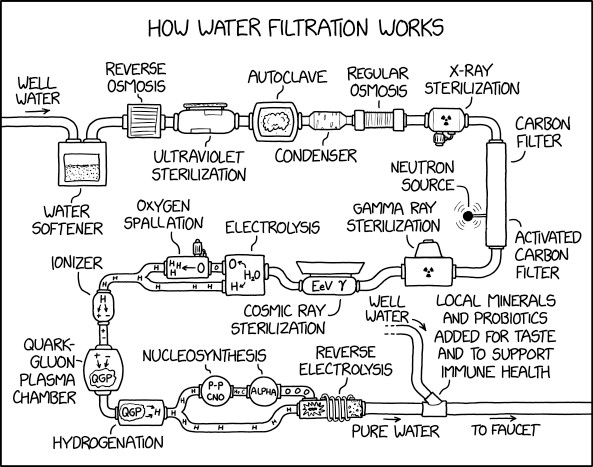
Everyone probably feels like the above illustration sooner or later about their water system.
The Critical Role of Water in Pharmaceutical Manufacturing
In the pharmaceutical industry, we often joke that we’re primarily water companies that happen to make drugs on the side. This quip underscores a fundamental truth: water is a crucial component in drug manufacturing processes. Its purity and quality are paramount to ensuring the safety and efficacy of pharmaceutical products.
Why Water Quality Matters
Water is ubiquitous in pharmaceutical manufacturing, used in everything from cleaning equipment to serving as a key ingredient in many formulations. Given its importance, regulatory bodies like the FDA and EMA have established stringent Good Manufacturing Practice (GMP) guidelines for water systems in pharmaceutical facilities.
GMP Requirements for Water Systems
The GMPs mandate that water systems be meticulously designed, constructed, installed, commissioned, qualified, monitored, and maintained. The primary goal? Preventing microbiological contamination. This comprehensive approach encompasses several key areas:
System Design: Water systems must be engineered to minimize the risk of contamination.
Construction and Installation: Materials and methods used must meet high standards to ensure system integrity.
Commissioning and Qualification: Rigorous testing is required to verify that the system performs as intended.
Monitoring: Ongoing surveillance is necessary to detect any deviations from established parameters.
Maintenance: Regular upkeep is crucial to maintain system performance and prevent degradation.
Key Regulatory Requirements
Agency
Title
Year
URL
EMA
Guideline on the quality of water for pharmaceutical use
To meet these GMP requirements, pharmaceutical manufacturers must implement several specific measures:
Minimizing Particulates
Particulate matter in water can compromise product quality and potentially harm patients. Filtration systems and regular cleaning protocols are essential to keep particulate levels in check.
Controlling Microbial Contamination
Microorganisms can proliferate rapidly in water systems if left unchecked. Strategies to prevent this include:
Regular sanitization procedures
Maintaining appropriate water temperatures
Implementing effective water treatment technologies (e.g., UV light, ozonation)
Preventing Endotoxin Formation
Endotoxins, produced by certain bacteria, can be particularly problematic in pharmaceutical water systems. Measures to prevent endotoxin formation include:
Minimizing areas where water can stagnate
Ensuring complete drainage of pipes
Regular system flushing
The Ongoing Challenge
Maintaining water quality in pharmaceutical manufacturing is not a one-time effort but an ongoing process. It requires constant vigilance, regular testing, and a commitment to continuous improvement. As regulations evolve and our understanding of potential contaminants grows, so too must our approaches to water system management.
Types of Water
These water types are defined and regulated by pharmacopeias such as the United States Pharmacopeia (USP), European Pharmacopoeia (Ph. Eur.), and other regional standards. Pharmaceutical manufacturers must adhere to the specific requirements outlined in these references to ensure water quality and safety in drug production.
Potable Water
Potable water, also known as drinking water, may be used for some pharmaceuticals bt is more commonly used in cosmetics. It can also be used for cleanings walls and floors in non-asceptic areas.
Key points:
Must comply with EPA standards or comparable regulations in the EU/Japan
Can be used to manufacture drug substances (bulk drugs)
Not suitable for preparing USP dosage forms or laboratory reagents
Purified Water (PW)
Purified water is widely used in pharmaceutical manufacturing for non-sterile preparations.
Specifications (USP <1231>):
Conductivity: ≤1.3 μS/cm at 25°C
Total organic carbon (TOC): ≤500 ppb
Microbial limits: ≤100 CFU/mL
Applications:
Non-parenteral preparations
Cleaning equipment for non-parenteral products
Preparation of some bulk chemicals
Water for Injection (WFI)
Water for Injection is used for parenteral drug products and has stricter quality standards.
Specifications (USP <1231>):
Conductivity: ≤1.3 μS/cm at 25°C
TOC: ≤500 ppb
Bacterial endotoxins: <0.25 EU/mL
Microbial limits: ≤10 CFU/100 mL
Production methods:
Distillation
Reverse osmosis (allowed by Ph. Eur. since 2017)
Sterile Water for Injection (SWFI)
SWFI is WFI that has been sterilized for direct administration.
Characteristics:
Sterile
Non-pyrogenic
Packaged in single-dose containers
Highly Purified Water (HPW)
Previously included in the European Pharmacopoeia, but now discontinued.
Type of Water
Description
USP Reference
EP Reference
Potable Water
Meets drinking water standards, used for early stages of manufacturing
Not applicable
Not applicable
Purified Water (PW)
Used for non-sterile preparations, cleaning equipment
USP <1231>
Ph. Eur. 0008
Water for Injection (WFI)
Used for parenteral products, higher purity than PW
USP <1231>
Ph. Eur. 0169
Sterile Water for Injection (SWFI)
WFI that has been sterilized for direct administration
USP <1231>
Ph. Eur. 0169
Bacteriostatic Water for Injection
Contains bacteriostatic agents, for multiple-dose use
USP <1231>
Ph. Eur. 0169
Sterile Water for Irrigation
Packaged in single-dose containers larger than 1L
USP <1231>
Ph. Eur. 1116
Sterile Water for Inhalation
For use in inhalators, less stringent endotoxin levels
USP <1231>
Ph. Eur. 1116
Water for Hemodialysis
Specially treated for use in hemodialysis, produced on-site
USP <1231>
Not specified
Additional relevant USP chapters:
USP <645>: Water for Pharmaceutical Purposes – Microbial Attributes
USP <85>: Bacterial Endotoxins Test
Always refer to the most current versions of the pharmacopoeial monographs and regulatory guidelines for detailed information.
Good Water System Design
Hygienic and Sanitary Design
The cornerstone of any good water system is its hygienic and sanitary design. This principle encompasses several aspects:
Smooth, cleanable surfaces: All surfaces in contact with water should be smooth, non-porous, and easily cleanable to prevent biofilm formation.
Self-draining components: Pipes and tanks should be designed to drain completely, eliminating standing water that could harbor microorganisms.
Accessibility: All parts of the system should be easily accessible for inspection, cleaning, and maintenance.
Material Selection
Choosing the right materials is crucial for maintaining water quality and system integrity:
Corrosion resistance: Use materials that resist corrosion, such as stainless steel (316L grade for high-purity applications) or appropriate food-grade plastics.
Smooth internal finish: Crevices are places where corrosion happens, electropolishing improves the resistance of stainless steel to corrosion.
Leachate prevention: Select materials that do not leach harmful substances into the water, even under prolonged contact or elevated temperatures.
Non-adsorptive surfaces: Avoid materials that may adsorb contaminants, which could later be released back into the water.
Microbial Control
Preventing microbial growth is essential for water system safety:
Elimination of dead legs: Design piping to avoid areas where water can stagnate and microorganisms can proliferate.
Temperature control: Maintain temperatures outside the optimal range for microbial growth (typically below 20°C or above 50°C).
Regular sanitization: Incorporate features that allow for effective and frequent sanitization of the entire system.
System Integrity
Ensuring the system remains sealed and leak-free is critical:
Proper sealing: Use appropriate gaskets and seals compatible with the system’s operating conditions.
Pressure testing: Implement regular pressure tests to identify and address potential leaks promptly.
Quality connections: Utilize sanitary fittings and connections designed for hygienic applications.
Cleaning and Sanitization Compatibility
The system must withstand regular cleaning and sanitization:
Chemical resistance: Choose materials and components that can tolerate cleaning and sanitizing agents without degradation.
Thermal stability: Ensure all parts can withstand thermal sanitization processes if applicable.
CIP/SIP design: Incorporate Clean-in-Place (CIP) or Steam-in-Place (SIP) features for efficient and thorough cleaning.
Capacity and Performance
Meeting output requirements while maintaining quality is crucial:
Proper sizing: Design the system to meet peak demand without compromising water quality or flow rates.
Redundancy: Consider incorporating redundant components for critical parts to ensure continuous operation.
Efficiency: Optimize the system layout to minimize pressure drops and energy consumption.
Monitoring and Control
Implement robust monitoring systems to ensure water quality:
Sampling points: Strategically place sampling ports throughout the system for regular quality checks.
Instrumentation: Install appropriate instruments to monitor critical parameters such as flow rate, pressure, temperature, and conductivity.
Control systems: Implement automated control systems to maintain consistent water quality and system performance.
Regulatory Compliance
Ensure the system design meets all relevant regulatory requirements:
Material compliance: Use only materials approved for contact with water in your specific application.
Documentation: Maintain detailed documentation of system design, materials, and operating procedures.
Validation: Conduct thorough system qualification to demonstrate consistent performance and quality.
By adhering to these principles, you can design a water system that not only meets your capacity requirements but also ensures the highest standards of safety and quality. Remember, good water system design is an ongoing process that requires regular review and updates to maintain its effectiveness over time.
Facility design and control considerations for mitigating viral contamination risk is a holistic approach to facility design and controls, considering all potential routes of viral introduction and spread. A living risk management approach should be taken to identify vulnerabilities and implement appropriate mitigation measures.
Facility Considerations
Segregation of areas: Separate areas for cell banking, small-scale and large-scale upstream cell culture/fermentation, downstream processing, media/buffer preparation, materials management, corridors, and ancillary rooms (e.g. cold rooms, freezer rooms, storage areas).
Traffic flow: Control and minimize traffic flow of materials, personnel, equipment, and air within and between areas and corridors. Implement room segregation strategies.
Air handling systems: Design HVAC systems to maintain appropriate air quality and prevent cross-contamination between areas. Use HEPA filtration where needed.
Room Classifications
For open operations:
Open sterile and aseptic operations must be performed in an environment where the probability of contamination is acceptably low, i.e. an environment meeting the bioburden requirements for a Grade A space.
Open bioburden-controlled processing may be performed in an ISO Grade 8/EU Grade C or EU Grade D environment as appropriate for the unit operation.
Open aseptic operations require a Grade A environment. Maintaining a Grade A cleanroom for large bioreactors is not feasible.
For closed operations:
Closed systems do not require cleanroom environments. ICH Q7 states that closed or contained systems can be located outdoors if they provide adequate protection of the material.
When all equipment used to manufacture a product is closed, the surrounding environment becomes less critical. The cleanroom requirements should be based on a business risk assessment and could be categorized as unclassified.
Housing a closed aseptic process in a Grade C or Grade B cleanroom would not mitigate contamination risk compared to an unclassified environment.
For low bioburden closed operations, the manufacturing environment can be unclassified.
Equipment Considerations
Closed vs. open processing: Utilize closed processing operations where possible to prevent introduction/re-introduction of viruses. Implement additional controls for open processing steps.
Closure Level
Description
Closed Equipment
Single use, never been used, such as irradiated and autoclaved assembles; connections are made using sterile connectors or tube wielders/sealers
Functionally closed equipment: cleaned and sterilized
Open vessels or connections that undergo cleaning and sterilization prior to use and are then aseptically connected. The connection is then sterilized after being closed and remains closed during use.
Functionally closed equipment: cleaned and sanitized
Open vessels or connections that are CIPed including bioburden reducing flushes, but not sterilized before use and remain closed during use
Open
Connections open to the environment without subsequent cleaning, sanitization or sterilization prior to use
Operational Practices
Personnel controls: Implement rigorous training programs, safety policies and procedures for personnel working in critical areas.
Cleaning and sanitization: Establish frequent and thorough cleaning protocols for facilities, equipment, and processing areas using appropriate cleaning agents effective against viruses.
Material and equipment flow: Define procedures for disinfection and transfer of materials and equipment between areas to prevent contamination spread.
Storage practices: Implement proper storage procedures for product contact materials, intermediates, buffers, etc. Control access to cold rooms and freezers.
Additional Controls
Pest control: Implement comprehensive pest control strategies both inside and outside facilities, including regular treatments and monitoring.
Water systems: Design and maintain water systems to prevent microbial growth and contamination.
Process gases: Use appropriate filtration for process air and gases.
Maturity models offer significant benefits to organizations by providing a structured framework for benchmarking and assessment. Organizations can clearly understand their strengths and weaknesses by evaluating their current performance and maturity level in specific areas or processes. This assessment helps identify areas for improvement and sets a baseline for measuring progress over time. Benchmarking against industry standards or best practices also allows organizations to see how they compare to their peers, fostering a competitive edge.
One of the primary advantages of maturity models is their role in fostering a culture of continuous improvement. They provide a roadmap for growth and development, encouraging organizations to strive for higher maturity levels. This continuous improvement mindset helps organizations stay agile and adaptable in a rapidly changing business environment. By setting clear goals and milestones, maturity models guide organizations in systematically addressing deficiencies and enhancing their capabilities.
Standardization and consistency are also key benefits of maturity models. They help establish standardized practices across teams and departments, ensuring that processes are executed with the same level of quality and precision. This standardization reduces variability and errors, leading to more reliable and predictable outcomes. Maturity models create a common language and framework for communication, fostering collaboration and alignment toward shared organizational goals.
The use of maturity models significantly enhances efficiency and effectiveness. Organizations can increase productivity and use their resources by identifying areas for streamlining operations and optimizing workflows. This leads to reduced errors, minimized rework, and improved process efficiency. The focus on continuous improvement also means that organizations are constantly seeking ways to refine and enhance their operations, leading to sustained gains in efficiency.
Maturity models play a crucial role in risk reduction and compliance. They assist organizations in identifying potential risks and implementing measures to mitigate them, ensuring compliance with relevant regulations and standards. This proactive approach to risk management helps organizations avoid costly penalties and reputational damage. Moreover, maturity models improve strategic planning and decision-making by providing a data-backed foundation for setting priorities and making informed choices.
Finally, maturity models improve communication and transparency within organizations. Providing a common communication framework increases transparency and builds trust among employees. This improved communication fosters a sense of shared purpose and collaboration, essential for achieving organizational goals. Overall, maturity models serve as valuable tools for driving continuous improvement, enhancing efficiency, and fostering a culture of excellence within organizations.
Business Process Maturity Model (BPMM)
A structured framework used to assess and improve the maturity of an organization’s business processes, it provides a systematic methodology to evaluate the effectiveness, efficiency, and adaptability of processes within an organization, guiding continuous improvement efforts.
Key Characteristics of BPMM
Assessment and Classification: BPMM helps organizations understand their current process maturity level and identify areas for improvement. It classifies processes into different maturity levels, each representing a progressive improvement in process management.
Guiding Principles: The model emphasizes a process-centric approach focusing on continuous improvement. Key principles include aligning improvements with business goals, standardization, measurement, stakeholder involvement, documentation, training, technology enablement, and governance.
Incremental Levels
BPMM typically consists of five levels, each building on the previous one:
Initial: Processes are ad hoc and chaotic, with little control or consistency.
Managed: Basic processes are established and documented, but results may vary.
Standardized: Processes are well-documented, standardized, and consistently executed across the organization.
Predictable: Processes are quantitatively measured and controlled, with data-driven decision-making.
Optimizing: Continuous process improvement is ingrained in the organization’s culture, focusing on innovation and optimization.
Benefits of BPMM
Improved Process Efficiency: By standardizing and optimizing processes, organizations can achieve higher efficiency and consistency, leading to better resource utilization and reduced errors.
Enhanced Customer Satisfaction: Mature processes lead to higher product and service quality, which improves customer satisfaction.
Better Change Management: Higher process maturity increases an organization’s ability to navigate change and realize project benefits.
Readiness for Technology Deployment: BPMM helps ensure organizational readiness for new technology implementations, reducing the risk of failure.
Usage and Implementation
Assessment: Organizations can conduct BPMM assessments internally or with the help of external appraisers. These assessments involve reviewing process documentation, interviewing employees, and analyzing process outputs to determine maturity levels.
Roadmap for Improvement: Organizations can develop a roadmap for progressing to higher maturity levels based on the assessment results. This roadmap includes specific actions to address identified deficiencies and improve process capabilities.
Continuous monitoring and regular evaluations are crucial to ensure that processes remain effective and improvements are sustained over time.
A BPMM Example: Validation Program based on ASTM E2500
To apply the Business Process Maturity Model (BPMM) to a validation program aligned with ASTM E2500, we need to evaluate the program’s maturity across the five levels of BPMM while incorporating the key principles of ASTM E2500. Here’s how this application might look:
Level 1: Initial
At this level, the validation program is ad hoc and lacks standardization:
Validation activities are performed inconsistently across different projects or departments.
There’s limited understanding of ASTM E2500 principles.
Risk assessment and scientific rationale for validation activities are not systematically applied.
Documentation is inconsistent and often incomplete.
Level 2: Managed
The validation program shows some structure but lacks organization-wide consistency:
Basic validation processes are established but may not fully align with ASTM E2500 guidelines.
Some risk assessment tools are used, but not consistently across all projects.
Subject Matter Experts (SMEs) are involved, but their roles are unclear.
There’s increased awareness of the need for scientific justification in validation activities.
Level 3: Standardized
The validation program is well-defined and consistently implemented:
Validation processes are standardized across the organization and align with ASTM E2500 principles.
Risk-based approaches are consistently used to determine the scope and extent of validation activities.
SMEs are systematically involved in the design review and verification processes.
The concept of “verification” replaces traditional IQ/OQ/PQ, focusing on critical aspects that impact product quality and patient safety.
Quality risk management tools (e.g., impact assessments, risk management) are routinely used to identify critical quality attributes and process parameters.
Level 4: Predictable
The validation program is quantitatively managed and controlled:
Key Performance Indicators (KPIs) for validation activities are established and regularly monitored.
Data-driven decision-making is used to continually improve the efficiency and effectiveness of validation processes.
Advanced risk management techniques are employed to predict and mitigate potential issues before they occur.
There’s a strong focus on leveraging supplier documentation and expertise to streamline validation efforts.
Engineering procedures for quality activities (e.g., vendor technical assessments and installation verification) are formalized and consistently applied.
Level 5: Optimizing
The validation program is characterized by continuous improvement and innovation:
There’s a culture of continuous improvement in validation processes, aligned with the latest industry best practices and regulatory expectations.
Innovation in validation approaches is encouraged, always maintaining alignment with ASTM E2500 principles.
The organization actively contributes to developing industry standards and best practices in validation.
Validation activities are seamless integrated with other quality management systems, supporting a holistic approach to product quality and patient safety.
Advanced technologies (e.g., artificial intelligence, machine learning) may be leveraged to enhance risk assessment and validation strategies.
Key Considerations for Implementation
Risk-Based Approach: At higher maturity levels, the validation program should fully embrace the risk-based approach advocated by ASTM E2500, focusing efforts on aspects critical to product quality and patient safety.
Scientific Rationale: As maturity increases, there should be a stronger emphasis on scientific understanding and justification for validation activities, moving away from a checklist-based approach.
SME Involvement: Higher maturity levels should see increased and earlier involvement of SMEs in the validation process, from equipment selection to verification.
Supplier Integration: More mature programs will leverage supplier expertise and documentation effectively, reducing redundant testing and improving efficiency.
Continuous Improvement: At the highest maturity level, the validation program should have mechanisms in place for continuous evaluation and improvement of processes, always aligned with ASTM E2500 principles and the latest regulatory expectations.
Process and Enterprise Maturity Model (PEMM),
The Process and Enterprise Maturity Model (PEMM), developed by Dr. Michael Hammer, is a comprehensive framework designed to help organizations assess and improve their process maturity. It is a corporate roadmap and benchmarking tool for companies aiming to become process-centric enterprises.
Key Components of PEMM
PEMM is structured around two main dimensions: Process Enablers and Organizational Capabilities. Each dimension is evaluated on a scale to determine the maturity level.
Process Enablers
These elements directly impact the performance and effectiveness of individual processes. They include:
Design: The structure and documentation of the process.
Performers: The individuals or teams executing the process.
Owner: The person responsible for the process.
Infrastructure: The tools, systems, and resources supporting the process.
Metrics: The measurements used to evaluate process performance.
Organizational Capabilities
These capabilities create an environment that supports and sustains high-performance processes. They include:
Leadership: The commitment and support from top management.
Culture: The organizational values and behaviors that promote process excellence.
Expertise: The skills and knowledge required to manage and improve processes.
Governance: The mechanisms to oversee and guide process management activities.
Maturity Levels
Both Process Enablers and Organizational Capabilities are assessed on a scale from P0 to P4 (for processes) and E0 to E4 (for enterprise capabilities):
P0/E0: Non-existent or ad hoc processes and capabilities.
P1/E1: Basic, but inconsistent and poorly documented.
P2/E2: Defined and documented, but not fully integrated.
P3/E3: Managed and measured, with consistent performance.
P4/E4: Optimized and continuously improved.
Benefits of PEMM
Self-Assessment: PEMM is designed to be simple enough for organizations to conduct their own assessments without needing external consultants.
Empirical Evidence: It encourages the collection of data to support process improvements rather than relying on intuition.
Engagement: Involves all levels of the organization in the process journey, turning employees into advocates for change.
Roadmap for Improvement: Provides a clear path for organizations to follow in their process improvement efforts.
Application of PEMM
PEMM can be applied to any type of process within an organization, whether customer-facing or internal, core or support, transactional or knowledge-intensive. It helps organizations:
Assess Current Maturity: Identify the current state of process and enterprise capabilities.
Benchmark: Compare against industry standards and best practices.
Identify Improvements: Pinpoint areas that need enhancement.
Track Progress: Monitor the implementation and effectiveness of process improvements.
A PEMM Example: Validation Program based on ASTM E2500
To apply the Process and Enterprise Maturity Model (PEMM) to an ASTM E2500 validation program, we can evaluate the program’s maturity across the five process enablers and four enterprise capabilities defined in PEMM. Here’s how this application might look:
Process Enablers
Design:
P-1: Basic ASTM E2500 approach implemented, but not consistently across all projects
P-2: ASTM E2500 principles applied consistently, with clear definition of requirements, specifications, and verification activities
P-3: Risk-based approach fully integrated into design process, with SME involvement from the start
P-4: Continuous improvement of ASTM E2500 implementation based on lessons learned and industry best practices
Performers:
P-1: Some staff trained on ASTM E2500 principles
P-2: All relevant staff trained and understand their roles in the ASTM E2500 process
P-3: Staff proactively apply risk-based thinking and scientific rationale in validation activities
P-4: Staff contribute to improving the ASTM E2500 process and mentor others
E-3: Leadership drives cultural change to fully embrace risk-based validation approach
E-4: Leadership promotes ASTM E2500 principles beyond the organization, influencing industry standards
Culture:
E-1: Some recognition of the importance of risk-based validation
E-2: Culture of quality and risk-awareness developing across the organization
E-3: Strong culture of scientific thinking and continuous improvement in validation activities
E-4: Innovation in validation approaches encouraged and rewarded
Expertise:
E-1: Basic understanding of ASTM E2500 principles among key staff
E-2: Dedicated team of ASTM E2500 experts established
E-3: Deep expertise in risk-based validation approaches across multiple departments
E-4: Organization recognized as thought leader in ASTM E2500 implementation
Governance:
E-1: Basic governance structure for validation activities in place
E-2: Clear governance model aligning ASTM E2500 with overall quality management system
E-3: Cross-functional governance ensuring consistent application of ASTM E2500 principles
E-4: Governance model that adapts to changing regulatory landscape and emerging best practices
To use this PEMM assessment:
Evaluate your validation program against each enabler and capability, determining the current maturity level (P-1 to P-4 for process enablers, E-1 to E-4 for enterprise capabilities).
Identify areas for improvement based on gaps between current and desired maturity levels.
Develop action plans to address these gaps, focusing on moving to the next maturity level for each enabler and capability.
Regularly reassess the program to track progress and adjust improvement efforts as needed.
Comparison Table
Aspect
BPMM
PEMM
Creator
Object Management Group (OMG)
Dr. Michael Hammer
Purpose
Assess and improve business process maturity
Roadmap and benchmarking for process-centricity
Structure
Five levels: Initial, Managed, Standardized, Predictable, Optimizing
Two components: Process Enablers (P0-P4), Organizational Capabilities (E0-E4)
Enterprise systems, business process improvement, benchmarking
Process reengineering, organizational engagement, benchmarking
In summary, while both BPMM and PEMM aim to improve business processes, BPMM is more structured and detailed, often requiring external appraisers, and focuses on incremental process improvement across organizational boundaries. In contrast, PEMM is designed for simplicity and self-assessment, emphasizing the role of process enablers and organizational capabilities to foster a supportive environment for process improvement. Both have advantages, and keeping both in mind while developing processes is key.
ASTM E2500, the Standard Guide for Specification, Design, and Verification of Pharmaceutical and Biopharmaceutical Manufacturing Systems and Equipment, is intended to “satisfy international regulatory expectations in ensuring that manufacturing systems and equipment are fit for the intended use and to satisfy requirements for design, installation, operation, and performance.”
The ASTM E2500 approach is a comprehensive framework for specification setting, design, and verification of pharmaceutical and biopharmaceutical manufacturing systems and equipment. It emphasizes a risk- and science-based methodology to ensure that systems are fit for their intended use, ultimately aiming to enhance product quality and patient safety.
Despite its 17-year history, it is fair to say it is not the best-implemented standard. There are still many unrealized opportunities and some major challenges. I don’t think a single organization I’ve been in has fully aligned, and ASTM E2500 can feel aspirational.
Key Principles
Risk Management: The approach integrates risk management principles from ICH Q8, Q9, and Q10, focusing on identifying and mitigating risks to product quality and patient safety throughout the lifecycle of the manufacturing system.
Good Engineering Practices (GEP): It incorporates GEP to ensure systems are correctly designed, installed, and operated.
Flexibility and Efficiency: It strives for a more flexible and efficient organization of verification activities that can be adapted to each project’s specific context.
Regulatory agencies expect drugmakers to persuade them that we know our processes and that our facilities, equipment, systems, utilities, and procedures have been established based on concrete data and a thorough risk assessment. The ASTM E2500 standard provides a means of demonstrating that all of these factors have been validated in consideration of carefully evaluated risks.
What the Standard Calls for
Four Main Steps
Requirements: Define the system’s needs and critical aspects. Subject Matter Experts (SMEs) play a crucial role in this phase by defining needs, identifying critical aspects, and developing the verification strategy.
Specification & Design: Develop detailed specifications and design the system to meet the requirements. This step involves thorough design reviews and risk assessments to ensure the system functions as intended.
Verification: Conduct verification activities to confirm that the system meets all specified requirements. This step replaces the traditional FAT/SAT/IQ/OQ/PQ sequence with a more streamlined verification process that can be tailored to the project’s needs.
Acceptance & Release: Finalize the verification process and release the system for operational use. This step includes the final review and approval of all verification activities and documentation.
Four Cross-Functional Processes
Good Engineering Practices (GEP): Ensure all engineering activities adhere to industry standards and best practices.
Quality Risk Management: Continuously assess and manage risks to product quality and patient safety throughout the project.
Design Review: Regularly reviews the system design to ensure it meets all requirements and addresses identified risks.
Change Management: Implement a structured process for managing system changes to ensure that all modifications are appropriately evaluated and documented.
Applications and Benefits
Applicability: The ASTM E2500 approach can be applied to new and existing manufacturing systems, including laboratory, information, and medical device manufacturing systems.
Lifecycle Coverage: It applies throughout the manufacturing system’s lifecycle, from concept to retirement.
Regulatory Compliance: The approach is designed to conform with FDA, EU, and other international regulations, ensuring that systems are qualified and meet all regulatory expectations.
Efficiency and Cost Management: By focusing on critical aspects and leveraging risk management tools, the ASTM E2500 approach can streamline project execution, reduce time to market, and optimize resource utilization.
The ASTM E2500 approach provides a structured, risk-based framework for specifying, designing, and verifying pharmaceutical and biopharmaceutical manufacturing systems. It emphasizes flexibility, efficiency, and regulatory compliance, making it a valuable tool for ensuring product quality and patient safety.
What Makes it Different?
ASTM E2500
The more traditional approach
Testing Approach
It emphasizes a risk-based approach, focusing on identifying and managing risks to product quality and patient safety throughout the manufacturing system’s lifecycle. This approach allows for flexibility in organizing verification activities based on the specific context and critical aspects of the system.
Typically follows a prescriptive sequence of tests (FAT, SAT, IQ, OQ, PQ) as outlined in guidelines like EU GMP Annex 15. This method is more rigid and less adaptable to the specific needs and risks of each project.
Verification vs Qualification
The term “verification” encompasses all testing activities, which can be organized more freely and rationally to optimize efficiency. Verification activities are tailored to the project’s needs and focus on critical aspects.
Follows a structured qualification process (Installation Qualification, Operational Qualification, Performance Qualification) with predefined steps and documentation requirements.
Role of Subject Matter Experts
SMEs play a crucial role from the start of the project, contributing to the definition of needs, identification of critical aspects, system design review, and development of the verification strategy. They are involved throughout the project lifecycle.
SMEs are typically involved at specific points in the project lifecycle, primarily during the qualification phases, and may not have as continuous a role as in the ASTM E2500 approach.
Integration of Good Engineering Practices
Offers greater flexibility in organizing verification activities, allowing for a more efficient and streamlined process. This can lead to reduced time to market and optimized resource utilization.
While GEP is also important, the focus is more on the qualification steps rather than integrating GEP throughout the entire project lifecycle.
Change Management
It emphasizes early and continuous change management, starting from the supplier’s site, to avoid test duplication and ensure that changes are properly evaluated and documented.
It emphasizes early and continuous change management, starting from the supplier’s site, to avoid test duplication and ensure that changes are properly evaluated and documented.
Documentation
Documentation is focused on risk management and verification activities, ensuring compliance with international regulations (FDA, EU, ICH Q8, Q9, Q10). The approach is designed to meet regulatory expectations while allowing for flexibility in documentation.
quires extensive documentation for each qualification step, which can be more cumbersome and less adaptable to specific project needs.
Opinion
I’m watching to see what the upcoming update to Annex 15 will do to address the difficulties some see between an ATSM E2500 approach and the European regulations. I also hope we will see an update to ISPE Baseline® Guide Volume 5: Commissioning and Qualification to align an approach.
ISPE Baseline® Guide Volume 5
ATSM E2500
Design inputs Impact assessment Design Qualification Commissioning Multiple trial runs to get things right IQ, OQ, PQ, and acceptance criteria GEP Scope and QA Scope overlapped Focused on Documentation Deliverables Change Management
Design inputs Design Review Risk Mitigation Critical Control Parameters define Acceptance Criteria Verification Testing Performance Testing GEP Scope and QA Scope have a clear boundary Process, Product Quality and Patient Safety Quality by Design, Design Space, and Continuous Improvement
To be honest I don’t think ATSM E2500, ISPE Guide 5, or anything else has the balance just right. And your program ends up being a triangulation between these and the regulations. And don’t even bring in trying to align GAMP5 or USP <1058> or…or…or…
And yes, I do consider this part of my 3-year plan. I look forward to the challenges of a culture shift, increased SME involvement, formalization of GEPs (and teaching engineers how to write), effective change management, timely risk assessments, and comprehensive implementation planning.


 Investigations of a Dog