Strategic Decision Delegation in Quality Leadership

If you are like me, you face a fundamental choice on a daily (or hourly basis): we can either develop distributed decision-making capability throughout our organizations, or we can create bottlenecks that compromise our ability to respond effectively to quality events, regulatory changes, and operational challenges. The reactive control mindset—where senior quality leaders feel compelled to personally approve every decision—creates dangerous delays in an industry where timing can directly impact patient safety.

It makes sense, we are an experience based profession, so decisions tend to need by more experienced people. But that can really lead to an over tendency to make decisions. Next time you are being asked to make a decision as these four questions.

1. Who is Closest to the Action?

Proximity is a form of expertise. The quality team member completing batch record reviews has direct insight into manufacturing anomalies that executive summaries cannot capture. The QC analyst performing environmental monitoring understands contamination patterns that dashboards obscure. The validation specialist working on equipment qualification sees risk factors that organizational charts miss.

Consider routine decisions about cleanroom environmental monitoring deviations. The microbiologist analyzing the data understands the contamination context, seasonal patterns, and process-specific risk factors better than any senior leader reviewing summary reports. When properly trained and given clear escalation criteria, they can make faster, more scientifically grounded decisions about investigation scope and corrective actions.

2. Pattern Recognition and Systematization

Quality systems are rich with pattern decisions—deviation classifications, supplier audit findings, cleaning validation deviations, or analytical method deviations. These decisions often follow established precedent and can be systematized through clear criteria derived from your quality risk management framework.

This connects directly to ICH Q9(R1)’s principle of formality in quality risk management. The level of delegation should be commensurate with the risk level, but routine decisions with established precedent and clear acceptance criteria represent prime candidates for systematic delegation.

3. Leveraging Specialized Expertise

In pharmaceutical quality, technical depth often trumps hierarchical position in decision quality. The microbiologist analyzing contamination events may have specialized knowledge that outweighs organizational seniority. The specialist tracking FDA guidance may see compliance implications that escape broader quality leadership attention.

Consider biologics manufacturing decisions where process characterization data must inform manufacturing parameters. The bioprocess engineer analyzing cell culture performance data possesses specialized insight that generic quality management cannot match. When decision authority is properly structured, these technical experts can make more informed decisions about process adjustments within validated ranges.

4. Eliminating Decision Bottlenecks

Quality systems are particularly vulnerable to momentum-stalling bottlenecks. CAPA timelines extend, investigations languish, and validation activities await approvals because decision authority remains unclear. In our regulated environment, the risk isn’t just a suboptimal decision—it’s often no decision at all, which can create far greater compliance and patient safety risks.

Contamination control strategies, environmental monitoring programs, and cleaning validation protocols all suffer when every decision must flow through senior quality leadership. Strategic delegation creates clear authority for qualified team members to act within defined parameters while maintaining appropriate oversight.

Building Decision Architecture in Quality Systems

Effective delegation in pharmaceutical quality requires systematic implementation:

Phase 1: Decision Mapping and Risk Assessment

Using quality risk management principles, catalog your current decision types:

  • High-risk, infrequent decisions: Major CAPA approvals, manufacturing process changes, regulatory submission decisions (retain centralized authority)
  • Medium-risk, pattern decisions: Routine deviation investigations, supplier performance assessments, analytical method variations (candidates for structured delegation)
  • Low-risk, high-frequency decisions: Environmental monitoring trend reviews, routine calibration approvals, standard training completions (ideal for delegation)

Phase 2: Competency-Based Authority Matrix

Develop decision authority levels tied to demonstrated competencies rather than just organizational hierarchy. This should include:

  • Technical qualifications required for specific decision categories
  • Experience thresholds for handling various risk levels
  • Training requirements for expanded decision authority
  • Documentation standards for delegated decisions

Phase 3: Oversight Evolution

Transition from pre-decision approval to post-decision coaching. This requires:

  • Quality metrics tracking decision effectiveness across the organization
  • Regular review of delegated decisions for continuous improvement
  • Feedback systems that support decision-making development
  • Clear escalation pathways for complex situations
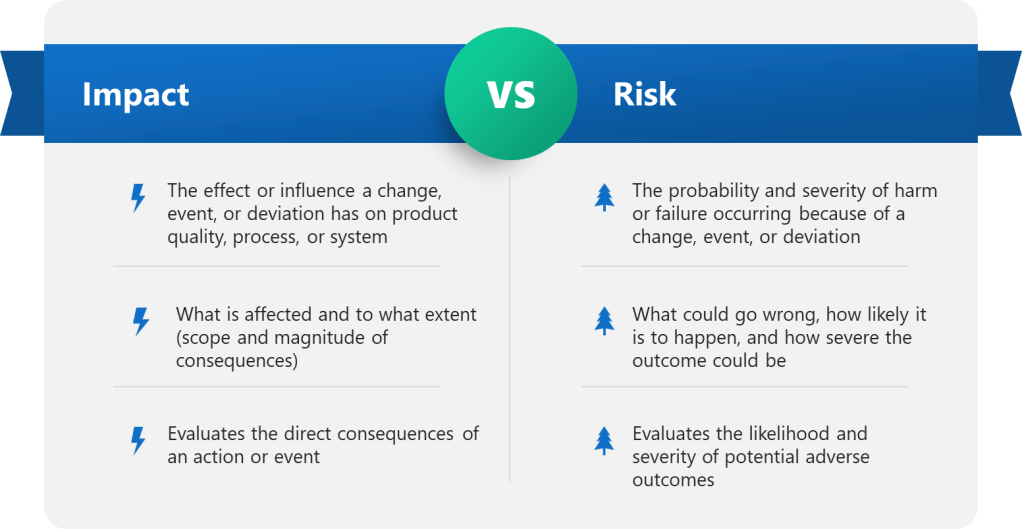
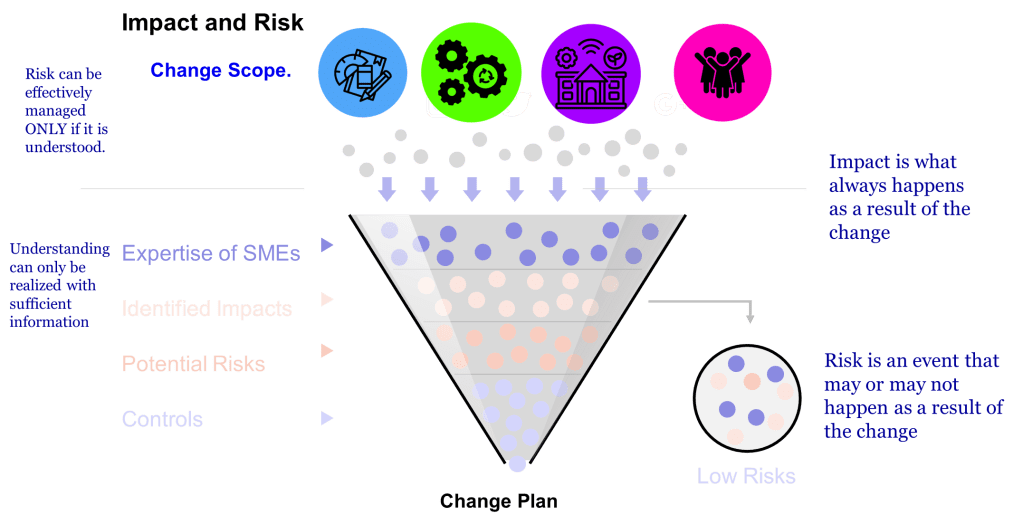
Understanding the Distinction Between Impact and Risk

Two concepts—impact and risk — are often discussed but sometimes conflated within quality systems. While related, these concepts serve distinct purposes and drive different decisions throughout the quality system. Let’s explore.

The Fundamental Difference: Impact vs. Risk

The difference between impact and risk is fundamental to effective quality management. The difference between impact and risk is critical. Impact is best thought of as ‘What do I need to do to make the change.’ Risk is ‘What could go wrong in making this change?'”

Impact assessment focuses on evaluating the effects of a proposed change on various elements such as documentation, equipment, processes, and training. It helps identify the scope and reach of a change. Risk assessment, by contrast, looks ahead to identify potential failures that might occur due to the change – it’s preventive and focused on possible consequences.

This distinction isn’t merely academic – it directly affects how we approach actions and decisions in our quality systems, impacting core functions of CAPA, Change Control and Management Review.

AspectImpactRisk
DefinitionThe effect or influence a change, event, or deviation has on product quality, process, or systemThe probability and severity of harm or failure occurring as a result of a change, event, or deviation
FocusWhat is affected and to what extent (scope and magnitude of consequences)What could go wrong, how likely it is to happen, and how severe the outcome could be
Assessment TypeEvaluates the direct consequences of an action or eventEvaluates the likelihood and severity of potential adverse outcomes
Typical UseUsed in change control to determine which documents, systems, or processes are impactedUsed to prioritize actions, allocate resources, and implement controls to minimize negative outcomes
MeasurementUsually described qualitatively (e.g., minor, moderate, major, critical)Often quantified by combining probability and impact scores to assign a risk level (e.g., low, medium, high)
ExampleA change in raw material supplier impacts the manufacturing process and documentation.The risk is that the new supplier’s material could fail to meet quality standards, leading to product defects.

Change Control: Different Questions, Different Purposes

Within change management, the PIC/S Recommendation PI 054-1 notes that “In some cases, especially for simple and minor/low risk changes, an impact assessment is sufficient to document the risk-based rationale for a change without the use of more formal risk assessment tools or approaches.”

Impact Assessment in Change Control

  • Determines what documentation requires updating
  • Identifies affected systems, equipment, and processes
  • Establishes validation requirements
  • Determines training needs

Risk Assessment in Change Control

  • Identifies potential failures that could result from the change
  • Evaluates possible consequences to product quality and patient safety
  • Determines likelihood of those consequences occurring
  • Guides preventive measures

A common mistake is conflating these concepts or shortcutting one assessment. For example, companies often rush to designate changes as “like-for-like” without supporting data, effectively bypassing proper risk assessment. This highlights why maintaining the distinction is crucial.

Validation: Complementary Approaches

In validation, the impact-risk distinction shapes our entire approach.

Impact in validation relates to identifying what aspects of product quality could be affected by a system or process. For example, when qualifying manufacturing equipment, we determine which critical quality attributes (CQAs) might be influenced by the equipment’s performance.

Risk assessment in validation explores what could go wrong with the equipment or process that might lead to quality failures. Risk management plays a pivotal role in validation by enabling a risk-based approach to defining validation strategies, ensuring regulatory compliance, mitigating product quality and safety risks, facilitating continuous improvement, and promoting cross-functional collaboration.

In Design Qualification, we verify that the critical aspects (CAs) and critical design elements (CDEs) necessary to control risks identified during the quality risk assessment (QRA) are present in the design. This illustrates how impact assessment (identifying critical aspects) works together with risk assessment (identifying what could go wrong).

When we perform Design Review and Design Qualification, we focus on Critical Aspects: Prioritize design elements that directly impact product quality and patient safety. Here, impact assessment identifies critical aspects, while risk assessment helps prioritize based on potential consequences.

Following Design Qualification, Verification activities such as Installation Qualification (IQ), Operational Qualification (OQ), and Performance Qualification (PQ) serve to confirm that the system or equipment performs as intended under actual operating conditions. Here, impact assessment identifies the specific parameters and functions that must be verified to ensure no critical quality attributes are compromised. Simultaneously, risk assessment guides the selection and extent of tests by focusing on areas with the highest potential for failure or deviation. This dual approach ensures that verification not only confirms the intended impact of the design but also proactively mitigates risks before routine use.

Validation does not end with initial qualification. Continuous Validation involves ongoing monitoring and trending of process performance and product quality to confirm that the validated state is maintained over time. Impact assessment plays a role in identifying which parameters and quality attributes require ongoing scrutiny, while risk assessment helps prioritize monitoring efforts based on the likelihood and severity of potential deviations. This continuous cycle allows quality systems to detect emerging risks early and implement corrective actions promptly, reinforcing a proactive, risk-based culture that safeguards product quality throughout the product lifecycle.

Data Integrity: A Clear Example

Data integrity offers perhaps the clearest illustration of the impact-risk distinction.

As I’ve previously noted, Data quality is not a risk. It is a causal factor in the failure or severity. Poor data quality isn’t itself a risk; rather, it’s a factor that can influence the severity or likelihood of risks.

When assessing data integrity issues:

  • Impact assessment identifies what data is affected and which processes rely on that data
  • Risk assessment evaluates potential consequences of data integrity lapses

In my risk-based data integrity assessment methodology, I use a risk rating system that considers both impact and risk factors:

Risk RatingActionMitigation
>25High Risk-Potential Impact to Patient Safety or Product QualityMandatory
12-25Moderate Risk-No Impact to Patient Safety or Product Quality but Potential Regulatory RiskRecommended
<12Negligible DI RiskNot Required

This system integrates both impact (on patient safety or product quality) and risk (likelihood and detectability of issues) to guide mitigation decisions.

The Golden Day: Impact and Risk in Deviation Management

The Golden Day concept for deviation management provides an excellent practical example. Within the first 24 hours of discovering a deviation, we conduct:

  1. An impact assessment to determine:
    • Which products, materials, or batches are affected
    • Potential effects on critical quality attributes
    • Possible regulatory implications
  2. A risk assessment to evaluate:
    • Patient safety implications
    • Product quality impact
    • Compliance with registered specifications
    • Level of investigation required

This impact assessment is also the initial risk assessment, which will help guide the level of effort put into the deviation. This statement shows how the two concepts, while distinct, work together to inform quality decisions.

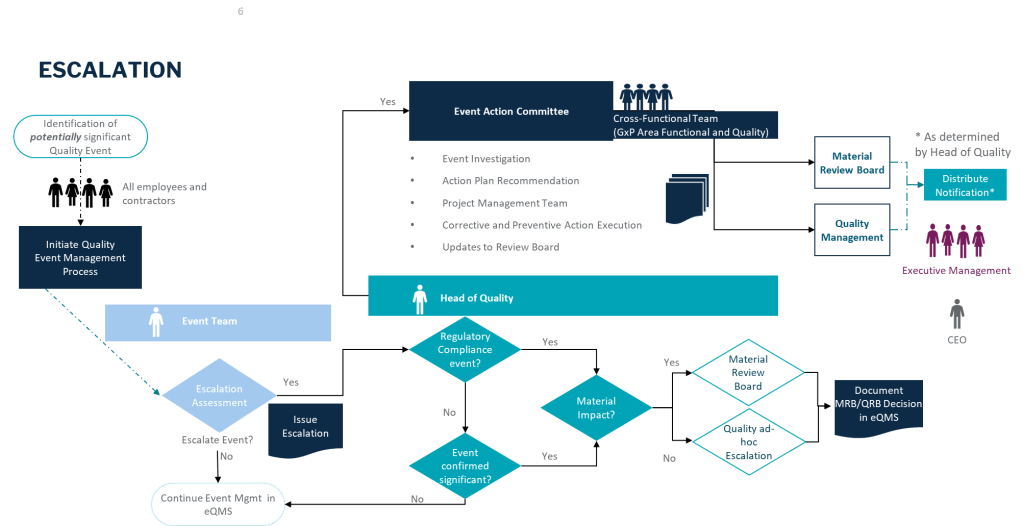
Quality Escalation: When Impact Triggers a Response

In quality escalation, we often use specific criteria based on both impact and risk:

Escalation CriteriaExamples of Quality Events for Escalation
Potential to adversely affect quality, safety, efficacy, performance or compliance of product– Contamination – Product defect/deviation from process parameters or specification – Significant GMP deviations
Product counterfeiting, tampering, theft– Product counterfeiting, tampering, theft reportable to Health Authority – Lost/stolen IMP
Product shortage likely to disrupt patient care– Disruption of product supply due to product quality events
Potential to cause patient harm associated with a product quality event– Urgent Safety Measure, Serious Breach, Significant Product Complaint

These criteria demonstrate how we use both impact (what’s affected) and risk (potential consequences) to determine when issues require escalation.

Both Are Essential

Understanding the difference between impact and risk fundamentally changes how we approach quality management. Impact assessment without risk assessment may identify what’s affected but fails to prevent potential issues. Risk assessment without impact assessment might focus on theoretical problems without understanding the actual scope.

The pharmaceutical quality system requires both perspectives:

  1. Impact tells us the scope – what’s affected
  2. Risk tells us the consequences – what could go wrong

By maintaining this distinction and applying both concepts appropriately across change control, validation, and data integrity management, we build more robust quality systems that not only comply with regulations but actually protect product quality and patient safety.

Quality Escalation Best Practices: Ensuring GxP Compliance and Patient Safety

Quality escalation is a critical process in maintaining the integrity of products, particularly in industries governed by Good Practices (GxP) such as pharmaceuticals and biotechnology. Effective escalation ensures that issues are addressed promptly, preventing potential risks to product quality and patient safety. This blog post will explore best practices for quality escalation, focusing on GxP compliance and the implications for regulatory notifications.

Understanding Quality Escalation

Quality escalation involves raising unresolved issues to higher management levels for timely resolution. This process is essential in environments where compliance with GxP regulations is mandatory. The primary goal is to ensure that products are manufactured, tested, and distributed in a manner that maintains their quality and safety.

This is a requirement across all the regulations, including clinical. ICH E6(r3) emphasizes the importance of effective monitoring and oversight to ensure that clinical trials are conducted in compliance with GCP and regulatory requirements. This includes identifying and addressing issues promptly.

Key Triggers for Escalation

Identifying triggers for escalation is crucial. Common triggers include:

  • Regulatory Compliance Issues: Non-compliance with regulatory requirements can lead to product quality issues and necessitate escalation.
  • Quality Control Failures: Failures in quality control processes, such as testing or inspection, can impact product safety and quality.
  • Data Integrity: Significant concerns and failures in quality of data.
  • Supply Chain Disruptions: Disruptions in the supply chain can affect the availability of critical components or materials, potentially impacting product quality.
  • Patient Safety Concerns: Any issues related to patient safety, such as adverse events or potential safety risks, should be escalated immediately.
Escalation CriteriaExamples of Quality Events for Escalation
Potential to adversely affect quality, safety, efficacy, performance or compliance of product (commercial or clinical)•Contamination (product, raw material, equipment, micro; environmental)
•Product defect/deviation from process parameters or specification (on file with agencies, e.g. CQAs and CPPs)
•Significant GMP deviations
•Incorrect/deficient labeling
•Product complaints (significant PC, trends in PCs)
•OOS/OOT (e.g.; stability)
Product counterfeiting, tampering, theft•Product counterfeiting, tampering, theft reportable to Health Authority (HA)
•Lost/stolen IMP
•Fraud or misconduct associated with counterfeiting, tampering, theft
•Potential to impact product supply (e.g.; removal, correction, recall)
Product shortage likely to disrupt patient care and/or reportable to HA•Disruption of product supply due to product quality events, natural disasters (business continuity disruption), OOS impact, capacity constraints
Potential to cause patient harm associated with a product quality event•Urgent Safety Measure, Serious Breach, Significant Product Compliant, Safety Signal that are determined associated with a product quality event
Significant GMP non-compliance/event•Non-compliance or non-conformance event with potential to impact product performance meeting specification, safety efficacy or regulatory requirements
Regulatory Compliance Event•Significant (critical, repeat) regulatory inspection findings; lack of commitment adherence
•Notification of directed/for cause inspection
•Notification of Health Authority correspondence indicating potential regulatory action

Best Practices for Quality Escalation

  1. Proactive Identification: Encourage a culture where team members proactively identify potential issues. Early detection can prevent minor problems from escalating into major crises.
  2. Clear Communication Channels: Establish clear communication channels and protocols for escalating issues. This ensures that the right people are informed promptly and can take appropriate action.
  3. Documentation and Tracking: Use a central repository to document and track issues. This helps in identifying trends, implementing corrective actions, and ensuring compliance with regulatory requirements.
  4. Collaborative Resolution: Foster collaboration between different departments and stakeholders to resolve issues efficiently. This includes involving quality assurance, quality control, and regulatory affairs teams as necessary.
  5. Regulatory Awareness: Be aware of regulatory requirements and ensure that all escalations are handled in a manner that complies with these regulations. This includes maintaining confidentiality when necessary and ensuring transparency with regulatory bodies.

GxP Impact and Regulatory Notifications

In industries governed by GxP, any significant quality issues may require notification to regulatory bodies. This includes situations where product quality or patient safety is compromised. Best practices for handling such scenarios include:

  • Prompt Notification: Notify regulatory bodies promptly if there is a risk to public health or if regulatory requirements are not met.
  • Comprehensive Reporting: Ensure that all reports to regulatory bodies are comprehensive, including details of the issue, actions taken, and corrective measures implemented.
  • Continuous Improvement: Use escalations as opportunities to improve processes and prevent future occurrences. This includes conducting root cause analyses and implementing preventive actions.

Fit with Quality Management Review

This fits within the Quality Management Review band, being an ad hoc triggered review of significant issues, ensuring appropriate leadership attention, and allowing key decisions to be made in a timely manner.

Conclusion

Quality escalation is a vital component of maintaining product quality and ensuring patient safety in GxP environments. By implementing best practices such as proactive issue identification, clear communication, and collaborative resolution, organizations can effectively manage risks and comply with regulatory requirements. Understanding when and how to escalate issues is crucial for preventing potential crises and ensuring that products meet the highest standards of quality and safety.

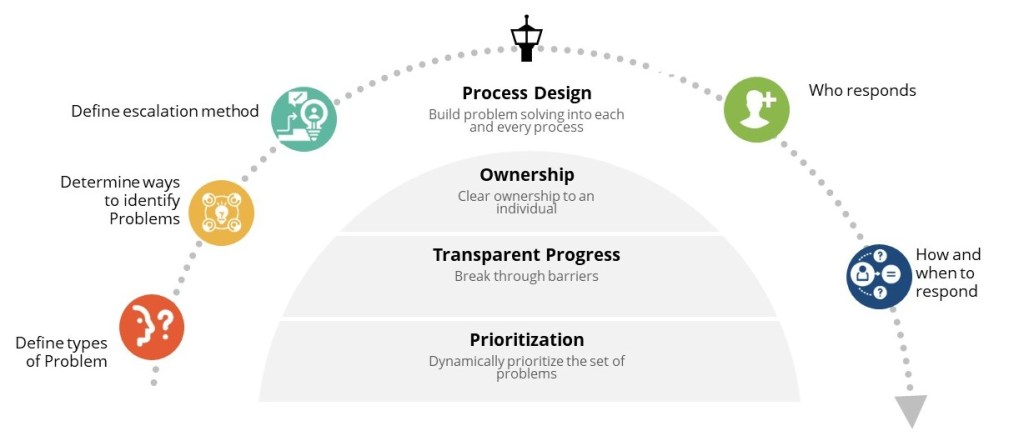
Design Problem Solving into the Process

Good processes and systems have ways designed into them to identify when a problem occurs, and ensure it gets the right rigor of problem-solving. A model like Art Smalley’s can be helpful here.

Each and every process should go through the following steps:

  1. Define those problems that should be escalated and those that should not. Everyone working in a process should have the same definition of what is a problem. Often times we end up with a hierarchy of issues that are solved within the process – Level 1 – and those processes that go to a root cause process (deviation/CAPA) – level 2.
  2. Identify the ways to notice a problem. Make the work as visual as possible so it is easier to detect the problem.
  3. Define the escalation method. There should be one clear way to surface a problem. There are many ways to create a signal, but it should be simple, timely, and very clear.

These three elements make up the request for help.

The next two steps make up the response to that request.

  1. Who is the right person to respond? Supervisor? Area management? Process Owner? Quality?
  2. How does the individual respond, and most importantly when? This should be standardized so the other end of that help chain is not wondering whether, when, and in what form that help is going to arrive.

In order for this to work, it is important to identify clear ownership of the problem. There always must be one person clearly accountable, even if only responsible for bits, so they can push the problem forward.

It is easy for problem-solving to stall. So make sure progress is transparent. Knowing what is being worked on, and what is not, is critical.

Prioritization is key. Not every problem needs solving so have a mechanism to ensure the right problems are being solved in the process.

Problem solving within a process

Escalation of Critical Events

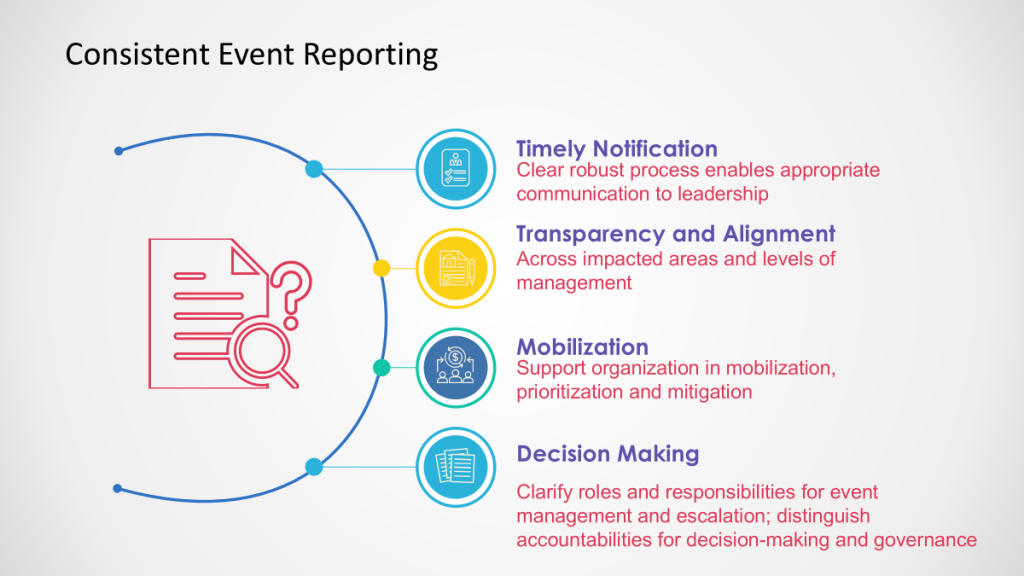
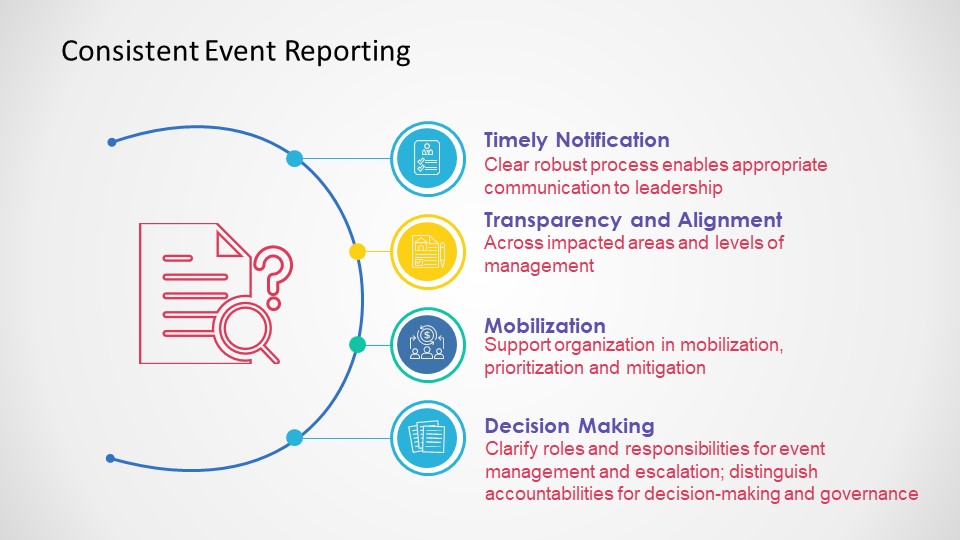
Event management systems need to have an escalation mechanism to ensure critical events are quickly elevated to a senior level to ensure organization-wide timely reactions.

Consistent Event Reporting

There are many reasons for a fast escalation.

  • Events that trigger reporting to Regulatory Agencies (e.g. Serious Breach, Urgent Safety Measures (UK), Field Alerts, Biological Product Deviation, Medical Device Report)
  • Events that require immediate action to prevent additional harm from across the organization
  • Events that require marshalling resources from large parts of the organization

GMP

GCP

GPVP

GLP

Research

IT

         Impact to data integrity

       Impact to product quality/supply

       Impact to data integrity

       Data/privacy breach

       Event impacting on-time compliance rates (not isolated/steady state)

       Impact to data integrity

       Impact to data integrity

       Reference GxP area for Impact resulting from/linked to system error/failure

       Product Quality/ CMC events in accordance with MRB criteria (or other events of similar scope of impact)

       Impact to study integrity

       Impact to subject’s safety, rights or welfare

       Gaps in reporting/ collection of potential AEs

       Impact to study integrity

       Impact to study integrity

       System design, testing, deployment, upgrade, etc. event impacting GxP data integrity or regulatory compliance

       Recurring event with broad scope of impact

       Recurring event with broad scope of impact

       Recurring event with broad scope of impact

       Recurring event with broad scope of impact

       Recurring event with broad scope of impact

       Recurring event with broad scope of impact

       Impact to program milestones & corporate goals

       Impact to program milestones & corporate goals

       Impact to program milestones & corporate goals

       Impact to program milestones & corporate goals

       Impact to program milestones & corporate goals

       Potential Falsified or Counterfeit Product

       Potential Fraud or Misconduct

       Potential Fraud or Misconduct

       Credible Risk of Product Shortage

       Quality event with patient safety risk/gap

       GxP Data Breach

       Potential Product Recall

       Significant Quality Event Notified to Regulatory Authority

       System error or failure with significant GxP compliance impact

·       Potential Critical Finding Resulting from Regulatory Authority Inspection or Audit by External Body/Third Party

·       Quality Event/Observation Classified as Critical (Event or Internal Audit) Notification from Regulatory Authority or other External Authority of Findings of Significant/Critical Quality Deficiency (inspection or other than through inspection)

o   e.g.; Refusal to File, Notification of Inadequate Response to Inspection Findings (e.g.; Other Action Indicated (FDA classification), Warning Letter


You can drill down to a lower, more practical level, like this

Escalation Criteria

Examples of Quality Events for Escalation

Potential to adversely affect quality, safety, efficacy, performance or compliance of product (commercial or clinical)

       Contamination (product, raw material, equipment, micro; environmental)

       Product defect/deviation from process parameters or specification (on file with agencies)

       Significant GMP deviations

       Incorrect/deficient labeling

       Product complaints (significant PC, trends in PCs)

       OOS/OOT (e.g., stability)

Product counterfeiting, tampering, theft

       Product counterfeiting, tampering, theft reportable to Health Authority (HA)

       Lost/stolen IMP

       Fraud or misconduct associated with counterfeiting, tampering, theft

       Potential to impact product supply (e.g., removal, correction, recall)

Product shortage likely to disrupt patient care and/or reportable to HA

       Disruption of product supply due to product quality events, natural disasters (business continuity disruption), OOS impact, capacity constraints

Potential to cause patient harm associated with a product quality event

       Urgent Safety Measure, Serious Breach, Significant Product Compliant, Safety Signal that are determined associated with a product quality event

Significant GMP non-compliance/event

       Non-compliance or non-conformance event with potential to impact product performance meeting specification, safety efficacy or regulatory requirements

Regulatory Compliance Event

       Significant (critical, repeat) regulatory inspection findings, lack of commitment adherence

       Notification of directed/for cause inspection

       Notification of HA correspondence indicating potential regulatory action


An updated and expanded version of this is found here.