Data Quality, Data Bias, and the Risk Assessment

I’ve seen my fair share of risk assessments listing data quality or bias as hazards. I tend to think that is pretty sloppy. I especially see this a lot in conversations around AI/ML. Data quality is not a risk. It is a causal factor in the failure or severity.

Data Quality and Data Bias

Data Quality

Data quality refers to how well a dataset meets certain criteria that make it fit for its intended use. The key dimensions of data quality include:

  1. Accuracy – The data correctly represents the real-world entities or events it’s supposed to describe.
  2. Completeness – The dataset contains all the necessary information without missing values.
  3. Consistency – The data is uniform and coherent across different systems or datasets.
  4. Timeliness – The data is up-to-date and available when needed.
  5. Validity – The data conforms to defined business rules and parameters.
  6. Uniqueness – There are no duplicate records in the dataset.

High-quality data is crucial for making informed quality decisions, conducting accurate analyses, and developing reliable AI/ML models. Poor data quality can lead to operational issues, inaccurate insights, and flawed strategies.

Data Bias

Data bias refers to systematic errors or prejudices present in the data that can lead to inaccurate or unfair outcomes, especially in machine learning and AI applications. Some common types of data bias include:

  1. Sampling bias – When the data sample doesn’t accurately represent the entire population.
  2. Selection bias – When certain groups are over- or under-represented in the dataset.
  3. Reporting bias – When the frequency of events in the data doesn’t reflect real-world frequencies.
  4. Measurement bias – When the data collection method systematically skews the results.
  5. Algorithmic bias – When the algorithms or models introduce biases in the results.

Data bias can lead to discriminatory outcomes and produce inaccurate predictions or classifications.

Relationship between Data Quality and Bias

While data quality and bias are distinct concepts, they are closely related:

  • Poor data quality can introduce or exacerbate biases. For example, incomplete or inaccurate data may disproportionately affect certain groups.
  • High-quality data doesn’t necessarily mean unbiased data. A dataset can be accurate, complete, and consistent but still contain inherent biases.
  • Addressing data bias often involves improving certain aspects of data quality, such as completeness and representativeness.

Organizations must implement robust data governance practices to ensure high-quality and unbiased data, regularly assess their data for quality issues and potential biases, and use techniques like data cleansing, resampling, and algorithmic debiasing.

Identifying the Hazards and the Risks

It is critical to remember the difference between a hazard and a risk. Data quality is a causal factor in the hazard, not a harm.
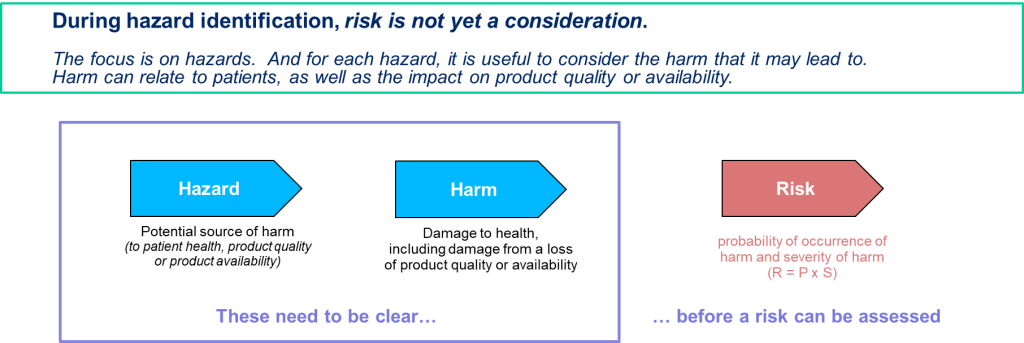
Hazard Identification

Think of it like a fever. An open wound is a causal factor for the fever, which has a root cause of poor wound hygiene. I can have the factor (the wound), but without the presence of the root cause (poor wound hygiene), the event (fever) would not develop (okay, there may be other root causes in play as well; remember there is never really just one root cause).

Potential Issues of Poor Data Quality and Inadequate Data Governance

The risks associated with poor data quality and inadequate data governance can significantly impact organizations. Here are the key areas where risks can develop:

Decreased Data Quality

  • Inaccurate, incomplete, or inconsistent data leads to flawed decision-making
  • Errors in customer information, product details, or financial data can cause operational issues
  • Poor quality data hinders effective analysis and forecasting

Compliance Failures:

  • Non-compliance with regulations can result in regulatory actions
  • Legal complications and reputational damage from failing to meet regulatory requirements
  • Increased scrutiny from regulatory bodies

Security Breaches

  • Inadequate data protection increases vulnerability to cyberattacks and data breaches
  • Financial costs associated with breach remediation, legal fees, and potential fines
  • Loss of customer trust and long-term reputational damage

Operational Inefficiencies

  • Time wasted on manual data cleaning and correction
  • Reduced productivity due to employees working with unreliable data
  • Inefficient processes resulting from poor data integration or inconsistent data formats

Missed Opportunities

  • Failure to identify market trends or customer insights due to unreliable data
  • Missed sales leads or potential customers because of inaccurate contact information
  • Inability to capitalize on business opportunities due to lack of trustworthy data

Poor Decision-Making

  • Decisions based on inaccurate or incomplete data leading to suboptimal outcomes, including deviations and product/study impact
  • Misallocation of resources due to flawed insights from poor quality data
  • Inability to effectively measure and improve performance

Potential Issues of Data Bias

Data bias presents significant risks across various domains, particularly when integrated into machine learning (ML) and artificial intelligence (AI) systems. These risks can manifest in several ways, impacting both individuals and organizations.

Discrimination and Inequality

Data bias can lead to discriminatory outcomes, systematically disadvantaging certain groups based on race, gender, age, or socioeconomic status. For example:

  • Judicial Systems: Biased algorithms used in risk assessments for bail and sentencing can result in harsher penalties for people of color compared to their white counterparts, even when controlling for similar circumstances.
  • Healthcare: AI systems trained on biased medical data may provide suboptimal care recommendations for minority groups, potentially exacerbating health disparities.

Erosion of Trust and Reputation

Organizations that rely on biased data for decision-making risk losing the trust of their customers and stakeholders. This can have severe reputational consequences:

  • Customer Trust: If customers perceive that an organization’s AI systems are biased, they may lose trust in the brand, leading to a decline in customer loyalty and revenue.
  • Reputation Damage: High-profile cases of AI bias, such as discriminatory hiring practices or unfair loan approvals, can attract negative media attention and public backlash.

Legal and Regulatory Risks

There are significant legal and regulatory risks associated with data bias:

  • Compliance Issues: Organizations may face legal challenges and fines if their AI systems violate anti-discrimination laws.
  • Regulatory Scrutiny: Increasing awareness of AI bias has led to calls for stricter regulations to ensure fairness and accountability in AI systems.

Poor Decision-Making

Biased data can lead to erroneous decisions that negatively impact business operations:

  • Operational Inefficiencies: AI models trained on biased data may make poor predictions, leading to inefficient resource allocation and operational mishaps.
  • Financial Losses: Incorrect decisions based on biased data can result in financial losses, such as extending credit to high-risk individuals or mismanaging inventory.

Amplification of Existing Biases

AI systems can perpetuate and even amplify existing biases if not properly managed:

  • Feedback Loops: Biased AI systems can create feedback loops where biased outcomes reinforce the biased data, leading to increasingly skewed results over time.
  • Entrenched Inequities: Over time, biased AI systems can entrench societal inequities, making it harder to address underlying issues of discrimination and inequality.

Ethical and Moral Implications

The ethical implications of data bias are profound:

  • Fairness and Justice: Biased AI systems challenge the principles of fairness and justice, raising moral questions about using such technologies in critical decision-making processes.
  • Human Rights: There are concerns that biased AI systems could infringe on human rights, particularly in areas like surveillance, law enforcement, and social services.

Perform the Risk Assessment
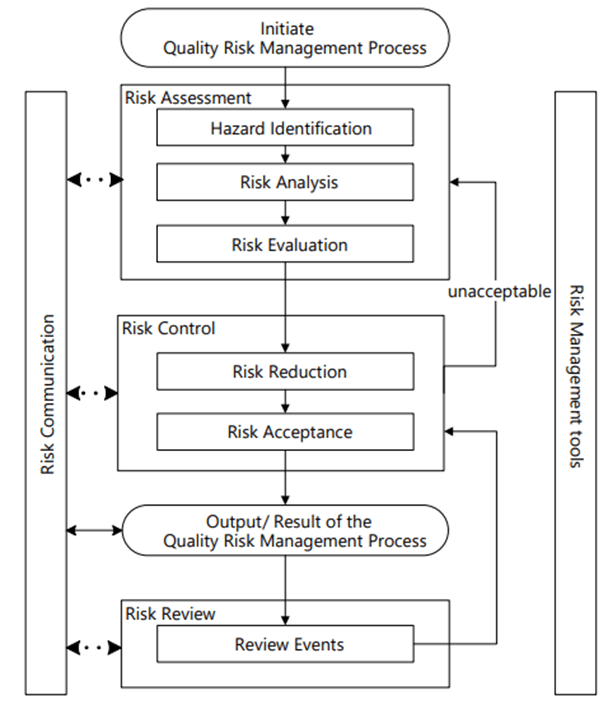
ICH Q9 (r1) Risk Management Process

Risk Management happens at the system/process level, where an AI/ML solution will be used. As appropriate, it drills down to the technology level. Never start with the technology level.

Hazard Identification

It is important to identify product quality hazards that may ultimately lead to patient harm. What is the hazard of that bad decision? What is the hazard of bad quality data? Those are not hazards; they are causes.

Hazard identification, the first step of a risk assessment, begins with a well-defined question defining why the risk assessment is being performed. It helps define the system and the appropriate scope of what will be studied. It addresses the “What might go wrong?” question, including identifying the possible consequences of hazards. The output of the hazard identification step is the identification of the possibilities (i.e., hazards) that the risk event (e.g., impact to product quality) happens.

The risk question takes the form of “What is the risk of using AI/ML solution for <Process/System> to <purpose of AI/MIL solution.” For example, “What is the risk of using AI/ML to identify deviation recurrence and help prioritize CAPAs?” or “What is the risk of using AI/ML to monitor real-time continuous manufacturing to determine the need to evaluate for a potential diversion?”

Process maps, data maps, and knowledge maps are critical here.

We can now identify the specific failure modes associated with AI/ML. This may involve deeep dive risk assessments. A failure mode is the specific way a failure occurs. So in this case, the specific way that bad data or bad decision making can happen. Multiple failure modes can, and usually do, lead to the same hazardous situation.

Make sure you drill down on failure causes. If more than 5 potential causes can be identified for a proposed failure mode, it is too broad and probably written at a high level in the process or item being risk assessed. It should be broken down into several specific failure modes with fewer potential causes and more manageable.

Start with an outline of how the process works and a description of the AI/ML (special technology) used in the process. Then, interrogate the following for potential failure modes:

  • The steps in the process or item under study in which AI/ML interventions occur;
  • The process/procedure documentation for example, master batch records, SOPs, protocols, etc.
    • Current and proposed process/procedure in sufficient detail to facilitate failure mode identification;
  • Critical Process Controls

Thinking of Swiss Cheese: Reason’s Theory of Active and Latent Failures

The Theory of Active and Latent Failures was proposed by James Reason in his book, Human Error. Reason stated accidents within most complex systems, such as health care, are caused by a breakdown or absence of safety barriers across four levels within a system. These levels can best be described as Unsafe Acts, Preconditions for Unsafe Acts, Supervisory Factors, and Organizational Influences. Reason used the term “active failures” to describe factors at the Unsafe Acts level, whereas “latent failures” was used to describe unsafe conditions higher up in the system.

This is represented as the Swiss Cheese model, and has become very popular in root cause analysis and risk management circles and widely applied beyond the safety world.

Swiss Cheese Model

In the Swiss Cheese model, the holes in the cheese depict the failure or absence of barriers within a system. Such occurrences represent failures that threaten the overall integrity of the system. If such failures never occurred within a system (i.e., if the system were perfect), then there would not be any holes in the cheese. We would have a nice Engelberg cheddar.

Not every hole that exists in a system will lead to an error. Sometimes holes may be inconsequential. Other times, holes in the cheese may be detected and corrected before something bad happens. This process of detecting and correcting errors occurs all the time.

The holes in the cheese are dynamic, not static. They open and close over time due to many factors, allowing the system to function appropriately without catastrophe. This is what human factors engineers call “resilience.” A resilient system is one that can adapt and adjust to changes or disturbances.

Holes in the cheese open and close at different rates. The rate at which holes pop up or disappear is determined by the type of failure the hole represents.

  1. Holes that occur at the Unsafe Acts level, and even some at the Preconditions level, represent active failures. Active failures usually occur during the activity of work and are directly linked to the bad outcome. Active failures change during the process of performing, opening, and closing over time as people make errors, catch their errors, and correct them.
  2. Latent failures occur higher up in the system, above the Unsafe Acts level — the Organizational, Supervisory, and Preconditions levels. These failures are referred to as “latent” because when they occur or open, they often go undetected. They can lie “dormant” or “latent” in the system for an extended period of time before they are recognized. Unlike active failures, latent failures do not close or disappear quickly.

Most events (harms) are associated with multiple active and latent failures. Unlike the typical Swiss Cheese diagram above, which shows an arrow flying through one hole at each level of the system, there can be a variety of failures at each level that interact to produce an event. In other words, there can be several failures at the Organizational, Supervisory, Preconditions, and Unsafe Acts levels that all lead to harm. The number of holes in the cheese associated with events are more frequent at the Unsafe Acts and Preconditions levels, but (usually) become fewer as one progresses upward through the Supervisory and Organizational levels.

Given the frequency and dynamic nature of activities, there are more opportunities for holes to open up at the Unsafe and Preconditions levels on a frequent basis and there are often more holes identified at these levels during root cause investigation and risk assessments.

The way the holes in the cheese interact across levels is important:

  • One-to-many mapping of causal factors is when a hole at a higher level (e.g., Preconditions) may result in several holes at a lower level (e.g. Unsafe acts)
  • Many-to-one mapping of causal factors when multiple holes at the higher level (e.g. preconditions) might interact to produce a single hole at the lower level (e.g. Unsafe Acts)

By understand the Swiss Cheese model, and Reason’s wider work in Active and Latent Failures, we can strengthen our approach to problem-solving.

Plus cheese is cool.

Swiss Cheese on a cheese board with knife

Similac Recall is a Systematic Failure in our Food/Drug Safety

There has been a lot of press lately for the Abbott Nutrition recall of infant formula. Fundamentally this is a colossal failure of our regulatory program, another failure in a long string of failures, and confirmation that the time is now for radical changes in the agency.

Consumer Reports, in the article “How the FDA Bungled the Powdered Infant Formula Recall” does a good job covering the important points, so please read that article.

The optimist in me hopes that this calamity will drive needed change, as has been the unfortunate history of regulatory change in this country. I’m just not sure I hold enough confidence in Congress to get the job done.

The Failure Space of Clinical Trials – Protocol Deviations and Events

Let us turn our failure space model, and level of problems, to deviations in a clinical trial. This is one of those areas that regulations and tribal practice have complicated, perhaps needlessly. It is also complicated by the different players of clinical sites, sponsor, and usually these days a number of Contract Research Organizations (CRO).

What is a Protocol Deviation?

Protocol deviation is any change, divergence, or departure from the study design or procedures defined in the approved protocol.

Protocol deviations may include unplanned instances of protocol noncompliance. For example, situations in which the clinical investigator failed to perform tests or examinations as required by the protocol or failures on the part of subjects to complete scheduled visits as required by the protocol, would be considered protocol deviations.

In the case of deviations which are planned exceptions to the protocol such deviations should be reviewed and approved by the IRB, the sponsor, and by the FDA for medical devices, prior to implementation, unless the change is necessary to eliminate apparent immediate hazards to the human subjects (21 CFR 312.66), or to protect the life or physical well-being of the subject (21 CFR 812.150(a)(4)).

The FDA, July 2020. Compliance Program Guidance Manual for Clinical Investigator Inspections (7348.811).

In assessing protocol deviations/violations, the FDA instructs field staff to determine whether changes to the protocol were: (1) documented by an amendment, dated, and maintained with the protocol; (2) reported to the sponsor (when initiated by the clinical investigator); and (3) approved by the IRB and FDA (if applicable) before implementation (except when necessary to eliminate apparent immediate hazard(s) to human subjects).

Regulation/GuidanceStates
ICH E-6 (R2) Section 4.5.1-4.5.44.5.1“trial should be conducted in compliance with the protocol agreed to by the sponsor and, if required by the regulatory authorities…”
4.5.2 The investigator should not implement any deviation from, or changes of, the protocol without agreement by the sponsor and prior review and documented approval/favorable opinion from the IRB/IEC of an amendment, except where necessary to eliminate an immediate hazard(s) to trial subjects, or when the change(s) involves only logistical or administrative aspects of the trial (e.g., change in monitor(s), change of telephone number(s)).
4.5.3 The investigator, or person designated by the investigator, should document and explain any deviation from the approved protocol.
4.5.4 The investigator may implement a deviation from, or a change in, the protocol to eliminate an immediate hazard(s) to trial subjects without prior IRB/IEC approval/favorable opinion.
ICH E3, section 9.6The sponsor should describe the quality management approach implemented in the trial and summarize important deviations from the predefined quality tolerance limits and remedial actions taken in the clinical study report
21CFR 312.53(vi) (a)investigators selected “Will conduct the study(ies) in accordance with the relevant, current protocol(s) and will only make changes in a protocol after notifying the sponsor, except when necessary to protect the safety, the rights, or welfare of subjects.”
21CFR 56.108(a)IRB shall….ensur[e] that changes in approved research….may not be initiated without IRB review and approval except where necessary to eliminate apparent immediate hazards to the human subjects.
21 CFR 56.108(b)“IRB shall….follow written procedures for ensuring prompt reporting to the IRB, appropriate institutional officials, and the Food and Drug Administration of… any unanticipated problems involving risks to human subjects or others…[or] any instance of serious or continuing noncompliance with these regulations or the requirements or determinations of the IRB.”
45 CFR 46.103(b)(5)Assurances applicable to federally supported or conducted research shall at a minimum include….written procedures for ensuring prompt reporting to the IRB….[of] any unanticipated problems involving risks to subjects or others or any serious or continuing noncompliance with this policy or the requirements or determinations of the IRB.
FDA Form-1572 (Section 9)lists the commitments the investigator is undertaking in signing the 1572 wherein the clinical investigator agrees “to conduct the study(ies) in accordance with the relevant, current protocol(s) and will only make changes in a protocol after notifying the sponsor, except when necessary to protect the safety, the rights, or welfare of subjects… [and] not to make any changes in the research without IRB approval, except where necessary to eliminate apparent immediate hazards to the human subjects.”
A few key regulations and guidances (not meant to be a comprehensive list)

How Protocol Deviations are Implemented

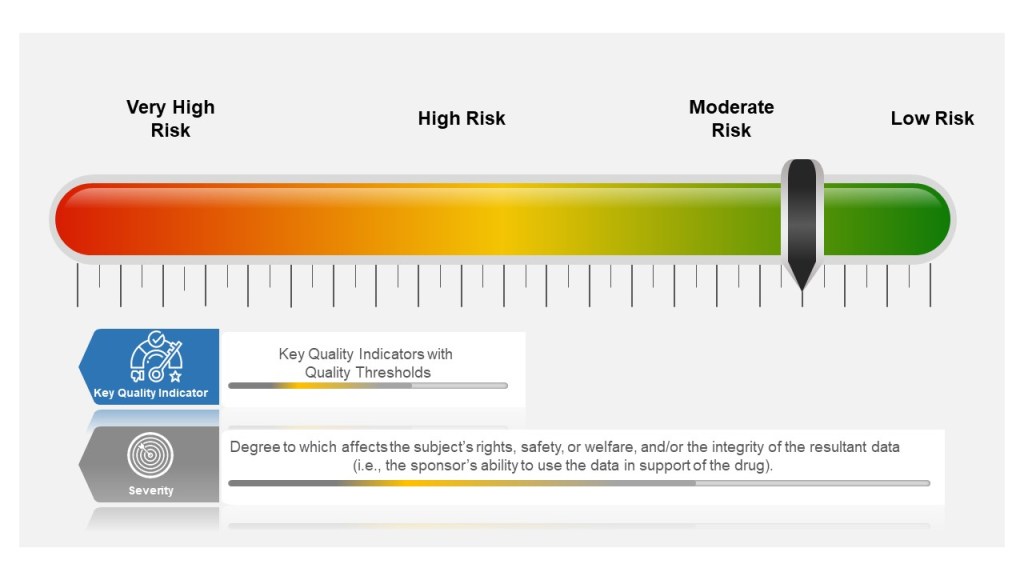
Many companies tend to have a failure scale built into their process, differentiating between protocol deviations and violations based on severity. Others use a minor, major, and even critical scale to denote differences in severity. The axis here for severity is the degree to which affects the subject’s rights, safety, or welfare, and/or the integrity of the resultant data (i.e., the sponsor’s ability to use the data in support of the drug).

Other companies divide into protocol deviations and violations:

  • Protocol Deviation: A protocol deviation occurs when, without significant consequences, the activities on a study diverge from the IRB-approved protocol, e.g., missing a visit window because the subject is traveling. Not as serious as a protocol violation.
  • Protocol Violation: A divergence from the protocol that materially (a) reduces the quality or completeness of the data, (b) makes the ICF inaccurate, or (c) impacts a subject’s safety, rights or welfare. Examples of protocol violations may include: inadequate or delinquent informed consent; inclusion/exclusion criteria not met; unreported SAEs; improper breaking of the blind; use of prohibited medication; incorrect or missing tests; mishandled samples; multiple visits missed or outside permissible windows; materially inadequate record-keeping; intentional deviation from protocol, GCP or regulations by study personnel; and subject repeated noncompliance with study requirements.

This is probably a place when nomenclature can serve to get in the way, rather than provide benefit. The EMA says pretty much the same in “ICH guideline E3 – questions and answers (R1).

Principles of Events in Clinical Practice

  1. Severity of the event is based on degree to which affects the subject’s rights, safety, or welfare, and/or the integrity of the resultant data
  2. Events (problems, deviations, etc) will happen at all levels of a clinical practice (Sponsor, CRO, Site, etc)
  3. Events happen beyond the Protocol. These need to be managed appropriately as well.
  4. The event needs to be categorized, evaluated and trended by the sponsor

Severity of the Event

Starting in the study planning stage, ICH E6(R2) GCP requires sponsors to identify risks to critical study processes and study data and to evaluate these risks based on likelihood, detectability and impact on subject safety and data integrity.

Sponsors then establish key quality indicators (KQIs) and quality tolerance thresholds. KQI is really just a key risk indicator and should be treated similarly.

Study events that exceed the risk threshold should trigger an evaluation to determine if action is needed. In this way, sponsors can proactively manage risk and address protocol noncompliance.

The best practice here is to have a living risk assessment for each study. Evaluate across studies to understand your overall organization risk, and look for opportunities for wide-scale mitigations. Feedup into your risk register.

Event Classification for Clinical Protocols and GCPs

Where the Event happens

Deviations in the clinical space are a great example of the management of supplier events, and at the end of the day there is little difference between a GMP supplier event management, a GLP or a GCP. The individual requirements might be different but the principles and the process are the same.

Each entity in the trial organization should have their own deviation system where they investigate deviations, performing root cause investigation and enacting CAPAs.

This is where it starts to get tricky. first of all, not all sites have the infrastructure to do this well. Second the nature of reporting, usually through the Electronic Data Capture (EDC) system, can lead to balkanization at the site. Site’s need to have strong compliance programs through compiling deviation details into a single sitewide system that allows the site to trend deviations across studies in addition to following sponsor reporting requirements.

Unfortunately too many site’s rely on the sponsor’s program. Sponsors need to be evaluating the strength of this program during site selection and through auditing.

Events Happen

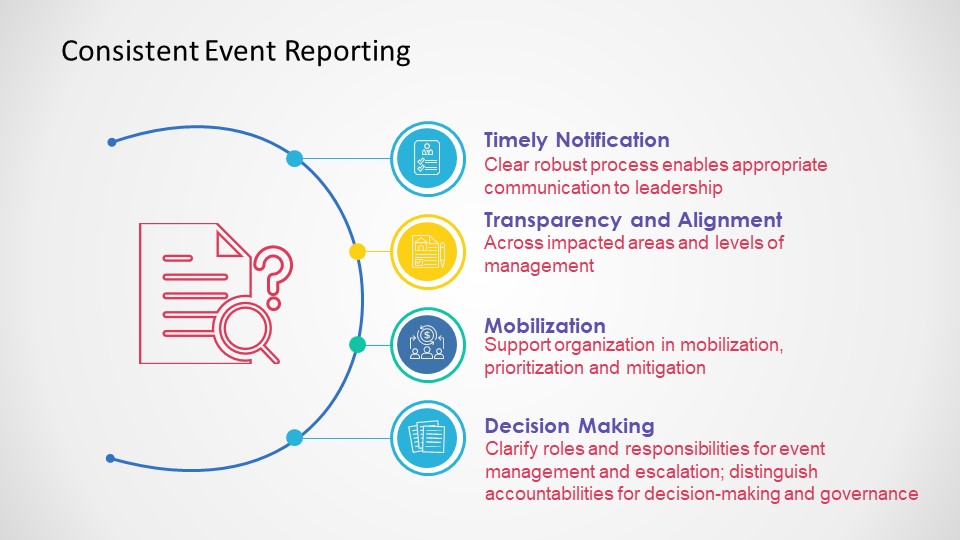
Consistent Event Reporting is Critical

Deviations should be to all process, procedure and plans, and just not the protocol.

Categorizing deviations is usually a pain point and an area where more consistency needs to be driven. I recommend first having a good standard set of categorizations. The industry would benefit from adopting a standard, and I think Norman Goldfarb’s proposal is still the best.

Once you have categories, and understand to your KQIs and other aspects you need to make sure they are consistently done. The key mechanisms of this are:

  1. Training
  2. Monitoring (in all its funny permutations)
  3. Periodic evaluations and Trending

Deviations should be trended, at a minimum, in several ways:

  1. Per site per study
  2. Per site all activities
  3. All sites per study
  4. All sites all activities

And remember, trending doesn’t count of you do not analyze the problem and take appropriate CAPAs.

This will allow trends to be identified and appropriate corrective and preventive actions identified to systematically improve.

Share your stories

As we move through of careers we all have endless incidents that can either be denied and suppressed or acknowledged and framed as “falls,” “failures,” or “mistakes.” These so-called falls all enhance our professional growth. By focusing on the process of falling, and then rising back up, we are able to have a greater understanding of the choices we have made, and the consequences of our choices.

Sharing and bearing witness to stories of failure from our professional and personal lives provide opportunities for us to explore and get closer to the underlying meaning of our work, our questions of what is it that we are trying to accomplish in our work as quality professionals. Our missteps allow us to identify paths we needed to take or create new stories and new pathways to emerge within the context of our work. As we share stories of tensions, struggles, and falling down, we realized how important these experiences are in the process of learning, of crafting one’s presence as a human being among human beings, of becoming a quality professional.

We may not have asked for a journey of struggle when we decided to become quality professionals, but the process of becoming tacitly involves struggle and difficulty. There is a clear pattern among individuals who demonstrate the ability to rise strong pain and adversity in that they are able to describe their experiences, and lay meaning to it.

It is important to recognize that simply recognizing and affirming struggle, or that something is not going as it should, does not necessarily lead to productive change. To make a change and to work towards a culture of excellence we must recognize that emotions and feelings are in the game. Learning to lead is an emotionally-laden process. And early-stage professionals feel exceptionally vulnerable within this process. This field requires early-stage professionals to hone their interpersonal, technical, and organizational skills, all while turning their gaze inward to understanding how their positioning in the organization impacts can be utilized for change. Novice professionals often struggle in terms of communicating ideas orally or in writing, being able to manage multiple tasks at once, staying on top of their technical content, or even thinking critically about who they are in the broader world. Early-stage professionals are always on the brink of vulnerability.

Share your stories. Help others share theirs.

I’m organizing a PechaKucha/Ignite event as part of the ASQ’s Team and Workplace Excellence Forum to sharpen our stories. More details coming soon. Start thinking of your stories to share!

Royalty-free stock photo ID: 642783229