When 483s Reveal Zemblanity: The Catalent Investigation – A Case Study in Systemic Quality Failure

The Catalent Indiana 483 form from July 2025 reads like a textbook example of my newest word, zemblanity, in risk management—the patterned, preventable misfortune that accrues not from blind chance, but from human agency and organizational design choices that quietly hardwire failure into our operations.

Twenty hair contamination deviations. Seven months to notify suppliers. Critical equipment failures dismissed as “not impacting SISPQ.” Media fill programs missing the very interventions they should validate. This isn’t random bad luck—it’s a quality system that has systematically normalized exactly the kinds of deviations that create inspection findings.

The Architecture of Inevitable Failure

Reading through the six major observations, three systemic patterns emerge that align perfectly with the hidden architecture of failure I discussed in my recent post on zemblanity.

Pattern 1: Investigation Theatre Over Causal Understanding

Observation 1 reveals what happens when investigations become compliance exercises rather than learning tools. The hair contamination trend—20 deviations spanning multiple product codes—received investigation resources proportional to internal requirement, not actual risk. As I’ve written about causal reasoning versus negative reasoning, these investigations focused on what didn’t happen rather than understanding the causal mechanisms that allowed hair to systematically enter sterile products.

The tribal knowledge around plunger seating issues exemplifies this perfectly. Operators developed informal workarounds because the formal system failed them, yet when this surfaced during an investigation, it wasn’t captured as a separate deviation worthy of systematic analysis. The investigation closed the immediate problem without addressing the systemic failure that created the conditions for operator innovation in the first place.

Pattern 2: Trend Blindness and Pattern Fragmentation

The most striking aspect of this 483 is how pattern recognition failed across multiple observations. Twenty-three work orders on critical air handling systems. Ten work orders on a single critical water system. Recurring membrane failures. Each treated as isolated maintenance issues rather than signals of systematic degradation.

This mirrors what I’ve discussed about normalization of deviance—where repeated occurrences of problems that don’t immediately cause catastrophe gradually shift our risk threshold. The work orders document a clear pattern of equipment degradation, yet each was risk-assessed as “not impacting SISPQ” without apparent consideration of cumulative or interactive effects.

Pattern 3: Control System Fragmentation

Perhaps most revealing is how different control systems operated in silos. Visual inspection systems that couldn’t detect the very defects found during manual inspection. Environmental monitoring that didn’t include the most critical surfaces. Media fills that omitted interventions documented as root causes of previous failures.

This isn’t about individual system inadequacy—it’s about what happens when quality systems evolve as collections of independent controls rather than integrated barriers designed to work together.

Solutions: From Zemblanity to Serendipity

Drawing from the approaches I’ve developed on this blog, here’s how Catalent could transform their quality system from one that breeds inevitable failure to one that creates conditions for quality serendipity:

Implement Causally Reasoned Investigations

The Energy Safety Canada white paper I discussed earlier this year offers a powerful framework for moving beyond counterfactual analysis. Instead of concluding that operators “failed to follow procedure” regarding stopper installation, investigate why the procedure was inadequate for the equipment configuration. Instead of noting that supplier notification was delayed seven months, understand the systemic factors that made immediate notification unlikely.

Practical Implementation:

  • Retrain investigators in causal reasoning techniques
  • Require investigation sponsors (area managers) to set clear expectations for causal analysis
  • Implement structured causal analysis tools like Cause-Consequence Analysis
  • Focus on what actually happened and why it made sense to people at the time
  • Implement rubrics to guide consistency

Build Integrated Barrier Systems

The take-the-best heuristic I recently explored offers a powerful lens for barrier analysis. Rather than implementing multiple independent controls, identify the single most causally powerful barrier that would prevent each failure type, then design supporting barriers that enhance rather than compete with the primary control.

For hair contamination specifically:

  • Implement direct stopper surface monitoring as the primary barrier
  • Design visual inspection systems specifically to detect proteinaceous particles
  • Create supplier qualification that includes contamination risk assessment
  • Establish real-time trend analysis linking supplier lots to contamination events

Establish Dynamic Trend Integration

Traditional trending treats each system in isolation—environmental monitoring trends, deviation trends, CAPA trends, maintenance trends. The Catalent 483 shows what happens when these parallel trend systems fail to converge into integrated risk assessment.

Integrated Trending Framework:

  • Create cross-functional trend review combining all quality data streams
  • Implement predictive analytics linking maintenance patterns to quality risks
  • Establish trigger points where equipment degradation patterns automatically initiate quality investigations
  • Design Product Quality Reviews that explicitly correlate equipment performance with product quality data

Transform CAPA from Compliance to Learning

The recurring failures documented in this 483—repeated hair findings after CAPA implementation, continued equipment failures after “repair”—reflect what I’ve called the effectiveness paradox. Traditional CAPA focuses on thoroughness over causal accuracy.

CAPA Transformation Strategy:

  • Implement a proper CAPA hierarchy, prioritizing elimination and replacement over detection and mitigation
  • Establish effectiveness criteria before implementation, not after
  • Create learning-oriented CAPA reviews that ask “What did this teach us about our system?”
  • Link CAPA effectiveness directly to recurrence prevention rather than procedural compliance

Build Anticipatory Quality Architecture

The most sophisticated element would be creating what I call “quality serendipity”—systems that create conditions for positive surprises rather than inevitable failures. This requires moving from reactive compliance to anticipatory risk architecture.

Anticipatory Elements:

  • Implement supplier performance modeling that predicts contamination risk before it manifests
  • Create equipment degradation models that trigger quality assessment before failure
  • Establish operator feedback systems that capture emerging risks in real-time
  • Design quality reviews that explicitly seek weak signals of system stress

The Cultural Foundation

None of these technical solutions will work without addressing the cultural foundation that allowed this level of systematic failure to persist. The 483’s most telling detail isn’t any single observation—it’s the cumulative picture of an organization where quality indicators were consistently rationalized rather than interrogated.

As I’ve written about quality culture, without psychological safety and learning orientation, people won’t commit to building and supporting robust quality systems. The tribal knowledge around plunger seating, the normalization of recurring equipment failures, the seven-month delay in supplier notification—these suggest a culture where adaptation to system inadequacy became preferable to system improvement.

The path forward requires leadership that creates conditions for quality serendipity: reward pattern recognition over problem solving, celebrate early identification of weak signals, and create systems that make the right choice the easy choice.

Beyond Compliance: Building Anti-Fragile Quality

The Catalent 483 offers more than a cautionary tale—it provides a roadmap for quality transformation. Every observation represents an invitation to build quality systems that become stronger under stress rather than more brittle.

Organizations that master this transformation—moving from zemblanity-generating systems to serendipity-creating ones—will find that quality becomes not just a regulatory requirement but a competitive advantage. They’ll detect risks earlier, respond more effectively, and create the kind of operational resilience that turns disruption into opportunity.

The choice is clear: continue managing quality as a collection of independent compliance activities, or build integrated systems designed to create the conditions for sustained quality success. The Catalent case shows us what happens when we choose poorly. The frameworks exist to choose better.


What patterns of “inevitable failure” do you see in your own quality systems? How might shifting from negative reasoning to causal understanding transform your approach to investigations? Share your thoughts—this conversation about quality transformation is one we need to have across the industry.
European Country Differences

As an American Pharmaceutical Quality professional who has worked in and with European colleagues for decades, I am used to hearing, “But the requirements in country X are different,” to which my response is always, “Prove it.”

EudraLex represents the cornerstone of Good Manufacturing Practice (GMP) regulations within the European Union, providing a comprehensive framework that ensures medicinal products meet stringent quality, safety, and efficacy standards. You will understand the fundamentals if you know and understand Eudralex volume 4. However, despite this unified approach, a few specific national differences exist in how a select few of these regulations are interpreted and implemented – mostly around Qualified Persons, GMP certifications, registrations and inspection types.

EudraLex: The European Union Pharmaceutical Regulatory Framework

EudraLex serves as the cornerstone of pharmaceutical regulation in the European Union, providing a structured approach to ensuring medicinal product quality, safety, and efficacy. The framework is divided into several volumes, with Volume 4 specifically addressing Good Manufacturing Practice (GMP) for both human and veterinary medicinal products. The legal foundation for these guidelines stems from Directive 2001/83/EC, which establishes the Community code for medicinal products for human use, and Directive 2001/82/EC for veterinary medicinal products.

Within this framework, manufacturing authorization is mandatory for all pharmaceutical manufacturers in the EU, whether their products are sold within or outside the Union. Two key directives establish the principles and guidelines for GMP: Directive 2003/94/EC for human medicinal products and Directive 91/412/EEC for veterinary products. These directives are interpreted and implemented through the detailed guidelines in the Guide to Good Manufacturing Practice.

Structure and Implementation of EU Pharmaceutical Regulation

The EU pharmaceutical regulatory framework operates on multiple levels. At the highest level, EU institutions establish the legal framework through regulations and directives. EU Law includes both Regulations, which have binding legal force in every Member State, and Directives, which lay down outcomes that must be achieved while allowing each Member State some flexibility in transposing them into national laws.

The European Medicines Agency (EMA) coordinates and harmonizes at the EU level, while national regulatory authorities inspect, license, and enforce compliance locally. This multilayered approach ensures consistent quality standards while accommodating certain national considerations.

For marketing authorization, medicinal products may follow several pathways:

Authorizing bodyProcedureScientific AssessmentTerritorial scope
European CommissionCentralizedEuropean Medicines Agency (EMA)EU
National authoritiesMutual Recognition, Decentralized, NationalNational competent authorities (with possible additional assessment by EMA in case of disagreement)EU countries concerned

This structure reflects the balance between EU-wide harmonization and national regulatory oversight in pharmaceutical manufacturing and authorization.

National Variations in Pharmaceutical Manufacturing Requirements

Austria

Austria maintains one of the more stringent interpretations of EU directives regarding Qualified Person requirements. While the EU directive 2001/83/EC establishes general qualifications for QPs, individual member states have some flexibility in implementing these requirements, and Austria has taken a particularly literal approach.

Austria also maintains a national “QP” or “eligible QP” registry, which is not a universal practice across all EU member states. This registry provides an additional layer of regulatory oversight and transparency regarding individuals qualified to certify pharmaceutical batches for release.

Denmark

Denmark has really flexible GMP certification recognition, but beyond that no real differences from Eudralex volume 4.

France

The Exploitant Status

The most distinctive feature of the French pharmaceutical regulatory framework is the “Exploitant” status, which has no equivalent in EU regulations. This status represents a significant departure from the standard European model and creates additional requirements for companies wishing to market medicinal products in France.

Under the French Public Health Code, the Exploitant is defined as “the company or organization providing the exploitation of medicinal products”. Exploitation encompasses a broad range of activities including “wholesaling or free distribution, advertising, information, pharmacovigilance, batch tracking and, where necessary, batch recall as well as any corresponding storage operations”. This status is uniquely French, as the European legal framework only recognizes three distinct positions: the Marketing Authorization Holder (MAH), the manufacturer, and the distributor.

The Exploitant status is mandatory for all companies that intend to market medicinal products in France. This requirement applies regardless of whether the product has received a standard marketing authorization or an early access authorization (previously known as Temporary Use Authorization or ATU).

To obtain and maintain Exploitant status, a company must fulfill several requirements that go beyond standard EU regulations:

  1. The company must obtain a pharmaceutical establishment license authorized by the French National Agency for the Safety of Medicines and Health Products (ANSM).
  2. It must employ a qualified person called a Chief Pharmaceutical Officer (Pharmacien Responsable).
  3. It must designate a local qualified person for Pharmacovigilance.

The Pharmacien Responsable: A Unique French Pharmaceutical Role

Another distinctive feature of the French health code is the requirement for a Pharmacien Responsable (Chief Pharmaceutical Officer or CPO), a role with broader responsibilities than the “Qualified Person” defined at the European level.

According to Article L.5124-2 of the French Public Health Code, “any company operating a pharmaceutical establishment engaged in activities such as purchasing, manufacturing, marketing, importing or exporting, and wholesale distribution of pharmaceutical products must be owned by a pharmacist or managed by a company which management or general direction includes a Pharmacien Responsable”. This appointment is mandatory and serves as a prerequisite for any administrative authorization request to operate a pharmaceutical establishment in France.

The Pharmacien Responsable holds significant responsibilities and personal liability, serving as “a guarantor of the quality of the medication and the safety of the patients”. The role is deeply rooted in French pharmaceutical tradition, deriving “directly from the pharmaceutical monopoly” and applying to all pharmaceutical companies in France regardless of their activities.

The Pharmacien Responsable “primarily organizes and oversees all pharmaceutical operations (manufacturing, advertising, information dissemination, batch monitoring and recalls) and ensures that transportation conditions guarantee the proper preservation, integrity, and safety of products”. They have authority over delegated pharmacists, approve their appointments, and must be consulted regarding their departure.

The corporate mandate of the Pharmacien Responsable varies depending on the legal structure of the company, but their placement within the organizational hierarchy must clearly demonstrate their authority and responsibility. This requirement for clear placement in the company’s organization chart, with explicit mention of hierarchical links and delegations, has no direct equivalent in standard EU pharmaceutical regulations.

Germany

While Germany has many distinctive elements—including the PZN identification system, the securPharm verification approach, specialized distribution regulations, and nuanced clinical trial oversight—the GMPs from Eudralex Volume 4 are the same.

Italy

Italy has implemented a highly structured inspection system with clearly defined categories that create a distinctive national approach to GMP oversight. 

  • National Preventive Inspections
    • Activating new manufacturing plants for active substances
    • Activating new manufacturing departments or lines
    • Reactivating departments that have been suspended
    • Authorizing manufacturing or import of new active substances (particularly sterile or biological products)
  • National Follow-up Inspections to verify the GMP compliance of the corrective actions declared as implemented by the manufacturing plant in the follow-up phase of a previous inspection. This structured approach to verification creates a continuous improvement cycle within the Italian regulatory system.
  • Extraordinary or Control Inspections: These are conducted outside normal inspection programs when necessary for public health protection.

Spain

The differences in Spain are mostly on the way an organization is registered and has no impacts on GMP operations.

Regulatory Recognition and Mutual Agreements

EU member states have received specific recognition for their GMP inspection capabilities from international partners individually.

GMP Critical System

Defining a GMP critical system is an essential aspect of Good Manufacturing Practices (GMP) in the pharmaceutical and medical device industries. A critical system is one that has a direct impact on product quality, safety, and efficacy.

Key Characteristics of GMP Critical Systems

  1. Direct Impact on Product Quality: A critical system is one that can directly affect the quality, safety, or efficacy of the final product.
  2. Influence on Patient Safety: Systems that have a direct or indirect influence on patient safety are considered critical. This is where CPPs come in
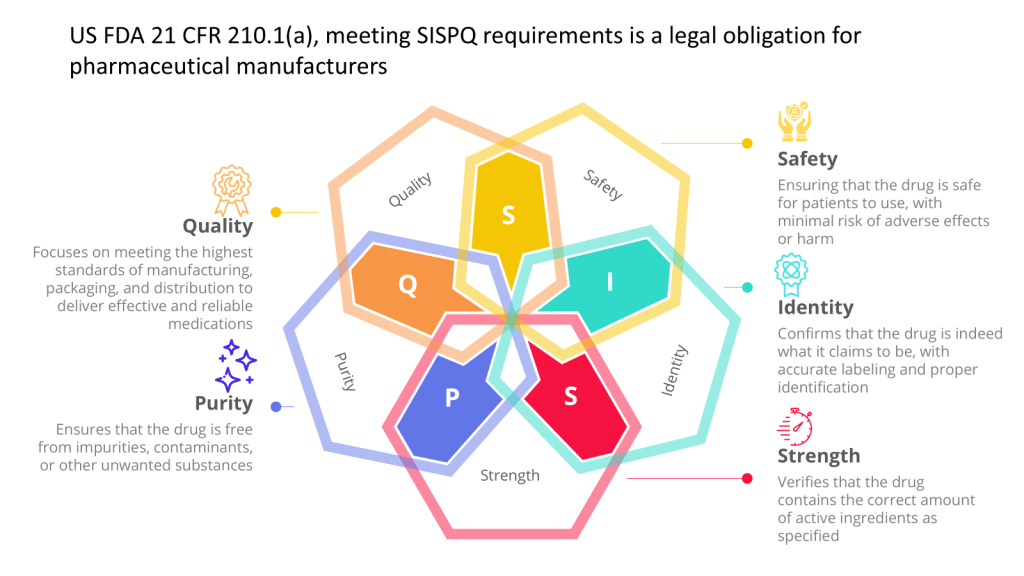
  3. Data Integrity: Systems that generate, store, or process data used to determine product SISPQ (e.g. batch quality or are included in batch processing records, stability, data used in a regulatory filing) are critical.
  4. Decision-Making Role: Systems used in the decision process for product release or a regulatory filing are considered critical.
  5. Contact with Products: Equipment or devices that may come into contact with products are often classified as critical.

Continuous Evaluation

It’s important to note that the criticality of systems should be periodically evaluated to ensure they remain in a valid state and compliant with GMP requirements. This includes reviewing the current range of functionality, deviation records, incidents, problems, upgrade history, performance, reliability, security, and validation status reports.

Phase Appropriate – An Unpacking

There is no term more misused and misunderstood than “Phase Appropriate.” It is one of those terms that just about everyone involved in FDA-regulated industries has an opinion on and one where we all get tripped up.

What do we mean by phase?

Drug development can be divided into discovery, preclinical studies, clinical development, and market approval. 

Each one of these phases is further broken down.

It is also important to remember that certain activities may start in earlier phases. For example, for manufacturing, tech transfer, and commercial manufacturing can start in Phase 3 (and more and more these days even 2!).

A similar approach can apply to medical devices.

Phase Appropriate GMPs

A Review of Regulations

21 CFR 210.2(c)An investigational drug for use in a phase 1 study, as described in § 312.21(a) of this chapter, is subject to the statutory requirements set forth in 21 U.S.C. 351(a)(2)(B). The production of such drug is exempt from compliance with the regulations in part 211 of this chapter. However, this exemption does not apply to an investigational drug for use in a phase 1 study once the investigational drug has been made available for use by or for the sponsor in a phase 2 or phase 3 study, as described in § 312.21(b) and (c) of this chapter, or the drug has been lawfully marketed. If the investigational drug has been made available in a phase 2 or phase 3 study or the drug has been lawfully marketed, the drug for use in the phase 1 study must comply with part 211.
FDA Guidance CGMP for Phase 1 Investigational Drugs
EMA/INS/GMP/258937/2022Guideline on the responsibilities of the sponsor with
regard to handling and shipping of investigational
medicinal products for human use in accordance with
Good Clinical Practice and Good Manufacturing Practice
Eudralex Volume 4 Annex 13Investigational Medicinal Products
ICH Q10 Diagram of the ICH Q10 Pharmaceutical Quality System Model (Annex 2)

What Activities are Phase-specific for the GMPs

Phase 1:

  • Critical quality attributes identified with safety Critical Quality Attributes (CQAs) clearly documented
  • Process changes as information is accumulated
  • Controls for analytical methods

Phase 2:

  • Processes characterized and Production and Process Controls (PPC) identified
  • Analytical methods are qualified
  • Materials acceptance criteria
  • Critical vendors qualified

Phase 3:

  • Processes validated with Production and Process Controls (PPC) identified and controlled
  • Validation of analytical methods
  • Materials have been fully qualified and tested upon receipt as appropriate

What About the Quality System?

ICH Q10 clearly spells out the PQS requirements, breaking down into stages of Pharmaceutical Development (usually Phase 1 and earlier), Technology Transfer (usually phase 2), Commercial Manufacturing (which may start before approval) and Product Discontinuation. Q10 then lays out the expectations by these stages for the four key elements of:

  1. Process performance and product quality monitoring system
  2. Corrective action and preventive action (CAPA) system
  3. Change management system
  4. Management review of process performance and product quality.
 Pharmaceutical DevelopmentTechnology TransferCommercial ManufacturingProduct Discontinuation
Process Performance and Product QualityProcess and product knowledge generated and process and product monitoring conducted throughout development can be used to establish a control strategy for manufacturing.Monitoring during scale-up activities can provide a preliminary indication of process performance and the successful integration into manufacturing. Knowledge obtained during transfer and scale up activities can be useful in further developing the control strategy.A well-defined system for process performance and product quality monitoring should be applied to assure performance within a state of control and to identify improvement areas.Once manufacturing ceases, monitoring such as stability testing should continue to completion of the studies. Appropriate action on marketed product should continue to be executed according to regional regulations.
Corrective Action and Preventive ActionProduct or process variability is explored. CAPA methodology is useful where corrective actions and preventive actions are incorporated into the iterative design and development process.CAPA can be used as an effective system for feedback, feedforward and continual improvement.CAPA should be used and the effectiveness of the actions should be evaluated.CAPA should continue after the product is discontinued. The impact on product remaining on the market should be considered as well as other products which might be impacted.
Change ManagementChange is an inherent part of the development process and should be documented; the formality of the change management process should be consistent with the stage of pharmaceutical development.The change management system should provide management and documentation of adjustments made to the process during technology transfer activities.A formal change management system should be in place for commercial manufacturing. Oversight by the quality unit should provide assurance of appropriate science and risk based assessments.Any changes after product discontinuation should go through an appropriate change management system.
Management Review of Process Performance and Product QualityAspects of management review can be performed to ensure adequacy of the product and process design.Aspects of management review should be performed to ensure the developed product and process can be manufactured at commercial scale.Management review should be a structured system, as described above, and should support continual improvement.Management review should include such items as product stability and product quality complaints.
ICH Stage appropriate quality system elements

Together with ICH Q9, this sets forth a framework of building knowledge and risk management into all aspects of the system together with a robust issue management mindset. There are really three things driving this.

  1. Consistency in execution
  2. Document decision making
  3. Follow through

Some aspects remain pretty steady in all phases/stages, while others will grow as the organization develops.

The Difference Between Maturity and Phase Appropriate

People confuse phase appropriate with maturity all the time. Phase appropriate means doing the right activities in the right order. Maturity means the how is the most effective possible.

Quality Management Maturity (QMM) is the state attained when drug manufacturers have consistent, reliable, and robust business processes to achieve quality objectives and promote continual improvement. This is both composed of phase independent and phase dependent aspects.

Remember, a Quality Culture is the foundation that makes the rest of this happen.

Catalent Belgium Form 483 and Contamination Control

The FDA recently released a Form 483 it handed to Catalent Belgium following an inspection of its 265,000 square-foot facility in Brussels in October 2021. Catalent is a pretty sizable entity, so it is very valuable to see what we can learn from their observations.

Failure to adequately assess an unexplained discrepancy or deviation

“Standard Operating Procedure STB-QA-0010, Deviation Management, v21 classifies deviations as minor, major or critical based on the calculation of a risk priority number, with a HEPA filter failure within a Grade A environment often classified as minor. Specifically, Deviation 327567 (Date of occurrence 04 March 2021) was for a HEPA filter failure on the <redacted> fill line, with a breach at the HEPA filter frame.”

This one is more common than it should be. I’ve recently written about categorization and criticality of events. I want to stress the term potential when addressing impact in the classification of events.

Control barriers exist for a reason. You breach that control barrier in any way, you have the potential to impact product or environment. It is really easy for experienced SMEs to say “But this has never had any real impact before” and then downgrade the deviation classification. Before long it becomes the norm that HEPA filter failures are minor because they never have impact. And then one does. Then there are shortages or worse.

It is important to avoid that complacency and treat each and every control barrier failure to the same level of investigation based on their potentiality to impact.

The other problem here is failure to identify trends and deal with them. I can honestly say that the last thing I ever want anyone, especially an inspector, to write about something where I have quality oversight is a failure to investigate multiple control barrier events.

Other GMP manufacturing areas have a similar elevated level of HEPA filter failures, with the root cause of the HEPA filter failures unknown. There is no CAPA in support of correction action. Your firm failed to ensure your investigations identify appropriate root causes and you failed to implement sustainable corrective action and preventive action (CAPA).

Contamination Control function

Observation 2 and 3 are doozies, but there is probably a lack of expertise involved here. The site is using out-of-date and inadequate methods in their validation. Hire a strong contamination control expert and leverage them. Build expertise in the organization through a robust training program. Connect this to all relevant quality systems/processes.

Corrective Maintenance and Troubleshooting

“Equipment and facilities used in the manufacture of drug product are not adequately maintained or appropriately designed to facilitate operations for their intended use.

The asset control lifecycle matters, and corrective maintenance can not be shorted.

This is starting to feel a lot like my upcoming presentation at the 2022 ISPE Aseptic Conference where I will be speaking on “Contamination Control, Risk and the Quality Management System

Contamination Control is a fairly wide term used to mean “getting microbiologists out of the lab” and involved in risk management and the quality management system. This presentation will evaluate best practices in building a contamination control strategy and ensuring its use throughout the quality system. Leveraging a House of Quality approach, participants will learn how to: Create targeted/ risk based measures of contamination avoidance; Implement Key performance indicators to assess status of contamination control; and ensure a defined strategy for deviation management (investigations), CAPA and change management.”

Maybe we can talk more there!