At ASQ BOSCON 2019 I spoke on “Knowledge management & effective change management.” From my proposal:
An effective change management system includes active knowledge management, leveraging existing process and product knowledge; capturing new knowledge gained during implementation of the change; and, transferring that knowledge in appropriate ways to all stakeholders. This session will focus on three key areas of knowledge management as it enables change. It will provide an understanding of the principles of knowledge management, including: transforming data into information; the acquisition and creation of knowledge; and the some shared best practices for dissemination and using information and knowledge for the purpose of change management and building a quality culture.
Cultivating expertise, in short learning, is critical to building a quality culture. Yet, the urgency of work easily trumps learning. It can be difficult to carve out time for learning in the inexorable flow of daily tasks. We are all experienced with the way learning ends up being in the lowest box on the 2×2 Eisenhower matrix, or however you like to prioritize your tasks.
For learning to really happen, it must fit around and align itself to our working days. We need to build our systems so that learning is an inevitable result of doing work. There are also things we as individuals can practice to make learning happen.
What we as individuals can do
Practice mindfulness. As you go about your daily job be present and aware, using it as an opportunity to ability to learn and develop. Don’t just sit in on that audit; notice and learn the auditor’s tactics and techniques as you engage with her. Ask product managers about product features; ask experts about industry trends; ask peers for feedback on your presentation skills. These kinds of inquiries are learning experiences and most peers love to tell you what they know.
Keep a to-learn list. Keep a list of concepts, thoughts, practices, and vocabulary you want to explore and then later later explore them when you have a few moments to reflect. Try to work a few off the list, maybe during your commute or at other times when you have space to reflect.
Build learning into your calendar. Many of us schedule email time, time for project updates, time to do administrative work. Make sure you dedicate time for learning.
Share meaningfully. Share with others, but just don’t spread links. Discuss why you are sharing it, what you learned and why you think it is important. This blog is a good example of that.
What we can build into our systems
Make sure our learning and knowledge management systems are built into everything we do. Make them easy to use. Ensure content is shared internally and leads to continuous improvement.
Plan for short-term wins. There is no nirvana, no perfect state. Ensure you have lots of little victories and shareable moments. Plan for this as part of your schedules and cycles.
Learning is a very effective lever for system improvement. At the very least it gives us the power to “add, change, evolve or self-organize system structure” (lever 4) and can also start giving us ways to change the paradigm (lever 2) and eventually even transcend paradigms (lever 1).
How do regions acquire the knowledge they need to diversify their economic activities? How does the migration of workers among firms and industries contribute to the diffusion of that knowledge? Here we measure the industry-, occupation-, and location-specific knowledge carried by workers from one establishment to the next, using a dataset summarizing the individual work history for an entire country. We study pioneer firms—firms operating in an industry that was not present in a region—because the success of pioneers is the basic unit of regional economic diversification. We find that the growth and survival of pioneers increase significantly when their first hires are workers with experience in a related industry and with work experience in the same location, but not with past experience in a related occupation. We compare these results with new firms that are not pioneers and find that industry-specific knowledge is significantly more important for pioneer than for nonpioneer firms. To address endogeneity we use Bartik instruments, which leverage national fluctuations in the demand for an activity as shocks for local labor supply. The instrumental variable estimates support the finding that industry-specific knowledge is a predictor of the survival and growth of pioneer firms. These findings expand our understanding of the micromechanisms underlying regional economic diversification.
C. Jara-Figueroa, Bogang Jun, Edward L. Glaeser, and Cesar A. Hidalgo. “The role of industry-specific, occupation-specific, and location-specific knowledge in the growth and survival of new firms” PNAS December 11, 2018 115 (50) 12646-12653; published ahead of print December 10, 2018 https://doi.org/10.1073/pnas.1800475115
Interesting academic paper on industry domain knowledge that has ramifications on the pharmaceutical industry, including the quality domain.
One of the hallmarks of a quality culture is learning from our past experiences, to eliminate repeat mistakes and to reproduce success. The more times you do an activity, the more you learn, and the better you get (within limits for simple activities). Knowledge management is an enabler of quality systems, in part, to focus on learning and thus accelerate learning across the organization as a whole, and not just one person or a team.
This is where the” lessons learned” process comes in. There are a lot of definitions of lessons learned out there, but the definition I keep returning to is that a lessons learned is a change in personal or organizational behavior as a result from learning from experience. Ideally, this is a permanent, institutionalized change, and this is often where our quality systems can really drive continuous improvement.
Lessons identified is generate, assess, and share.
Updated processes (and documents) is contextualize, apply and update.
Lessons Learned in the Context of Knowledge Management
Identify Lessons Learned
Identifying lessons needs to be done regularly, the closer to actual change management and control activities the better. The formality of this exercise depends on the scale of the change. There are basically a few major forms:
After action reviews: held daily (or other regular cycle) for high intensity learning. Tends to be very focused on questions of the day.
Retrospective: Held at specific periods (for example project gates or change control status changes. Tends to have a specific focus on a single project.
Consistency discussions: Held periodically among a community of practice, such as quality reviewers or multiple site process owners. This form looks holistically at all changes over a period of time (weekly, monthly, quarterly). Very effective when linked to a set of leading and lagging indicators.
Incident and events: Deviations happen. Make sure you learn the lessons and implement solutions.
The chosen formality should be based on the level of change. A healthy organization will be utilizing all of these.
Level of Change
Form of Lesson Learned
Transactional
Consistency discussion After action (when things go wrong)
Organizational
Retrospective After action (weekly, daily as needed)
Transformational
Retrospective After action (daily)
Successful lessons learned:
Are based on solid performance data: Based on facts and the analysis of facts.
Separate experience from opinion as much as possible. A lesson arises from actual experience and is an objective reflection on the results.
Generate distinct lessons from which others can learn and take action. A good action avoids generalities.
In practice there are a lot of similarities between the techniques to facilitate a good lessons learned and a root cause analysis. Start with a good core of questions, starting with the what:
What were some of the key issues?
What were the success factors?
What worked well?
What did not work well?
What were the challenges and pitfalls?
What would you approach differently if you ever did this again?
From these what questions, we can continue to narrow in on the learnings by asking why and how questions. Ask open questions, and utilize all the techniques of root cause analysis here.
Then once you are at (or close) to a defined issue for the learning (a root cause), ask a future-tense question to make it actionable, such as:
What would your advice be for someone doing this in the future?
What would you do next time?
Press for specifics. if it is not actionable it is not really a learning.
Update the Process
Learning implies memory, and an organization’s memories usually require procedures, job aids and other tools to be updated and created. In short, lessons should evolve your process. This is often the responsibility of the change management process owner. You need to make sure the lesson actually takes hold.
Differences between effectiveness reviews and lesson’s learned
What can we learn from this change for the next change?
Effectiveness reviews are 1 and 2 (based on a risk based approach) while lessons learned is 3. Lessons learned contributes to the health of the system and drives continuous improvements in the how we make changes.
Citations
Lesson learned management model for solving incidents. (2017). 2017 12th Iberian Conference on Information Systems and Technologies (CISTI), Information Systems and Technologies (CISTI), 2017 12th Iberian Conference On, 1.
Fowlin, J. j & Cennamo, K. (2017). Approaching Knowledge Management Through the Lens of the Knowledge Life Cycle: a Case Study Investigation. TechTrends: Linking Research & Practice to Improve Learning, 61(1), 55–64.
Michell, V., & McKenzie, J. (2017). Lessons learned: Structuring knowledge codification and abstraction to provide meaningful information for learning. VINE: The Journal of Information & Knowledge Management Systems, 47(3), 411–428.
Milton, N. J. (2010). The Lessons Learned Handbook : Practical Approaches to Learning From Experience. Burlington: Chandos Publishing.
Paul R. Carlile. (2004). Transferring, Translating, and Transforming: An Integrative Framework for Managing Knowledge across Boundaries. Organization Science, (5), 555.
Secchi, P. (Ed.) (1999). Proceedings of Alerts and Lessons Learned: An Effective way to prevent failures and problems. Technical Report WPP-167. Noordwijk, The Netherlands: ESTEC
Having recently said farewell to a leader in our quality organization, I have been reflecting on quality leaders and what makes one great. As I often do, I look to standards, in this case the American Society of Quality (ASQ).
The Certified Manager of Quality/Organizational Excellence (CMQ/OE)leads and champions process improvement initiatives—that can have regional or global focus—in various service and industrial settings. A CMQ/OE facilitates and leads team efforts to establish and monitor customer/supplier relations,supports strategic planning and deployment initiatives, and helps develop measurement systems to determine organizational improvement.
The ASQ’s Certified Manager of Quality/Operation Excellence (CMQ/OE) body of knowledge‘s first section is on leadership.
To be honest, the current body of knowledge (bok) is a hodge-podge collection of stuff that is sort of related but often misses a real thematic underpinning. The bok (and the exam) could use a healthy dose of structure when laying out the principles of roles and responsibilities, change management, leadership techniques and empowerment.
There are fundamental skills to being a leader:
Shape a vision that is exciting and challenging for your team (or division/unit/organization).
Translate that vision into a clear strategy about what actions to take, and what not to do.
Recruit, develop, and reward a team of great people to carry out the strategy.
Focus on measurable results.
Foster innovation and learning to sustain your team (or organization) and grow new leaders.
Lead yourself — know yourself, improve yourself, and manage the appropriate balance in your own life.
In order to do these things a leader needs to demonstrate skills in communication, critical thinking, problem solving, and skills motivating and leading teams (and self).
The best leaders know a lot about the domain in which they are leading, and part of what makes them successful in a management role is technical competence. A Quality leader needs to know quality as a domain AND the domain of the industry they are within.
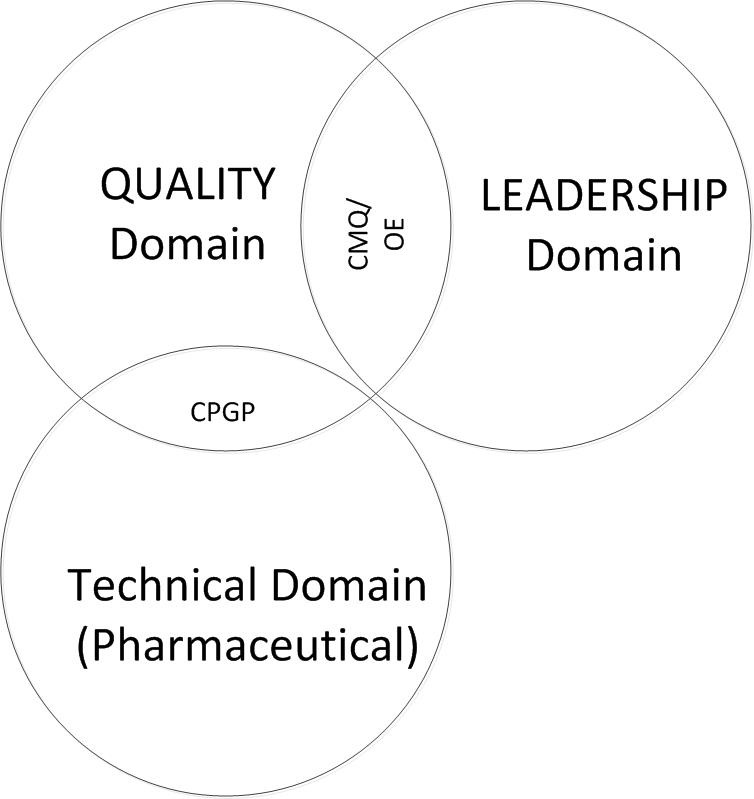
Three domains necessary for a quality leader
In my industry it is just not enough to know quality (for now we’ll define that as the ASQ BoK) nor is it enough to know pharmaceuticals (with regulatory being a subdomain). It is not enough just to have leadership skills. It is critical to be able to operate in all three areas.
To excel as a leader in practice, you also need a lot of expertise in a particular domain.
As an example, take the skill of thinking critically in order to find the essence of a situation. To do that well, you must have specific, technical expertise. The critical information an engineer needs to design a purification system is different from the knowledge used to understand drug safety, and both of those differ in important ways from what is needed to negotiate a good business deal.
When you begin to look at any of the core skills that leaders have, it quickly becomes clear that domain-specific expertise is bound up in all of them. And the domains of expertise required may also be fairly specific. Even business is not really a single domain. Leadership in pharmaceuticals, transportation, and internet (for example) all require a lot of specific knowledge.
Similarly, with only leadership and technical, you are going to fumble. Quality brings a set of practices necessary for success. A domain filled with analytical and decision making capabilities that cross-over with leadership (critical thinking and problem-solving) but are deepened with that perspective.
There are also other smaller domains, or flavors of domains. If I was building this model out more seriously I would have an interesting cluster of Health and Safety with Quality (the wider bucket of compliance even). I’m simplifying for this post.
Development of knowledge
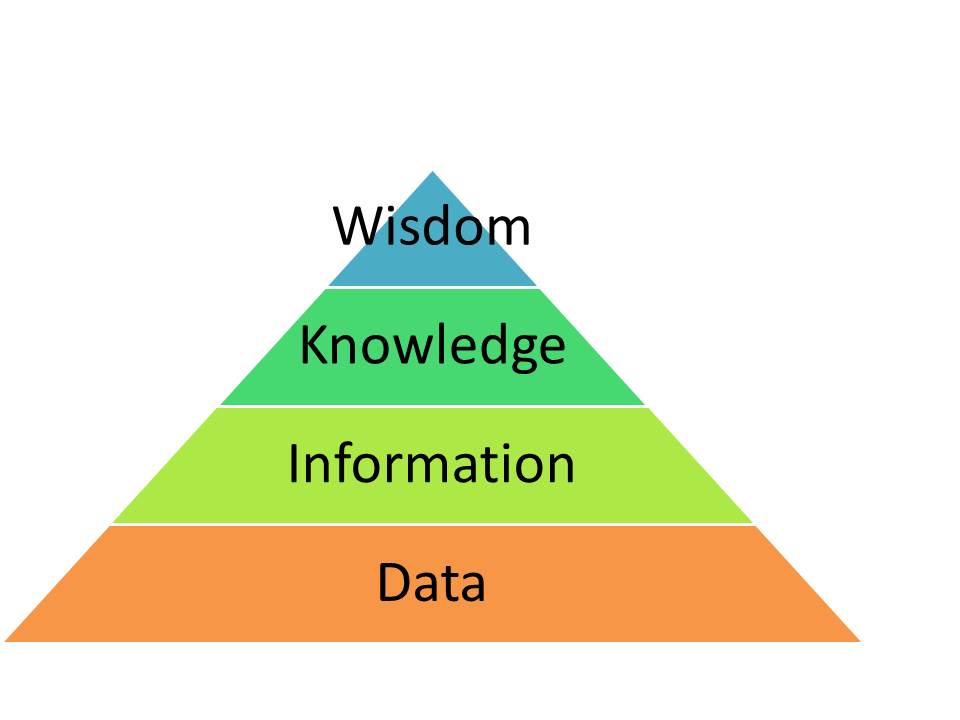
To go a step further. These three domains are critical for any quality professional. What changes is the development of wisdom and the widening of scope. This is why tenure is important. People need to be able to settle down and develop the skills they need to be successful in all three domains.
Good quality leaders recognize all this and look to build their organizations to reflect the growth of technical, quality and leadership domain.



 Investigations of a Dog