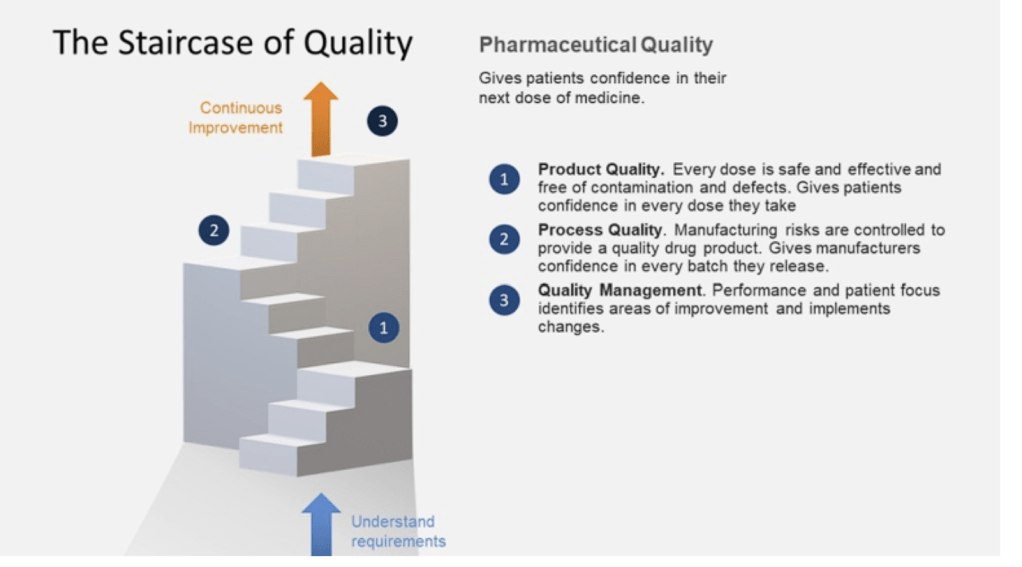
The Importance of a Quality Plan

In the ever-evolving landscape of pharmaceutical manufacturing, quality management has become a cornerstone of success. Two key frameworks guiding this pursuit of excellence are the ICH Q10 Pharmaceutical Quality System and the FDA’s Quality Management Maturity (QMM) program. At the heart of these initiatives lies the quality plan – a crucial document that outlines an organization’s approach to ensuring consistent product quality and continuous improvement.

What is a Quality Plan?

A quality plan serves as a roadmap for achieving quality objectives and ensuring that all stakeholders are aligned in their pursuit of excellence.

Key components of a quality plan typically include:

  1. Organizational objectives to drive quality
  2. Steps involved in the processes
  3. Allocation of resources, responsibilities, and authority
  4. Specific documented standards, procedures, and instructions
  5. Testing, inspection, and audit programs
  6. Methods for measuring achievement of quality objectives

Aligning with ICH Q10 Management Responsibilities

ICH Q10 provides a model for an effective pharmaceutical quality system that goes beyond the basic requirements of Good Manufacturing Practice (GMP). To meet ICH Q10 management responsibilities, a quality plan should address the following areas:

1. Management Commitment

The quality plan should clearly articulate top management’s commitment to quality. This includes allocating necessary resources, participating in quality system oversight, and fostering a culture of quality throughout the organization.

2. Quality Policy and Objectives

Align your quality plan with your organization’s overall quality policy. Define specific, measurable quality objectives that support the broader goals of quality realization, establishing and maintaining a state of control, and facilitating continual improvement.

3. Planning

Outline the strategic approach to quality management, including how quality considerations are integrated into product lifecycle stages from development through to discontinuation.

4. Resource Management

Detail how resources (human, financial, and infrastructural) will be allocated to support quality initiatives. This includes provisions for training and competency development of personnel.

5. Management Review

Establish a process for regular management review of the quality system’s performance. This should include assessing the need for changes to the quality policy, objectives, and other elements of the quality system.

Aligning with FDA’s Quality Management Maturity Model

The FDA’s QMM program aims to encourage pharmaceutical manufacturers to go beyond basic compliance and foster a culture of quality and continuous improvement. To align your quality plan with QMM principles, consider incorporating the following elements:

1. Quality Culture

Describe how your organization will foster a strong quality culture mindset. This includes promoting open communication, encouraging employee engagement in quality initiatives, and recognizing quality-focused behaviors.

2. Continuous Improvement

Detail processes for identifying areas where quality management practices can be enhanced. This might include regular assessments, benchmarking against industry best practices, and implementing improvement projects.

3. Risk Management

Outline a proactive approach to risk management that goes beyond basic compliance. This should include processes for identifying, assessing, and mitigating risks to product quality and supply chain reliability.

4. Performance Metrics

Define key performance indicators (KPIs) that will be used to measure and monitor quality performance. These metrics should align with the FDA’s focus on product quality, patient safety, and supply chain reliability.

5. Knowledge Management

Describe systems and processes for capturing, sharing, and utilizing knowledge gained throughout the product lifecycle. This supports informed decision-making and continuous improvement.

The SOAR Analysis

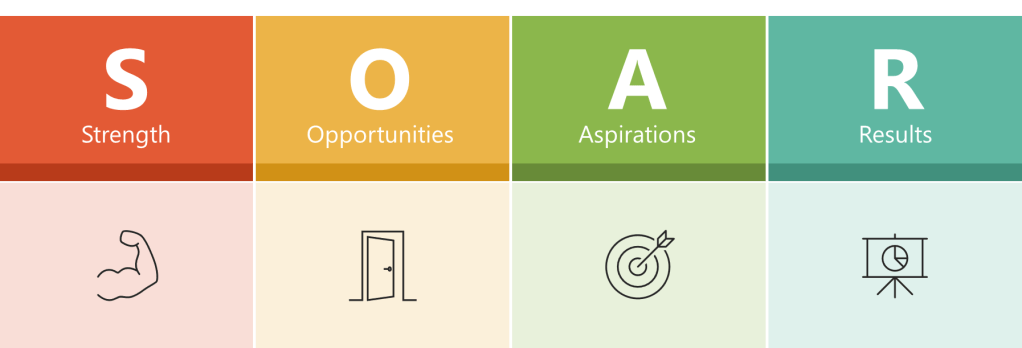
A SOAR Analysis is a strategic planning framework that focuses on an organization’s positive aspects and future potential. The acronym SOAR stands for Strengths, Opportunities, Aspirations, and Results.

Key Components

  1. Strengths: This quadrant identifies what the organization excels at, its assets, capabilities, and greatest accomplishments.
  2. Opportunities: This section explores external circumstances, potential for growth, and how challenges can be reframed as opportunities.
  3. Aspirations: This part focuses on the organization’s vision for the future, dreams, and what it aspires to achieve.
  4. Results: This quadrant outlines the measurable outcomes that will indicate success in achieving the organization’s aspirations.
Characteristics and Benefits

  • Positive Focus: Unlike SWOT analysis, SOAR emphasizes strengths and opportunities rather than weaknesses and threats.
  • Collaborative Approach: It engages stakeholders at all levels of the organization, promoting a shared vision.
  • Action-Oriented: SOAR is designed to guide constructive conversations and lead to actionable strategies.
  • Future-Focused: While addressing current strengths and opportunities, SOAR also projects a vision for the future.

Application

SOAR analysis is typically conducted through team brainstorming sessions and visualized using a 2×2 matrix. It can be applied to various contexts, including business strategy, personal development, and organizational change.

By leveraging existing strengths and opportunities to pursue shared aspirations and measurable results, SOAR analysis provides a framework for positive organizational growth and strategic planning.

The SOAR Analysis for Quality Plan Writing

Utilizing a SOAR (Strengths, Opportunities, Aspirations, Results) analysis can be an effective approach to drive the writing of a quality plan. This strategic planning tool focuses on positive aspects and future potential, making it particularly useful for developing a forward-looking quality plan. Here’s how you can leverage SOAR analysis in this process:

Conducting the SOAR Analysis

Strengths

Begin by identifying your organization’s current strengths related to quality. Consider:

  • Areas where your organization excels in quality management
  • Significant quality-related accomplishments
  • Unique quality offerings that set you apart from competitors

Ask questions like:

  • What are our greatest quality-related assets and capabilities?
  • Where do we consistently meet or exceed quality standards?

Opportunities

Next, explore external opportunities that could enhance your quality initiatives. Look for:

  • Emerging technologies that could improve quality processes
  • Market trends that emphasize quality
  • Potential partnerships or collaborations to boost quality efforts

Consider:

  • How can we leverage external circumstances to improve our quality?
  • What new skills or resources could elevate our quality standards?

Aspirations

Envision your preferred future state for quality in your organization. This step involves:

  • Defining what you want to be known for in terms of quality
  • Aligning quality goals with overall organizational vision

Ask:

  • What is our ideal quality scenario?
  • How can we integrate quality excellence into our long-term strategy?

Results

Finally, determine measurable outcomes that will indicate success in your quality initiatives. This includes:

  • Specific, quantifiable quality metrics
  • Key performance indicators (KPIs) for quality improvement
  • Key behavior indicators (KBIs) and Key risk indicators (KRIs)

Consider:

  • How will we measure progress towards our quality goals?
  • What tangible results will demonstrate our quality aspirations have been achieved?

Writing the Quality Plan

With the SOAR analysis complete, use the insights gained to craft your quality plan:

  1. Executive Summary: Provide an overview of your quality vision, highlighting key strengths and opportunities identified in the SOAR analysis.
  2. Quality Objectives: Translate your aspirations into concrete, measurable objectives. Ensure these align with the strengths and opportunities identified.
  3. Strategic Initiatives: Develop action plans that leverage your strengths to capitalize on opportunities and achieve your quality aspirations. For each initiative, specify:
    • Resources required
    • Timeline for implementation
    • Responsible parties
  4. Performance Metrics: Establish a system for tracking the results identified in your SOAR analysis. Include both leading and lagging indicators of quality performance.
  5. Continuous Improvement: Outline processes for regular review and refinement of the quality plan, incorporating feedback and new insights as they emerge.
  6. Resource Allocation: Based on the strengths and opportunities identified, detail how resources will be allocated to support quality initiatives.
  7. Training and Development: Address any skill gaps identified during the SOAR analysis, outlining plans for employee training and development in quality-related areas.
  8. Risk Management: While SOAR focuses on positives, acknowledge potential challenges and outline strategies to mitigate risks to quality objectives.

By utilizing the SOAR analysis framework, your quality plan will be grounded in your organization’s strengths, aligned with external opportunities, inspired by aspirational goals, and focused on measurable results. This approach ensures a positive, forward-looking quality strategy that engages stakeholders and drives continuous improvement.

A well-crafted quality plan serves as a bridge between regulatory requirements, industry best practices, and an organization’s specific quality goals. By aligning your quality plan with ICH Q10 management responsibilities and the FDA’s Quality Management Maturity model, you create a robust framework for ensuring product quality, fostering continuous improvement, and building a resilient, quality-focused organization.
Scale of Remediation Under a Consent Decree

The recent Sanofi Warning Letter certainly gets me thinking about the work of a consent decree and the scale and ‘stickiness‘ within an organization.

Scale of Remediation

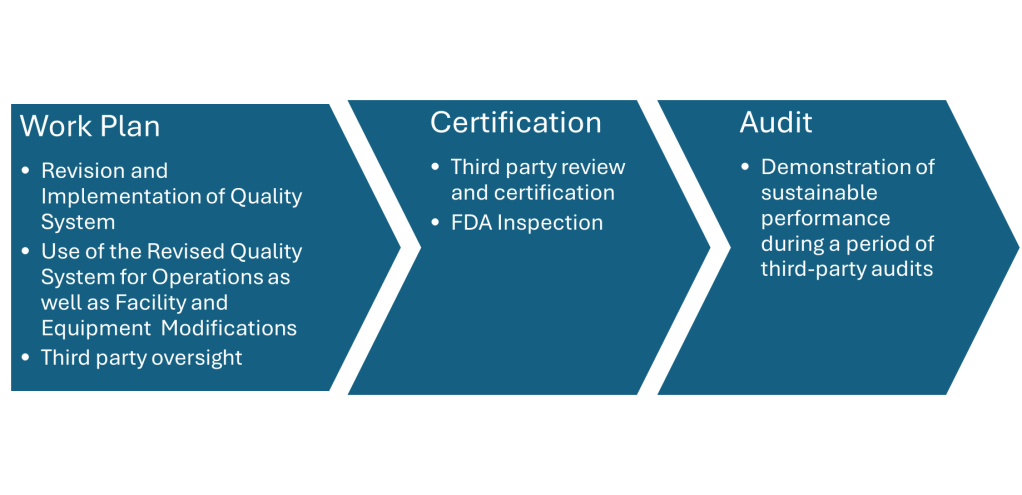
In the Sanofi-Genzyme consent decree there were these concentric circles of required activities. At the center was the plant the issue was discovered, the Allston Landing Facility, which had the full brunt of remediation.

The next level out were the plants in Framingham and Northborough. They had remediation actions to be done, including reduced third party oversight for critical activities for a more limited time. The consent decree was on a much reduced scale at these sites.

The next level out was the former Genzyme sites beyond the Massachusetts core. They did alignment to the new standards created as part of the consent decree. Finally the rest of Sanofi, after Sanofi bought Genzyme, pretty much ignored it.

This balkanization meant that the culture across the organization never really changed. The cultural resistance of the site/silos fostered a culture of “us vs. them” mentality within the organization. Without a unified organizational culture, it is much harder to implement and maintain changes across the entire company.

The Slippery Slope: How Quality Improvements Can Erode Over Time

The erosion of quality culture at Sanofi demonstrated by this new Warning Letter isn’t unique to this case. Even when quality improvement initiatives are launched with great enthusiasm and initial success it is not uncommon for these hard-won gains to gradually erode over time, leaving organizations back where they started or even worse off. This phenomenon of “quality backsliding” can be frustrating and costly.

Why Quality Improvements Fade

There are several reasons why quality improvements may deteriorate over time:

Leadership Changes: When key champions of quality initiatives leave or change roles, their successors may not prioritize maintaining those improvements. New leaders often want to make their own mark, potentially abandoning or de-emphasizing existing quality programs.

Budget Cuts: In times of financial pressure, quality improvement efforts are often seen as “nice to have” rather than essential. Resources dedicated to sustaining improvements may be reallocated, leading to a gradual decline in performance.

Complacency: Initial success can breed complacency. Once targets are met, there may be less motivation to continue pushing for further improvements or even maintaining current standards.

Loss of Focus: As new priorities emerge, attention and resources can shift away from quality initiatives. Without ongoing commitment, processes can slowly revert to old, less effective ways of working.

Lack of Standardization: If improvements aren’t fully standardized and integrated into daily operations, they remain dependent on individual efforts rather than becoming part of the organizational culture.

Pharmaceutical GMP Quality Systems: FDA, ICH Q10 and QMM

Recent LinkedIn discourse got me thinking of the wider pharmaceutical quality system and how it is reflected in ICH Q10 and in the FDA Guidance for Industry on Quality Systems Approach to Pharmaceutical CGMP Regulation.

ICH Q10

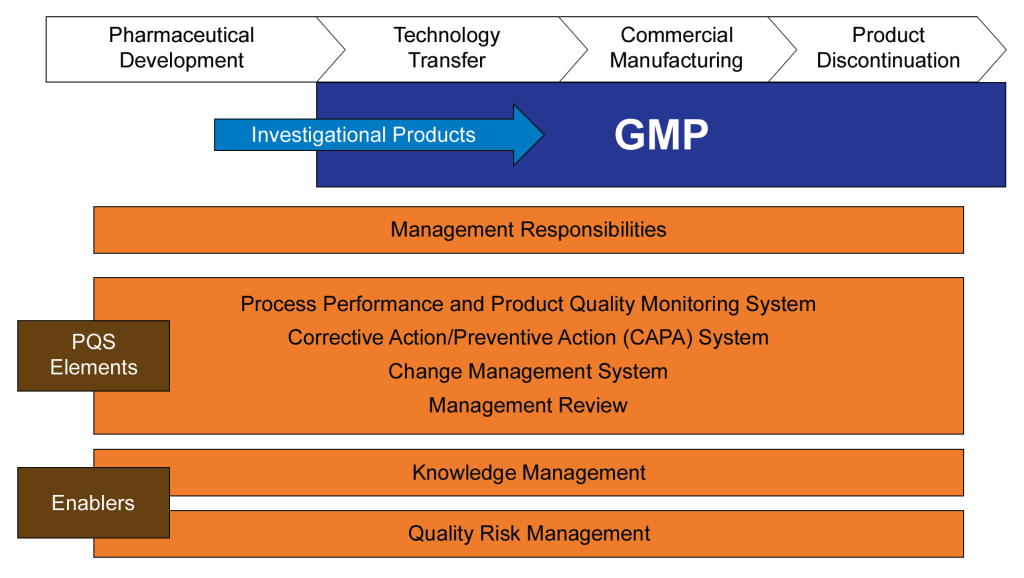
The International Conference on Harmonization (ICH) was established to harmonize the technical requirements for pharmaceutical product registration across Europe, Japan, and the United States. ICH Q10, finalized in June 2008, emerged from this initiative as a guideline for a comprehensive Pharmaceutical Quality System (PQS) applicable throughout the product lifecycle. It was adopted by the FDA in April 2009, following its implementation by the European Commission in July 2008.

ICH Q10 aims to provide a model for pharmaceutical manufacturers to develop and maintain effective quality management systems. The guideline emphasizes a lifecycle approach, integrating quality management principles from ISO standards and regional GMP requirements. The primary objectives of ICH Q10 include:

  • Ensuring consistent product quality that meets customer and regulatory requirements.
  • Establishing effective monitoring and control systems for process performance and product quality.
  • Promoting continual improvement and innovation throughout the product lifecycle.

The guideline outlines the key elements of management responsibilities, Corrective and Preventive Action (CAPA) , process performance and product quality monitoring, change management, and management review. ICH Q10 is usually considered part of the “Quality Trio” with ICH Q8 and Q9. Quality by design is only possible through proper risk management and a robust quality system.

FDA Guidance for Industry on Quality Systems Approach to Pharmaceutical CGMP Regulation

The FDA developed guidance on implementing modern quality systems and risk management practices to align with the CGMP (Current Good Manufacturing Practice) requirements outlined in parts 210 and 211 of the FDA regulations. These regulations govern the manufacturing of human and veterinary drugs, including biological products. Published in 2006, this guidance should be viewed as part of a continuum of thought with ICH Q10 and not as an earlier draft.

This guidance aims to assist manufacturers in meeting cGMP requirements by adopting a comprehensive quality systems model. It emphasizes the integration of quality systems with regulatory requirements to ensure full compliance without imposing new expectations on manufacturers. Key aspects of the guidance include:

  • Highlighting the consistency of the quality systems model with cGMP regulations.
  • Encouraging the use of risk management and quality systems to enhance compliance and product quality.
  • Providing a framework for manufacturers to gain control over their manufacturing processes.

Six-System Inspection Model

The FDA’s Six-System Inspection Model is a framework introduced in this guidance to ensure compliance with current Good Manufacturing Practice (CGMP) regulations in the pharmaceutical industry. This model helps FDA inspectors evaluate the robustness of a company’s quality management system by focusing on six key subsystems.

I am a huge fan of the six subsystem approach. Basically we have here the organization of the quality manual, a guide to what standards you need to write in a bigger company, and a franework for understanding the cGMPs as a whole (great for education purposes).

Here’s a detailed explanation of each subsystem:

1. Quality System

  • Role: Acts as the central hub for all other systems, ensuring overall quality management.
  • Focus: Management responsibilities, internal audits, CAPA (Corrective and Preventive Actions), and continuous improvement.
  • Importance: Ensures that all other systems are effectively integrated and managed to maintain product quality and regulatory compliance.

2. Facilities and Equipment System

  • Role: Ensures that facilities and equipment are suitable for their intended use and maintained properly.
  • Focus: Design, maintenance, cleaning, and calibration of facilities and equipment.
  • Importance: Prevents contamination and ensures consistent manufacturing conditions.

3. Materials System

  • Role: Manages the control of raw materials, components, and packaging materials.
  • Focus: Supplier qualification, receipt, storage, inventory control, and testing of materials.
  • Importance: Ensures that only high-quality materials are used in the manufacturing process, reducing the risk of product defects.

4. Production System

  • Role: Oversees the actual manufacturing processes.
  • Focus: Process controls, batch records, in-process controls, and validation.
  • Importance: Ensures that products are manufactured consistently and meet predefined quality criteria.

5. Packaging and Labeling System

  • Role: Manages the packaging and labeling processes to ensure correct and compliant product presentation.
  • Focus: Label control, packaging operations, and labeling verification.
  • Importance: Prevents mix-ups and ensures that products are correctly identified and used.

6. Laboratory Controls System

  • Role: Ensures the reliability of laboratory testing and data integrity.
  • Focus: Sampling, testing, analytical method validation, and laboratory records.
  • Importance: Verifies that products meet quality specifications before release.

Integration and Interdependence

  • Quality System as the Fulcrum: The quality system is the central element that integrates all other subsystems. It ensures that each subsystem functions correctly and is aligned with overall quality objectives.
  • State of Control: The primary goal of the six-system inspection model is to ensure that each subsystem is in a state of control, meaning it operates within predefined limits and consistently produces the desired outcomes.

The Six-System Inspection Model provides a structured approach for FDA inspectors to assess the compliance and effectiveness of a pharmaceutical company’s quality management system. By focusing on these six subsystems, the FDA ensures that all aspects of manufacturing, from raw materials to final product testing, are adequately controlled and managed to maintain high standards of product quality and safety.

A Complementary and Holistic Approach

Both ICH Q10 and the FDA’s guidance on quality systems approach aim to enhance the quality and safety of pharmaceutical products through robust quality management systems. ICH Q10 provides a harmonized model applicable across the product lifecycle, while the FDA guidance focuses on integrating quality systems with existing CGMP regulations. Together, they support the pharmaceutical industry in achieving consistent product quality and regulatory compliance.

AspectICH Q10FDA Guidance on CGMPISO 13485 and 21 CFR 820ISO 9000
Purpose and ScopeComprehensive model for pharmaceutical quality systems across the product lifecycle.Quality systems approach to ensure CGMP compliance in pharmaceuticals.Quality management system for medical devices, incorporating ISO 13485 and regulatory requirements of 21 CFR 820.Fundamentals and vocabulary for quality management systems applicable to any industry.
Industry FocusSpecifically for the pharmaceutical industry.Specifically for the pharmaceutical industry.Specifically for the medical device industry.Applicable to any industry.
Key ElementsManagement responsibilities, CAPA, process performance, change management, management review.Management responsibilities, quality systems, process validation, continuous improvement.Risk management, quality manual, documentation requirements (e.g., Device Master Records, Device History Records).Quality management principles, terms, and definitions.
Regulatory FocusStrong emphasis on regulatory compliance and lifecycle management.Strong emphasis on regulatory compliance with CGMP.Incorporates regulatory requirements specific to medical devices (21 CFR 820).Does not directly address regulatory compliance.
FlexibilityFlexible, adaptable to specific product and process needs.More prescriptive with specific compliance requirements.Harmonized with international standards but includes specific regulatory requirements.Provides a broad framework for customization.
Management InvolvementEmphasizes management’s role in quality and regulatory compliance.Emphasizes management’s role in quality and CGMP integration.Emphasizes management’s role in quality and risk-based decision making.Emphasizes management’s role in quality and customer satisfaction.
ImplementationTailored to pharmaceutical manufacturing, integrating quality management principles.Mandates oversight and controls over drug manufacturing processes.Requires a quality manual and specific documentation practices; aligned with international standards.Requires customization to specific industry needs.

These two documents were developed at the same time and represents the thinking twenty years ago in laying down an approach that still matters today. I usually regard the six system approach as a deepening and defining of what Q10 means by process performance and product quality monitoring.

What is the current agency thinking?

The FDA and other revulatory agencies haven’t stopped their thinking in 2008. Sixteen years later we see the continued push for quality culture and quality maturity. The FDA continues to make this a top priority, as we’ve been seeing in their annual drug shortage reports to Congress. There are a few themes we continue to see driven home.

The Patient is the Customer

Quality management must be customer-focused, ensuring that all processes and materials meet their intended use. Senior management’s commitment is crucial for a strong QMS, which emphasizes proactive quality assurance over reactive quality control. Robust supplier relationships and oversight programs are essential to manage variability in materials and processes.

This application of a core priciple in ISO 9000 may seem to basic to some, but I think it is central to a lot of messaging and should never be taken for granted.

Benefits of Better Quality Performance

A continued focus that a quality-focused culture leads to:

  • Early problem detection
  • Enhanced process stability and productivity
  • Fewer major deviations and failures
  • Efficient QA release of batches
  • Reduced customer complaints and returns
  • Protection of brand and competitiveness

Management Oversight of Drug Quality

Management must address sources of variability, including people, materials, methods, measurements, machines, and environment. Risk management should be dynamic and ongoing, facilitating continual learning and improvement.

Corrective Action and Preventive Action (CAPA)

A structured approach to investigating complaints, product rejections, nonconformances, recalls, deviations, audits, regulatory inspections, and trends is essential. CAPA should determine root causes and implement corrective actions.

Change Management

Timely and effective change management ensures corrections and improvements are undertaken efficiently. This includes implementing product quality improvements, process improvements, variability reduction, innovations, and pharmaceutical quality system enhancements.

Management Review

Management is responsible for quality policy, QMS effectiveness, internal communications, resource management, and supply chain oversight. This includes ensuring the quality of incoming materials and outsourced activities.

Quality Culture Driven by Top Management

A strong corporate quality culture is driven by daily decisions and executive oversight. Sustainable compliance requires aiming for high standards rather than just meeting minimum requirements. Quality management maturity involves proactive and preventive actions, iterative learning, and leveraging modern technologies.

Facility Lifecycle

Senior management must ensure the suitability of operational design, control, and maintenance. This includes addressing infrastructure reliability, appropriateness for new product demands, and mitigating equipment/facility degradation.

Risk Management in Manufacturing

Human factors and manual interventions pose significant risks in pharmaceutical manufacturing. Automation and separation technologies can mitigate these risks, but many facilities still rely on manually intensive processes. Leveraging new technologies and practices is a huge opportunity.

This approach is reflected in the FDA’s Quality Management Maturity (QMM), which promotes advanced quality management practices within drug manufacturing establishments.

Goals of the QMM Program

  1. Foster a Strong Quality Culture Mindset: Encourage establishments to integrate quality deeply into their organizational culture.
  2. Recognize Advanced Quality Management Practices: Acknowledge and reward establishments that go beyond basic CGMP (Current Good Manufacturing Practices) requirements.
  3. Identify Growth Opportunities: Provide suggestions for enhancing quality management practices.
  4. Minimize Risks to Product Availability: Ensure a reliable market supply by reducing quality-related failures and maintaining performance during supply chain disruptions.

Key Components of the QMM Program

  • Management Commitment to Quality: Leadership must prioritize quality, set clear objectives, and integrate these with business goals. Effective management review processes are crucial.
  • Business Continuity: Establishments should develop robust plans to handle disruptions, ensuring consistent operations and supply chain reliability.
  • Advanced Pharmaceutical Quality System (PQS): Implementing quality principles like Quality by Design (QbD) and risk management approaches to maintain system reliability and minimize production disruptions.
  • Technical Excellence: Emphasizing data management, innovative manufacturing processes, and advanced technologies to enhance quality and operational efficiency.
  • Employee Engagement and Empowerment: Encouraging employees to take ownership of quality, make suggestions, and understand their impact on product quality and patient safety.

Implementation and Assessment

  • The FDA has developed a prototype assessment protocol to evaluate QMM. This includes a standardized approach to minimize bias and ensure objectivity. Someday, eventually, it will move away from constant prototyping.
  • Assessments will focus on qualitative aspects, such as the establishment’s quality culture and how it uses data to drive improvements.

Benefits of QMM

  • Enhanced Supply Chain Reliability: By adopting mature quality management practices, establishments can reduce the occurrence of quality-related failures. The fact shortages continue to be so damning to our industry is a huge wake-up call.
  • Proactive Continual Improvement: Encourages a proactive approach to quality management, leveraging technological advancements and integrated business operations.
  • Long-term Cost Savings: Investing in a mature quality culture can lead to fewer compliance issues, reduced inspection needs, and overall cost reductions.

Conclusion

The FDA’s QMM program aims to transform how pharmaceutical quality is perceived, measured, and rewarded. The program seeks to ensure a more reliable drug supply and better patient outcomes by fostering a strong quality culture and recognizing advanced practices. It should be seen as part of a 20-year commitment from the agency in alignment with its international partners.

The Challenges Ahead for Quality

Discussions about Industry 4.0 and Quality 4.0 often focus on technology. However, technology is just one of the challenges that Quality organizations face. Many trends are converging to create constant disruption for businesses, and the Quality unit must be ready for these changes. Rapid changes in technology, work, business models, customer expectations, and regulations present opportunities to improve quality management but also bring new risks.

The widespread use of digital technology has raised the expectations of stakeholders beyond what traditional quality management can offer. As the lines between companies, suppliers, and customers become less distinct, the scope of quality management must expand beyond the traditional value chain. New work practices, such as agile teams and remote work, are creating challenges for traditional quality management governance and implementation strategies. To remain relevant, Quality leaders must adapt to these changes..

 ChallengeMeansImpact to Quality ManagementHow to Prepare
Advanced AnalyticsThe increase in data sources and improved data processing has led to higher expectations from customers, regulators, business leaders, and employees. They expect companies to use data analytics to provide advanced insights and improve decision-making.Requires a holistic approach that allows quality professionals to access, analyze and apply insights from structured and unstructured data

Quality excellence will be determined by how quickly data can be captured, analyzed, shared and applied  
Develop a talent strategy to recruit, develop, rent or borrow individuals with data analytics capabilities, such as data science, coding and data visualization
Hyper-AutomationTo become more efficient and agile in a competitive market, companies will increasingly use technologies like RPA, AI, and ML. These technologies will automate or enhance tasks that were previously done by humans. In other words, if a task can be automated, it will be.How to ensure these systems meet intended use and all requirements

Algorithm-error-generated root causes
Develop a hyperautomation vision for quality management that highlights business outcomes and reflects the use cases of relevant digital technology

Perform a risk-based assessment with appropriate experts to identify critical failure points in machine and algorithm decision making
Virtualization of WorkThe shift to remote work due to COVID-19, combined with advancements in cloud computing and AR/VR technology, will make work increasingly digital.Rethink how quality is executed and governed in a digital environment.Evaluate current quality processes for flexibility and compatibility with virtual work and create an action plan.

Uncover barriers to driving a culture of quality in a virtual working environment and
incorporate virtual work-relevant objectives, metrics and activities into your strategy.
Shift to Resilient OperationsPrioritizing capabilities that improve resilience and agility.Adapt in real-time to changing and simultaneously varying levels of risk without sacrificing the core purpose of QualityEnable employees to make faster decisions without sacrificing quality by developing training to build quality-informed judgment and embedding quality guidance in employee workflows.

Identify quality processes that may prevent operational resilience and reinvent them by starting from scratch, ruthlessly challenging the necessity of every step and requirement.

Ensure employees and new hires have the right skill sets to design, build and operate a responsive network environment.
Rise of Inter-connected EcosystemsThe growth of interconnected networks of people, businesses, and devices allows companies to create value by expanding their systems to include customers, suppliers, partners, and other organizations.Greater connectivity between customers, suppliers, and partners provides more visibility into the value chain. However, it also increases risk because it can be difficult to understand and manage different views of quality within the ecosystem.Map out the entire quality management ecosystem model and its participants, as well as their interactions with customers.

Co-develop critical-to-quality behaviors with strategic partners.

Strengthen relationships with partners across the ecosystem to capture and leverage relevant information and data, while at the same time addressing data privacy concerns.
Digitally Native WorkforceShift from digital immigrants (my generation and older) to digital natives who are those people who have grown up and are comfortable with computers and the internet. Unlike other generations, digital natives are so used to using technology in all areas of their lives that it is (and always has been) an integral, necessary part of their day-to-day.Increased flexibility leads to a need to rethink the way we monitor, train, and incentivize quality.

Connecting the 4 Ps: People, Processes, Policies and Platforms
Identify and target existing quality processes to digitize to offer desired flexibility.

Adjust messages about the importance of quality to connect with values employees care about (e.g., autonomy, innovation, social issues).
Customer Expectation MultiplicityCustomer expectations evolve quickly and expand into new-in-kind areas as access to information and global connectedness increases.Develop product portfolios, internal processes and company cultures that can quickly adapt to rapidly changing customer expectations for quality.Identify where hyperautomation and predictive capabilities of quality management can enhance customer experience and prevent issues before they occur.
Increasing Regulatory ComplexityThe global regulatory landscape is becoming more complex as countries introduce new regulations at different rates. Increased push for localization.Need strong system to efficiently implement changes across different systems, locations, and regions while maintaining consistent quality management throughout the ecosystem.Coordinate a structured regulatory tracking approach to monitor changing regulatory developments — highly regulated industries require a more comprehensive approach compared to organizations in a moderate regulatory environment
Challenges to Quality Management

The traditional Value Proposition of quality management is no longer sufficient to meet the expectations of stakeholders. With the rise of a digitally native workforce, there are new expectations for how work is done and managed. Business leaders expect quality leaders to have full command of operational data, diagnosing and anticipating quality problems. Regulators also expect high data transparency and traceability.

The value proposition of quality management lies in predicting problems rather than reacting to them. The primary objective of quality management should be to find hidden value by addressing the root causes of quality issues before they manifest. Quality organizations who can anticipate and prevent operational problems will meet or exceed stakeholder expectations.

Our organizations are on a journey towards utilizing predictive capabilities to unlock value, rather than one that retroactively solves problems. Our scope needs to be based on quality being predictive, connected, flexible, and embedded. For me this is the heart of Qualty 4.0.

Quality management should be applied across a multitude of systems, devices, products, and partners to create a seamless experience. This entails transforming quality from a function into an interdisciplinary, participatory process. The expanded scope will reach new risks in an increasingly complex ecosystem. The Quality unit cannot do this on its own; it’s all about breaking down silos and building autonomy within the organization.

To achieve this transformation, we need to challenge ourselves to move beyond top-down and regimented Governance Models and Implementation Strategies. We need to balance our core quality processes and workflows to achieve repeatability and consistency while continually adjusting as situations evolve. We need to build autonomy, critical thinking, and risk-based thinking into our organizational structures.

One way to achieve this is by empowering end-users to solve their own quality challenges through participatory quality management. This encourages personal buy-in and enables quality governance to adapt in real-time to different ways of working. By involving end-users in the process of identifying and solving quality issues, we can build a culture of continuous improvement and foster a sense of ownership over the quality of our products and services.

The future of quality management lies in being predictive, connected, flexible, and embedded.

  • Predictive: The value proposition of quality management needs to be predicting problems over problem-solving.
  • Connected: The scope of quality management needs to extend beyond the value chain and connect across the ecosystem
  • Flexible: The governance model needs to be based on an open-source model, rather than top-down.
  • Embedded: The implementation strategy needs to shift from viewing quality as a role to quality as a skill.

By embracing these principles and involving all stakeholders in the process of continuous improvement, we can unlock hidden value and exceed stakeholder expectations.

Deaing with these challenges and implications requires the Quality organization to treat transformation like a Program. This program should have four main initiative areas:

  1. Build the capacity for targeted prevention through targeted data insights. This includes building alliances with IT and other teams to have the right data available in flexible ways but it also includes the building of capacity to actually use the data.
  2. Expand quality management to cover the entire value network.
  3. Localize Risk Management to Make Quality Governance Flexible and Open Source.
  4. Distribute Tasks and Knowledge to Embed Quality Management in the Business.

Across these pillars the program approach will:

  1. Assess the current state: Identify areas requiring attention and improvement by examining existing People, Processes, Policies and Platforms. This comprehensive assessment will provide a clear understanding of the organization’s current situation and help pinpoint areas where projects can have the most significant impact
  2. Establish clear objectives: Establish clear objectives to h provide a clear roadmap for success.
  3. Prioritize foundational elements: Prioritize building foundational elements. Avoid bells-and-whistles for their own sake.
  4. Develop a phased approach: This is not an overnight process. Develop a phased approach that allows for gradual implementation, with clear milestones and measurable outcomes. This ensures that the organization can adapt and adjust as needed while maintaining ongoing operations and minimizing disruptions.
  5. Collaborate with stakeholders: Engage stakeholders from across the organization,to ensure alignment and buy-in. Create a shared vision for the initiative to ensure that everyone is working towards the same goals. Regular communication and collaboration among stakeholders will foster a sense of ownership and commitment to the transformation process.
  6. Continuously monitor progress: Regularly review the progress, measuring outcomes against predefined objectives. This enables organizations to identify any potential issues or roadblocks and make adjustments as necessary to stay on track. Establishing key performance indicators (KPIs) will help track progress and determine the effectiveness of the Program.
  7. Embrace a culture of innovation: Encourage a culture that embraces innovation and continuous improvement. This helps ensure that the organization remains agile and adaptive, making it better equipped to take advantage of new technologies and approaches as they emerge. Fostering a culture of innovation will empower employees to seek out new ideas and solutions, driving long-term success.
  8. Invest in employee training and development: It is crucial to provide employees with the necessary training and development opportunities to adapt to new technologies and processes. This will ensure that employees are well-equipped to handle the changes brought about by these challenges and contribute to the organization’s overall success.
  9. Evaluate and iterate: As the Program unfolds, it is essential to evaluate the results of each phase and make adjustments as needed. This iterative approach allows organizations to learn from their experiences and continuously improve their efforts, ultimately leading to greater success.

To do this leverage the eight accelerators to change.

Balancing Expertise

Quality professionals are often defined by our technical knowledge, and with that can come a genuine and intense love and interest in the work. In the pharmaceutical/med-device work, I work in this is defined by both a knowledge of the science and of the regulations (and that stuff inbetween – regulatory science).

The challenge here is that we start defining ourselves by our role as we progress as representing the highest level of expertise in this technical expertise, which means senior Quality (as in the department) jobs are defined in terms of in service to our function – patient safety and product quality (safety, efficacy, and quality). This can then lead to seeing people as the “means” to that end. This inevitably leads to prioritizing that outcome over people.

Do not get me wrong, results matter, and I am a firm proponent of product quality and patient safety. But this approach is reductionist and does not serve to drive fear out of the organization. How can people be safe if they are considered a means to produce value? We need to shift so that we realize we can only get to quality by focusing on our people.