
Leaks in Single-Use Manufacturing: A Critical Challenge in Bioprocessing

The recent FDA warning letter to Sanofi highlights a critical issue in biopharmaceutical manufacturing: the integrity of single-use systems (SUS) and the prevention of leaks. This incident serves as a stark reminder of the importance of robust control strategies in bioprocessing, particularly when it comes to high-pressure events and product leakage.

The Sanofi Case: A Cautionary Tale

In January 2025, the FDA issued a warning letter to Sanofi regarding their Genzyme facility in Framingham, Massachusetts. The letter cited significant deviations from Current Good Manufacturing Practice (CGMP) for active pharmaceutical ingredients (APIs). One of the key issues highlighted was the company’s failure to address high-pressure events that resulted in in-process product leakage.

Sanofi had been using an unapproved workaround, replacing shipping bags to control the frequency of high-pressure and in-process leaking events. This deviation was not properly documented or the solution validated.

A proper control strategy in this context would likely involve:

  1. A validated process modification to prevent or mitigate high-pressure events
  2. Engineering controls or equipment upgrades to handle pressure fluctuations safely
  3. Improved monitoring and alarm systems to detect potential high-pressure situations
  4. Validated procedures for responding to high-pressure events if they occur
  5. A comprehensive risk assessment and mitigation plan related to pressure control in the manufacturing process

The Importance of Leak Prevention in Single-Use Systems

Single-use technologies have become increasingly prevalent in biopharmaceutical manufacturing due to their numerous advantages, including reduced risk of cross-contamination and increased flexibility. For all this to work, the integrity of these systems is paramount to ensure product quality and patient safety.

Leaks in single-use bags can lead to:

  1. Product loss
  2. Contamination risks
  3. Costly production delays
  4. Regulatory non-compliance

Strategies for Leak Prevention and Detection

To address the challenges posed by leaks in single-use systems, manufacturers need to consider implementing a comprehensive control strategy. Here are some key approaches:

1. Integrity Testing

Implementing robust integrity testing protocols is crucial. Two non-destructive testing methods are particularly suitable for single-use systems:

  • Pressure-based tests: These tests can detect leaks by inflating components with air to a defined pressure. They can identify defects as small as 10 µm in flat bags and 100 µm in large-volume 3D systems.
  • Trace-gas-based tests: Typically using helium, these tests offer the highest level of sterility assurance and can detect even smaller defects.

2. Risk-Based Quality by Design (QbD) Approach

Single-use components and the manufacturing process must be established and maintained using a risk-based QbD approach that can help identify potential failure points and implement appropriate controls. This should include:

  • Comprehensive risk assessments
  • Validated procedures for responding to high-pressure events
  • Improved monitoring and alarm systems

Validated Process Modifications

Instead of using unapproved workarounds, companies need to develop and validate process modifications to prevent or mitigate high-pressure events. One thing to be extra cautious about is the worry of a temporary solution becoming a permanent one.

Conclusion

The Sanofi warning letter serves as a crucial reminder of the importance of maintaining the integrity of single-use systems in biopharmaceutical manufacturing. By implementing comprehensive control strategies, including robust integrity testing, risk-based approaches, and validated process modifications, manufacturers can significantly reduce the risk of leaks and ensure compliance with cGMP standards.

As the industry continues to embrace single-use technologies, it’s imperative that we remain vigilant in addressing these challenges to maintain product quality, patient safety, and regulatory compliance.
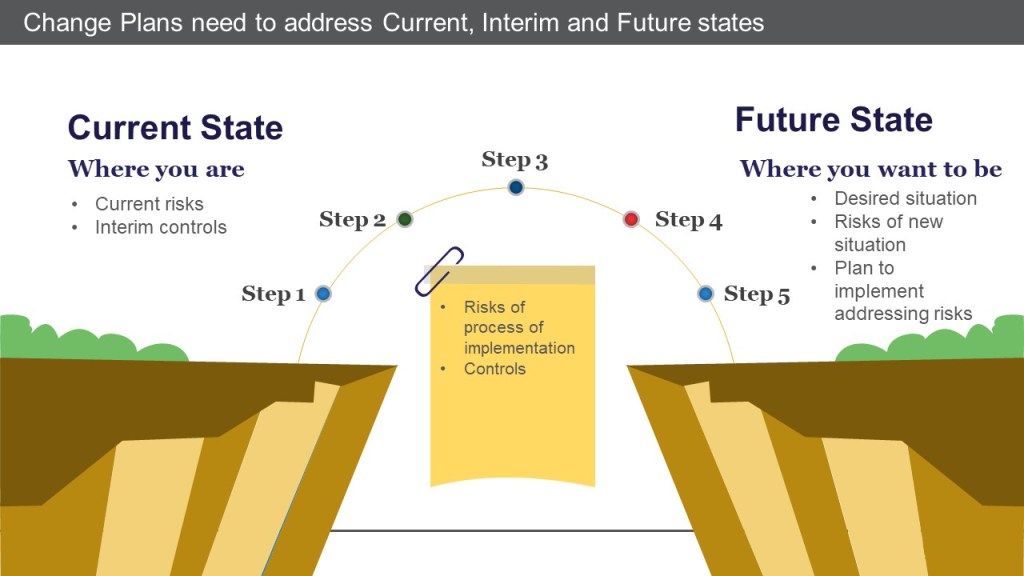
Interim Controls within a Change Control

The PIC/S recommendation on change control section 5.3 “Change Planning & Implementation” recognizes that changes often address issues that need to be remediated:

  • Potential risks with the current state (until changes are implemented) and any risks that might be temporarily introduced during the change process are adequately assessed.
  • Interim controls (short-term measures), as needed, are identified and implemented in a timely manner to monitor/mitigate risks associated with the current situation (until change implementation).

This section also recognizes that changes introduce an interim set of conditions that lead to implementation – from opening a machine through massive construction activities, and just about anything else.

A good change control does not just address what is necessary to implement the desired future state. It also contains interim controls for managing the current state until the future is implemented, and addresses all of the potential risks during the process of implementation.

Change plans address current, interim, and future states

Often the change control stems from an action plan in a CAPA record, where the interim controls are specifically called out and detailed. These may be adequate for a relatively brief period but are not realistically sustainable. Remember that these interim controls must also go through the appropriate change control process. Which may have been a separate change control or be part of this change control. In all cases, the change control should either determine that the CAPA plan is adequate or identify additional risks that were identified during change planning.

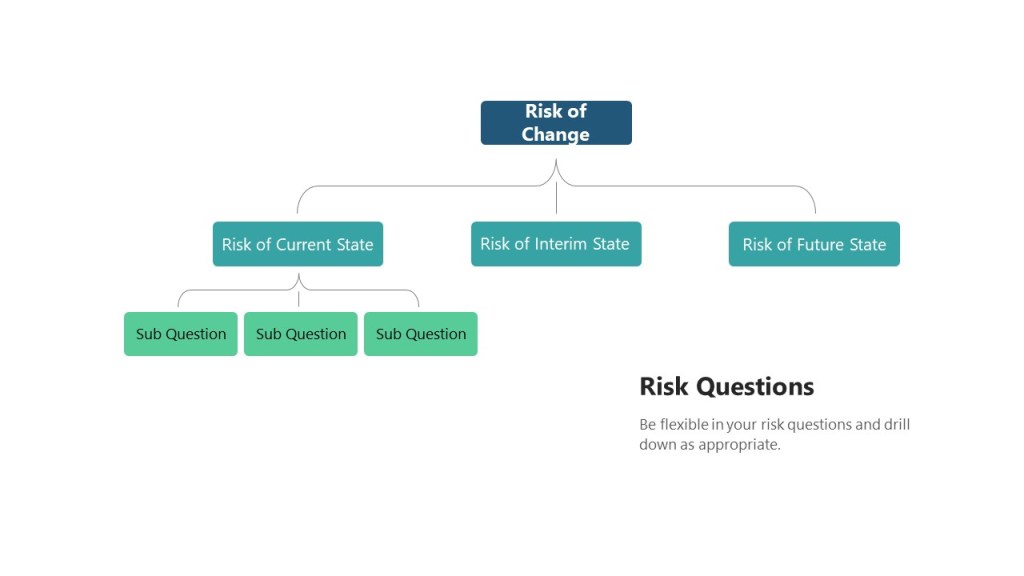
Risk assessments for change control should really have three basic risk questions:

  • What are the risks of the current state as we implement the change?
  • What are the risks of the implementation process?
  • What are the risks of the future state?

As discussed elsewhere, these questions are really branching trees.

The Risk Question branches in changes

Interim controls in a change are usually little temporary changes in the change plan that either mitigate occurrence or impact.

Interim Control TypeMitigate OccurrenceMitigate Impact
ExamplesEvery record processed will be reviewed for the event error before completion. Revised preventive maintenance procedure to require vibration test at next preventive maintenance. Increase cleaning frequency of incubator.Add emergency response steps to address a valve that is malfunctioning. Add engineering check for pump prior to each use. Perform cleaning log review prior to use.

As temporary changes, it is important to determine how they will be implemented, if they require monitoring, and how they will go away. Often the process of implementation of the change removes the temporary changes, but that is not always the case.

Top 5 Posts by Views in 2019 (first half)

With June almost over a look at the five top views for 2019. Not all of these were written in 2019, but I find it interesting what folks keep ending up at my blog to read.

  1. FDA signals – no such thing as a planned deviation: Since I wrote this has been a constant source of hits, mostly driven by search engines. I always feel like I should do a follow-up, but not sure what to say beyond – don’t do planned deviations, temporary changes belong in the change control system.
  2. Empathy and Feedback as part of Quality Culture: The continued popularity of this post since I wrote it in March has driven a lot of the things I am writing lately.
  3. Effective Change Management: Change management and change control are part of my core skill set and I’m gratified that this post gets a lot of hits. I wonder if I should build it into some sort of expanded master class, but I keep feeling I already have.
  4. Review of Audit Trails: Data Integrity is so critical these days. I should write more on the subject.
  5. Risk Management is about reducing uncertainty: This post really captures a lot of the stuff I am thinking about and driving action on at work.

Thinking back to my SWOT, and the ACORN test I did at the end of 2018, I feel fairly good about the first six months. I certainly wish I found time to blog more often, but that seems doable. And like most bloggers, I still am looking for ways to increase engagement with my posts and to spark conversations.

FDA signals – no such thing as a planned deviation

The subject of planned deviations made for a raucous “Breakfast with the FDA” session Sept. 25 at the Parenteral Drug Association/FDA conference in Washington.

These are the deviations from standard operating procedures that workers carry out on purpose, typically to keep a pharmaceutical plant operating when for one reason or another they won’t be doing it the way the company said they would.

FDA Compliance Experts Advise Against Treating Minor Changes As ‘Planned Deviations’” – Bowman Cox, Pink Sheet

I wish I had gone to the PDA/FDA conference this year, if for nothing else to have been able to stand up and cheer wildly when this was said:

Brooke Higgins, a senior policy advisor in the FDA drug center’s Office of Compliance, agreed that “it’s a very strange term, and it kind of makes your skin crawl a little bit.”

There is a whole lot more good stuff over at the Pink Sheet’s summary.

I am a firm believer that there are no such things as planned changes. There are change controls, some of which are temporary, occasionally even ones that are retroactive (deviation identifies a change which is formalized in a change control). But all are through the same system, with the same evaluations and assessments and the same sorts of actions.

Keep all changes together. Its a true best practice.