I firmly believe that quality and ethics go hand-in-hand, and frankly it shakes some of my confidence on my profession when I read of organizations that supposedly subscribe to quality principles and standards (such as the ISOs) still not meeting the grade.
There are four widely accepted principles in biomedicine, which applies equally to medical devices and pharmaceuticals:
Principle of respect for autonomy
Principle of nonmaleficence
Principle of beneficence
Principle of justice
It seems a failure of ISO 13458 that adherence to this quality standard does not lead to results aligned to these four principles. It should surprise no one who knows me that this is one of the reasons I support strong regulations in this space.
Sources
Beauchamp T, Childress J. Principles of Biomedical Ethics, 7th Edition. New York: Oxford University Press, 2013
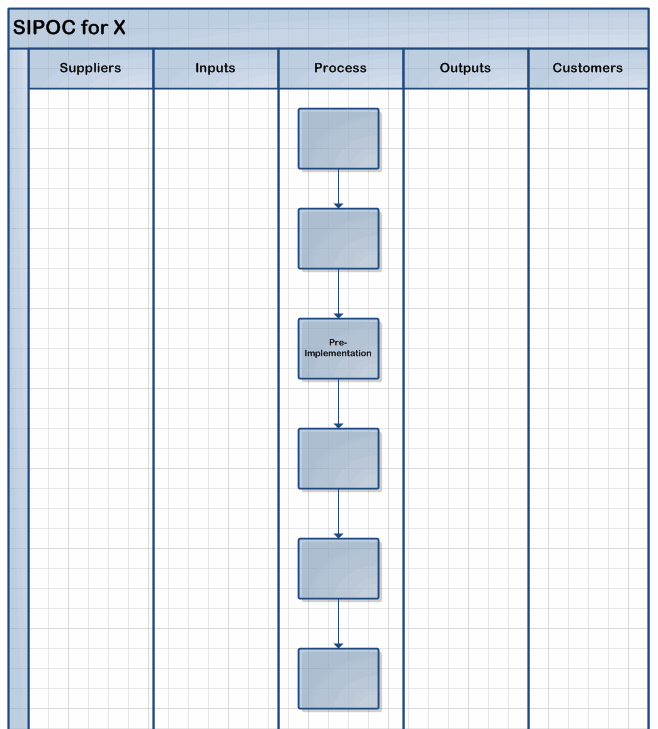
I am a huge fan of a SIPOC which stands for suppliers-inputs-process-outputs-customers. A SIPOC diagram is a quick broad overview of all the elements of a process and serves as a great visual tool.
Blank SIPOC
Start with the process
Provide the key steps of the process in the middle column
and briefly describe its key steps. A
SIPOC diagram is a high-level process map and is designed to get a birds-eye
overview of the process. Do not include decision points or feedback loops.
Identify the outputs of the process
Focus on the key outputs of the process. In this step, write
down the three or more main outputs. Use nouns for the most part and avoid
categorizing your outputs into good or bad ones – that’s not the point of the
diagram.
Identify the customers
List the people who benefit from the process. These don’t
have to be the literal “customers.” E.g., if you are working on a diagram for
an internal process, the “customers” are your coworkers. Think of who benefits
from this process. Who would be upset if the process is not complete?
List the inputs for the process
List the inputs required for the process to function
properly. Just like with every previous step, focus on the most important ones.
Three to six main inputs should do.
Identify the suppliers of the inputs
List the suppliers based on what inputs the process uses. Be
sure to mention any specific suppliers whose input has a direct influence on
the output.
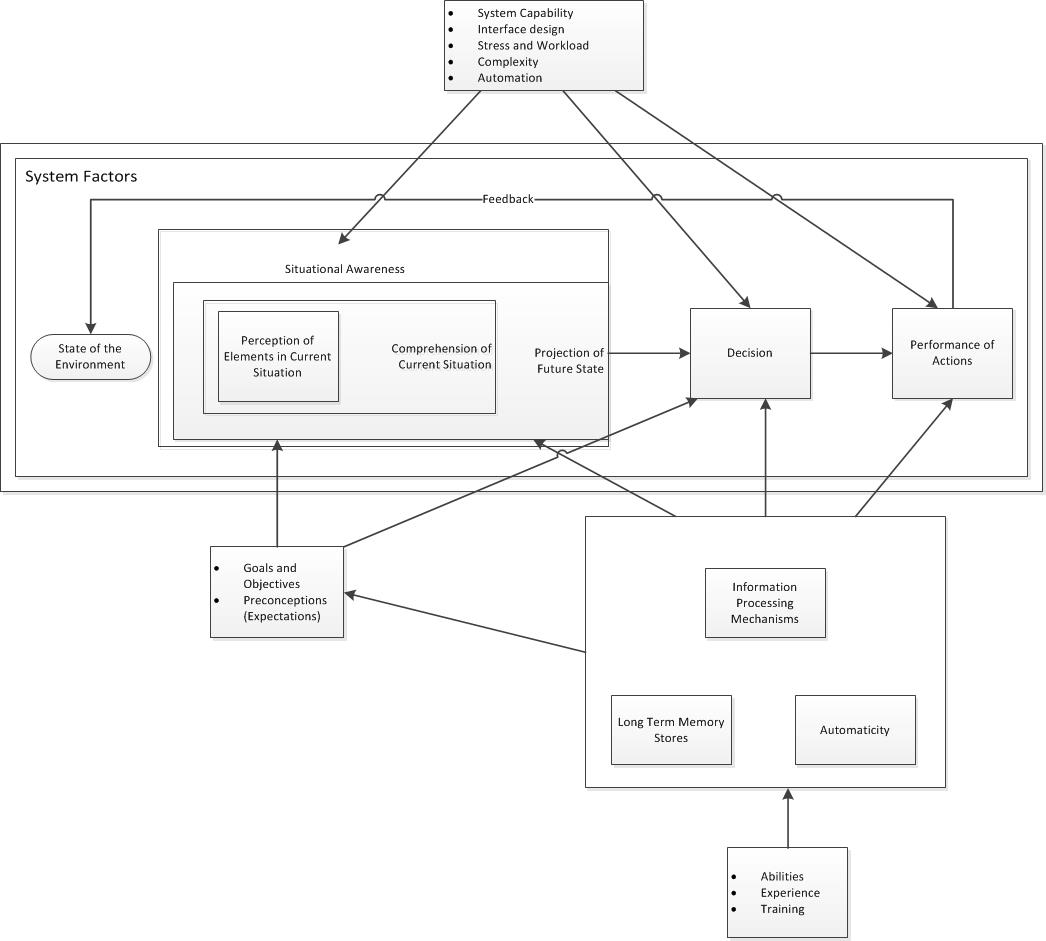
One of the key aspects of being an expert is the capacity to apply situational awareness: the perception of relevant information, comprehension of their meaning and the projection to future events.
Developing this situational awareness is a critical part of problem-solving and we can map the 4Cs of trouble-shooting onto these three elements.
Perception
The ability to perceive important information is a critical first step to being able to problem-solve, and one that takes time to develop especially in the highly complex and demanding environments most of us operate in. Knowing which information is important and have an understanding of the many subtle cues to evaluate is one of the hallmarks of an expert. But even for experts it can be difficult, which is why building perceptual cues in our checklists, procedures and such is important.
Comprehension
From perception we can draw meaning and significance, allowing the expert to combine, interpret, store and retain information. Integrating multiple pieces of information to arrive at a determination of relevance.
Projection
Experts are able to project from current events to anticipate future events and their implications.
Model of situation awareness in dynamic decision making (Endsley, 1995)
At the heart, data integrity is a lot about culture. There are technical requirements, but mostly we are returning to the same principles as quality culture and just keep coming back to Deming. A great example of this is the use of the fraud triangle and human error.
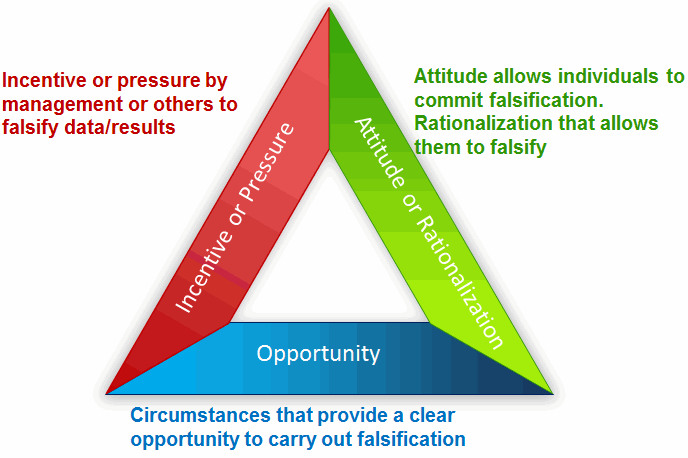
The fraud triangle was developed by Donald Cressey in the 1950s when investigating financial fraud and embezzlement. The principles Cressey identified are directly relevant to data integrity, and to quality culture as a whole.
Falsification Triangle
Element
Exists When
To Break
Incentive or Pressure
Why commit falsification of data? Managerial pressure or financial gains are the two main drivers here to push people to commit fraud. Setting unrealistic objectives such as stretch goals, turnaround time or key performance indicators that are totally divorced from reality especially when these are linked to pay or advancement will only encourage staff to falsify data to receive rewards. These goals coupled with poor analytical instruments and methods will only ensure that corners will be cut to meet deadlines or targets.
Management must lead by example – not through communication or establishing data governance structures but by ensuring the pressure to falsify data is removed. This means setting realistic expectations that are compatible with the organization’s capacity and process capability.
Rationalization or Incentive
To commit fraud people must either have an incentive or can rationalize that this is an acceptable practice within an organization or department.
Staff need to understand how their actions can impact the health of the patient. Ensure individuals know the importance of reliable and accurate data to the wellbeing of the patient as well as the business health of the company.
Opportunity
The opportunity to falsify data can be due to encouragement by management as a means of keeping cost down or a combination of lax controls or poor oversight of activities that contribute to staff being able to commit fraud.
Implement a process that is technically controlled so there is little, if any, opportunity to commit falsification of data.
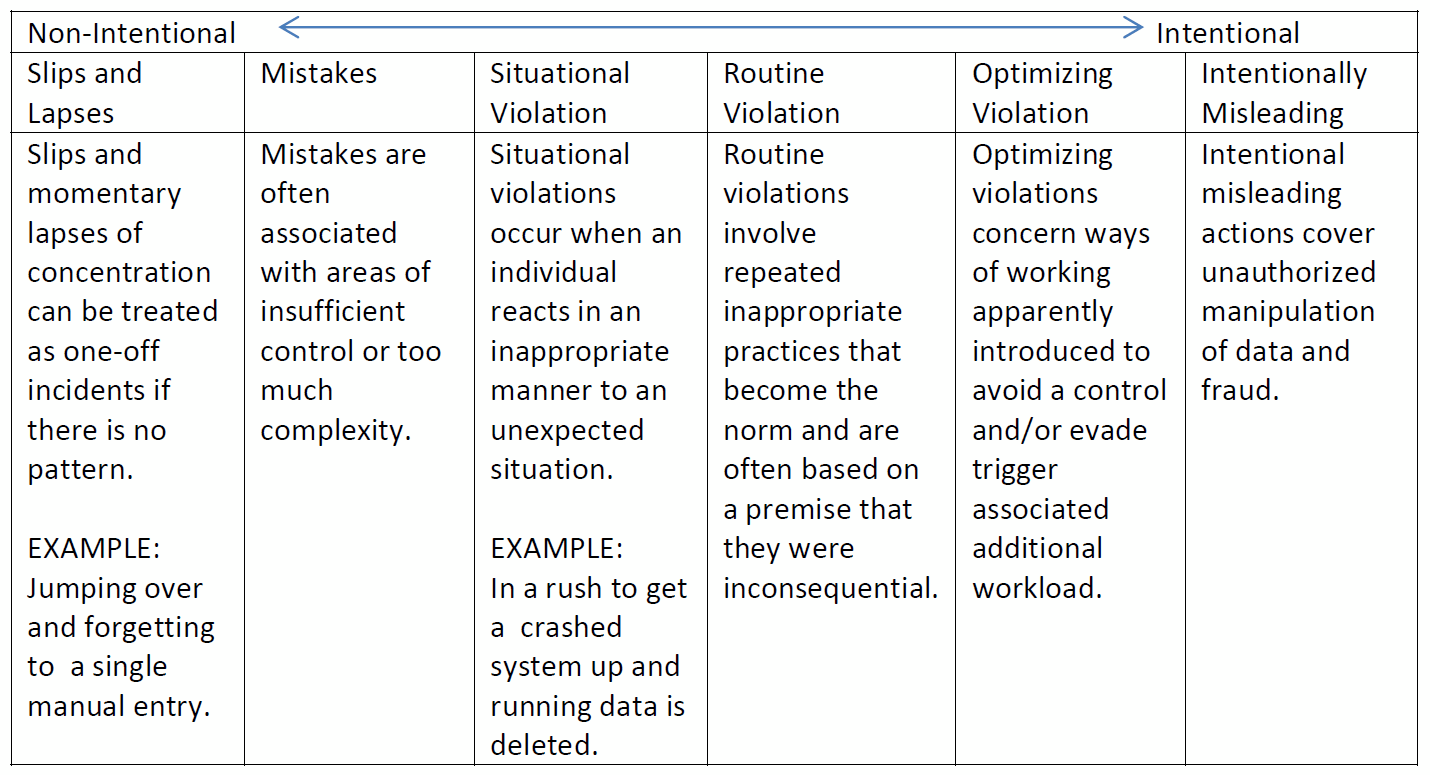
Mistakes are human nature – we all have fat finger moments.
This is why we build our processes and technologies to ensure we capture these
errors and self-correct them. These errors should be tracked and trended, but
only as a way to drive continuous improvement. It is important to have the
capability in your quality systems to be able to evaluate mistakes up-to-and
including fraud.
It helps to be able to classify issues and determine if there are changes to governance, management systems and behaviors necessary.
Events should be classified based on how intentional they are
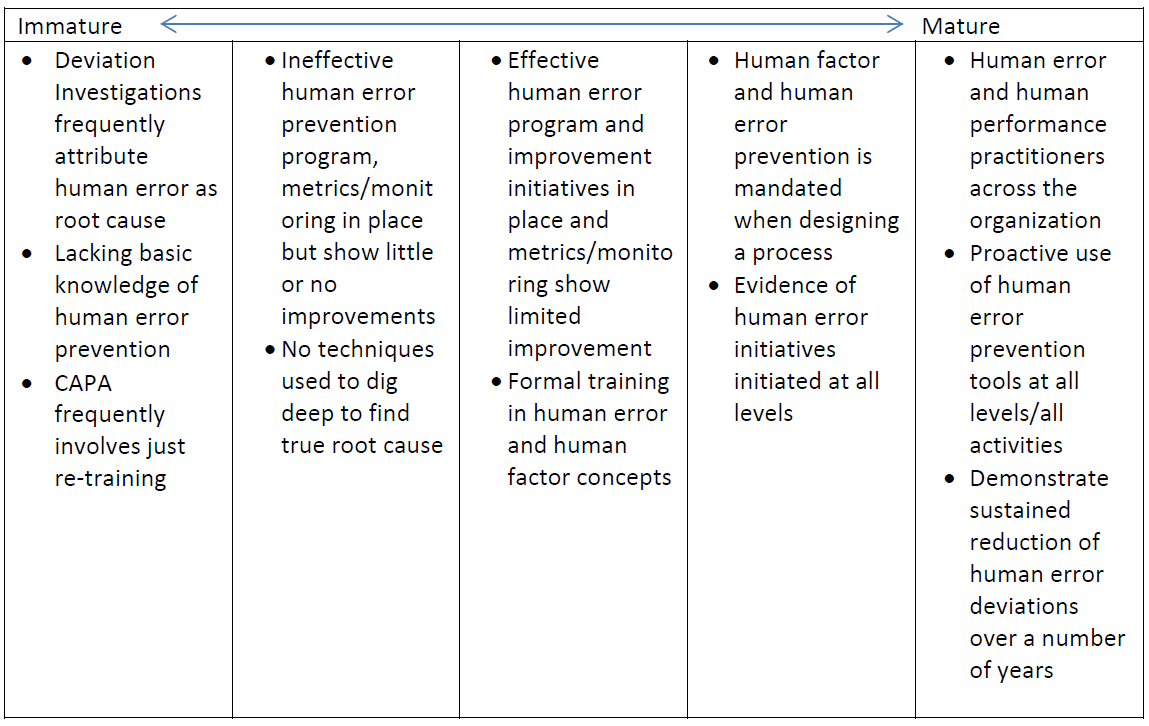
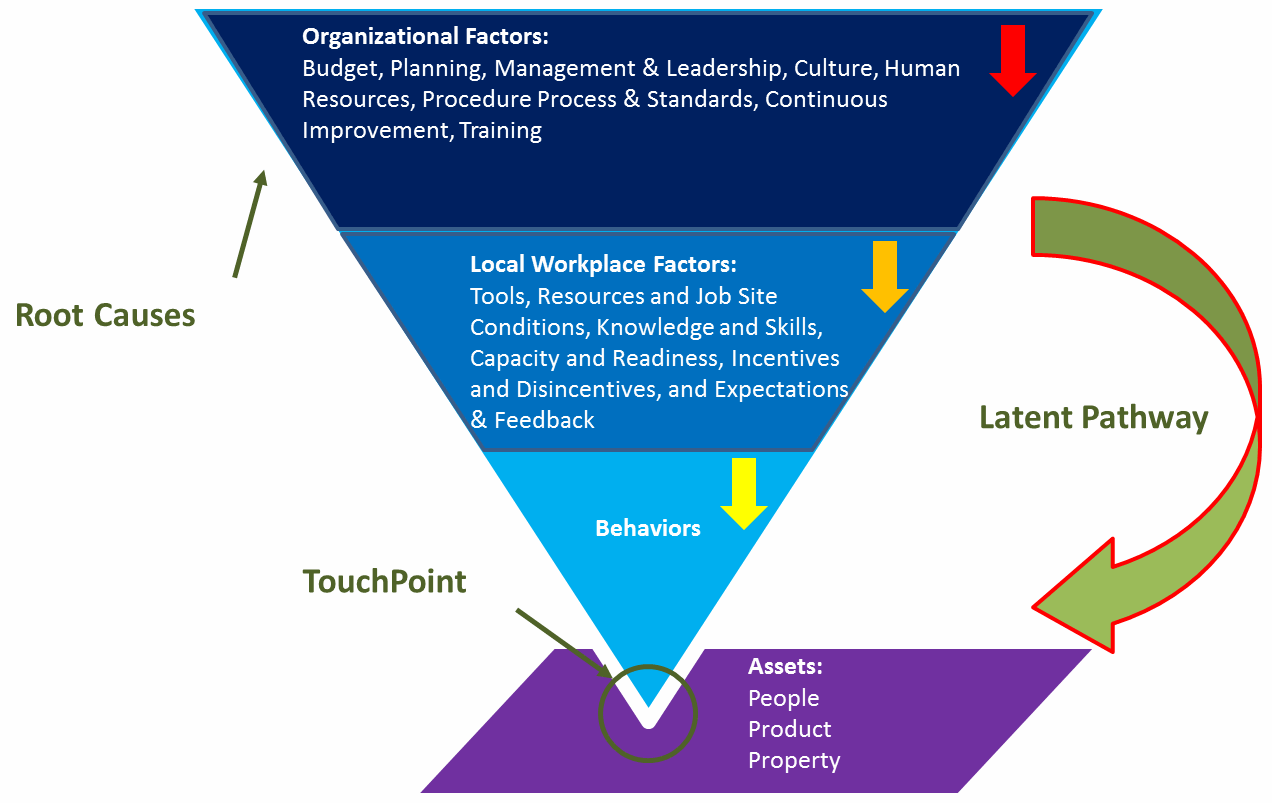
Human error should be built into investigative systems. Yes, whenever possible we are looking for technical controls, but the human exists and needs to be fully taken into consideration.
The best way to ensure data integrity is the best way to build a quality culture.
Quality System Management should be viewed and governed as a program
Program management is commonly defined as “a group of projects that contribute to a common, higher order objective.” The projects in a program are related, and the intent of achieving benefits would not be realized if the projects were managed independently.
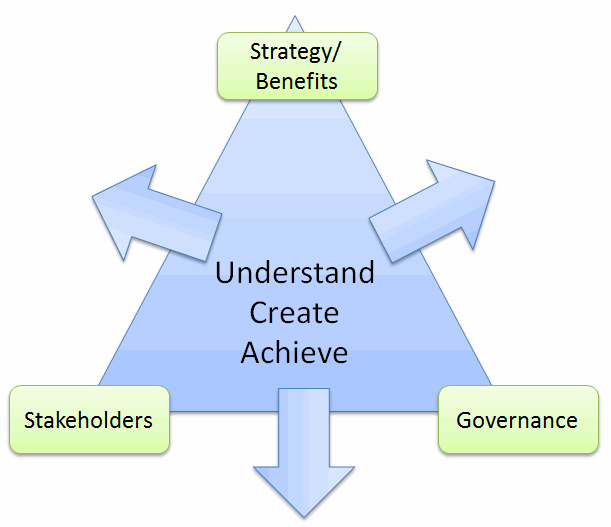
Program management includes the practices and processes of strategic alignment, benefits management, stakeholder management, governance, and lifecycle management. Program governance creates the control framework for delivering the programs’ change objectives and making benefit delivery visible to the organization’s control.
There are different styles of program management and what I am focusing on here is what is sometimes called “heartbeat”, which aims to achieve evolutionary improvement of existing systems and processes or organizational change. This program type creates value by reconciling contradicting views and demands for change from various organization actors in order to enhance existing systems and practices while sustaining operations.
Heartbeat program management is all about awareness of the contexts of the program and requires knowledge of strategy, competition, trends in the industry, and differences in management practices between the business units of the company. A good heartbeat program manager is highly concerned about their program’s long-term effects and implications for the company’s business.
Magic triangle of a program manager
Programs exist to create value by improving the management
of projects and to create benefits through better organization of projects. The
fundamental goals of program management are:
Efficiency and effectiveness: Aspects of management that a proficient project manager should address and benefit from coordination.
Business focus goal: The external alignment of projects with the requirements, goals, drivers and culture of the wider organization. These goals are associated with defining an appropriate direction for the constituent projects within a program as well as for the program as a whole.
Goal
Description
Efficiency and effectiveness goals
Improved co-ordination
Assist in identification and definition of project inter-dependencies and thereby reduce the incidence of work backlogs, rework and delays
Improved dependency management
Reduce the amount of re-engineering required due to inadequate management of the interfaces between projects
More effective resource utilization
Improve the effectiveness and efficiency of the allocation of shared resources Assist in providing justification for specialist resources that deliver an overall improvement to program delivery and/or business operations
Provide a means to identify and improve upon transferable lessons. Facilitate organizational learning
Greater senior management ‘visibility’
Enable senior management to better monitor, direct and control the implementation process
Business focus goals
More coherent communication
Improve communication of overall goals and direction both internally and externally to the program Target management attention clearly on the realization of benefits that are defined and understood at the outset and achieved through the lifetime of the program and beyond Assist in keeping personal agendas in check
Improved project definition
Ensure that project definition is more systematic and objective, thereby reducing the prevalence of projects with a high risk of failure or obsolescence Enable the unbundling of activities in a strategic project-set into specific projects Enable the bundling of related projects together to create a greater leverage or achieve economies of scale
Better alignment with business drivers,
goals and strategy
Improves the linkage between the strategic direction of organizations and the management activities required to achieve these strategic objectives Provide an enabling framework for the realization of strategic change and the ongoing alignment of strategy and projects in response to a changing business environment (via project addition/culling, etc.)
The Attributes of a Good Heartbeat Program Manager are the
Attributes to a Good Quality Leader
As quality leaders we are often ambassadors to ensure that
the quality program is progressing despite the conflicting requirements of the
various stakeholders. We need to actively influence quality-related decisions
of all stakeholders, including people holding superior positions. Having a
well-developed personal network within the organization is particularly
helpful.
It is critical to always be communicating about the quality
program in a visionary way, to be seen as passionate ambassadors. Playing this
role requires constant attention to differing expectations of the stakeholders
and various ways to influence stakeholders for the benefit of the quality
system. To always be striving to build quality, to advance quality.
As advocates for Quality, it is a core competency to be able to stand up and defend, or argue for, the quality program and team members. This ability to challenge others, including their superiors, in a productive way is a critical ability.
A key focus of the quality program should be on engagement with a conscious and sustained drive to secure buy-in from key stakeholders (including senior management) and win over the hearts and minds of those responsible for execution to make changes feel less painful and inflicted. As quality leaders our aim should always be to engender a climate of comprehension, inclusion and trust, and to draw upon expertise globally to create fit for purpose processes and systems
Effective quality leaders need to be “heavyweight”
organizational players.
Core Competencies of the Heartbeat Manager
Contextual awareness
Scenario planning
Political skills
Courage
Networking
A note on program life
Many standard approaches perceive programs to have a finite life. This is constraining given that the strategies themselves, especially as applied to quality, have long lifetimes. I believe that program management has as much to learn from quality management, and there is a lot of value in seeing an indefinite time horizon as beneficial.
Quality management is an evolutionary approach, and utilizing program management methodologies within it should be taken in the same light.

 Investigations of a Dog