Site Training Needs

Institute training on the job.

Principle 6, W. Edwards Deming

(a) Each person engaged in the manufacture, processing, packing, or holding of a drug product shall have education, training, and experience, or any combination thereof, to enable that person to perform the assigned functions. Training shall be in the particular operations that the employee performs and in current good manufacturing practice (including the current good manufacturing practice regulations in this chapter and written procedures required by these regulations) as they relate to the employee’s functions. Training in current good manufacturing practice shall be conducted by qualified individuals on a continuing basis and with sufficient frequency to assure that employees remain familiar with CGMP requirements applicable to them.

(b) Each person responsible for supervising the manufacture, processing, packing, or holding of a drug product shall have the education, training, and experience, or any combination thereof, to perform assigned functions in such a manner as to provide assurance that the drug product has the safety, identity, strength, quality, and purity that it purports or is represented to possess.

(c) There shall be an adequate number of qualified personnel to perform and supervise the manufacture, processing, packing, or holding of each drug product.

US FDA 21CFR 210.25

All parts of the Pharmaceutical Quality system should be adequately resourced with competent personnel, and suitable and sufficient premises, equipment and facilities.

EU EMA/INS/GMP/735037/201 2.1

The organization shall determine and provide the resources needed for the establishment,
implementation, maintenance and continual improvement of the quality management system. The organization shall consider:

a) the capabilities of, and constraints on, existing internal resources;
b) what needs to be obtained from external providers.

ISO 9001:2015 requirement 7.1.1

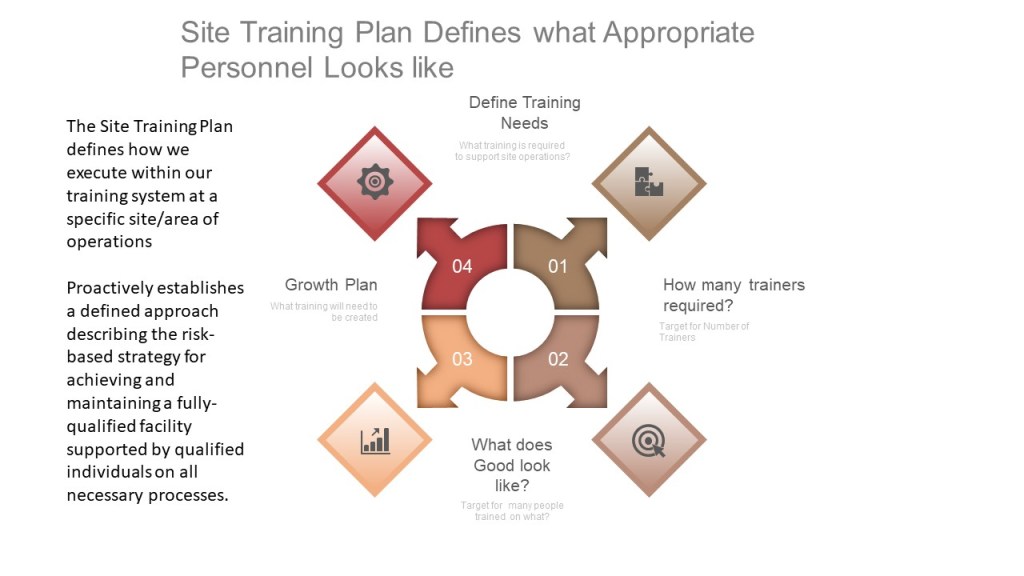
It is critical to have enough people with the appropriate level of training to execute their tasks.

It is fairly easy to define the individual training plan, stemming from the job description and the process training requirements. In the aggregate we get the ability to track overdue training, and a forward look at what training is coming due. Quite frankly, lagging indicators that show success at completing assigned training but give no insight to the central question – do we have enough qualified individuals to do the work?

To get this proactive, we start with the resource plan. What operations need to happen in a time frame and what are the resources needed. We then compare that to the training requirements for those operations.
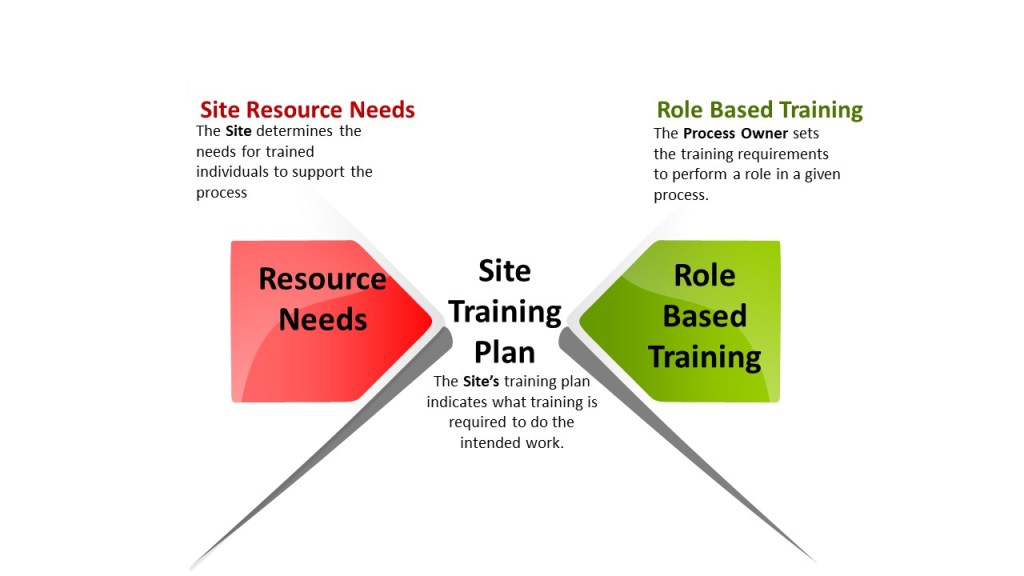
We can then evaluate current training status and retention levels and determine how many instructors we will need to ensure adequate training.

We perform a gap assessment to determine what new training needs exist

We then take a forward look at what new improvements are planned and ensure appropriate training is forecasted.

Now we have a good picture of what an “adequate number” is. We can now set a leading KPI to ensure that training is truly proactive.
Teams Need Vision Too

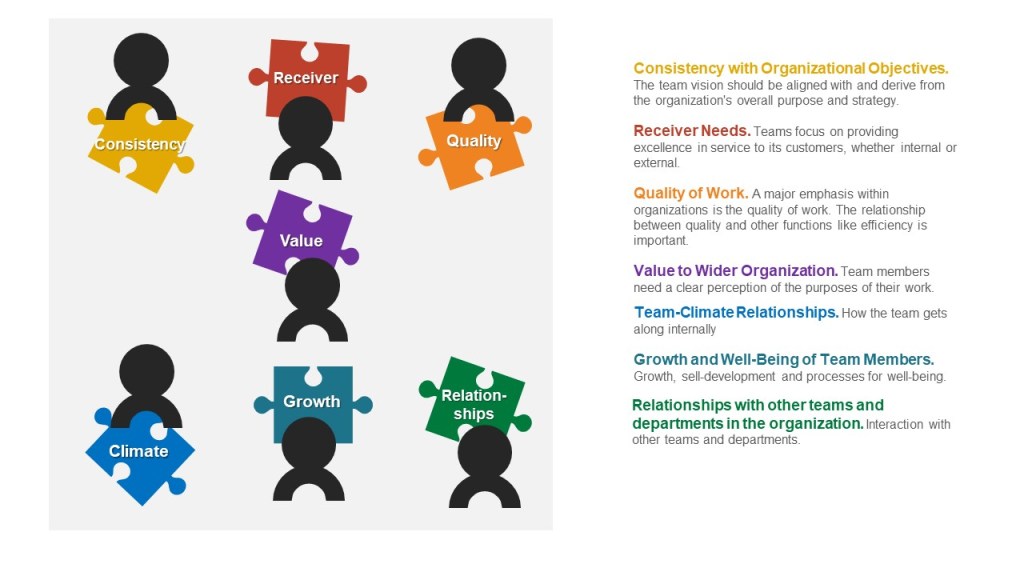
Teams exist to execute to organization objectives. In order to meet these objectives, a team needs a vision of itself. There are eight major elements to a team’s vision:

  1. Consistency with organizational objectives: The team vision should be aligned with and derive from the organization’s overall purpose and strategy. Teams are sub-elements in a wider organization structure and their success will be judged on the extent to which they make valuable contributions to the overall purpose of the organization. In some circumstances a team may decide that it is important for its own values, purposes and orientations to act as a minority group which aims to bring about change in organization objectives – perhaps like a red team.
  2. Receiver needs: Teams focus on providing excellence in service to its customers, whether internal or external.
  3. Quality of work: A major emphasis within organizations is the quality of work. The relationship between quality and other functions like efficiency is important.
  4. Value to the wider organization: Understanding the importance of the team just not for the wider organization but beyond, leads to team cohesion and greater team effectiveness. Team members need a clear perception of the purposes of their work.
  5. Team-climate relationships: Team climate refers to aspects such as the warmth, humor, amount of conflict, mutual support, sharing, backbiting, emphasis on status, participation, information sharing, level of criticism of each other’s work and support for new ideas.
  6. Growth and well-being of team members: Growth, skill development and challenge are central elements of work life and teams can be a major source of support. Teams provide opportunities for skill sharing and support for new training. Teams need to be concerned for the well-being of its members, including things like burnout.
  7. Relationships with other teams and departments in the organization: Teams rarely operate in isolation. They interact with other team and departments within the organization. Teams must be committed to working effectively and supporting other teams. Avoid silo thinking.
Criteria for Team Vision

Management’s Job

In episode 48 of the Deming Len’s podcast, the host refers back to Deming’s last interview, “Dr. Deming: ‘Management Today Does Not Know What Its Job Is‘”

Why Commissions Didn't Fix Our Sales Problem In Their Own Words

What if your sales problem isn't your people — but the system they're stuck in? Mike Carr spent years doing what everyone told him to do: commissions, quotas, performance plans. Every new hire came with the quiet assumption they'd be gone in a few months. He even optimized onboarding to make firing faster. Then he did the math: it was costing ~$75,000 every time. He called it "Burning the Porsche." His friend Travis Timmons — who'd been applying Deming's principles — kept nudging him to look at it differently. Mike's first reaction? "This is crazy talk." In this episode, they walk through what changed, what didn't work at first, and why the biggest shift wasn't the system — it was the psychology. If you've ever felt stuck trying to fix your salespeople, this will change how you think about it. TRANSCRIPT 0:00:02.2 Andrew Stotz: My name is Andrew Stotz and I'll be your host as we dive deeper into the teachings of Dr. W. Edwards Deming. Today we have an interesting discussion. I'm going to be continuing my discussion with Travis Timmons, who we've been talking about all kinds of things, including offsites, which I've found very, very valuable. I know the listeners have, too. But we're also joined by Michael Carr, who is a business owner who found the teachings of Dr. Deming about 10 years ago and has been trying to implement it ever since. Why don't we kick it off with you, Travis? Tell us a little bit about how you came across Michael and what your relationship's been like over these years.   0:00:43.5 Travis Timmons: Yeah, thanks, Andrew. Great to be here again. Yeah, Mike and I met, I'll say it's probably 14 years ago, something like that. 13, 14 years ago, a business organization he and I were both part of and sat around a table of other business owners working on problems together. And long story short, and part of the problem solving, got to know Mike a little better and had some individual conversations about how Dr. Deming and the Deming approach was having such a positive impact on my business. Might be of interest to some of the things he was working on in his. And encouraged him to attend the Deming two and a half day. But that's kind of how we met, working on business problems together, having some of the same frustrations that even though we're in different industries, the problems seem to look eerily similar across businesses. So, yeah, that's kind of how he and I met and encouraged him to maybe explore Deming and see if it'd have a positive impact on him like it did for us.   0:01:49.2 Andrew Stotz: We were talking before we turned on the microphone about the idea of how do we reach the young man or woman out there who's looking for answers. And we know Deming has a lot of those answers. So I'm really interested to learn more about you, Mike, about not only, of course, your Deming journey, but maybe tell us a little bit about your business and your experience so people can kind of put you in context, in particular where they are and thinking about where you are and where you were.   0:02:17.8 Mike Carr: Sure. Yeah. I came into business about 25 years ago and I did it kind of accidentally where while I was in grad school, I started a campus chapter of Habitat for Humanity and I had more volunteers than I could handle. So over a weekend, I wrote a small piece of software to let people kind of sign up online. This is before the days of SaaS and everything that we're used to today. And that actually took off so quickly that I was supporting it for free, I was giving it away for free to other organizations – nonprofits. And eventually my wife said, this is taking so much of your time, you either need to start charging for it or shut it down and spend some more time with the family. So I quit my full-time job at the time, put all my effort on what became the business, and quickly found myself running a business with no business background or training because my training was in electrical engineering. So I hired my first salesperson and not knowing sort of how traditional business works, I hired the person on salary, fixed salary, and sort of set up a system for her to sell within.   0:03:39.3 Mike Carr: And again, not knowing Deming, not having any business background. And so I kind of accidentally set up sales the way Deming would have recommended because that's just what I thought made sense. Then later on hired a director of sales who had a lot of success in sales, but traditional sales, and he seemed to know what he was talking about. So we completely switched our sales to more of a traditional sales approach based on his recommendation. And that's when problems really started. Because as we're aware on everyone on the call here, the commissions, quotas, and that kind of thing cause a lot of unintended consequences. So at the time that I met Travis in the peer group that we belong to, I was having a lot of issues with sales. I couldn't figure out how to get sales to work. We were hiring and firing people rapidly. And Travis mentioned Deming to me and the Deming two and a half day training which I attended. And I had become so steeped in traditional sales at that time that after the training I literally said, this is crazy talk, this Deming stuff.   0:04:55.4 Mike Carr: It doesn't align at all with traditional sales techniques. But I gave it a shot and over the next year or two we started implementing it. We started trying things. I kept learning about Deming and at some point I realized this is actually the way I was doing it in the beginning when things were actually kind of working back then. So it was funny how I had come full circle from where I had started.   0:05:23.0 Andrew Stotz: And plenty of people that are listening have commission-based salespeople, bonus incentives, all kinds of different things. And they're like, that's the way you do it and the problems that you face are just part of it. And they couldn't see any other way. And it's way too much risk in their mind to even experiment with another way. So what were the problems that you were facing when you talked about I was facing these problems from the way I was compensating my salespeople? I want to make sure that we connect with people who are like… I don't want someone to say, well, that's not me. I want someone to understand exactly the problems that you were facing and then so they can think, okay, yeah, I probably have that problem.   0:06:11.7 Mike Carr: Right. So it was a lot of… So I'll describe sort of the sequence that we would go through. We would hire someone who seemed really qualified. We would give them a day or two of training, we would give them a telephone and a computer, and we would say, "Okay, you've been trained, you have the equipment, go do some hunting and get some sales," and basically leave them alone to go and do that. Of course, they would sort of rapidly fail because they didn't have the support they needed. They didn't have a system to work within. And so we would start applying pressure, we would start messing with compensation and apply incentives, and then we eventually get to a PIP, a performance improvement plan, and then we would eventually let them go and then do all the offboarding and then start from square one. And we did that so many times that we actually started optimizing our process for rapid hiring and firing. At one point, I moved to these thin client PCs so that we didn't even have to send an entire PC to the person.   0:07:25.7 Mike Carr: We could just send the thin client and put their desktop up in the cloud so that when we had to fire them later, it was just a lot quicker to get all your equipment back. So we optimized for that rapid hiring and firing, and we were literally going into most hires with the assumption we're going to fire this person within a couple of months. And so obviously you can imagine the stress that creates for the person we hired, obviously, but also stress on the part of management because we're just constantly failing all the time. Not to mention the business isn't getting revenue and we're missing all the opportunity that we could be capturing. So one day I said to the management team, let's add up how much it costs us to go through this entire cycle beginning to end in terms of man-hours and salary and so forth and missed opportunity. And the number we arrived at was something like $75,000. 75,000 to $100,000 every time we go through the loop. And so to put this in context, I said to the team, this is as if we had gone and bought a Porsche and then just poured gasoline all over it and lit it on fire every time we go through the loop. So I started calling it Burning the Porsche. Let's just burn the Porsche again, guys. And so we got to call it Burning the Porsche. We were optimizing for rapid hire and fire, and obviously stress levels on all sides were just skyrocketing. So those were the problems that we were facing.   0:09:10.0 Andrew Stotz: And I can hear a skeptical person say, oh, you just didn't know about how to train. I know how to train my salespeople, and I put them through this intense training, then I apply all those incentives and it works. What do you say to that?   0:09:27.4 Mike Carr: So, yeah, we tried all of those things. So we gave them piles and piles of written materials, we made training videos, and of course we wanted to hold them accountable for those things. So we had quizzes at the end of each training section, and assuming they passed the quiz, which was five or 10 questions, written questions, we would check the box. And we would later, when they began to fail, we would point back at the checkboxes from the training and say, "Hey, you were trained on this. We checked the box. Why are you not doing the things that you were trained on and the box was checked?" So, yeah, we tried a lot of different varieties of training and different accountability techniques, and just nothing was sticking. And I think everyone was just getting more and more frustrated. On the part of the person that we were hiring and firing, let's not forget about them. I mean, they're going through this three to six month process that's very anxiety-producing in the system that we had, and it can't feel good for them.   0:10:37.1 Andrew Stotz: Yeah, it's interesting because when you're in that situation, as many people are, there's no way out. It's just tightens the screws tighter. Every book you read, everything you see, every person you talk to, it's just you've got to engineer your KPIs better. That's what it is. We need more granularity in KPIs and all of that. And did you feel at some point, before you met Travis and learned about Deming, did you feel at some point like there's no other choice, I just got to do it this way, or what was going in your head before you came upon Deming?   0:11:24.5 Mike Carr: Yeah, I mean, that's exactly how I felt, is that other people are getting this to work somehow. So it must be that I'm just not applying enough pressure or my compensation structure isn't correct. We need a different mix of base salary and commission, and we need different quotas because other companies seem to be making this work somehow, and I just don't know what magic they're using. So that made me even double down to say I just need to look around and look at more companies and how are they structuring their commissions, how are they holding their people accountable? I started reading a lot of business books on the topic, lots of sales management business books that reinforce that thinking. You just need to get your compensation structure right and everything works. But for me, nothing worked.   0:12:21.5 Andrew Stotz: It kind of reminds me of an AA meeting as I imagine Travis sitting down next to you and then hearing the struggles that you're going through. It's like, yeah, been there. And maybe Travis… Now that we understand the background of kind of where Mike was coming from, let's talk about maybe on that day that you first met or in your first conversations, what were the things that stood out?   0:12:48.3 Travis Timmons: It was probably several months in because we'd meet monthly at that business peer-to-peer. But yeah, to your point, it's like, hey, I struggled with similar things. Mike is pretty humble. He's a super smart guy, PhD in engineering, so he doesn't lack intelligence. So he can figure stuff out, but just like me, was not trained in business. And there's a lot of things out there that just seem to make sense when you read them, but they're not applicable. And nothing seemed to take the entire system into consideration or make an assumption that people were good. That was the other thing that jumped out at me and I had the assumption that would align with Mike's worldview because as he's already said there a few times, he knew he was putting these employees through the ringer as well and he didn't like that. So it just got to a point where I'm like, hey, I found something that is different. It takes a system view and for me, it took the stress off and gave me a construct with which I could work within.   0:14:04.5 Travis Timmons: And with his background in engineering, he obviously knows how to put stuff together, so I thought this would be a good fit for him to at least explore it and look at something different than what the traditional business approach was out there. And it just kind of went from there. He finally got tired of me bugging him about it, I think, and said, yeah, I'll go to this two-and-a-half-day so Travis stops bringing it up. But it's the same thing I was doing before finding Deming. The same problem kept coming up in my organization, and I'd read a book about it or I'd have somebody tell me, "Hey, have you tried this," "Have you tried that?" And it wasn't taking an entire system view to how to solve the system for the business. So that's where I introduced it to Mike and said, "Hey, go check this out. You're a smarter guy than I am. See what you think about it."   0:14:54.7 Andrew Stotz: It kind of reminds me of AI these days because we all use AI in different ways, but I get on the TV, on the internet, talking to friends, like, oh, I'm doing all of this and I'm doing all that and I've redesigned everything. I'm like, so how much more money is in your bank account? Are you really? And it's like there's this excitement that everybody's talking about, but I'm not able to get that. Am I missing something? I'm just not smart enough. But I'm like, "Wait a minute, I'm smarter than those guys. I know that." And that guy he doesn't…. And so maybe you can talk a little bit, Mike, about your journey, your discovery, the seminar, and kind of how it started for you and where did it go?   0:15:48.7 Mike Carr: Right. Well, so let me start at the end of the journey, and then that will illuminate the beginning. So what I realized today, and I volunteer a lot with scouting because of this, is we don't really have, we don't really train young people in leadership. Most schools don't have a class on leadership. They might have some introduction to some type of leadership, say, in sports, but we don't really train people to lead other people or to manage other people. And so what I think happens, my theory is most leaders in business, specifically, lead by copying what they see other people doing. It's a Xerox copy of other leaders, and probably in the same business, in the same company, even. And so I think what we have today is we have a lot of people who want to be good leaders, they want to be good managers, but all they have to go off of is copying from what they see other people doing. And unfortunately, that's a lot of these sort of accountability techniques and pressure techniques. And so going back to the beginning, when I got into business, my background was engineering.   0:17:14.6 Mike Carr: And I had no business background, no business training. I had been in Scouts, but Scouts doesn't teach you really how to manage, how to be a sales manager. And so I was just lacking any kind of a background. So that's where I went wrong at the time, and I looked around to copy other people. How are they doing sales? And for me, I think what I took away from the two-and-a-half-day was here is a framework not just for sales management, but here is a framework that finally gives me sort of the perspective that I could use to develop my own leadership skills in a way that makes personally a lot more sense to me. And I come from an engineering background, and Deming was also an electrical engineer. And so I think it just kind of resonated with me because the techniques and the concepts he was talking about felt very familiar from my engineering training. Let's think of this as a system. Let's look at root causes. And let's think about how changing the system, how is that going to change outcomes?   0:18:22.4 Mike Carr: All of that sort of aligns with a lot of electrical engineering. And so it kind of made sense. But then I said, what Deming's really proposing here is that we take these concepts that are applied to electrical engineering and we extrapolate them to business management. And I thought that's a really interesting idea because I hadn't really thought about that before. And once I made that connection, that leadership framework just kind of came together naturally because now I have a leadership framework that I can build off of and that I understand and that seems to make sense.   0:18:57.6 Andrew Stotz: And how would you summarize that for someone who doesn't know Deming? What are the top three things that you got from it that you really have incorporated into your leadership style?   0:19:11.8 Mike Carr: Well, the number one is the psychology piece. If you're copying off other people for sales management specifically, you're copying a lot of high stress, a lot of judgment approaches, rankings, measuring personal performance, measuring individual performance, not as a team. So you have all of these sort of tricks that people do in sales management. And so the number one thing for me was the psychology piece, which is, no, no, no, let's just start with the assumption that people want to do a good job. And in my case, we're selling software that helps nonprofits. So why are we using these high-pressure techniques? People naturally want to help nonprofits do better. Let's just find those people that have an intrinsic motivation to do that, of which there are many, and then let's give them a system within which they can do that. They can go out and help nonprofits solve problems. And so that was the number one thing is just moving away from the manipulation and persuasion techniques that you see in business books and copying from other business leaders and moving toward the intrinsic motivation piece.   0:20:28.3 Mike Carr: So that would be my number one for sure. And then the number two is thinking, which is Deming's number one thing, is just thinking of everything as a system and a collection of subsystems and understanding. One thing we did early on is previously we would send out a memo across the company whenever we made a sale and we would congratulate the salesperson who closed the sale. And I said, well, it's not… Once we implemented Deming, I said, it's not just the salesperson that made this sale. This sale was the result of everyone in the company working together to produce a good product and provide good support to our customers and do good marketing and all the stuff that's required. It's all of us working together. So we just said, "Let's stop congratulating the one person and let's celebrate the sale across the entire company and congratulate everyone." So it's these kinds of things that sort of just seem natural to me and that just aligned with sort of my worldview.   0:21:34.8 Andrew Stotz: And how do you handle that for the salespeople? Is it the case that in your type of style, in the Deming style, that really only a certain type of salesperson can work in that environment and the rest of them are gonna say, "That's not for me. I want to get the commission dollars and I made that sale, and everybody else's job is to produce and deliver?" It starts with the sale.   0:22:03.1 Mike Carr: No, you're absolutely right. There are people like that, and in fact, we changed our recruiting process. And right from the first screening call now, we start talking about the fact that we pay a fixed salary and we don't have commissions and we don't have quotas. And initially, I thought that would be really appealing to people. I thought everyone we talked to would be like, "Wow, that's exactly what I want." But we actually found and experienced a number of people that when we explained that, they said, "No, that's not for me. I want the commissions and I want the quotas and I want the celebration that comes with closing a sale and I want those things." So we just make it… Today, we just make it very clear up front because we're more about finding the person that's gonna be a good fit and has the intrinsic motivation for what we're doing. And so we're very upfront about it early on.   0:23:08.2 Andrew Stotz: And that makes sense. There are some rainmakers out there who can bring in a huge amount of sales, who are very skilled at it, and they know the game very well. And so they say, "I don't want my compensation tied to anything to anybody else." And they have plenty of places to go work. But for the people that are different from that, that say, "I want to be part of an overall system and I want to contribute to this company," and all that, there are people that also see the value of that. And then I guess from an overall business perspective, when you change the way you looked at the way you're hiring salespeople, the way you're incentivizing them, and the way that you're getting people working together, what are some… Some people say, "Yeah, you're gonna lose some good salespeople. Your sales may even go down if I take all of my great performers and I say, "All right, we're going on flat salary plus some bonus for the whole company when we do well." I'm gonna take a hit in my revenue for the next six months. But what benefit on the other side do I get?   0:24:19.0 Mike Carr: Right. And that's exactly what we saw. Initially, sales went down and we did have some people leave, and we did have some people that we had to ask to leave, unfortunately, because they had been hired under a different system, the pre-Deming system, and they weren't really a good fit for the way we were doing it now. We did have some people stay as well. So it's kind of a mixed bag there. But it did take a number of years to stabilize. And to be honest, Travis probably heard me… Every time I would come to the meeting that we had together, it would be always the same problem: "I can't get sales working." And for the first couple of years, it was always pre-Deming, "I can't get sales working." And then Travis sent me to the two-and-a-half-day training and I implemented all that, and the next two years was, "I can't get sales working." But eventually, it did start working. And also, it's not easy. Deming is not easy. And even Deming himself said there's no instant pudding.   0:25:32.5 Mike Carr: So it does take a lot of study, a lot of learning. There are good resources out there, but there could be more. I think this podcast is one of them that's a really good resource I learned a lot from. But sometimes it's a little bit hard to find resources to help you get up and running. So it takes some time to sort of figure all this out, get all your systems re-implemented from scratch. And so that's why today, when I meet people and suggest Deming, I always suggest just try this one thing or try this one thing. Don't try to just immediately jump in the deep end with both feet.   0:26:14.4 Andrew Stotz: Yeah, I want to come back to that in a second, but I want to go also to Travis because what Mike's talking about is I'm sure all kinds of stuff you faced and dealt with related to incentivizing and all of that. Maybe you can talk a little bit about your experience.   0:26:30.7 Travis Timmons: Yeah, one of the things kind of to circle back, like you said, there are some rainmakers out there. And I think the consistent thing I've heard from smaller businesses under, I don't know, under 10 or 15 million in revenue and under, it's hard to afford what the rainmaker wants to be paid. So when you have that reality as a small business owner, it'd be great to have a rainmaker. You can't afford a rainmaker, but you're trying to put a system in place for non-rainmakers that works for rainmakers. And I don't even… I'm not saying that Deming doesn't work at large organizations, because it absolutely does. But I think that's the reality of… I think who we're trying to reach is the small business owner out there that doesn't have their MBA from Northwestern and doesn't just have any kind of. Like Mike and I, we had zero business experience, but the reality is you need a different approach to have the sales piece work. Yeah, we never really had a sales team in our world, so I didn't have that problem to solve in my organization just by the nature of kind of how we were structured.   0:27:48.3 Travis Timmons: But we did have other issues in terms of the system thinking. And that's where realizing to Mike's point, the one big thing we had to tackle early on was like, hey, if we have a good client visit, it's not just because the physical therapist crushed the visit. The front desk had to have a good experience. The billing team had to get the bill out clean. Everything had to happen correctly for that visit to go well. And in our world, that would be, I guess, our sale. So the system thinking, how do you get the entire team to understand what direction you're going in? So you have to be a team player minded person. I think Mike would agree with that to work well within Deming. But yeah, we didn't have the sales… Now, I've heard plenty of stories over the years in different organizations I've been part of that had the same problem Mike did. And I've heard at Deming seminars time and time again, organizations that made the switch and it was a game changer for their organization. And it doesn't happen in two months, to Mike's point.   0:28:54.4 Travis Timmons: But it has a way to approach things in a systematic and methodological way. If that makes… Does that kind of align with what you'd say, Mike? The system approach and collaboration for the entire team to understand, here's where we're going, rather than sales doing this and development doing this and marketing doing that and accounts receivable doing this, like nobody's trying to get the same thing accomplished at the end of the day until Deming helped me see that in a different light.   0:29:26.3 Mike Carr: Yeah, I would agree with all of that. But I would also say while you're also learning Deming at the same time, so it's a little tricky to learn it all and implement it all at the same time. I explain it to my team as if you're driving a car at 70 miles an hour on the freeway and fixing the car at the same time. It's hard to do both.   0:29:50.3 Andrew Stotz: I thought you were going to say and climbing out of it into another car while you're fixing both.   0:30:02.3 Mike Carr: Yeah. Similar. Yeah, fixing both. So yeah, because that's a good point because you're still running the company you had, you're trying to transition to the new sort of company under the new system, and you're learning about it all at the same time. So it is not… There's no instant pudding, but I would say it's worth it at the end of the day.   0:30:14.3 Travis Timmons: I would say…   0:30:17.0 Mike Carr: I want to… Sorry. Go ahead.   0:30:18.7 Travis Timmons: And Mike, you can tell me if you would disagree with this, I'll just go observationally because you said, "I listened for two years, you complain about sales," and that's true. And then on the flip side of that, when you implemented Deming, it took about two years. I don't think it was that long, but it did take some time. What I think would maybe be interesting for the audience to wrap their head around, and Andrew, you probably could tease this out better than I can, but you've stuck with it. What would be the reason you stuck with it versus everything else you tried for a few months and then switched? And you kind of explained that with the system view, but I think that's the powerful thing is there is a lot to learn with Deming and it's a constant journey. It's a journey. I'm still well over a decade into this and I'm still learning. But what made you stick with this approach versus the whack-a-mole that you were doing prior, if that's a fair way to look at it?   0:31:21.4 Mike Carr: Yeah, I mean, it's really just the way it aligns with my worldview and my engineering background. The systems thinking just sort of makes sense to me. And so I said, it all just lines up so well, and it just seems like it ought to work. I just need to sort of figure it all out and get it in place. And I just didn't want to go back to sort of the high stress, rapid hiring and firing. I would rather put my effort toward bringing value to my customers than spending hours and hours debating how our compensation structure should balance base salary versus commission. I was spending so much of my week fiddling with the commission structure, and I wasn't doing the things that were bringing value to the customer at the end of the day. So now I feel a lot more productive, even if it takes some time to get it figured out. I feel like it's… My time is spent more productively in the things that I do now, figuring out the system.   0:32:34.0 Andrew Stotz: I'm curious because if you objectively look at it, people understand system. In biology, we learn about system. Doctors understand the human body and interactions. And yet we kind of blindly… If I think about it… I take care of my mother, she's gonna be 88 in a couple of weeks. And when you take care of someone that's fragile, everything has a secondary effect. And so it's easy, for instance, if she has to go to the hospital for something and then they see something and they think, "Oh, well, we should just give her medicine for that." Well, okay, have you thought about the fact that that medicine may help her with that, but she could fall because of the dizziness she's gonna get from that, and that fall could pretty much end her life? And also have you thought about the fact that what we're optimizing for is not necessarily what you're optimizing for? We're not optimizing for longevity. We're optimizing for today being the best day it can be. So when I look at, even in the case of my mom, for instance, with blood pressure, one of the things I use is I went out there and I found beetroot, and I basically make a beetroot drink, measure blood pressure before and after and throughout the day.   0:34:09.8 Andrew Stotz: It probably lowers blood pressure more than any pill. And I'm monitoring everything as an analyst, which is my background. And the side effect is good health of drinking… If you drank too much beetroot juice with carrot and other things I mix in with it, that's a side effect. But yet my mom is, "Just give me the pill." And I'm just curious, what kind of world are we in where we do know systems thinking, but it's like it's crushed out of us. It's not even crushed out of us. We know. And if we look at all the things that we do in society, whether it's disease or whatever, it's just constantly, we don't follow it. And I'm just curious, what are your thoughts on that? Or am I wrong? Many people just simply don't understand systems thinking.   0:35:08.8 Travis Timmons: Well, I think it's complicated. I think it's complicated, A, because to Mike's point earlier, we're not taught about this through a traditional structure, or if we are, we're taught about it… Like, I had a background with military training, and it doesn't get much more command and control than that. And that doesn't work in the real world, so to speak. So there's not a lot of training mechanisms out there that prepare you to deal with. I love the fact that Mike, as the engineer, said the most important thing to him was the psychology. I think that speaks volumes to how powerful, when you get the entire system working well, it gets back to the joy in work.   0:36:00.5 Travis Timmons: And Mike might correct me on this, but I think one of the reasons he continues to dive in, as do I, with Deming is it doesn't suck energy away. It just… You have more energy because you have a method and a system to work within that makes sense. Like if I do this over here, if I know that there's an entire system involved, to your point with the blood pressure medication, if I do this, it's gonna have a consequence. And if you have that worldview of your business, if I tamper with sales but I don't fix the product, it's gonna be hard for the salesperson to get sales because my product isn't good. Or that whole system view. But yeah, I think it's awesome that a PhD electrical engineer, super smart guy, the most important takeaway for him was the psychology and energy piece. I think that speaks volumes to what Dr. Deming does.   0:37:02.5 Andrew Stotz: I wrote it down and I wrote down intrinsic motivation. But also, this is another… When Deming tells the story about the girl who makes a Halloween costume with her mom and they don't have much, but it's something nice. And then they go to a Halloween party and then an adult comes up with the idea of having a competition. And of course she didn't win, but it was an amazing experience with her and her mom making this costume over time. And you just think, we understand intrinsic motivation very well, but yet very few people are optimizing for that and truly thinking about that. So both intrinsic motivation and systems thinking we know, but yet for some reason just isn't encouraged.   0:37:57.4 Mike Carr: That's because the first day of kindergarten you get the gold stars. And then it sort of goes downhill from there. But I have a business example of what you're talking about, Andrew, with the understanding systems thinking but not applying it. And I've brought this up with my team in the pre-Deming days. I used to ask, why do we pay the entire company a fixed salary except for these three people over here? What's different about those three people than everyone else? I don't pay developers per line of code written. I don't pay them based… I don't have a quota on how many bugs they're allowed to write per week. It's just not done that way. It's a fixed salary, and we give you some tools to work with and a system to work within. But for some reason, we have these three people over here that we have to treat completely differently from everyone else. Why is that? And the only reason that I could come up with is that's just how everybody else does it. So I think discovering Deming sort of answered that question for me, which was, you don't have to do it that way. You can just pay everyone in the same way because everyone basically is motivated intrinsically to do the job and feel like they're making a difference.   0:39:36.2 Andrew Stotz: One of the ways that we do it in our coffee business is we look at the results of the business every three months. And then I've developed a benchmarking system that looks at what I call profitable growth. Are we profitable and are we growing? And then I look at that relative to our global peers, and then I say, are we profitable and growing more than our peers? And it's a scorecard, but it's a scorecard for the whole company. And then what we do is every quarter we say, okay, we were profitable and growing better than our peers, and therefore we're going to allocate some of the profit that we make as a bonus. And then we do a compensation across the whole company split in a couple different ways. But our objective… And we've had different meetings and stuff, but there was something that triggered my business partner, Dale. I don't know what it was, Travis, but Dale just had his first kind of offsite and he listened to the podcast and he got a lot from that. And he even presented some of the Deming stuff because we've done lots of training, but he was like, many people in our business don't even really know it anymore because it was a while ago that we did a lot of that training and stuff like that.   0:41:16.3 Andrew Stotz: So I wouldn't say that we're implementing to a level that I would if I was running it, but that's also, you own companies and you run companies and you don't want to confuse those two things. But anyways, the point is that once we did that… And then we fly everybody in across Thailand, wherever they are, whether they're sales or technicians or whatever, and bring them together for a day to review the results. And that's the first kind of offsite where we had a very specific… And Dale and I had a meeting a couple of weeks before it, and I went through from what you talked about to help narrow it down, to help him think, "Okay, what do you want to get out of this?" Because I really started to understand that you were really focused and you were not overextending yourself as to everything that you wanted to accomplish. But the excitement that employees feel when they're all in it together, that's what we want more of. And like you said, it's the way we think, and that's the way we want to live. So, yeah, that's a little bit of my story there with what your influence was, Travis.   0:42:29.2 Travis Timmons: That's great. Yeah. And I think, I mean, you mentioned benchmarking and KPIs. And one thing I'd want to make sure listeners understand, because sometimes when we talk about Deming, they think, oh, you just rainbows and puppy dogs and everything's going to be fine. We do have, and I know you do too, Andrew, and I know Mike does, there's a lot of KPIs we look at. And we want to be industry leading. But when you have a different view, it's a long-view and it's a system view. And when everybody's working to optimize the system and understand if we do this well, we get to stay in business and maybe crush the competition along the way, that's kind of fun. But the KPI piece and the Deming system approach, it's a long-term view. So that's just something that came to mind. I've had people say this before, and I'm sure Mike's heard it, because, oh, you're just paying your salespeople a salary, how do you motivate them? How do you keep score? Mike has a KPI dashboard, I am certain. Fitness Matters has a KPI dashboard for sure. Andrew's coffee company has a KPI…   0:43:52.2 Andrew Stotz: No, we don't.   0:43:53.6 Travis Timmons: You have to track.   0:43:55.3 Andrew Stotz: What we don't use is, I just don't use…. We don't use that word KPI, because I hate the connotation of it. But we definitely track and use that for feedback, just like you guys are. But yes, I just it's just I have a pet peeve about that.   0:44:14.2 Travis Timmons: Yeah, yeah, no, I totally get it because it has all the negative connotations that go with how do you make those happen? But like for the common cause versus special cause and variation and all of that. But yeah, it's fun to see when you optimize your system and the entire team works. You have I've shared on the podcast here some of our data and it's just it's fun. It's work. It's work. Every day is hard. But you have a method by which to attack the work. And I think Mike could probably speak to that too with his experience. But that's why he's stuck with it all these years. Even though there was about a year into the process of Deming where he was still complaining about sales, he had a consistent process by which he was tackling it, and it got better along the way, I think.   0:45:08.6 Andrew Stotz: And the thing that I would like to wrap it up with is to just dig a little bit deeper into something that you said, which is it takes time to figure it out. And I would like you to talk about that little bit of learning and application journey because obviously if someone's able to go to a seminar, that's fantastic, but let's take someone in Europe, in Asia, wherever, that they may not have that access. Tell us a little bit about how you started that journey and what you've now seen and what you would recommend, which you already did give some recommendation. But maybe you can just talk a little bit about that because one of the things that's unique about this is that, number one, it's one guy, Dr. Deming. It's not a movement like Lean or something else that has certifications and these traditional things. And so it makes it harder to understand it. It makes it harder for it to spread. But maybe just tell us a little bit about your experience there.   0:46:19.1 Travis Timmons: I'll share my piece, and I'm sure Mike has great examples as well. But yeah, the down and dirty DemingNext is a tool that is available now that was not available when I started my journey. So you get bits and pieces through DemingNext. That's amazing. That was not around when Mike and I either one started our journey, I don't think. Second, if you could just have the concept of looking at your business as an entire system rather than pieces and parts. And then I always recommend people start in one of two small areas. It's either with the PDSAs, plan, do, study, act. That's a very easy, low-cost way to start somewhere in your business. Or operational definitions. Those are the two areas I think are very easy to implement, low cost. And when you apply that to a systems view, I think right there a lot of positive things can happen. And then the DemingNext that the institute has as a resource is one of the things that I think allows more people to get access to Deming and implement it.   0:47:34.3 Mike Carr: Yeah, I would reinforce all of that. The DemingNext program is really good. The two and a half day is really good. I would also recommend going to the two and a half day multiple times if you're able. And I would also recommend taking as many of your management team and C-suite as you possibly can and putting them through the two and a half day or whatever kind of training, DemingNext or whatever training you're using, because I've found that about 80% of Deming is having a shared vocabulary across the company so that you can have these meetings and you can say things like common cause variation and everyone knows sort of what you're talking about. If you don't have the shared vocabulary, it's kind of hard to make the improvements in the business. So whatever training you're using, and I would encourage people to just like sponge mode, just anything you can find, try to gather it all together from whatever place and share it across the company. But the number one thing that I would do if I were starting today is I would… This is one of the things where I think AI can really help you out because you can sit down with ChatGPT and you can just simply say, "Help me learn about W. Edwards Deming."   0:49:00.3 Mike Carr: And you can have a conversation and you can say just ask it, "How can I apply this to my company?" And that's probably going to start a really interesting back and forth. Of course, you need to make sure it's not hallucinating something along the way, but I think that could be a really interesting resource to help learn and relatively inexpensive, and you can get it for everyone in your team and use that as an onboard. You could even ask it, "What is something simple I could try tomorrow that I could see if it works in my company?" and see what it recommends. If I had to start over, that's probably where I would start.   0:49:35.6 Andrew Stotz: That's great advice. And I know also with like NotebookLM and things like that where you can upload the source documents and then have a discussion, AI is super critical now, and I think opens up a whole new opportunity for spreading the message. So that's a resource where you couldn't get it until you talk to Kelly Allen as an example, or others that know it, and here you have a huge resource. I want to wrap up there, but before we do, let's give you guys the last word. Travis, maybe you want to just wrap up your thinking on what we've just discussed and what you want the audience to take away. What do you want them to do? What's your call to action?   0:50:22.7 Travis Timmons: Yeah, call to action would be start learning one thing about the Deming approach and Dr. Deming. I think you'll be surprised how it looks at the business world differently. So I would just encourage people to, as Mike said, be a sponge, whether it's listening to these podcasts, taking a look at DemingNext, ChatGPT, there's all kinds of different routes. But just start to see why is this different. And then the podcast, DemingNext, just so many stories of businesses that were having a hard time and having kind of the life sucked out of the owner that found a different way. And yeah, just happy to have this opportunity to share. I think Mike and I are both passionate about getting the word out to as many business owners as we can because we know it's hard and we know it doesn't have to be. So I would just encourage people to start where they feel comfortable. There's no wrong or right place. You don't have to get a certification in Deming to do Deming.   0:51:06.3 Andrew Stotz: Right, Mike?   0:51:29.2 Mike Carr: I guess my call to action would be to take a step back from the things that you may have seen other companies doing. Maybe you didn't have that leadership training. Maybe you learned leadership and management skills by copying what you saw other people doing. And basically just ask yourself, is there a better way than what I'm seeing other people do? And just open that door for the learning that's going to come with learning Deming and give it a chance. Try something, give it a shot, see how it works for you with the understanding it's not going to work right off the bat. It's gonna take some doing and take some learning. But just try to see that maybe what other people are doing is maybe there's something better than what other people are doing and just allow for that opportunity.   0:52:25.3 Andrew Stotz: Yes. As one of the people in a 12-step self-help program said, you have nothing to lose but your misery.   0:52:38.0 Travis Timmons: Right. Right.   0:52:40.2 Andrew Stotz: So, Mike and Travis, I want to thank you on behalf of the Deming Institute for this discussion. Fascinating. And I really want to encourage listeners to take some action. Go to deming.org and jump on DemingNext. Get access. ChatGPT, NotebookLM, whatever's your tool, go for it. It's right there. And the results you get from it are enormous. Now, this is your host, Andrew Stotz, and I want to leave you with one of my favorite quotes from Dr. Deming, and really, it's what makes it all worthwhile, and that is, "people are entitled to joy in work."
  1. Why Commissions Didn't Fix Our Sales Problem
  2. Fitness Matters: A Deming Success Story (Part 4)
  3. The Courage to Not React
  4. Fitness Matters: A Deming Success Story (Part 3)
  5. Where is Quality Really Made? An Insider's View of Deming's World

I’ve written recently about driving fear out of the organization. Without a doubt I think this is the number one task for us. True North for the quality profession.

The source of innovation is freedom. All we have—new knowledge, invention—comes from freedom. Somebody responsible only to himself has the heaviest responsibility. “You cannot plan to make a discovery,” Irving Langmuir said. Discoveries and new knowledge come from freedom. When somebody is responsible only to himself, [has] only himself to satisfy, then you’ll have invention, new thought, now product, new design, new ideas.

Dr. W. Edwards Deming

Structured What-If Technique as a Risk Assessment Tool

The structured what-if technique, SWIFT, is a high-level and less formal risk identification technique that can be used independently, or as part of a staged approach to make bottom-up methods such as FMEA more efficient. SWIFT uses structured brainstorming in a facilitated workshop where a predetermined set of guidewords (timing, amount, etc.) are combined with prompts elicited from participants that often begin with phrases such as “what if?” or “how could?”.

At the heart of a SWIFT is a list of guidewords to enable a comprehensive review of risks or sources of risk. At the start of the workshop the context, scope and purpose of the SWIFT is discussed and criteria for success articulated. Using the guidewords and “what if?” prompts, the facilitator asks the participants to raise and discuss issues such as:

  • known risks
  • risk sources and drivers
  • previous experience, successes and incidents
  • known and existing controls
  • regulatory requirements and constraints

The list of guidewords is utilized by the facilitator to monitor the discussion and to suggest additional issues and scenarios for the team to discuss. The team considers whether controls are adequate and if not considers potential treatments. During this discussion, further “what if?” questions are posed.

Often the list of risks generated can be used to fuel a qualitative or semi-quantitative risk assessment method, such as an FMEA is.

A SWIFT Analysis allows participants to look at the system response to problems rather than just examining the consequences of component failure. As such, it can be used to identify opportunities for improvement of processes and systems and generally can be used to identify actions that lead to and enhance their probabilities of success.

What-If Analysis

What–If Analysis is a structured brainstorming method of determining what things can go wrong and judging the likelihood and consequences of those situations occurring.  The answers to these questions form the basis for making judgments regarding the acceptability of those risks and determining a recommended course of action for those risks judged to be unacceptable.  An experienced review team can effectively and productively discern major issues concerning a process or system.  Lead by an energetic and focused facilitator, each member of the review team participates in assessing what can go wrong based on their past experiences and knowledge of similar situations.

What If?AnswerLikelihoodSeverityRecommendations
What could go wrong?What would happen if it did?How likely?ConsequencesWhat will we do about them Again – prevent and monitor
What-If Analysis

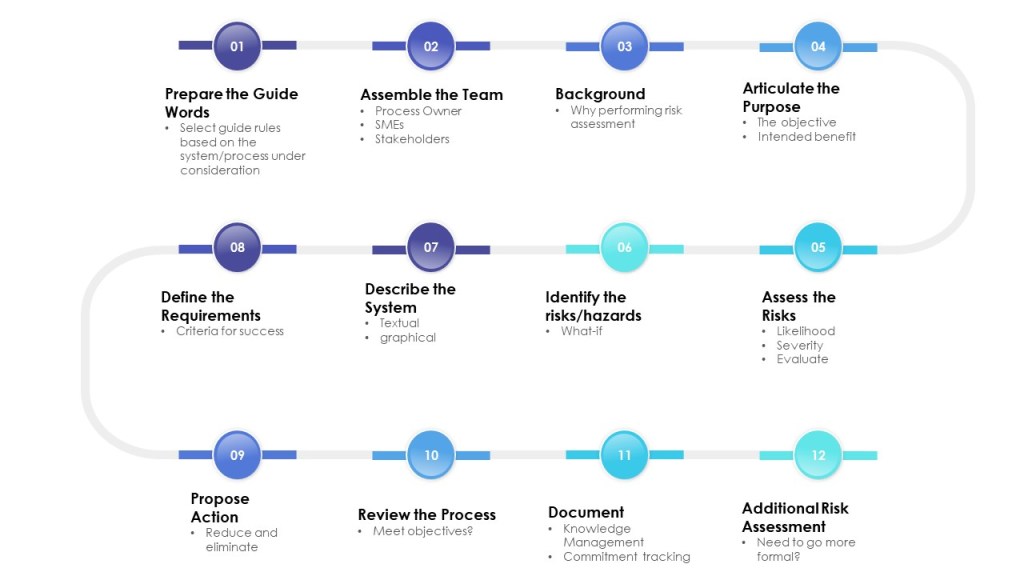
Steps in a SWIFT Analysis

SWIFT Risk Assessment
  1. Prepare the guide words: The facilitator should select a set of guide words to be used in the SWIFT.
  2. Assemble the team: Select participants for the SWIFT workshop based on their knowledge of the system/process being assessed and the degree to which they represent the full range of stakeholder groups.
  3. Background: Describe the trigger for the SWIFT (e.g., a regulatory change, an adverse event, etc.).
  4. Articulate the purpose: Clearly explain the purpose to be served by the SWIFT (e.g., to improve effectiveness of the process).
  5. Define the requirements: Articulate the criteria for success
  6. Describe the system: Provide appropriate-level textual and graphical descriptions of the system or process to be risk assessed. A clear understanding is necessary and can be is established through interviews, gathering a multifunctional team and through the study of documents, plans and other records. Normally the
  7. Identify the risks/hazards: This is where the structured what-if technique is applied. Use the guide words/headings with each system, high-level subsystem, or process step in turn. Participants should use prompts starting with the phrases like “What if…” or “How could…” to elicit potential risks/hazards associated with the guide word. For instance, if the process is “Receipt of samples,” and the guide word is “time, timing or speed,” prompts might include: “What if the sample is delivered at a shift change” (wrong time) or “How could the sample be left waiting too long in ambient conditions?” (wrong timing).
  8. Assess the risks: With the use of either a generic approach or a supporting risk analysis technique, estimate the risk associated with the identified hazards. In light of existing controls, assess the likelihood that they could lead to harm and the severity of harm they might cause. Evaluate the acceptability of these risk levels, and identify any aspects of the system that may require more detailed risk identification and analysis.
  9. Propose actions: Propose risk control action plans to reduce the identified risks to an acceptable level.
  10. Review the process: Determine whether the SWIFT met its objectives, or whether a more detailed risk assessment is required for some parts of the system.
  11. Document: Produce an overview document to communicate the results of the SWIFT.
  12. Additional risk assessment: Conduct additional risk assessments using more detailed or quantitative techniques, if required. The SWIFT Analysis is really effective as a filtering mechanism to focus effort on the most valuable areas.

Guideword Examples

The facilitator and process owner can choose any guide words that seem appropriate. Guidewords usually stem around:

  • Wrong: Person or people
  • Wrong: Place, location, site, or environment
  • Wrong: Thing or things
  • Wrong: Idea, information, or understanding
  • Wrong: Time, timing, or speed
  • Wrong: Process
  • Wrong: Amount
  • Failure: Control or Detection
  • Failure: Equipment

If your organization has invested time to create root cause categories and sub-categories, the guidewords can easily start there.

Whataboutism

Whataboutism is the common term for a version of the tu quoque fallacy, a diversionary tactic to shift the focus off of an issue and avoid having to directly address it by twisting criticism back onto the critic and in doing so revealing the original critic’s hypocrisy.

Whataboutism often results in a comparison of issues as pure deflection. We see it when individuals are always focused on why others get ahead and they don’t, looking for comparisons and reasons they are being treated unfairly instead of focusing on their own opportunities for improvement. It is so easy to use when we are faced with criticism, “Well, what about … ?”

We also see whataboutism in our cultures. Maybe it is a tendency to excuse your own team’s shortcomings because obviously the sins of another team is so much worse. This is a result of, and strengthens, silo-thinking.

Building the feedback process to reduce and eventually eliminate whataboutism is critical.