
This is definitely a good site that covers what complexity science is about. Good resource that I found a fascinating read.
Author: Jeremiah Genest
Quality professional with over 20 years of experience. Gamer and storyteller with forty years of practice.
Team Effectiveness
With much of the work in organizations accomplished through teams it is important to determine the factors that lead to effective as well as ineffective team processes and to better specify how, why, and when they contribute. It doesn’t matter if the team is brought together for a specific project and then disbands, or if it is a fairly permanent part of the organization, similar principles are at work.
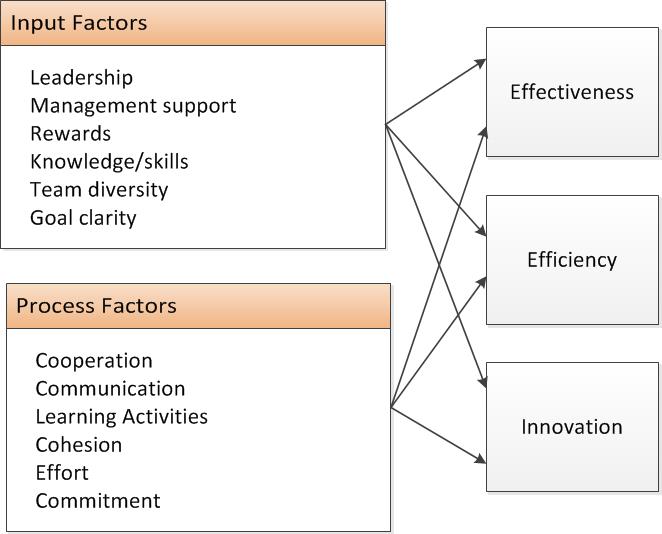
The input-process-output model of teams is a great place to start. While simplistic, it can offer a good model of what makes teams works and is applicable to the different types of teams.
Input factors are the organizational context, team composition, task design that influence the team. Process factors are what mediates between the inputs and desired outputs.
- Leadership: The leadership style(s) (participative, facilitative, transformational, directive, etc) of the team leader influences the team toward the achievement of goals.
- Management support refers to the help or effort provided by senior management to assist the project team, including managerial involvement and resource support.
- Rewards are the recompense that the organization gives in return for good work.
- Knowledge/skills are the knowledge, experience and capability of team members to process, interpret, manipulate and use information.
- Team diversity includes functional diversity as well as overall diversity.
- Goal clarity is the degree to which the goals of the project are well defined and the importance of the goals to the organization is clearly communicated to all team members.
- Cooperation is the measure of how well team members work with each other and with other groups.
- Communication is the exchange of knowledge and information related to tasks with the team (internal) or between team members and external stakeholders (external).
- Learning activities are the process by which a team takes action, contains feedback and makes changes to improve. Under this fits the PDCA lifecycle, including Lean, SixSigma and similar problem solving methodologies..
- Cohesion is the spirit of togetherness and support for other team members that helps team members quickly resolve conflicts without residual hard feelings, also referred to as team trust, team spirit, team member support or team member involvement.
- Effort includes the amount of time that team members devote to the project.
- Commitment refers to the condition where team members are bound emotionally or intellectually to the project and to each other during the team process.
Process Factors are usually the focus on team excellence frameworks, such as the ASQ or the PMI.
Outputs, or outcomes, are the consequences of the team’s actions or activities:
- Effectiveness is the extent a project achieves the performance expectations of key project stakeholders. Expectations are usually different for different projects and across different stake-holders; thus, various measures have been used to evaluate effectiveness, usually quality, functionality, or reliability. Effectiveness can be meeting customer/user requirements, meeting project goals or some other related set of measures.
- Efficiency is the ability of the project team to meet its budget and schedule goals and utilize resources within constraints Measures include: adherence to budget, adherence to schedule, resource utilization within constraints, etc.
- Innovation is the creative accomplishment of teams in generating new ideas, methods, approaches, inventions, or applications and the degree to which the project outputs were novel.
Under this model we can find a various levers to improve out outcomes and enhance the culture of our teams.
Data Process Mapping
In a presentation on practical applications of data integrity for laboratories at the March 2019 MHRA Laboratories Symposium held in London, UK, MHRA Lead GCP and GLP Inspector Jason Wakelin-Smith highlighted the important role data process mapping plays in understanding these challenges and moving down the DI pathway.
He pointed out that understanding of processes and systems, which data maps facilitate, is a key theme in MHRA’s GxP data integrity guidance, finalized in March of 2018. The guidance is intended to be broadly applicable across the regulated practices, but excluding the medical device arena, which is regulated in Europe by third-party notified bodies.
IPQ. MHRA Inspectors are Advocating Data Mapping as a Key First Step on the Data Integrity Pilgrimage
Data process maps look at the entire data life-cycle from creation through storage (covering key components of create, modify and delete) and include all operations with both paper and electronic records. Data maps are cross-functional diagrams (swim-lanes) and have the following sections:
- Prep/Input
- Data Creation
- Data Manipulation (include delete)
- Data Use
- Data Storage
Use a standard symbol for paper record, computer data and process step.

For computer data denote (usually by color) the level of controls:
- Fully aligned with Part 11 and Data Integrity guidances
- Gaps in compliance but remediation plan in place (this includes places where paper is considered “true copy”
- Not compliant, no remediation plan
Data operations are depicted utilizing arrows. The following data operations are probably most common, and are recommended for consistency:
- Data Entry – input of process, meta data (e.g. lot ID, operator)
- Data Store – archival location
- Data Copy – transcription from another system or paper, transfer of data from one system to another, printing (Indicate if it is a manual process).
- Data Edit – calculations, processing, reviews, unit changes (Indicate if it is a manual process)
- Data Move – movement of paper or electronic records
Data operation arrows should denote (again by color) the current controls in place:
- Technical Controls – Validated Automated Process
- Operational Controls – Manual Process with Review/Verified/Witness Requirements
- No Controls – Automated process that is not validated or Manual process with no Review/Verified/Witness Considerations

Top 5 Posts by Views in 2019 (first half)
With June almost over a look at the five top views for 2019. Not all of these were written in 2019, but I find it interesting what folks keep ending up at my blog to read.
- FDA signals – no such thing as a planned deviation: Since I wrote this has been a constant source of hits, mostly driven by search engines. I always feel like I should do a follow-up, but not sure what to say beyond – don’t do planned deviations, temporary changes belong in the change control system.
- Empathy and Feedback as part of Quality Culture: The continued popularity of this post since I wrote it in March has driven a lot of the things I am writing lately.
- Effective Change Management: Change management and change control are part of my core skill set and I’m gratified that this post gets a lot of hits. I wonder if I should build it into some sort of expanded master class, but I keep feeling I already have.
- Review of Audit Trails: Data Integrity is so critical these days. I should write more on the subject.
- Risk Management is about reducing uncertainty: This post really captures a lot of the stuff I am thinking about and driving action on at work.
Thinking back to my SWOT, and the ACORN test I did at the end of 2018, I feel fairly good about the first six months. I certainly wish I found time to blog more often, but that seems doable. And like most bloggers, I still am looking for ways to increase engagement with my posts and to spark conversations.
Mindsets and Attitudes
Mindsets are lenses or frames of mind that orient individuals to particular sets of associations and expectations. Mindsets help individuals make sense of complex information by offering them simple schematics about themselves and objects in their world. For employees, mindsets provide scaffolding for understanding the broad nature of their work. Mindsets can be intentionally and adaptively changed through targeted interventions, so the goal is to build the processes to assess, monitor and shape as part of our quality systems.
Attitudes are the beliefs and feelings that drive individuals’ intentions and actions. Attitudes are the lens through which individuals make sense of their surroundings and impart consistency to guide their behavior .
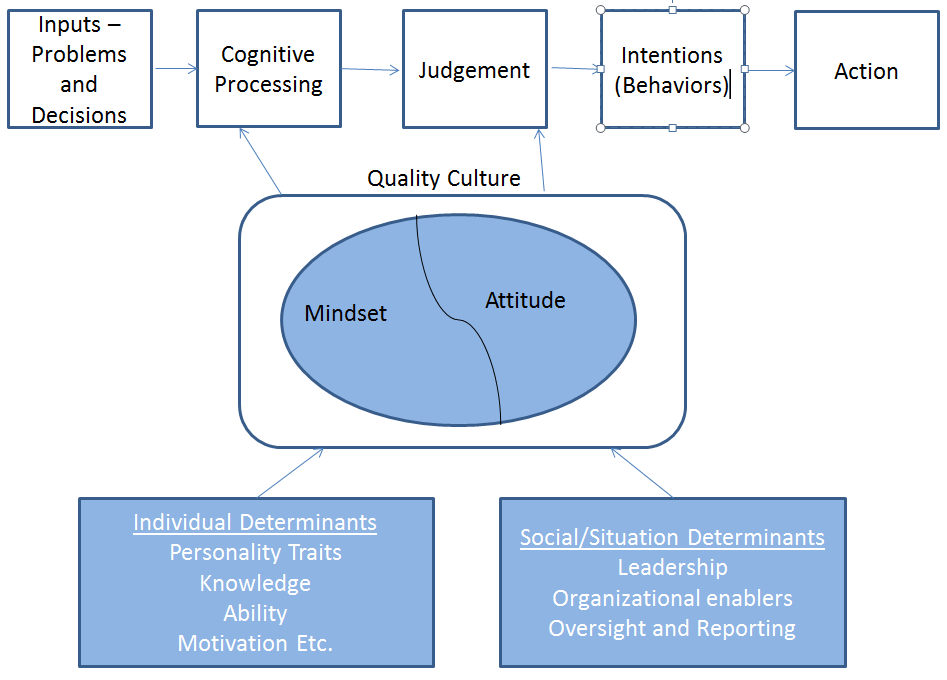
Mindset influences attitudes, which influence behaviors, which influence actions, which influence results, which influence performance. And performance leas to changes in mindsets, and is a continuous improvement loop.
Since behaviors drive the actions we want to see, they are often a great pivot point. By thinking and working on mindsets and attitudes we are targeting the fourth and second leverage points.
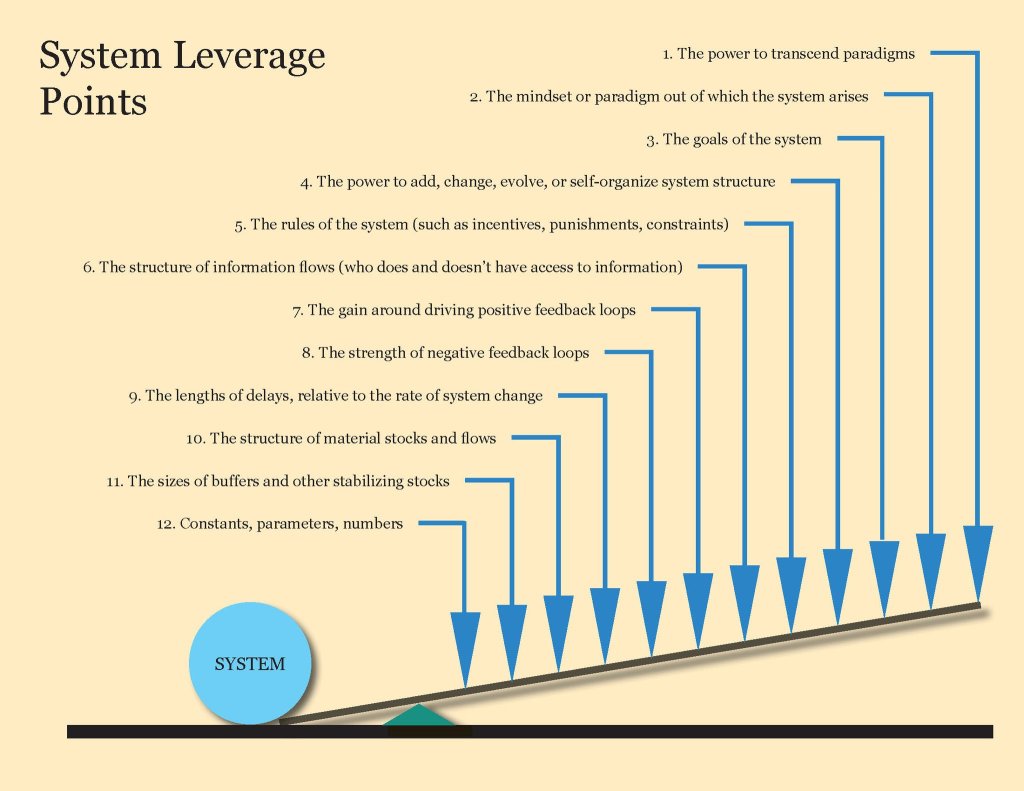
Another way to think about this is we are developing habits. The same three factors apply:
- Start small: If you have ever tried to tackle multiple resolutions all at once, you know it is next to impossible. Often, the habits will lack cohesion with one another, leading to more stress and less progress. The cognitive load increases, and the brain processes things in a more scattered, less congruent manner. It’s better to focus on one new habit at a time.
- Enact the new habit daily: We can’t predict how long a specific habit will take to form, but all the research I’ve seen indicates that the more often people account on the new behavior, the more likely it is to become routine.
- Weave into existing processes: When we blend the new behavior with current activities, it’s easier to latch on to, which make sit become an unconscious action more quickly.
Habits are contagious within social contexts, but scaling positive pressure on an organization level is a big challenge.
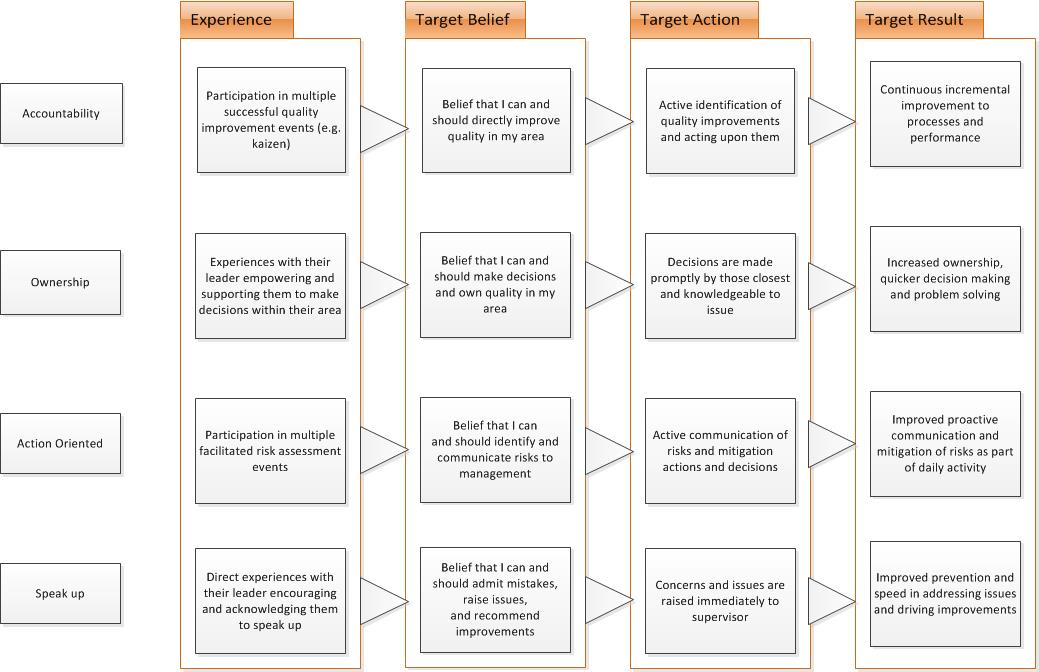
Another way to view this is in the framework of experiences, build beliefs, which lead to actions and give us results. By building this into our systems we can make sure the appropriate processes are in place to make sure these new habits stick. Building a quality culture is a multi-year journey requiring incremental, layered and additive formation.
This formation comes through building the mindsets that lead to the behaviors we want to see. Following the ISPE’s recommendations there are four good behaviors we can target (these are not the only ones nor are they exhaustive).
- Accountability: Employees consistently see quality and compliance as their personal responsibilities. Establishing clear individual accountability for quality and compliance is a foundational step in helping shape quality mindset and cultural excellence. Accountability should be communicated consistently through job descriptions, onboarding, current good manufacturing practice (cGMP) training, and performance goals, and be supported by coaching, capability development programs, rewards, and recognition. Leaders should hold themselves and others accountable for performing to quality and compliance standards
- Ownership: Employees have sufficient authority to make decisions and feel trusted to do their jobs well. Individual ownership of quality and compliance is a primary driver for shaping quality mindset. When individuals are fully engaged, empowered, and taking action to improve product quality, organizations typically benefit from continuous improvement and faster decision-making.
- Action orientation: Employees regularly identify issues and intervene to minimize potential negative effects on quality and compliance. Establishing the expectation that individuals demonstrate action orientation helps shape quality mindset and foster cultural excellence. Leaders should promote and leverage proactive efforts (e.g., risk assessments, Gemba walks, employee suggestions) to reinforce support for the desired behavior. Additionally, it is important that rewards and recognition be aligned to support proactive efforts, rather than reactive fire-fighting efforts.
- Speak up: Employees are not afraid to speak up, identify quality issues, or challenge the status quo for improved quality; they believe management will act on their suggestions. Empowering individuals to speak up and raise quality issues help foster quality mindset. Leaders should support this by modeling the desired behavior, building trust, and creating an environment in which individuals feel comfortable raising quality issues, engaging front-line personnel in problem solving, and involving employees in continuous-improvement activities.
Creating a high level action plan of experience -> Target Belief -> Target Action ->Target Result might look like this:
Sources
- Aguire, D., von Post, R & Alpern, M. (2013). Culture’s role in enabling organization change. PWC
- Ajzen, I. (2005). Attitudes, personality and behavior. (2nd ed.). Berkshire, GBR: McGraw-Hill Professional Publishing
- Ball, K., Jeffrey, R.W., Abbott, G., McNaughton, S.A. & Crawford, D (2010). Is Healthy behavior contagious: associations with social norms with physical activity and healthy eating. International Journal of Behavioural Nutrition and Physical Activity, 7 (86)
- Fujita, K., Gollwitzer, P. M., & Oettingen, G. (2007) . Mindsets and pre-conscious open-mindedness to incidental information. Journal of Experimental Social Psychology, 43(1), 48-61.
- Gollwitzer, P. M. (1990). Action phases and mind-sets. In E. T. Higgins & R. M. Sorrentino (Eds.), Handbook of motivation and cognition: Foundations of social behavior, Vol. 2, pp. 53-92). New York, NY, US: The Guilford Press.

