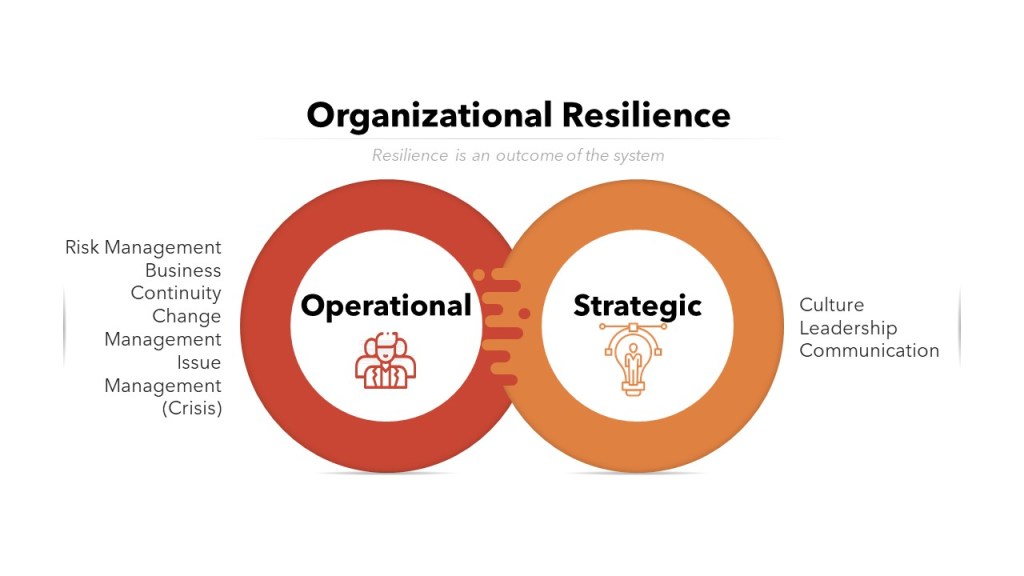
In the current world scenario, which is marked by high volatility, uncertainty, complexity, and ambiguity (VUCA), threats are increasingly unforeseen. As organizations, we are striving for this concept of Resilience.
Resilience is one of those hot words, and like many hot business terms it can mean a few different things depending on who is using it, and that can lead to confusion. I tend to see the following uses, which are similar in theme.
Where used
Meaning
Physics
The property of a material to absorb energy when deformed and not fracture nor break; in other words, the material’s elasticity.
Ecology
The capacity of an ecosystem to absorb and respond to disturbances without permanent damage to the relationships between species.
Psychology
An individual’s coping mechanisms and strategies.
Organizational and Management studies
The ability to maintain an acceptable level of service in the face of periodic or catastrophic systemic and singular faults and disruptions (e.g. natural disasters, cyber or terrorist attacks, supply chain disturbances).
For our purposes, resilience can be viewed as the ability of an organization to maintain quality over time, in the face of faults and disruptions. Given we live in a time of disruption, resilience is obviously of great interest to us.
In my post “Principles behind a good system” I lay out eight principles for good system development. Resilience is not a principle, it is an outcome. It is through applying our principles we gain resilience. However, like any outcome we need to design for it deliberately.
In 2023 I start my leadership cycle through the Food, Drug and Cosmetic division, starting as chair-elect. This means time to do some content creation! Here’s the first thing I have planned.
The Food, Drug, and Cosmetic Division will be hosting a poster share on February 28th from 3-5 pm in Boston, with a cocktail hour afterwards (5-6). The event is being sponsored by Veeva Systems and will be free (big shout out to Veeva!)
We are looking for individuals and companies to share a poster on the theme of “What are you proud of in your eQMS? What about your implementation or continued use stands out and that you want to share?”
If interested in presenting a poster, please complete this form.
We ask that all posters be completed by the 22nd of February so we can get them printed.
We will record the poster presentation and make them available through my.ASQ after the event. Poster presenters must sign a standard ASQ waiver (we will make it available before the event).
An event sign-up will come out in January.
The event is open to all. While I’m thinking the focus will be heavily focused to FD&C and medical device members, other quality professionals will get value.
So please present a poster! I am very excited about this sort of sharing of ideas. I want to keep experimenting with alternative ways to share information and network, and I think the old poster session is something that has renewed utility in this day-and-age. Sort of a speed conference. Easier to create a poster and can be a compact event.
Beyond wishing for an 11 month cycle of writing and approval on my annual reports, there is some valuable information there.
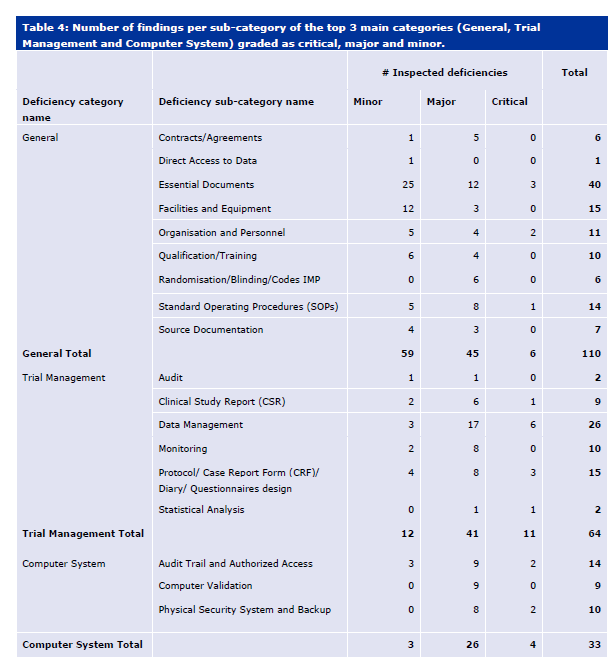
In 2021, three CHMP GCP inspections were conducted entirely remotely, and three inspections were conducted in a hybrid setting. A total of 286 deficiencies, comprising 24 critical, 152 major and 110 minor findings were recorded for the 27 CHMP requested inspections conducted in 2021. This represents an average of 10-11 findings per site inspected. The three top categories were: “General”, “Trial Management” and “Computer System”. An increase in findings related to computer systems (e. g. Audit Trail and Authorized Access, Computer Validation, Physical Security System and Backup) is noted compared to the last reports.
Under organisation and personel we see “Delegation of tasks to inappropriate team members.” This reinforces the needs for strong cv and job descriptions, and linking to both hiring and personnel qualification.
The computer systems observations are the greatest hits of data integrity, and should be a wakeup call to any company that treats GCP and GMP computer systems differently.
Let the 2022 annual GCP training development begin. And make sure you get that training done on time!
Folks often forget that in the United States the active ingredient in sun screen is a drug and needs to meet appropriate quality system requirements. This Warning Letter to Kari Gran, Inc is a case in point.
The whole warning letter is a result of a company not realizing (or thinking they can get away with not having) the need for GMP compliance.
I’m not sure I would draw broader trends around data integrity or anything else from it.
Knowledge management is a key enabler for quality, and should firmly be part of our standards of practice and competencies. There is a host of practices, and one tool that should be in our toolboxes as quality professionals is the Community of Practice (COP).
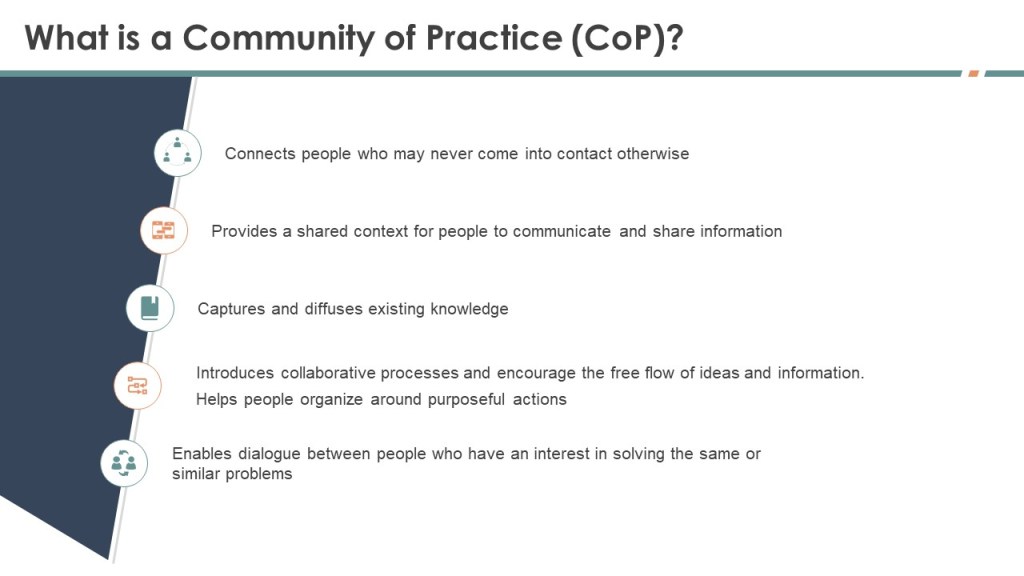
What is a Community of Practice?
Wenger, Trayner, and de Laat (2011) defined a Community of Practice as a “learning partnership among people who find it useful to learn from and with each other about a particular domain. They use each other’s experience of practice as a learning resource.” Etienne Wagner is the theoretical origin of the idea of a Community of Practice, as well as a great deal of the subsequent development of the concept.
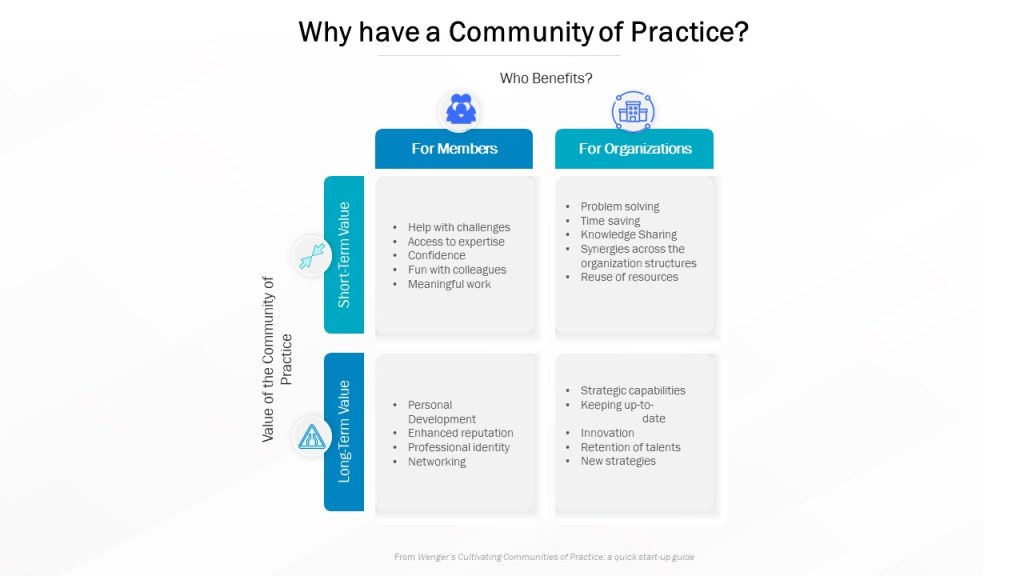
Communities of practice are groups of people who share a passion for something that they know how to do, and who interact regularly in order to learn how to do it better. As such, they are a great tool for continuous improvement.
These communities can be defined by disciplines, by problems, or by situations. They can be internal or external. A group of deviation investigators who want to perform better investigations, contamination control experts sharing across sites, the list is probably endless for whenever there is a shared problem to be solved.
The idea is to enable practitioners to manage knowledge. Practitioners have a special connection with each other because they share actual experiences. They understand each other’s stories, difficulties, and insights. This allows them to learn from each other and build on each other’s expertise.
There are three fundamental characteristics of communities:
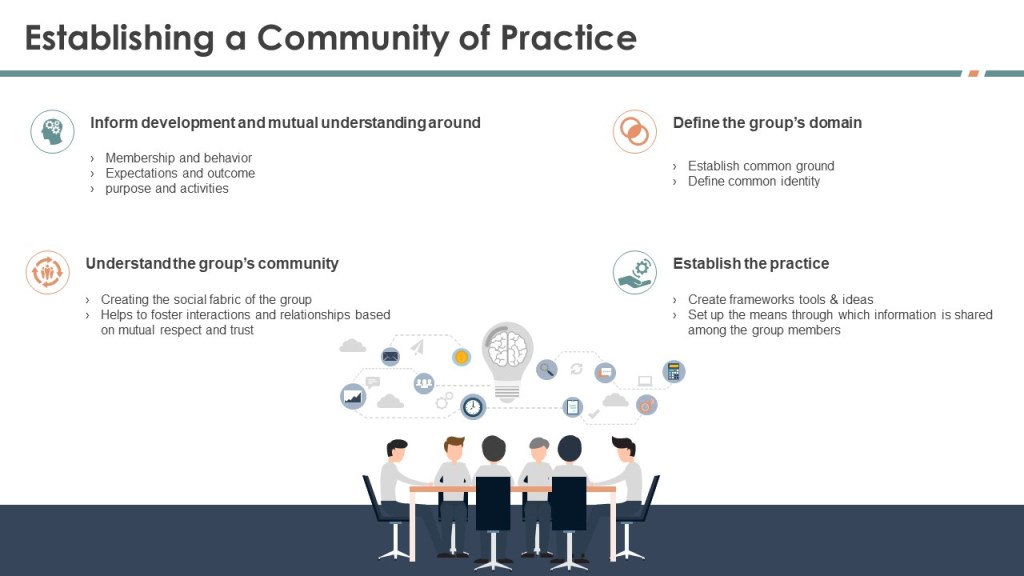
Domain: the area of knowledge that brings the community together, gives it its identity, and defines the key issues that members need to address. A community of practice is not just a personal network: it is about something. Its identity is defined not just by a task, as it would be for a team, but by an “area” of knowledge that needs to be explored and developed.
Community: the group of people for whom the domain is relevant, the quality of the relationships among members, and the definition of the boundary between the inside and the outside. A community of practice is not just a Web site or a library; it involves people who interact and who develop relationships that enable them to address problems and share knowledge.
Practice: the body of knowledge, methods, tools, stories, cases, documents, which members share and develop together. A community of practice is not merely a community of interest. It brings together practitioners who are involved in doing something. Over time, they accumulate practical knowledge in their domain, which makes a difference to their ability to act individually and collectively.
The combination of domain, community, and practice is what enables communities of practice to manage knowledge. Domain provides a common focus; community builds relationships that enable collective learning; and practice anchors the learning in what people do. Cultivating communities of practice requires paying attention to all three elements.
Communities of Practice are different than workgroups or project teams.
What’s the purpose?
Who belongs?
What holds it together?
How long does it last?
Community of Practice
To develop members’ capabilities. To build and exchange knowledge
Members who share domain and community
Commitment from the organization. Identification with the group’s expertise. Passion
As long as there is interest in maintaining the group
Formal work group
To deliver a product or service
Everyone who reports to the group’s manager
Job requirements and common goals
Until the next reorganization
Project team
To accomplish a specific task
Employee’s assigned by management
The project’s milestones and goals
Until the project has been completed
Informal network
To collect and pass on business information
Friends and business acquantainces
Mutual needs
As long as people have a reason to connect
Types of organizing blocks
Establishing a Community of Practice
Sponsorship
For a Community of Practice to thrive it is crucial for the organization to provide adequate sponsorship. Sponsorship are those leaders who sees that a community can deliver value and therefore makes sure that the community has the resources it needs to function and that its ideas and proposals find their way into the organization. While there is often one specific sponsor, it is more useful to think about the sponsorship structure that enables the communities to thrive and have an impact on the performance of the organization. This includes high-level executive sponsorship as well as the sponsorship of line managers who control the time usage of employees. The role of sponsorship includes:
Translating strategic imperatives into a knowledge-centric vision of the organization
Legitimizing the work of communities in terms of strategic priorities
Channeling appropriate resources to ensure sustained success
Giving a voice to the insights and proposals of communities so they affect the way business is conducted
Negotiating accountability between line operations and communities (e.g., who decides which “best practices” to adopt)
Support Structure
Communities of Practice need organizational support to function. This support includes:
A few explicit roles, some of which are recognized by the formal organization and resourced with dedicated time
Direct resources for the nurturing of the community infrastructure including meeting places, travel funds, and money for specific projects
Technological infrastructure that enables members to communicate regularly and to accumulate documents
It pays when you use communities of practice in a systematic way to put together a small “support team” of internal consultants who provide logistic and process advice for communities, including coaching community leaders, educational activities to raise awareness and skills, facilitation services, communication with management, and coordination across the various community of practices. But this is certainly not needed.
Process Owners and Communities of Practice go hand-in-hand. Often it is either the Process Owner in a governance or organizing role; or the community of practice is made up of process owners across the network.
Recognition Structure
Communities of Practice allows its participants to build reputation, a crucial asset in the knowledge economy. Such reputation building depends on both peer and organizational recognition.
Peer recognition: community-based feedback and acknowledgement mechanisms that celebrate community participation
Organizational recognition: rubric in performance appraisal for community contributions and career paths for people who take on community leadership



 Investigations of a Dog