A common and distorted application of psychological safety is that it is somehow a shield from accountability. Non-performing employees tend to invoke it as an excuse for poor performance, insisting that a focus on psychological safety means valuing people and building relationships. That’s true, but stretching the premise, they claim that we should give them a pass when they don’t perform.
The flawed logic seems to be along the lines of because we may have used fear and intimidation, command and control, and manipulative and coercive tactics with people in the past, in an attempt to hold folks accountable, we must shed the artifacts that drive accountability in order to have an environment of psychological safety.
In my experience, this is especially prevalent when discussing metrics around overdue quality systems records and training. How to discuss what is late, can you even publish a list of folks with overdue training?
I want to be very clear, psychological safety is not a kind of diplomatic immunity from having to deliver results. It is not a shield from accountability.
Being held accountable can be looked at as transparency in progress. Psychological safety allows us to be vulnerable and to trust that the organization will take the problems seriously and address them.
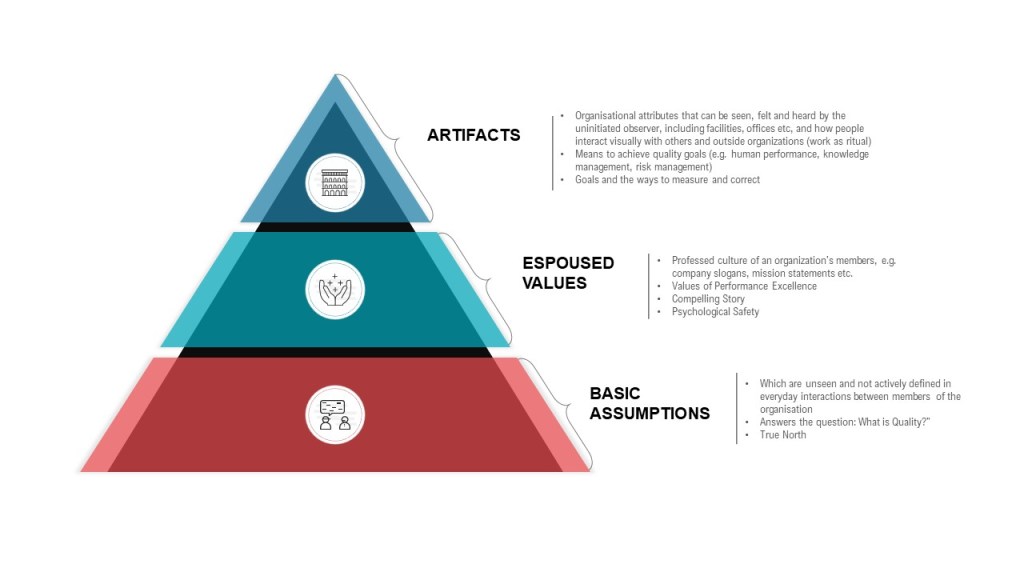
Culture is often the true reason for the behavior of people within an organization and it can often be deeply unconscious and not rationally recognized by most members. These ideas are so integrated that they can be difficult to confront or debate and thus difficult to change.
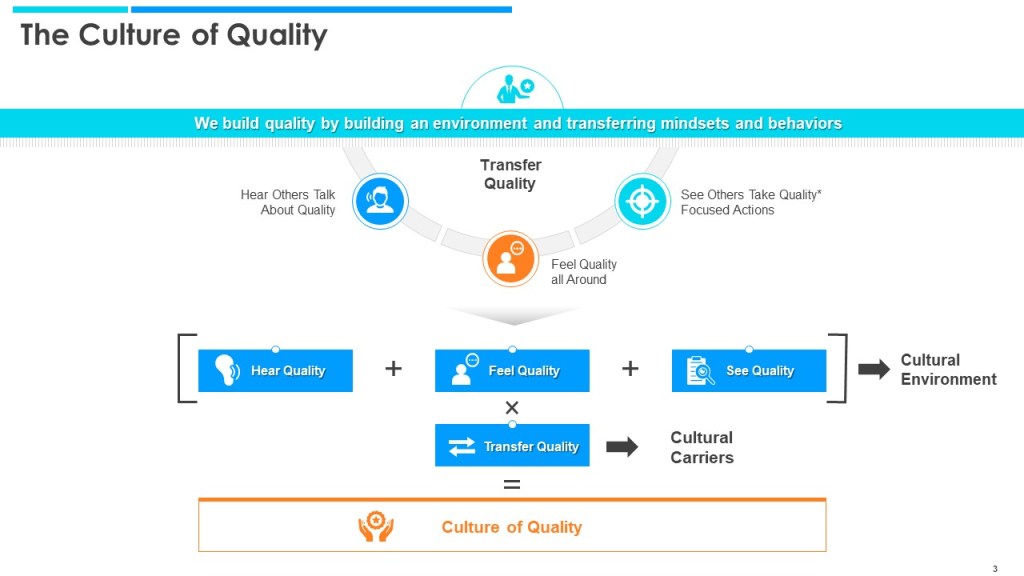
How we Build Quality
A critical part for improving culture is being able to measure the current situation. A great place to start is using a survey-based to gather input from employees on the current culture of quality. Some of the topic areas can include:
Teamwork, collaboration, and involvement are the norm
Emphasis on constant improvement and state-of-the-art knowledge and practices
Willingness to change, adapt, learn from successes and mistakes, take reasonable risk, and try new things
Attributes of a High Performing Culture
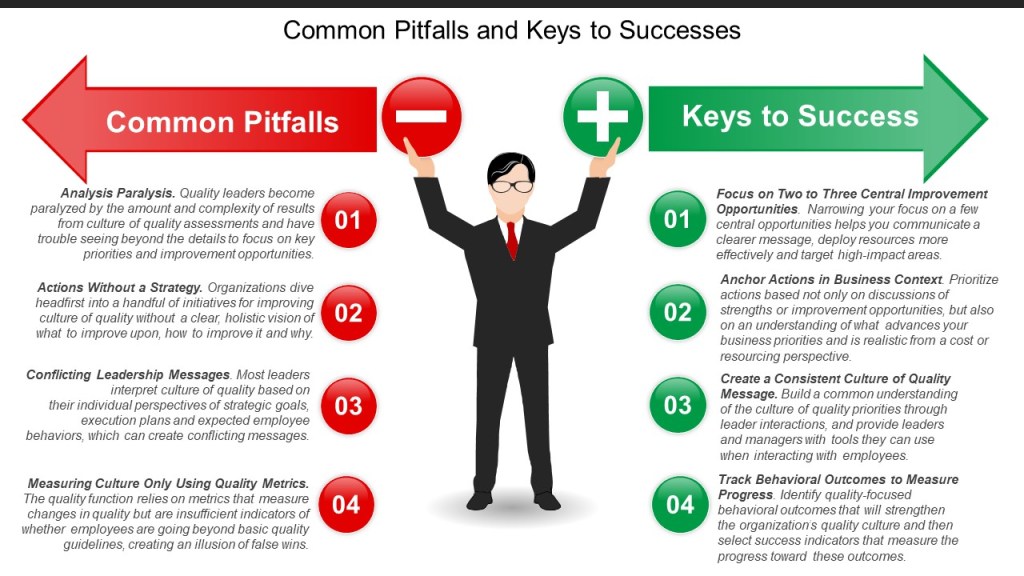
There is a dark underbelly to aspiring to this, leaders who either fail to meet these standards or demonstrate hypocrisy and “do-as-I-say-not-as-I-do” attitudes. Organizations that aspire, can easily be hoisted by their own petard, and there is an excellent term for this “Moral Injury.”
Moral injury is understood to be the strong cognitive and emotional response that can occur following events that violate a person’s moral or ethical code. Potentially morally injurious events include a person’s own or other people’s acts of omission or commission, or betrayal by a trusted person in a high-stakes situation. For example, look at healthcare staff working during the COVID-19 pandemic who experienced a moral injury because they perceive that they received inadequate protective equipment, or when their workload is such that they deliver care of a standard that falls well below what they would usually consider to be good enough. This is causing a mass exodus of employees.
Give some thought to how to resolve moral injuries when they happen. Include them in your change plan and make them sustainable. They can happen, and when they do they will cripple your organization.
FDA’s Office of Pharmaceutical Quality (OPQ) in the Center for Drug Evaluation and Research (CDER) recently published a white paper proposal on the development of a rating system to measure a firm’s quality management maturity (QMM) as a way to mitigate drugs shortages and enhance the quality of finished drug products. These ratings would be publicly available. This is very aligned in thought to the recent NAS study recommendations in a paper commissioned by Congress.
This fits nicely within the recent draft guidance on metrics, and the two are definitely meant to fit together.
I am a big advocate of this work. I definitely want to see the particulars, but this is a long time coming and greatly needed. Frankly, the best way to make them happen is to require the QMM to be a factor in purchasing decisions for Medicaid/Medicare and the Veterans Hospitals (and more if possible).
The agency will be holding two workshops on quality management maturity, on May 24 and May 25. The first workshop will address CDER’s QMM program and the second will discuss quality ratings.