McKinsey paid $600 million as a result of its illegal activities around the sales of opioid drugs. Frankly, I’m amazed that the company has not gone the way of Arthur Anderson, a fate that is well deserved.
Yet the company still exists and continues to do creepy stuff, for example, take a look at Cory Doctorow’s article on their kids’ program.
Hiring McKinsey is basically like hiring the Tony Soprano Consulting Company.
Does training in your organization seem like death by PowerPoint? Is learning viewed as something an expert dumps in the lap of the learner.? However, that’s not what learning is – lectures and one-way delivery end up resulting in very little learning.
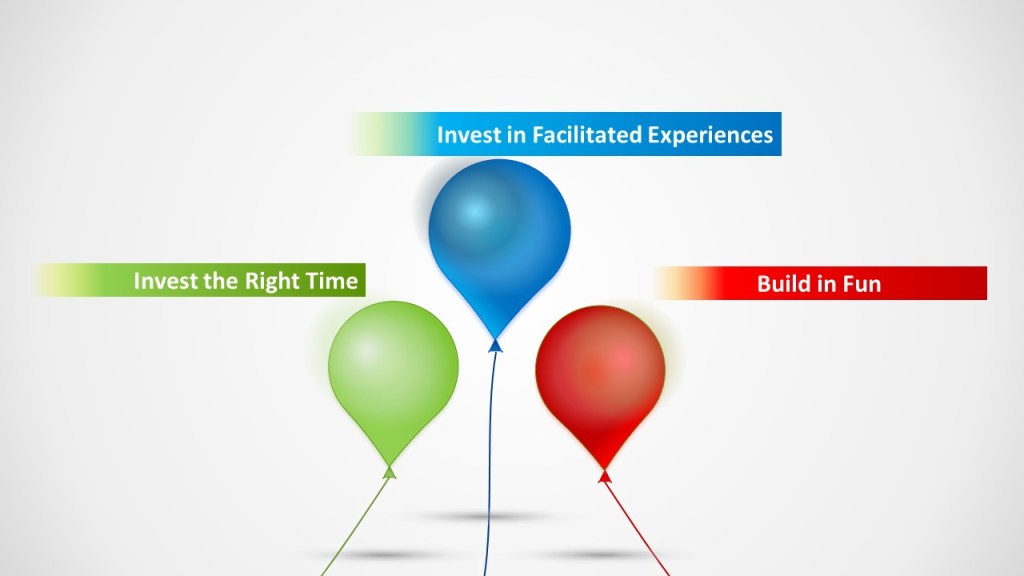
For deeper meaning to occur, invest in professionally facilitated experiences that enable staff to form mental models they remember. Get people thinking before and after the training to ensure that the mental model stays fresh in the mind.
Culture of Cutting Time
Avoid the desire for training in shorter and shorter chunks. The demands of the workplace are increasingly complex and stressful, so any time out of the office is a serious cost. The paradox is that by shortening the training, we don’t give the time for structured learning, which sabotages the investment when the training program could be substantially improved by adding the time to allow the learning to be consolidated.
We know that learning takes place when people have fun, stress is low, and the environment encourages discovery. Make training cheerful and open rather than dull and quiet. Encourage lots of informal learning opportunities. Give more control to the learner to shape their experience. Have fun!
People learn and solve problems when they are having fun, stress is low, and the environment encourages discovery. A core part of psychological safety.
I’ve talked before about bringing playfulness to work, about exuberance and excitement. These personal approaches can be turned to the wider organization.
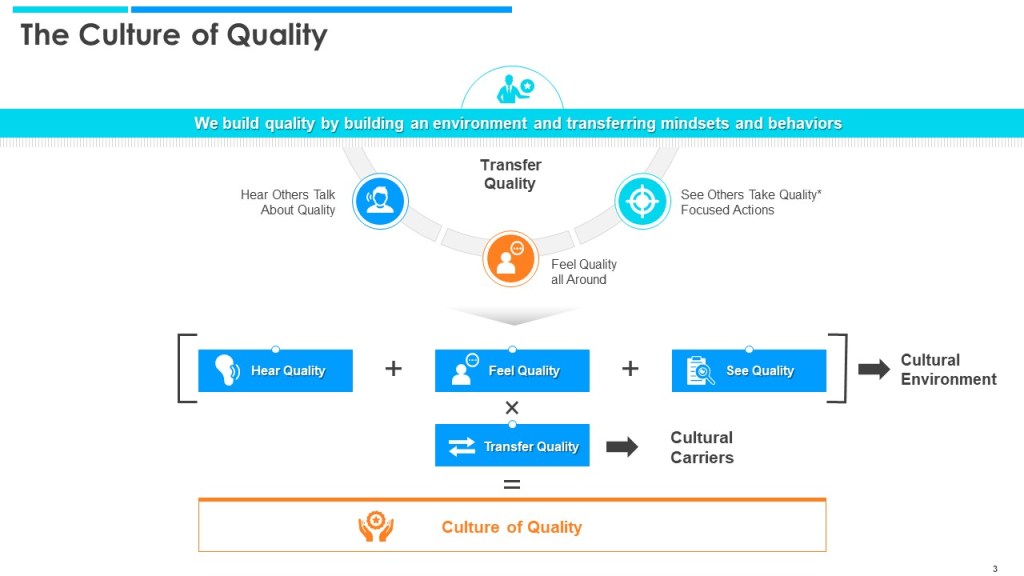
Quality as a profession – not so known for fun. So we need to look for opportunities for fun, whether in our training programs, through initiatives like Quality Days, or any other place we can find it.
Here are some ideas for organizing fun to drive a quality message.
Activity
Name
Description
Cost
required
Effort
required
Impact/
Learning Opportunity
Learning
Outcome
Video
Competitions
Contest
of team videos with stories about how they transfer quality or outline
continuous improvement projects. Teams may also record a best practice
to be shared with the organization.
Medium
High
High
-Video and
poster viewership helps transfer quality behaviors and values to others.
-Employee-created
messages are more credible, giving them a stronger impact on transferring the
culture of quality throughout the organization.
Poster
Signing
Teams can
sign a poster to make a commitment to quality. They can hold a contest for
designing the best Quality Day poster.
Low
Low
Medium
Employee
Idea Demonstrations
Make peer
idea generation (quality ideas) visible to all employees through the use of
regularly refreshed public “progress boards” and idea showcases
where projects are publicly evaluated.
Low
Medium
High
-Shows
employees that quality focus is something that peers around them prioritize
and benefit from.
-Provides
employees a benchmark for what behaviors are expected from them and
encourages the ones whose ideas are recognized.
Quality
Awards and Recognition
Publicly
recognize individuals and teams with a trophy/certificate for consistently
embodying quality in their work. Awarding behaviors, not just outcomes,
increases employee engagement.
High
Medium
High
-Helps engage
employees in quality improvement efforts by demonstrating that despite other
objectives and priorities, quality remains important to leaders.
Client/
Customer Visit
Invite your
clients/customers to visit and talk about their experience with the
product/service and the importance of quality.
High
High
High
-Helps
employees understand how a high-quality mindset avoids customer-facing
mistakes and leads to greater customer satisfaction.
Games
Word-Play
Games: A group of employees can play games like Scrabble and Bingo with
quality terminology.
Low
Low
Medium
-Quick games
help employees become aware of quality terms, tests, standards in a fun way.
Trivia Games:
Employees can play games such as “Jeopardy” and beer pong with quality
standards, tests, tools to educate themselves.
Low
Low
Medium
Articles
on Quality
Share blogs
and articles on quality.
Low
Medium
Medium
-Increases
quality’s visibility across the organization and promotes awareness.
Quality
Quiz Competition
Employees can
take quizzes on quality-related concepts.
Low
Medium
High
-Tests
employees’ awareness and creates a healthy competition to know more.
Quality Merchandise
(swag)
Distribute
T-shirts, mugs, badges with quality quotes to employees. Reward contest
winners with goodies such as chocolates with quality phrases written on them.
High
High
Medium
-Provides
more visibility to quality and imparts a sense of pride in employees.
Leveraging fun is a good way to help build a culture of quality.
Building moments of planned fun is work, and should be part of the overall Quality Plan, with activities and milestones clearly marked and executed towards.
Everyone struggles with meetings, and I am certainly not an exception. As a fan of finding and leveraging expertise, I’d like to share the big thinkers in this space that I rely on and three books that I recommend everyone read.
Elise’s practice, and her book, are all about the best ways to make it easy for people to enjoy meetings that get work done. She emphasizes that the whole point of a meeting is to gather people for a purpose and shares different meeting types to help us get to the why.
The amazing thing is how her book and her company’s practice are all about clear, practical tools and methodologies. Her workshops are well-run and can be transformative.
Everyone should read the book. And when your organization says “Meetings are horrible” then do yourself a favor and leverage Lucid Meeting’s offerings. Trust me, you will be happy you gave Elise a call.
Gamestorming
The book Gamestorming: A Playbook for Innovators, Rulebreakers, and Changemakers literally changed my career trajectory when I read it back in 2010. This book by Dave Gray, Sunni Brown, and James Macanufo taught me methods of meeting facilitation and having fun in meetings, which have made me happier in my professional growth, and hopefully a better leader. I’ve written about this before, and I continue to believe that visual meetings lead to better results and we all need to do more.
GameStormingis a beautiful resource webpage. As a company, they lead some great workshops. The Expeditions I attended, run by Dave Mastronardi, was one of the two best virtual events of 2021 – and yes, the other one was run by Elise! I strongly recommend signing up for an Expedition, and look forward to new offerings from Dave and his team.
Strategyzer
I love this team’s books. Co-founders Alex Osterwalder and Alan Smith have built a set of tools and methodologies to drive innovation in an organization. The 2021 High-Impact Tools for Teams is one of the must-reads in this area, and presents a powerful, highly visual approach to building teams.




 Investigations of a Dog