Challenges in Validation

I often get asked why I moved from a broader senior role in Quality Management to a particular but deep role in Quality Engineering and Validation. There are many answers, but the biggest is that validation is poised for some exciting shifts due to navigating a complex validation landscape characterized by rapid technological advancements, evolving regulatory standards, and the development of novel therapies. Addressing these challenges requires innovation, collaboration, and a proactive approach to risk management and data integration. Topics near and dear to me.

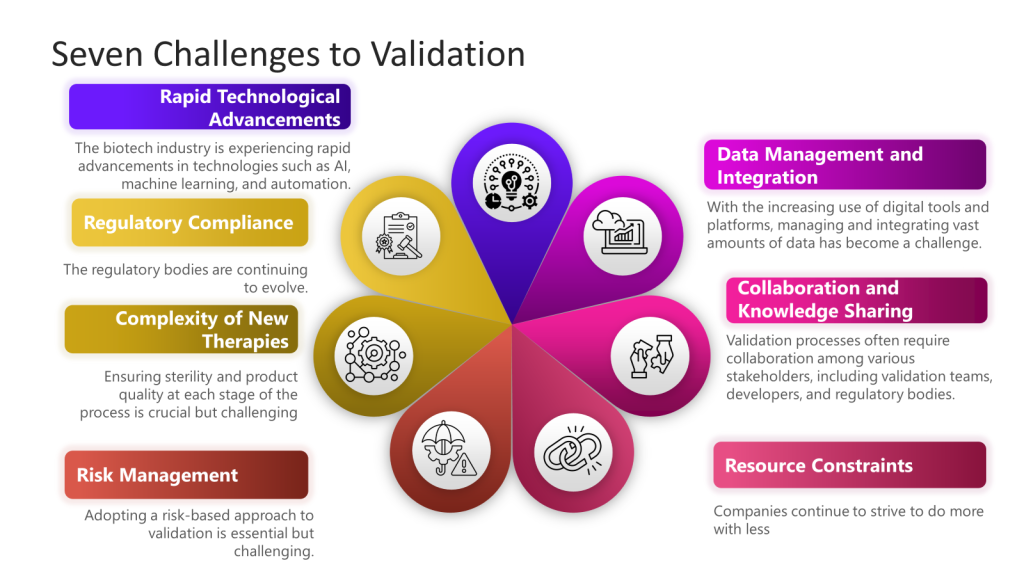
Today’s Challenges in Biotech Validation

1. Rapid Technological Advancements

The biotech industry is experiencing rapid technological advancements such as AI, machine learning, and automation. Integrating these technologies into validation processes can be challenging due to the need for new validation frameworks and methodologies.

2. Regulatory Compliance

Maintaining compliance with evolving regulatory standards is a significant challenge. Regulatory bodies like the FDA continuously update guidelines for technological advancements.

3. Complexity of New Therapies

Developing novel therapies, such as cell and gene therapies, introduces additional complexity to the validation process. These therapies often require redesigned facilities and equipment to accommodate their sensitive and sterile nature. Ensuring sterility and product quality at each process stage is crucial but challenging.

4. Data Management and Integration

Managing and integrating vast amounts of data has become challenging with the increasing use of digital tools and platforms. Effective data management is essential for predictive modeling and risk management in validation processes. Organizations must adopt robust data analytics and machine learning tools to handle this data efficiently.

5. Collaboration and Knowledge Sharing

Validation processes often require collaboration among various stakeholders, including validation teams, developers, and regulatory bodies. Ensuring real-time communication and data sharing can be challenging but is essential for streamlining validation efforts and aligning goals.

6. Resource Constraints

Smaller biotech companies, in particular, face resource constraints regarding funding, personnel, and expertise. These constraints can hinder their ability to implement advanced validation techniques and maintain compliance with regulatory standards.

7. Risk Management

Adopting a risk-based approach to validation is essential but challenging. Companies must identify and mitigate risks throughout the product lifecycle, which requires a thorough understanding of potential risks and effective risk management strategies.

Let’s Avoid the Term Validation 4.0

Let’s avoid the 4.0 term. We are constantly evolving, and adding a current ‘buzziness’ to it does no one any favors. We are shifting from traditional, paper-heavy validation methods to a more dynamic, data-driven, and digitalized process. Yes, we are leveraging modern technologies such as automation, data analytics, artificial intelligence (AI), and the Internet of Things (IoT) to enhance validation processes’ efficiency, flexibility, and reliability. But we don’t need buzziness, we just need to give it some thought, experiment, and refine.

Component Manufacturers Validation Requirements

I recently got asked what a medical device component manufacturer’s validation requirements are. Here is my answer.

Component manufacturers play a crucial role in the medical device industry by producing various parts and components for proper functioning and assembly. Here are some key expectations and responsibilities of component manufacturers in the medical device sector:

  1. Quality and Precision Manufacturing: Medical device components often require high precision, accuracy, and quality to ensure patient safety and device efficacy. To meet these demanding standards, component manufacturers must adhere to stringent quality control measures, utilize advanced manufacturing techniques, and maintain strict tolerances.
  2. Regulatory Compliance: The medical device industry is heavily regulated, and component manufacturers must comply with relevant regulations and standards set by governing bodies like the FDA, ISO, and others. This includes maintaining proper documentation, implementing quality management systems, and ensuring traceability of materials and processes.
  3. Material Selection and Biocompatibility: Many medical device components come into direct contact with the human body or bodily fluids. Consequently, component manufacturers must carefully select biocompatible, non-toxic, and suitable materials for the intended application. They must also ensure proper sterilization and packaging to maintain sterility.
  4. Design and Engineering Support: Some component manufacturers offer design and engineering services in addition to manufacturing to assist medical device companies in developing new components or optimizing existing ones. This collaboration helps ensure that components meet specific performance, functional, and regulatory requirements.
  5. Supply Chain Management: Component manufacturers must have robust supply chain management systems to ensure the timely delivery of components to medical device manufacturers. This includes maintaining adequate inventory levels, managing logistics, and minimizing disruptions in the supply chain.

Yes, component manufacturers in the medical device industry are expected to validate their manufacturing processes to ensure the components they produce meet specified requirements and perform as intended.

  • Regulatory bodies like the FDA require that components critical to the safety and performance of medical devices be produced through validated processes. This helps ensure that components consistently meet quality standards.
  • Component manufacturers must perform Installation Qualification (IQ), Operational Qualification (OQ), and Performance Qualification (PQ) on their manufacturing equipment and processes.
  • Validation requirements apply to finished components and raw materials, sub-components received from suppliers, and any processes involved in producing the component. Traceability of validation activities throughout the supply chain is essential.
  • The level of validation required depends on the component’s criticality and risk to the final medical device. More stringent validation is expected for higher-risk components that directly contact the patient or are essential for device safety and efficacy.
  • The component manufacturer must maintain validation documentation such as protocols, test reports, and traceability matrices and provide it to the medical device company upon request for review and auditing purposes.

Commissioning, Qualification and Validation

Commissioning, qualification, and validation are three distinct but interrelated processes in the pharmaceutical and biotechnology industries that ensure facilities, equipment, systems, and processes meet regulatory requirements and produce products of the desired quality. Here are the key differences:

Commissioning

  • Commissioning is a systematic process of ensuring that equipment, systems, and facilities are designed, installed, and functioning according to operational and engineering requirements.
  • It involves design reviews, installation verification, functional testing, and handover to operations.
  • Commissioning primarily focuses on satisfying engineering requirements and does not have direct regulatory requirements.

Qualification

  • Qualification is a regulated and documented process that demonstrates that equipment, systems, and facilities are installed correctly and operate as intended for their specific use.
  • It applies only to equipment, systems, and utilities that directly or indirectly impact product quality and patient safety.
  • Qualification activities include Installation Qualification (IQ), Operational Qualification (OQ), and Performance Qualification (PQ).
  • Qualification is focused on by regulatory authorities like the FDA and EMA to ensure compliance.

Validation

  • Validation is a broader concept establishing documented evidence that a process consistently produces a product that meets its predetermined specifications and quality attributes.
  • It encompasses the entire process lifecycle, including process design, qualification of equipment/systems, and continued process verification.
  • Validation ensures that the equipment and systems are qualified and the entire process is controlled to produce the desired final product.

In summary, commissioning verifies engineering requirements, qualification demonstrates suitability for intended use, and validation provides a high degree of assurance that the process will consistently produce a quality product. These activities are interconnected, with commissioning often leveraged during qualification and qualification being a subset of the overall validation process.

FDA’s Framework for Process Validation

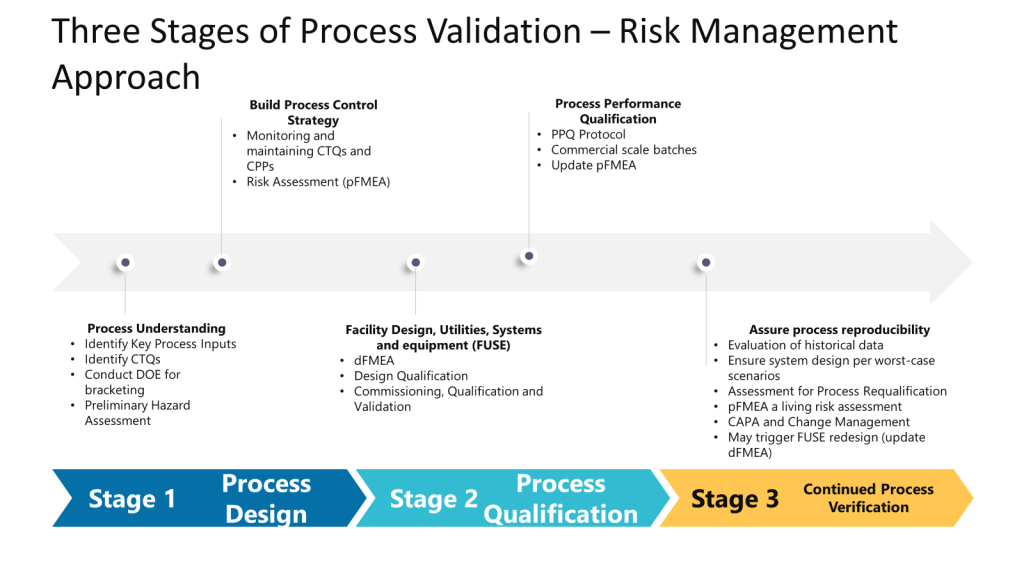
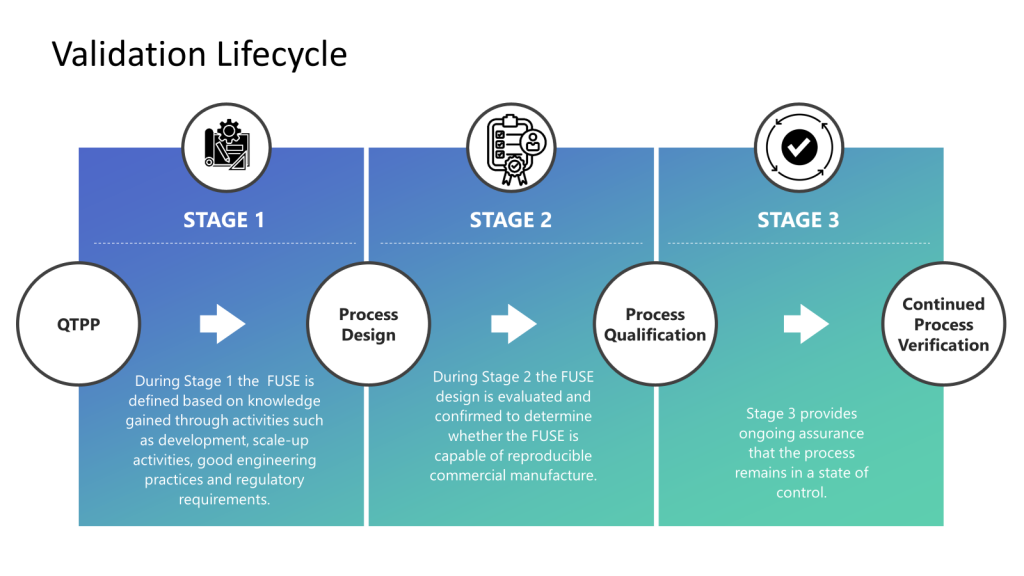
The FDA’s Process Validation Guidance is a core document outlining a lifecycle approach with outlines a lifecycle approach with three main stages:

Stage 1: Process Design

  • Establish a process design based on knowledge gained through development and scale-up activities.
  • Identify critical quality attributes (CQAs) and critical process parameters (CPPs) using risk assessment and multivariate studies like Design of Experiments (DoE).
  • Develop a control strategy to ensure CQAs are met.

Stage 2: Process Qualification

  • Evaluate the process design through facility, utility, and equipment qualification.
  • Conduct performance qualification (PQ) by running production batches to confirm the process design has reproducible commercial manufacturing.
  • Establish scientific evidence that the process meets all defined requirements and product specifications.

Stage 3: Continued Process Verification

  • Maintain the validated status and monitor performance to ensure a state of control.
  • Identify sources of variation and implement process improvements through an ongoing program.
  • Conduct product quality reviews periodically to evaluate process performance.

The guidance emphasizes using a science and risk-based approach throughout the lifecycle, leveraging process understanding and knowledge gained from development through commercial production. Effective process validation requires good planning, documented evidence, and a robust quality system.

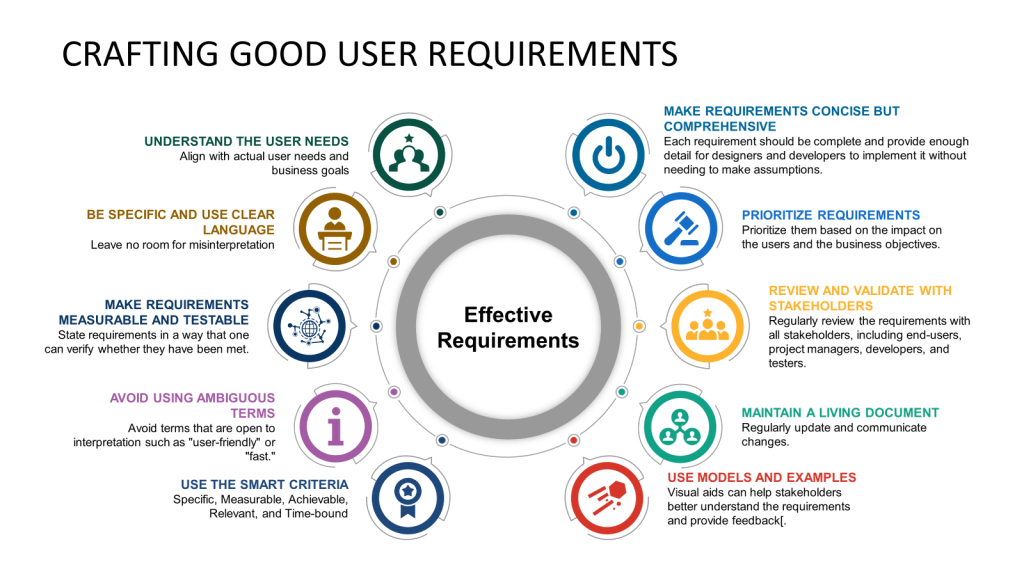
Crafting Good User Requirements

The User Requirements are a foundational document identifying the system’s product and process requirements. These product quality-related user requirements are based on product knowledge (CQAs), process knowledge (CPPs), regulatory requirements, and organization/site quality requirements. Writing a good user requirement for quality requirements involves several critical steps to ensure clarity, specificity, and effectiveness.

Understand the User Needs

Start by thoroughly understanding the user’s needs. This involves engaging with the end users or stakeholders to gather insights about their expectations, pain points, and the context in which the system will be used. This foundational step ensures that the requirements you develop are aligned with actual user needs and business goals.

Be Specific and Use Clear Language

Requirements should be specific and clearly stated to avoid ambiguity. Use simple, direct language and avoid technical jargon unless it is widely understood by all stakeholders. Define all terms and ensure that each requirement is phrased in a way that leaves no room for misinterpretation.

Make Requirements Measurable and Testable

Each requirement should be measurable and testable. This means stating requirements so one can verify whether they have been met. For example, instead of saying, “The system should load fast,” specify, “The system should load within 3 seconds when the number of simultaneous users is less than 10,000”.

Avoid Using Ambiguous Terms

Avoid terms open to interpretation, such as “user-friendly” or “fast.” If such terms are necessary, clearly define what they specifically mean in the context of your project. For instance, “user-friendly” is “the user can complete the desired task with no more than three clicks”.

Use the SMART Criteria

Employ the SMART criteria to ensure that each requirement is Specific, Measurable, Achievable, Relevant, and Time-bound. This approach helps set clear expectations and facilitates easier validation and verification of the requirements.

Make Requirements Concise but Comprehensive

While keeping each requirement concise and to the point is important, ensure all necessary details are included. Each requirement should be complete and provide enough detail for designers and developers to implement without making assumptions.

Prioritize Requirements

Not all requirements are equally important. Prioritize them based on their impact on the users and the business objectives. This helps manage the project scope and focuses on delivering maximum value.

It is good to categorize the user requirements here, such as:

  • Quality
  • Business
  • Health, Safety, and Environmental (HSE)

Review and Validate with Stakeholders

Review the requirements regularly with all stakeholders, including end-users, project managers, developers, and testers. This collaborative approach helps identify gaps or misunderstandings early in the project lifecycle.

Maintain a Living Document

Requirements might evolve as new information emerges or business needs change. Maintain your requirements document as a living document, regularly update it, and communicate changes to all stakeholders.

Use Models and Examples

Where applicable, use diagrams, mock-ups, or prototypes to complement the written requirements. Visual aids can help stakeholders better understand the requirements and provide feedback.

When writing user requirements for quality requirements, it’s crucial to avoid common pitfalls that can lead to misunderstandings, scope creep, and, ultimately, a product that does not meet the needs of the users or stakeholders. Here are some of the most common mistakes to avoid:

Ambiguity and Lack of Clarity

One of the most frequent errors in writing requirements is ambiguity. Requirements should be clear and concise, with no room for interpretation. Using vague terms like “user-friendly” or “fast” without specific definitions can lead to unmet expectations because different people may interpret these terms differently.

Incomplete Requirements

Another common issue is incomplete requirements that do not capture all necessary details or scenarios. This can result in features that do not fully address the users’ needs or require costly revisions later in development.

Overlooking Non-Functional Requirements

Focusing solely on what the system should do (functional requirements) without considering how it should perform (non-functional requirements), such as performance, security, and usability, can jeopardize the system’s effectiveness and user satisfaction.

Failure to Involve Stakeholders

Not involving all relevant stakeholders in the requirements gathering and validation process can lead to missing critical insights or requirements important to different user groups. This often results in a product that does not fully meet the needs of all its users.

Scope Creep

Without a clear definition of scope, projects can suffer from scope creep, where additional features and requirements are added without proper review, leading to delays and budget overruns. It’s important to have a well-defined project scope and a change management process in place.

Not Prioritizing Requirements

Not all requirements are equally important. Failing to prioritize requirements can misallocate resources and efforts on less critical features. Using prioritization techniques like MoSCoW (Must have, Should have, Could have, Won’t have this time) can help manage and focus efforts on what truly matters.

Lack of Validation and Verification

Skipping the validation (ensuring the product meets the intended use and needs of the stakeholders) and verification (ensuring the product meets the specified requirements) processes can lead to a final product not aligned with user needs and expectations.

Poor Documentation and Traceability

Inadequate documentation and lack of traceability can lead to confusion and errors during development. Maintaining detailed documentation and traceability from requirements through to implementation is crucial to ensure consistency and completeness.

Ignoring the Importance of Clear Communication

Effective communication is essential throughout the requirements process. Miscommunication can lead to incorrect or misunderstood requirements being developed. Regular, clear communication and documentation updates are necessary to keep all stakeholders aligned.

 Not Considering the Testing of Requirements

Considering how requirements will be tested during the definition phase is important. This consideration helps ensure that requirements are testable and that the final product will meet them. Planning for testing early can also highlight any potential issues with clarity or feasibility of requirements.

Validation Planning in the Quality System

The Validation Master Plan (VMP) and Validation Plan (VP) are integral to the validation process but differ significantly in their scope, detail, and application. The VMP provides a strategic and comprehensive outline for validation activities (often capturing the whole commissioning/qualification/validation lifecycle) across an organization, ensuring compliance and coherence. The VP, derived from the VMP, focuses on specific validation projects, detailing the procedures, responsibilities, and requirements needed to achieve compliance for those specific systems or projects.

Validation Master Plan (VMP)

A Validation Master Plan is a high-level document that outlines the overall validation strategy for an entire site or organization. It is comprehensive and covers all aspects of validation activities across various departments and systems within the organization. The VMP is designed to ensure that all components of the validation process are appropriately planned, executed, and maintained to meet regulatory compliance requirements.

Key characteristics of a VMP include:

  • Scope and Purpose: It defines the scope and objectives of all validation activities within the organization.
  • Strategy and Approach: It outlines the validation strategy and approach, including integrating Good Manufacturing Practices (GMP).
  • Responsibilities: It details the organizational structure and responsibilities for validation activities.
  • Documentation: It references all applicable protocols, reports, and related documents.
  • Compliance and Review: It includes compliance requirements and specifies the frequency of reviews and updates to ensure the plan remains current.

A Subvalidation Master Plan (sVMP) is a deep dive into a specific area or validation, such as the analytical method lifecycle.

The purpose of a Validation Master Plan (VMP) is multifaceted, primarily serving as a comprehensive document that outlines the strategy for validation activities within an organization. It is designed to ensure that all validation processes are conducted correctly and comply with regulatory standards.

Here are the key purposes of a VMP:

  1. Documentation of Compliance Requirements: The VMP documents the organization’s compliance requirements, ensuring that all validation activities meet the necessary regulatory standards.
  2. Strategic Planning: Acts as a roadmap for validation, detailing what, how, and when validation activities will be executed. This includes the lifecycle of the manufacturing validation process and integrates Good Manufacturing Practices (GMP).
  3. Resource Planning: The VMP identifies anticipated resource needs and provides key input into scheduling project timelines, which is crucial for efficient validation execution.
  4. Control and Direction: The VMP controls and defines different parts of the production process to ensure consistency over time and directs validation strategies for instruments and systems.
  5. Risk Mitigation: The VMP helps mitigate risks associated with product manufacturing by outlining the validation approach and specific validation activities.
  6. Educational Tool: The VMP informs and educates senior management and other stakeholders about the importance of validation in terms of its impact on product quality, thereby fostering an understanding and support for validation activities.
  7. Regulatory Audit Support: It provides essential documentation regulators require during an audit, demonstrating the organization’s control over quality and compliance with GMPs.
  8. Organizational Alignment: The VMP enables stakeholders within the organization to unify around the details of the validation strategy, eliminating ambiguity and justifying validation activities internally and externally.

The Validation Master Plan is crucial for ensuring that all aspects of validation are planned, executed, and documented in accordance with regulatory requirements and organizational goals. It serves as a compliance tool and a strategic guide for managing and conducting validation activities effectively.

Validation Plan (VP)

A Validation Plan (VP) is more specific and detailed than a VMP and is typically written for a particular validation project or system. The VP focuses on the specific validation activities for individual pieces of equipment, systems, or processes and is derived from the broader directives set out in the VMP.

Key characteristics of a VP include:

  • Detailed Scope and Objectives: It describes what is to be validated, the specific tasks to be performed, and the expected outcomes.
  • Project-Specific Details: These include timelines, specific procedures, and responsibilities for the particular validation project.
  • Risk Assessments and Requirements: It details the risk assessments, quality parameters, and regulatory requirements specific to the system or project being validated.

Differences and Relationship

Level of Detail: The VMP is a high-level document that provides an overarching framework and strategy for validation activities across an organization. In contrast, a VP is a detailed, project-specific document that outlines the execution of validation activities for specific systems or projects.

Purpose and Use: The VMP sets the stage for all validation efforts within an organization and ensures consistency and compliance with industry standards. The VP, derived from the VMP, focuses on specific validation tasks and how they will be accomplished.

Scope: While the VMP covers an organization’s entire validation program, a VP is limited to a particular project or system.

Periodic Review and Updates

A Validation Master Plan (VMP) should be reviewed and updated regularly to remain current and effective. The specific frequency of these reviews can vary depending on the organization’s needs, the complexity of the systems, and regulatory requirements. However, it is generally recommended that a VMP be reviewed at least annually.

This annual review is crucial to address any changes in the manufacturing process, regulatory updates, or modifications in the validation strategy. The review process should include evaluating the progress of validation activities, assessing the impact of any changes in the process or equipment, and updating the plan to reflect new or altered validation requirements.

Additionally, the VMP should be updated whenever significant changes occur that could affect the validation status of the systems or processes described in the plan. This could include major equipment upgrades, product design changes, or regulatory standard shifts.

Validation Plans (VP) should be revised based on changes in the project’s scope. Sometimes, a VP may be opened for an extended period of time for a complex project, in which case it should be evaluated for accuracy and completeness based on the project lifecycle.