The Deep Ownership Paradox: Why It Takes Years to Master What You Think You Already Know

When I encounter professionals who believe they can master a process in six months, I think of something the great systems thinker W. Edwards Deming once observed: “It is not necessary to change. Survival is not mandatory.” The professionals who survive—and more importantly, who drive genuine improvement—understand something that transcends the checkbox mentality: true ownership takes time, patience, and what some might call “stick-to-itness.”

The uncomfortable truth is that most of us confuse familiarity with mastery. We mistake the ability to execute procedures with the deep understanding required to improve them. This confusion has created a generation of professionals who move from role to role, collecting titles and experiences but never developing the profound process knowledge that enables breakthrough improvement. This is equally true on the consultant side.

The cost of this superficial approach extends far beyond individual career trajectories. When organizations lack deep process owners—people who have lived with systems long enough to understand their subtle rhythms and hidden failure modes—they create what I call “quality theater”: elaborate compliance structures that satisfy auditors but fail to serve patients, customers, or the fundamental purpose of pharmaceutical manufacturing.

The Science of Deep Ownership

Recent research in organizational psychology reveals the profound difference between surface-level knowledge and genuine psychological ownership. When employees develop true psychological ownership of their processes, something remarkable happens: they begin to exhibit behaviors that extend far beyond their job descriptions. They proactively identify risks, champion improvements, and develop the kind of intimate process knowledge that enables predictive rather than reactive management.

But here’s what the research also shows: this psychological ownership doesn’t emerge overnight. Studies examining the relationship between tenure and performance consistently demonstrate nonlinear effects. The correlation between tenure and performance actually decreases exponentially over time—but this isn’t because long-tenured employees become less effective. Instead, it reflects the reality that deep expertise follows a complex curve where initial competence gives way to periods of plateau, followed by breakthrough understanding that emerges only after years of sustained engagement.

Consider the findings from meta-analyses of over 3,600 employees across various industries. The relationship between organizational commitment and job performance shows a very strong nonlinear moderating effect based on tenure. The implications are profound: the value of process ownership isn’t linear, and the greatest insights often emerge after years of what might appear to be steady-state performance.

This aligns with what quality professionals intuitively know but rarely discuss: the most devastating process failures often emerge from interactions and edge cases that only become visible after sustained observation. The process owner who has lived through multiple product campaigns, seasonal variations, and equipment lifecycle transitions develops pattern recognition that cannot be captured in procedures or training materials.

The 10,000 Hour Reality in Quality Systems

Malcolm Gladwell’s popularization of the 10,000-hour rule has been both blessing and curse for understanding expertise development. While recent research has shown that deliberate practice accounts for only 18-26% of skill variation—meaning other factors like timing, genetics, and learning environment matter significantly—the core insight remains valid: mastery requires sustained, focused engagement over years, not months.

But the pharmaceutical quality context adds layers of complexity that make the expertise timeline even more demanding. Unlike chess players or musicians who can practice their craft continuously, quality professionals must develop expertise within regulatory frameworks that change, across technologies that evolve, and through organizational transitions that reset context. The “hours” of meaningful practice are often interrupted by compliance activities, reorganizations, and role changes that fragment the learning experience.

More importantly, quality expertise isn’t just about individual skill development—it’s about understanding systems. Deming’s System of Profound Knowledge emphasizes that effective quality management requires appreciation for a system, knowledge about variation, theory of knowledge, and psychology. This multidimensional expertise cannot be compressed into abbreviated timelines, regardless of individual capability or organizational urgency.

The research on mastery learning provides additional insight. True mastery-based approaches require that students achieve deep understanding at each level before progressing to the next. In quality systems, this means that process owners must genuinely understand the current state of their processes—including their failure modes, sources of variation, and improvement potential—before they can effectively drive transformation.

The Hidden Complexity of Process Ownership

Many of our organizations struggle with “iceberg phenomenon”: the visible aspects of process ownership—procedure compliance, metric reporting, incident response—represent only a small fraction of the role’s true complexity and value.

Effective process owners develop several types of knowledge that accumulate over time:

  • Tacit Process Knowledge: Understanding the subtle indicators that precede process upsets, the informal workarounds that maintain operations, and the human factors that influence process performance. This knowledge emerges through repeated exposure to process variations and cannot be documented or transferred through training.
  • Systemic Understanding: Comprehending how their process interacts with upstream and downstream activities, how changes in one area create ripple effects throughout the system, and how to navigate the political and technical constraints that shape improvement opportunities. This requires exposure to multiple improvement cycles and organizational changes.
  • Regulatory Intelligence: Developing nuanced understanding of how regulatory expectations apply to their specific context, how to interpret evolving guidance, and how to balance compliance requirements with operational realities. This expertise emerges through regulatory interactions, inspection experiences, and industry evolution.
  • Change Leadership Capability: Building the credibility, relationships, and communication skills necessary to drive improvement in complex organizational environments. This requires sustained engagement with stakeholders, demonstrated success in previous initiatives, and deep understanding of organizational dynamics.

Each of these knowledge domains requires years to develop, and they interact synergistically. The process owner who has lived through equipment upgrades, regulatory inspections, organizational changes, and improvement initiatives develops a form of professional judgment that cannot be replicated through rotation or abbreviated assignments.

The Deming Connection: Systems Thinking Requires Time

Deming’s philosophy of continuous improvement provides a crucial framework for understanding why process ownership requires sustained engagement. His approach to quality was holistic, emphasizing systems thinking and long-term perspective over quick fixes and individual blame.

Consider Deming’s first point: “Create constancy of purpose toward improvement of product and service.” This isn’t about maintaining consistency in procedures—it’s about developing the deep understanding necessary to identify genuine improvement opportunities rather than cosmetic changes that satisfy short-term pressures.

The PDCA cycle that underlies Deming’s approach explicitly requires iterative learning over multiple cycles. Each cycle builds on previous learning, and the most valuable insights often emerge after several iterations when patterns become visible and root causes become clear. Process owners who remain with their systems long enough to complete multiple cycles develop qualitatively different understanding than those who implement single improvements and move on.

Deming’s emphasis on driving out fear also connects to the tenure question. Organizations that constantly rotate process owners signal that deep expertise isn’t valued, creating environments where people focus on short-term achievements rather than long-term system health. The psychological safety necessary for honest problem-solving and innovative improvement requires stable relationships built over time.

The Current Context: Why Stick-to-itness is Endangered

The pharmaceutical industry’s current talent management practices work against the development of deep process ownership. Organizations prioritize broad exposure over deep expertise, encourage frequent role changes to accelerate career progression, and reward visible achievements over sustained system stewardship.

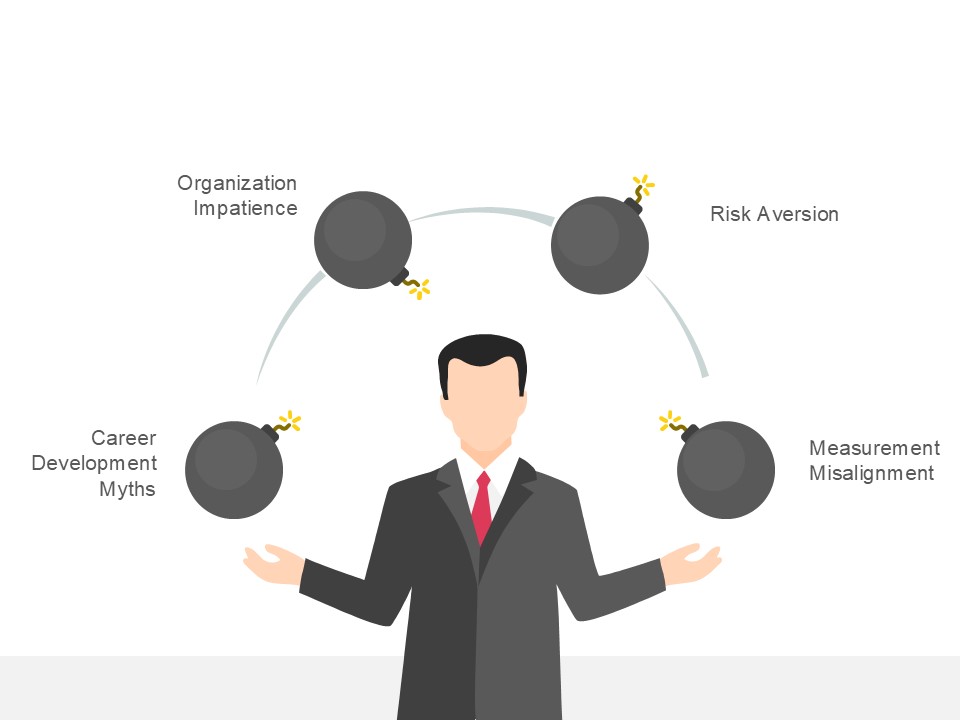
This approach has several drivers, most of them understandable but ultimately counterproductive:

  • Career Development Myths: The belief that career progression requires constant role changes, preventing the development of deep expertise in any single area. This creates professionals with broad but shallow knowledge who lack the depth necessary to drive breakthrough improvement.
  • Organizational Impatience: Pressure to demonstrate rapid improvement, leading to premature conclusions about process owner effectiveness and frequent role changes before mastery can develop. This prevents organizations from realizing the compound benefits of sustained process ownership.
  • Risk Aversion: Concern that deep specialization creates single points of failure, leading to policies that distribute knowledge across multiple people rather than developing true expertise. This approach reduces organizational vulnerability to individual departures but eliminates the possibility of breakthrough improvement that requires deep understanding.
  • Measurement Misalignment: Performance management systems that reward visible activity over sustained stewardship, creating incentives for process owners to focus on quick wins rather than long-term system development.

The result is what I observe throughout the industry: sophisticated quality systems managed by well-intentioned professionals who lack the deep process knowledge necessary to drive genuine improvement. We have created environments where people are rewarded for managing systems they don’t truly understand, leading to the elaborate compliance theater that satisfies auditors but fails to protect patients.
Building Genuine Process Ownership Capability

Creating conditions for deep process ownership requires intentional organizational design that supports sustained engagement rather than constant rotation. This isn’t about keeping people in the same roles indefinitely—it’s about creating career paths that value depth alongside breadth and recognize the compound benefits of sustained expertise development.

Redefining Career Success: Organizations must develop career models that reward deep expertise alongside traditional progression. This means creating senior individual contributor roles, recognizing process mastery in compensation and advancement decisions, and celebrating sustained system stewardship as a form of leadership.

Supporting Long-term Engagement: Process owners need organizational support to sustain motivation through the inevitable plateaus and frustrations of deep system work. This includes providing resources for continuous learning, connecting them with external expertise, and ensuring their contributions are visible to senior leadership.

Creating Learning Infrastructure: Deep process ownership requires systematic approaches to knowledge capture, reflection, and improvement. Organizations must provide time and tools for process owners to document insights, conduct retrospective analyses, and share learning across the organization.

Building Technical Career Paths: The industry needs career models that allow technical professionals to advance without moving into management roles that distance them from process ownership. This requires creating parallel advancement tracks, appropriate compensation structures, and recognition systems that value technical leadership.

Measuring Long-term Value: Performance management systems must evolve to recognize the compound benefits of sustained process ownership. This means developing metrics that capture system stability, improvement consistency, and knowledge development rather than focusing exclusively on short-term achievements.

The Connection to Jobs-to-Be-Done

The Jobs-to-Be-Done tool I explored iprovides valuable insight into why process ownership requires sustained engagement. Organizations don’t hire process owners to execute procedures—they hire them to accomplish several complex jobs that require deep system understanding:

Knowledge Development: Building comprehensive understanding of process behavior, failure modes, and improvement opportunities that enables predictive rather than reactive management.

System Stewardship: Maintaining process health through minor adjustments, preventive actions, and continuous optimization that prevents major failures and enables consistent performance.

Change Leadership: Driving improvements that require deep technical understanding, stakeholder engagement, and change management capabilities developed through sustained experience.

Organizational Memory: Serving as repositories of process history, lessons learned, and contextual knowledge that prevents the repetition of past mistakes and enables informed decision-making.

Each of these jobs requires sustained engagement to accomplish effectively. The process owner who moves to a new role after 18 months may have learned the procedures, but they haven’t developed the deep understanding necessary to excel at these higher-order responsibilities.

The Path Forward: Embracing the Long View

We need to fundamentally rethink how we develop and deploy process ownership capability in pharmaceutical quality systems. This means acknowledging that true expertise takes time, creating organizational conditions that support sustained engagement, and recognizing the compound benefits of deep process knowledge.

The choice is clear: continue cycling process owners through abbreviated assignments that prevent the development of genuine expertise, or build career models and organizational practices that enable deep process ownership to flourish. In an industry where process failures can result in patient harm, product recalls, and regulatory action, only the latter approach offers genuine protection.

True process ownership isn’t something we implement because best practices require it. It’s a capability we actively cultivate because it makes us demonstrably better at protecting patients and ensuring product quality. When we design organizational systems around the jobs that deep process ownership accomplishes—knowledge development, system stewardship, change leadership, and organizational memory—we create competitive advantages that extend far beyond compliance.

Organizations that recognize the value of sustained process ownership and create conditions for its development will build capabilities that enable breakthrough improvement and genuine competitive advantage. Those that continue to treat process ownership as a rotational assignment will remain trapped in the cycle of elaborate compliance theater that satisfies auditors but fails to serve the fundamental purpose of pharmaceutical manufacturing.

Process ownership should not be something we implement because organizational charts require it. It should be a capability we actively develop because it makes us demonstrably better at the work that matters: protecting patients, ensuring product quality, and advancing the science of pharmaceutical manufacturing. When we embrace the deep ownership paradox—that mastery requires time, patience, and sustained engagement—we create the conditions for the kind of breakthrough improvement that our industry desperately needs.

In quality systems, as in life, the most valuable capabilities cannot be rushed, shortcuts cannot be taken, and true expertise emerges only through sustained engagement with the work that matters. This isn’t just good advice for individual career development—it’s the foundation for building pharmaceutical quality systems that genuinely serve patients and advance human health.

Further Reading

Kausar, F., Ijaz, M. U., Rasheed, M., Suhail, A., & Islam, U. (2025). Empowered, accountable, and committed? Applying self-determination theory to examine work-place procrastination. BMC Psychology13, 620. https://doi.org/10.1186/s40359-025-02968-7

Available at: https://pmc.ncbi.nlm.nih.gov/articles/PMC12144702/

Kim, A. J., & Chung, M.-H. (2023). Psychological ownership and ambivalent employee behaviors: A moderated mediation model. SAGE Open13(1). https://doi.org/10.1177/21582440231162535

Available at: https://journals.sagepub.com/doi/full/10.1177/21582440231162535

Wright, T. A., & Bonett, D. G. (2002). The moderating effects of employee tenure on the relation between organizational commitment and job performance: A meta-analysis. Journal of Applied Psychology87(6), 1183-1190. https://doi.org/10.1037/0021-9010.87.6.1183

Available at: https://pubmed.ncbi.nlm.nih.gov/12558224/

A Guide to Essential Thinkers and Their Works

A curated exploration of the minds that have shaped my approach to organizational excellence, systems thinking, and quality culture

Quality management has evolved far beyond its industrial roots to become a sophisticated discipline that draws from psychology, systems theory, organizational behavior, and strategic management. The intellectual influences that shape how we think about quality today represent a rich tapestry of thinkers who have fundamentally changed how organizations approach excellence, learning, and continuous improvement.

This guide explores the key intellectual influences that inform my quality thinking, organized around the foundational concepts they’ve contributed. For each thinker, I’ve selected two essential books that capture their most important contributions to quality practice.

I want to caution that this list is not meant to be complete. It really explores some of the books I’ve been using again and again as I explore many of the concepts on this blog. Please share your foundational books in the comments!

And to make life easier, I provided links to the books.

https://bookshop.org/lists/quality-thinkers

Psychological Safety and Organizational Learning

Amy Edmondson

The pioneer of psychological safety research

Amy Edmondson’s work has revolutionized our understanding of how teams learn, innovate, and perform at their highest levels. Her research demonstrates that psychological safety—the belief that one can speak up without risk of punishment or humiliation—is the foundation of high-performing organizations.

Essential Books:

  1. The Fearless Organization: Creating Psychological Safety in the Workplace for Learning, Innovation, and Growth (2018) – The definitive guide to understanding and building psychological safety in organizations.
  2. The 4 Stages of Psychological Safety (HBR Emotional Intelligence Series) (2024) – A practical handbook featuring Edmondson’s latest insights alongside other leading voices in the field.

Timothy Clark

The architect of staged psychological safety development

Timothy Clark has extended Edmondson’s foundational work by creating a practical framework for how psychological safety develops in teams. His four-stage model provides leaders with a clear pathway for building psychologically safe environments.

Essential Books:

  1. The 4 Stages of Psychological Safety: Defining the Path to Inclusion and Innovation (2020) – Clark’s comprehensive framework for understanding how teams progress through inclusion safety, learner safety, contributor safety, and challenger safety.
  2. The 4 Stages of Psychological Safety™ Behavioral Guide (2025) – A practical companion with over 120 specific behaviors for implementing psychological safety in daily work.

Decision-Making and Risk Management

Gerd Gigerenzer

The champion of bounded rationality and intuitive decision-making

Gigerenzer’s work challenges the notion that rational decision-making requires complex analysis. His research demonstrates that simple heuristics often outperform sophisticated analytical models, particularly in uncertain environments—a key insight for quality professionals facing complex organizational challenges.

Essential Books:

  1. Risk Savvy: How to Make Good Decisions (2014) – A practical guide to understanding risk and making better decisions in uncertain environments.
  2. Gut Feelings: The Intelligence of the Unconscious (2007) – Explores how intuitive decision-making can be superior to analytical approaches in many situations.

Change Management and Organizational Transformation

John Kotter

The authority on leading organizational change

Kotter’s systematic approach to change management has become the standard framework for organizational transformation. His eight-step process provides quality leaders with a structured approach to implementing quality initiatives and cultural transformation.

Essential Books:

  1. Leading Change (2012) – The classic text on organizational change management featuring Kotter’s legendary eight-step process.
  2. Our Iceberg Is Melting: Changing and Succeeding Under Any Conditions (2006) – A business fable that makes change management principles accessible and memorable.

Systems Thinking and Organizational Design

Donella Meadows

The systems thinking pioneer

Meadows’ work on systems thinking provides the intellectual foundation for understanding organizations as complex, interconnected systems. Her insights into leverage points and system dynamics are essential for quality professionals seeking to create sustainable organizational change.

Essential Books:

  1. Thinking in Systems (2008) – The essential introduction to systems thinking, with practical examples and clear explanations of complex concepts.

Peter Senge

The learning organization architect

Senge’s concept of the learning organization has fundamentally shaped how we think about organizational development and continuous improvement. His five disciplines provide a framework for building organizations capable of adaptation and growth.

Essential Books:

  1. The Fifth Discipline: The Art & Practice of the Learning Organization (2006) – The foundational text on learning organizations and the five disciplines of systems thinking.
  2. The Fifth Discipline Fieldbook: Strategies and Tools for Building a Learning Organization (1994) – A practical companion with tools and techniques for implementing learning organization principles.

Edgar Schein

The organizational culture architect

Schein’s three-layer model of organizational culture (artifacts, espoused values, and basic assumptions) is fundamental to your approach to quality culture assessment and development. Schein’s work provides the structural foundation for understanding how culture actually operates in organizations.

Essential Books:

  1. Organizational Culture and Leadership (5th Edition, 2016) – The definitive text on understanding and changing organizational culture, featuring the three-level model that shapes your quality culture work.
  2. Humble Inquiry: The Gentle Art of Asking Instead of Telling (2013) – Essential insights into leadership communication and building psychological safety through questioning rather than commanding.

Quality Management and Continuous Improvement

W. Edwards Deming

The quality revolution catalyst

Deming’s work forms the philosophical foundation of modern quality management. His System of Profound Knowledge provides a comprehensive framework for understanding how to transform organizations through quality principles.

Essential Books:

  1. Out of the Crisis (1982) – Deming’s classic work introducing the 14 Points for Management and the foundations of quality transformation.
  2. The New Economics for Industry, Government, Education (2000) – Deming’s mature thinking on the System of Profound Knowledge and its application across sectors.

Worker Empowerment and Democratic Management

Mary Parker Follett

The prophet of participatory management

Follett’s early 20th-century work on “power-with” rather than “power-over” anticipated modern approaches to worker empowerment and participatory management. Her insights remain remarkably relevant for building quality cultures based on worker engagement.

Essential Books:

  1. Mary Parker Follett: Prophet of Management (1994) – A collection of Follett’s essential writings with commentary by leading management thinkers.
  2. The New State: Group Organization the Solution of Popular Government (1918) – Follett’s foundational work on democratic organization and group dynamics.

Data Communication, Storytelling and Visual Thinking

Nancy Duarte

The data storytelling pioneer

Duarte’s work bridges the gap between data analysis and compelling communication. Her frameworks help quality professionals transform complex data into persuasive narratives that drive action.

Essential Books:

  1. DataStory: Explain Data and Inspire Action Through Story (2019) – The definitive guide to transforming data into compelling narratives that inspire action.
  2. Slide:ology: The Art and Science of Creating Great Presentations (2008) – Essential techniques for visual communication and presentation design.

Dave Gray

The visual thinking and organizational innovation pioneer

Gray’s work bridges abstract organizational concepts and actionable solutions through visual frameworks, collaborative innovation, and belief transformation. His methodologies help quality professionals make complex problems visible, engage teams in creative problem-solving, and transform the beliefs that undermine quality culture.

Essential Books:

  1. Gamestorming: A Playbook for Innovators, Rulebreakers, and Changemakers (2010) – Co-authored with Sunni Brown and James Macanufo, this foundational text provides over 80 structured activities for transforming how teams collaborate, innovate, and solve problems. Essential for quality professionals seeking to make quality improvement more engaging and creative. Now in a 2nd edition!
  2. Liminal Thinking: Create the Change You Want by Changing the Way You Think (2016) – Gray’s most profound work on organizational transformation, offering nine practical approaches for transforming the beliefs that shape organizational reality.

Strategic Planning and Policy Deployment

Hoshin Kanri Methodology

The Japanese approach to strategic alignment

While not attributed to a single author, Hoshin Kanri represents a sophisticated approach to strategic planning that ensures organizational alignment from top to bottom. The X-Matrix and catch-ball processes provide powerful tools for quality planning.

Essential Books:

  1. Implementing Hoshin Kanri: How to Manage Strategy Through Policy Deployment and Continuous Improvement (2021) – A comprehensive guide to implementing Hoshin Kanri based on real-world experience with 14 companies.
  2. Hoshin Kanri: Policy Deployment for Successful TQM (1991) – The classic introduction to Hoshin planning principles and practice.

Lean Manufacturing and Process Excellence

Taiichi Ohno and Shigeo Shingo

The Toyota Production System architects

These two pioneers created the Toyota Production System, which became the foundation for lean manufacturing and continuous improvement methodologies worldwide.

Essential Books:

  1. Toyota Production System: Beyond Large-Scale Production by Taiichi Ohno (1988) – The creator of TPS explains the system’s foundations and philosophy.
  2. Fundamental Principles of Lean Manufacturing by Shigeo Shingo (2021) – Recently translated classic providing deep insights into process improvement thinking.

Strategic Decision-Making and Agility

John Boyd

The OODA Loop creator

Boyd’s work on rapid decision-making cycles has profound implications for organizational agility and continuous improvement. The OODA Loop provides a framework for staying ahead of change and competition.

Essential Books:

  1. Science, Strategy and War: The Strategic Theory of John Boyd by Frans Osinga (2007) – The most comprehensive analysis of Boyd’s strategic thinking and its applications.
  2. Certain to Win: The Strategy of John Boyd, Applied to Business by Chet Richards (2004) – Practical application of Boyd’s concepts to business strategy.

Dave Snowden

The complexity theory pioneer and creator of the Cynefin framework

Snowden’s work revolutionizes decision-making by providing practical frameworks for navigating uncertainty and complexity. The Cynefin framework helps quality professionals understand what type of situation they face and choose appropriate responses, distinguishing between simple problems that need best practices and complex challenges requiring experimentation.

Essential Books:

  1. Cynefin – Weaving Sense-Making into the Fabric of Our World (2020) – The comprehensive guide to the Cynefin framework and its applications across healthcare, strategy, organizational behavior, and crisis management. Essential for quality professionals seeking to match their response to the nature of their challenges.
  2. A Leader’s Framework for Decision Making (2007 Harvard Business Review) – Co-authored with Mary Boone, this article provides the essential introduction to complexity-based decision-making. Critical reading for understanding when traditional quality approaches work and when they fail.

This guide represents a synthesis of influences that shape my quality thinking. Each recommended book offers unique insights that, when combined, provide a comprehensive foundation for quality leadership in the 21st century.

Worker’s Rights: The Bedrock of True Quality Management – A May Day Reflection

As we celebrate International Workers’ Day this May 1st, it is an opportune moment to reflect on the profound connection between workers’ rights and effective quality management. The pursuit of quality cannot be separated from how we treat, empower, and respect the rights of those who create that quality daily. Today’s post examines this critical relationship, drawing from the principles I’ve advocated throughout my blog, and challenges us to reimagine quality management as fundamentally worker-centered.

The Historical Connection Between Workers’ Rights and Quality

International Workers’ Day commemorates the historic struggles and gains made by workers and the labor movement. This celebration reminds us that the evolution of quality management has paralleled the fight for workers’ rights. Quality is inherently a progressive endeavor, fundamentally anti-Taylorist in nature. Frederick Taylor’s scientific management approach reduced workers to interchangeable parts in a machine, stripping them of autonomy and creativity – precisely the opposite of what modern quality management demands.

The quality movement, from Deming onwards, has recognized that treating workers as mere cogs undermines the very foundations of quality. When we champion human rights and center those whose rights are challenged, we’re not engaging in politics separate from quality – we’re acknowledging the fundamental truth that quality cannot exist without empowered, respected workers.

Driving Out Fear: The Essential Quality Right

“No one can put in his best performance unless he feels secure,” wrote Deming thirty-five years ago. Yet today, fear remains ubiquitous in corporate culture, undermining the very quality we seek to create. As quality professionals, we must confront this reality at every opportunity.

Fear in the workplace manifests in multiple ways, each destructive to quality:

Source of FearDescriptionImpact on Quality
CompetitionManagers often view anxiety generated by competition between co-workers as positive, encouraging competition for scarce resources, power, and statusUndermines collaboration necessary for system-wide quality improvements
“Us and Them” CultureSilos proliferate, creating barriers between staff and supervisorsPrevents holistic quality approaches that span departmental boundaries
Blame CultureFocus on finding fault rather than improving systems, often centered around the concept of “human error”Discourages reporting of issues, driving quality problems underground

When workers operate in fear, quality inevitably suffers. They hide mistakes rather than report them, avoid innovation for fear of failure, and focus on protecting themselves rather than improving systems. Driving out fear isn’t just humane – it’s essential for quality.

Key Worker Rights in Quality Management

Quality management systems that respect workers’ rights create environments where quality can flourish. Based on workplace investigation principles, these rights extend naturally to all quality processes.

The Right to Information

In any quality system, clarity is essential. Workers have the right to understand quality requirements, the rationale behind procedures, and how their work contributes to the overall quality system. Transparency sets the stage for collaboration, where everyone works toward a common quality goal with full understanding.

The Right to Confidentiality and Non-Retaliation

Workers must feel safe reporting quality issues without fear of punishment. This means protecting their confidentiality when appropriate and establishing clear non-retaliation policies. One of the pillars of workplace equity is ensuring that employees are shielded from retaliation when they raise concerns, reinforcing a commitment to a culture where individuals can voice quality issues without fear.

The Right to Participation and Representation

The Who-What Matrix is a powerful tool to ensure the right people are involved in quality processes. By including a wider set of people, this approach creates trust, commitment, and a sense of procedural justice-all essential for quality success. Workers deserve representation in decisions that affect their ability to produce quality work.

Worker Empowerment: The Foundation of Quality Culture

Empowerment is not just a nice-to-have; it’s a foundational element of any true quality culture. When workers are entrusted with authority to make decisions, initiate actions, and take responsibility for outcomes, both job satisfaction and quality improve. Unfortunately, empowerment rhetoric is sometimes misused within quality frameworks like TQM, Lean, and Six Sigma to justify increased work demands rather than genuinely empowering workers.

The concept of empowerment has its roots in social movements, including civil rights and women’s rights, where it described the process of gaining autonomy and self-determination for marginalized groups. In quality management, this translates to giving workers real authority to improve processes and address quality issues.

Mary Parker Follett’s Approach to Quality Through Autonomy

Follett emphasized giving workers autonomy to complete their jobs effectively, believing that when workers have freedom, they become happier, more productive, and more engaged. Her “power with” principle suggests that power should be shared broadly rather than concentrated, fostering a collaborative environment where quality can thrive.

Rejecting the Great Man Fallacy

Quality regulations often fall into the trap of the “Great Man Fallacy” – the misguided notion that one person through education, experience, and authority can ensure product safety, efficacy, and quality. This approach is fundamentally flawed.

People only perform successfully when they operate within well-built systems. Process drives success by leveraging the right people at the right time making the right decisions with the right information. No single person can ensure quality, and thinking otherwise sets up both individuals and systems for failure.

Instead, we need to build processes that leverage teams, democratize decisions, and drive reliable results. This approach aligns perfectly with respecting workers’ rights and empowering them as quality partners rather than subjects of quality control.

Quality Management as a Program: Centering Workers’ Rights

Quality needs to be managed as a program, walking a delicate line between long-term goals, short-term objectives, and day-to-day operations. As quality professionals, we must integrate workers’ rights into this program approach.

The challenges facing quality today-from hyperautomation to shifting customer expectations-can only be addressed through worker empowerment. Consider how these challenges demand a worker-centered approach:

ChallengeImpact on Quality ManagementWorker-Centered Approach
Advanced AnalyticsRequires holistic data analysis and applicationDevelop talent strategies that upskill workers rather than replacing them
Hyper-AutomationTasks previously done by humans being automatedInvolve workers in automation decisions; focus on how automation can enhance rather than replace human work
Virtualization of WorkRethinking how quality is executed in digital environmentsEnsure workers have input on how virtual quality processes are designed
Shift to Resilient OperationsNeed to adapt to changing risk levels in real-timeEnable employees to make faster decisions by building quality-informed judgment
Digitally Native WorkforceChanged expectations for how work is managedConnect quality to values employees care about: autonomy, innovation, social issues

To meet these challenges, we must shift from viewing quality as a function to quality as an interdisciplinary, participatory process. We need to break down silos and build autonomy, encouraging personal buy-in through participatory quality management.

May Day as a Reminder of Our Quality Mission

As International Workers’ Day approaches, I’m reminded that our quality mission is inseparable from our commitment to workers’ rights. This May Day, I encourage all quality professionals to:

  1. Evaluate how your quality systems either support or undermine workers’ rights
  2. Identify and eliminate sources of fear in your quality processes
  3. Create mechanisms for meaningful worker participation in quality decisions
  4. Reject hierarchical quality models in favor of democratic, empowering approaches
  5. Recognize that centering workers’ rights isn’t just ethical-it’s essential for quality

Quality management without respect for workers’ rights is not just morally questionable-it’s ineffective. The future of quality lies in approaches that are predictive, connected, flexible, and embedded. These can only be achieved when workers are treated as valued partners with protected rights and real authority.

This May Day, let’s renew our commitment to driving out fear, empowering workers, and building quality systems that respect the dignity and rights of every person who contributes to them. In doing so, we honor not just the historical struggles of workers, but also the true spirit of quality that puts people at its center.

What steps will you take this International Workers’ Day to strengthen the connection between workers’ rights and quality in your organization?

Quality Systems as Living Organizations: A Framework for Adaptive Excellence

The allure of shiny new tools in quality management is undeniable. Like magpies drawn to glittering objects, professionals often collect methodologies and technologies without a cohesive strategy. This “magpie syndrome” creates fragmented systems—FMEA here, 5S there, Six Sigma sprinkled in—that resemble disjointed toolkits rather than coherent ecosystems. The result? Confusion, wasted resources, and quality systems that look robust on paper but crumble under scrutiny. The antidote lies in reimagining quality systems not as static machines but as living organizations that evolve, adapt, and thrive.

The Shift from Machine Logic to Organic Design

Traditional quality systems mirror 20th-century industrial thinking: rigid hierarchies, linear processes, and documents that gather dust. These systems treat organizations as predictable machines, relying on policies to command and procedures to control. Yet living systems—forests, coral reefs, cities—operate differently. They self-organize around shared purpose, adapt through feedback, and balance structure with spontaneity. Deming foresaw this shift. His System of Profound Knowledge—emphasizing psychology, variation, and systems thinking—aligns with principles of living systems: coherence without control, stability with flexibility.

At the heart of this transformation is the recognition that quality emerges not from compliance checklists but from the invisible architecture of relationships, values, and purpose. Consider how a forest ecosystem thrives: trees communicate through fungal networks, species coexist through symbiotic relationships, and resilience comes from diversity, not uniformity. Similarly, effective quality systems depend on interconnected elements working in harmony, guided by a shared “DNA” of purpose.

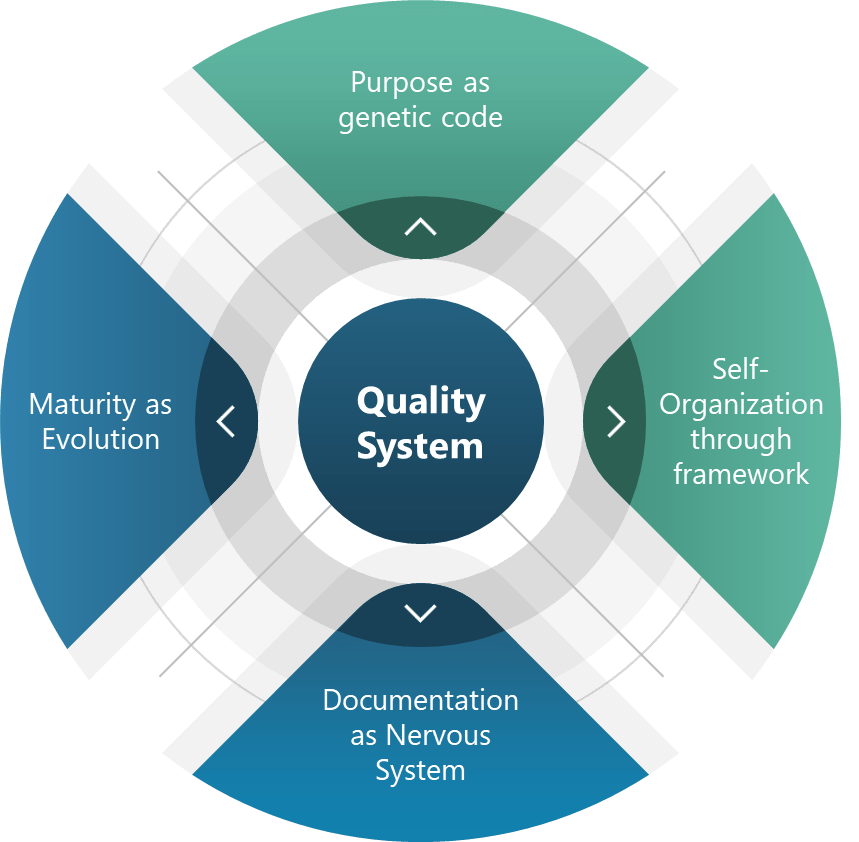
The Four Pillars of Living Quality Systems

  1. Purpose as Genetic Code
    Every living system has inherent telos—an aim that guides adaptation. For quality systems, this translates to policies that act as genetic non-negotiables. For pharmaceuticals and medical devices this is “patient safety above all.”. This “DNA” allowed teams to innovate while maintaining adherence to core requirements, much like genes express differently across environments without compromising core traits.
  2. Self-Organization Through Frameworks
    Complex systems achieve order through frameworks as guiding principles. Coherence emerges from shared intent. Deming’s PDSA cycles and emphasis on psychological safety create similar conditions for self-organization.
  3. Documentation as a Nervous System
    The enhanced document pyramid—policies, programs, procedures, work instructions, records—acts as an organizational nervous system. Adding a “program” level between policies and procedures bridges the gap between intent and action and can transform static documents into dynamic feedback loops.
  4. Maturity as Evolution
    Living systems evolve through natural selection. Maturity models serve as evolutionary markers:
    • Ad-hoc (Primordial): Tools collected like random mutations.
    • Managed (Organized): Basic processes stabilize.
    • Standardized (Complex): Methodologies cohere.
    • Predictable (Adaptive): Issues are anticipated.
    • Optimizing (Evolutionary): Improvement fuels innovation.

Cultivating Organizational Ecosystems: Eight Principles

Living quality systems thrive when guided by eight principles:

  • Balance: Serving patients, employees, and regulators equally.
  • Congruence: Aligning tools with culture.
  • Human-Centered: Designing for joy—automating drudgery, amplifying creativity.
  • Learning: Treating deviations as data, not failures.
  • Sustainability: Planning for decade-long impacts, not quarterly audits.
  • Elegance: Simplifying until it hurts, then relaxing slightly.
  • Coordination: Cross-pollinating across the organization
  • Convenience: Making compliance easier than non-compliance.

These principles operationalize Deming’s wisdom. Driving out fear (Point 8) fosters psychological safety, while breaking down barriers (Point 9) enables cross-functional symbiosis.

The Quality Professional’s New Role: Gardener, Not Auditor

Quality professionals must embrace a transformative shift in their roles. Instead of functioning as traditional enforcers or document controllers, we are now called to act as stewards of living systems. This evolution requires a mindset change from one of rigid oversight to one of nurturing growth and adaptability. The modern quality professional takes on new identities such as coach, data ecologist, and systems immunologist—roles that emphasize collaboration, learning, and resilience.

To thrive in this new capacity, practical steps must be taken. First, it is essential to prune toxic practices by eliminating fear-driven reporting mechanisms and redundant tools that stifle innovation and transparency. Quality professionals should focus on fostering trust and streamlining processes to create healthier organizational ecosystems. Next, they must plant feedback loops by embedding continuous learning into daily workflows. For instance, incorporating post-meeting retrospectives can help teams reflect on successes and challenges, ensuring ongoing improvement. Lastly, cross-pollination is key to cultivating diverse perspectives and skills. Rotating staff between quality assurance, operations, and research and development encourages knowledge sharing and breaks down silos, ultimately leading to more integrated and innovative solutions.

By adopting this gardener-like approach, quality professionals can nurture the growth of resilient systems that are better equipped to adapt to change and complexity. This shift not only enhances organizational performance but also fosters a culture of continuous improvement and collaboration.

Thriving, Not Just Surviving

Quality systems that mimic life—not machinery—turn crises into growth opportunities. As Deming noted, “Learning is not compulsory… neither is survival.” By embracing living system principles, we create environments where survival is the floor, and excellence is the emergent reward.

Start small: Audit one process using living system criteria. Replace one control mechanism with a self-organizing principle. Share learnings across your organizational “species.” The future of quality isn’t in thicker binders—it’s in cultivating systems that breathe, adapt, and evolve.

Worker’s Empowerment

Empowerment is a foundational element of a quality culture, where workers are entrusted with the authority to make decisions, initiate actions, and take responsibility for the outcomes of their work. This approach not only enhances job satisfaction and productivity but also fosters a culture of autonomy and participation, which is essential for achieving high organizational performance. However, the concept of empowerment has sometimes been misinterpreted within quality management frameworks such as Total Quality Management (TQM), Lean, and Six Sigma. In these contexts, empowerment rhetoric is occasionally used to justify increased work demands and managerial oversight, rather than genuinely empowering workers to contribute to quality improvements. A true quality culture, therefore, requires a genuine commitment to empowering workers, ensuring that they have the autonomy to drive continuous improvement and innovation.

History of Worker Empowerment

The concept of empowerment has its roots in social movements, including the civil rights and women’s rights movements, where it was used to describe the process of gaining autonomy and self-determination for marginalized groups. In the context of management, empowerment gained prominence in the 1980s and 1990s as a way to improve organizational performance by engaging workers more effectively.

Several management thinkers have discussed and advocated for worker empowerment, contributing significantly to the development of this concept. Here are some key figures and their contributions:

Mary Parker Follett

    • Autonomy and Collective Power: Follett emphasized the importance of giving workers autonomy to complete their jobs effectively. She believed that when workers have the freedom to work independently, they become happier, more productive, and more engaged. Follett’s “power with” principle suggests that power should be shared among many, rather than concentrated in a few hands, fostering a collaborative environment.
    • Collaboration and Flexibility: Follett advocated for establishing personal ownership of company goals while allowing flexibility in achieving them. This approach encourages agile problem-solving and creative solutions that benefit the business.

    Tom Peters

      • Self-Managing Teams: Peters has been a strong advocate for creating self-managing teams where leadership roles rotate among members. He emphasizes the importance of listening to workers and believing in their unlimited potential. Peters’ philosophy includes empowering front-line staff to act as business teams, which can significantly enhance organizational performance.
      • Empowerment through Leadership: Peters suggests that managers should be retrained to become listeners rather than talkers, fostering an environment where every worker feels valued and empowered to contribute.

      W. Edwards Deming

        • Involvement and Autonomy: Deming’s 14 Points for Management include principles that support worker empowerment, such as removing barriers to pride of workmanship and encouraging collaboration across departments. These principles aim to create an environment where workers feel valued and empowered to improve processes.
        • Continuous Improvement: Deming’s emphasis on continuous improvement processes, like kaizen, involves worker participation, which can be seen as a form of empowerment. However, it is crucial to ensure that such participation is genuine and not merely rhetorical.

        Rosabeth Moss Kanter

          • Change Management: Kanter’s change management theory emphasizes creating a collaborative and transparent work environment. Her approach involves empowering worker by encouraging them to speak up, team up, and continuously work towards positive change within the organization.
          • Empowerment through Participation: Kanter’s principles promote worker engagement and loyalty by involving them in organizational changes and decision-making processes.

          Elton Mayo

            • Human Relations Theory: Mayo’s work highlights the importance of social and relational factors in motivating workers. While not directly focused on empowerment, his theory suggests that workers are more motivated by attention and camaraderie than by monetary rewards alone. This perspective supports the idea that empowering workers involves recognizing their social needs and fostering a supportive work environment.

            These thinkers have contributed to the understanding and implementation of worker empowerment by emphasizing autonomy, collaboration, and the importance of recognizing employee contributions. Their ideas continue to influence management practices today.

            Dimensions of Empowerment

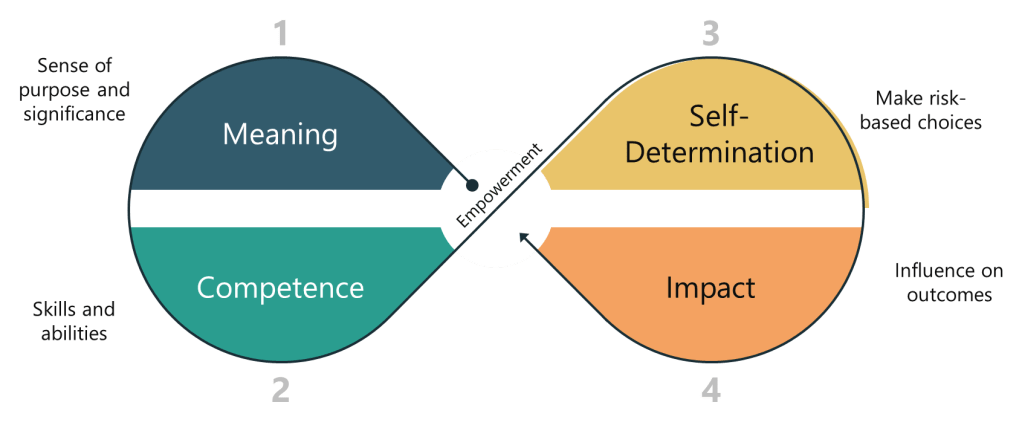
            Empowerment can be understood through several key dimensions:

            • Meaning: This refers to the sense of purpose and significance that employees derive from their work. When employees feel that their work is meaningful, they are more likely to be motivated and engaged.
            • Competence: This dimension involves the skills and abilities that employees need to perform their jobs effectively. Empowerment requires that employees have the necessary competencies to make decisions and take actions.
            • Self-Determination: This is the ability of employees to make choices and decisions about their work. Self-determination is crucial for empowerment, as it allows employees to feel in control of their tasks and outcomes.
            • Impact: This dimension refers to the influence that employees have on organizational outcomes. When employees feel that their actions can make a difference, they are more likely to be empowered and motivated.
            Four dimensions of empowerment

            Implementation Practices

            Implementing empowerment effectively requires several key practices:

            1. Clear Communication: Employees need clear expectations and goals to understand how their work contributes to the organization’s objectives.
            2. Training and Development: Providing employees with the necessary skills and knowledge to make informed decisions is essential for empowerment.
            3. Autonomy and Decision-Making Authority: Employees should have the freedom to make decisions within their scope of work.
            4. Feedback and Recognition: Regular feedback and recognition of employee contributions help reinforce empowerment by acknowledging their impact.

            Deming’s Involvement in Worker Empowerment

            W. Edwards Deming, a pioneer in quality management, emphasized the importance of employee involvement and empowerment through his 14 Points for Management. Specifically:

            • Point 3: Cease dependence on inspection to achieve quality. Eliminate the need for inspection on a mass basis by building quality into the product in the first place. This point encourages organizations to empower workers by giving them the tools and training needed to ensure quality during production.
            • Point 9: Break down barriers between departments. People in research, design, sales, and production must work as a team to foresee problems of production and in use that may be encountered with the product or service. This emphasizes collaboration and cross-functional teamwork, which is a form of empowerment.
            • Point 12: Remove barriers that rob the hourly worker of his right to pride of workmanship. The responsibility of supervisors must be changed from sheer numbers to quality. This point directly addresses the need to empower workers by removing obstacles that prevent them from taking pride in their work.

            Deming’s philosophy aligns with genuine empowerment by focusing on building quality into processes, fostering teamwork, and recognizing the value of worker pride and autonomy.

            Denison and Organizational Culture

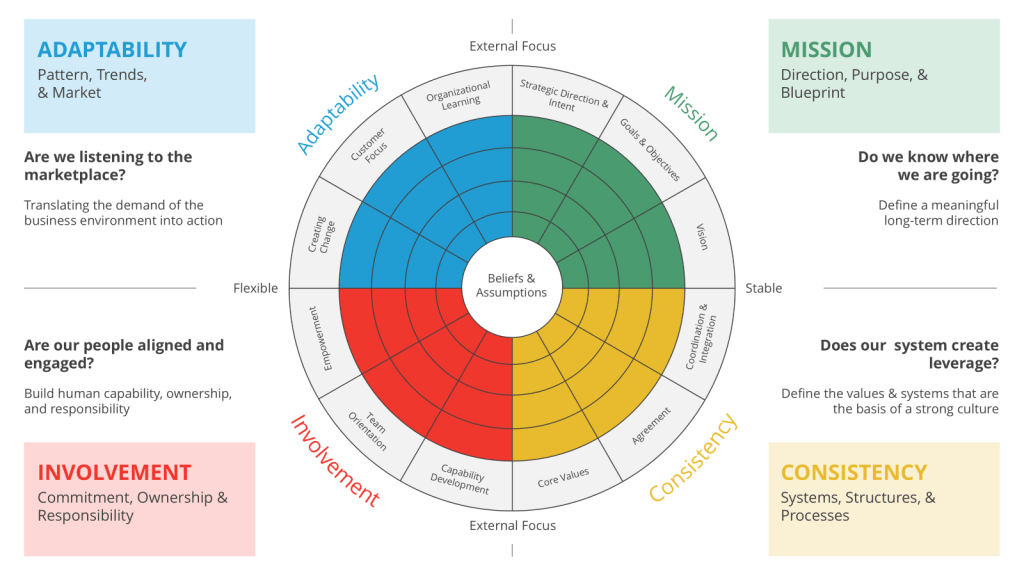
            Daniel Denison’s work on organizational culture, particularly through the Denison Model, assesses culture across four critical traits: Mission, Involvement, Adaptability, and Consistency. Each of these traits is further divided into three indexes, providing a comprehensive framework for understanding and improving organizational culture.

            Involvement and Empowerment

            Denison’s model emphasizes the importance of Involvement, which is the degree to which individuals at all levels are engaged and feel a sense of ownership in the organization. This trait is crucial for empowerment, as it involves aligning employees with the business direction and positioning them to contribute to its success. The indexes under Involvement include aspects such as empowerment, team orientation, and capability development, all of which are essential for creating a culture where employees feel valued and empowered.

            Empowerment through Cultural Alignment

            Denison suggests that empowerment is not just about giving employees authority but also about ensuring they are aligned with and committed to the organization’s mission. By fostering a culture where workers are engaged and capable, organizations can enhance their performance metrics such as innovation, customer satisfaction, and worker satisfaction. Denison’s approach emphasizes the need for leaders to manage culture effectively, recognizing that culture can either support or hinder organizational goals.

            Leadership and Empowerment

            Denison’s model implies that leaders should focus on creating an environment where workers feel empowered to contribute. This involves not only setting a clear mission but also ensuring that systems and processes support worker involvement and adaptability. By doing so, leaders can foster a culture where workers are motivated to drive organizational success. Denison’s philosophy underscores the importance of balancing internal consistency with external adaptability, ensuring that organizations remain responsive to market changes while maintaining internal cohesion.

            Denison’s work provides a structured framework for understanding how empowerment fits into a broader organizational culture. By emphasizing involvement and alignment, organizations can create an environment where workers feel empowered to contribute to success.

            Misuse of Empowerment Rhetoric in Quality Methodologies

            Total Quality Management (TQM)

            TQM emphasizes worker involvement and empowerment as part of its comprehensive approach to quality improvement. However, the emphasis on continuous improvement and customer satisfaction can sometimes lead to increased workloads and stress for workers, undermining genuine empowerment.

            Lean Manufacturing

            Lean manufacturing focuses on eliminating waste and maximizing efficiency, often using empowerment rhetoric to encourage workers to participate in continuous improvement processes like kaizen. However, this can result in workers being manipulated into accepting intensified workloads without real control over their conditions.

            Six Sigma

            Six Sigma uses a structured approach to quality improvement, relying on trained professionals like Green and Black Belts. While it involves worker participation, the focus on defect reduction and process optimization can lead to a narrow definition of empowerment that serves managerial goals rather than worker autonomy.

            Avoiding the Misuse of Empowerment Rhetoric

            To avoid misusing empowerment rhetoric, organizations should focus on creating a genuine culture of empowerment by:

            Ensuring Autonomy

            Ensuring autonomy in the workplace is crucial for empowering workers. This involves providing them with real decision-making authority and the freedom to act within their roles. When workers have autonomy, they are more likely to feel a sense of ownership over their work, which can lead to increased motivation and productivity. Autonomy allows workers to make decisions that align with their expertise and judgment, reducing the need for constant managerial oversight. This not only speeds up decision-making processes but also fosters a culture of trust and responsibility. To implement autonomy effectively, organizations should clearly define the scope of decision-making authority for each role, ensure that workers understand their responsibilities, and provide the necessary resources and support to facilitate independent action. By doing so, organizations can create an environment where workers feel valued and empowered to contribute to organizational success.

            Fostering Meaningful Work

            Fostering meaningful work is essential for creating a sense of purpose and engagement among workers. This involves aligning worker tasks with organizational goals and ensuring that work contributes to a broader sense of purpose. When workers understand how their tasks fit into the larger picture, they are more likely to be motivated and committed to their work. Meaningful work encourages workers to see beyond their immediate tasks and understand the impact of their contributions on the organization and its stakeholders. To foster meaningful work, organizations should communicate clearly about organizational objectives and how individual roles contribute to these goals. Additionally, providing opportunities for workers to participate in goal-setting and strategic planning can enhance their sense of purpose and connection to the organization’s mission. By making work meaningful, organizations can create a workforce that is not only productive but also passionate about achieving shared objectives.

            Developing Competence

            Developing competence is a critical aspect of empowering workers . This involves investing in training and development to enhance their skills and abilities. When workers feel competent in their roles, they are more confident and capable of making decisions and taking initiatives. Competence development should be tailored to the needs of both the organization and the individual worker, ensuring that training programs are relevant and effective. Organizations should also provide ongoing opportunities for learning and growth, recognizing that competence is not static but rather something that evolves over time. By investing in worker development, organizations can create a skilled and adaptable workforce that is better equipped to handle challenges and drive innovation. Moreover, when workers see that their employer is committed to their growth, they are more likely to feel valued and committed to the organization.

            Recognizing Impact

            Recognizing the impact of workers contributions is vital for reinforcing their sense of empowerment. Regularly acknowledging and rewarding worker achievements helps to demonstrate that their work is valued and appreciated. This can be done through various means, such as public recognition, bonuses, or promotions. However, recognition should be genuine and specific, highlighting the specific contributions and outcomes that workers have achieved. Generic or superficial recognition can undermine its effectiveness and lead to skepticism among workers. To make recognition meaningful, organizations should establish clear criteria for what constitutes impactful work and ensure that recognition is timely and consistent. By acknowledging workers contributions, organizations can foster a culture of appreciation and motivation, encouraging workers to continue striving for excellence and making significant contributions to organizational success.

            Encouraging Self-Determination

            Encouraging self-determination is essential for empowering workers to take ownership of their work processes and outcomes. This involves supporting workers in making choices about how they complete their tasks and achieve their objectives. Self-determination allows workers to work in ways that best suit their skills and work styles, leading to increased job satisfaction and productivity. To encourage self-determination, organizations should provide workers with the flexibility to design their work processes and set their own goals, as long as these align with organizational objectives. Additionally, organizations should foster an environment where workers feel comfortable suggesting improvements and innovations, without fear of criticism or reprisal. By giving workers the autonomy to make decisions about their work, organizations can tap into their creativity and initiative, leading to more effective and efficient work processes. This approach not only empowers workers but also contributes to a more agile and responsive organization.

            By focusing on these aspects, organizations can move beyond rhetorical empowerment and create a truly empowered workforce.

            Conclusion

            Worker empowerment is a powerful concept that, when implemented genuinely, can lead to significant improvements in organizational performance and worker satisfaction. However, its misuse in quality methodologies like TQM, Lean, and Six Sigma can undermine its potential benefits. By understanding the dimensions of empowerment and aligning practices with Deming’s principles, organizations can foster a culture of true empowerment that benefits both workers and the organization as a whole.