Subject Matter Expert in Validation

In ASTM E2500, a Subject Matter Expert (SME) is an individual with specialized knowledge and technical understanding of critical aspects of manufacturing systems and equipment. The SME plays a crucial role throughout the project lifecycle, from defining needs to verifying and accepting systems. They are responsible for identifying critical aspects, reviewing system designs, developing verification strategies, and leading quality risk management efforts. SMEs ensure manufacturing systems are designed and verified to meet product quality and patient safety requirements.

In the ASTM E2500 process, the Subject Matter Experts (SME) has several key responsibilities critical to successfully implementing the standard. These responsibilities include:

  1. Definition of Needs: SMEs define the system’s needs and identify critical aspects that impact product quality and patient safety.
  2. Risk Management: SMEs participate in risk management activities, helping to identify, assess, and manage risks throughout the project lifecycle. This includes conducting quality risk analyses and consistently applying risk management principles.
  3. Verification Strategy Development: SMEs are responsible for planning and defining verification strategies. This involves selecting appropriate test methods, defining acceptance criteria, and ensuring that verification activities are aligned with the project’s critical aspects.
  4. System Design Review: SMEs review system designs to ensure they meet specified requirements and address identified risks. This includes participating in design reviews and providing technical input to optimize system functionality and compliance.
  5. Execution of Verification Tests: SMEs lead the execution of verification tests, ensuring that tests are conducted accurately and that results are thoroughly reviewed. They may also leverage vendor documentation and test results as part of the verification process, provided the vendor’s quality system and technical capabilities are deemed acceptable.
  6. Change Management: SMEs play a crucial role in change management, ensuring that any modifications to the system are properly evaluated, documented, and implemented. This helps maintain the system’s validated state and ensures continuous compliance with regulatory requirements.
  7. Continuous Improvement: SMEs are involved in continuous process improvement efforts, using operational and performance data to identify opportunities for enhancements. They also conduct root-cause analyses of failures and implement technically sound improvements based on gained product knowledge and understanding.

These responsibilities highlight the SME’s integral role in ensuring that manufacturing systems are designed, verified, and maintained to meet the highest standards of quality and safety, as outlined in ASTM E2500.

The ASTM E2500 SME is a Process Owner

ASTM E2500 uses the term SME in the same way we discuss process owners, or what is sometimes called product or molecule stewards. The term should probably be changed to reflect the special role of the SME and the relationship with other stakeholders.

A Molecule Steward has a specialized role within pharmaceutical and biotechnology companies and oversees the lifecycle of a specific molecule or drug product. This role involves a range of responsibilities, including:

  1. Technical Expertise: Acting as the subject matter expert per ASTM E2500.
  2. Product Control Strategies: Implementing appropriate product control strategies across development and manufacturing sites based on anticipated needs.
  3. Lifecycle Management: Providing end-to-end accountability for a given molecule, from development to late-stage lifecycle management.

A Molecule Steward ensures a drug product’s successful development, manufacturing, and lifecycle management, maintaining high standards of quality and compliance throughout the process.

The ASTM E2500 SME (Molecule Steward) and Stakeholders

In the ASTM E2500 approach, the Subject Matter Expert (Molecule Steward) collaborates closely with various project players to ensure the successful implementation of manufacturing systems.

Definition of Needs and Requirements

  • Collaboration with Project Teams: SMEs work with project teams from the beginning to define the system’s needs and requirements. This involves identifying critical aspects that impact product quality and patient safety.
  • Input from Multiple Departments: SMEs gather input from different departments, including product/process development, engineering, automation, and validation, to ensure that all critical quality attributes (CQAs) and critical process parameters (CPPs) are considered.

Risk Management

  • Quality Risk Analysis: SMEs lead the quality risk analysis process, collaborating with QA and other stakeholders to identify and assess risks. This helps focus on critical aspects and consistently apply risk management principles.
  • Vendor Collaboration: SMEs often work with vendors to leverage their expertise in conducting risk assessments and ensuring that vendor documentation meets quality requirements.

System Design Review

  • Design Review Meetings: SMEs participate in design review meetings with suppliers and project teams to ensure the system design meets the defined needs and critical aspects. This collaborative effort helps in reducing the need for modifications and repeat tests.
  • Supplier Engagement: SMEs engage with suppliers to ensure their design solutions are understood and integrated into the project. This includes reviewing supplier documentation and ensuring compliance with regulatory requirements.

Verification Strategy Development

  • Developing Verification Plans: SMEs collaborate with QA and engineering teams to develop verification strategies and plans. This involves selecting appropriate test methods, defining acceptance criteria, and ensuring verification activities align with project goals.
  • Execution of Verification Tests: SMEs may work with suppliers to conduct verification tests at the supplier’s site, ensuring that tests are performed accurately and efficiently. This collaboration helps achieve the “right test” at the “right time” objective.

Change Management

  • Managing Changes: SMEs play a crucial role in the change management process, working with project teams to evaluate, document, and implement changes. This ensures that the system remains in a validated state and continues to meet regulatory requirements.
  • Continuous Improvement: SMEs collaborate with other stakeholders to identify opportunities for process improvements and implement changes based on operational and performance data.

Documentation and Communication

  • Clear Communication: SMEs ensure clear communication and documentation of all verification activities and acceptance criteria. This involves working closely with QA to validate all critical aspects and ensure compliance with regulatory standards.

Challenges in Validation

I often get asked why I moved from a broader senior role in Quality Management to a particular but deep role in Quality Engineering and Validation. There are many answers, but the biggest is that validation is poised for some exciting shifts due to navigating a complex validation landscape characterized by rapid technological advancements, evolving regulatory standards, and the development of novel therapies. Addressing these challenges requires innovation, collaboration, and a proactive approach to risk management and data integration. Topics near and dear to me.

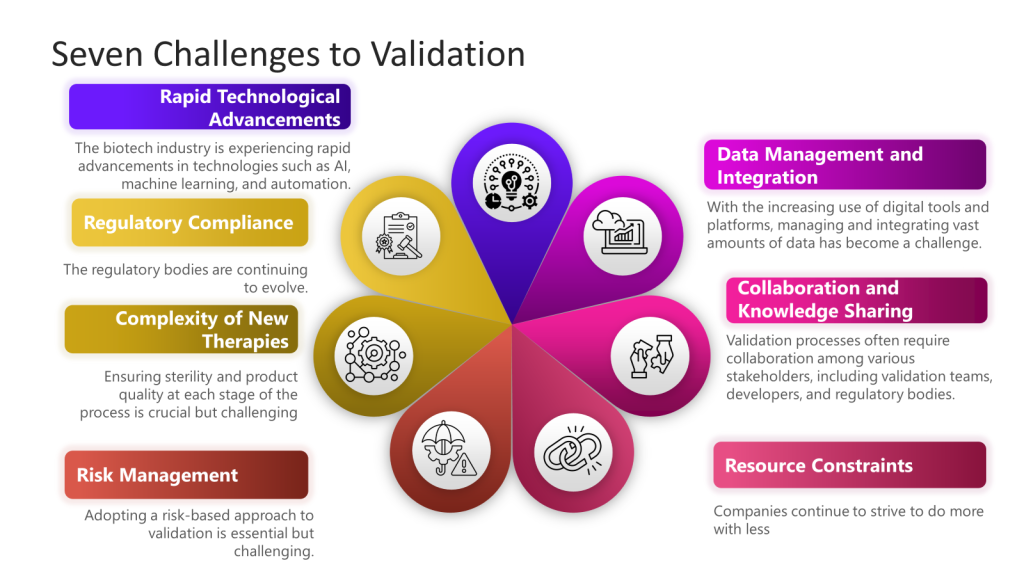
Today’s Challenges in Biotech Validation

1. Rapid Technological Advancements

The biotech industry is experiencing rapid technological advancements such as AI, machine learning, and automation. Integrating these technologies into validation processes can be challenging due to the need for new validation frameworks and methodologies.

2. Regulatory Compliance

Maintaining compliance with evolving regulatory standards is a significant challenge. Regulatory bodies like the FDA continuously update guidelines for technological advancements.

3. Complexity of New Therapies

Developing novel therapies, such as cell and gene therapies, introduces additional complexity to the validation process. These therapies often require redesigned facilities and equipment to accommodate their sensitive and sterile nature. Ensuring sterility and product quality at each process stage is crucial but challenging.

4. Data Management and Integration

Managing and integrating vast amounts of data has become challenging with the increasing use of digital tools and platforms. Effective data management is essential for predictive modeling and risk management in validation processes. Organizations must adopt robust data analytics and machine learning tools to handle this data efficiently.

5. Collaboration and Knowledge Sharing

Validation processes often require collaboration among various stakeholders, including validation teams, developers, and regulatory bodies. Ensuring real-time communication and data sharing can be challenging but is essential for streamlining validation efforts and aligning goals.

6. Resource Constraints

Smaller biotech companies, in particular, face resource constraints regarding funding, personnel, and expertise. These constraints can hinder their ability to implement advanced validation techniques and maintain compliance with regulatory standards.

7. Risk Management

Adopting a risk-based approach to validation is essential but challenging. Companies must identify and mitigate risks throughout the product lifecycle, which requires a thorough understanding of potential risks and effective risk management strategies.

Let’s Avoid the Term Validation 4.0

Let’s avoid the 4.0 term. We are constantly evolving, and adding a current ‘buzziness’ to it does no one any favors. We are shifting from traditional, paper-heavy validation methods to a more dynamic, data-driven, and digitalized process. Yes, we are leveraging modern technologies such as automation, data analytics, artificial intelligence (AI), and the Internet of Things (IoT) to enhance validation processes’ efficiency, flexibility, and reliability. But we don’t need buzziness, we just need to give it some thought, experiment, and refine.

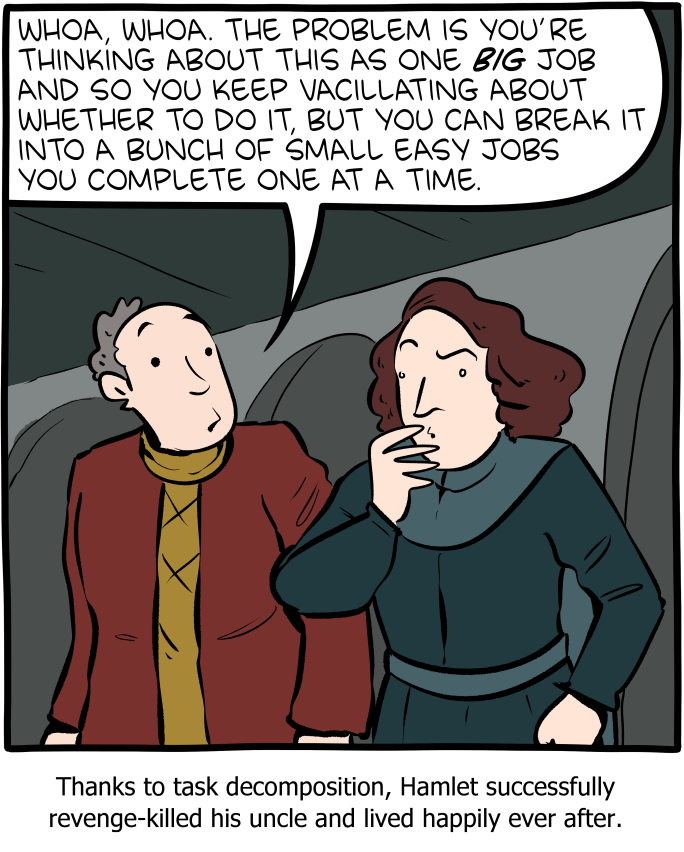
Task Decomposition

http://smbc-comics.com/comic/break-it-down

Task decomposition is a systematic approach to breaking down a complex task into smaller, more manageable components. A more detailed version of task analysis helps organize work, improve understanding, and facilitate effective execution.

Step 1: Understand the Task

The first step in task decomposition is to fully understand the task at hand. This involves defining the main objective, identifying the final deliverables, and recognizing all the requirements and constraints associated with the task.

Step 2: Break Down the Task

Once the task is clearly understood, the next step is to break it down into smaller, more manageable parts. This can be done by identifying the major components or phases of the task and then further dividing these into subtasks.

Techniques for Breaking Down Tasks:

  • Hierarchical Task Analysis (HTA): This involves creating a hierarchy of tasks, starting with the main task at the top and breaking it down into subtasks and further into individual actions.
  • Functional Decomposition: Focus on dividing the task based on different functions or processes involved.
  • Object-Oriented Decomposition: Used primarily in software development, where tasks are divided based on the objects or data involved.

Step 3: Sequence the Tasks

Determine the logical order in which the subtasks should be completed. This involves identifying dependencies between tasks, where some tasks must precede others.

Step 4: Assign Resources and Estimate Time

Assign the appropriate resources to each subtask, including personnel, tools, and materials. Additionally, estimate the time required to complete each subtask. This helps in scheduling and resource allocation.

Step 5: Prioritize Tasks

Not all tasks are equally important. Prioritize tasks based on their impact on the overall project, their urgency, and their dependencies.

Step 6: Monitor and Adjust

Once the decomposition and planning are in place, the execution phase begins. It’s important to monitor the progress of tasks, check adherence to timelines, and make adjustments as necessary. This might involve re-prioritizing tasks or re-allocating resources to address any bottlenecks or delays.

Step 7: Documentation and Feedback

Document the entire process and gather feedback. This documentation will serve as a valuable reference for future projects, and feedback can help in refining the decomposition process.

Task decomposition is a dynamic process that may require iterative adjustments. Used well, it is a powerful tool in the quality toolbox.

Risk Management is a Living Process

Living and adhoc risk assessments

ISO 31000-2018 “Risk Management Guidelines” discusses on-going monitoring and review of risk management activities. We see a similar requirement in ICH Q9(r1) for the pharmaceutical industry. In many organizations we can take a lot of time on the performance of risk assessments (hopefully effectively) and a lot of time mitigating risks (again, hopefully effectively) but many organizations struggle in maintaining a lifecycle approach.

To do appropriate lifecycle management we should ensure three things:

  1. Planned review
  2. Continuous Monitoring
  3. Incorporate through governance, improvement and knowledge management activities.

Reviews are a critical part of our risk management process framework.

This living risk management approach effectively drives work in Control Environment, Response and Stress Testing.

At heart lies the ongoing connection between risk management and knowledge management.

Build Your Knowledge Base

Engaging with knowledge and Knowledge Management are critical parts of development. The ability to navigate the flood of available data to find accurate information is tied directly to individuals’ existing knowledge and their skills at distinguishing credible information from misleading content.

There is ample evidence that many individuals lack the ability to accurately judge their understanding or the quality and accuracy of their performance (i.e., calibration). To truly develop our knowledge, we need to be engaged in deliberative practice. But to truly calibrate requires feedback, guidance, and coaching that you may not have access to within our organizations. This requires effort and deliberate building of a system and processes.

Information can be found with little mental effort but without critical analysis of its legitimacy or validity, the ease of information can actually work against the development of deeper-processing strategies. It is really easy to go-online and get an answer, but unless learners put themselves in positions to struggle cognitively with an issue, and unless they have occasions to transform or reframe problems, their likelihood of progressing into competence is jeopardized.

The more learners forge principled knowledge in a professional domain, the greater their reported interest in and identity with that field. Therefore, without the active pursuit of knowledge, these individuals’ interest in professional development may wane and their progress toward expertise may stall. This is why I find professional societies so critical, and why I am always pushing people to step up.

My constant goal as a mentor is to help people do the following:

  • Refuse to be lulled into accepting a role as passive consumers of information, striving instead to be active producers of knowledge
  • Probe and critically analyze the information they encounter, rather
    than accepting quick, simple answers
  • Forge a meaningful interest in the profession and personal connections to members
    of professional communities, instead of relying on moment-by-moment stimulation and superficial relationships

If we are going to step up to the challenges ahead of us, to address the skill gaps we are seeing, we each need to be deliberate in how we develop and deliberate in how we build our organizations to support development.