First, what impacts knowledge workers’ energy is not the sheer amount of time they spend in meetings, but the relative proportion of meeting time compared to what they spend on individual tasks. We found that, on a given day, the more time knowledge workers dedicate to meetings relative to their own individual tasks, the less they engage in small break activities (e.g., a short walk, casual conversations, brief fun reading) to restore their energy during that day. The absence of such break activities, which are crucial for periodic replenishment, harms their workday energy. The impaired energy in turn has a negative impact on the knowledge workers’ task performance, creativity, and job satisfaction at work.
A Door Opens – Making Space for Innovation facilitated by Keith McCandless and Nancy White
“Notice and stop counterproductive behaviors that stifle creativity and innovation”
I felt they struggled to explain the concept of a TRIZ and the breakouts struggled to have an impact as a result. In hindsight, it was definitely a bit of my coming at the methodology a little too vigorously from my quality background. So a bit of an learning moment for me.
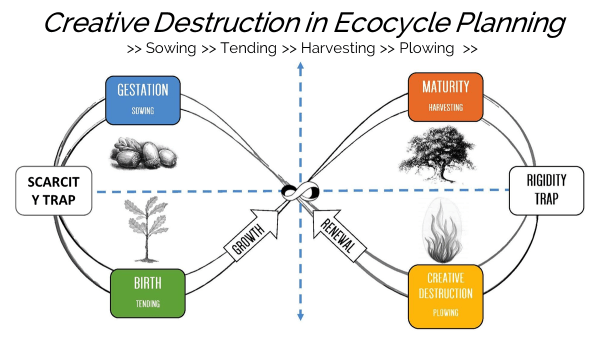
I’ll be contemplating this picture for weeks. There was a lot to absorb.
The NeuroScience of Teaming by Dr Michael Platt and Elizabeth Johnson
Start with the need to make time to socialize with coworkers at work. Back to the idea of fun.
Good relationships are critical in business. Finding ways to connect is critical for well-being. We are wired to connect.
The need to practice our social networking and skills. I feel that these days, so often I feel out of shape here after the last few weeks.
Our attention is one of the aspects of our neurobiology we have control over and through attention we can prioritize what our brain processes.
All about meeting structure comes back to managing attention. Discusses how eye contact causes processes in brain that link to team work and trust, and how this is an engineering challenge.
Importance of breaks.
All comes back to building relationships. I was interested in there is causal evidence here around synchronizing as a biomarker.
Perspective taking – shifting frame of reference to someone else’s.
Impact of the hierarchy on perspective taking. It’s not good.
We can create benefits that live beyond this workshop
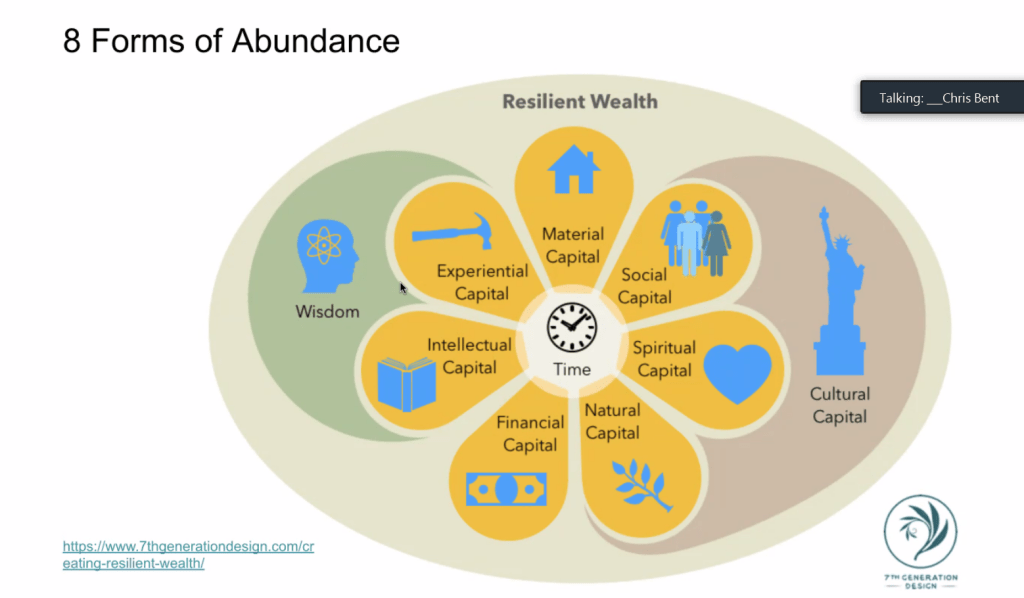
Love the concept that the act of receiving help and knowledge is part of our being generous towards our peers. Thinking of abundance and applying it in professional development is a favorite topic of mine.
Deliberately thinking of what abundance I have that may help others fill their needs, and sharing what challenges I need help on was a powerful way to end my day.
Events should always walk-the-walk. What are we told we need to do?
Ensure everyone understands the purpose, the desired outcome, the manner of interaction
Cover the technology. Make sure there is room for mistakes and what to do when it happens
Engage people early and often
The symposium started strong here. And it was great to see so many excited individuals ready to engage.
How to Unlock Creativity Through the Power of Play – Charlie Hoehn
Steve Job (or in this case Steve Jobs adjacent) anecdotes are usually a way to make me groan a little. The guy was not a good person to emulate. And anyone now associated with Tesla is probably someone I don’t want to meet.
I like the Stuart Brown quote of the “Opposite of play isn’t work it’s depression.”
Stresses the key of enthusiastically saying yes. Of co-workers as playmates and work as play.
What stands in the way of you and team feeling safe to play?
What activities would allow you to “play the fool” around your co-workers?
All work and no play leads to culture of fear. Leads to burnout.
Ways to make office creative
Walking meetings
Company outings during work
Company potlucks during work
Contests during work
Playful cues with no obligations to use them
RECESS – The act of stepping away creates creativity
Great question – how do we incentive play in the workplace.
Started kind of weak (and I resicovered my dislike of quoting) but very valuable session. I’ll read his work.
When Virtual Communication Might Curb Creativity – Dr Melanie Brucks
“Can we collaborate when interact on-line”
Shared environment and visual focus and the influence on divergent thinking and convergent thinking is pretty interesting. The mimicking of experiences.
The rating scale for creativity is fascinating. Something we talk about a lot in idea management. Need to followup on this.
Great science dose to start thinking about creativity and work.
Understanding the Power of Environmental Space on Creativity, Collaboration, and Innovation – Matt Chadder
Environmental space capturing attention is a critical thing for design of workspace. I’m shocked we aren’t talking about this more in Lean circles.
I need to read more about this. There’s something deep here for GxP spaces and human error reduction.
Rest spaces – the company cafeteria – as the number one place to manage stress. Looking forward to discussing that in a continuous improvement issue. No surprise hospitals are Matt’s reference.
Environmental spaces to reset culture (3-4 days to seed the new behavior)
It is critical to carve out the time to develop and challenge oneself, to listen to external exertise and to share with peers. You cannot wait for others to make the time for you to engage in learning.
Everyone struggles with meetings, and I am certainly not an exception. As a fan of finding and leveraging expertise, I’d like to share the big thinkers in this space that I rely on and three books that I recommend everyone read.
Elise’s practice, and her book, are all about the best ways to make it easy for people to enjoy meetings that get work done. She emphasizes that the whole point of a meeting is to gather people for a purpose and shares different meeting types to help us get to the why.
The amazing thing is how her book and her company’s practice are all about clear, practical tools and methodologies. Her workshops are well-run and can be transformative.
Everyone should read the book. And when your organization says “Meetings are horrible” then do yourself a favor and leverage Lucid Meeting’s offerings. Trust me, you will be happy you gave Elise a call.
Gamestorming
The book Gamestorming: A Playbook for Innovators, Rulebreakers, and Changemakers literally changed my career trajectory when I read it back in 2010. This book by Dave Gray, Sunni Brown, and James Macanufo taught me methods of meeting facilitation and having fun in meetings, which have made me happier in my professional growth, and hopefully a better leader. I’ve written about this before, and I continue to believe that visual meetings lead to better results and we all need to do more.
GameStormingis a beautiful resource webpage. As a company, they lead some great workshops. The Expeditions I attended, run by Dave Mastronardi, was one of the two best virtual events of 2021 – and yes, the other one was run by Elise! I strongly recommend signing up for an Expedition, and look forward to new offerings from Dave and his team.
Strategyzer
I love this team’s books. Co-founders Alex Osterwalder and Alan Smith have built a set of tools and methodologies to drive innovation in an organization. The 2021 High-Impact Tools for Teams is one of the must-reads in this area, and presents a powerful, highly visual approach to building teams.



 Investigations of a Dog