Operational Stability

At the heart of achieving consistent pharmaceutical quality lies operational stability—a fundamental concept that forms the critical middle layer in the House of Quality model. Operational stability serves as the bridge between cultural foundations and the higher-level outcomes of effectiveness, efficiency, and excellence. This critical positioning makes it worthy of detailed examination, particularly as regulatory bodies increasingly emphasize Quality Management Maturity (QMM) as a framework for evaluating pharmaceutical operations.
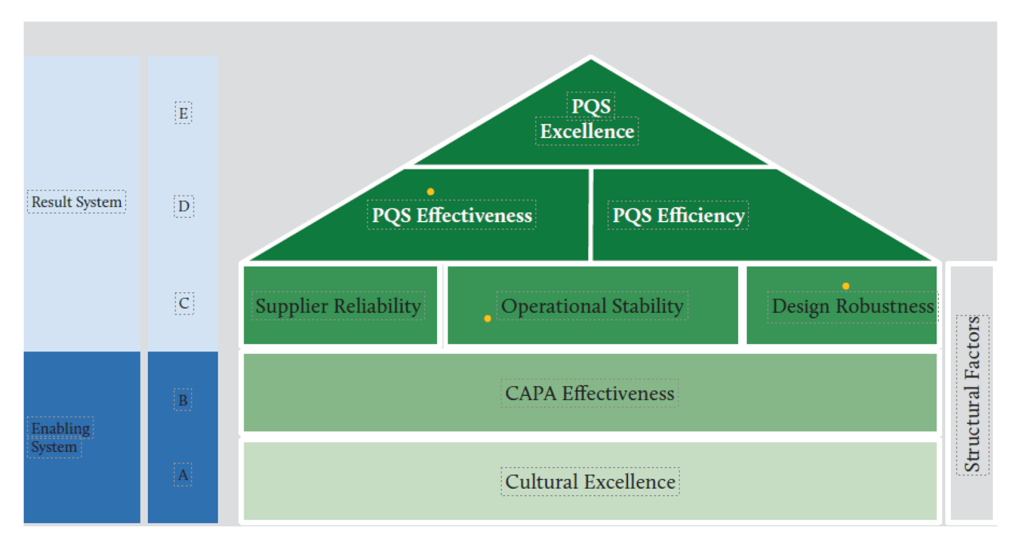
he image is a diagram in the shape of a house, illustrating a framework for PQS (Pharmaceutical Quality System) Excellence. The house is divided into several colored sections:

The roof is labeled "PQS Excellence."

Below the roof, two sections are labeled "PQS Effectiveness" and "PQS Efficiency."

Underneath, three blocks are labeled "Supplier Reliability," "Operational Stability," and "Design Robustness."

Below these, a larger block spans the width and is labeled "CAPA Effectiveness."

The base of the house is labeled "Cultural Excellence."

On the left side, two vertical sections are labeled "Enabling System" (with sub-levels A and B) and "Result System" (with sub-levels C, D, and E).

On the right side, a vertical label reads "Structural Factors."

The diagram uses different shades of green and blue to distinguish between sections and systems.

Understanding Operational Stability in Pharmaceutical Manufacturing

Operational stability represents the state where manufacturing and quality processes exhibit consistent, predictable performance over time with minimal unexpected variations. It refers to the capability of production systems to maintain control within defined parameters regardless of routine challenges that may arise. In pharmaceutical manufacturing, operational stability encompasses everything from batch-to-batch consistency to equipment reliability, from procedural adherence to supply chain resilience.

The essence of operational stability lies in its emphasis on reliability and predictability. A stable operation delivers consistent outcomes not by chance but by design—through robust systems that can withstand normal operating stresses without performance degradation. Pharmaceutical operations that achieve stability demonstrate the ability to maintain critical quality attributes within specified limits while accommodating normal variability in inputs such as raw materials, human operations, and environmental conditions.

According to the House of Quality model for pharmaceutical quality frameworks, operational stability occupies a central position between cultural foundations and higher-level performance outcomes. This positioning is not accidental—it recognizes that stability is both dependent on cultural excellence below it and necessary for the efficiency and effectiveness that lead to excellence above it.

The Path to Obtaining Operational Stability

Achieving operational stability requires a systematic approach that addresses several interconnected dimensions. This pursuit begins with establishing robust processes designed with sufficient control mechanisms and clear operating parameters. Process design should incorporate quality by design principles, ensuring that processes are inherently capable of consistent performance rather than relying on inspection to catch deviations.

Standard operating procedures form the backbone of operational stability. These procedures must be not merely documented but actively maintained, followed, and continuously improved. This principle applies broadly—authoritative documentation precedes execution, ensuring alignment and clarity.

Equipment reliability programs represent another critical component in achieving operational stability. Preventive maintenance schedules, calibration programs, and equipment qualification processes all contribute to ensuring that physical assets support rather than undermine stability goals. The FDA’s guidance on pharmaceutical CGMP regulation emphasizes the importance of the Facilities and Equipment System, which ensures that facilities and equipment are suitable for their intended use and maintained properly.

Supplier qualification and management play an equally important role. As pharmaceutical manufacturing becomes increasingly globalized, with supply chains spanning multiple countries and organizations, the stability of supplied materials becomes essential for operational stability. “Supplier Reliability” appears in the House of Quality model at the same level as operational stability, underscoring their interconnected nature1. Robust supplier qualification programs, ongoing monitoring, and collaborative relationships with key vendors all contribute to supply chain stability that supports overall operational stability.

Human factors cannot be overlooked in the pursuit of operational stability. Training programs, knowledge management systems, and appropriate staffing levels all contribute to consistent human performance. The establishment of a “zero-defect culture” underscores the importance of human factors in achieving true operational stability.
Main Content Overview:
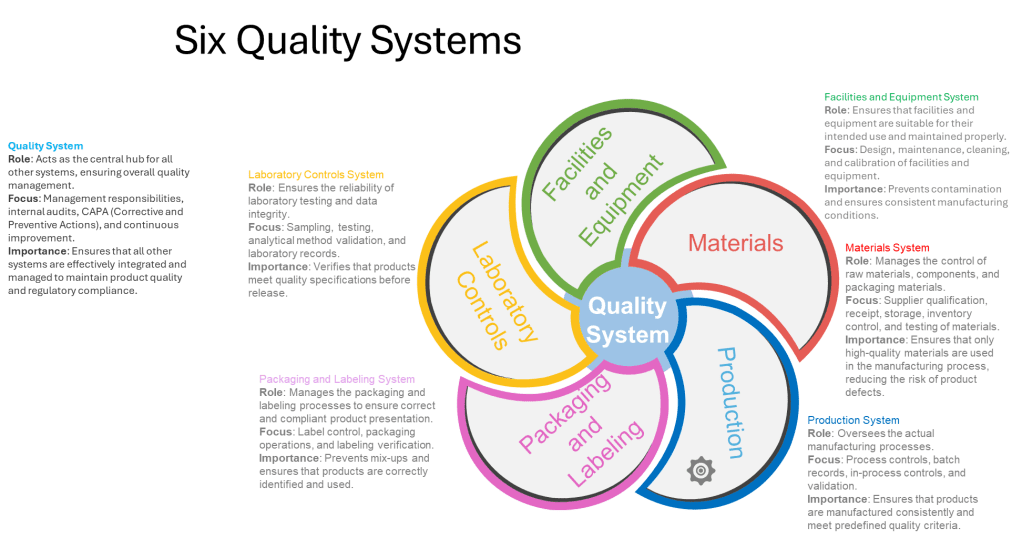
The document outlines six key quality systems essential for effective quality management in regulated industries, particularly pharmaceuticals and related fields. Each system is described with its role, focus areas, and importance.

Detailed Alt Text
1. Quality System

Role: Central hub for all other systems, ensuring overall quality management.

Focus: Management responsibilities, internal audits, CAPA (Corrective and Preventive Actions), and continuous improvement.

Importance: Integrates and manages all systems to maintain product quality and regulatory compliance.

2. Laboratory Controls System

Role: Ensures reliability of laboratory testing and data integrity.

Focus: Sampling, testing, analytical method validation, and laboratory records.

Importance: Verifies products meet quality specifications before release.

3. Packaging and Labeling System

Role: Manages packaging and labeling to ensure correct and compliant product presentation.

Focus: Label control, packaging operations, and labeling verification.

Importance: Prevents mix-ups and ensures correct product identification and use.

4. Facilities and Equipment System

Role: Ensures facilities and equipment are suitable and maintained for intended use.

Focus: Design, maintenance, cleaning, and calibration.

Importance: Prevents contamination and ensures consistent manufacturing conditions.

5. Materials System

Role: Manages control of raw materials, components, and packaging materials.

Focus: Supplier qualification, receipt, storage, inventory control, and testing.

Importance: Ensures only high-quality materials are used, reducing risk of defects.

6. Production System

Role: Oversees manufacturing processes.

Focus: Process controls, batch records, in-process controls, and validation.

Importance: Ensures consistent manufacturing and adherence to quality criteria.

Image Description:
A diagram (not shown here) likely illustrates the interconnection of the six quality systems, possibly with the "Quality System" at the center and the other five systems branching out, indicating their relationship and integration within an overall quality management framework

Measuring Operational Stability: Key Metrics and Approaches

Measurement forms the foundation of any improvement effort. For operational stability, measurement approaches must capture both the state of stability and the factors that contribute to it. The pharmaceutical industry utilizes several key metrics to assess operational stability, ranging from process-specific measurements to broader organizational indicators.

Process capability indices (Cp, Cpk) provide quantitative measures of a process’s ability to meet specifications consistently. These statistical measures compare the natural variation in a process against specified tolerances. A process with high capability indices demonstrates the stability necessary for consistent output. These measures help distinguish between common cause variations (inherent to the process) and special cause variations (indicating potential instability).

Deviation rates and severity classification offer another window into operational stability. Tracking not just the volume but the nature and significance of deviations provides insight into systemic stability issues. The following table outlines how different deviation patterns might be interpreted:

Deviation PatternStability ImplicationRecommended Response
Low frequency, low severityGood operational stabilityContinue monitoring, seek incremental improvements
Low frequency, high severityCritical vulnerability despite apparent stabilityRoot cause analysis, systemic preventive actions
High frequency, low severityDegrading stability, risk of normalization of devianceProcess review, operator training, standard work reinforcement
High frequency, high severityFundamental stability issuesComprehensive process redesign, management system review

Equipment reliability metrics such as Mean Time Between Failures (MTBF) and Overall Equipment Effectiveness (OEE) provide visibility into the physical infrastructure supporting operations. These measures help identify whether equipment-related issues are undermining otherwise well-designed processes.

Batch cycle time consistency represents another valuable metric for operational stability. In stable operations, the time required to complete batch manufacturing should fall within a predictable range. Increasing variability in cycle times often serves as an early warning sign of degrading operational stability.

Right-First-Time (RFT) batch rates measure the percentage of batches that proceed through the entire manufacturing process without requiring rework, deviation management, or investigation. High and consistent RFT rates indicate strong operational stability.

Leveraging Operational Stability for Organizational Excellence

Once achieved, operational stability becomes a powerful platform for broader organizational excellence. Robust operational stability delivers substantial business benefits that extend throughout the organization.

Resource optimization represents one of the most immediate benefits. Stable operations require fewer resources dedicated to firefighting, deviation management, and rework. This allows for more strategic allocation of both human and financial resources. As noted in the St. Gallen reports “organizations with higher levels of cultural excellence, including employee engagement and continuous improvement mindsets supports both quality and efficiency improvements.”

Stable operations enable focused improvement efforts. Rather than dispersing improvement resources across multiple priority issues, organizations can target specific opportunities for enhancement. This focused approach yields more substantial gains and allows for the systematic building of capabilities over time.

Regulatory confidence grows naturally from demonstrated operational stability. Regulatory agencies increasingly look beyond mere compliance to assess the maturity of quality systems. The FDA’s Quality Management Maturity (QMM) program explicitly recognizes that mature quality systems are characterized by consistent, reliable processes that ensure quality objectives and promote continual improvement.

Market differentiation emerges as companies leverage their operational stability to deliver consistently high-quality products with reliable supply. In markets where drug shortages have become commonplace, the ability to maintain stable supply becomes a significant competitive advantage.

Innovation capacity expands when operational stability frees resources and attention previously consumed by basic operational problems. Organizations with stable operations can redirect energy toward innovation in products, processes, and business models.

Operational Stability within the House of Quality Model

The House of Quality model places operational stability in a pivotal middle position. This architectural metaphor is instructive—like the middle floors of a building, operational stability both depends on what lies beneath it and supports what rises above it. Understanding this positioning helps clarify operational stability’s role in the broader quality management system.

Cultural excellence lies at the foundation of the House of Quality. This foundation provides the mindset, values, and behaviors necessary for sustained operational stability. Without this cultural foundation, attempts to establish operational stability will likely prove short-lived. At a high level of quality management maturity, organizations operate optimally with clear signals of alignment, where quality and risk management stem from and support the organization’s objectives and values.

Above operational stability in the House of Quality model sit Effectiveness and Efficiency, which together lead to Excellence at the apex. This positioning illustrates that operational stability serves as the essential platform enabling both effectiveness (doing the right things) and efficiency (doing things right). Research from the St. Gallen reports found that “plants with more effective quality systems also tend to be more efficient in their operations,” although “effectiveness only explained about 4% of the variation in efficiency scores.”

The House of Quality model also places Supplier Reliability and Design Robustness at the same level as Operational Stability. This horizontal alignment stems from these three elements work in concert as the critical middle layer of the quality system. Collectively, they provide the stable platform necessary for higher-level performance.

ElementRelationship to Operational StabilityJoint Contribution to Upper Levels
Supplier ReliabilityProvides consistent input materials essential for operational stabilityEnables predictable performance and resource optimization
Operational StabilityCreates consistent process performance regardless of normal variationsEstablishes the foundation for systematic improvement and performance optimization
Design RobustnessEnsures processes and products can withstand variation without quality impactReduces the resource burden of controlling variation, freeing capacity for improvement

The Critical Middle: Why Operational Stability Enables PQS Effectiveness and Efficiency

Operational stability functions as the essential bridge between cultural foundations and higher-level performance outcomes. This positioning highlights its critical role in translating quality culture into tangible quality performance.

Operational stability enables PQS effectiveness by creating the conditions necessary for systems to function as designed. The PQS effectiveness visible in the upper portions of the House of Quality depends on reliable execution of core processes. When operations are unstable, even well-designed quality systems fail to deliver their intended outcomes.

Operational stability enables efficiency by reducing wasteful activities associated with unstable processes. Without stability, efficiency initiatives often fail to deliver sustainable results as resources continue to be diverted to managing instability.

The relationship between operational stability and the higher levels of the House of Quality follows a hierarchical pattern. Attempts to achieve efficiency without first establishing stability typically result in fragile systems that deliver short-term gains at the expense of long-term performance. Similarly, effectiveness cannot be sustained without the foundation of stability. The model implies a necessary sequence: first cultural excellence, then operational stability (alongside supplier reliability and design robustness), followed by effectiveness and efficiency, ultimately leading to excellence.

Balancing Operational Stability with Innovation and Adaptability

While operational stability provides numerous benefits, it must be balanced with innovation and adaptability to avoid organizational rigidity. There is a potential negative consequences of an excessive focus on efficiency, including reduced resilience and flexibility which can lead to stifled innovation and creativity.

The challenge lies in establishing sufficient stability to enable consistent performance while maintaining the adaptability necessary for continuous improvement and innovation. This balance requires thoughtful design of stability mechanisms, ensuring they control critical quality attributes without unnecessarily constraining beneficial innovation.

Process characterization plays an important role in striking this balance. By thoroughly understanding which process parameters truly impact critical quality attributes, organizations can focus stability efforts where they matter most while allowing flexibility elsewhere. This selective approach to stability creates what might be called “bounded flexibility”—freedom to innovate within well-understood boundaries.

Change management systems represent another critical mechanism for balancing stability with innovation. Well-designed change management ensures that innovations are implemented in a controlled manner that preserves operational stability. ICH Q10 specifically identifies Change Management Systems as a key element of the Pharmaceutical Quality System, emphasizing its importance in maintaining this balance.

Measuring Quality Management Maturity through Operational Stability

Regulatory agencies increasingly recognize operational stability as a key indicator of Quality Management Maturity (QMM). The FDA’s QMM program evaluates organizations across multiple dimensions, with operational performance being a central consideration.

Organizations can assess their own QMM level by examining the nature and pattern of their operational stability. The following table presents a maturity progression framework related to operational stability:

Maturity LevelOperational Stability CharacteristicsEvidence Indicators
Reactive (Level 1)Unstable processes requiring constant interventionHigh deviation rates, frequent batch rejections, unpredictable cycle times
Controlled (Level 2)Basic stability achieved through rigid controls and extensive oversightLow deviation rates but high oversight costs, limited process understanding
Predictive (Level 3)Processes demonstrate inherent stability with normal variation understoodStatistical process control effective, leading indicators utilized
Proactive (Level 4)Stability maintained through systemic approaches rather than individual effortsRoot causes addressed systematically, culture of ownership evident
Innovative (Level 5)Stability serves as platform for continuous improvement and innovationStability metrics consistently excellent, resources focused on value-adding activities

This maturity progression aligns with the FDA’s emphasis on QMM as “the state attained when drug manufacturers have consistent, reliable, and robust business processes to achieve quality objectives and promote continual improvement”.

Practical Approaches to Building Operational Stability

Building operational stability requires a comprehensive approach addressing process design, organizational capabilities, and management systems. Several practical methods have proven particularly effective in pharmaceutical manufacturing environments.

Statistical Process Control (SPC) provides a systematic approach to monitoring processes and distinguishing between common cause and special cause variation. By establishing control limits based on natural process variation, SPC helps identify when processes are operating stably within expected variation versus when they experience unusual variation requiring investigation. This distinction prevents over-reaction to normal variation while ensuring appropriate response to significant deviations.

Process validation activities establish scientific evidence that a process can consistently deliver quality products. Modern validation approaches emphasize ongoing process verification rather than point-in-time demonstrations, aligning with the continuous nature of operational stability.

Root cause analysis capabilities ensure that when deviations occur, they are investigated thoroughly enough to identify and address underlying causes rather than symptoms. This prevents recurrence and systematically improves stability over time. The CAPA (Corrective Action and Preventive Action) system plays a central role in this aspect of building operational stability.

Knowledge management systems capture and make accessible the operational knowledge that supports stability. By preserving institutional knowledge and making it available when needed, these systems reduce dependence on individual expertise and create more resilient operations. This aligns with ICH Q10’s emphasis on “expanding the body of knowledge”.

Training and capability development ensure that personnel possess the necessary skills to maintain operational stability. Investment in operator capabilities pays dividends through reduced variability in human performance, often a significant factor in overall operational stability.

Operational Stability as the Engine of Quality Excellence

Operational stability occupies a pivotal position in the House of Quality model—neither the foundation nor the capstone, but the essential middle that translates cultural excellence into tangible performance outcomes. Its position reflects its dual nature: dependent on cultural foundations for sustainability while enabling the effectiveness and efficiency that lead to excellence.

The journey toward operational stability is not merely technical but cultural and organizational. It requires systematic approaches, appropriate metrics, and balanced objectives that recognize stability as a means rather than an end. Organizations that achieve robust operational stability position themselves for both regulatory confidence and market leadership.

As regulatory frameworks evolve toward Quality Management Maturity models, operational stability will increasingly serve as a differentiator between organizations. Those that establish and maintain strong operational stability will find themselves well-positioned for both compliance and competition in an increasingly demanding pharmaceutical landscape.

The House of Quality model provides a valuable framework for understanding operational stability’s role and relationships. By recognizing its position between cultural foundations and performance outcomes, organizations can develop more effective strategies for building and leveraging operational stability. The result is a more robust quality system capable of delivering not just compliance but true quality excellence that benefits patients, practitioners, and the business itself.
Building a Maturity Model for Pharmaceutical Change Control: Integrating ICH Q8-Q10

ICH Q8 (Pharmaceutical Development), Q9 (Quality Risk Management), and Q10 (Pharmaceutical Quality System) provide a comprehensive framework for transforming change management from a reactive compliance exercise into a strategic enabler of quality and innovation.

The ICH Q8-Q10 triad is my favorite framework pharmaceutical quality systems: Q8’s Quality by Design (QbD) principles establish proactive identification of critical quality attributes (CQAs) and design spaces, shifting the paradigm from retrospective testing to prospective control; Q9 provides the scaffolding for risk-based decision-making, enabling organizations to prioritize resources based on severity, occurrence, and detectability of risks; and, Q10 closes the loop by embedding these concepts into a lifecycle-oriented quality system, emphasizing knowledge management and continual improvement.

These guidelines create a robust foundation for change control. Q8 ensures changes align with product and process understanding, Q9 enables risk-informed evaluation, and Q10 mandates systemic integration across the product lifecycle. This triad rejects the notion of change control as a standalone procedure, instead positioning it as a manifestation of organizational quality culture.

The PIC/S Perspective: Risk-Based Change Management

The PIC/S guidance (PI 054-1) reinforces ICH principles by offering a methodology that emphasizes effectiveness as the cornerstone of change management. It outlines four pillars:

  1. Proposal and Impact Assessment: Systematic evaluation of cross-functional impacts, including regulatory filings, process interdependencies, and stakeholder needs.
  2. Risk Classification: Stratifying changes as critical/major/minor based on potential effects on product quality, patient safety, and data integrity.
  3. Implementation with Interim Controls: Bridging current and future states through mitigations like enhanced monitoring or temporary procedural adjustments.
  4. Effectiveness Verification: Post-implementation reviews using metrics aligned with change objectives, supported by tools like statistical process control (SPC) or continued process verification (CPV).

This guidance operationalizes ICH concepts by mandating traceability from change rationale to verified outcomes, creating accountability loops that prevent “paper compliance.”

A Five-Level Maturity Model for Change Control

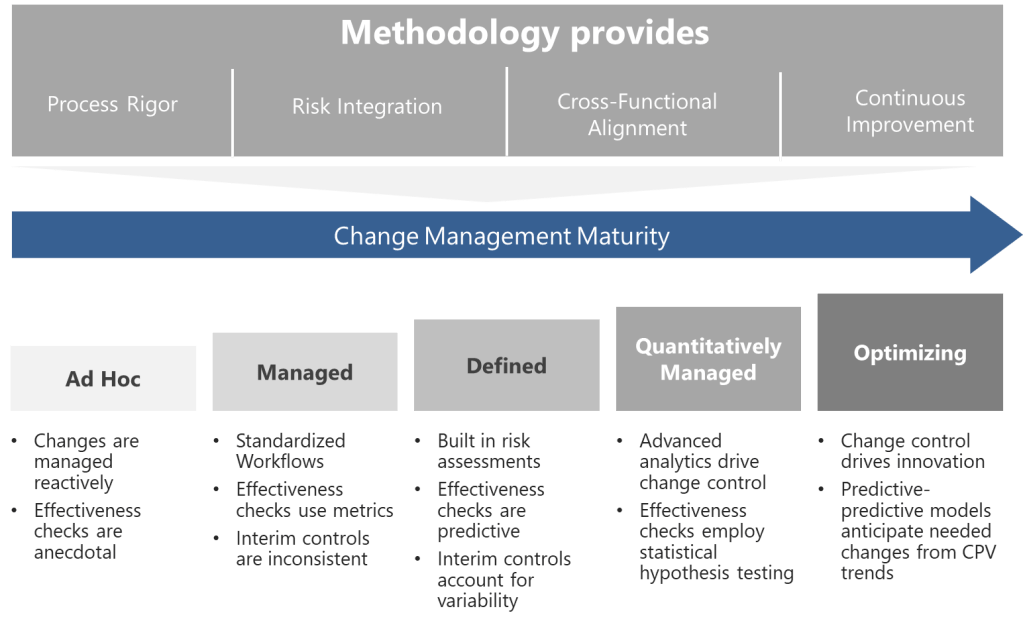
Building on these foundations, I propose a maturity model that evaluates organizational capability across four dimensions, each addressing critical aspects of pharmaceutical change control systems:

  1. Process Rigor
    • Assesses the standardization, documentation, and predictability of change control workflows.
    • Higher maturity levels incorporate design space utilization (ICH Q8), automated risk thresholds, and digital tools like Monte Carlo simulations for predictive impact modeling.
    • Progresses from ad hoc procedures to AI-driven, self-correcting systems that preemptively identify necessary changes via CPV trends.
  2. Risk Integration
    • Measures how effectively quality risk management (ICH Q9) is embedded into decision-making.
    • Includes risk-based classification (critical/major/minor), use of the right tool, and dynamic risk thresholds tied to process capability indices (CpK/PpK).
    • At advanced levels, machine learning models predict failure probabilities, enabling proactive mitigations.
  3. Cross-Functional Alignment
    • Evaluates collaboration between QA, regulatory, manufacturing, and supply chain teams during change evaluation.
    • Maturity is reflected in centralized review boards, real-time data integration (e.g., ERP/LIMS connectivity), and harmonized procedures across global sites.
  4. Continuous Improvement
    • Tracks the organization’s ability to learn from past changes and innovate.
    • Incorporates metrics like “first-time regulatory acceptance rate” and “change-related deviation reduction.”
    • Top-tier organizations use post-change data to refine design spaces and update control strategies.

Level 1: Ad Hoc (Chaotic)

At this initial stage, changes are managed reactively. Procedures exist but lack standardization—departments use disparate tools, and decisions rely on individual expertise rather than systematic risk assessment. Effectiveness checks are anecdotal, often reduced to checkbox exercises. Organizations here frequently experience regulatory citations related to undocumented changes or inadequate impact assessments.

Progression Strategy: Begin by mapping all change types and aligning them with ICH Q9 risk principles. Implement a centralized change control procedure with mandatory risk classification.

Level 2: Managed (Departmental)

Changes follow standardized workflows within functions, but silos persist. Risk assessments are performed but lack cross-functional input, leading to unanticipated impacts. Effectiveness checks use basic metrics (e.g., # of changes), yet data analysis remains superficial. Interim controls are applied inconsistently, often overcompensating with excessive conservatism or being their in name only.

Progression Strategy: Establish cross-functional change review boards. Introduce the right level of formality of risk for changes and integrate CPV data into effectiveness reviews.

Level 3: Defined (Integrated)

The organization achieves horizontal integration. Changes trigger automated risk assessments using predefined criteria from ICH Q8 design spaces. Effectiveness checks leverage predictive analytics, comparing post-change performance against historical baselines. Knowledge management systems capture lessons learned, enabling proactive risk identification. Interim controls are fully operational, with clear escalation paths for unexpected variability.

Progression Strategy: Develop a unified change control platform that connects to manufacturing execution systems (MES) and laboratory information management systems (LIMS). Implement real-time dashboards for change-related KPIs.

Level 4: Quantitatively Managed (Predictive)

Advanced analytics drive change control. Machine learning models predict change impacts using historical data, reducing assessment timelines. Risk thresholds dynamically adjust based on process capability indices (CpK/PpK). Effectiveness checks employ statistical hypothesis testing, with sample sizes calculated via power analysis. Regulatory submissions for post-approval changes are partially automated through ICH Q12-enabled platforms.

Progression Strategy: Pilot digital twins for high-complexity changes, simulating outcomes before implementation. Formalize partnerships with regulators for parallel review of major changes.

Level 5: Optimizing (Self-Correcting)

Change control becomes a source of innovation. Predictive-predictive models anticipate needed changes from CPV trends. Change histories provide immutable audit trails across the product. Autonomous effectiveness checks trigger corrective actions via integrated CAPA systems. The organization contributes to industry-wide maturity through participation in various consensus standard and professional associations.

Progression Strategy: Institutionalize a “change excellence” function focused on benchmarking against emerging technologies like AI-driven root cause analysis.

Methodological Pillars: From Framework to Practice

Translating this maturity model into practice requires three methodological pillars:

1. QbD-Driven Change Design
Leverage Q8’s design space concepts to predefine allowable change ranges. Changes outside the design space trigger Q9-based risk assessments, evaluating impacts on CQAs using tools like cause-effect matrices. Fully leverage Q12.

2. Risk-Based Resourcing
Apply Q9’s risk prioritization to allocate resources proportionally. A minor packaging change might require a 2-hour review by QA, while a novel drug product process change engages R&D, regulatory, and supply chain teams in a multi-week analysis. Remember, the “level of effort commensurate with risk” prevents over- or under-management.

3. Closed-Loop Verification
Align effectiveness checks with Q10’s lifecycle approach. Post-change monitoring periods are determined by statistical confidence levels rather than fixed durations. For instance, a formulation change might require 10 consecutive batches within CpK >1.33 before closure. PIC/S-mandated evaluations of unintended consequences are automated through anomaly detection algorithms.

Overcoming Implementation Barriers

Cultural and technical challenges abound in maturity progression. Common pitfalls include:

  • Overautomation: Implementing digital tools before standardizing processes, leading to “garbage in, gospel out” scenarios.
  • Risk Aversion: Misapplying Q9 to justify excessive controls, stifling continual improvement.
  • Siloed Metrics: Tracking change closure rates without assessing long-term quality impacts.

Mitigation strategies involve:

  • Co-developing procedures with frontline staff to ensure usability.
  • Training on “right-sized” QRM—using ICH Q9 to enable, not hinder, innovation.
  • Adopting balanced scorecards that link change metrics to business outcomes (e.g., time-to-market, cost of quality).

The Future State: Change Control as a Competitive Advantage

Change control maturity increasingly differentiates market leaders. Organizations reaching Level 5 capabilities can leverage:

  • Adaptive Regulatory Strategies: Real-time submission updates via ICH Q12’s Established Conditions framework.
  • AI-Enhanced Decision Making: Predictive analytics for change-related deviations, reducing downstream quality events.
  • Patient-Centric Changes: Direct integration of patient-reported outcomes (PROs) into change effectiveness criteria.

Maturity as a Journey, Not a Destination

The proposed model provides a roadmap—not a rigid prescription—for advancing change control. By grounding progression in ICH Q8-Q10 and PIC/S principles, organizations can systematically enhance their change agility while maintaining compliance. Success requires viewing maturity not as a compliance milestone but as a cultural commitment to excellence, where every change becomes an opportunity to strengthen quality and accelerate innovation.

In an era of personalized medicines and decentralized manufacturing, the ability to manage change effectively will separate thriving organizations from those merely surviving. The journey begins with honest self-assessment against this model and a willingness to invest in the systems, skills, and culture that make maturity possible.

Scale of Remediation Under a Consent Decree

The recent Sanofi Warning Letter certainly gets me thinking about the work of a consent decree and the scale and ‘stickiness‘ within an organization.

Scale of Remediation

In the Sanofi-Genzyme consent decree there were these concentric circles of required activities. At the center was the plant the issue was discovered, the Allston Landing Facility, which had the full brunt of remediation.

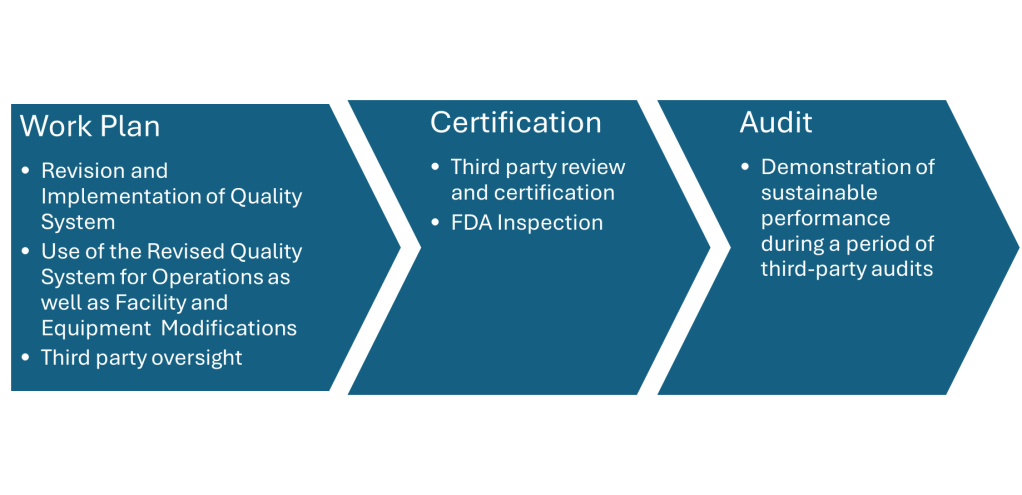
The next level out were the plants in Framingham and Northborough. They had remediation actions to be done, including reduced third party oversight for critical activities for a more limited time. The consent decree was on a much reduced scale at these sites.

The next level out was the former Genzyme sites beyond the Massachusetts core. They did alignment to the new standards created as part of the consent decree. Finally the rest of Sanofi, after Sanofi bought Genzyme, pretty much ignored it.

This balkanization meant that the culture across the organization never really changed. The cultural resistance of the site/silos fostered a culture of “us vs. them” mentality within the organization. Without a unified organizational culture, it is much harder to implement and maintain changes across the entire company.

The Slippery Slope: How Quality Improvements Can Erode Over Time

The erosion of quality culture at Sanofi demonstrated by this new Warning Letter isn’t unique to this case. Even when quality improvement initiatives are launched with great enthusiasm and initial success it is not uncommon for these hard-won gains to gradually erode over time, leaving organizations back where they started or even worse off. This phenomenon of “quality backsliding” can be frustrating and costly.

Why Quality Improvements Fade

There are several reasons why quality improvements may deteriorate over time:

Leadership Changes: When key champions of quality initiatives leave or change roles, their successors may not prioritize maintaining those improvements. New leaders often want to make their own mark, potentially abandoning or de-emphasizing existing quality programs.

Budget Cuts: In times of financial pressure, quality improvement efforts are often seen as “nice to have” rather than essential. Resources dedicated to sustaining improvements may be reallocated, leading to a gradual decline in performance.

Complacency: Initial success can breed complacency. Once targets are met, there may be less motivation to continue pushing for further improvements or even maintaining current standards.

Loss of Focus: As new priorities emerge, attention and resources can shift away from quality initiatives. Without ongoing commitment, processes can slowly revert to old, less effective ways of working.

Lack of Standardization: If improvements aren’t fully standardized and integrated into daily operations, they remain dependent on individual efforts rather than becoming part of the organizational culture.

Pharmaceutical GMP Quality Systems: FDA, ICH Q10 and QMM

Recent LinkedIn discourse got me thinking of the wider pharmaceutical quality system and how it is reflected in ICH Q10 and in the FDA Guidance for Industry on Quality Systems Approach to Pharmaceutical CGMP Regulation.

ICH Q10

The International Conference on Harmonization (ICH) was established to harmonize the technical requirements for pharmaceutical product registration across Europe, Japan, and the United States. ICH Q10, finalized in June 2008, emerged from this initiative as a guideline for a comprehensive Pharmaceutical Quality System (PQS) applicable throughout the product lifecycle. It was adopted by the FDA in April 2009, following its implementation by the European Commission in July 2008.

ICH Q10 aims to provide a model for pharmaceutical manufacturers to develop and maintain effective quality management systems. The guideline emphasizes a lifecycle approach, integrating quality management principles from ISO standards and regional GMP requirements. The primary objectives of ICH Q10 include:

  • Ensuring consistent product quality that meets customer and regulatory requirements.
  • Establishing effective monitoring and control systems for process performance and product quality.
  • Promoting continual improvement and innovation throughout the product lifecycle.

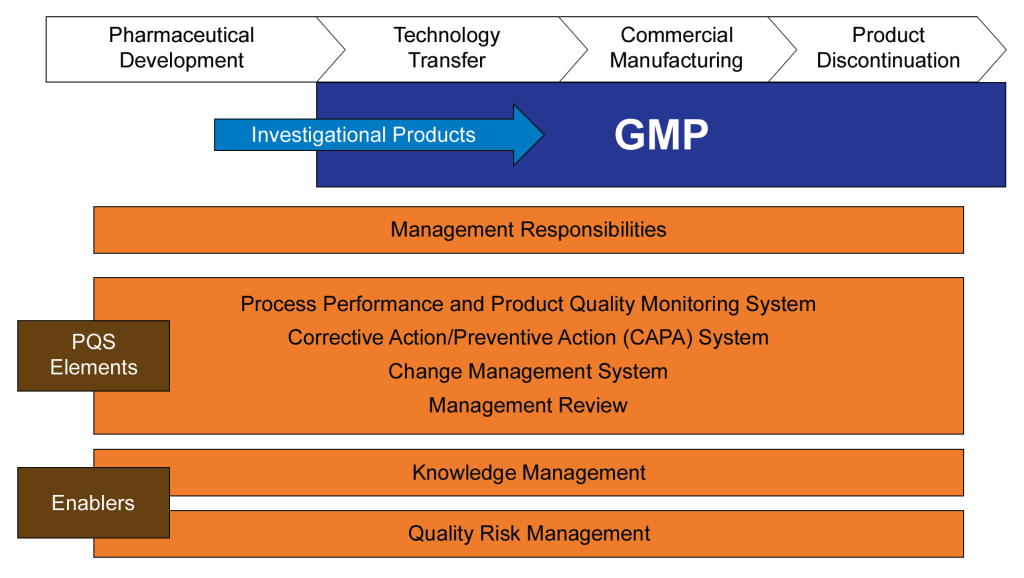
The guideline outlines the key elements of management responsibilities, Corrective and Preventive Action (CAPA) , process performance and product quality monitoring, change management, and management review. ICH Q10 is usually considered part of the “Quality Trio” with ICH Q8 and Q9. Quality by design is only possible through proper risk management and a robust quality system.

FDA Guidance for Industry on Quality Systems Approach to Pharmaceutical CGMP Regulation

The FDA developed guidance on implementing modern quality systems and risk management practices to align with the CGMP (Current Good Manufacturing Practice) requirements outlined in parts 210 and 211 of the FDA regulations. These regulations govern the manufacturing of human and veterinary drugs, including biological products. Published in 2006, this guidance should be viewed as part of a continuum of thought with ICH Q10 and not as an earlier draft.

This guidance aims to assist manufacturers in meeting cGMP requirements by adopting a comprehensive quality systems model. It emphasizes the integration of quality systems with regulatory requirements to ensure full compliance without imposing new expectations on manufacturers. Key aspects of the guidance include:

  • Highlighting the consistency of the quality systems model with cGMP regulations.
  • Encouraging the use of risk management and quality systems to enhance compliance and product quality.
  • Providing a framework for manufacturers to gain control over their manufacturing processes.

Six-System Inspection Model

The FDA’s Six-System Inspection Model is a framework introduced in this guidance to ensure compliance with current Good Manufacturing Practice (CGMP) regulations in the pharmaceutical industry. This model helps FDA inspectors evaluate the robustness of a company’s quality management system by focusing on six key subsystems.

I am a huge fan of the six subsystem approach. Basically we have here the organization of the quality manual, a guide to what standards you need to write in a bigger company, and a franework for understanding the cGMPs as a whole (great for education purposes).

Here’s a detailed explanation of each subsystem:

1. Quality System

  • Role: Acts as the central hub for all other systems, ensuring overall quality management.
  • Focus: Management responsibilities, internal audits, CAPA (Corrective and Preventive Actions), and continuous improvement.
  • Importance: Ensures that all other systems are effectively integrated and managed to maintain product quality and regulatory compliance.

2. Facilities and Equipment System

  • Role: Ensures that facilities and equipment are suitable for their intended use and maintained properly.
  • Focus: Design, maintenance, cleaning, and calibration of facilities and equipment.
  • Importance: Prevents contamination and ensures consistent manufacturing conditions.

3. Materials System

  • Role: Manages the control of raw materials, components, and packaging materials.
  • Focus: Supplier qualification, receipt, storage, inventory control, and testing of materials.
  • Importance: Ensures that only high-quality materials are used in the manufacturing process, reducing the risk of product defects.

4. Production System

  • Role: Oversees the actual manufacturing processes.
  • Focus: Process controls, batch records, in-process controls, and validation.
  • Importance: Ensures that products are manufactured consistently and meet predefined quality criteria.

5. Packaging and Labeling System

  • Role: Manages the packaging and labeling processes to ensure correct and compliant product presentation.
  • Focus: Label control, packaging operations, and labeling verification.
  • Importance: Prevents mix-ups and ensures that products are correctly identified and used.

6. Laboratory Controls System

  • Role: Ensures the reliability of laboratory testing and data integrity.
  • Focus: Sampling, testing, analytical method validation, and laboratory records.
  • Importance: Verifies that products meet quality specifications before release.

Integration and Interdependence

  • Quality System as the Fulcrum: The quality system is the central element that integrates all other subsystems. It ensures that each subsystem functions correctly and is aligned with overall quality objectives.
  • State of Control: The primary goal of the six-system inspection model is to ensure that each subsystem is in a state of control, meaning it operates within predefined limits and consistently produces the desired outcomes.

The Six-System Inspection Model provides a structured approach for FDA inspectors to assess the compliance and effectiveness of a pharmaceutical company’s quality management system. By focusing on these six subsystems, the FDA ensures that all aspects of manufacturing, from raw materials to final product testing, are adequately controlled and managed to maintain high standards of product quality and safety.

A Complementary and Holistic Approach

Both ICH Q10 and the FDA’s guidance on quality systems approach aim to enhance the quality and safety of pharmaceutical products through robust quality management systems. ICH Q10 provides a harmonized model applicable across the product lifecycle, while the FDA guidance focuses on integrating quality systems with existing CGMP regulations. Together, they support the pharmaceutical industry in achieving consistent product quality and regulatory compliance.

AspectICH Q10FDA Guidance on CGMPISO 13485 and 21 CFR 820ISO 9000
Purpose and ScopeComprehensive model for pharmaceutical quality systems across the product lifecycle.Quality systems approach to ensure CGMP compliance in pharmaceuticals.Quality management system for medical devices, incorporating ISO 13485 and regulatory requirements of 21 CFR 820.Fundamentals and vocabulary for quality management systems applicable to any industry.
Industry FocusSpecifically for the pharmaceutical industry.Specifically for the pharmaceutical industry.Specifically for the medical device industry.Applicable to any industry.
Key ElementsManagement responsibilities, CAPA, process performance, change management, management review.Management responsibilities, quality systems, process validation, continuous improvement.Risk management, quality manual, documentation requirements (e.g., Device Master Records, Device History Records).Quality management principles, terms, and definitions.
Regulatory FocusStrong emphasis on regulatory compliance and lifecycle management.Strong emphasis on regulatory compliance with CGMP.Incorporates regulatory requirements specific to medical devices (21 CFR 820).Does not directly address regulatory compliance.
FlexibilityFlexible, adaptable to specific product and process needs.More prescriptive with specific compliance requirements.Harmonized with international standards but includes specific regulatory requirements.Provides a broad framework for customization.
Management InvolvementEmphasizes management’s role in quality and regulatory compliance.Emphasizes management’s role in quality and CGMP integration.Emphasizes management’s role in quality and risk-based decision making.Emphasizes management’s role in quality and customer satisfaction.
ImplementationTailored to pharmaceutical manufacturing, integrating quality management principles.Mandates oversight and controls over drug manufacturing processes.Requires a quality manual and specific documentation practices; aligned with international standards.Requires customization to specific industry needs.

These two documents were developed at the same time and represents the thinking twenty years ago in laying down an approach that still matters today. I usually regard the six system approach as a deepening and defining of what Q10 means by process performance and product quality monitoring.

What is the current agency thinking?

The FDA and other revulatory agencies haven’t stopped their thinking in 2008. Sixteen years later we see the continued push for quality culture and quality maturity. The FDA continues to make this a top priority, as we’ve been seeing in their annual drug shortage reports to Congress. There are a few themes we continue to see driven home.

The Patient is the Customer

Quality management must be customer-focused, ensuring that all processes and materials meet their intended use. Senior management’s commitment is crucial for a strong QMS, which emphasizes proactive quality assurance over reactive quality control. Robust supplier relationships and oversight programs are essential to manage variability in materials and processes.

This application of a core priciple in ISO 9000 may seem to basic to some, but I think it is central to a lot of messaging and should never be taken for granted.

Benefits of Better Quality Performance

A continued focus that a quality-focused culture leads to:

  • Early problem detection
  • Enhanced process stability and productivity
  • Fewer major deviations and failures
  • Efficient QA release of batches
  • Reduced customer complaints and returns
  • Protection of brand and competitiveness

Management Oversight of Drug Quality

Management must address sources of variability, including people, materials, methods, measurements, machines, and environment. Risk management should be dynamic and ongoing, facilitating continual learning and improvement.

Corrective Action and Preventive Action (CAPA)

A structured approach to investigating complaints, product rejections, nonconformances, recalls, deviations, audits, regulatory inspections, and trends is essential. CAPA should determine root causes and implement corrective actions.

Change Management

Timely and effective change management ensures corrections and improvements are undertaken efficiently. This includes implementing product quality improvements, process improvements, variability reduction, innovations, and pharmaceutical quality system enhancements.

Management Review

Management is responsible for quality policy, QMS effectiveness, internal communications, resource management, and supply chain oversight. This includes ensuring the quality of incoming materials and outsourced activities.

Quality Culture Driven by Top Management

A strong corporate quality culture is driven by daily decisions and executive oversight. Sustainable compliance requires aiming for high standards rather than just meeting minimum requirements. Quality management maturity involves proactive and preventive actions, iterative learning, and leveraging modern technologies.

Facility Lifecycle

Senior management must ensure the suitability of operational design, control, and maintenance. This includes addressing infrastructure reliability, appropriateness for new product demands, and mitigating equipment/facility degradation.

Risk Management in Manufacturing

Human factors and manual interventions pose significant risks in pharmaceutical manufacturing. Automation and separation technologies can mitigate these risks, but many facilities still rely on manually intensive processes. Leveraging new technologies and practices is a huge opportunity.

This approach is reflected in the FDA’s Quality Management Maturity (QMM), which promotes advanced quality management practices within drug manufacturing establishments.

Goals of the QMM Program

  1. Foster a Strong Quality Culture Mindset: Encourage establishments to integrate quality deeply into their organizational culture.
  2. Recognize Advanced Quality Management Practices: Acknowledge and reward establishments that go beyond basic CGMP (Current Good Manufacturing Practices) requirements.
  3. Identify Growth Opportunities: Provide suggestions for enhancing quality management practices.
  4. Minimize Risks to Product Availability: Ensure a reliable market supply by reducing quality-related failures and maintaining performance during supply chain disruptions.

Key Components of the QMM Program

  • Management Commitment to Quality: Leadership must prioritize quality, set clear objectives, and integrate these with business goals. Effective management review processes are crucial.
  • Business Continuity: Establishments should develop robust plans to handle disruptions, ensuring consistent operations and supply chain reliability.
  • Advanced Pharmaceutical Quality System (PQS): Implementing quality principles like Quality by Design (QbD) and risk management approaches to maintain system reliability and minimize production disruptions.
  • Technical Excellence: Emphasizing data management, innovative manufacturing processes, and advanced technologies to enhance quality and operational efficiency.
  • Employee Engagement and Empowerment: Encouraging employees to take ownership of quality, make suggestions, and understand their impact on product quality and patient safety.

Implementation and Assessment

  • The FDA has developed a prototype assessment protocol to evaluate QMM. This includes a standardized approach to minimize bias and ensure objectivity. Someday, eventually, it will move away from constant prototyping.
  • Assessments will focus on qualitative aspects, such as the establishment’s quality culture and how it uses data to drive improvements.

Benefits of QMM

  • Enhanced Supply Chain Reliability: By adopting mature quality management practices, establishments can reduce the occurrence of quality-related failures. The fact shortages continue to be so damning to our industry is a huge wake-up call.
  • Proactive Continual Improvement: Encourages a proactive approach to quality management, leveraging technological advancements and integrated business operations.
  • Long-term Cost Savings: Investing in a mature quality culture can lead to fewer compliance issues, reduced inspection needs, and overall cost reductions.

Conclusion

The FDA’s QMM program aims to transform how pharmaceutical quality is perceived, measured, and rewarded. The program seeks to ensure a more reliable drug supply and better patient outcomes by fostering a strong quality culture and recognizing advanced practices. It should be seen as part of a 20-year commitment from the agency in alignment with its international partners.

The Challenges Ahead for Quality

Discussions about Industry 4.0 and Quality 4.0 often focus on technology. However, technology is just one of the challenges that Quality organizations face. Many trends are converging to create constant disruption for businesses, and the Quality unit must be ready for these changes. Rapid changes in technology, work, business models, customer expectations, and regulations present opportunities to improve quality management but also bring new risks.

The widespread use of digital technology has raised the expectations of stakeholders beyond what traditional quality management can offer. As the lines between companies, suppliers, and customers become less distinct, the scope of quality management must expand beyond the traditional value chain. New work practices, such as agile teams and remote work, are creating challenges for traditional quality management governance and implementation strategies. To remain relevant, Quality leaders must adapt to these changes..

 ChallengeMeansImpact to Quality ManagementHow to Prepare
Advanced AnalyticsThe increase in data sources and improved data processing has led to higher expectations from customers, regulators, business leaders, and employees. They expect companies to use data analytics to provide advanced insights and improve decision-making.Requires a holistic approach that allows quality professionals to access, analyze and apply insights from structured and unstructured data

Quality excellence will be determined by how quickly data can be captured, analyzed, shared and applied  
Develop a talent strategy to recruit, develop, rent or borrow individuals with data analytics capabilities, such as data science, coding and data visualization
Hyper-AutomationTo become more efficient and agile in a competitive market, companies will increasingly use technologies like RPA, AI, and ML. These technologies will automate or enhance tasks that were previously done by humans. In other words, if a task can be automated, it will be.How to ensure these systems meet intended use and all requirements

Algorithm-error-generated root causes
Develop a hyperautomation vision for quality management that highlights business outcomes and reflects the use cases of relevant digital technology

Perform a risk-based assessment with appropriate experts to identify critical failure points in machine and algorithm decision making
Virtualization of WorkThe shift to remote work due to COVID-19, combined with advancements in cloud computing and AR/VR technology, will make work increasingly digital.Rethink how quality is executed and governed in a digital environment.Evaluate current quality processes for flexibility and compatibility with virtual work and create an action plan.

Uncover barriers to driving a culture of quality in a virtual working environment and
incorporate virtual work-relevant objectives, metrics and activities into your strategy.
Shift to Resilient OperationsPrioritizing capabilities that improve resilience and agility.Adapt in real-time to changing and simultaneously varying levels of risk without sacrificing the core purpose of QualityEnable employees to make faster decisions without sacrificing quality by developing training to build quality-informed judgment and embedding quality guidance in employee workflows.

Identify quality processes that may prevent operational resilience and reinvent them by starting from scratch, ruthlessly challenging the necessity of every step and requirement.

Ensure employees and new hires have the right skill sets to design, build and operate a responsive network environment.
Rise of Inter-connected EcosystemsThe growth of interconnected networks of people, businesses, and devices allows companies to create value by expanding their systems to include customers, suppliers, partners, and other organizations.Greater connectivity between customers, suppliers, and partners provides more visibility into the value chain. However, it also increases risk because it can be difficult to understand and manage different views of quality within the ecosystem.Map out the entire quality management ecosystem model and its participants, as well as their interactions with customers.

Co-develop critical-to-quality behaviors with strategic partners.

Strengthen relationships with partners across the ecosystem to capture and leverage relevant information and data, while at the same time addressing data privacy concerns.
Digitally Native WorkforceShift from digital immigrants (my generation and older) to digital natives who are those people who have grown up and are comfortable with computers and the internet. Unlike other generations, digital natives are so used to using technology in all areas of their lives that it is (and always has been) an integral, necessary part of their day-to-day.Increased flexibility leads to a need to rethink the way we monitor, train, and incentivize quality.

Connecting the 4 Ps: People, Processes, Policies and Platforms
Identify and target existing quality processes to digitize to offer desired flexibility.

Adjust messages about the importance of quality to connect with values employees care about (e.g., autonomy, innovation, social issues).
Customer Expectation MultiplicityCustomer expectations evolve quickly and expand into new-in-kind areas as access to information and global connectedness increases.Develop product portfolios, internal processes and company cultures that can quickly adapt to rapidly changing customer expectations for quality.Identify where hyperautomation and predictive capabilities of quality management can enhance customer experience and prevent issues before they occur.
Increasing Regulatory ComplexityThe global regulatory landscape is becoming more complex as countries introduce new regulations at different rates. Increased push for localization.Need strong system to efficiently implement changes across different systems, locations, and regions while maintaining consistent quality management throughout the ecosystem.Coordinate a structured regulatory tracking approach to monitor changing regulatory developments — highly regulated industries require a more comprehensive approach compared to organizations in a moderate regulatory environment
Challenges to Quality Management

The traditional Value Proposition of quality management is no longer sufficient to meet the expectations of stakeholders. With the rise of a digitally native workforce, there are new expectations for how work is done and managed. Business leaders expect quality leaders to have full command of operational data, diagnosing and anticipating quality problems. Regulators also expect high data transparency and traceability.

The value proposition of quality management lies in predicting problems rather than reacting to them. The primary objective of quality management should be to find hidden value by addressing the root causes of quality issues before they manifest. Quality organizations who can anticipate and prevent operational problems will meet or exceed stakeholder expectations.

Our organizations are on a journey towards utilizing predictive capabilities to unlock value, rather than one that retroactively solves problems. Our scope needs to be based on quality being predictive, connected, flexible, and embedded. For me this is the heart of Qualty 4.0.

Quality management should be applied across a multitude of systems, devices, products, and partners to create a seamless experience. This entails transforming quality from a function into an interdisciplinary, participatory process. The expanded scope will reach new risks in an increasingly complex ecosystem. The Quality unit cannot do this on its own; it’s all about breaking down silos and building autonomy within the organization.

To achieve this transformation, we need to challenge ourselves to move beyond top-down and regimented Governance Models and Implementation Strategies. We need to balance our core quality processes and workflows to achieve repeatability and consistency while continually adjusting as situations evolve. We need to build autonomy, critical thinking, and risk-based thinking into our organizational structures.

One way to achieve this is by empowering end-users to solve their own quality challenges through participatory quality management. This encourages personal buy-in and enables quality governance to adapt in real-time to different ways of working. By involving end-users in the process of identifying and solving quality issues, we can build a culture of continuous improvement and foster a sense of ownership over the quality of our products and services.

The future of quality management lies in being predictive, connected, flexible, and embedded.

  • Predictive: The value proposition of quality management needs to be predicting problems over problem-solving.
  • Connected: The scope of quality management needs to extend beyond the value chain and connect across the ecosystem
  • Flexible: The governance model needs to be based on an open-source model, rather than top-down.
  • Embedded: The implementation strategy needs to shift from viewing quality as a role to quality as a skill.

By embracing these principles and involving all stakeholders in the process of continuous improvement, we can unlock hidden value and exceed stakeholder expectations.

Deaing with these challenges and implications requires the Quality organization to treat transformation like a Program. This program should have four main initiative areas:

  1. Build the capacity for targeted prevention through targeted data insights. This includes building alliances with IT and other teams to have the right data available in flexible ways but it also includes the building of capacity to actually use the data.
  2. Expand quality management to cover the entire value network.
  3. Localize Risk Management to Make Quality Governance Flexible and Open Source.
  4. Distribute Tasks and Knowledge to Embed Quality Management in the Business.

Across these pillars the program approach will:

  1. Assess the current state: Identify areas requiring attention and improvement by examining existing People, Processes, Policies and Platforms. This comprehensive assessment will provide a clear understanding of the organization’s current situation and help pinpoint areas where projects can have the most significant impact
  2. Establish clear objectives: Establish clear objectives to h provide a clear roadmap for success.
  3. Prioritize foundational elements: Prioritize building foundational elements. Avoid bells-and-whistles for their own sake.
  4. Develop a phased approach: This is not an overnight process. Develop a phased approach that allows for gradual implementation, with clear milestones and measurable outcomes. This ensures that the organization can adapt and adjust as needed while maintaining ongoing operations and minimizing disruptions.
  5. Collaborate with stakeholders: Engage stakeholders from across the organization,to ensure alignment and buy-in. Create a shared vision for the initiative to ensure that everyone is working towards the same goals. Regular communication and collaboration among stakeholders will foster a sense of ownership and commitment to the transformation process.
  6. Continuously monitor progress: Regularly review the progress, measuring outcomes against predefined objectives. This enables organizations to identify any potential issues or roadblocks and make adjustments as necessary to stay on track. Establishing key performance indicators (KPIs) will help track progress and determine the effectiveness of the Program.
  7. Embrace a culture of innovation: Encourage a culture that embraces innovation and continuous improvement. This helps ensure that the organization remains agile and adaptive, making it better equipped to take advantage of new technologies and approaches as they emerge. Fostering a culture of innovation will empower employees to seek out new ideas and solutions, driving long-term success.
  8. Invest in employee training and development: It is crucial to provide employees with the necessary training and development opportunities to adapt to new technologies and processes. This will ensure that employees are well-equipped to handle the changes brought about by these challenges and contribute to the organization’s overall success.
  9. Evaluate and iterate: As the Program unfolds, it is essential to evaluate the results of each phase and make adjustments as needed. This iterative approach allows organizations to learn from their experiences and continuously improve their efforts, ultimately leading to greater success.

To do this leverage the eight accelerators to change.