Design Lifecycle within PDCA – Planning

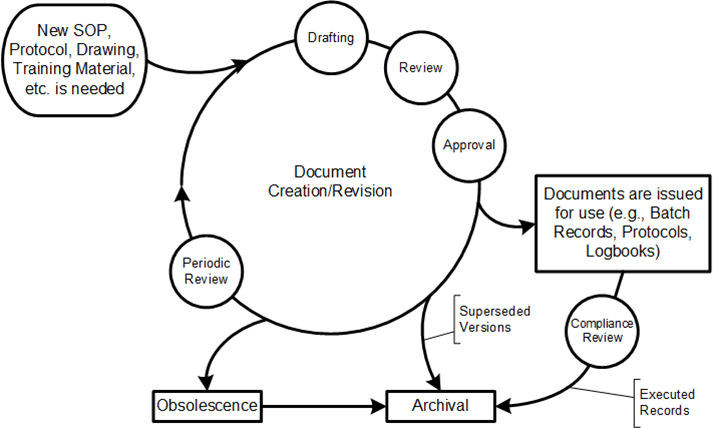
In the post “Review of Process/Procedure” I mentioned how the document draft and review cycle can be seen as an iterative design cycle. In this post I want to expand on the design lifecycle as a fundamental expression of PDCA that sits at the heart of all we do.

PDCA, a refresher

PDCA (and it’s variants) are a pretty tried and true model for process improvement. In the PDCA model a plan is structured in four steps: P (plan) D (do) C (check) A (act). The intention is create a structured cycle that allows the process to flow in accordance with the objectives to be achieved (P), execute what was planned (D), check whether the objectives were achieved with emphasis on the verification of what went right and what went wrong (C) and identify factors of success or failure to feed a new process of planning (A).

Conceptually, the organization will be a fast turning wheel of endlessly learning from mistakes and seeking to maximize processes in order to remain forever in pursuit of strategic objectives, endlessly searching for the maximum efficiency and effectiveness of the system.

PDCA cycle driving continuous improvement

Design Lifecycle

This design lifecycle just takes the PDCA spiral and spreads it across time. At the same time it breaks down a standard set of activities and recognizes the stage gates from moving between startup (or experiment) and continuous improvement.

Design Lifecycle

Identifying the Problem (Plan)

At it’s heart problem-solving requires understanding a set of requirements and building for success.

I always go back to the IEEE definition of “A requirement is a condition or capability needed by a user to solve a problem or achieve an objective; a condition or capability that must be met or possessed by a system or system component to satisfy a contract ,standard, specification , or other formally imposed document; a document representation of condition or capability “

A requirement can be explicitly stated, implicit, inherited or derived from other requirements.

The first place to look for requirements is the organization itself.

Understanding the needs of the organization

The cultural needs of the organization drives the whole problem-solving and requirement gathering activity and it starts by being clear on Strategy and understanding the goals and objectives and how these goals percolate to the different business processes that we are improving. This gives a good starting point to focus on what opportunities to be explored and what problems to be solved.

It is not uncommon in the problem-solving phase that the objectives/needs are not known, so we must work our way through figuring out what the initial need is. Go back to the fundamentals of understanding the business processes “as-is” and review existing regulations, standards, guidelines and other internal sources of requirements followed currently. This is the time to interview stakeholders and go the GEMBA.

We state the problem, and re-frame it. And now we can move on to Requirement Elicitation.

Identifying the Problem

Requirement Elicitation

Requirement Elicitation is the process of probing and facilitating the stakeholders to provide more clarity and granular details pertaining to the (usual) high-level requirement gathered so far. This is a discovery process, exploratory in nature, focusing on finding enough details so that a solution can be envisioned and developed. Elicitation is not an isolated activity, and has been happening throughout the process by all the discussion, interaction, analysis, verification and validation up to now.

You should be engaging with knowledge management throughout the cycle, but ensure there is specific engagement here.

It is a progressive process where the requirement clarity ushers in increments and may need multiple rounds of probing/discussions. As the new details are uncovered the requirements are further elaborated and detailed. There are a whole toolbox of elicitation techniques and like any engagement it is important to properly prepare.

Requirement Elicitation

Requirement Analysis

Requirement Analysis pertains to extracting the requirement out of the heaps of information acquired from various stakeholders and communicated and turned into documentation in a form that is easily understood by the stakeholders, including the project team. Here we are engaging in requirement refinement, modification, clarification, validation & finalization and engaging in extensive communication.

A requirement can be classified as:

We build for traceability here, so as we build and test solutions we can always trace back to the requirements.

Design the Solution

Building for the solution includes change management. Any solution focuses both on the technical, the organization and the people.

Ensure you leverage risk management.

Change Management Approach

The Place of Empathy

In this design process, we address and use empathy to acquire insight into users’ (stakeholders) needs and inform the design process and create a relevant solution. Using an approach informed by cognitive empathy, we apply different methods to build up that competence and insight, enabling us to prioritize the needs of the users and make the results of the process more desirable.

Psychological safety, reflexivity and sense-making inform our work.

Prepare for Startup

By engaging in Design Thinking we are ready for Startup. Moving through the three steps of:

We have created a plan to execute against. Startup, which can often be Experimentation, is it’s own, future, post.

References and Related Documents in Procedural Documents

It is pretty standard advice that relevant references to other documents should be listed in a separate section of the procedure. The reasoning is that when some standard operating procedures are intimately linked to others – the information contained in more than one document is necessary to complete a task – it is useful to include a cross-reference section in each document. Many also say that this section reinforces the SOP’s authority.

Another fairly common piece of advice is to have this, or another, section in the procedure identify the documents used in the development of the procedure, such as regulatory documents or technical/validation reports.

My take is that neither belongs in a process/procedure (SOP/WI). We should be looking to streamline requirements documents, and these sections are just cruft.

If you have electronic document control systems then cross-references should be handled trough hyperlink. Users are quite comfortable with hyperlinks and will easily navigate between documents.

Listing of regulations and other requirements belongs in a separate design document (ideally part of the document control system), and again add little value to the execution of the document.

There are a lot of so-called “best practices” about documents that stem from the days where everything is paper, and it is okay to move beyond them.

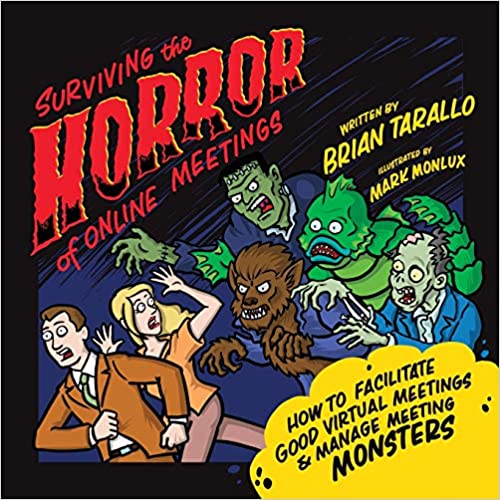
Surviving the Horror of Online Meetings (Book Review)

Surviving the Horror of Online Meetings

Written by Brian Tarallo

Illustrated by Mark Monlux

A fun read this week has been Surviving the Horror of Online Meetings, which brings a great deal of fun to a very pertinent topic in a pretty short page count (70 pages). As a fan of classic monster movies I can’t recommend the art enough.

Tons of good survival tips. Some of my favorite were:

  • Plan five minute sprints – for every 5 minutes of slide presentations or briefings include something that will engage participants – for example a poll or a breakout session.
  • “I Like, I wish, what if” – participants type feedback into chat about idea share
  • Hide self-view – I instantly did this and it makes such a difference

And then each of the silver bullets was worth the price of admission.

We are all fatigued from constant online meetings, and they are not going anywhere. This book is a fun bit of medicine and I definitely recommend giving it a read.

Review of Process/Procedure

Review of documents are a critical part of the document management lifecycle.

Document Lifecycle

In the post Process/Procedure Lifecycle there are some fundamental stakeholders:

  • The Process Owner defines the process, including people, process steps, and technology, as well as the connections to other processes. They are accountable for change management, training, monitoring and control of the process and supporting procedure. The Process Owners owns the continuous improvement of the overall process.
  • Quality is ultimately responsible for the decisions made and that they align, at a minimum, with all regulatory requirements and internal standards.
  • Functional Area Management represents the areas that have responsibilities in the process and has a vested interest or concern in the ongoing performance of a process. This can include stakeholders who are process owners in upstream or downstream processes.
  • A Subject Matter Expert (SME) is typically an expert on a narrow division of a process, such as a specific tool, system, or set of process steps. A process may have multiple subject matter experts associated with it, each with varying degrees of understanding of the over-arching process.

A Risk Based Approach

The level of review of a new or revised process/procedure is guided by three fundamental risk questions:

  • What might go wrong with the associated process? (risk identification)
  • What is the likelihood that this will go wrong? (risk analysis)
  • What are the consequences? How severe are they if this goes wrong? (risk analysis)

Conducting risk identification is real about understanding how complicated and complex the associated process is. This looks at the following criteria:

  • Interconnectedness: the organization and interaction of system components and other processes
  • Repeatability: the amount of variance in the process
  • Information content: the amount of information needed to interact with the process

What Happens During a Review of Process and Procedure

The review of a process/procedure ensures that the proposed changes add value to the process and attain the outcome the organization wants. There are three levels of review (which can and often do happen simultaneously):

  • Functional review
  • Expert review by subject matter experts
  • Step-by-step real-world challenge

Functional review is the vetting of the process/procedure. Process stakeholders, including functional area management affected by the change has the opportunity to review the draft, suggest changes and agree to move forward.

Functional review supplies the lowest degree of assurance. This review looks for potential impact of the change on the function – usually focused on responsibilities – but does not necessarily assures a critical review.

In the case of expert review, the SMEs will review the draft for both positive and negative elements. On the positive side, they will look for the best practices, value-adding steps, flexibility in light of changing demands, scalability in light of changing output targets, etc. On the negative side, they will look for bottlenecks in the process, duplication of effort, unnecessary tasks, non-value-adding steps, role ambiguities (i.e. several positions responsible for a task, or no one responsible for a task), etc.

Expert review provides a higher degree of assurance because it is a compilation of expert opinion and it is focused on the technical content of the procedure.

The real-world challenge tests the process/procedure’s applicability by challenging it step-by-step in as much as possible the actual conditions of use. Tis involves selecting seasoned employee(s) within the scope of the draft procedure – not necessarily a SME – and comparing the steps as drafted with the actual activities. It is important to ascertain if they align. It is equally important to consider evidence of resistance, repetition and human factor problems.

Sometimes it can be more appropriate to do the real-world test as a tabletop or simulation exercise.

As sufficient reviews are obtained, the comments received are incorporated, as appropriate. Significant changes incorporated during the review process may require the procedure be re-routed for review, and may require the need to add additional reviews.

Repeat as a iterative process as necessary.

Design lifecycle

The process/procedure lifecycle can be seen as the iterative design lifecycle.

Design Thinking: Determine process needs.

  • Collect and document business requirements
  • Map current-state processes.
  • Observe and interview process workers.
  • Design process to-be.

Startup: Create process documentation, workflows, and support materials. Review and described above

Continuous Improvement: Use the process; Collect, analyze, and report; Improve

GxP New Hire Orientation

Leveraging the company’s new employee orientation program can help both compliance and quality by ensuring that a new hire (or transfer) understands the expectations for employee performance which:

  • Are covered by the GxP regulations, corporate policies and process/procedure
  • Are written and readily available to employees
  • Are mandatory

In a heavily regulated industry, like pharmaceuticals, this is especially important because an individual may not have experienced such regulation in their former position. Even within a regulated organization the level of regulatory experience will change as you move from one area to the next.

The new hire orientation process is not a once-and-done and should be long enough to truly make an impact on the individual’s performance.

This new hire program is seeing to engage new hires more rapidly within the quality culture to ensure that employee’s behavior aligns more rapidly with quality culture.

For example, the new hire orientation should reinforce that a pharmaceutical company is a regulated environment, responsible for products that can directly affect customers’ health and quality of life. Product failure could result in death or sickness. Working for an organization where products help preserve and sustain life comes with the responsibility to know one’s job and perform it correctly at all time.

New hire orientation must present the organization’s cultural imperative for quality – why is it important to fulfill the organization’s purpose or reason for being – and how has this been embedded into the organization’s culture. At heart new hire orientation should answer three questions:

  1. What does quality mean to you personally and how do you exhibit in the organization?
  2. What are the expectations for quality outcomes in the organization and how we judge that they have been met.
  3. How quality is embedded in the culture and daily work of the people in this organization and what represents good role model behaviors.

Content that does not immediately impact the new hire, or only impacts new hires in several departments or units, is better deferred until later training activities.

Topics that would be in that immediate review include:

  • What does it mean to work in a regulated environment
  • The role of the quality system
  • How to access process/procedure and complete training
  • Good documentation practices and data integrity (high level)
  • How to engage with regulatory stakeholders and other external partners (high level)

What other material would you cover?