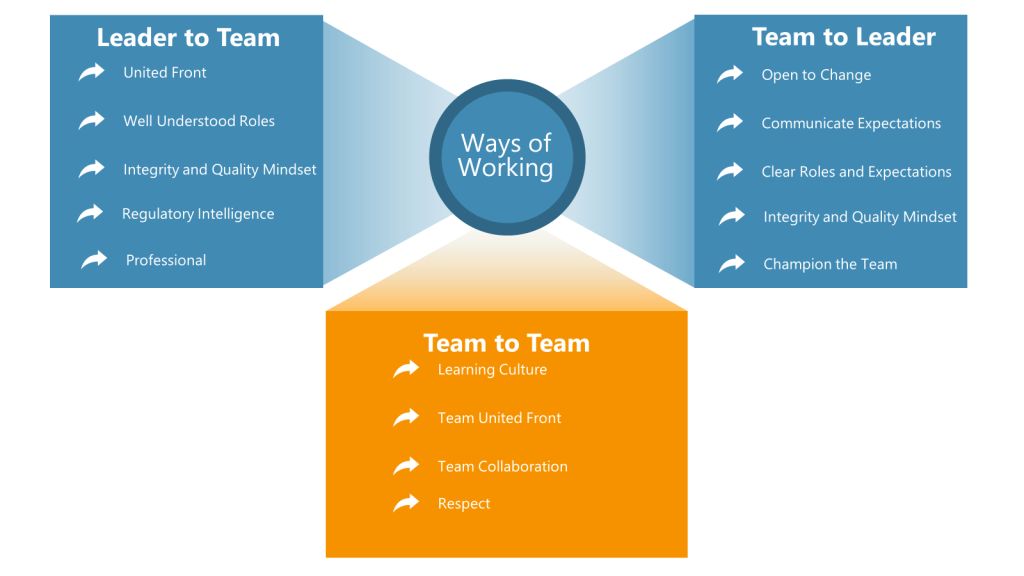
Another building block to Quality Culture is conducive culture, which is an environment that promotes employee productivity, satisfaction, and well-being. There is a huge overlap between the concepts of a Just and Conducive Culture.
Physical Comfort and Resources: Ensuring employees have a comfortable physical environment and the necessary resources to perform their tasks effectively.
Open Communication: Encouraging transparent and open communication between employees and management helps build trust and fosters a sense of teamwork.
Recognition and Reward: Regularly acknowledging and rewarding individual contributions can maintain high levels of employee motivation and engagement.
Diversity, Equity, and Inclusion (DEI): Promoting a culture that values diversity, equity, and inclusion can lead to a more respectful and collaborative workplace, enhancing employee morale and productivity.
Work-Life Balance: Supporting employees in achieving a healthy work-life balance through flexible working hours and telecommuting opportunities can increase their engagement and motivation.
Positive Organizational Values: Establishing and operationalizing core values that align with collaboration, learning, and adapting (CLA) can create a supportive and innovative work environment.
Feedback and Development: Regular, constructive feedback and opportunities for professional growth help employees feel valued and supported in their roles.
Team Culture: Promoting teamwork and collective responsibility for outcomes can enhance the organization’s overall performance and success.
As a leader, fostering critical thinking in my team and beyond is a core part of my job. Fostering critical thinking means an approach that encourages open-mindedness, curiosity, and structured problem-solving.
It is essential to create an environment where team members feel comfortable questioning assumptions and engaging in constructive debates. Encourage them to ask “why” and explore different perspectives. This open dialogue promotes deeper thinking and prevents groupthink.
Inspire your team to ask questions and seek deeper understanding. Role model this behavior by starting meetings with thought-provoking “what if” scenarios or sharing your own curiosities. Celebrate curiosity and reward those who think outside the box.
Assign Stretch Assignments
Provide your team with challenging tasks that push them beyond their comfort zones. These stretch assignments force them to think critically, analyze information from multiple angles, and develop innovative solutions.
Encourage diversity of thought within your team. Diverse backgrounds, experiences, and viewpoints can challenge assumptions and biases, leading to a more comprehensive understanding and better decision-making.
Engage in Collaborative Problem-Solving
Involve your team in decision-making processes and problem-solving exercises. Techniques like role reversal debates, where team members argue a point they disagree with, can help them understand different perspectives and refine their argumentative skills.
Offer training sessions on critical thinking techniques, such as SWOT analysis, root cause analysis, and logical fallacies. Equip your team with the tools and frameworks they need to think critically.
Lead by Example
As a leader, model critical thinking behaviors. Discuss your thought processes openly, question your assumptions, and show the value of critical evaluation in real-time decision-making. Your team will be more likely to emulate these habits.
Encourage Continuous Learning
Recommend learning resources, such as courses, articles, and books from diverse fields. Continuous learning can broaden perspectives and foster multifaceted thinking.
Embrace Feedback and Mistakes
Establish feedback loops within the team and create a safe environment where mistakes are treated as learning opportunities. Receiving and giving feedback helps refine understanding and overcome biases.
Implement Role-Playing Scenarios
Use role-playing scenarios to simulate real-world challenges. This helps team members practice critical thinking in a controlled environment, enhancing their ability to apply these skills in actual situations.
It is fascinating that for all the discussion around quality culture, which borrows from Safety II and other safety movements/submovements, we’ve largely avoided using the term justice, which is so prevalent in certain areas of the safety world. One can replace quality with justice and talk about many of the same things.
Both attempt to realize Deming’s Point 8—to drive out fear—which I consider Deming’s most radical proposition.
We really should see them as building blocks. A just culture enables the open reporting and analysis of errors necessary for a quality culture to identify areas for improvement. The two cultures are complementary—a robust quality program requires psychological safety fostered by a just culture. However, a quality culture has broader aims beyond responding to errors or safety lapses. We cannot have a Quality Culture without a Just Culture.
Psychological safety creates an environment where staff can speak up, enabling a just culture. A just culture defines the balanced accountability approach for responding to errors and safety events. A quality culture is a broader concept that drives improvement across the organization, relying on the foundation of a just culture.
But I really wish we used the term justice more. Promoting justice is an activity I wish we took more seriously as a profession.
A central premise of the Quality mindset is that the means justify the ends and that how we work produces a better result.
At its core, a Quality mindset values the journey as much as the destination. It’s an understanding that the path taken to achieve results is integral to the quality of those results. This mindset shifts the focus from merely meeting targets to how those targets are met, emphasizing continuous improvement, attention to detail, and a commitment to excellence at every step of the process.
The Means Define the Culture
One of the most profound impacts of adopting a Quality mindset is on organizational culture. When a company prioritizes the means as much as the ends, it fosters a culture of integrity, responsibility, and continuous learning. Employees are encouraged to take ownership of their work, innovate, and find better ways to achieve objectives. This enhances the quality of work and boosts morale and engagement among team members.
Process Improvement as a Habit
Incorporating a Quality mindset means viewing process improvement as not a one-time initiative but an ongoing habit. It’s about making small, continuous adjustments that cumulatively lead to significant improvements.
Building Resilience through Quality
Another critical aspect of the Quality mindset is its role in building organizational resilience. Companies can create flexible and robust processes that withstand external pressures and disruptions by concentrating on the means. This resilience is crucial in today’s fast-paced and ever-changing business environment, where adaptability and agility are key to survival and success.
The Role of Leadership
Leadership plays a pivotal role in cultivating a Quality mindset within an organization. Leaders must set the tone by demonstrating a commitment to quality in their actions and decisions. They should encourage open communication, foster a culture of feedback and learning, and recognize and reward quality improvements. By leading by example, leaders can inspire their teams to adopt a Quality mindset and contribute to a culture of excellence.
Conclusion
Adopting a Quality mindset is a strategic choice that can lead to superior outcomes for organizations. By focusing on the means—how work is done—companies can improve processes, foster a positive culture, build resilience, and ultimately achieve higher-quality results. Embedding this mindset into the fabric of the company’s operations requires a commitment from all levels of the organization, especially leadership. In the end, a Quality mindset is not just about achieving better results; it’s about building a better organization.
To foster a culture of adaptability, engagement, and high performance on your team, you need to demonstrate consistent curiosity about your employees, yourself, and your organization. Here’s how:
Curiosity about employees. Organizations are a collection of the mindsets, attitudes, and values of the people that work within them. To shape your team’s culture, you need to understand people’s values and motivations. Talk to employees directly, formally survey them, or engage in focus groups about the team’s culture to tap into your collective wisdom.
Curiosity about yourself. As your culture evolves, you must too. Reflect with open-mindedness on your own role. Ask yourself: How have I evolved over time within this team and this organization? The better you understand your own position in the culture, the better suited you’ll be to lead and shape it.
Curiosity about the organization. Great leaders don’t just shape culture once—they stay curious about the changing nature of their companies and contexts over time. How have your organization’s mission, vision, and values changed? How has the personnel changed? And how have all of these factors affected the culture along the way? The more you understand your cultural context, the better equipped you’ll be to navigate it.
Curiosity about the domain: What are the changes in your field? What is current research? Regulatory shifts? Best practices? The more you understand the external landscape, the better equipped you are to establish a vision of excellence.
Happy little boy holding glass with soap foam by David Pereiras from Noun Project (CC BY-NC-ND 2.0)