Cultural humility is an important part of Quality Culture. Cultural humility is often seen as approaching interactions with an attitude of openness, asking questions to learn rather than making assumptions, being willing to admit what you don’t know, and constantly examining your own lens and biases. It’s about creating an environment where all perspectives are valued and people feel respected.
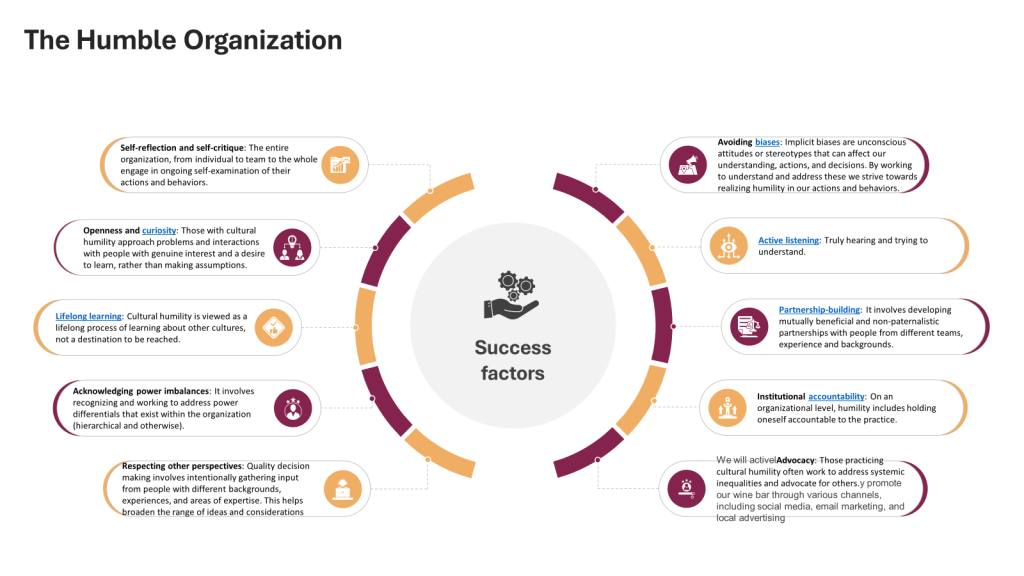
Cultural humility involves several key characteristics and behaviors:
Self-reflection and self-critique: The entire organization, from individual to team to the whole engage in ongoing self-examination of their actions and behaviors.
Openness and curiosity: Those with cultural humility approach problems and interactions with people with genuine interest and a desire to learn, rather than making assumptions.
Lifelong learning: Cultural humility is viewed as a lifelong process of learning about other cultures, not a destination to be reached.
Acknowledging power imbalances: It involves recognizing and working to address power differentials that exist within the organization (hierarchical and otherwise).
Respecting other perspectives: Quality decision making involves intentionally gathering input from people with different backgrounds, experiences, and areas of expertise. This helps broaden the range of ideas and considerations
Avoiding biases: Implicit biases are unconscious attitudes or stereotypes that can affect our understanding, actions, and decisions. By working to understand and address these we strive towards realizing humility in our actions and behaviors.
Partnership-building: It involves developing mutually beneficial and non-paternalistic partnerships with people from different teams, experience and backgrounds.
Institutional accountability: On an organizational level, humility includes holding oneself accountable to the practice.
Advocacy: Those practicing cultural humility often work to address systemic inequalities and advocate for others.
Leadership Behaviors
Humble leaders exhibit the following behaviors:
Admitting limitations and mistakes
Appreciating others’ strengths and contributions
Being open to new ideas and feedback
Listening before speaking
Encouraging employees to keep trying and viewing mistakes as learning opportunities
Taking responsibility for employees’ mistakes
Modeling openness and fallibility
Maintaining a collective focus
Cultural Attributes
A work culture with humble leadership is characterized by:
Openness to new ideas and continuous learning
Appreciation for diverse perspectives and contributions
Reduced fear of taking interpersonal risks
High-quality interpersonal relationships
Collective humility within teams
Trust between leaders and team members
Inclusivity and reduced power differentials
Emphasis on growth and development rather than blame
Employee Perceptions and Behaviors
In a humble environment, employees are more likely to:
Feel safe expressing themselves and taking risks
Believe in their ability to contribute constructively
Engage in voice behaviors and share ideas
Show themselves freely without fear of adverse consequences
Imitate leaders in showing their own shortcomings and appreciating others
Perceive making mistakes as acceptable
Experience increased job satisfaction and reduced turnover intentions
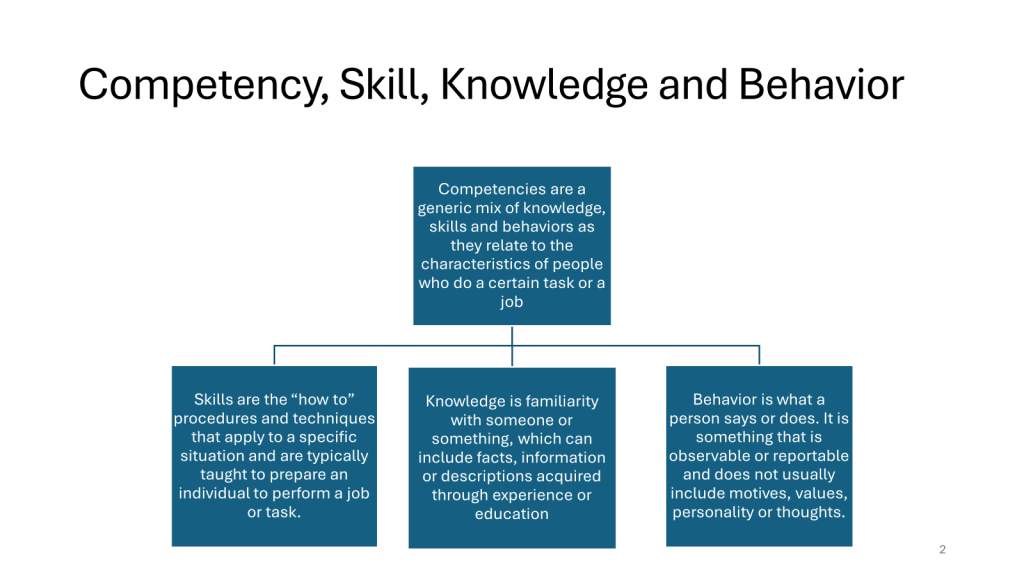
Organizational competencies are the skills, abilities, and knowledge that allow an organization to be successful in achieving its goals. They form the foundation of an organization’s culture, values, and strategy.
Organizational competencies can be broadly divided into two main categories:
Technical Competencies
Non-Technical Competencies (also called General Competencies)
Technical Competencies
Technical competencies are specific skills and knowledge required to perform particular jobs or functions within an organization. They are directly related to the core business activities and technical aspects of the work. For technical competencies:
They cover various fields of expertise relevant to the specific work carried out in the organization
They are at the heart of what the organizational employees do
They allow an organization to produce products or services efficiently and effectively
They often require ongoing training and reinforcement to stay current
Non-Technical Competencies
Non-technical competencies, also known as general competencies or soft skills, are broader skills and attributes that are important across various roles and functions. They include:
These competencies are crucial for effective interaction, collaboration, and overall organizational success.
Organizational Competencies for Validation (an example)
For an organization focusing on validation the following competencies would be particularly relevant:
Technical Competencies
Skill Area
Key Aspects
Proficiency Levels
Beginner
Intermediate
Advanced
Expert
General CQV Principles
Modern process validation and
guidance
Validation design and how to
reduce variability
Able
to review a basic protocol
Able
to review/approve Validation document deliverables.
Understands
the importance of a well-defined URS.
Able to be QEV lead in a small
project
Able to answer questions and
guide others in QEV
Participates in process
improvement
Able to review and approve
RTM/SRs
Able
to be QEV lead in a large project project
Trains
and mentors others in QEV
Leads
process improvement initiatives
Able
to provide Quality oversight on the creation of Validation Plans for complex
systems and/or projects
Sets
overall CQV strategy
Recognized
as an expert outside of JEB
Facilities
and Utilities
Oversee Facilities, HVAC and
Controlled Environments
Pharma Water and WFI
Pure Steam, Compressed Air,
Medical Gases
Understands
the principles and GMP requirements
Applies the principles,
activities, and deliverables that constitute an efficient and acceptable
approach to demonstrating facility fitness-for-use/qualification
Guide
the Design to Qualification Process for new facilities/utilities or the
expansion of existing facilities/utilities
Able
to establish best practices
Systems
and Equipment
Equipment, including Lab
equipment
Understands
the principles and GMP requirements
Principles, activities, and
deliverables that constitute an efficient and acceptable approach to
demonstrating equipment fitness-for-use/qualification
Able
to provide overall strategy for large projects
Able
to be QEV lead on complex systems and equipment.
Able
to establish best practices
Computer
Systems and Data Integrity
Computer lifecycle, including
validation
Understands
the principles and GMP requirements
Able to review CSV documents
Apply GAMP5 risk
based approach
Day-to-day quality oversight
Able
to provide overall strategy for a risk based GAMP5 approach to computer
system quality
Able
to establish best practices
Asset Lifecycle
Quality
oversight and decision making in the lifecycle asset lifecycle: Plan,
acquire, use, maintain, and dispose of assets
Can
use CMMS to look up Calibrations, Cal schedules and PM schedules
Quality
oversight of asset lifecycle decisions
Able
to provide oversight on Cal/PM frequency
Able
to assess impact to validated state for corrective WO’s.
Able
to establish asset lifecycle for new equipment classes
Establish
risk-based PM for new asset classes
verification
Establish
asset lifecycle approach
Serves
as the organization’s authority on GMP requirements related to asset
management in biotech facilities
Cleaning, Sanitization and Sterilization Validation
Evaluate
and execute cleaning practices, limit calculations, scientific rationales,
and validation documents
Manage
the challenges of multi-product facilities in the establishment of limits,
determination of validation strategies, and maintaining the validated state
Differentiate
the requirements for cleaning and sterilization validation when using manual,
semi-automatic, and automatic cleaning technologies
Review
protocols
Identify
and characterize potential residues including product, processing aids,
cleaning agents, and adventitious agents
Understand
Sterilization principles and requirements
Create,
review and approve scientifically sound rationales, validation protocols, and
reports
Manage
and remediate the pitfalls inherent in cleaning after the production of
biopharmaceutical and pharmaceutical products
Define
cleaning/sterilization validation strategy
Implements
a lifecycle approach to validation, ensuring continued process verification
Implements
a lifecycle approach to validation, ensuring continued process verification
Quality Risk Management
Apply
QRM principles according to Q9
Understands
basic risk assessment principles
Can
identify potential hazards and risks
Familiar
with risk matrices and scoring methods
Participate
in a risk assessment
Conducts
thorough risk assessments using established methodologies
Analyzes
risks quantitatively and qualitatively
Prioritizes
risks based on likelihood and impact
Determine
appropriate tools
Establish
risk-based decision-making tools
Leads
complex risk assessments across multiple areas
Develops
new risk assessment methodologies
Provides
expert guidance on risk analysis techniques
Serves
as the organization’s authority on regulatory requirements and expectations
related to quality risk management
Builds
a proactive risk culture across the organization, fostering risk awareness at
all levels
Process Validation
Demonstrating
that the manufacturing process can consistently produce a product that meets
predetermined specifications and quality attributes.
Understanding
of GMP principles and regulatory requirements
Basic
understanding of GMP principles and regulatory requirements
Can
independently write, approve and execute validation protocols for routine
processes
Ability to develop validation master plans
and protocols
Understanding
of critical process parameters (CPPs) and critical quality attributes (CQAs)
Expertise
in designing and implementing complex validation strategies
Ability
to troubleshoot and resolve validation issues
Deep
understanding of regulatory expectations and industry best practices
Leads
cross-functional validation teams for high-impact projects
Develops
innovative validation approaches for novel bioprocesses
Serves
as an organizational authority on validation matters and regulatory
interactions
Reflective learning is a powerful tool that organizations can leverage to build competency and drive continuous improvement. At its core, this approach involves actively analyzing and evaluating experiences and learning processes to enhance understanding and performance across all levels of the organization.
The process of reflective learning begins with individuals and teams taking the time to step back and critically examine their actions, decisions, and outcomes. This introspection allows them to identify what worked well, what didn’t, and why. By doing so, they can uncover valuable insights that might otherwise go unnoticed in the day-to-day rush of business activities.
One of the key benefits of reflective learning is its ability to transform tacit knowledge into explicit knowledge. Tacit knowledge is the unspoken, intuitive understanding that individuals develop through experience. By reflecting on and articulating these insights, organizations can capture and share this valuable wisdom, making it accessible to others and fostering a culture of collective learning.
To implement reflective learning effectively, organizations should create structured opportunities for reflection. This might include regular debriefing sessions after projects, dedicated time for personal reflection, or the use of learning journals. Additionally, leaders should model reflective practices and encourage open and honest discussions about both successes and failures.
It’s important to note that reflective learning is not just about looking back; it’s also about looking forward. The insights gained through reflection should be used to inform future actions and strategies. This forward-thinking approach helps organizations to be more adaptable and responsive to changing circumstances, ultimately leading to improved performance and innovation.
By embracing reflective learning as a core organizational practice, companies can create a dynamic environment where continuous learning and improvement become ingrained in the culture. This not only enhances individual and team performance but also contributes to the overall resilience and competitiveness of the organization in an ever-changing business landscape.
Implement Regular After-Action Reviews
After-action reviews (AARs) or Lessons Learned are critical to provide a structured way for teams to reflect on projects, initiatives, or events. To implement effective AARs:
Schedule them immediately after key milestones or project completions
Focus on what was planned, what actually happened, why there were differences, and what can be learned
Encourage open and honest discussion without blame
Document key insights and action items
Create a Supportive Environment for Reflection
Foster a culture that values and encourages reflection:
Provide dedicated time and space for individual and group reflection
Model reflective practices at the leadership level
Recognize and reward insights gained through reflection
By systematically implementing these practices, organizations can build a strong competency in reflective learning, leading to improved decision-making, innovation, and overall performance. Utilizing a model always helps.
Kolb’s Reflective Model
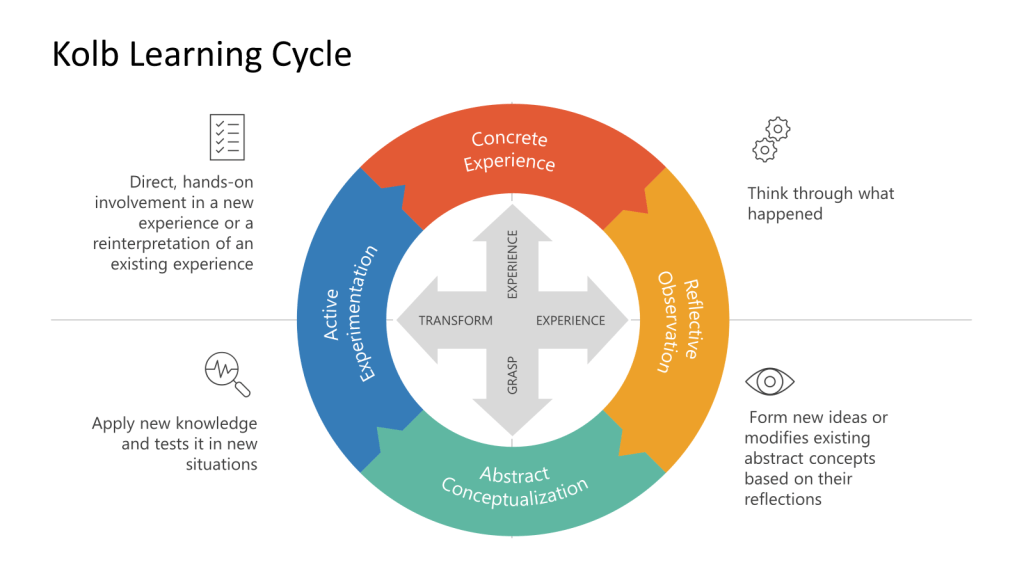
Kolb’s reflective model, also known as Kolb’s experiential learning cycle, is a widely used framework for understanding how people learn from experience. The model consists of four stages that form a continuous cycle of learning:
The Four Stages of Kolb’s Reflective Model
Concrete Experience: This is the stage where the learner actively experiences an activity or situation. It involves direct, hands-on involvement in a new experience or a reinterpretation of an existing experience.
Reflective Observation: In this stage, the learner reflects on and reviews the experience. They think about what happened, considering their feelings and the links to their existing knowledge and skills.
Abstract Conceptualization: Here, the learner forms new ideas or modifies existing abstract concepts based on their reflections. This stage involves analyzing the experience and drawing conclusions about what was learned.
Active Experimentation: In the final stage, the learner applies their new knowledge and tests it in new situations. This involves planning how to put the new learning into practice and experimenting with new approaches.
Create Opportunities for Concrete Experiences: Provide employees with hands-on learning experiences, such as job rotations, simulations, or real-world projects.
Encourage Reflection: Set up regular reflection sessions or debriefings after significant experiences. Encourage employees to keep learning journals or participate in group discussions to share their observations.
Facilitate Conceptualization: Provide resources and support for employees to analyze their experiences and form new concepts. This could involve training sessions, mentoring programs, or access to relevant literature and research.
Support Active Experimentation: Create a safe environment for employees to apply their new knowledge and skills. Encourage innovation and provide opportunities for employees to test new ideas in their work.
Integrate the Model into Learning Programs: Design training and development programs that incorporate all four stages of Kolb’s cycle, ensuring a comprehensive learning experience.
Personalize Learning: Recognize that individuals may have preferences for different stages of the cycle. Offer diverse learning opportunities to cater to various learning styles.
Measure and Iterate: Regularly assess the effectiveness of knowledge management initiatives based on Kolb’s model. Use feedback and results to continuously improve the learning process.
By incorporating Kolb’s reflective model into knowledge management practices, we can create a more holistic and effective approach to learning and development. This can lead to improved knowledge retention, better application of learning to real-world situations, and a more adaptable and skilled workforce.
– Expands on Kolb’s work – Recognizes various responses to potential learning situations
Backward Design
Grant Wiggins, Jay McTighe
1. Identify desired results 2. Determine acceptable evidence 3. Plan learning experiences and instruction
– Starts with learning outcomes – Focuses on designing effective learning experiences
Applying the Experiential Learning Model to Validation Competencies
To apply Kolb’s experiential learning model to building an organization’s competency for validation, we can structure the process as follows:
Concrete Experience
Have employees participate in actual validation activities or simulations
Provide hands-on training sessions on validation techniques and tools
Assign validation tasks to teams in real projects
Reflective Observation
Conduct debriefing sessions after validation activities
Encourage employees to keep validation journals or logs
Facilitate group discussions to share experiences and observations
Review validation results and outcomes as a team
Abstract Conceptualization
Offer formal training on validation principles, methodologies, and best practices
Encourage employees to develop validation frameworks or models based on their experiences
Analyze validation case studies from other organizations or industries
Create validation guidelines and standard operating procedures
Active Experimentation
Implement new validation approaches in upcoming projects
Encourage employees to propose and test innovative validation methods
Set up pilot programs to trial new validation tools or techniques
Assign employees to different types of validation projects to broaden their skills
To make this process continuous and effective:
Create a validation competency framework with clear learning objectives and skill levels
Develop a mentoring program where experienced team members guide less experienced colleagues
Establish regular knowledge-sharing sessions focused on validation topics
Implement a system for capturing and disseminating lessons learned from validation activities
Use technology platforms to support collaborative learning and information sharing about validation
Regularly assess and update the organization’s validation processes based on learning outcomes
Encourage cross-functional teams to work on validation projects to broaden perspectives
Partner with external experts or organizations to bring in fresh insights and best practices
Recognize and reward employees who demonstrate growth in validation competencies
Integrate validation competency development into performance reviews and career progression paths
By systematically applying Kolb’s model, we can create a robust learning environment that continuously improves our validation capabilities. This approach ensures that employees not only gain theoretical knowledge but also practical experience, leading to a more competent and adaptable workforce.
The article “Why ‘Wisdom Work’ Is the New ‘Knowledge Work'” by Chip Conley at Harvard Business Review discusses the evolving dynamics in the workforce due to significant demographic shifts. As the workforce ages and younger individuals ascend to senior management roles, there is a unique opportunity for companies to harness the intergenerational transfer of wisdom. This transfer can significantly strengthen organizations by leveraging the experience and insights of older employees while integrating the innovative perspectives of younger workers. The article emphasizes that companies that successfully facilitate this exchange will enhance their overall workplace environment and performance.
This approach closely aligns with my thoughts around building expertise, and I found this a very thought provoking article.
Wisdom work involves leveraging the collective experience and insights of employees, leading to more informed and balanced decision-making. Wise leaders consider diverse perspectives and long-term implications, which can result in more sustainable and ethical business practices.
Intergenerational knowledge transfer fosters an environment where creativity and innovation can thrive. Younger employees bring fresh ideas and familiarity with new technologies, while older employees provide context and practical wisdom. This synergy can lead to innovative solutions and improved business processes.
Increased Employee Engagement and Satisfaction
Employees who feel their knowledge and experience are valued are more likely to be engaged and motivated. Wisdom work encourages a culture of mutual respect and continuous learning, which can enhance job satisfaction and reduce turnover rates.
Better Conflict Resolution
Wisdom work promotes the development of soft skills such as empathy, communication, and problem-solving. These skills are crucial for resolving conflicts effectively and maintaining a harmonious workplace. Employees equipped with relational wisdom can navigate interpersonal challenges more smoothly, leading to a more cohesive team environment.
Enhanced Mentorship and Leadership Development
A focus on wisdom work facilitates mentorship opportunities where experienced employees guide and support younger colleagues. This not only helps in the professional development of younger employees but also keeps older employees engaged and valued. Such mentorship can accelerate the growth of leadership skills across the organization.
Organizations that embrace wisdom work are better equipped to adapt to changes and uncertainties. The combined experience of older employees and the adaptability of younger ones create a resilient workforce capable of navigating complex challenges and seizing new opportunities.
Increased Productivity and Performance
The integration of wisdom work can lead to performance enhancements by leveraging the strengths of a diverse workforce. Employees can learn from each other, leading to improved productivity and business outcomes. The exchange of knowledge and skills across generations helps in creating a more competitive and efficient organization.
Fostering a Culture of Lifelong Learning
Wisdom work encourages a culture where learning and development are continuous processes. Employees are motivated to keep updating their skills and knowledge, which is essential for staying relevant in a rapidly changing business environment. This culture of lifelong learning can drive innovation and maintain a competitive edge.
I feel that the numerous benefits that wisdom work can bring to significantly enhance the professional setting really resonate with the concepts behind quality culture. By fostering intergenerational knowledge transfer, organizations can improve decision-making, innovation, employee engagement, conflict resolution, mentorship, adaptability, productivity, and create a culture of lifelong learning.
One of the topics I’m passionate about is exploring the changing landscape of quality management and the challenges we face. The solutions that worked in the past decade won’t be as effective in our current era, marked by post-globalization, capital rationalization, spatial dispersion, shrinking workforces, and an increasing reliance on automation. This transformation calls for a new perspective on quality management, as traditional instincts and strategies may no longer be sufficient. The nature of opportunity and risk has fundamentally changed, and in order to thrive, we need to adapt our approach.
The New Rules of Engagement
In this era of volatility, several key trends are reshaping the business environment:
Post-Globalization: The shift towards localized operations and supply chains.
Capital Rationalization: More stringent allocation of financial resources. This is a huge trend in biotech.
Spatial Dispersion: Decentralized workforces and operations.
Shrinking Workforces: Reduced human resources due to demographic changes.
Dependence on Automation: Increased reliance on technologies like AI, ML, and RPA.
We need to reevaluate how we approach quality management in light of these trends.
Prediction: Anticipating the Future
In a volatile environment, it is crucial to predict and anticipate disruptions. Quality management must shift from being reactive to proactive. This involves:
Advanced Analytics: Utilizing data analytics to anticipate quality issues before they emerge. This necessitates a strong data foundation and the capability to analyze both structured and unstructured data.
Scenario Planning: Developing multiple scenarios to anticipate potential disruptions and their impacts on quality aids in making well-informed strategic decisions and preparing for various contingencies.
Adaptability: Embracing Change
Adaptability is crucial in a constantly changing world. Quality management systems need to be flexible and responsive to new challenges.
Agile Methodologies: Implementing agile practices to allow for quick adjustments to processes and workflows, fostering a culture of experimentation, and learning from failures.
Virtualization of Work: Adapting quality processes to support remote and hybrid work environments involves re-evaluating governance models and ensuring that quality standards are maintained regardless of the location of work.
Resilience: Building Robust Systems
Resilience ensures that organizations can withstand and recover from disruptions. This capability is built on strong foundations:
Robust Systems: Developing systems that can operate effectively under stress. This includes ensuring that automated processes are reliable and that there are contingencies for system failures.
Organizational Culture: Fostering a culture that values resilience and continuous improvement ensures that employees are prepared to handle disruptions and contribute to the organization’s long-term success.
Implementing the New Quality Paradigm
To effectively implement these principles, organizations should consider the following steps:
Assess the Current State: Conduct a comprehensive assessment of existing quality processes, identifying areas for improvement and potential vulnerabilities.
Set Clear Objectives: Establish clear, measurable objectives that align with the principles of prediction, adaptability, and resilience.
Develop a Phased Approach: Implement changes gradually, with clear milestones and measurable outcomes to ensure smooth transitions.
Engage Stakeholders: Involve all relevant stakeholders in the transformation process to ensure alignment and buy-in.
Monitor Progress: Continuously monitor progress against predefined objectives and make adjustments as necessary to stay on track.
Invest in Training: Provide employees with the necessary training and development opportunities to adapt to new technologies and processes.
Conclusion
It is important to change our mindset and strategy. Embracing the principles of prediction, adaptability, and resilience can help organizations navigate the complexities of a volatile environment and position themselves for long-term success. Going forward, it is essential to stay vigilant, flexible, and proactive in our approach to quality management. We must ensure that we not only meet but exceed stakeholder expectations in this rapidly changing world.
Curiosity and Inquiry: Wonder naturally leads to curiosity, prompting individuals to ask questions and seek answers. This inquisitive mindset is a cornerstone of critical thinking, as it drives the exploration of new ideas and the examination of existing knowledge.
Engagement and Motivation: Experiencing awe and wonder can make learning more engaging and enjoyable. This emotional engagement motivates individuals to delve deeper into subjects, enhancing their understanding and retention of information.
Creativity and Imagination: Wonder stimulates the imagination, allowing individuals to think beyond conventional boundaries and explore new possibilities. This creative thinking is essential for problem-solving and innovation. Critical thinking involves analyzing information and synthesizing new ideas, which is facilitated by a sense of wonder.
Empathy and Perspective-Taking: Wonder can also foster empathy by encouraging individuals to see the world from different perspectives. This empathetic understanding is crucial for critical thinking, allowing for a more comprehensive and nuanced analysis of issues.
Mindfulness and Reflection: Engaging with wonder often involves mindfulness and reflection, which are essential for critical thinking. Taking time to contemplate and reflect on experiences allows individuals to process information more thoroughly and develop well-reasoned conclusions. This reflective practice helps shift perspectives and integrate new knowledge.
Building a sense of wonder in the workplace involves creating an environment that encourages curiosity, creativity, and engagement.
1. Encourage Curiosity and Open-Mindedness
Ask Open-Ended Questions: Encourage open-ended questions that stimulate thinking and discussion to promote a culture where employees feel comfortable asking questions and exploring new ideas.
Vocalize Thoughts: Create an environment where employees are encouraged to share their thoughts and ideas openly, without fear of judgment. This helps in fostering a culture of curiosity and innovation.
2. Foster a Positive and Supportive Environment
Effective Communication: Ensure that communication within the organization is open and transparent. This builds trust and collaboration among team members, essential for a positive work environment.
Recognition and Rewards: Acknowledge and celebrate achievements. This boosts morale and encourages employees to continue exploring and innovating.
3. Create Opportunities for Exploration and Learning
Professional Development: Offer opportunities for continuous learning and professional growth. This can include training sessions, workshops, and access to educational resources.
Encourage Experimentation: Allow employees to experiment with new ideas and projects. The freedom to explore can lead to innovative solutions and a greater sense of wonder.
4. Incorporate Sensory Experiences
Engage the Senses: Create a work environment that stimulates the senses. This can include visual displays and frequent and deliberate time on the front line. Engaging the senses can enhance well-being and foster a sense of wonder.
Mindful Practices: Encourage mindfulness practices such as meditation or nature walks. These activities can help employees stay present and appreciate the beauty and complexity of their surroundings.
5. Promote a Culture of Reflection and Feedback
Reflective Space: Provide spaces where employees can reflect and think deeply about their work. This can be a quiet room or a designated area for contemplation.
Feedback Mechanisms: Implement regular feedback sessions where employees can discuss their experiences and insights. This helps continuous improvement and fosters a culture of learning and wonder.
6. Lead by Example
Leadership Engagement: Leaders should model a sense of wonder by being curious, open-minded, and engaged. When leaders demonstrate these qualities, it sets a tone for the entire organization.
Beginner’s Mindset: Encourage leaders and employees to adopt a beginner’s mindset, approach problems and opportunities with fresh eyes, and be open to new possibilities.


 Investigations of a Dog
