
Build Wonder in the Organization

A sense of wonder significantly enhances critical thinking by fostering curiosity, creativity, and deeper engagement with the subject matter.

  1. Curiosity and Inquiry: Wonder naturally leads to curiosity, prompting individuals to ask questions and seek answers. This inquisitive mindset is a cornerstone of critical thinking, as it drives the exploration of new ideas and the examination of existing knowledge.
  2. Engagement and Motivation: Experiencing awe and wonder can make learning more engaging and enjoyable. This emotional engagement motivates individuals to delve deeper into subjects, enhancing their understanding and retention of information.
  3. Creativity and Imagination: Wonder stimulates the imagination, allowing individuals to think beyond conventional boundaries and explore new possibilities. This creative thinking is essential for problem-solving and innovation. Critical thinking involves analyzing information and synthesizing new ideas, which is facilitated by a sense of wonder.
  4. Empathy and Perspective-Taking: Wonder can also foster empathy by encouraging individuals to see the world from different perspectives. This empathetic understanding is crucial for critical thinking, allowing for a more comprehensive and nuanced analysis of issues.
  5. Mindfulness and Reflection: Engaging with wonder often involves mindfulness and reflection, which are essential for critical thinking. Taking time to contemplate and reflect on experiences allows individuals to process information more thoroughly and develop well-reasoned conclusions. This reflective practice helps shift perspectives and integrate new knowledge.
Photo by Magda Ehlers: https://www.pexels.com/photo/brown-monkey-photo-767197/

Building a sense of wonder in the workplace involves creating an environment that encourages curiosity, creativity, and engagement.

1. Encourage Curiosity and Open-Mindedness

  • Ask Open-Ended Questions: Encourage open-ended questions that stimulate thinking and discussion to promote a culture where employees feel comfortable asking questions and exploring new ideas.
  • Vocalize Thoughts: Create an environment where employees are encouraged to share their thoughts and ideas openly, without fear of judgment. This helps in fostering a culture of curiosity and innovation.

2. Foster a Positive and Supportive Environment

  • Effective Communication: Ensure that communication within the organization is open and transparent. This builds trust and collaboration among team members, essential for a positive work environment.
  • Recognition and Rewards: Acknowledge and celebrate achievements. This boosts morale and encourages employees to continue exploring and innovating.

3. Create Opportunities for Exploration and Learning

  • Professional Development: Offer opportunities for continuous learning and professional growth. This can include training sessions, workshops, and access to educational resources.
  • Encourage Experimentation: Allow employees to experiment with new ideas and projects. The freedom to explore can lead to innovative solutions and a greater sense of wonder.

4. Incorporate Sensory Experiences

  • Engage the Senses: Create a work environment that stimulates the senses. This can include visual displays and frequent and deliberate time on the front line. Engaging the senses can enhance well-being and foster a sense of wonder.
  • Mindful Practices: Encourage mindfulness practices such as meditation or nature walks. These activities can help employees stay present and appreciate the beauty and complexity of their surroundings.

5. Promote a Culture of Reflection and Feedback

  • Reflective Space: Provide spaces where employees can reflect and think deeply about their work. This can be a quiet room or a designated area for contemplation.
  • Feedback Mechanisms: Implement regular feedback sessions where employees can discuss their experiences and insights. This helps continuous improvement and fosters a culture of learning and wonder.

6. Lead by Example

  • Leadership Engagement: Leaders should model a sense of wonder by being curious, open-minded, and engaged. When leaders demonstrate these qualities, it sets a tone for the entire organization.
  • Beginner’s Mindset: Encourage leaders and employees to adopt a beginner’s mindset, approach problems and opportunities with fresh eyes, and be open to new possibilities.
Conducive Culture

Another building block to Quality Culture is conducive culture, which is an environment that promotes employee productivity, satisfaction, and well-being. There is a huge overlap between the concepts of a Just and Conducive Culture.

  1. Physical Comfort and Resources: Ensuring employees have a comfortable physical environment and the necessary resources to perform their tasks effectively.
  2. Open Communication: Encouraging transparent and open communication between employees and management helps build trust and fosters a sense of teamwork.
  3. Recognition and Reward: Regularly acknowledging and rewarding individual contributions can maintain high levels of employee motivation and engagement.
  4. Diversity, Equity, and Inclusion (DEI): Promoting a culture that values diversity, equity, and inclusion can lead to a more respectful and collaborative workplace, enhancing employee morale and productivity.
  5. Work-Life Balance: Supporting employees in achieving a healthy work-life balance through flexible working hours and telecommuting opportunities can increase their engagement and motivation.
  6. Positive Organizational Values: Establishing and operationalizing core values that align with collaboration, learning, and adapting (CLA) can create a supportive and innovative work environment.
  7. Feedback and Development: Regular, constructive feedback and opportunities for professional growth help employees feel valued and supported in their roles.
  8. Team Culture: Promoting teamwork and collective responsibility for outcomes can enhance the organization’s overall performance and success.

A conducive culture fosters innovation, collaboration, and inclusivity, all vital elements of a quality culture.

Fostering Critical Thinking

As a leader, fostering critical thinking in my team and beyond is a core part of my job. Fostering critical thinking means an approach that encourages open-mindedness, curiosity, and structured problem-solving.

Encourage Questioning and Healthy Debate

It is essential to create an environment where team members feel comfortable questioning assumptions and engaging in constructive debates. Encourage them to ask “why” and explore different perspectives. This open dialogue promotes deeper thinking and prevents groupthink.

Foster a Culture of Curiosity

Inspire your team to ask questions and seek deeper understanding. Role model this behavior by starting meetings with thought-provoking “what if” scenarios or sharing your own curiosities. Celebrate curiosity and reward those who think outside the box.

Assign Stretch Assignments

Provide your team with challenging tasks that push them beyond their comfort zones. These stretch assignments force them to think critically, analyze information from multiple angles, and develop innovative solutions.

Promote Diverse Perspectives

Encourage diversity of thought within your team. Diverse backgrounds, experiences, and viewpoints can challenge assumptions and biases, leading to a more comprehensive understanding and better decision-making.

Engage in Collaborative Problem-Solving

Involve your team in decision-making processes and problem-solving exercises. Techniques like role reversal debates, where team members argue a point they disagree with, can help them understand different perspectives and refine their argumentative skills.

Provide Training and Resources

Offer training sessions on critical thinking techniques, such as SWOT analysis, root cause analysis, and logical fallacies. Equip your team with the tools and frameworks they need to think critically.

Lead by Example

As a leader, model critical thinking behaviors. Discuss your thought processes openly, question your assumptions, and show the value of critical evaluation in real-time decision-making. Your team will be more likely to emulate these habits.

Encourage Continuous Learning

Recommend learning resources, such as courses, articles, and books from diverse fields. Continuous learning can broaden perspectives and foster multifaceted thinking.

Embrace Feedback and Mistakes

Establish feedback loops within the team and create a safe environment where mistakes are treated as learning opportunities. Receiving and giving feedback helps refine understanding and overcome biases.

Implement Role-Playing Scenarios

Use role-playing scenarios to simulate real-world challenges. This helps team members practice critical thinking in a controlled environment, enhancing their ability to apply these skills in actual situations.

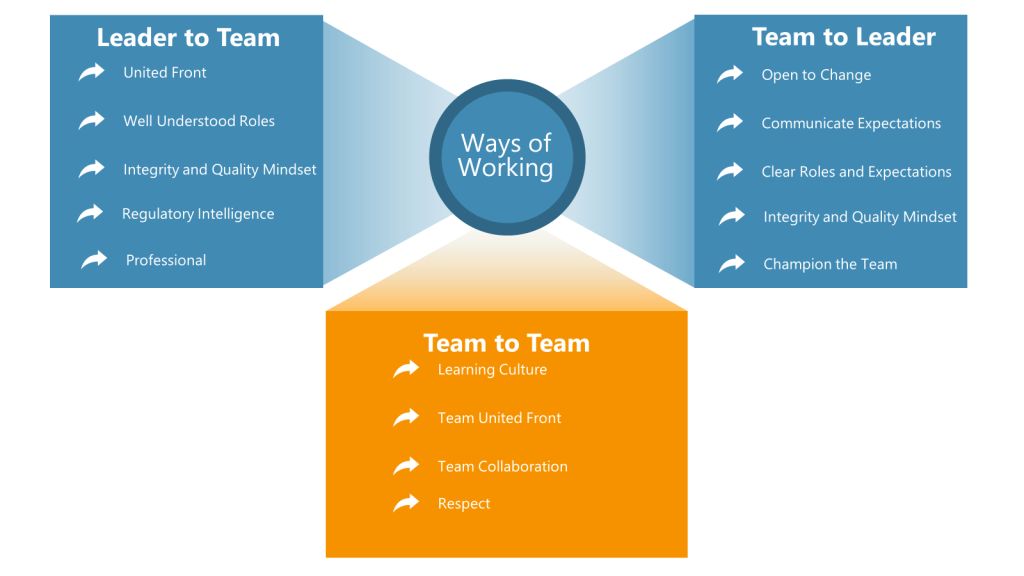
Build Into the Team Charter

Building these expectations into the team charter holds you and your team accountable.

Value: Regulatory Intelligence

Definition: Stay current on industry regulations and guidances. 

Desired Behaviors:

  1. I will dedicate time to reading industry-related guidance and regulation publications related to my job.
  2. I will share publications that I find interesting or applicable to my job with the team
  3. I will present to the team on at least one topic per year to share learnings with the team (or wider organization)

Value: Learning Culture

Definition: Share lessons learned from projects so the team can grow together and remain aligned.  Engage in knowledge-sharing sessions.

Desired Behaviors:

  1. I will share lessons learned from each project with the wider team via the team channel and/or weekly team meeting.
  2. I will encourage team members to openly share their experiences, successes, and challenges without fear of judgement.
  3. I will update RAID log with decisions made by the team.
  4. I will identify possible process improvements and update the process improvement tracker.

Value: Team Collaboration

Definition: Willingness to help teammates when they reach out for input/help

Desired Behaviors:

  1. I will be supportive of my teammate’s requests for assistance
  2. I will engage and offer my SME advice when asked or help identify another SME to assist 
  3. I will not ignore requests for input/help
  4. I will contribute to an environment where teammates can request help

Quality and a Just Culture

It is fascinating that for all the discussion around quality culture, which borrows from Safety II and other safety movements/submovements, we’ve largely avoided using the term justice, which is so prevalent in certain areas of the safety world. One can replace quality with justice and talk about many of the same things.

Both attempt to realize Deming’s Point 8—to drive out fear—which I consider Deming’s most radical proposition.

We really should see them as building blocks. A just culture enables the open reporting and analysis of errors necessary for a quality culture to identify areas for improvement. The two cultures are complementary—a robust quality program requires psychological safety fostered by a just culture. However, a quality culture has broader aims beyond responding to errors or safety lapses. We cannot have a Quality Culture without a Just Culture.

Psychological safety creates an environment where staff can speak up, enabling a just culture. A just culture defines the balanced accountability approach for responding to errors and safety events. A quality culture is a broader concept that drives improvement across the organization, relying on the foundation of a just culture.

But I really wish we used the term justice more. Promoting justice is an activity I wish we took more seriously as a profession.

Utilizing the Nadler-Tushman Model for Culture of Quality Initiatives

The Nadler-Tushman Congruence model is a diagnostic tool developed by organizational theorists David A. Nadler and Michael L. Tushman in the early 1980s. It analyzes and identifies the root causes of performance issues within an organization and can be a helpful model for diagnosing and improving a culture of quality.

Nadler-Tushman Congruence Framework

The Nadler-Tushman Congruence model is based on several assumptions that are common to modern organizational diagnostic models:

  • Organizations are open social systems within a larger environment.
  • Organizations are dynamic entities (i.e., change is possible and occurs).
  • Organizational behavior occurs at the individual, group, and systems level.
  • Interactions occur between the individual, group, and systems levels of organizational behavior

The model is based on the premise that an organization can achieve high performance when four key elements – work, people, structure, and culture – are aligned or congruent with each other. These elements are defined as:

Work

This refers to the core tasks and activities that the organization performs to achieve its goals. It includes the processes, workflows, and the skills/knowledge required to carry out the work effectively.

People

This element focuses on the individuals within the organization, their skills, knowledge, personalities, work styles, and how well they fit with the work requirements.

Structure

This encompasses the formal aspects of the organization, such as its hierarchy, reporting lines, policies, procedures, and systems that govern how work gets done.

Culture

This includes the shared values, beliefs, behaviors, and norms that shape how people interact and work together within the organization. The basic premise is that when these four elements are well-aligned and congruent, the organization operates smoothly and performs at a high level. However, a misalignment or incongruence among these elements can lead to friction, inefficiencies, and poor organizational performance.

Use

The Nadler-Tushman Congruence model can be effectively used for root cause analysis of organizational performance issues by following these steps:

  1. Identify the symptoms or performance gaps within the organization, such as low productivity, high employee turnover, quality issues, etc.
  2. Analyze the four key elements of the model – work, people, structure, and culture – to understand their current state within the organization.
  3. Assess the level of congruence or alignment among these four elements by examining their interactions in pairs:
  • Work and people: Do employees have the right skills/knowledge for the work? Is the work meaningful to them?
  • Work and structure: Does the organizational structure support efficient work processes?
  • Structure and people: Does the structure enable or hinder employee engagement/motivation?
  • People and culture: Are employee values/behaviors aligned with the organizational culture?
  • Culture and work: Does the culture facilitate or impede effective work practices?
  • Structure and culture: Is there harmony or conflict between the structure and cultural norms?
  1. Identify areas of incongruence or misalignment among these elements that could be the root causes of the performance issues. For example, a misalignment between people’s skills and work requirements or between an innovative culture and a rigid hierarchical structure.
  2. Conduct a root cause analysis by further investigating the specific reasons behind the identified incongruences using techniques like fishbone diagrams or Why-Why analysis.
  3. Develop an action plan to address the root causes by realigning the incongruent elements. This may involve changes to work processes, training programs, organizational policies, cultural initiatives, etc.

The key strength of the Nadler-Tushman model is its ability to provide a comprehensive framework for diagnosing performance problems by examining the interactions among the critical organizational elements. This systemic approach helps uncover root causes that may be overlooked in a siloed analysis of individual elements.