Quality Review

Maintaining high-quality products is paramount, and a critical component of ensuring quality is implementing a robust review of work by a second or third person, a peer review, and/or quality review—also known as a work product review process. Like many tools, it can be underutilized. It also gets to the heart of the question of Quality Unit oversight.

Introduction to Work Product Review

Work product review systematically evaluates the output from various processes or tasks to ensure they meet predefined quality standards. This review is crucial in environments where the quality of the final product directly impacts safety and efficacy, such as in pharmaceutical manufacturing. Work product review aims to identify any deviations or defects early in the process, allowing for timely corrections and minimizing the risk of non-compliance with regulatory requirements.

Criteria for Work Product Review

To ensure that work product reviews are effective, several key criteria should be established:

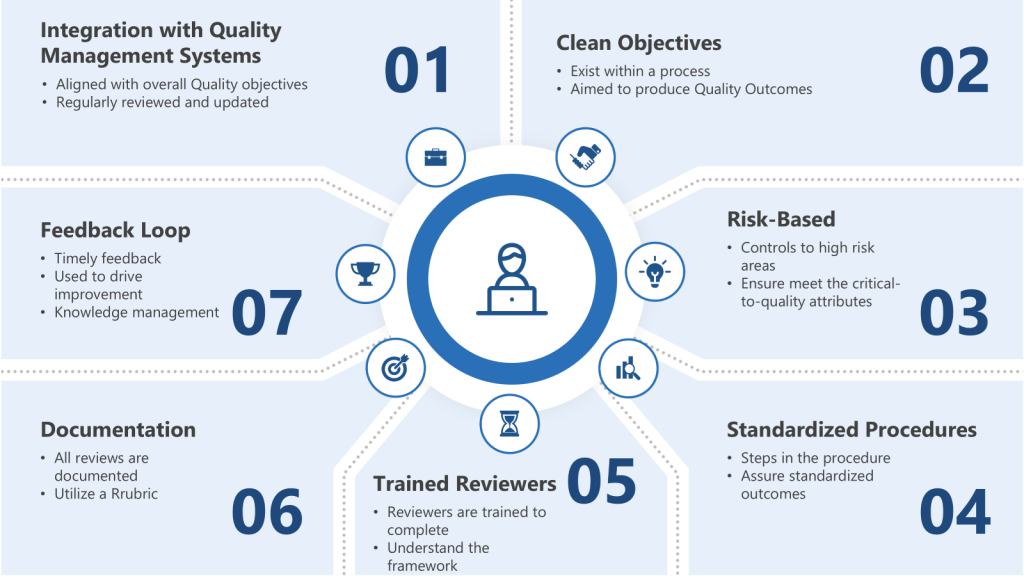
  1. Integration with Quality Management Systems: Integrate risk-based thinking into the quality management system to ensure that work product reviews are aligned with overall quality objectives. This involves regularly reviewing and updating risk assessments to reflect changes in processes or new information.
  2. Clear Objectives: The review should have well-defined objectives that align with the process they exist within and regulatory requirements. For instance, in pharmaceutical manufacturing, these objectives might include ensuring that all documentation is accurate and complete and that manufacturing processes adhere to GMP standards.
  3. Risk-Based: Apply work product reviews to areas identified as high-risk during the risk assessment. This ensures that resources are allocated efficiently, focusing on processes that have the greatest potential impact on quality.
  4. Standardized Procedures: Standardized procedures should be established for conducting the review. These procedures should outline the steps involved, the reviewers’ roles and responsibilities, and the criteria for accepting or rejecting the work product.
  5. Trained Reviewers: Reviewers should be adequately trained and competent in the subject matter. This means understanding not just the deliverable being reviewed but the regulatory framework it sits within and how it applies to the specific work products being reviewed in a GMP environment.
  6. Documentation: All reviews should be thoroughly documented. This documentation should include the review’s results, any findings or issues identified, and actions taken to address these issues.
  7. Feedback Loop: There should be a mechanism for feedback from the review process to improve future work products. This could involve revising procedures or providing additional training to personnel.
Bridging the Gap Between Work-as-Imagined, Work-as-Prescribed, and Work-as-Done

Work product review is a systematic process that evaluates the output from various tasks to ensure they meet predefined quality standards connecting to work-as-imagined, work-as-prescribed, and work-as-done. Work product review serves as a bridge between these concepts by systematically evaluating the output of work processes. Here’s how it connects:

  • Alignment with Work-as-Prescribed: Work product review ensures that outputs comply with established standards and procedures (work-as-prescribed), helping to maintain regulatory compliance and quality standards.
  • Insight into Work-as-Done: Through the review process, organizations gain insight into how work is actually being performed (work-as-done). This helps identify any deviations from prescribed procedures and allows for adjustments to improve alignment between work-as-prescribed and work-as-done.
  • Closing the Gap with Work-as-Imagined: By documenting and addressing discrepancies between work-as-imagined and work-as-done, work product review facilitates communication and feedback that can refine policies and procedures. This helps to bring work-as-imagined closer to the realities of work-as-done, improving the effectiveness of quality oversight.

Work product review is essential for ensuring that the quality of work outputs aligns with both prescribed standards and the realities of how work is actually performed. By bridging the gaps between work-as-imagined, work-as-prescribed, and work-as-done, organizations can enhance their quality management systems and maintain high standards of quality, safety and efficacy.

Aligning to the Role of Quality Unit Oversight

While work product review does not guarantee Quality Unit Oversight, it is a potential control to ensure this oversight.

In the pharmaceutical industry, the Quality Unit plays a pivotal role in ensuring drug products’ safety, efficacy, and quality. It oversees all quality-related aspects, from raw material selection to final product release. However, the Quality Unit must be enabled appropriately and structured within the organization to effectively exercise its authority and fulfill its responsibilities. This blog post explores what it means for a Quality Unit to have the necessary authority and how insufficient implementation of its responsibilities can impact pharmaceutical manufacturing.

Responsibilities of the Quality Unit

Establishing and Maintaining the Quality System: The Quality Unit must set up and continuously update the quality management system to ensure compliance with GxPs and industry best practices.

Auditing and Compliance: Conduct internal audits to ensure adherence to policies and procedures, and report quality system performance metrics.

Approving and Rejecting Components and Products: The Quality Unit has the authority to approve or reject components, drug products, and packaging materials based on quality standards.

Investigating Nonconformities: Ensuring thorough investigations into production errors, discrepancies, and complaints related to product quality.

Keeping Management Informed: Reporting on product, process, and system risks, as well as outcomes of regulatory inspections.

What It Means for a Quality Unit to Be Enabled

For a Quality Unit to be effectively enabled, it must have:

  • Independence: The Quality Unit should operate independently of production units to avoid conflicts of interest and ensure unbiased decision-making.
  • Authority: It must have the authority to approve or reject the work product without undue influence from other departments.
  • Resources: Adequate personnel are essential for conducting the quality unit functions.
  • Documentation and Procedures: Clear, documented procedures outlining responsibilities and processes are crucial for maintaining consistency and compliance.

Insufficient Implementation of Responsibilities

When a Quality Unit insufficiently implements its responsibilities, it can lead to significant issues, including:

  • Regulatory Noncompliance: Failure to adhere to GxPs and regulatory standards can result in regulatory action.
  • Product Quality Issues: Inadequate oversight can lead to the release of substandard products, posing risks to patient safety and public health.
  • Lack of Continuous Improvement: Without effective quality systems in place, opportunities for process improvements and innovation may be missed.

The Quality Unit is the backbone of pharmaceutical manufacturing, ensuring that products meet the highest standards of quality and safety. By understanding the Quality Unit’s responsibilities and ensuring it has the necessary authority and resources, pharmaceutical companies can maintain compliance, protect public health, and foster a culture of continuous improvement. Inadequate implementation of these responsibilities can have severe consequences, emphasizing the importance of a well-structured and empowered Quality Unit.

By understanding these responsibilities, we can take a risk-based approach to applying quality review.

When to Apply Quality Review as Work Product Review

Work product review by Quality should be applied at critical stages to guarantee critical-to-quality attributes, including adherence to the regulations. This should be a risk-based approach. As such, it should be identified as controls in a living risks assessment and adjusted (add more, remove where unnecessary) as appropriate.

Closely scrutinize the responsibilities of the Quality Unit in the regulations to ensure all are met.

Best Practices in Quality Review

Rubrics are a great way to standardize quality reviews. If it is important enough to require a work review, it is important enough to standardize. The process owner should develop and maintain these rubrics with an appropriate group of stakeholder custodians. This is a key part of knowledge management. Having this cross-functional perspective on the output and what quality looks like is critical. This rubric should include:

  • Definition of prescribed work and the intended output that is being reviewed
  • Potential outcomes related to critical attributes, including definitions of technical accuracy
  • Methods and techniques used to generate the outcome
  • Operating experience and lessons learned
  • Risks, hazards, and user-centered design considerations
  • Requirements, standards, and code compliance
  • Planning, oversight, and acceptance testing
  • Input data and sources
  • Assumptions
  • Documentation required
  • Reviews and approvals required
  • Program or procedural obstacles to desired performance
  • Surprise situations, for example, unanticipated risk factors, schedule or scope changes, and organizational issues
  • Engineering human performance tool(s) applicable to activities being reviewed.

The rubric should have an assessment component, and that assessment should feed back into the originator’s qualified state.

Work product reviews must be early enough to allow feedback into the normal work for repetitive tasks. This should lead to gates in processes, quality-on-the-floor, or better-trained supervisors performing better and more effective reviews. This feedback should always be to the responsible person – the originator—and should be, wherever possible, face-to-face feedback to resolve the particular issues identified. This dialogue is critical.

Conclusion

Work product review is a powerful tool for enhancing quality oversight. By aligning this process with the responsibilities of the Quality Unit and implementing best practices such as standardized rubrics and a risk-based approach, companies can ensure that their products meet the highest standards of quality and safety. Effective work product review not only supports regulatory compliance but also fosters a culture of continuous improvement, which is essential for maintaining excellence in the pharmaceutical industry.
Worker’s Empowerment

Empowerment is a foundational element of a quality culture, where workers are entrusted with the authority to make decisions, initiate actions, and take responsibility for the outcomes of their work. This approach not only enhances job satisfaction and productivity but also fosters a culture of autonomy and participation, which is essential for achieving high organizational performance. However, the concept of empowerment has sometimes been misinterpreted within quality management frameworks such as Total Quality Management (TQM), Lean, and Six Sigma. In these contexts, empowerment rhetoric is occasionally used to justify increased work demands and managerial oversight, rather than genuinely empowering workers to contribute to quality improvements. A true quality culture, therefore, requires a genuine commitment to empowering workers, ensuring that they have the autonomy to drive continuous improvement and innovation.

History of Worker Empowerment

The concept of empowerment has its roots in social movements, including the civil rights and women’s rights movements, where it was used to describe the process of gaining autonomy and self-determination for marginalized groups. In the context of management, empowerment gained prominence in the 1980s and 1990s as a way to improve organizational performance by engaging workers more effectively.

Several management thinkers have discussed and advocated for worker empowerment, contributing significantly to the development of this concept. Here are some key figures and their contributions:

Mary Parker Follett

    • Autonomy and Collective Power: Follett emphasized the importance of giving workers autonomy to complete their jobs effectively. She believed that when workers have the freedom to work independently, they become happier, more productive, and more engaged. Follett’s “power with” principle suggests that power should be shared among many, rather than concentrated in a few hands, fostering a collaborative environment.
    • Collaboration and Flexibility: Follett advocated for establishing personal ownership of company goals while allowing flexibility in achieving them. This approach encourages agile problem-solving and creative solutions that benefit the business.

    Tom Peters

      • Self-Managing Teams: Peters has been a strong advocate for creating self-managing teams where leadership roles rotate among members. He emphasizes the importance of listening to workers and believing in their unlimited potential. Peters’ philosophy includes empowering front-line staff to act as business teams, which can significantly enhance organizational performance.
      • Empowerment through Leadership: Peters suggests that managers should be retrained to become listeners rather than talkers, fostering an environment where every worker feels valued and empowered to contribute.

      W. Edwards Deming

        • Involvement and Autonomy: Deming’s 14 Points for Management include principles that support worker empowerment, such as removing barriers to pride of workmanship and encouraging collaboration across departments. These principles aim to create an environment where workers feel valued and empowered to improve processes.
        • Continuous Improvement: Deming’s emphasis on continuous improvement processes, like kaizen, involves worker participation, which can be seen as a form of empowerment. However, it is crucial to ensure that such participation is genuine and not merely rhetorical.

        Rosabeth Moss Kanter

          • Change Management: Kanter’s change management theory emphasizes creating a collaborative and transparent work environment. Her approach involves empowering worker by encouraging them to speak up, team up, and continuously work towards positive change within the organization.
          • Empowerment through Participation: Kanter’s principles promote worker engagement and loyalty by involving them in organizational changes and decision-making processes.

          Elton Mayo

            • Human Relations Theory: Mayo’s work highlights the importance of social and relational factors in motivating workers. While not directly focused on empowerment, his theory suggests that workers are more motivated by attention and camaraderie than by monetary rewards alone. This perspective supports the idea that empowering workers involves recognizing their social needs and fostering a supportive work environment.

            These thinkers have contributed to the understanding and implementation of worker empowerment by emphasizing autonomy, collaboration, and the importance of recognizing employee contributions. Their ideas continue to influence management practices today.

            Dimensions of Empowerment

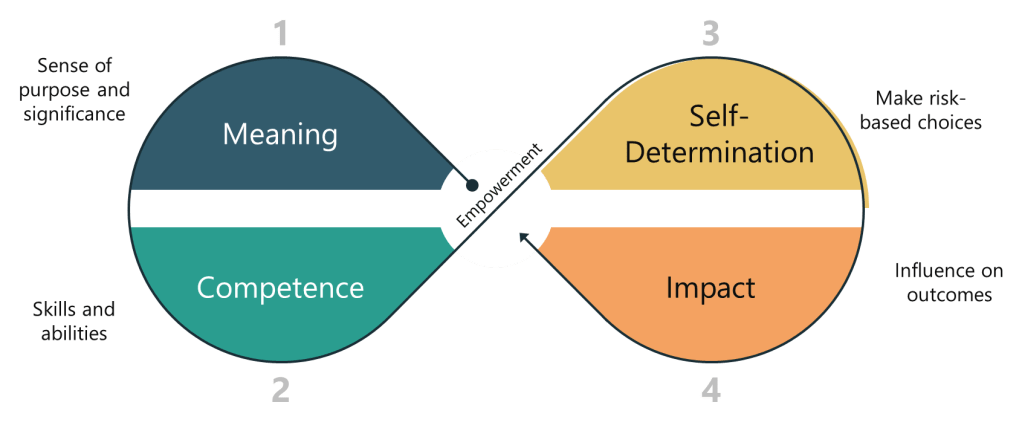
            Empowerment can be understood through several key dimensions:

            • Meaning: This refers to the sense of purpose and significance that employees derive from their work. When employees feel that their work is meaningful, they are more likely to be motivated and engaged.
            • Competence: This dimension involves the skills and abilities that employees need to perform their jobs effectively. Empowerment requires that employees have the necessary competencies to make decisions and take actions.
            • Self-Determination: This is the ability of employees to make choices and decisions about their work. Self-determination is crucial for empowerment, as it allows employees to feel in control of their tasks and outcomes.
            • Impact: This dimension refers to the influence that employees have on organizational outcomes. When employees feel that their actions can make a difference, they are more likely to be empowered and motivated.
            Four dimensions of empowerment

            Implementation Practices

            Implementing empowerment effectively requires several key practices:

            1. Clear Communication: Employees need clear expectations and goals to understand how their work contributes to the organization’s objectives.
            2. Training and Development: Providing employees with the necessary skills and knowledge to make informed decisions is essential for empowerment.
            3. Autonomy and Decision-Making Authority: Employees should have the freedom to make decisions within their scope of work.
            4. Feedback and Recognition: Regular feedback and recognition of employee contributions help reinforce empowerment by acknowledging their impact.

            Deming’s Involvement in Worker Empowerment

            W. Edwards Deming, a pioneer in quality management, emphasized the importance of employee involvement and empowerment through his 14 Points for Management. Specifically:

            • Point 3: Cease dependence on inspection to achieve quality. Eliminate the need for inspection on a mass basis by building quality into the product in the first place. This point encourages organizations to empower workers by giving them the tools and training needed to ensure quality during production.
            • Point 9: Break down barriers between departments. People in research, design, sales, and production must work as a team to foresee problems of production and in use that may be encountered with the product or service. This emphasizes collaboration and cross-functional teamwork, which is a form of empowerment.
            • Point 12: Remove barriers that rob the hourly worker of his right to pride of workmanship. The responsibility of supervisors must be changed from sheer numbers to quality. This point directly addresses the need to empower workers by removing obstacles that prevent them from taking pride in their work.

            Deming’s philosophy aligns with genuine empowerment by focusing on building quality into processes, fostering teamwork, and recognizing the value of worker pride and autonomy.

            Denison and Organizational Culture

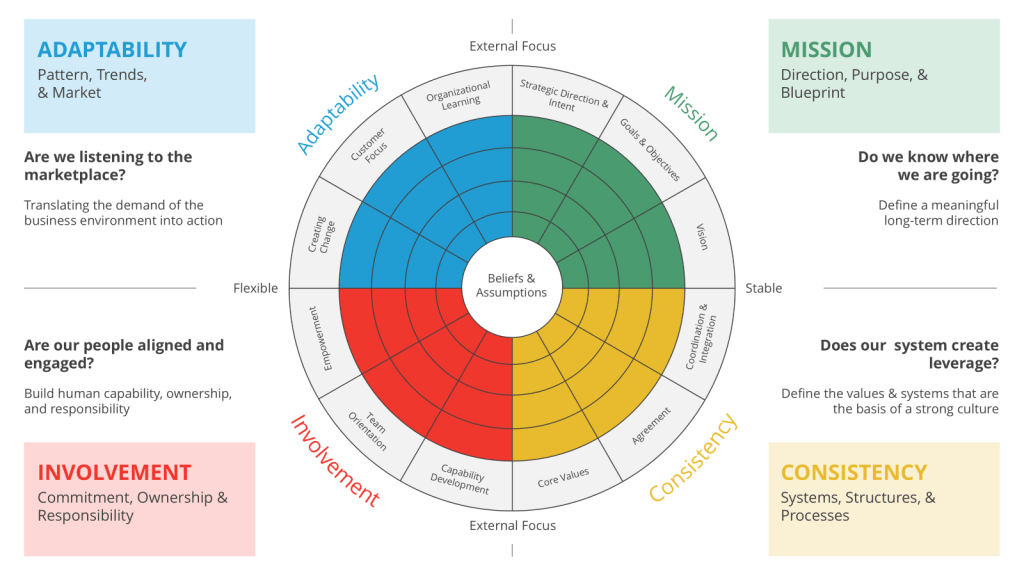
            Daniel Denison’s work on organizational culture, particularly through the Denison Model, assesses culture across four critical traits: Mission, Involvement, Adaptability, and Consistency. Each of these traits is further divided into three indexes, providing a comprehensive framework for understanding and improving organizational culture.

            Involvement and Empowerment

            Denison’s model emphasizes the importance of Involvement, which is the degree to which individuals at all levels are engaged and feel a sense of ownership in the organization. This trait is crucial for empowerment, as it involves aligning employees with the business direction and positioning them to contribute to its success. The indexes under Involvement include aspects such as empowerment, team orientation, and capability development, all of which are essential for creating a culture where employees feel valued and empowered.

            Empowerment through Cultural Alignment

            Denison suggests that empowerment is not just about giving employees authority but also about ensuring they are aligned with and committed to the organization’s mission. By fostering a culture where workers are engaged and capable, organizations can enhance their performance metrics such as innovation, customer satisfaction, and worker satisfaction. Denison’s approach emphasizes the need for leaders to manage culture effectively, recognizing that culture can either support or hinder organizational goals.

            Leadership and Empowerment

            Denison’s model implies that leaders should focus on creating an environment where workers feel empowered to contribute. This involves not only setting a clear mission but also ensuring that systems and processes support worker involvement and adaptability. By doing so, leaders can foster a culture where workers are motivated to drive organizational success. Denison’s philosophy underscores the importance of balancing internal consistency with external adaptability, ensuring that organizations remain responsive to market changes while maintaining internal cohesion.

            Denison’s work provides a structured framework for understanding how empowerment fits into a broader organizational culture. By emphasizing involvement and alignment, organizations can create an environment where workers feel empowered to contribute to success.

            Misuse of Empowerment Rhetoric in Quality Methodologies

            Total Quality Management (TQM)

            TQM emphasizes worker involvement and empowerment as part of its comprehensive approach to quality improvement. However, the emphasis on continuous improvement and customer satisfaction can sometimes lead to increased workloads and stress for workers, undermining genuine empowerment.

            Lean Manufacturing

            Lean manufacturing focuses on eliminating waste and maximizing efficiency, often using empowerment rhetoric to encourage workers to participate in continuous improvement processes like kaizen. However, this can result in workers being manipulated into accepting intensified workloads without real control over their conditions.

            Six Sigma

            Six Sigma uses a structured approach to quality improvement, relying on trained professionals like Green and Black Belts. While it involves worker participation, the focus on defect reduction and process optimization can lead to a narrow definition of empowerment that serves managerial goals rather than worker autonomy.

            Avoiding the Misuse of Empowerment Rhetoric

            To avoid misusing empowerment rhetoric, organizations should focus on creating a genuine culture of empowerment by:

            Ensuring Autonomy

            Ensuring autonomy in the workplace is crucial for empowering workers. This involves providing them with real decision-making authority and the freedom to act within their roles. When workers have autonomy, they are more likely to feel a sense of ownership over their work, which can lead to increased motivation and productivity. Autonomy allows workers to make decisions that align with their expertise and judgment, reducing the need for constant managerial oversight. This not only speeds up decision-making processes but also fosters a culture of trust and responsibility. To implement autonomy effectively, organizations should clearly define the scope of decision-making authority for each role, ensure that workers understand their responsibilities, and provide the necessary resources and support to facilitate independent action. By doing so, organizations can create an environment where workers feel valued and empowered to contribute to organizational success.

            Fostering Meaningful Work

            Fostering meaningful work is essential for creating a sense of purpose and engagement among workers. This involves aligning worker tasks with organizational goals and ensuring that work contributes to a broader sense of purpose. When workers understand how their tasks fit into the larger picture, they are more likely to be motivated and committed to their work. Meaningful work encourages workers to see beyond their immediate tasks and understand the impact of their contributions on the organization and its stakeholders. To foster meaningful work, organizations should communicate clearly about organizational objectives and how individual roles contribute to these goals. Additionally, providing opportunities for workers to participate in goal-setting and strategic planning can enhance their sense of purpose and connection to the organization’s mission. By making work meaningful, organizations can create a workforce that is not only productive but also passionate about achieving shared objectives.

            Developing Competence

            Developing competence is a critical aspect of empowering workers . This involves investing in training and development to enhance their skills and abilities. When workers feel competent in their roles, they are more confident and capable of making decisions and taking initiatives. Competence development should be tailored to the needs of both the organization and the individual worker, ensuring that training programs are relevant and effective. Organizations should also provide ongoing opportunities for learning and growth, recognizing that competence is not static but rather something that evolves over time. By investing in worker development, organizations can create a skilled and adaptable workforce that is better equipped to handle challenges and drive innovation. Moreover, when workers see that their employer is committed to their growth, they are more likely to feel valued and committed to the organization.

            Recognizing Impact

            Recognizing the impact of workers contributions is vital for reinforcing their sense of empowerment. Regularly acknowledging and rewarding worker achievements helps to demonstrate that their work is valued and appreciated. This can be done through various means, such as public recognition, bonuses, or promotions. However, recognition should be genuine and specific, highlighting the specific contributions and outcomes that workers have achieved. Generic or superficial recognition can undermine its effectiveness and lead to skepticism among workers. To make recognition meaningful, organizations should establish clear criteria for what constitutes impactful work and ensure that recognition is timely and consistent. By acknowledging workers contributions, organizations can foster a culture of appreciation and motivation, encouraging workers to continue striving for excellence and making significant contributions to organizational success.

            Encouraging Self-Determination

            Encouraging self-determination is essential for empowering workers to take ownership of their work processes and outcomes. This involves supporting workers in making choices about how they complete their tasks and achieve their objectives. Self-determination allows workers to work in ways that best suit their skills and work styles, leading to increased job satisfaction and productivity. To encourage self-determination, organizations should provide workers with the flexibility to design their work processes and set their own goals, as long as these align with organizational objectives. Additionally, organizations should foster an environment where workers feel comfortable suggesting improvements and innovations, without fear of criticism or reprisal. By giving workers the autonomy to make decisions about their work, organizations can tap into their creativity and initiative, leading to more effective and efficient work processes. This approach not only empowers workers but also contributes to a more agile and responsive organization.

            By focusing on these aspects, organizations can move beyond rhetorical empowerment and create a truly empowered workforce.

            Conclusion

            Worker empowerment is a powerful concept that, when implemented genuinely, can lead to significant improvements in organizational performance and worker satisfaction. However, its misuse in quality methodologies like TQM, Lean, and Six Sigma can undermine its potential benefits. By understanding the dimensions of empowerment and aligning practices with Deming’s principles, organizations can foster a culture of true empowerment that benefits both workers and the organization as a whole.

            Types of Work, an Explainer

            The concepts of work-as-imagined, work-as-prescribed, work-as-done, work-as-disclosed, and work-as-reported have been discussed and developed primarily within the field of human factors and ergonomics. These concepts have been elaborated by various experts, including Steven Shorrock, who has written extensively on the topic and I cannot recommend enough.

            • Work-as-Imagined: This concept refers to how people think work should be done or imagine it is done. It is often used by policymakers, regulators, and managers who design work processes without direct involvement in the actual work.
            • Work-as-Prescribed: This involves the formalization of work through rules, procedures, and guidelines. It is how work is officially supposed to be done, often documented in organizational standards.
            • Work-as-Done: This represents the reality of how work is actually performed in practice, including the adaptations and adjustments made by workers to meet real-world demands.
            • Work-as-Disclosed: Also known as work-as-reported or work-as-explained, this is how people describe or report their work, which may differ from both work-as-prescribed and work-as-done due to various factors, including safety and organizational culture[3][4].
            • Work-as-Reported: This term is often used interchangeably with work-as-disclosed and refers to the accounts of work provided by workers, which may be influenced by what they believe should be communicated to others.
            • Work-as-Measured: The quantifiable aspects of work that are tracked and assessed, often focusing on performance metrics and outcomes
            AspectWork-as-DoneWork-as-ImaginedWork-as-InstructedWork-as-PrescribedWork-as-ReportedWork-as-Measured
            DefinitionActual activities performed in the workplace.How work is thought to be done, based on assumptions and expectation.Direct instructions given to workers on task performance.Formalized work according to rules, policies, and procedures.Description of work as shared verbally or in writing.Quantitative assessment of work performance.
            PurposeAchieve objectives in real-world conditions, adapting as necessary.Conceptual understanding and planning of work.Ensure tasks are performed correctly and efficiently.Standardize and control work for compliance and safety.Communicate work processes and outcomes.Evaluate work efficiency and effectiveness.
            CharacteristicsAdaptive, context-dependent, often involves improvisation.Based on assumptions, may not align with reality.Clear, direct, and often specific to tasks.Detailed, formal, assumed to be the correct way to work.May not fully reflect reality, influenced by audience and context.Objective, based on metrics and data.
            AspectWork-as-MeasuredWork-as-Judged
            DefinitionQuantification or classification of aspects of work.Evaluation or assessment of work based on criteria or standards.
            PurposeTo assess, understand, and evaluate work performance using metrics and data.To form opinions or make decisions about work quality or effectiveness.
            CharacteristicsObjective and subjective measures, often numerical; can lack stability and validity.Subjective, influenced by personal biases, experiences, and expectations.
            AgencyConducted by supervisors, managers, or specialists in various fields.Performed by individuals or groups with authority to evaluate work performance.
            GranularityCan range from coarse (e.g., overall productivity) to fine (e.g., specific actions).Typically broader, considering overall performance rather than specific details.
            InfluenceAffected by technological, social, and regulatory contexts.Affected by preconceived notions and potential biases.

            Further Reading

            Is There Equity in Out of Office?

            I think many of us are considering what work looks like, grappling with a return to offices, hybrid situations, and being fully remote. I think the media focuses rather extensively on companies like Apple, where a good chunk of the workforce seems to be up-in-arms about a mandatory return to the office.

            In the pharma world, things are a little more complicated, especially as it applies to the quality profession.

            At the heart sits the question, what sort of labs and manufacturing facilities do you have on site? This physical presence requires that certain employees be on-site. Which in most pharmas makes a bundle of those who must be on-site, and those who do not need to be on-site.

            I understand the desire for those who can work remotely to want to work remotely. There are a lot of good reasons for working remotely, and I personally chose a company that was purely remote for a chunk of those.

            But, and this is a big but, what does equity look like?

            Take for example an average quality department. It is broken down into those who support labs, manufacturing, clinical trials and post-marketing surveillance (for simplicity). You thus have in the same department individuals who must be always on-site; who need to show up a few days a week; and those who can do their job perfectly well remotely. To complicate matters you might even have a big chunk of your partners (all those clinical trial, medical affairs, pharmacovigilance folks) that have no attention of coming back to the office.

            So, what does equity look like? How do you treat these three camps? How to you compensate those who come into the office, that have commutes on top of their days that co-workers do not? How do you ensure everyone has equal opportunity to be seen, heard and participate? What does this organization look like?

            I thnk this is one of the major challenges for quality organizations moving forward. I do not think there is one size fits all, and there is no easy answer.

            The Team/Workgroup Charter, and When to Revisit

            Teams and Work-Groups need ground rules, they should have a charter, which includes a nice vision of how the team sees itself.

            Let’s be honest, we do not spend enough time building and maintaining these charters. If you are like me you tend to dive right in, and that will always cause some problems. Luckily, it is never too late to take a step back and do the work.

            Start by answering these eight questions about the team and its place in the organization.

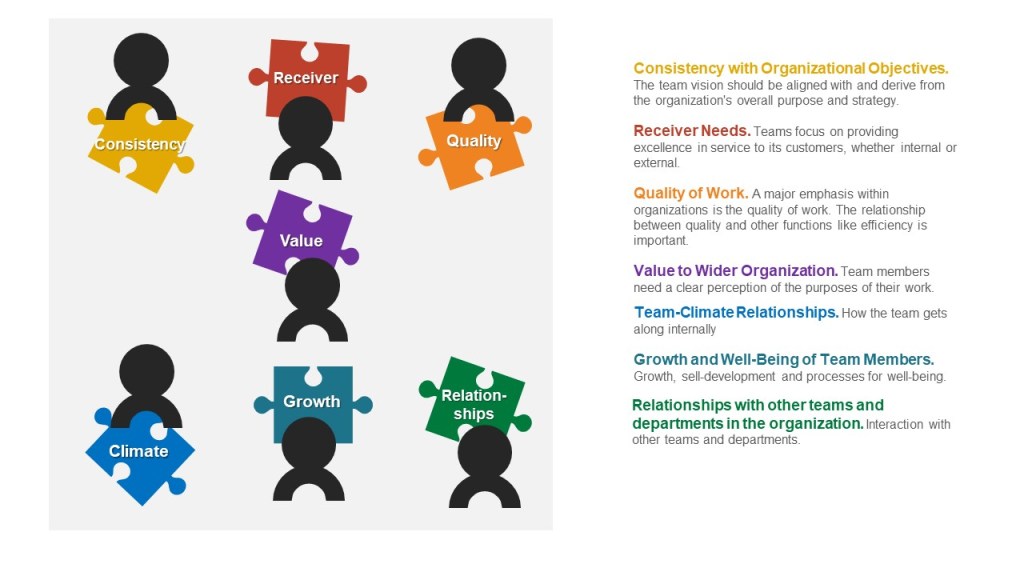
            1. Consistency with organizational objectives: The team vision should be aligned with and derive from the organization’s overall purpose and strategy. Teams are sub-elements in a wider organization structure and their success will be judged on the extent to which they make valuable contributions to the overall purpose of the organization. In some circumstances, a team may decide that it is important for its own values, purposes, and orientations to act as a minority group that aims to bring about change in organization objectives – perhaps like a red team.
            2. Receiver needs: How a team focuses on providing excellence in service to their customers, whether internal or external.
            3. Quality of work: A major emphasis within organizations is the quality of work. The relationship between quality and other functions like efficiency is important.
            4. Value to the wider organization: Understanding the importance of the team just not for the wider organization but beyond, leads to team cohesion and greater team effectiveness. Team members need a clear perception of the purposes of their work.
            5. Team-climate relationships: Team climate refers to aspects such as warmth, humor, amount of conflict, mutual support, sharing, backbiting, emphasis on status, participation, information sharing, level of criticism of each other’s work, and support for new ideas.
            6. Growth and well-being of team members: Growth, skill development and challenges are central elements of work-life, and teams can be a major source of support. Teams provide opportunities for skill sharing and support for new training. Teams need to be concerned for the well-being of their members, including things like burnout.
            7. Relationships with other teams and departments in the organization: Teams rarely operate in isolation. They interact with other team and departments within the organization. Teams must be committed to working effectively and supporting other teams. Avoid silo thinking.

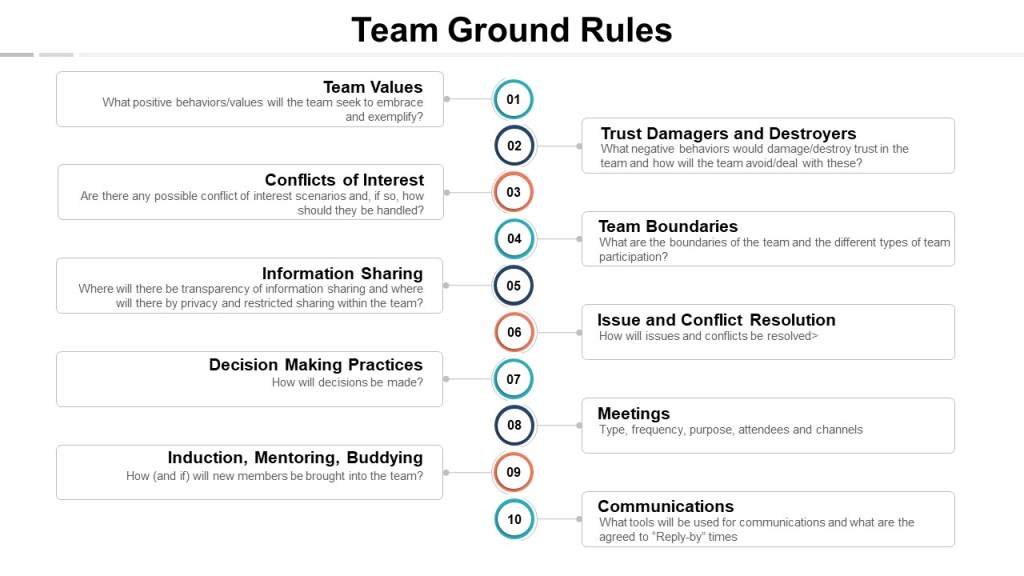
            From there you can then generate the 10 aspects of the charter:

            1. Team Ground Rules: What positive behaviors/values will the team seek to embrace and exemplify?
            2. Trust Damagers and Destroyers: What negative behaviors would damage/destroy trust in the team and how will the team avoid/deal with these?
            3. Conflicts of Interest: Are there any possible conflict of interest scenarios and, if so, how should they be handled?
            4. Team Boundaries: What are the boundaries of the team and the different types of team participation?
            5. Information Sharing: Where will there be transparency of information sharing and where will there be privacy and restricted sharing within the team?
            6. Issue and Conflict Resolution: How will issues and conflicts be resolved?
            7. Decision Making Practices: How will decisions be made?
            8. Meetings: Type, frequency, purpose, attendees and channels
            9. Induction, Mentoring, Buddying: How (and if) will new members be brought into the team?
            10. Communications: What tools will be used for communications and what are the agreed to “Reply-by” times

            Do not short communication

            How much time do you spend communicating every day? Whether this is through phone calls, IM, texts, email, written reports, face-to-face conversations, or meetings, many of us spend a large proportion of our day dealing with messages that demand our attention.

            Be deliberate in how we manage these interactions so that people communicate efficiently and effectively. Outline preferred methods of communication, how to use different channels effectively, and what people want to achieve. By improving communication you can drive for effective meetings, reduce the volume of emails, ensure that exchanges are professional, and free up time for high-value tasks.

            Include the following in your communication section:

            • When people need to reply to emails and when they don’t.
            • When people should “Reply All” to emails and when they should avoid it.
            • How to organize regular team meetings, who should attend, whether people will “dial in” remotely, what to include in the minutes, who will circulate them, and so on.
            • How your team communicates with customers internal and external.
            • How team members interact on internal social media (chat, slack, etc).
            • When making a video or audio call is appropriate.
            • How people engage with others face-to-face.

            Signs of Team/Work-Group Misalignment

            There are some behaviors to look out for, when you see them, it’s time to return to the charter, and improve.

            Vague Feelings of Fear. You know what the team is supposed to deliver on, but you don’t know how exactly you’re supposed to work with anything in your power or control to “move the needle.”

            Ivory Tower Syndrome. Things aren’t clear or different people have different expectations for a project or initiative. No one is really able to clarify.

            Surprises. Someone committed you to a task, but you weren’t part of that decision.

            Emergencies. How often are you called on to respond to something that’s absolutely needed by close of business today? How often are you expected to drop everything and take care of it? How often do you have to work nights and weekends to make sure you don’t fall behind?

            Cut Off at the Pass: Someone else is doing the same work unaware to all.

            Not Writing Things Down. You have to make sure everyone is literally on the same page, seeing the world in a similar enough way to know they are pursuing the same goals and objectives. If you don’t write things down, you may be at the mercy of cognitive biases later. How do you know that your goals and objectives are aligned with your overall company strategy? Can you review written minutes after key meetings? Are your team’s strategic initiatives written and agreed to by decision-makers? Do you implement project charters that all stakeholders have to sign off on before work can commence? What practices do you use to get everyone on the same page?