Poorly Incentived for Quality

Luis Charles Chavarría recently posted about watches and quality. Reading that, and several of the responses remind how pharmaceutical quality is often just framed in terms of regulatory adherence instead of a broader approach. ISO9001 and other major quality models basically break down to having 8 dimensions of quality.
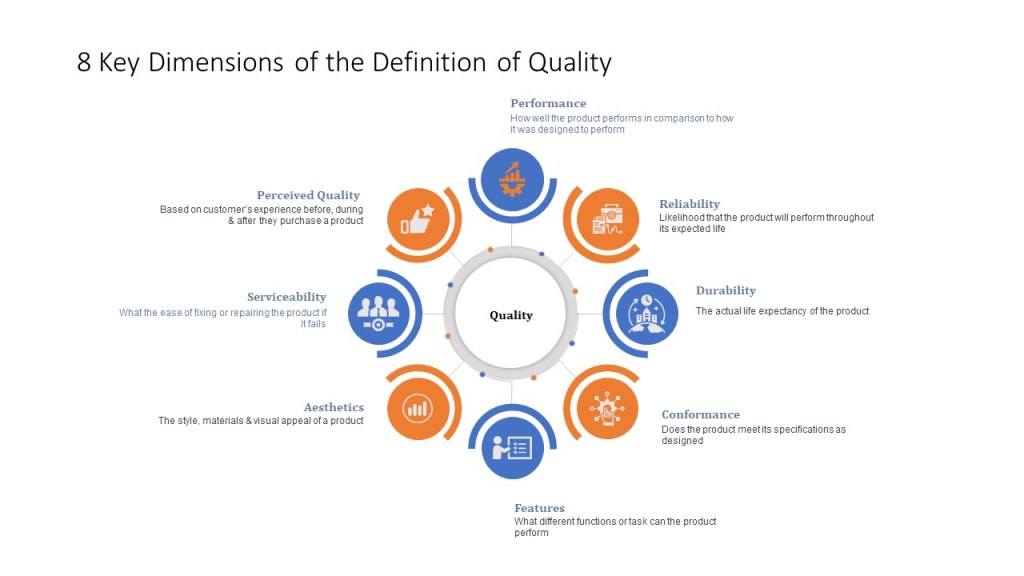
8 key dimensions of Quality

In a lot of industries, it is very visible to the customer whether quality exists. Shoes, cars, toaster ovens – I can gauge them based on multiple of the criteria above before I buy. I can go on credible review sites, use tools like Consumer Reports, get reliable feedback from others. When a friend recommends a couch, I can trust their opinions.

We have none of that in the regulated areas of pharma and much of medical devices. Patients are prescribed product, and even when there are multiple generics available the only real criteria is price. Chances are the patient barely knows the manufacturer, let alone the manufacturing site. It can be very difficult for a patient, or even doctor, to gauge the quality of the product.

It is for this reason we need more transparency throughout the supply chain, through the development of products. The National Academies of Science, Engineering and Medicine (NASEM) report is a start and needs to be implemented quickly. As a beginning it can really help start to shift the needle and make large parts of this industry more receptive to

Increasing Transparency in Drug/Medical Device Manufacturers

The National Academies of Science, Engineering and Medicine (NASEM) has published a report on resiliency in the medical supply chain that calls for the US Food and Drug Administration (FDA) to publicly disclose the location of all manufacturing facilities that supply ingredients and parts for pharmaceuticals and medical devices approved in the US.

The report recommends FDA publicly disclose information on drug sourcing, manufacturing quality and volume, and capacity for medical products approved for sale in the US.
 
“The manufacturer for a pharmaceutical drug should be required to publicly disclose the manufacturing location, in particular the FDA Establishment Identifier (FEI), the city, and the country for the finished dosage form (FDF), active pharmaceutical ingredient (API, major excipients, and major packaging and delivery devices for all pharmaceutical drugs sold in the United States,” said a report summary.
 
The same recommendation also applies to devices; device manufacturers should publicly disclose the manufacturing location in the FEI, the city, and the country involved in the device’s manufacturing and final assembly.
 
The report also recommends FDA make its risk-based site selection model scores publicly available. Wow, not only would that be good for consumers, I’d love to know where my sites fall in on that scoring.

Hurry up and put this recommendation in place!

Transparency is a good thing and it is shown to increase consumer safety. It is a problem that even a fairly knowledgeable industry professional like myself cannot figure out where generics are manufactured without making a few phone calls and shaking down my friend network. And even then, I’m never positive that I understand where my family’s medicine is coming from and the status of the sites involved in manufacturing and distributing the product.

Toyota is a horrible exemplar

Just like the immense sins of Jack Welch and GE will always tarnish six Sigma it is past time to realize that the conservative, looking backwards to Toyota of much of Lean thinking is a mistake that limits adoption and more importantly innovation.

As a company there is much at Toyota that is just wrong. The 2020 recalls were significant, but frankly not the first year the company has been having major quality contorl issues.

But more important is the fact the company is a liar and a supporter of authoritarianism. As a promponent of the pillars of Lean thats just damn hypocritical. After the failed coup of Janaury 6th, Toyota pledged to no longer fund anyone who supported the attack against US democracy. As of June they are the top fundraiser to those Republicans, giving to nearly a quarter of the 147 GOP politicians who objected to certifying the election results.

Toyota is showing us who they are. A company that stands apart from the principles so important to the Quality profession.

Transparency

Transparency in organizations generally falls into one of two categories: proactive and demand-driven.

  • Proactive dissemination refers to information that the organization’s leadership makes known about its activities and performance. Practical expressions can range from strategic and tactical goals, third-party evaluations, and organizational risks.
  • Demand-driven access refers to an organizational commitment to respond to employee requests for specific kinds of information or documents which otherwise would not be accessible.

The idea of transparency can also be unpacked in terms of its directionality. Disclosure cuts both ways, channeling information upwards as well as downwards in the organization. Leadership sharing insight into decisions is an example of downwards, where idea management processes are upwards.

The type of transparency also matters:

  • Opaque or fuzzy transparency involves the dissemination of information that does not reveal how organizations actually behave in practice, whether in terms of how they make decisions, or the results of their actions. The term also refers to information that is divulged only nominally, or which is revealed but turns out to be unreliable.
  • Clear transparency sheds light on organizational behavior, which permits interested employees to pursue strategies of constructive change.

This distinction between clear and opaque is grounded on the premise that if transparency practices are going to meet their goals of transforming organizational behavior, then they must be explicit in terms of who does what, and who gets what.

Transparency requires not only a willingness, but processes to drive it.

Photo by Elena Koycheva on Unsplash

Drive Out Fear on International Workers Day

Happy International Workers Day. Let’s celebrate by Driving Out Fear!

Thirty-five years ago Deming wrote that “no one can put in his best performance unless he feels secure.” Unfortunately, today we still live in a corporate world where fear and management by fear is ubiquitous. That fear is growing after more than a year of a global pandemic. As quality professionals we must deal with it at every opportunity.

Fear undermines quality, productivity, and innovation. The existence of fear leads to a vicious downward spiral.

Some sources of fear include:

  • Competition: Many managers use competition to instill fear. Competition is about winners and losers. Success cannot exist without failure. Managers deem the anxiety generated by competition between co-workers a good thing as they compete for scarce resources, power and status. Therefore, management encourage competition between individuals, between groups and departments and between business units.
  • “Us and Them” Culture: The “us and them” culture that predominates in so many organizations proliferated by silos. Includes barriers between staff and supervisors.
  • Blame Culture: Fear predominates in a blame culture. Blame culture can often center around enshrining the idea of human error.

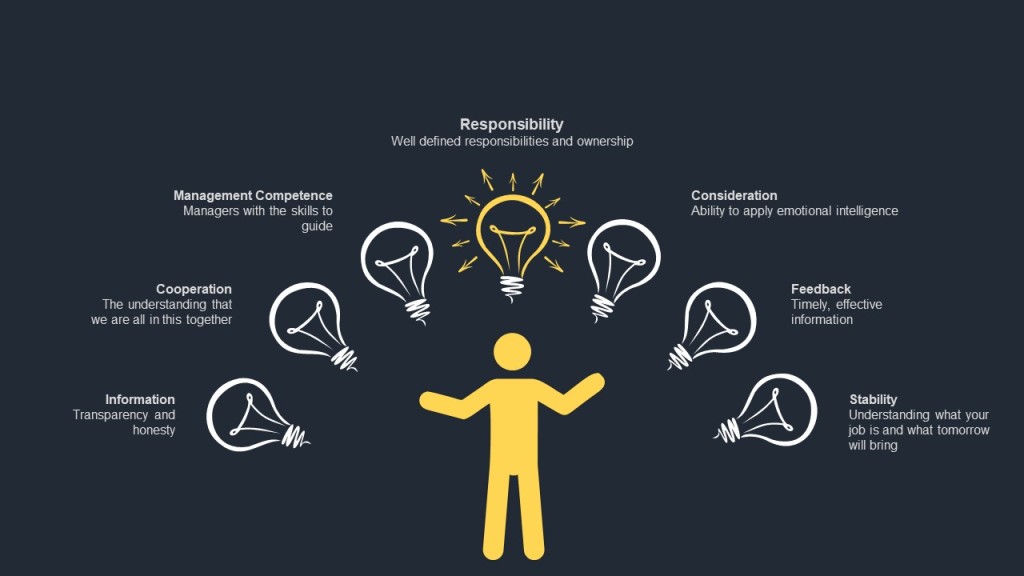
We drive out fear by building a culture centered on employee well-being. This is based on seven factors.

FactorMeansObtained by
ResponsibilityWell defined responsibilities and ownershipThe opportunity an employee has to provide input into decision making in his department
An individual employees’ own readiness to set high personal standards
An individual employee’s interest in challenging work assignments
The opportunity an employee has to improve skills and capabilities
Excellent career advancement opportunities
The organization’s encouragement of problem-solving and innovative thinking
Management CompetenceManagers trained with skills that lend themselves to contributing to the work of their team ensures that they will be looked to for help. Managers need to be able to guide.Direct Supervisor/Manager Leadership Abilities Management is engaged and leads by example (Gemba walks)
Management by Facts
ConsiderationWhen managers act as if employees have no feelings and just expect them to do their work as if they are robots, it can make employees uneasy. Such behavior makes them feel detached and merely a tool to carry out an end. In such environments, many times the only times employees hear from the manager is when something goes well or really bad. In either case, the perception could be that the manager has mood swings and that also adds to the employee’s insecurity. They may feel reluctant to talk to their manager for fear he is in one of his bad moods.Senior Management’s sincere interest in employee well-being
An individual employee’s relationship with their supervisor
Open and effective communication
Trust in management and co-workers
CooperationThe feeling that every person is on their own to look out for their interest is a sad state to be in. Yet when everyone has a fear that the other workers will take advantage of them or make them look bad at the first opportunity, a selfish and insecure environment will result. Employees should be able to work together for the benefit of the company. They should focus on group goals in addition to their personal goals, recognizing that individually there will be failures, but that the whole is more important than the individual parts.Trust Well trained employees Collaboration as a process Organizational culture (psychological safety) Hire and promote the right behaviors & traits to match the culture
FeedbackInformation that is given back to the employee regarding their performance on the job.Know what is expected of them (clear job descriptions)
Effective processes for timely feedback
Recognition
Know their opinion matters
InformationTransparency is critical. When employees know nothing about how a company is doing in terms of where they should be, it is a source of uneasiness. Without that knowledge, for all they know the company could be doing very poorly and that could be a bad thing for everyone. When they have a better sense of where the company is in the scheme of their objectives set by management, it helps them feel more secure. That is not to say it is the news being good or bad that affects their security, but rather the fact that they actually have the news.Strategy and Mission — especially the freedom and autonomy to succeed and contribute to an organization’s success
Organizational Culture and Core/Shared
Values
Feel that their job is important
StabilityEmployees feel more secure when their role does not change frequently and they understand what tomorrow will mean.Job Content — the ability to do what I do best
Availability of Resources to Perform the Job Effectively
Career development – opportunities to learn and grow
Photo by fauxels on Pexels.com