Knowledge Transfer

Our organizations are based on the interactions of individuals, teams and other organizations into a complex adaptive environment. We need to manage productive relationships as part of a complex system and interactions among parts can produce valuable, new, and unpredictable capabilities that are not inherent in any of the parts acting alone. This is why knowledge management, having a learning culture, is such a fundamental part of the work we do.

There are seven major categories we engage in when we manage, maintain, and create knowledge.

ActivityConvertsInvolvingMeaning
SocializationTacit-to-Tacitdifferent agentsSharing of tacit knowledge between individuals
IntrospectionTacit-to-Tacit same agentThe conscious or unconscious examination of one’s own tacit knowledge, as taken at an individual level
ExternalizationTacit-to-Explicitagent to knowledge managementThe expression of tacit knowledge and its translation into comprehensible forms interpretable by external agents
CombinationExplicit-to-ExplicitAll usersThe conversion of explicit knowledge into other variants of explicit knowledge
InternalizationExplicit-to-TacitTraining and deliberate practiceThe conversion of explicit knowledge into tacit knowledge
ConceptualizationAction-to-TacitContinuous ImprovementThe creation of tacit knowledge from aspects related to real work actions.
ReificationTacit-to-ActionProcess/ProcedureThe activity of bringing tacit knowledge into action (e.g. translating a mental model of a process activity into the actual operating tasks)
Knowledge Work Activities

As can be seen in the table above these seven activities involve moving between tacit and explicit knowledge. The apply to both declarative and procedural knowledge.

Examples of tacit and explicit knowledge

Socialization

Socialization is the level of interaction between, and communication of, various actors within an organization, which leads to the building of personal familiarity, improved communication, and problem solving. Often called learning the roles, this is the the process by which an individual acquires the social knowledge and skills necessary to assume an organizational role. Socialization encourages two-way information exchange, builds and establishes relationship trust, and enable transparency of information.

Socialization creates an operating style, enabling people to communicate with each other, have a language that they all understand and behavioral styles that are compatible. It reinforces basic assumptions and shares espoused values by helping create common norms and compatible cultures.

Socialization enables many influencing tactics which makes it critical for change management activities.

Introspection

The exploration of our experiences. Introspection can arise naturally but it can also arise deliberatively, for example journaling.

Introspection can also include retrospection, especially as a group activity. This is the strength of lessons learned.

Externalization

The work of making the tacit explicit. Knowledge management as continuous improvement.

Combination

The combination of knowledge drives innovation and a learning culture. This includes the ability to identify different sources of knowledge, understand different learning processes, and combine internal and external knowledge effectively.

Knowledge combination capability generates through exchange of knowledge between individuals and work teams is a process that allows the transfer of knowledge to the organization and that can be applied to develop and improve products and processes.

Internalization

As we move towards qualification we internalize knowledge.

Conceptualization

The insights gained from doing and observing work. Deliberative learning.

Reification

The process of translating work-as-imagined into work-as-done through work-as-prescribed on a continuous loop of improvement. The realm of transformative learning.
Storytelling and Leaders

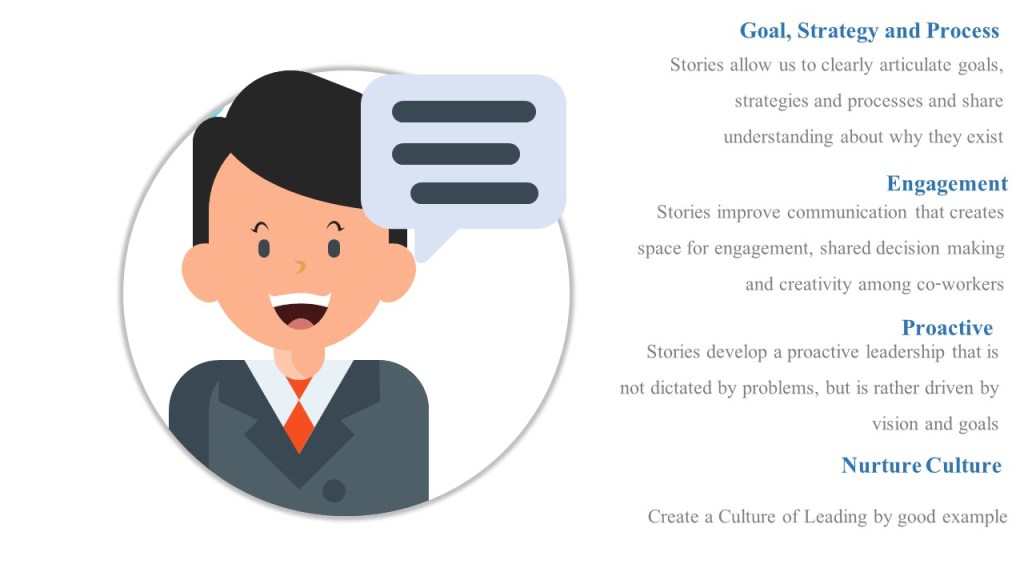
As leaders a big part of our work is ensuring the know-why – fostering and sharing an understanding of work culture and values. This is a continuing, long-term co-creative process that does not happen overnight. An important part of this work is shaping and sharing stories, using the past as a shaper of the future to give meaning to events. As stories are told in the present, they become a partner in shaping the future.

To successfully change, it is important to understand the past as well as dream for the future. Storytelling as a method and tool has real power to foster dialogue, reveal culture and create a shared vision:

  • Storytelling makes complex situations and phenomena accessible and provides details that can be used to build action plans for change and improvement.
  • Stories reveal values and principles embedded in a culture that are often hidden from the naked eye.
  • Stories make visible driving forces for change that are not revealed when direct questions are asked.
  • Stories provides a platform for understanding different perspectives. It breaks down barriers and builds bridges of trust.
  • Stories highlight turning points that can be used to facilitate innovation and change.

Through storytelling and dialog, we strengthen structure, identity and culture. It is how we tell our story.

Team Ground Rules

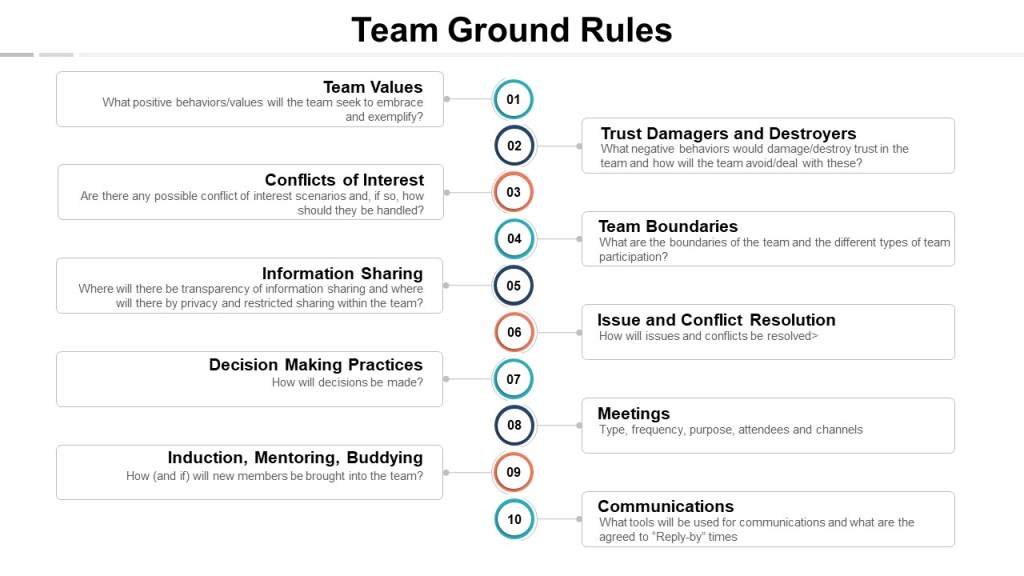
All teams need ground rules. Ground rules, the agreed behaviors of the team, should be short, sharp, unambiguous, and unanimous. The best ground rules follow the goldilocks-principle – they exist but are not unrealistic.

Ground rules are worthless unless implemented. A light set of ground rules which have been fully implemented is always better than a heavy set of ground rules not implemented or observed.

This means that any violations must be dealt with early on, or else the ground rules are not worth the paper they are written on.

Know the Knows

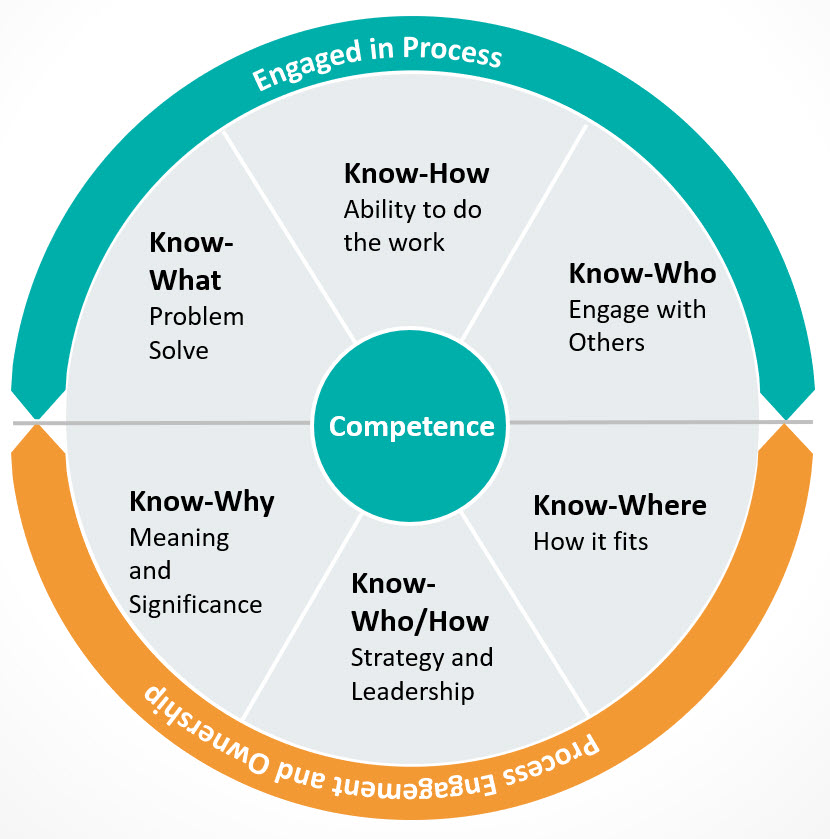
When developing training programs and cultural initiative sit is useful to break down what we really want people to know. I find it useful to think in terms of the following:

  • know-how: The technical skills to do the work
  • know-what: The ability to perform functional problem-solving, to adapt the process and innovate
  • know-who: networking and interpersonal skills, with social/emotional intelligence, for empathy or social network capacities
  • know-where: institutional and system knowledge of how the work fits into a larger ecosystem
  • know-who/how: strategic and leadership skills, for political ‘ nous’ in setting agendas, managing institutions, mobilizing resources;
  • know-why: creation of meaning, significance, identity, morality, with practical intuition for creative arts, sports, everyday social exchange.

To build all six elements requires a learning culture and a recognition that knowledge and awareness do not start and end at initial training on a process. We need to build the mechanisms to:

  • Communicate in a way to continually facilitate the assimilation of knowledge
  • Incorporate ongoing uses of tools such as coaching and mentoring in our processes and systems
  • Motivate the ongoing enhancement of learning
  • Nurture the development and retention of knowledge

We are striving at building competence, to be able to grow and apply the knowledge and abilities of our workers to solve problems and innovate.

Training, Development, Knowledge Management, Problem-Solving – these are a continuum but too often we balkanize responsibility of these in our organizations when what we need is an ecosystem approach.

Bring Playfulness to Your Work

Playfulness can soften difficult decisions, conversations and actions that require courage. Having the ability to bring a level of lightheartedness to even the most difficult situations can take the edge of circumstances that might otherwise scare you. Playfulness has the incredible power to disarm even the darkest of circumstances.

It invites courage to play.

Play is a fundamental part of the human experience. We should never forget to bring it to our work. A playful attitude keeps your mind curious. It makes us better problem-solvers.

Play involves an enthusiastic and in-the-moment attitude. When we play, we detach from outside stressors and become completely absorbed in the activity. Play is the ultimate mindfulness.

Do not let play be the first thing that gets lost when stress overrides our lives.

Playfulness is a subtle art. It is bordered by silliness on one side and rudeness on the other side. Be careful to ensure you never are in either of those territories. Men, this is especially critical to us as our culture lets too many sexist, racist and homophobic attitudes slide as humor. Always remember that playfulness is not the same as being funny. I’m not a very funny person, I try to avoid making people laugh. what I strive to do is make people feel included in my curiosity and exploration.

Good playfulness should always connect, never divide.

Take your play seriously! But don’t take yourself too seriously. Point out your own flaws and imperfections in a humorous, confident way. Sincere self-deprecation can be powerful.

People will strive for your success when you show up with playful energy. Make the other person genuinely feel special and watch the magic happen. Playfulness is a gentle invitation for others to follow you if they want to.

Playfulness will reflect in your body language. This is very inviting, and a whole lot of what folks mean as charisma stems from this spark.

By practicing playfulness you will develop an attitude of irreverence where you are in touch with yourself and avoid negativity and drama.

So reflect and ask yourself these questions:

  • How can you approach life with more playfulness? What would happen if you were more playful in your daily life?
  • Where are you lacking playfulness?
  • Who is someone playful you admire? What makes them playful?
  • If you approached life in a more playful way, what brave decisions would you make?
  • How would you show up differently if you were to embrace playfulness?
  • How can you invite more play into your life?